Running the way it should
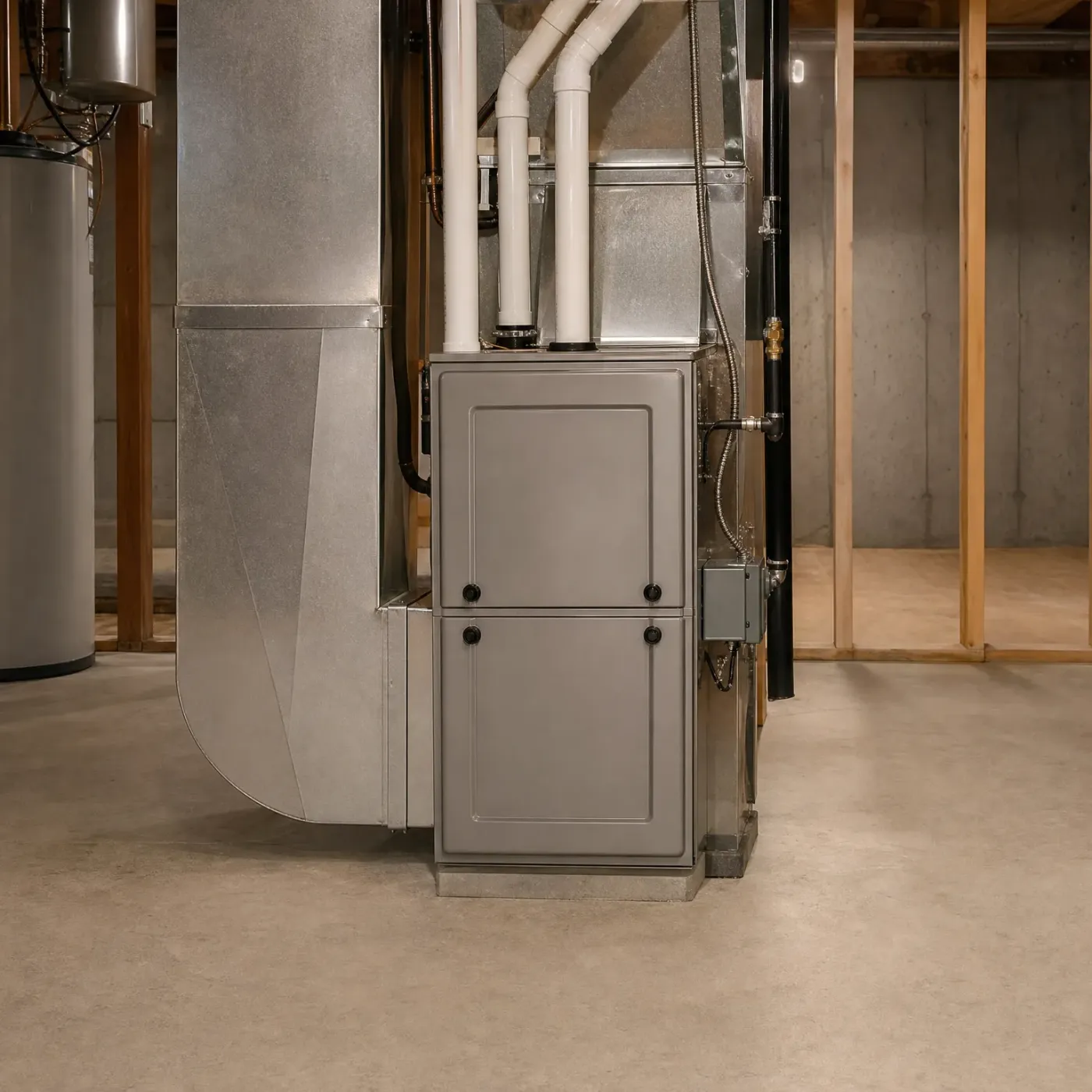
This furnace ties into round metal ductwork and the two PVC pipes that carry exhaust out and pull combustion air in. It fires on schedule, heats evenly, and the gas line and wiring beside it are clean and secure.
Send the form and the search for an installer is over.
Winter here is long, and a furnace that quits in January isn't a small problem. You're probably not asking out of curiosity. You're wondering if the noise it's making or the bill it's running up means it's near the end, or if it has a few more winters left in it before you need to plan for a replacement.
Most furnaces here run on gas, and a well-maintained one holds up for 15 to 20 years before it's worth replacing rather than repairing. What shortens that span is how hard the unit works each winter. Illinois furnaces run from October into April, sometimes longer, and that stretch of steady use wears on the heat exchanger and the blower motor faster than a mild climate would. A furnace installed in the last decade is probably still a good repair candidate. One pushing past 15 years, especially if it's starting to cycle more or heat unevenly, is closer to the point where a new install costs less over time than keeping the old one going.




A furnace follows the same order every time it starts. The inducer motor kicks on first and clears the heat exchanger. Then the igniter heats up, the gas valve opens, and the burners light. That sequence repeats thousands of times over an Illinois winter, and each part in it wears differently. The igniter is usually first to go. The inducer motor can stick or fail outright, especially on a cold morning when a furnace hasn't run in a while. The flame sensor is built to cut gas within seconds if it loses the flame, so a sensor coated with residue will cause the furnace to shut off and restart over and over before it fails for good. The part that actually ends a furnace's life is the heat exchanger, the metal chamber that passes heat into the air your ducts carry. Years of heating up and cooling down crack that metal eventually. None of this shows up on the thermostat. It shows up as a furnace that takes a few tries to light, or runs longer than it used to for the same temperature.
One installer gets your project, so there's no bidding war over it.
Send the request and finding a pro stops being your problem.
Asking costs nothing, and the choice to hire stays yours.
You notice it in small ways first. The furnace runs longer to reach the same temperature, and your gas bill climbs even though you haven't changed the thermostat. Rooms heat unevenly, one warm and the next one cold. You hear a bang or rattle at startup, or the burners look yellow instead of blue. Some mornings it short cycles, kicking off a few minutes after it starts. None of this means it will quit tonight. But with power here costing what it does, a furnace working harder than it should is spending your money to do a worse job, and if it's the heat exchanger making that noise, that's not something to leave alone through an Illinois winter.
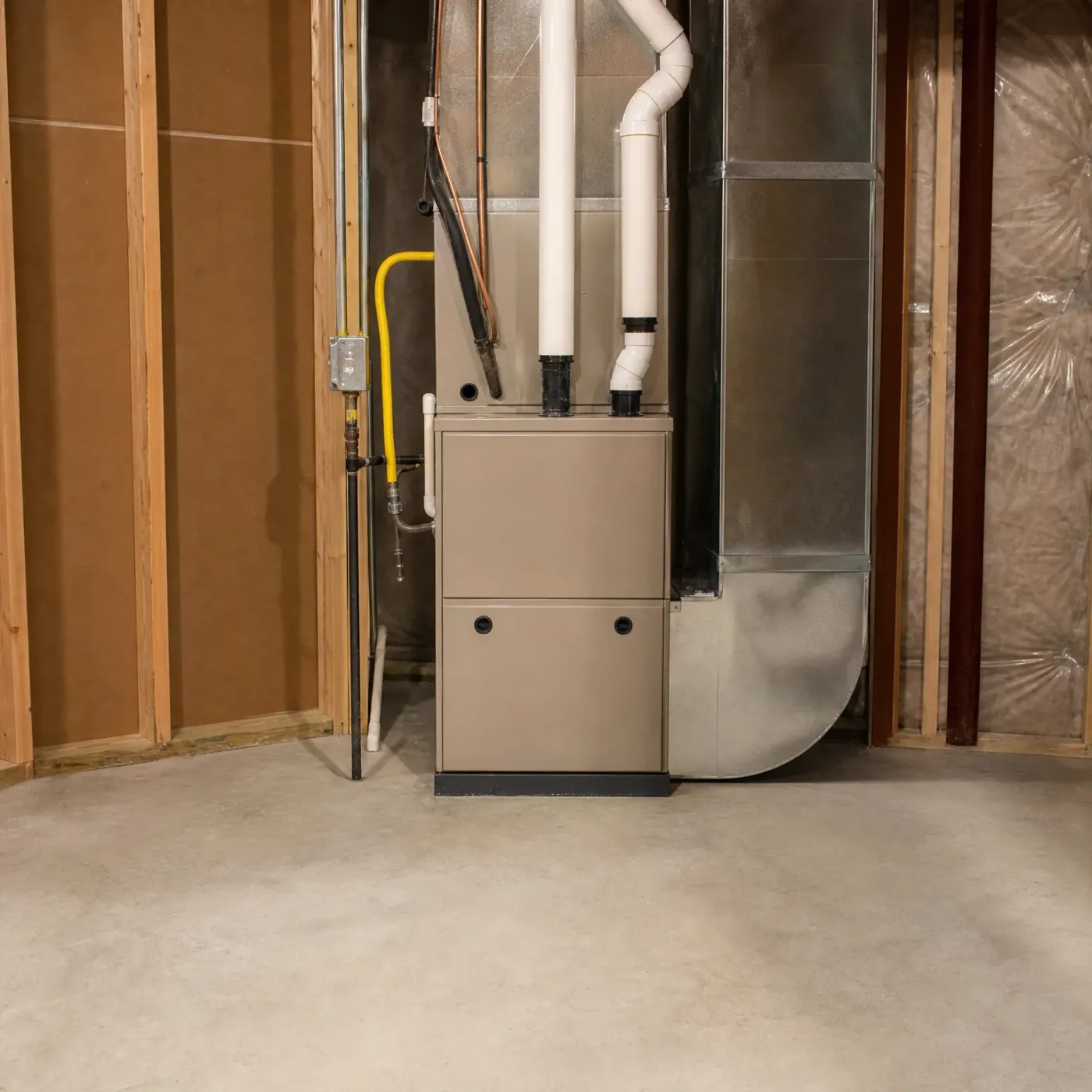
This furnace ties into round metal ductwork and the two PVC pipes that carry exhaust out and pull combustion air in. It fires on schedule, heats evenly, and the gas line and wiring beside it are clean and secure.
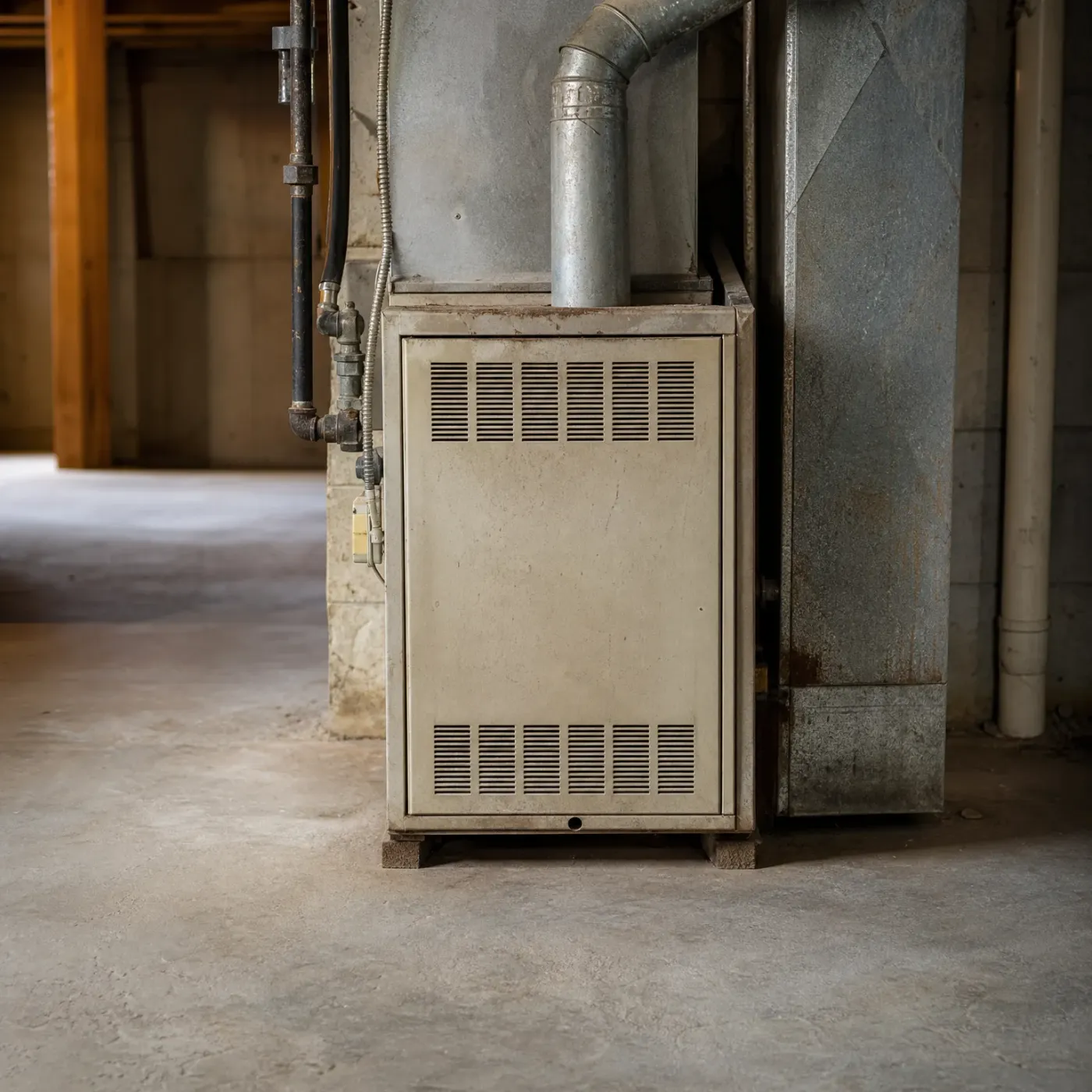
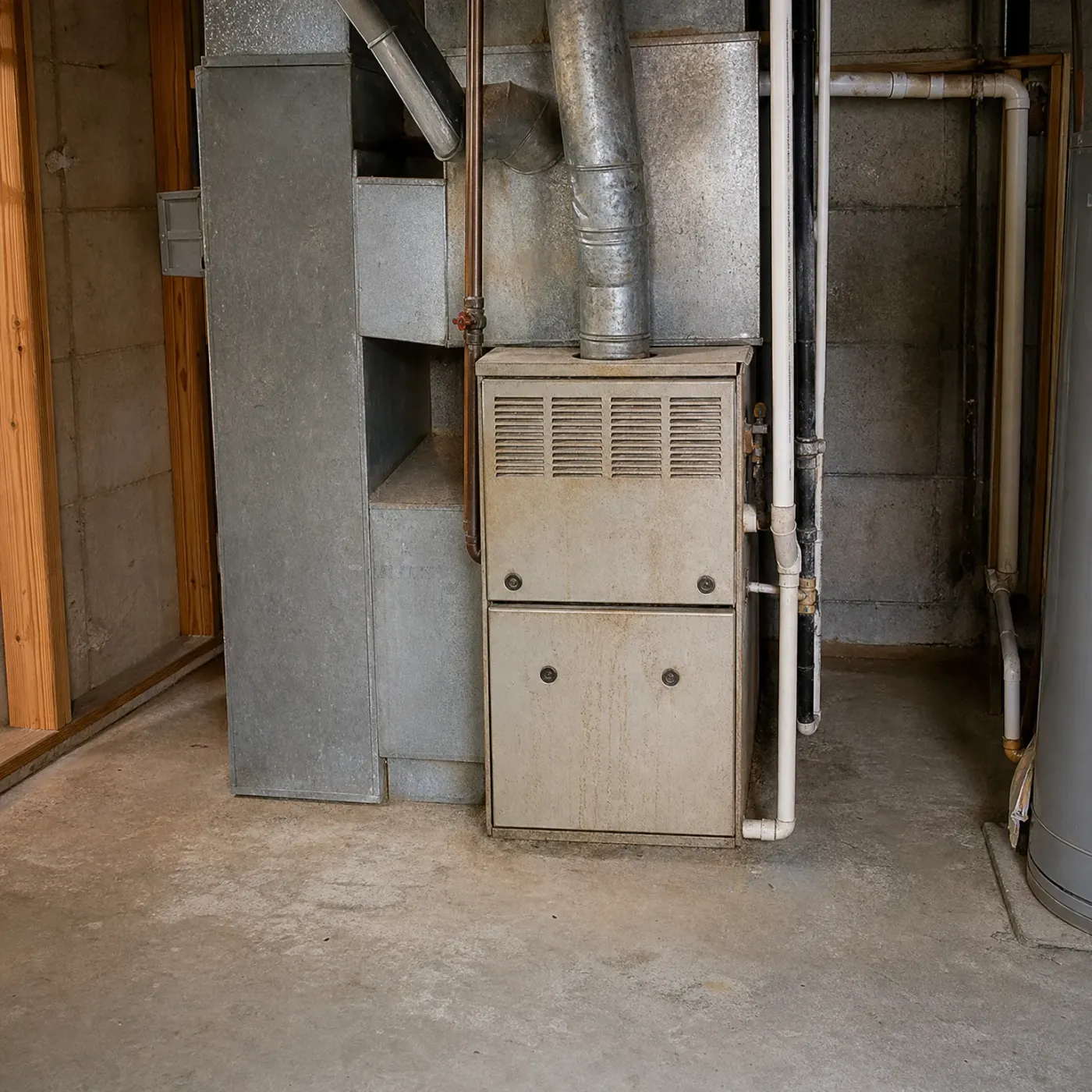
Older furnaces like this one vent through a round metal flue instead of PVC, and run on black iron gas pipe. Louvered panels, a flue pipe, and a unit that cycles longer than it used to are signs it's working harder to keep up.
Three out of four homes in Illinois heat with gas, so your furnace is doing the same job most of your neighbors' are. That means parts and service for it are easy to find when something goes wrong, and a contractor who works this area sees the same models and the same failures all winter long.
ACS 2020-2024 5-year B25040
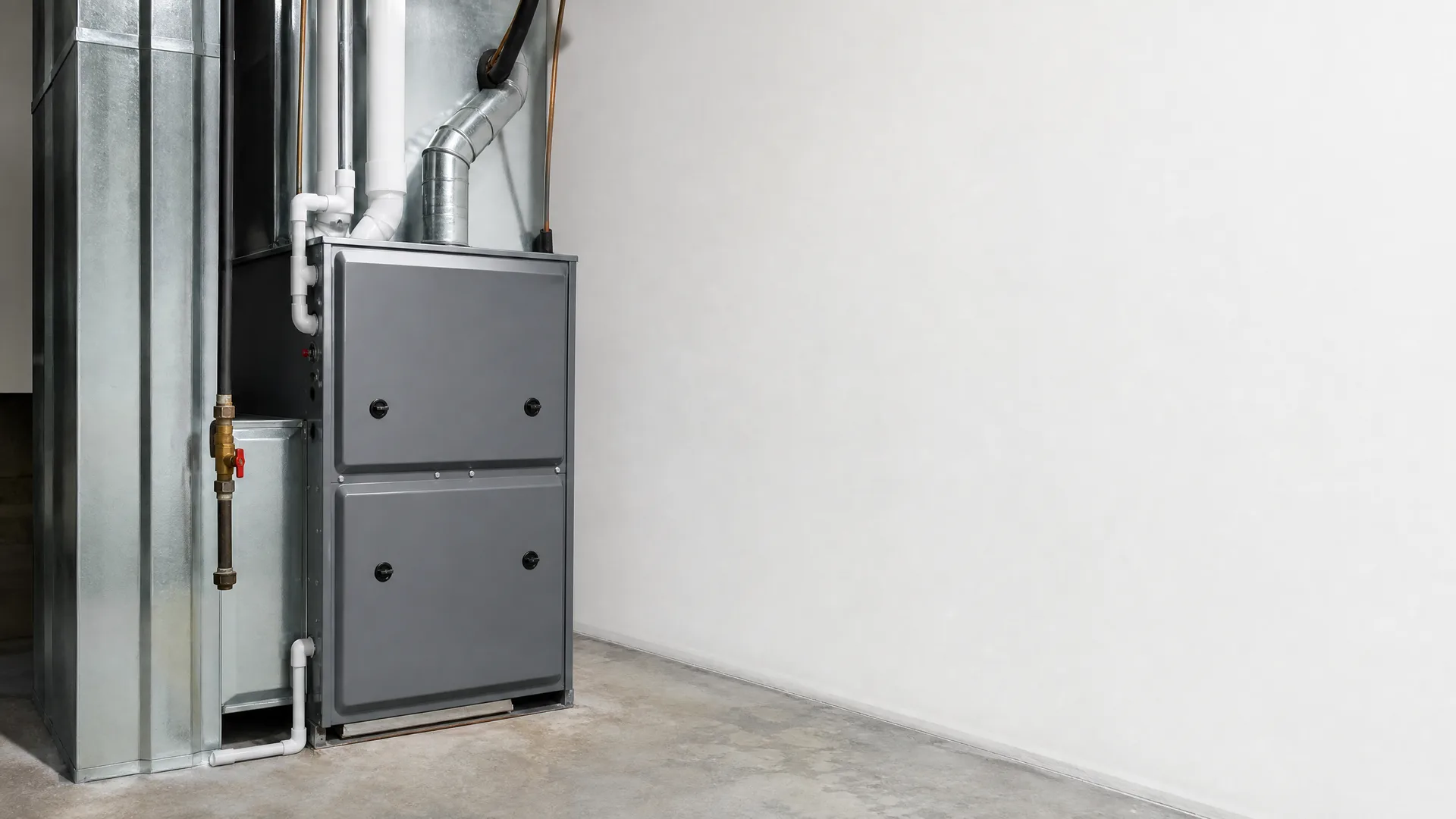
A furnace doesn't wear out from one hard winter. It wears out from firing on and off thousands of times each heating season, every one of those cycles asking the igniter, the gas valve, and the burners to work in the same order without fail. Over fifteen or twenty years, that's a lot of starts. Each one is small wear on a part that eventually stops responding the way it used to, and that's when you start noticing the furnace running longer or lighting less reliably.
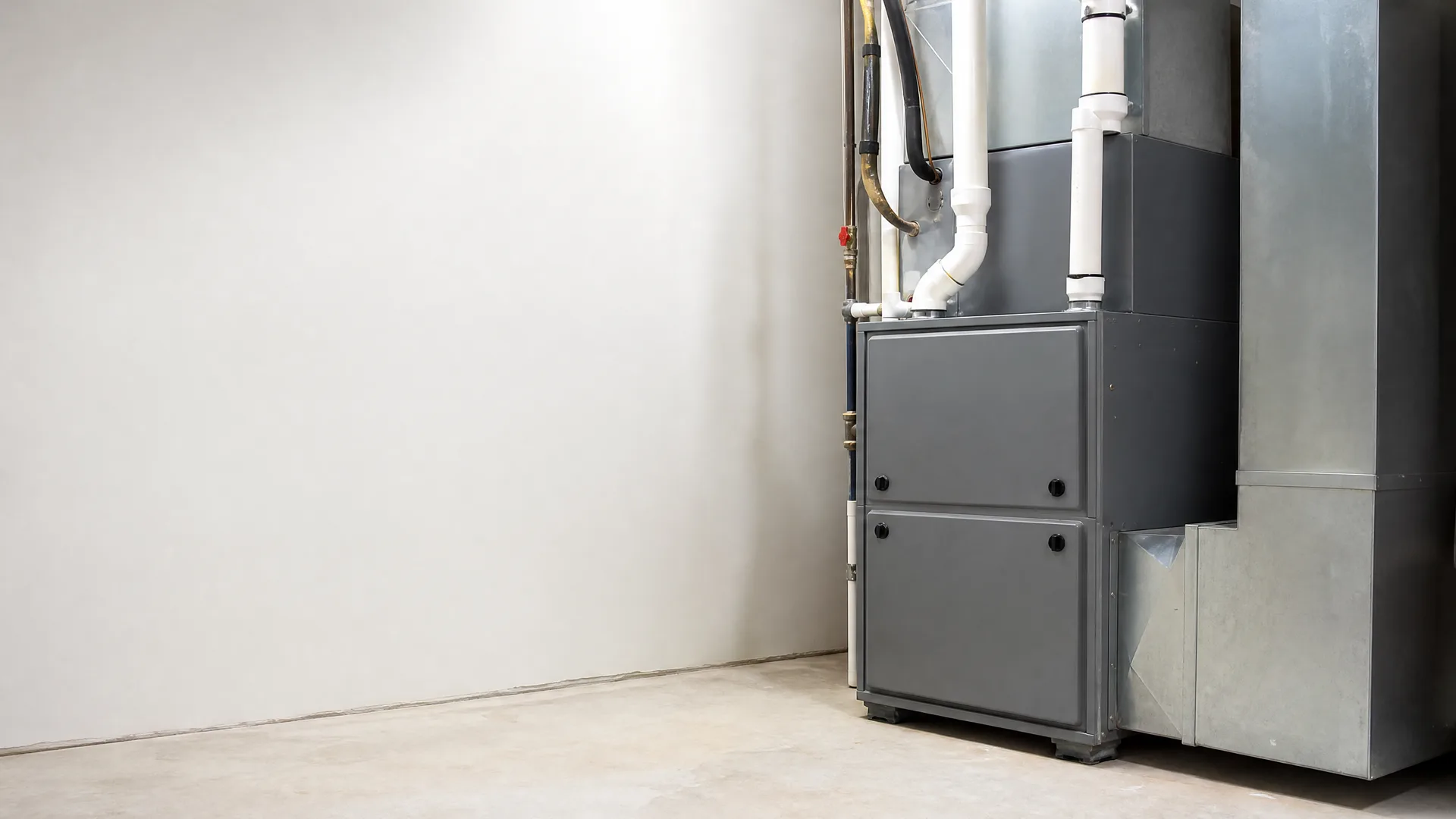
The heat exchanger is the part that separates the flame from the air moving through your ductwork, and it's usually the reason a furnace gets replaced rather than repaired. Metal that heats and cools thousands of times a winter can eventually crack, and once it does, a contractor will typically recommend replacing the unit rather than patching it. It's not a part sold on its own for a reason. By the time it cracks, the furnace has usually already logged most of its expected years of service.
A furnace in Illinois lasts about 15 to 20 years, and what happens in year 14 or 15 decides whether you get the rest of that range or a January breakdown instead. You've seen what the wear looks like: longer run times, higher bills, uneven heat, a burner flame that isn't steady blue anymore. If that sounds like your furnace, you're not early to this. Replacing it before it fails means you pick the week, not the furnace. A local contractor who installs these every winter knows which models hold up here and which ones don't, and can tell you straight whether yours is worth repairing again or done. Send the request and that search becomes someone else's job. One contractor gets it, licensed and working near you, not five companies competing for your afternoon.


A furnace near the end of its life in an Illinois winter doesn't wait for a convenient time to go. Once you've sent your request, finding someone to look at it stops being on you. It goes to one licensed, local contractor, not a handful competing for your callback, and they're someone who works on furnaces like yours all winter and knows what usually gives out first. That's a straighter path to heat than sorting through options yourself.