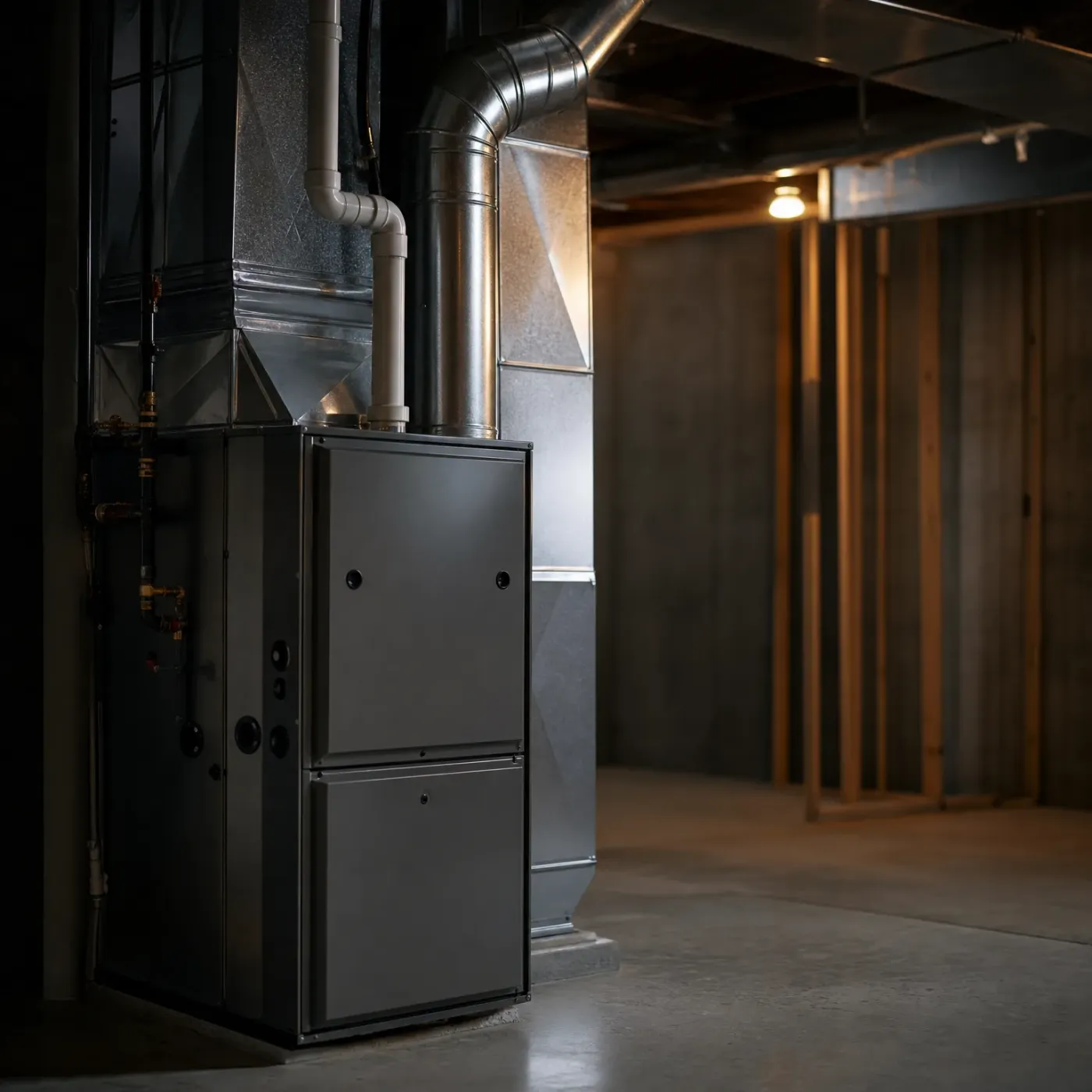
A dark gray furnace with two access panels stands in a basement, connected to galvanized sheet-metal ductwork and PVC pipes, with exposed wood framing and a bare bulb light in the background.

Get your furnace to the right pro

Is a high-efficiency gas furnace worth it in Illinois

Illinois winters run your furnace hard for months, and gas is how most homes here heat. A high-efficiency model costs more upfront, so the real question is whether it pays off on your bills and holds up in your house. This page gets into what changes with one, and what to check before you decide. If you want a local opinion on your setup, a licensed contractor who works on furnaces all winter can look at what you have now and tell you straight.

Connect with a pro

For most Illinois homes, yes, if the furnace is one you plan to keep for years. A high-efficiency furnace burns less gas to put out the same heat, because it pulls a second round of warmth out of the exhaust before venting it outside instead of sending that heat up the flue. In a state where furnaces run from October into April, that difference shows up on a lot of bills, not just one. It also changes what's on the outside of your house: these furnaces vent through PVC pipe instead of a metal flue, so your contractor needs a spot for that pipe and a way to drain the condensation it produces. Whether it's worth it to you depends on how long you plan to stay in the house and what your current furnace is costing you to run. A contractor who installs these in Illinois every winter can look at your setup and tell you what it would actually change.

An older man with gray hair and a beard, wearing a dark coat dusted with snow, stands smiling in a doorway of a warmly lit home with a sofa, lamp and window visible behind him.
An older man with grey hair and a beard, wearing a dark coat dusted with snow, stands in a dimly lit entryway with a ceiling lamp, a side table with two shaded lamps, and a lit fireplace visible in a room beyond.
A bearded older man in a dark snow-dusted coat and scarf stands just inside a home's front door, with a lamp-lit room and snowy window visible behind him.
An older man with gray hair and a beard stands in a doorway of a home, wearing a dark coat dusted with snow, with a lit fireplace and lamp visible in the blurred room behind him.

Where the extra efficiency comes from

A standard furnace vents hot exhaust straight outside, and that heat is wasted. A high-efficiency furnace runs that exhaust through a second heat exchanger first, pulling more warmth out of it before it leaves the house. That second step is why these furnaces need a plastic vent pipe instead of metal, and why they drain condensate instead of just venting dry. AFUE is what measures this. A furnace rated 95 AFUE turns 95 percent of the gas it burns into heat for your house. An 80 AFUE furnace turns 80 percent into heat and sends the rest up the vent.

Why Illinois winters make it count

The gain only shows up on the gas you actually burn, so it matters most where the furnace runs long and hard. Illinois winters stretch from October into April, and in the coldest months the furnace can run for hours at a stretch to hold the house at temperature. Over that many hours, the difference between turning 80 percent of the gas into heat and turning 95 percent into heat adds up on the meter. A furnace that only ran a few weeks a year would barely notice the difference. One that runs most of six months will.

A woman wrapped in a thick cream knit blanket sits in an armchair beside a lit table lamp, with an open book in the foreground and a frost-covered window behind her.
A bearded man in a plaid flannel shirt stands indoors looking out a frost-covered window, with a steaming dark blue mug on the wooden sill and snow-covered trees outside.

When it's worth the extra cost

If you plan to stay in the house and the furnace is nearing the end of its life anyway, a high-efficiency model has years of Illinois winters to earn back the difference. Replacing an aging furnace means the upgrade cost is just the gap between two options you were already weighing, not the whole price of a new system. Homes with a long heating season like this one get more use out of every point of efficiency, because the furnace is running more months out of the year than it would be somewhere milder. The more gas a furnace burns over its life, the more a small gain in efficiency adds up.

When a standard furnace makes more sense

If you're planning to sell the house in the next few years, or the furnace you have is still working fine, a standard furnace is the simpler choice. The high-efficiency model needs its own venting, run through PVC pipe rather than the metal flue a standard furnace uses, and that can add work to the installation depending on your house. A buyer deciding between homes may not pay more for the furnace in the basement. And a furnace that isn't failing doesn't need replacing just to chase savings that take years to show up on a bill.

75.3% of homes statewide heat with gas

Three out of four Illinois homes heat with gas, same as yours likely does. That means almost everyone around you is weighing this same decision on their own furnace, and whatever it burns shows up on your bill every winter until you replace it.

ACS 2020-2024 5-year B25040

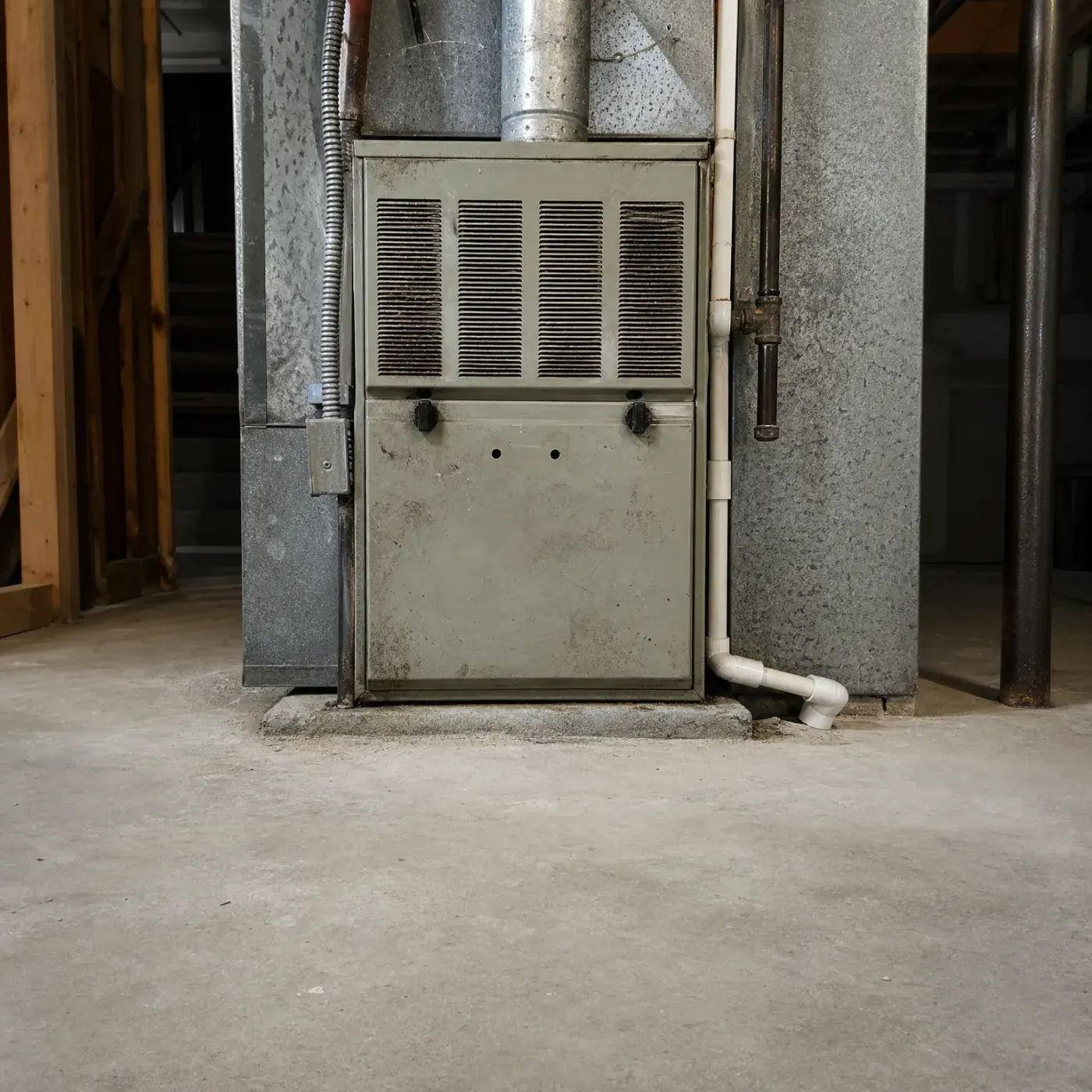
A gas furnace with a louvered upper panel stands on a concrete pad in a basement, flanked by sheet-metal ductwork, white PVC and metal pipes, and insulated columns.
Before you get your furnace installation
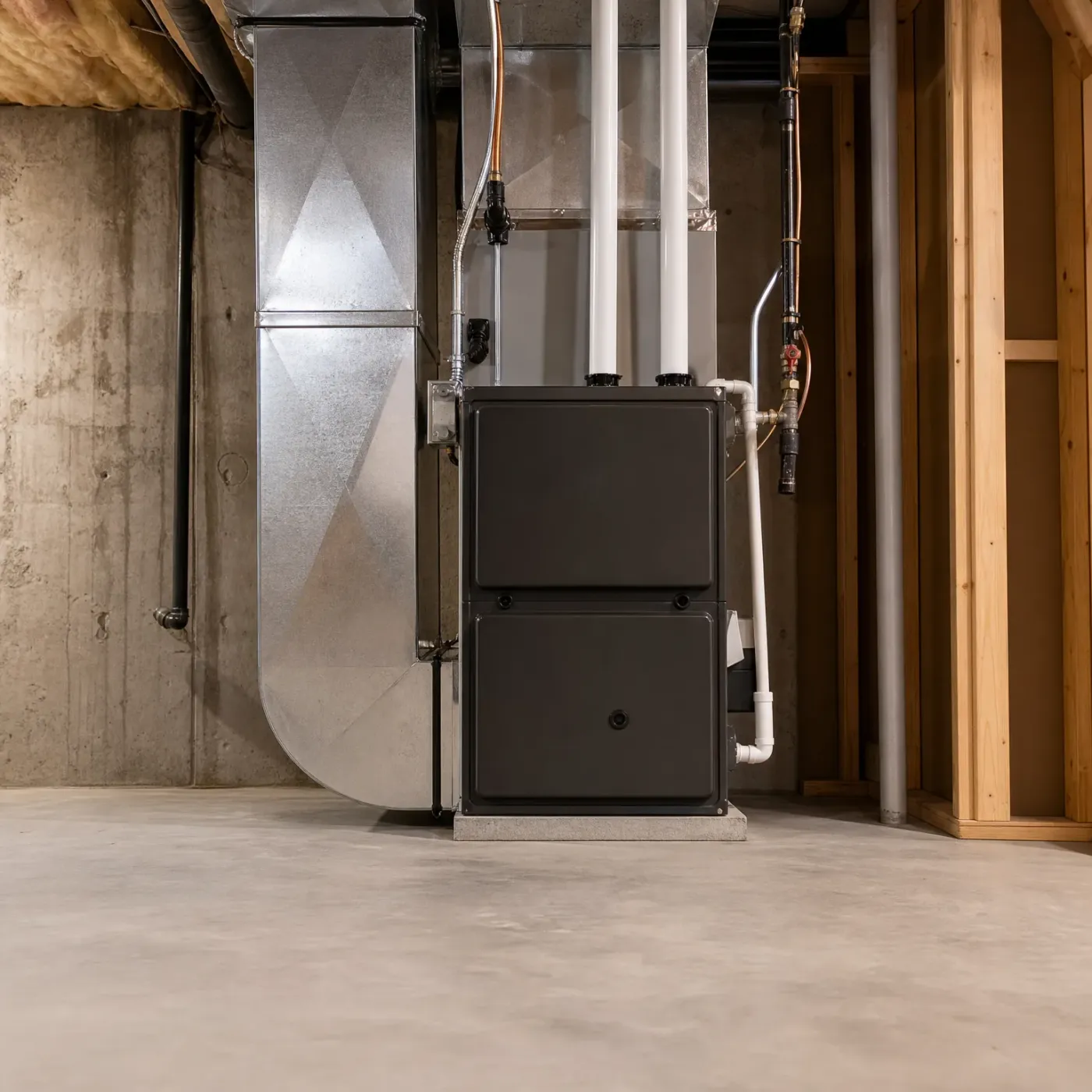
A dark high-efficiency furnace on a concrete pad in a basement, connected to galvanized ductwork, white PVC vent pipes, and copper and black gas piping, with concrete walls and wood framing nearby.
After you get your furnace installation

The right pro for this job

One installer gets your project, so there's no bidding war over it.

Sending the form costs nothing.

Where This Leaves You

  • A high-efficiency furnace earns back its extra cost through an Illinois winter that runs long enough to use it.
  • The decision comes down to how many winters are left for the furnace you install to work through.
  • A local contractor who services furnaces all winter knows which high-efficiency models hold up in this climate and which ones give owners trouble.
  • Matching with one contractor instead of several means one visit, one quote, and someone who can look at your actual house and your actual furnace.
  • If the furnace you have is old enough to need replacing soon, that same visit answers both questions at once.
  • What you burn every winter is the number this decision actually turns on, not the sticker price of the furnace.

A high-efficiency furnace makes sense in Illinois because the winters here are long enough and gas is expensive enough that the extra cost has time to work itself off. Whether it makes sense for your house comes down to how many winters that furnace has ahead of it, and that's a question about your furnace, not furnaces in general. A contractor who installs and services these units all winter in your area sees which models hold up and which ones end up back on a service call a few years in. That's not something a page can tell you. It's something someone standing in front of your furnace can.

Getting matched with one contractor instead of several means one person looks at your actual setup, your actual duct work, your actual furnace, and gives you a real answer instead of a generic one. If your current furnace is old enough that replacement is coming either way, that same visit can settle both questions, whether to replace it now and whether to go high-efficiency when you do. There's no sense paying for two separate conversations when one covers it.

The number that decides this isn't printed on the furnace. It's what you've been burning every winter, and what a high-efficiency unit would burn instead. A local contractor can work that out for your house.

A modern two-story house with dark siding and stone base at dusk, with lit soffit lights, a path of large rectangular pavers set in dark gravel, planting beds, a lawn, and an orange and blue sunset sky above distant trees and water.

Furnace Installation

Matched to your furnace job

Step 1 of 3: Equipment
  • A pale ceramic vase holding dried hydrangea blooms sits on a wooden windowsill in sunlight, with green foliage blurred beyond the window glass.
    • Say what's going on with your furnace, and a pro who works on them reaches out.
    • A local pro who knows furnaces gets your details and gets in touch.
  • Sunlit window seat with a cushioned bench and three textured throw pillows beside a dark wooden round side table holding a small stone bowl and a potted green plant.
    • Once you send the form, finding a pro is off your list.
    • After you send the request, you're done searching.
  • A potted olive-like tree in a wide beige ceramic planter sits on a pale stone ledge beside a black-framed window with blurred greenery outside.
    • Skip the round of in-home estimates for a new furnace.
    • Describe the project once instead of to every installer.
  • A wooden bench by a black-framed window holds a beige striped pillow, a fringed knit throw, and a pale ceramic vase with olive branches, with green foliage and a white house visible outside.
    • The pro who reaches out is licensed in Illinois.
    • Only one pro gets your request, so you hear from one company.