Profile view of a bearded man wearing a black baseball cap and a dark gray T-shirt against a plain light background.

Repair or replace a heat pump in Illinois

Step 1 of 3: Equipment

Should I repair or replace my heat pump in Illinois?

Your heat pump is giving you trouble again, and now you're weighing whether to fix it one more time or put in something new. Illinois summers get sticky and your heat pump likely carries real weight during the swing months, so when it struggles you feel it fast in comfort and on the power bill. The right call depends mostly on the age of the unit and what's actually wrong with it.

Repair it if the unit is young and the fix is minor. Replace it if it's old or the repair is a major one.

A heat pump that's under ten years old and needs a capacitor or a contactor is usually worth fixing. One that needs a new compressor or the refrigerant lines, especially past ten or twelve years, is a different math problem, since that repair can run close to what a new unit costs. Since most homes in Illinois heat with gas, the heat pump here is mainly doing summer cooling and shoulder season work rather than carrying the coldest months, but it still has to hold up against humid summers. With electricity rates in Illinois on the higher side, an older unit running on worn parts costs more to operate than a newer one that's properly matched to your house and ducts, and that gap is worth weighing against the repair bill in front of you.

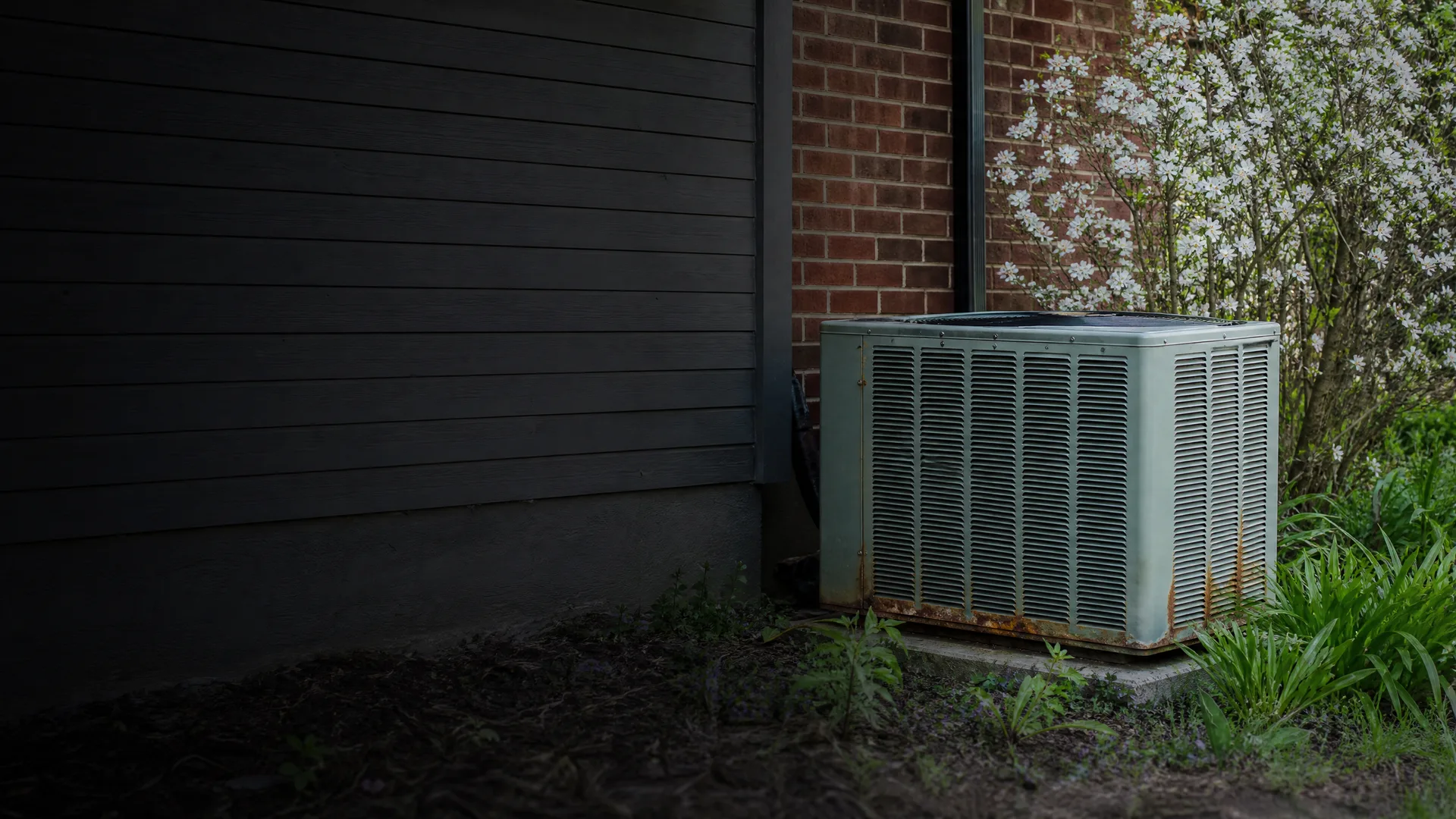
An outdoor air conditioning condenser unit on a concrete pad beside a dark horizontal-siding wall and a brick wall, with flowering shrubs and grass nearby.

You walk out to the side yard to turn on the hose and notice the unit sitting there, quiet, rust creeping along the base where it meets the pad. It's a mild spring day, the kind where you don't need heat or cooling yet, so you haven't thought about it in weeks. You crouch down and run a thumb along the rust. It flakes off easy. The panel seams show the same orange streaks lower down, where winter runoff sat against the metal. Nothing is running, nothing sounds wrong, but you know summer is coming and this thing has to carry the load again soon. You straighten up, turn the hose toward the flower bed instead, and tell yourself you'll call someone about it before it gets hot.

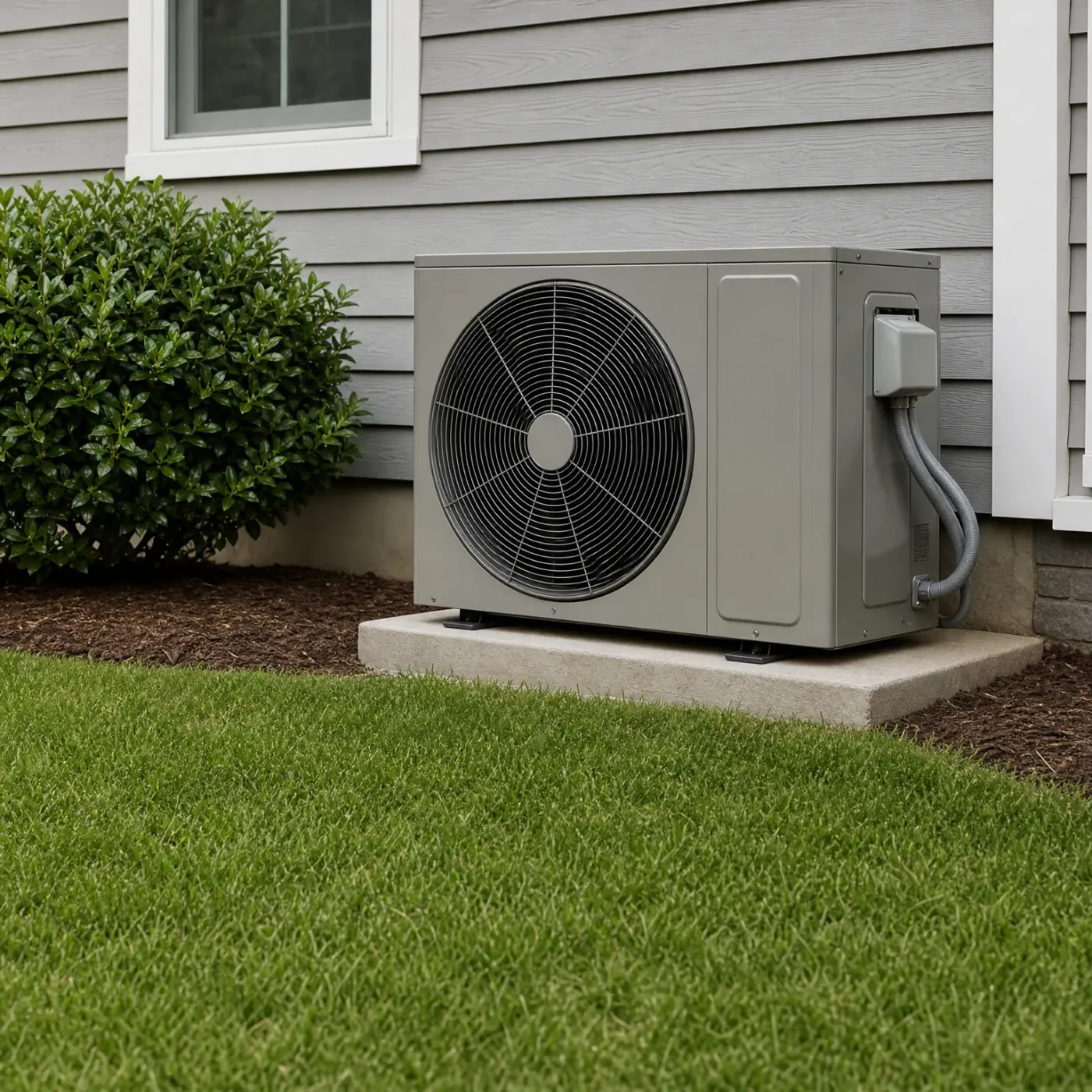
A gray outdoor heat pump unit with a large fan grille sits on a concrete pad beside a house with horizontal lap siding, next to a green shrub, mulch bed, and lawn.
A heat pump running clean like this one holds steady through a muggy Illinois summer without drawing extra power to make up for it.
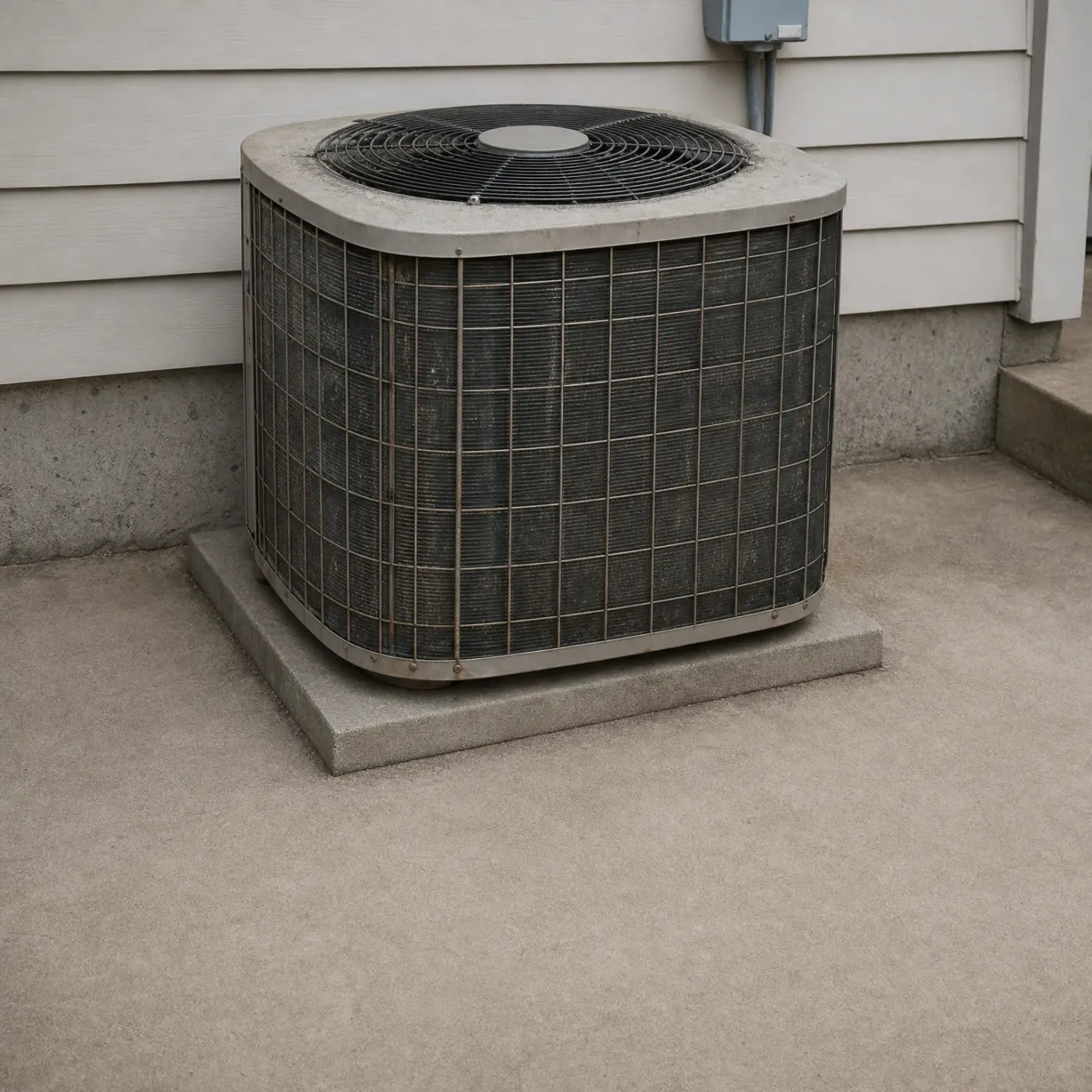
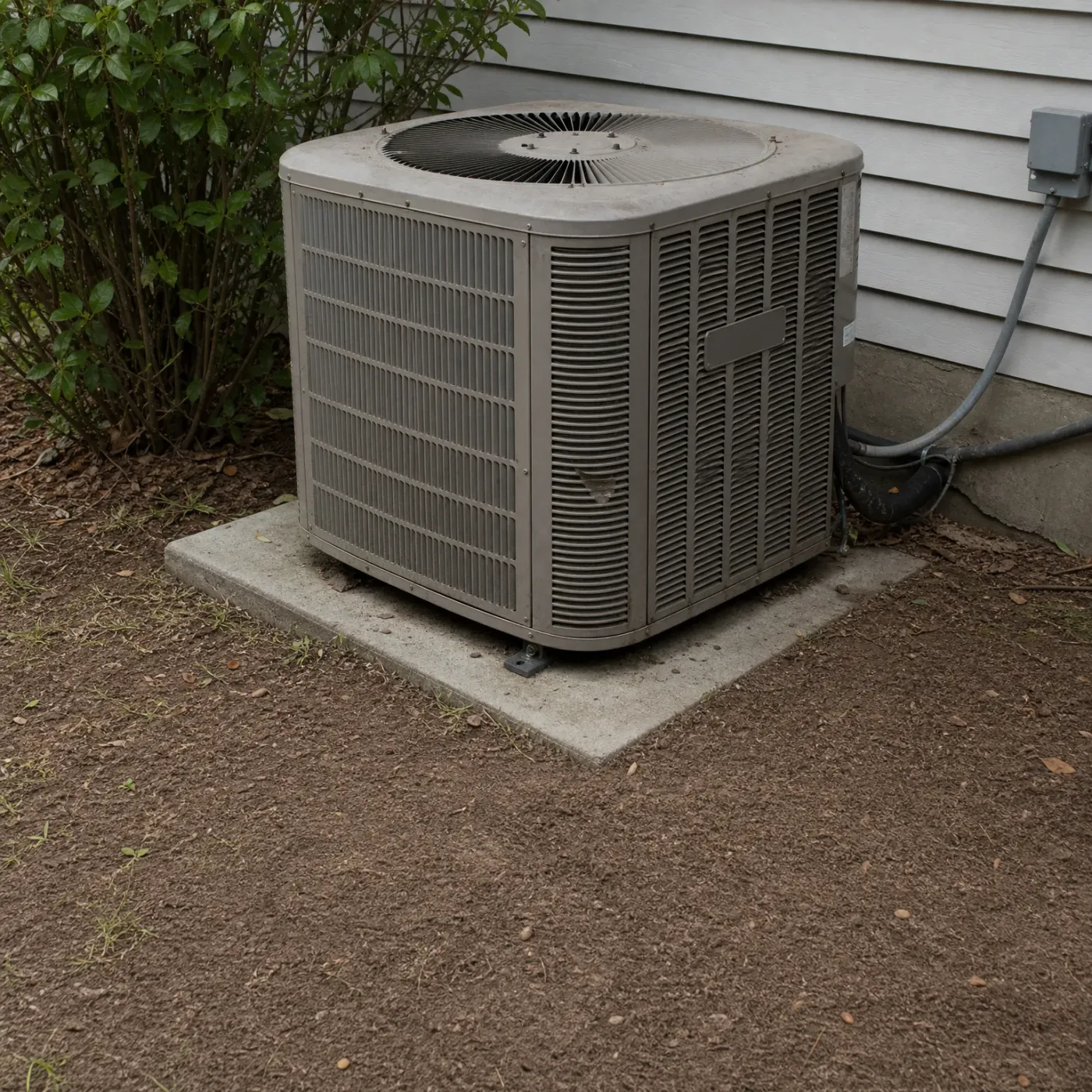
An outdoor air conditioning condenser unit with a top fan grille sits on a concrete pad beside a house with horizontal siding and a concrete step.
Coil fins caked with dust and debris make the unit work harder to move heat, and that shows up on your electric bill.

A heat pump doesn't make heat the way a furnace does. It moves heat from outside air into your house, even when that air feels cold, by running refrigerant through a cycle. In January, frost builds up on the outdoor coil, so the unit reverses itself for a few minutes, sends hot gas outside, and melts it off. The fan shuts off while this happens. If you catch it mid-cycle and see steam coming off the outdoor unit, that's just the frost burning off, not a malfunction. On the coldest days, when the outside air doesn't carry enough heat to keep up with the thermostat, a heat strip switches on to cover the gap. The reversing valve is what lets the same unit flip between heating your house in winter and cooling it in summer. If that valve sticks, the unit gets stuck in one mode no matter what the thermostat calls for. Low refrigerant shows up differently. The compressor keeps running longer than it should, trying to reach the set temperature, and that extra runtime wears parts down faster than they would otherwise.

How a heat pump actually runs

  • A heat pump switches into defrost by reversing the refrigerant cycle briefly, sending hot gas through the outdoor coil to melt frost off the fins.
  • During defrost, the outdoor fan stops and you may see steam rise off the unit, which is normal and not a sign of trouble.
  • An auxiliary heat strip kicks in during the coldest Illinois stretches when the heat pump alone can't pull enough warmth from the outside air.
  • The reversing valve is what lets the same unit heat your home in January and cool it in July, and a stuck valve means it can't switch modes.
  • A low refrigerant charge forces the compressor to run longer to hit the thermostat setting, which wears it down faster than a properly charged system.
  • The outdoor unit needs clearance on all sides to pull in air across the coil, so anything stacked against it chokes its airflow.
A man with grey hair and stubble in a dark sweater sits on a grey sofa indoors, looking off to the side, with a potted plant and a sunlit window behind him.
A man with gray hair, a beard and glasses, wearing a dark green sweater, sits on a gray sofa in a sunlit living room with a potted plant, table lamp and wooden sideboard behind him.
A middle-aged man with graying hair and a short beard sits on a blue sofa in a living room, looking toward a window, with a bookshelf, lamp and framed picture in the background.
A man with graying curly hair and a dark green sweater sits on a gray sofa in a sunlit living room, looking off to the side, with a framed picture, shelving, an armchair and a window with sheer curtains behind him.
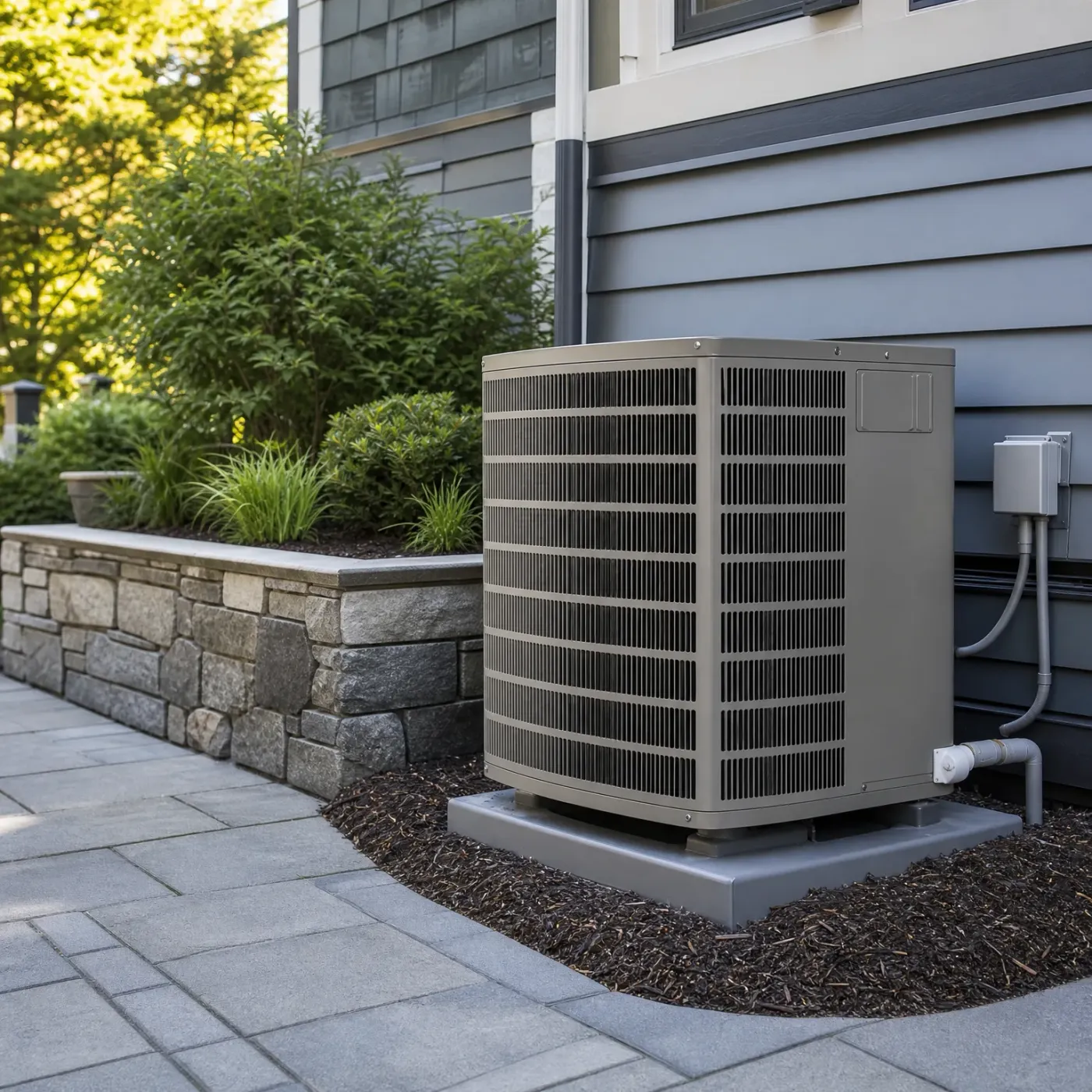
A beige outdoor condenser unit on a gray pad beside a house with gray horizontal siding, with refrigerant lines and an electrical disconnect box on the wall, bordered by dark mulch, a stone retaining wall with shrubs, and a paver walkway.

Send one request and you're done looking

Your request stays with one local pro.

Send the request and finding a pro stops being your problem.

Hand off the search

It costs nothing to send, and you don't have to hire anyone.

Repair It or Replace It

Repair

  • A heat pump under ten years old with one failed part, like a contactor or a capacitor, is usually worth fixing rather than replacing.
  • If the compressor still runs well and the refrigerant charge is correct, a repair can get you through the rest of this summer and winter.
  • Repairing costs less up front, which matters if the unit has otherwise been reliable and this is its first real breakdown.
  • A heat pump that's been maintained each season, with clean coils and a tech checking refrigerant levels, tends to hold up longer under the same strain.
  • If the problem is isolated, like a stuck reversing valve, swapping that one part is often straightforward for a tech who works on these year-round.

Replace

  • A heat pump that struggles to keep the house warm when it's near freezing outside may be undersized or failing, and a new one sized correctly solves both.
  • If you're facing a second or third repair in as many years, the money spent patching it starts to rival what a new system costs.
  • An aging compressor that's starting to fail will keep drawing more power to do the same job, and Illinois electric rates make that add up fast.
  • A new heat pump installed to match your home's actual heating and cooling load runs more efficiently through both the summer humidity and the winter cold.
  • If your gas furnace handles the coldest months as backup, replacing just the heat pump side lets a tech match the new unit to that setup properly.
  • Refrigerant for an older system can be hard to find or expensive if it uses a type being phased out, which pushes the repair cost up on its own.
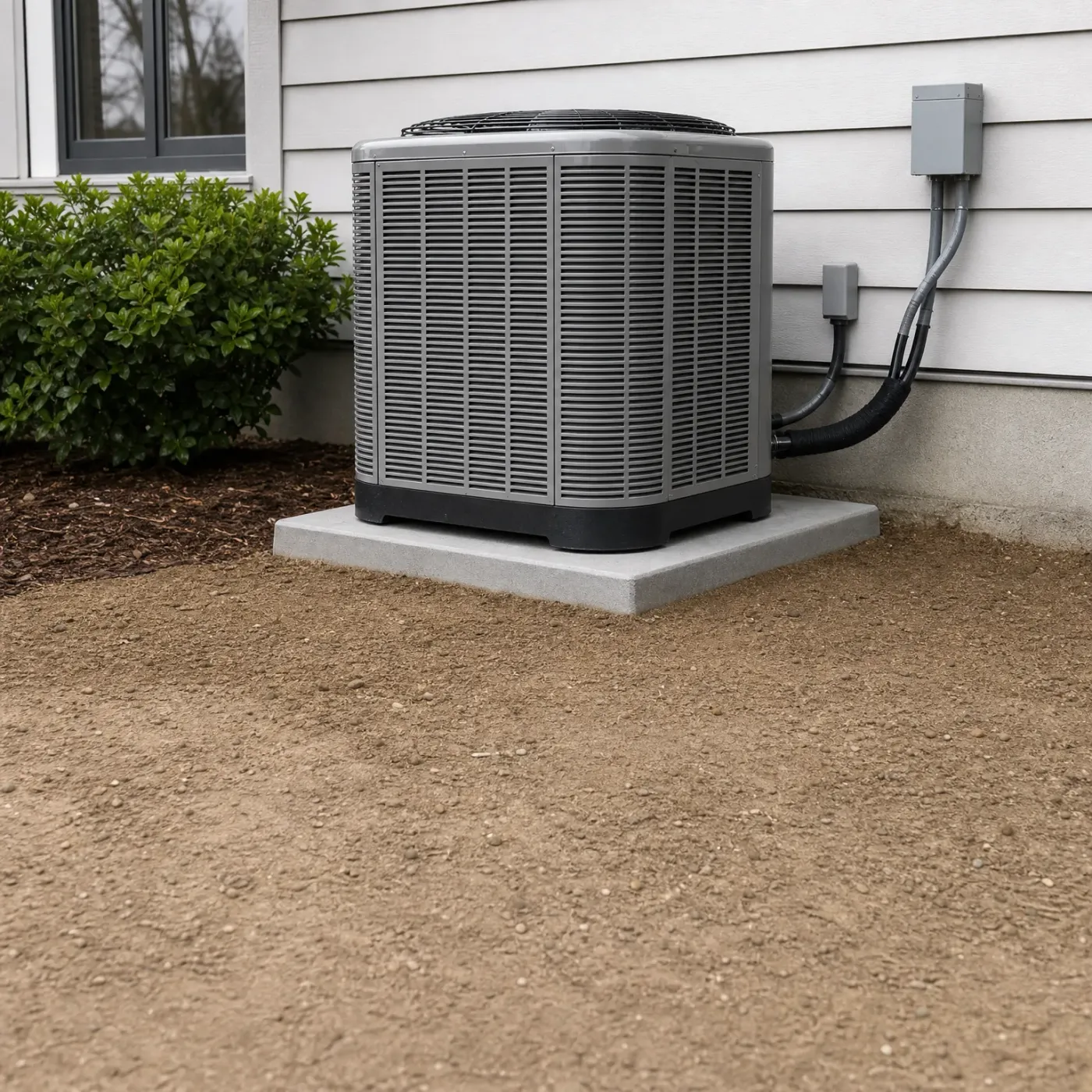
A gray outdoor condenser unit on a concrete pad beside a white horizontal-siding house, with refrigerant lines and conduit running to a wall-mounted disconnect box, bare soil in front and a green shrub at left.

Running the way it should

This unit sits clean on its pad, lines and conduit running straight to the disconnect. Nothing is leaning, nothing is caked with debris, and the pad underneath is level. A heat pump kept like this through an Illinois summer is doing what it was built to do, no more.

An outdoor air conditioner condenser unit on a concrete pad beside a house with horizontal lap siding, with a shrub to the left, bare dirt in front, and conduit and a metal disconnect box on the wall.

Signs it's past due

This one sits tight against the wall with little room for air to move around the coil. Crowded siding and ground-level growth block airflow the unit needs to work right, and that strain adds up over an Illinois summer. A qualified installer can tell you whether it's worth saving or time to put in something new.

A woman with shoulder-length brown hair wearing a beige knit cardigan sits in a gray upholstered armchair near a window, looking off to the side with a slight smile, with bookshelves blurred in the background.
A woman and a sleeping child wrapped together in a cream knitted blanket on a couch, with a potted plant, framed photo and lit lamp in the background.

A heat pump in Illinois runs both sides of the year, pulling heat into the house in January and pushing it back out in July. That doubles the hours on the compressor compared to a unit that only cools.

More run hours wear parts faster, so a heat pump here can need a repair sooner than the same unit would somewhere milder. It also means the cost of an inefficient unit shows up on your electric bill twice a year, not once.

Power costs 17.67 cents per kilowatt-hour statewide

At 17.67 cents per kilowatt-hour, every hour your heat pump struggles shows up fast on the bill. A unit low on charge or fighting a dirty coil draws more power to do the same job, and in Illinois that cost runs twelve months, not just summer.

EIA-861 2025 statewide residential average

Where Your Heat Pump Stands

  • A heat pump under ten years old with a single failed part, like a contactor or capacitor, is usually worth repairing.
  • A unit past ten years with a failing compressor or a refrigerant leak in the coil is usually worth replacing.
  • A heat pump that runs clean, with a level pad and straight lines, costs less to run through an Illinois summer than one fighting a dirty coil.
  • A local contractor who services heat pumps all year in Illinois knows which parts tend to fail first on units that run both seasons.
  • Sending one request means one licensed local contractor looks at your unit, not a handful of companies competing for the job.
  • Knowing where your unit stands lets you decide with the facts in front of you instead of guessing at the next repair bill.

The question you started with has a straightforward answer once you look at the unit itself. Age and what's actually failed tell you more than how long you've owned the house or how the system has sounded lately. A single part gone on a younger unit points to repair. A compressor on its way out or a coil leaking refrigerant on an older unit points to replacement, especially with a system that runs both January and July the way yours does. The run hours add up differently here than in a place that only cools, and that shapes which way the math leans.

What you do next matters more than it might seem. A heat pump that sits level, with clean coils and lines run straight to the disconnect, costs less to run through a muggy Illinois summer than one working against dust and a weak charge. Whichever way you go, repair or replacement, the work is worth having done by someone who sees this equipment all year, not just in July. A contractor who services heat pumps through Illinois winters and summers alike has seen which parts tend to go first on units that never really get a season off, and that familiarity matters when you want the job done right the first time.

Send one request and one licensed local contractor looks at your unit and gives you a straight read on where it stands. Not a handful of companies calling you back at once, just someone who knows this equipment and this climate, ready to tell you what they find.

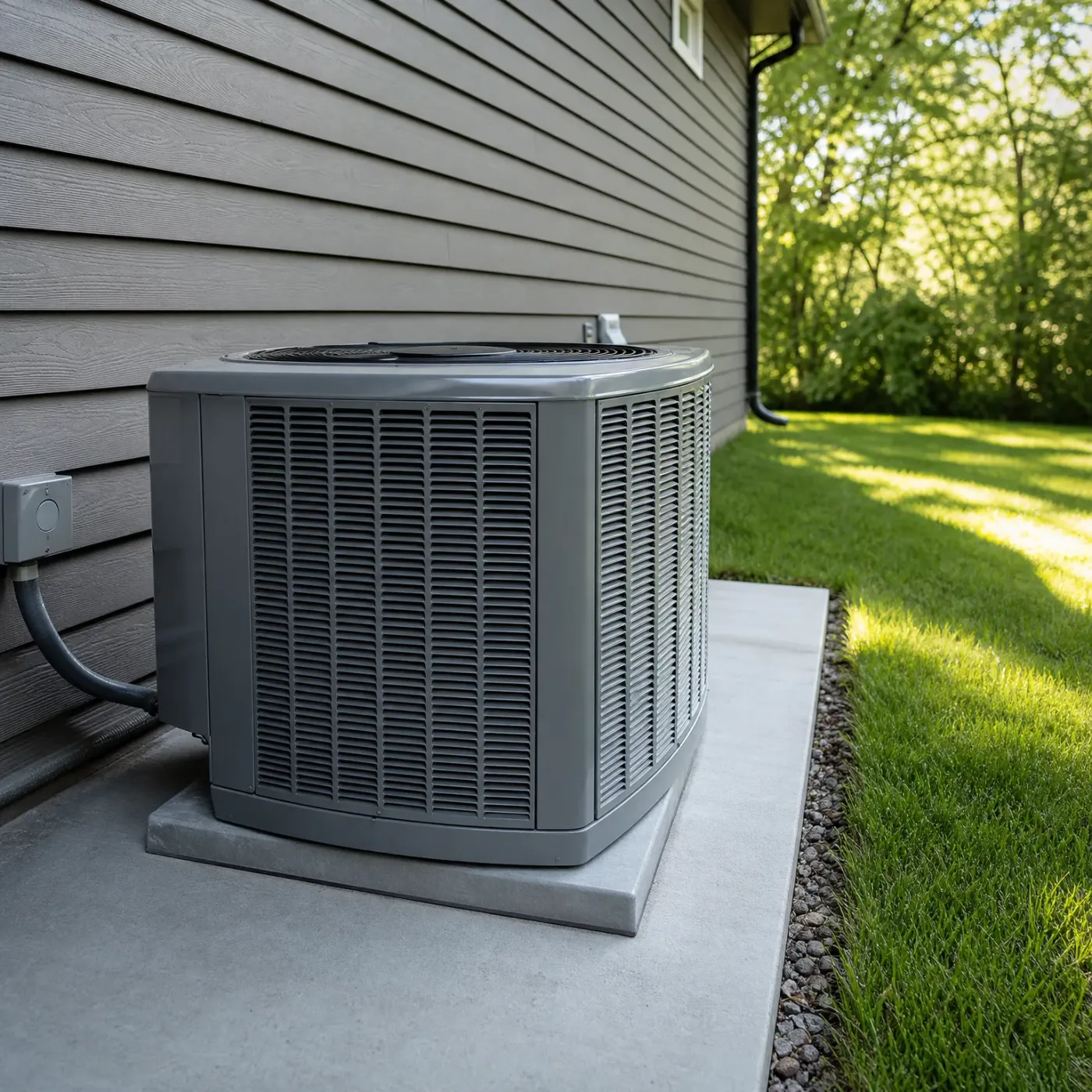
A gray outdoor air conditioner condenser unit on a concrete pad beside a house with horizontal lap siding, with an electrical disconnect box and conduit on the wall, a downspout, gravel edging and a green lawn with trees to the right.

Finding a pro stops being your job

Send my request

Your request goes to one pro, not a list of companies.

No charge to send it. You decide if you hire them.