Two systems in one cabinet
A gas furnace only has one job. A heat pump runs your heat and your AC, so a tune-up means checking twice the parts in one visit.
Get your heat pump to the right pro
Since most Illinois homes heat with gas, a heat pump running your heat and your AC is less common here, and a tune-up means different things depending on which job it's doing that day. This page covers what a thorough check looks like for both sides. If you'd rather hand the search off, you can get matched with a contractor who takes it from here.
Get my matchA heat pump tune-up checks both sides of the machine, since it heats your house in winter and cools it in summer. In summer, that means checking refrigerant charge, the condenser coil, and the fan motor, the same things a central AC tune-up covers. In winter, it means checking the reversing valve, the defrost control, and the outdoor coil for ice, since a heat pump that can't defrost itself properly will run constantly trying to keep up and your electric bill will show it. A technician also checks the thermostat settings and airflow through the ducts, since a heat pump moves more air than a furnace does to do the same job. Because Illinois winters push the system hard and summers here get sticky enough to run the AC side just as hard, a heat pump works more months of the year than most home AC or furnace units do, and skipping a season of maintenance shows up faster.




A gas furnace only has one job. A heat pump runs your heat and your AC, so a tune-up means checking twice the parts in one visit.
This is the part that switches the unit between heat and cooling. It only exists on a heat pump, and a furnace tune-up never touches it.
Watch for ice building up on the outdoor unit in winter that doesn't melt off during the day. Listen for the system running long stretches without the house ever feeling warm or cool enough. Notice a weak flow of air from the vents, or the system blowing air that isn't quite hot enough in January or quite cool enough in July. A hiss or a puddle near the outdoor unit is worth a look too. Since this one machine carries your heat all winter and your AC all summer, a problem that goes unchecked costs you twice, once in comfort and once on a power bill that's already high in Illinois.
A summer dew point averaging 63°F across June, July and August, per NOAA, means the air itself is heavy with moisture, not just hot. Your heat pump has to pull that moisture out of the air before the house actually feels cool, on top of dropping the temperature. That's more work than a dry 85 degree day asks of it. A tune-up that checks refrigerant charge and airflow matters more here than it would somewhere dry, since a system running low on charge or short on airflow will struggle to wring the moisture out, and you'll notice it as a house that's cool enough by the thermostat but still feels damp.
NASA POWER T2MDEW county cells weighted by homes
A heat pump tune-up starts with the charge. A tech connects gauges and checks refrigerant levels going both ways, since too little charge or too much hurts the unit whether it's making cold air in July or pulling heat out of cold air in January. Next comes the defrost cycle. The tech forces the outdoor coil into defrost and times how long it takes to clear, because a slow defrost means ice building back up before the cycle finishes. Electrical connections at the compressor and the reversing valve get checked and tightened. A loose connection there doesn't just cause a breakdown, it can strand the system in heat mode during a heat wave or in cooling mode during a cold snap. The crankcase heater gets tested too. Its job is keeping refrigerant from pooling in the compressor overnight when temperatures drop, and a heater that's failed quietly can lead to compressor damage that shows up months later. Airflow across the indoor coil gets measured with the system running, since weak airflow makes the system run longer to hit the same temperature, in summer and winter both. Last, the tech looks at the outdoor unit's footing. A pad that's settled or tilted throws off how water drains away when the unit defrosts, and that water can refreeze into ice around the base.
A heat pump runs on electricity for both jobs, heat and AC, so every cent on that rate matters twice as much as it would for a furnace. At 17.67 cents a kilowatt-hour, a dirty coil or a low charge that makes the unit run longer shows up fast on your bill.
EIA-861 2025 statewide residential average
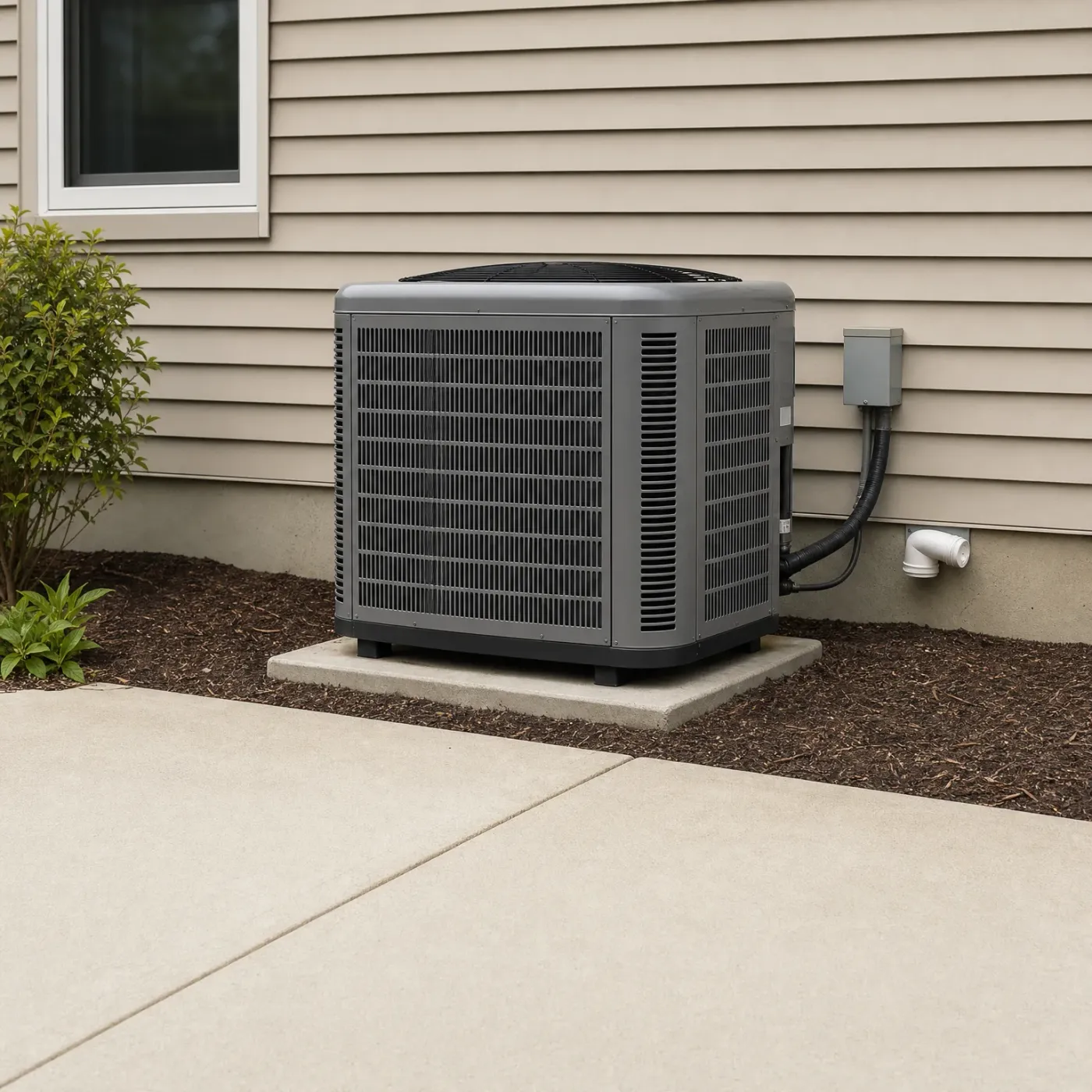
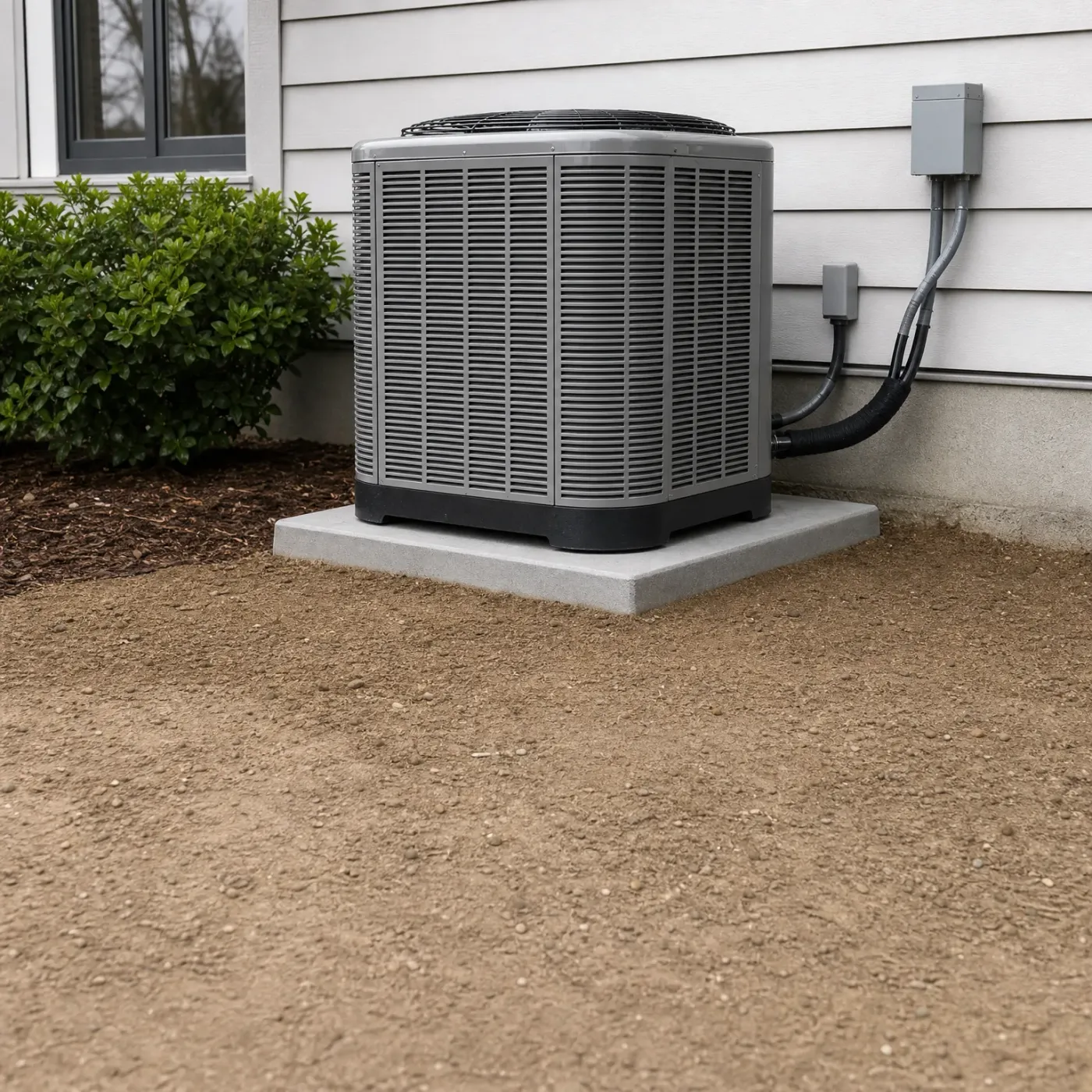
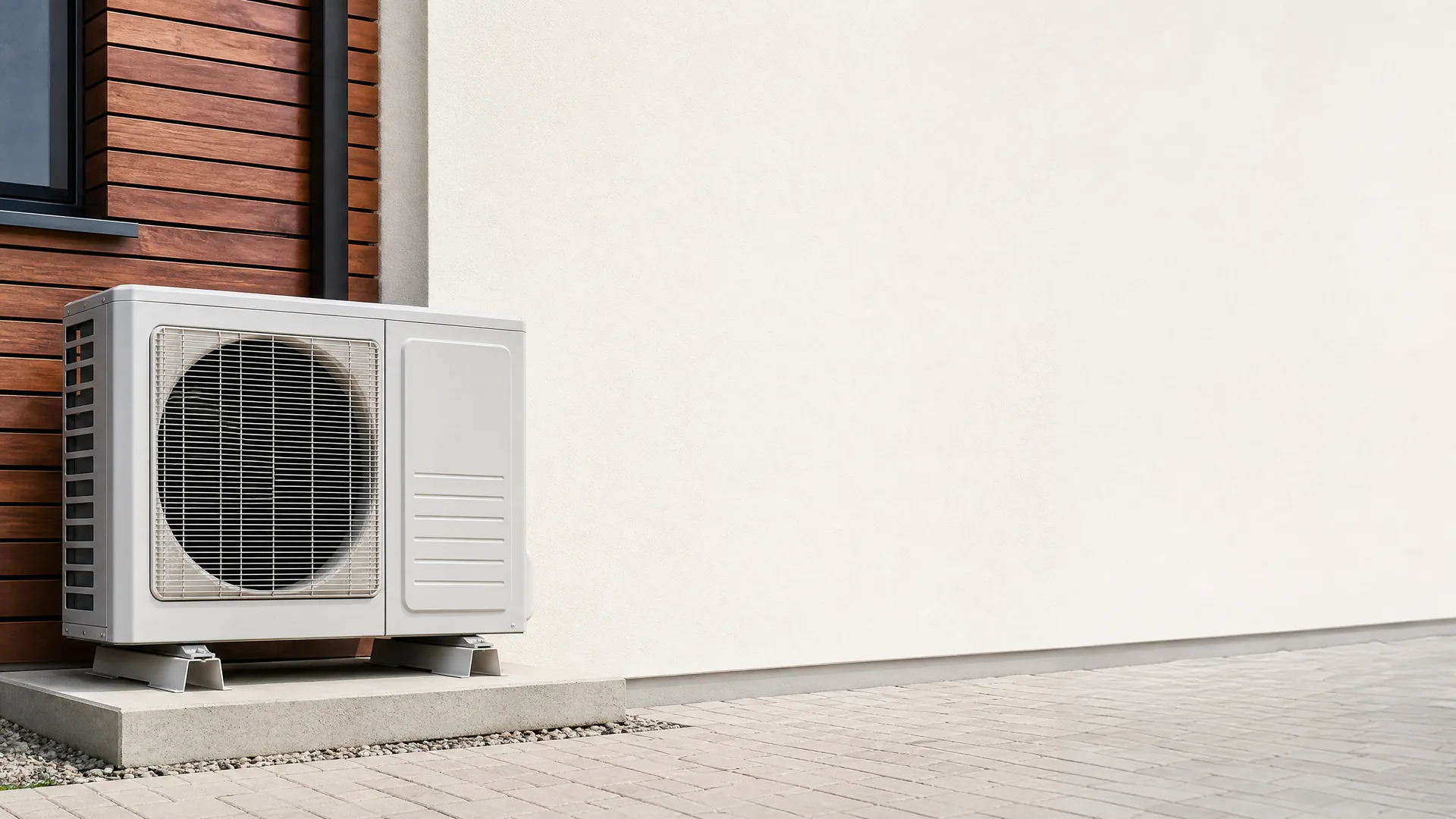
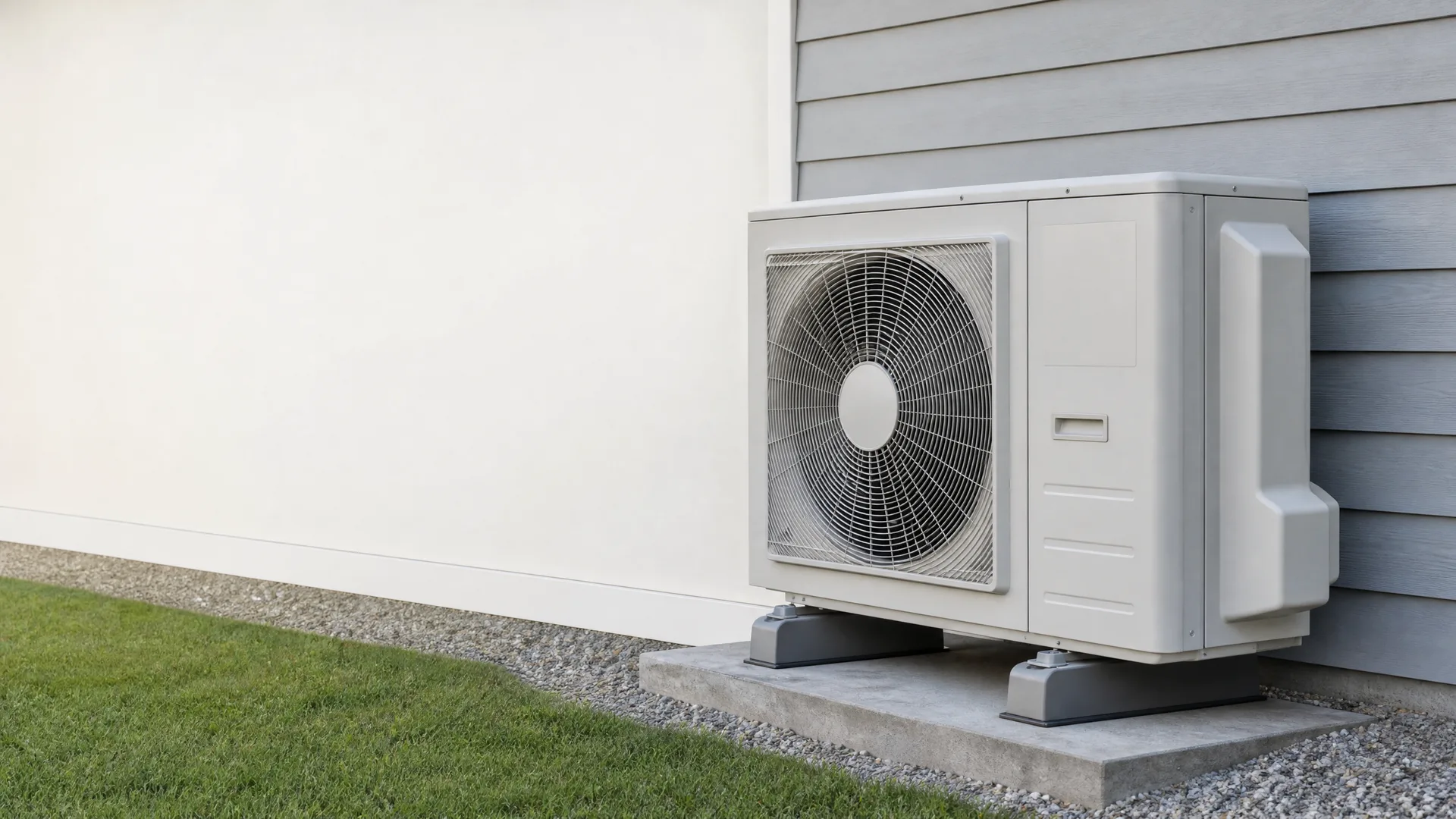
This unit sits clear on its pad, lines and conduit intact, nothing blocking the grille. Air moves through the coil the way it should, so the unit isn't working any harder than it needs to in July heat or a January cold snap.
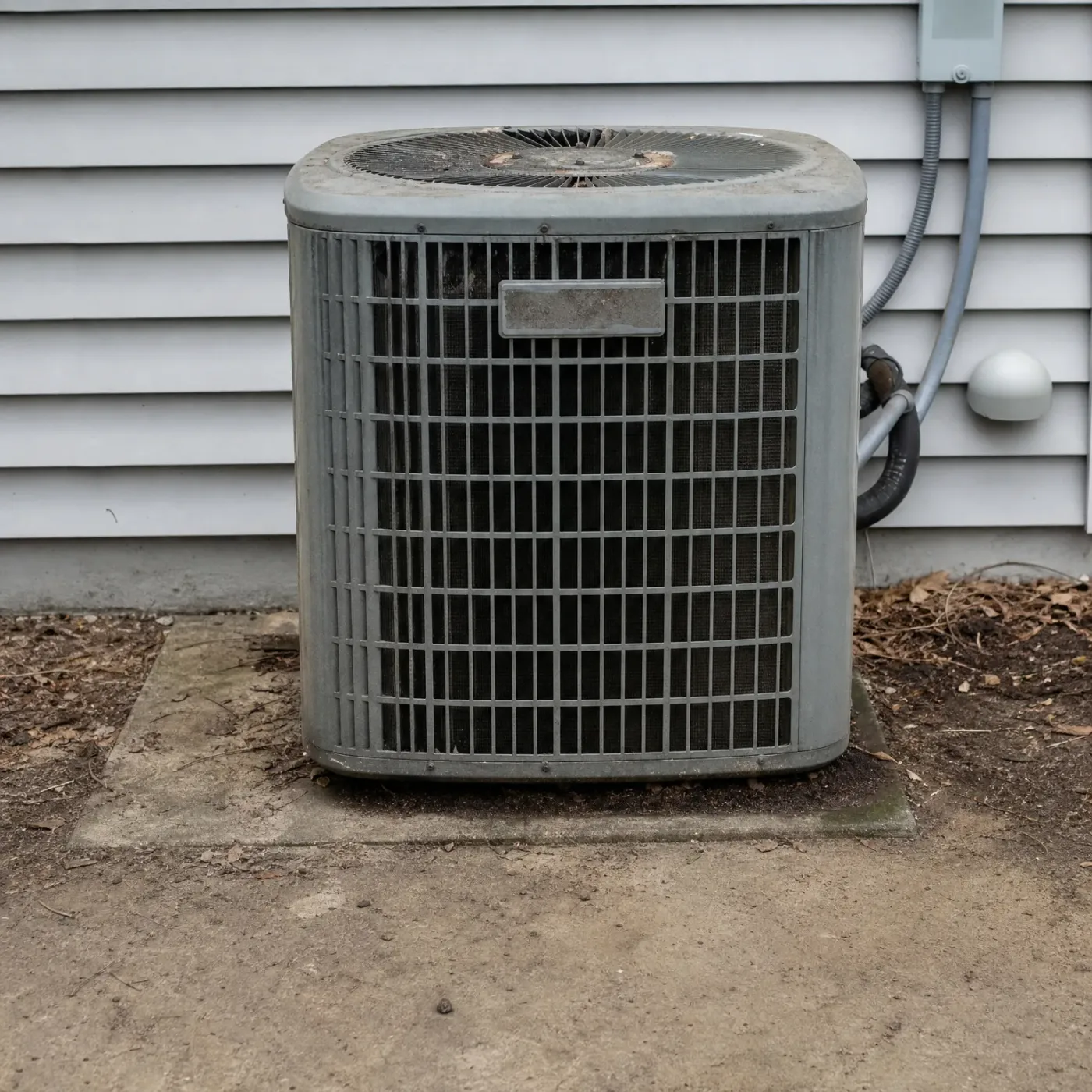
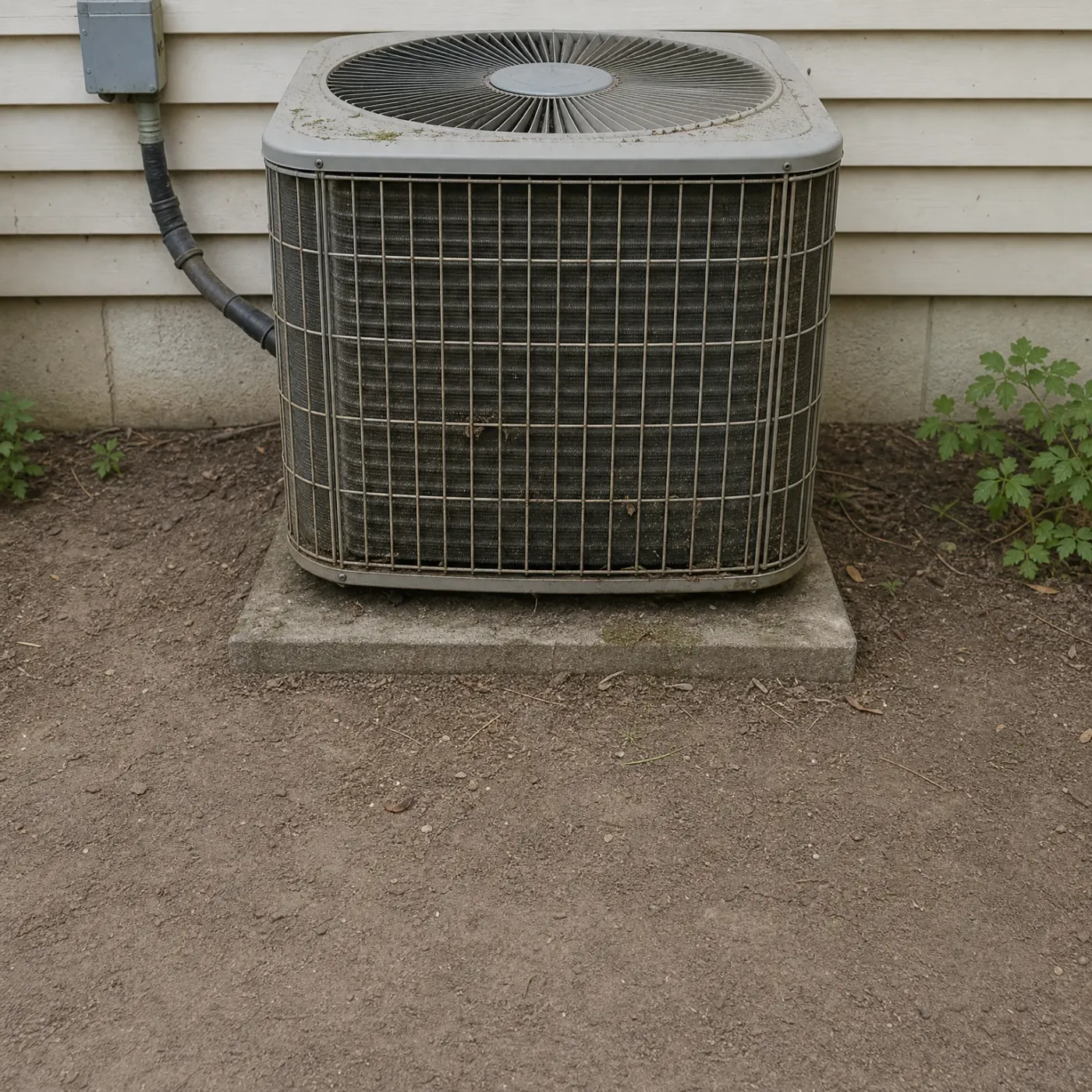
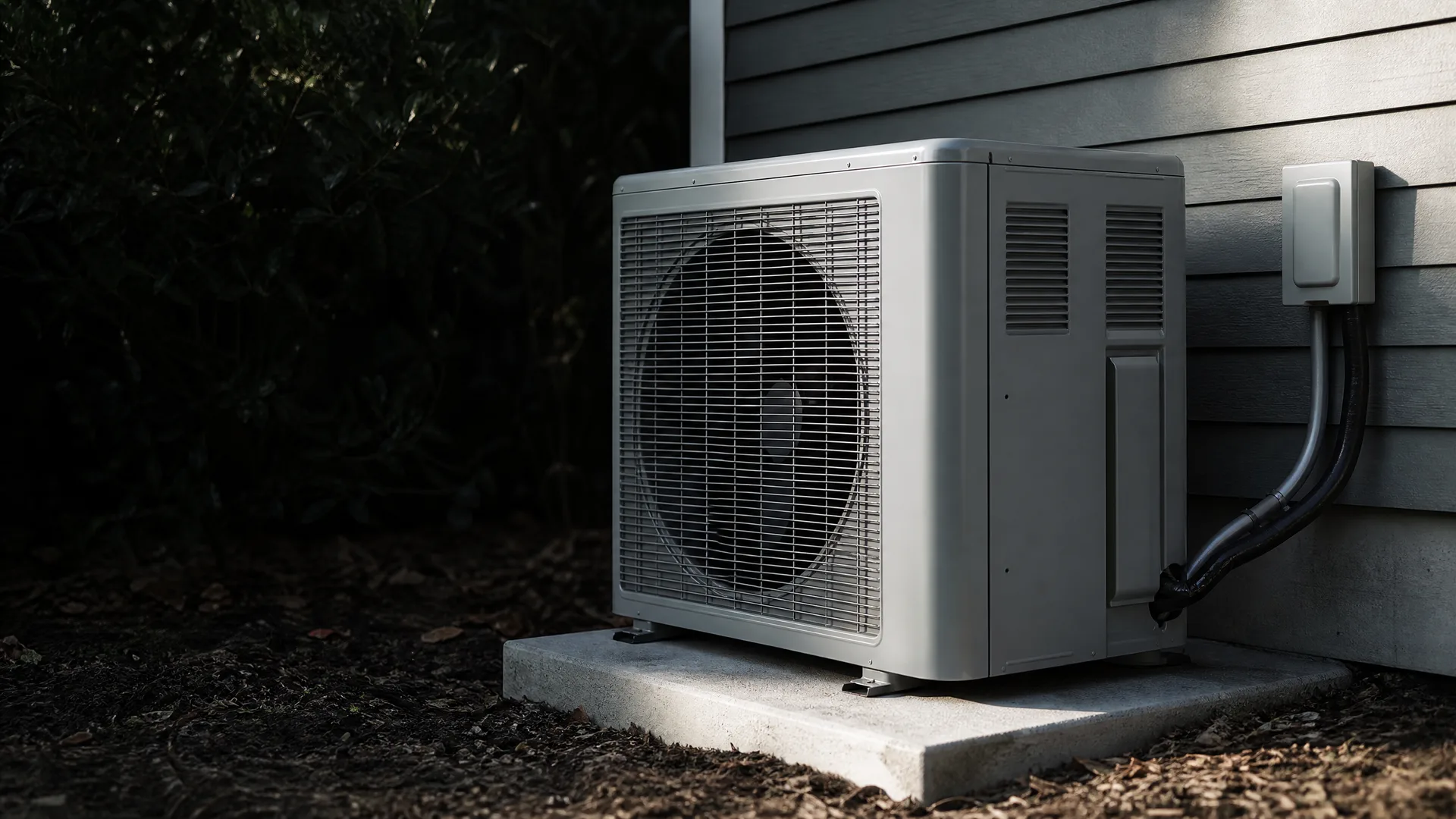
Dust and grime have built up across the grille and top panel, with dead leaves piled against the base. That buildup blocks airflow across the coil, so the unit strains to pull humidity out of summer air and struggles to pull heat from winter air.
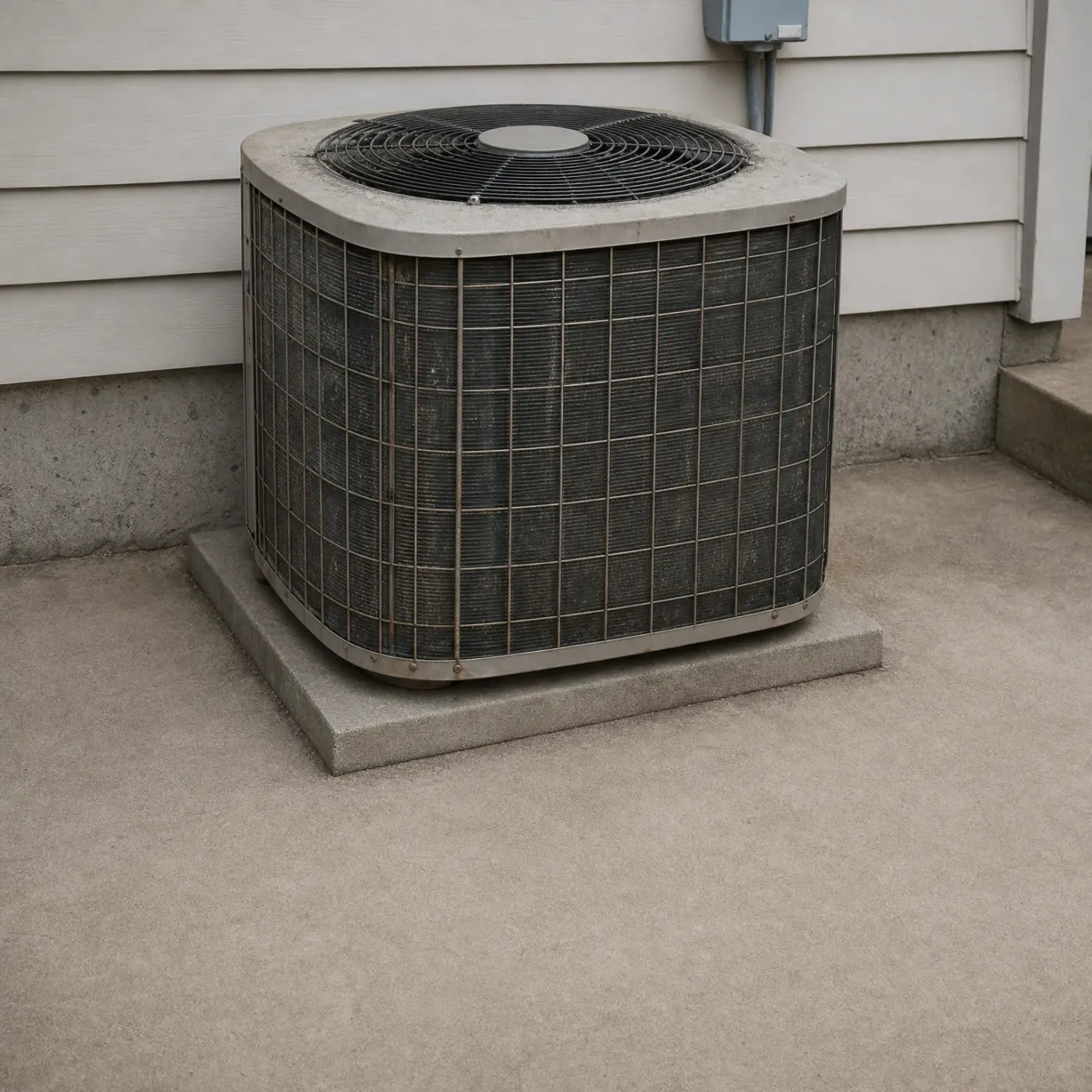
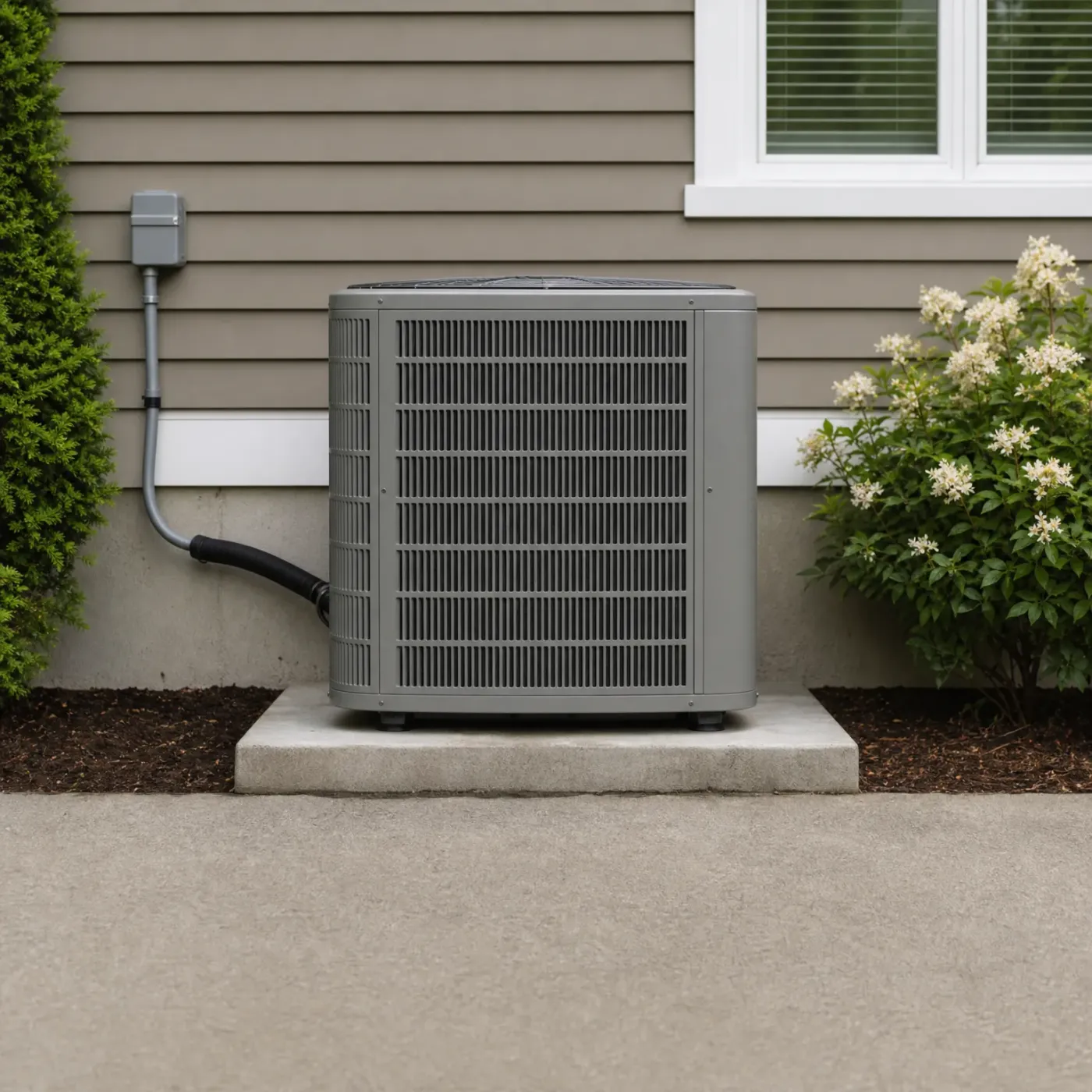
A heat pump carries the full load for your house, your heat and your AC both running on electricity at 17.67 cents a kilowatt-hour. When one side of that machine is working harder than it should, there's no gas furnace picking up the slack half the year to hide it. You feel it in July when the house won't quite cool down, and you feel it again in January when the air coming out feels lukewarm and the unit won't stop running. Finding a contractor who actually works on heat pumps regularly, rather than one who mostly services gas furnaces and treats your system as an afterthought, takes some digging on your own. Send the request and that search becomes someone else's job instead of yours. A contractor who knows both sides of this machine gets matched to your address, and from there it's their call to reach out about what your system needs.
The reversing valve sticks instead of switching clean. Refrigerant has drifted low without anyone noticing, so the system runs long and still falls short. Ice holds on the outdoor coil past noon in January. The electric strips kick in more than they should to cover what the heat pump can't, and that cost shows up at 17.67 cents a kilowatt-hour on both your winter and your summer bill.
The valve switches the moment the thermostat calls for it, no hesitation between heat and cooling. Refrigerant sits where it should, so the coil pulls summer humidity out of the air without straining and recovers heat in January without help from backup strips. The outdoor unit defrosts on schedule and gets back to work. The system runs the hours it's supposed to run, not more, and the bill reflects that.
Technician shuts down power to the outdoor unit first.
Outdoor coil gets washed clean of dirt and grass clippings.
Refrigerant charge gets checked with gauges on the lines.
Reversing valve gets cycled to confirm it switches clean.



A heat pump tune-up means someone checks the refrigerant charge, the reversing valve, the defrost cycle, and the electrical connections, because your unit has to switch between heat and cooling without missing a beat. Skip it and the signs show up as ice that won't melt off in January or a house that never quite feels right in July. Keep up with it and the reversing valve switches clean, the charge sits where it should, and the compressor isn't straining to do either job.
If you're not sure where your own system stands, that's worth finding out before the next change of season catches it off guard. Submitting your information here means a contractor who works on heat pumps in Illinois reaches out to you directly, with your situation in hand, so you're not the one tracking someone down.

A heat pump pro near you