




What auxiliary heat means on an Illinois heat pump

Tell a local repair pro what your heat pump is doing.

Step 1 of 3: Equipment

What does auxiliary heat mean on my heat pump?

You saw "aux heat" light up on your thermostat and want to know what it means. You're not wrong to check it out before it turns into a bigger problem or a bigger bill. On a cold Illinois morning, that light coming on isn't automatically bad news, but it's worth understanding what your system is actually doing when it switches over.

It means your heat pump can't pull enough heat from the outside air by itself

A heat pump moves heat from outdoors into your house, but that gets harder as the temperature drops. Once it's cold enough outside, the system can't keep up with the heat you've set on the thermostat, so a backup heat source kicks in to make up the difference. In most homes that backup is electric resistance heat, and it costs more to run than the heat pump itself. Since Illinois winters push well below freezing for stretches, you'll likely see that aux light during the coldest months. Seeing it once in a while during a cold snap is normal. Seeing it on mild days, or constantly, usually means the heat pump itself isn't pulling its weight anymore.

A woman in a cream cowl-neck sweater sits by a window with snow outside, in a dimly lit living room with a sofa, lit lamp, mirror, candles and a fireplace.
A woman in a gray turtleneck sweater sits beside a large window looking out at snow-covered evergreen trees, in a dimly lit living room with a lit fireplace, lamps, couch and houseplant.
A woman in a cream turtleneck sweater stands beside a large window with snow-covered ground and bare trees outside, in a dimly lit living room with lamps, a sofa and framed art.
A woman in a grey cowl-neck sweater stands indoors near a window, looking out at falling snow, with a lamp, framed picture and couch in the warmly lit room behind her.

Aux Heat: Normal or Trouble

Aux heat working right

  • The light comes on when it's cold enough outside that the heat pump alone can't keep up with the temperature you set.
  • It clicks on during defrost, when the system briefly reverses itself to melt ice off the outdoor coil and needs backup heat to cover the house.
  • It should go off again once the house reaches the set temperature or the outdoor temperature climbs back up.
  • In most Illinois homes the backup is electric resistance heat, which costs more to run than the heat pump alone, so short bursts are normal.
  • If you set the thermostat up several degrees at once, aux heat will kick in to close that gap fast, then shut off.

Aux heat signaling a problem

  • The light stays on for hours at a time instead of cycling off, even when it isn't especially cold out.
  • Your heat pump runs constantly outside but the house still feels cold, which means it's losing the fight to keep up on its own.
  • Aux heat is running on a mild day in the 40s or 50s, when the heat pump should be able to handle the load by itself.
  • The electric bill has jumped noticeably from one month to the next with no change in the weather.
  • You hear the outdoor unit short cycling, turning on and off in quick bursts instead of running steadily.
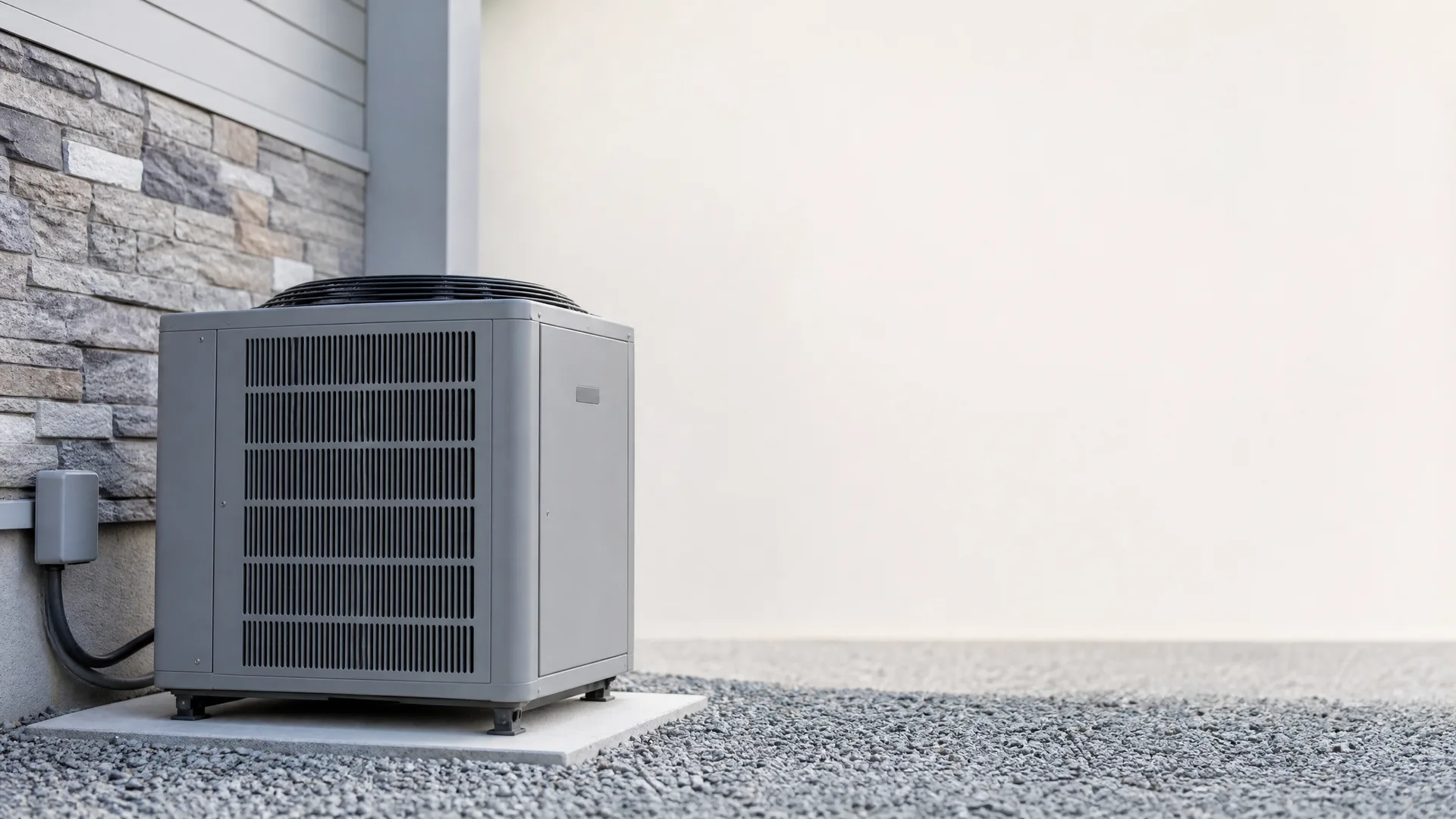
A gray outdoor condenser unit on a concrete pad beside a house with stacked stone and horizontal siding, surrounded by gray gravel and a plain light wall.

How the switch to aux heat works

A heat pump moves heat from the outside air into your house. Once the outdoor temperature drops far enough, usually somewhere in the 30s, there isn't enough heat left in that air to pull from efficiently. The thermostat senses the gap between the air coming out of your vents and the temperature you set, and it brings on the backup heat, usually electric strips, to make up the difference. That's the aux signal you're seeing.

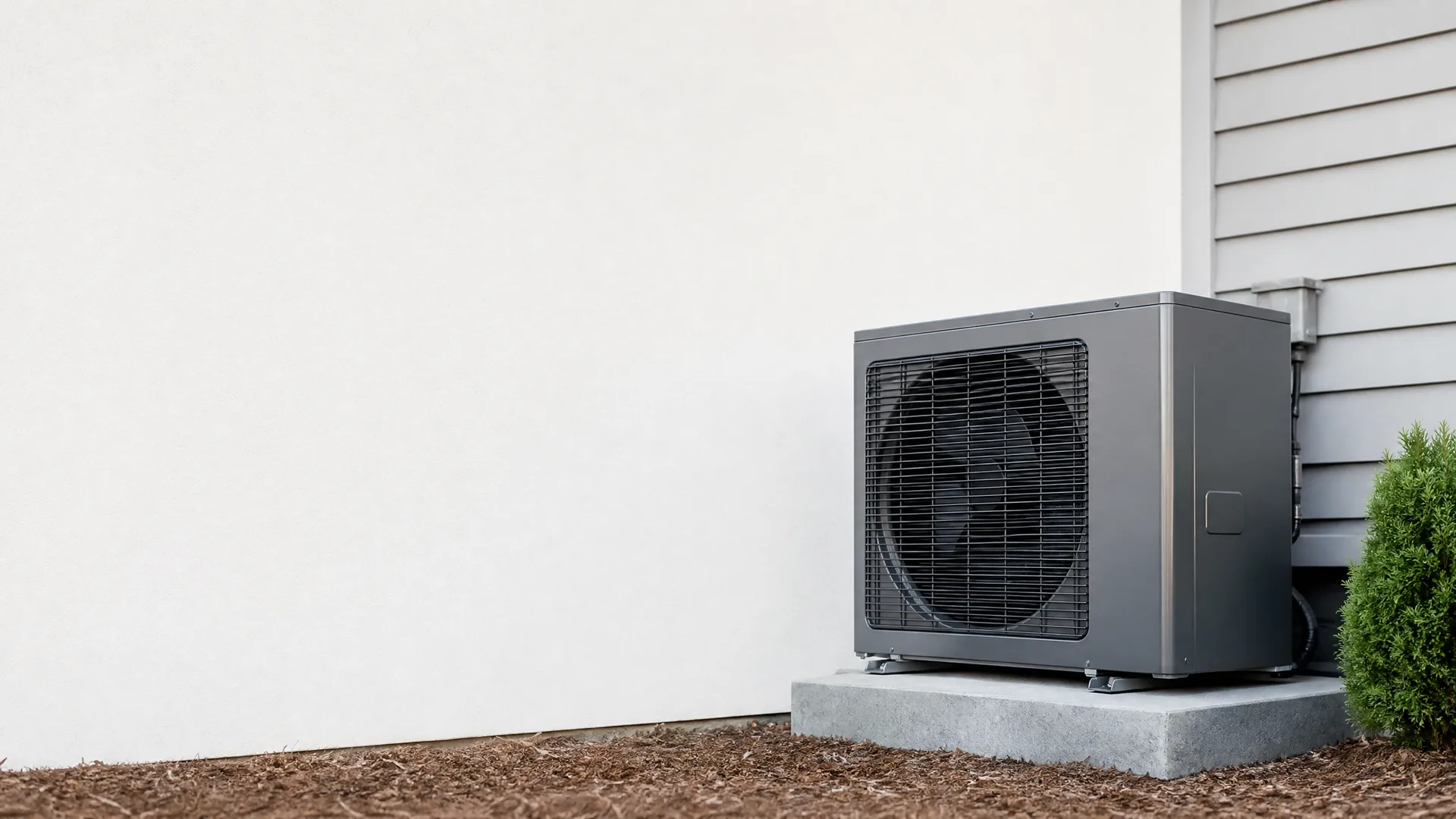
A dark gray outdoor heat pump unit sits on a concrete pad beside a white stucco wall and lap-sided house corner, with mulch and a small shrub in the foreground.

Why the light can mean trouble

Aux heat is supposed to be occasional help on the coldest days, not the main source of heat in your house. If that light stays on when it's 40 or 45 degrees out, something is making the heat pump work harder than it should, a low refrigerant charge, a failing compressor, or a reversing valve stuck in the wrong position. Electric strip heat costs more to run than the heat pump itself, and with power rates in Illinois, a stuck or constant aux signal shows up fast on your bill.

A woman stands in the open front doorway of a single-story house with stone and wood siding while a man in a dark polo shirt and cap walks toward it along a concrete path.

What it means for your bill

Aux heat on an Illinois heat pump usually means electric resistance heat, the same kind as a space heater, and it draws a lot more power than the heat pump running on its own. If the light sits on for an hour during a cold snap, you'll likely notice it on the bill, especially with power priced the way it is here. A short stretch of aux heat during a defrost cycle is nothing. A system stuck in aux heat all day, every day, is a different story.

If you're watching the thermostat more than you used to, or the light stays lit well past what seems like a cold morning, that's worth a second look before it turns into a season of high bills. A contractor who knows heat pumps can check whether your system is switching over too early, which usually points to something fixable rather than just how the equipment runs in Illinois winters. Getting matched with one means you skip calling around and re-explaining the thermostat light to every company in the phone book.

A speckled beige ceramic vase holding thin dried branches sits on a round wooden table near a window with sheer curtains, with a dark upholstered chair and draped blanket blurred in the background.
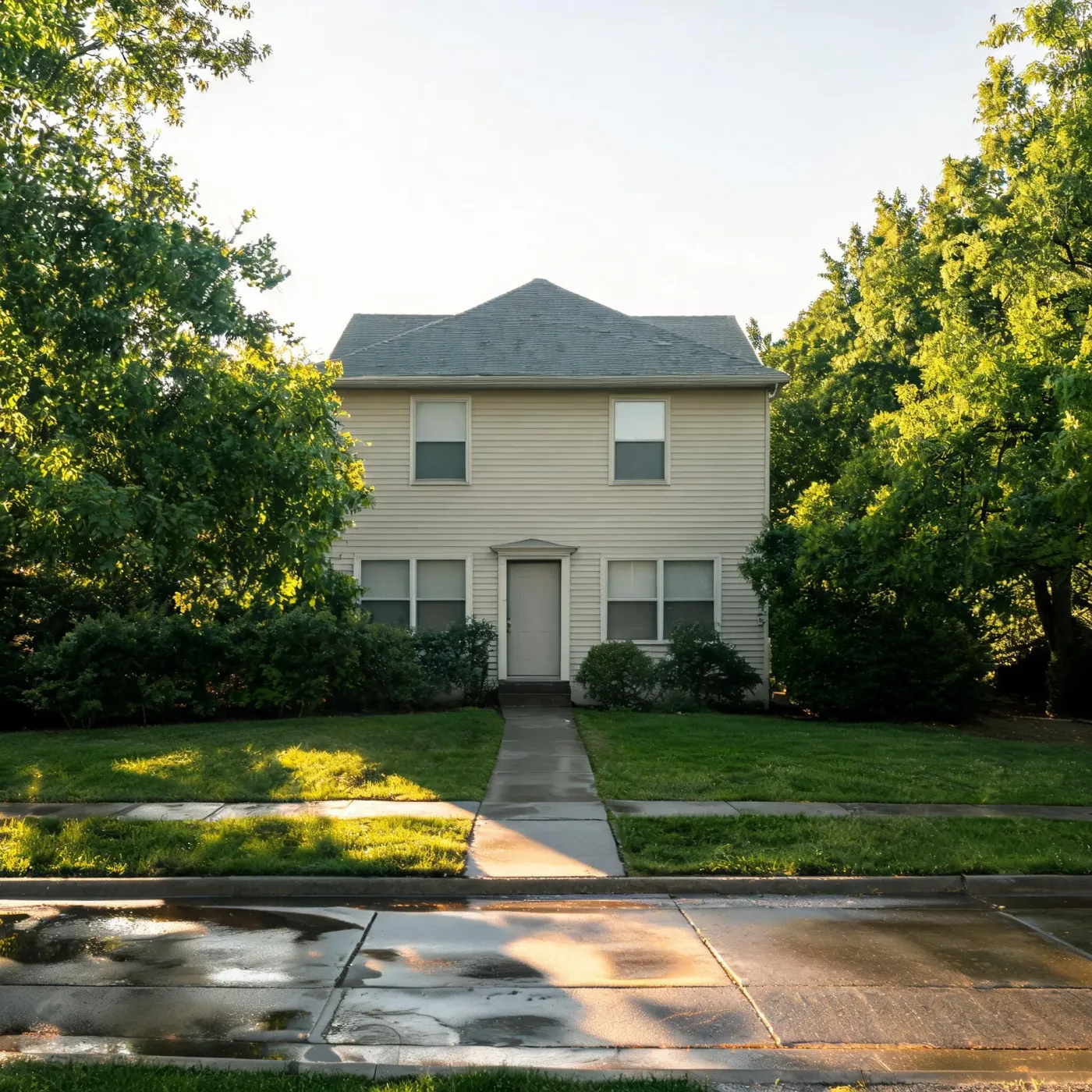
A two-story cream-colored house with horizontal siding and a gray hipped roof, flanked by large green trees and shrubs, with a concrete walkway crossing a lawn to a wet street in the foreground.

Summer here is a different season for this system, but it still tells you something about how the heat pump is built. Averaged across Illinois, the summer dew point runs 63°F in June, July and August, according to NOAA climate records, which is the sticky, heavy-air kind of summer that makes your AC run long hours. That same outdoor unit is what switches to heating mode and pulls warmth from the air every winter. A unit that's been working hard pulling moisture out of thick summer air all season is a unit worth having checked before the cold sets in and leans on aux heat to cover for it.

NASA POWER T2MDEW county cells weighted by homes

A heat pump pro near you

One form replaces the calls you'd make to find a heat pump pro.

Sending the form costs nothing.

Aux heat kicks on now and then

That light flashes on during a cold snap or a defrost cycle, runs for a while, and goes off again once the heat pump catches up. You check the thermostat, see it's doing what it should for how cold it is outside, and move on. If this is the pattern, the system's working the way it was designed to. Nothing here needs a service call. Keep an eye on it through the winter, and if the pattern changes, that's worth noting, but on its own this isn't a reason to pick up the phone.
Aux heat won't turn off

The light stays lit through mild weather, or it's on for hours when it used to run for twenty minutes. That's the heat pump telling you it can't keep up on its own, and electric resistance heat is covering the difference at a much higher cost on your bill. A low refrigerant charge, a failing component, or a thermostat that's lost its calibration can all cause this. Instead of tracking down a contractor yourself, calling around, and explaining the problem more than once, you can get matched with one who handles heat pumps like yours and let them reach out to you.

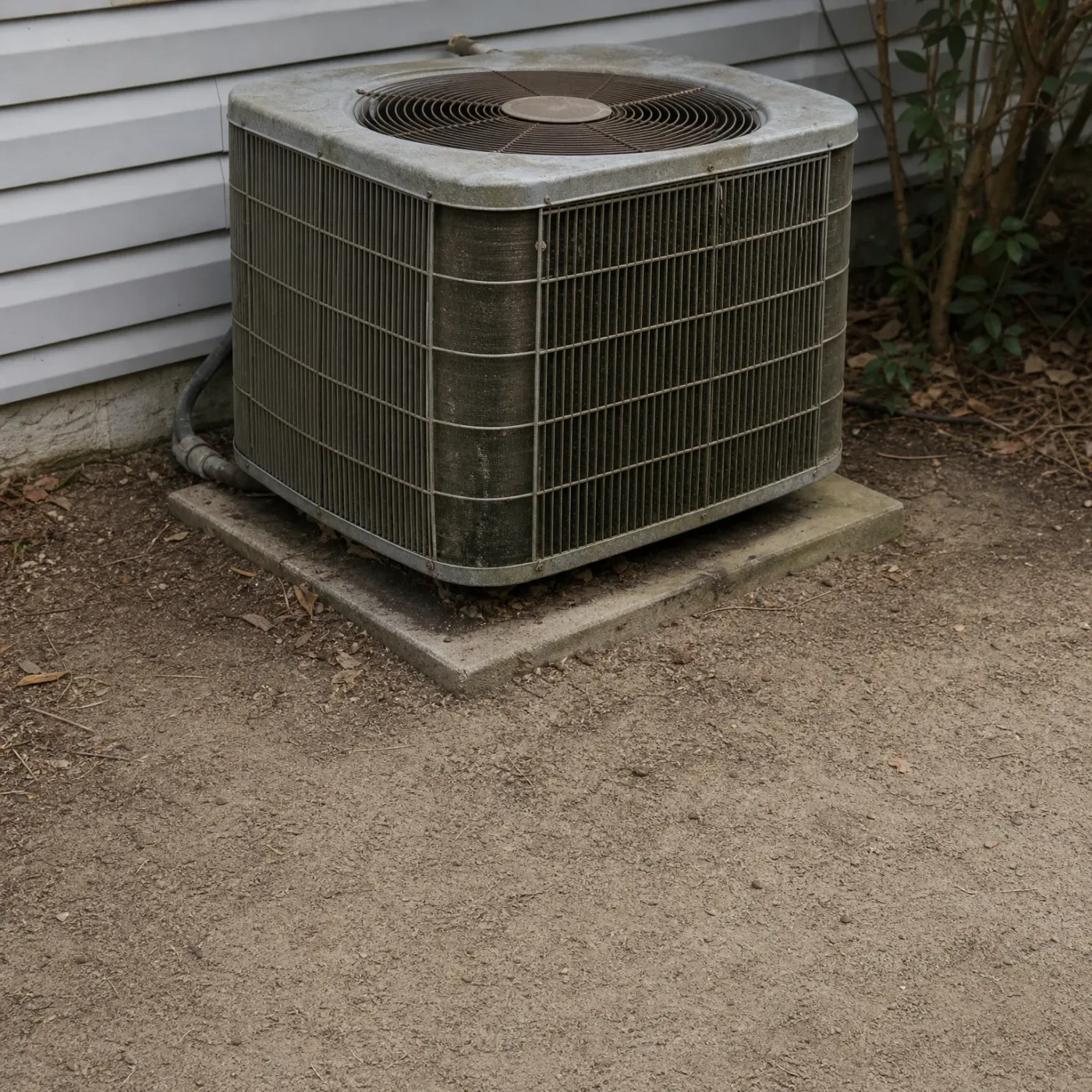
A weathered outdoor condenser unit on a concrete pad beside a house with light horizontal siding, surrounded by bare dirt and a shrub.
Before you get your heat pump repair
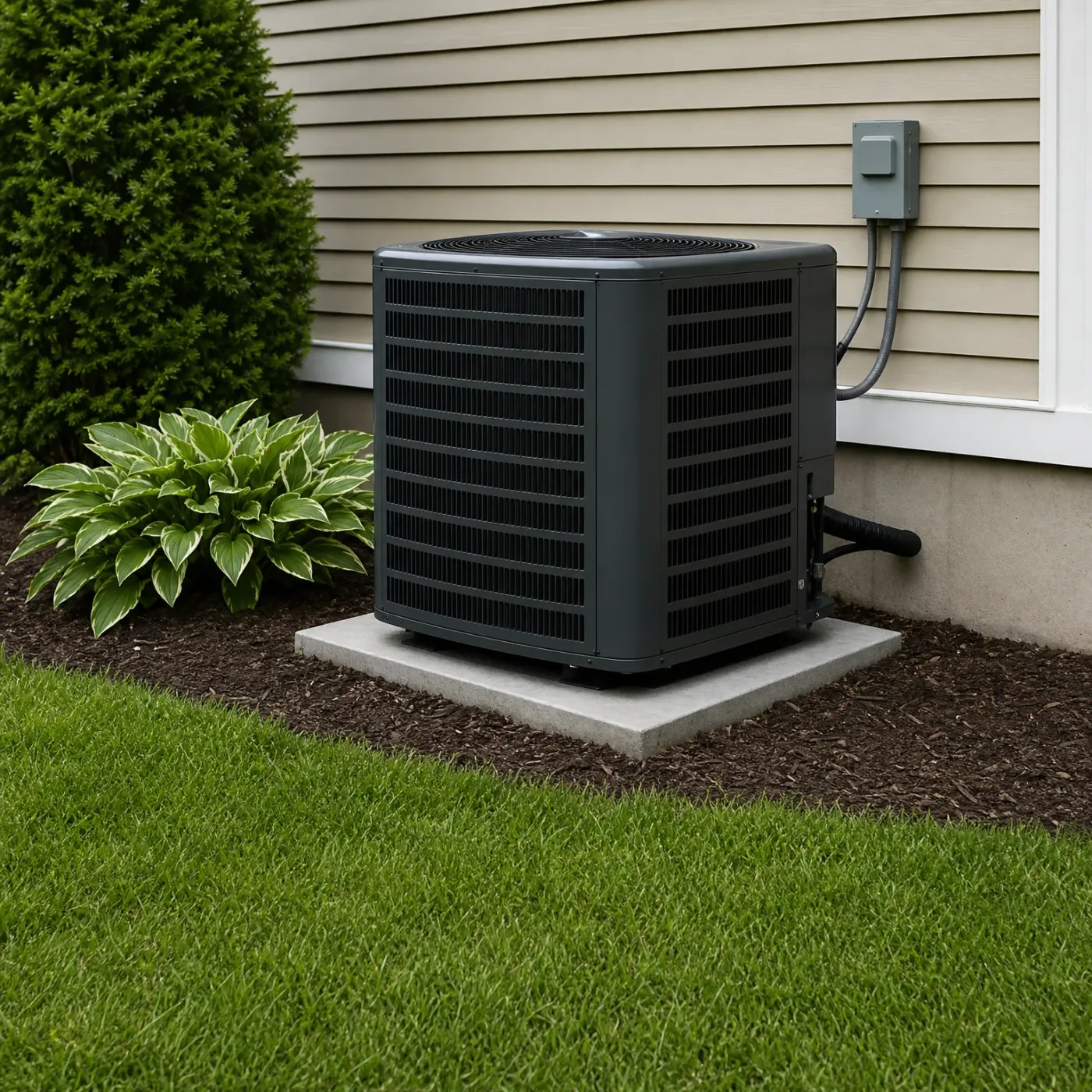
A dark gray outdoor condenser unit on a concrete pad beside a house with beige horizontal siding, with a gray electrical disconnect box and conduit on the wall, mulch beds, a hosta plant, a shrub, and mowed lawn in front.
After you get your heat pump repair

What's actually happening inside the system

  • The thermostat has two separate calls: one for the heat pump's compressor and one for the heating element, and aux heat means the second one fired.
  • Inside the air handler, aux heat usually means a bank of electric resistance coils, the same heating principle as a toaster, wired directly into the 240 volt circuit.
  • A defrost cycle forces aux heat on for a few minutes so the house isn't blowing cold air while the outdoor coil thaws itself out.
  • Some systems label this stage "emergency heat" instead, and on those thermostats that setting locks out the compressor entirely and runs on the coils alone.
  • The outdoor unit's reversing valve is what lets the same system pump heat in winter and pull it out in summer, and aux heat doesn't touch that valve at all.
  • A stuck contactor or a failed defrost board can make aux heat run far longer than the outdoor temperature calls for.

Your thermostat isn't one switch, it's two. One call goes to the outdoor unit's compressor, the part that moves heat from the outside air into your house. The other goes straight to a heating element sitting inside the air handler, usually a bank of electric coils wired into their own 240 volt circuit, working the same way a toaster does. When you see the aux heat light, that second call has fired, either because the compressor needs backup on a cold morning or because the system is running a defrost cycle. Defrost happens when ice builds up on the outdoor coil. The system reverses itself for a few minutes to melt that ice off, and since it can't heat your house while it's doing that, it leans on the coils so you're not stuck blowing cold air during the cycle. If your thermostat has a separate "emergency heat" setting, that's a different mode. It cuts the compressor out of the picture entirely and runs the house on the coils by themselves, usually meant for when the outdoor unit has a problem and shouldn't be running at all. None of this touches the reversing valve, the part that lets the same outdoor unit put heat into your house in January and pull it back out in July. That valve just keeps doing its job in the background. What shouldn't happen is aux heat running on and on with no cold snap or defrost cycle to explain it. That points to a stuck contactor or a failed defrost board telling the system it needs backup when it doesn't.

A bearded man in a plaid flannel shirt sits indoors looking out a window at snow-covered trees, with a steaming mug on the sill and wooden kitchen shelves behind him.
A man in a blue T-shirt sits on a light gray sofa, laughing while looking at an open laptop in the foreground, with a framed picture, lamp and potted plant behind him.

Is the aux light trying to tell you something?

You might notice the light stays on longer than it used to, even on days that aren't especially cold. Maybe the air coming out of the vents feels warm but the house still takes a while to catch up, or your last electric bill jumped more than the weather seems to explain. Some households notice the outdoor unit caked in ice and staying that way instead of clearing itself during a defrost cycle. None of this means the heat pump is failing outright, but a system that leans on aux heat more than it should is usually asking for a look. Left alone, that pattern tends to show up again in the next bill, not in a sudden breakdown.

A gray outdoor condenser unit on a raised pad beside a house with horizontal lap siding, with refrigerant lines, conduit and an electrical disconnect box on the wall, and shrubs on a mulch bed to the left.
A clean coil like this lets the heat pump pull heat from outside air without leaning on aux heat to make up the difference.
An outdoor air conditioner condenser unit on a gray composite pad beside a house with horizontal lap siding, with refrigerant lines and a conduit running to a wall-mounted disconnect box, and a shrub at left.
Dirt packed into the coil like this blocks that heat transfer, so the system calls for aux heat more than it should.

Power costs 17.67 cents per kilowatt-hour statewide

At 17.67 cents a kilowatt-hour, those electric resistance coils add up fast every time aux heat runs. A heat pump sips power compared to that backup element, so a light that stays on for hours during a cold stretch is worth checking rather than watching all winter.

EIA-861 2025 statewide residential average

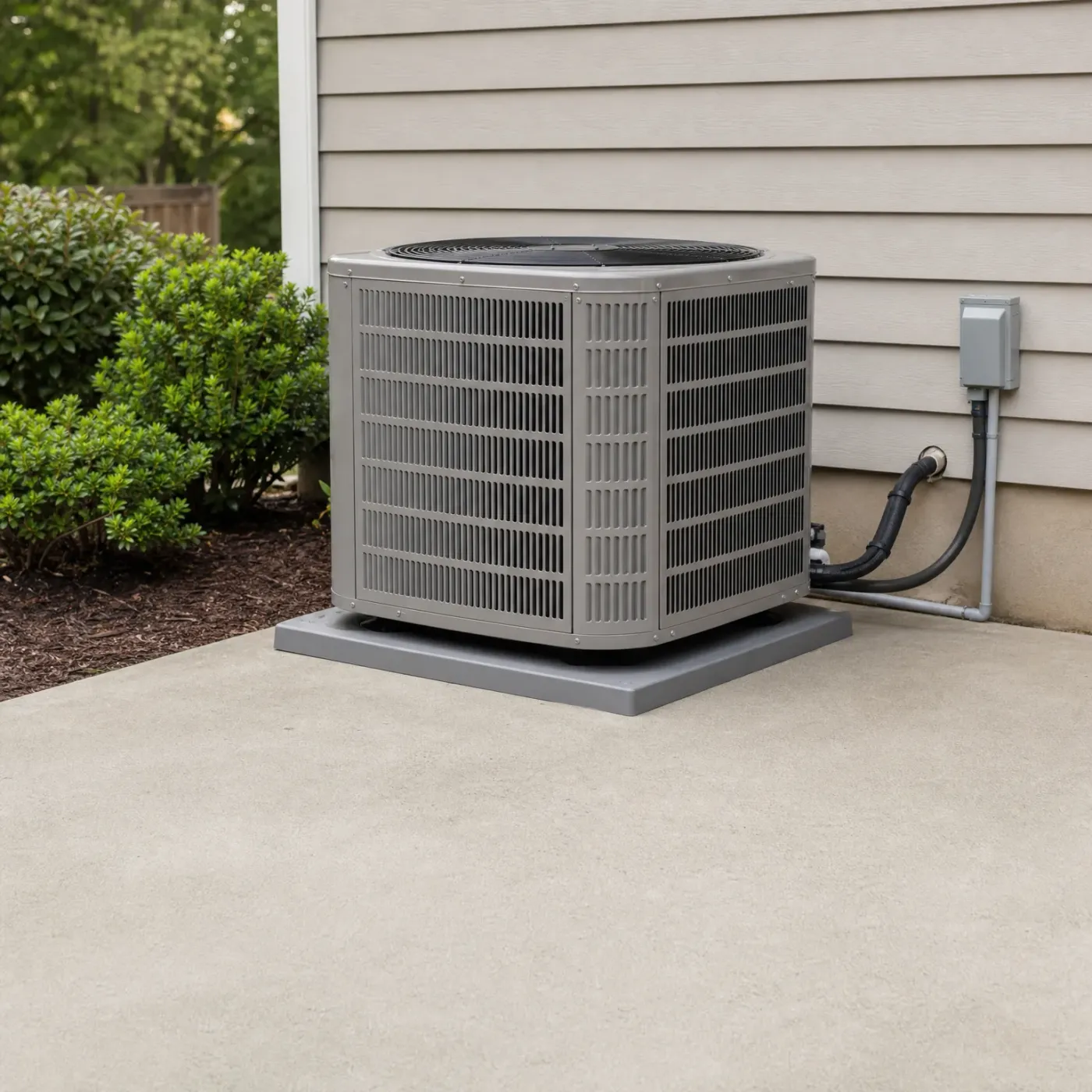
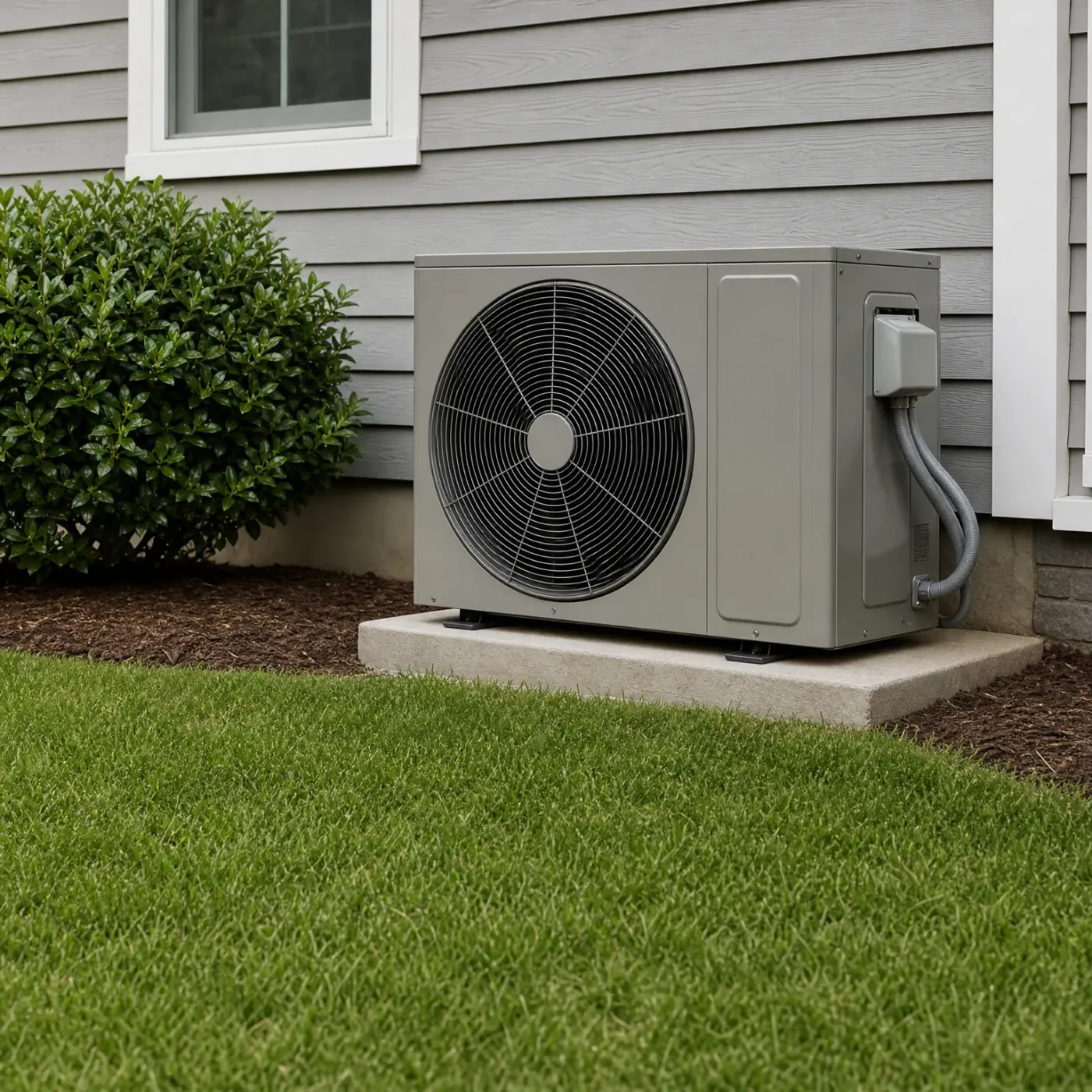
A gray outdoor heat pump unit with a large fan grille sits on a concrete pad beside a house with horizontal lap siding, next to a green shrub, mulch bed, and lawn.

The outdoor unit doing its job

This is what a healthy heat pump looks like sitting outside your house. The grilles are clear, the pad is level, and the lines running into the wall are intact. A unit kept like this pulls heat from outside air without passing the load to those electric coils.

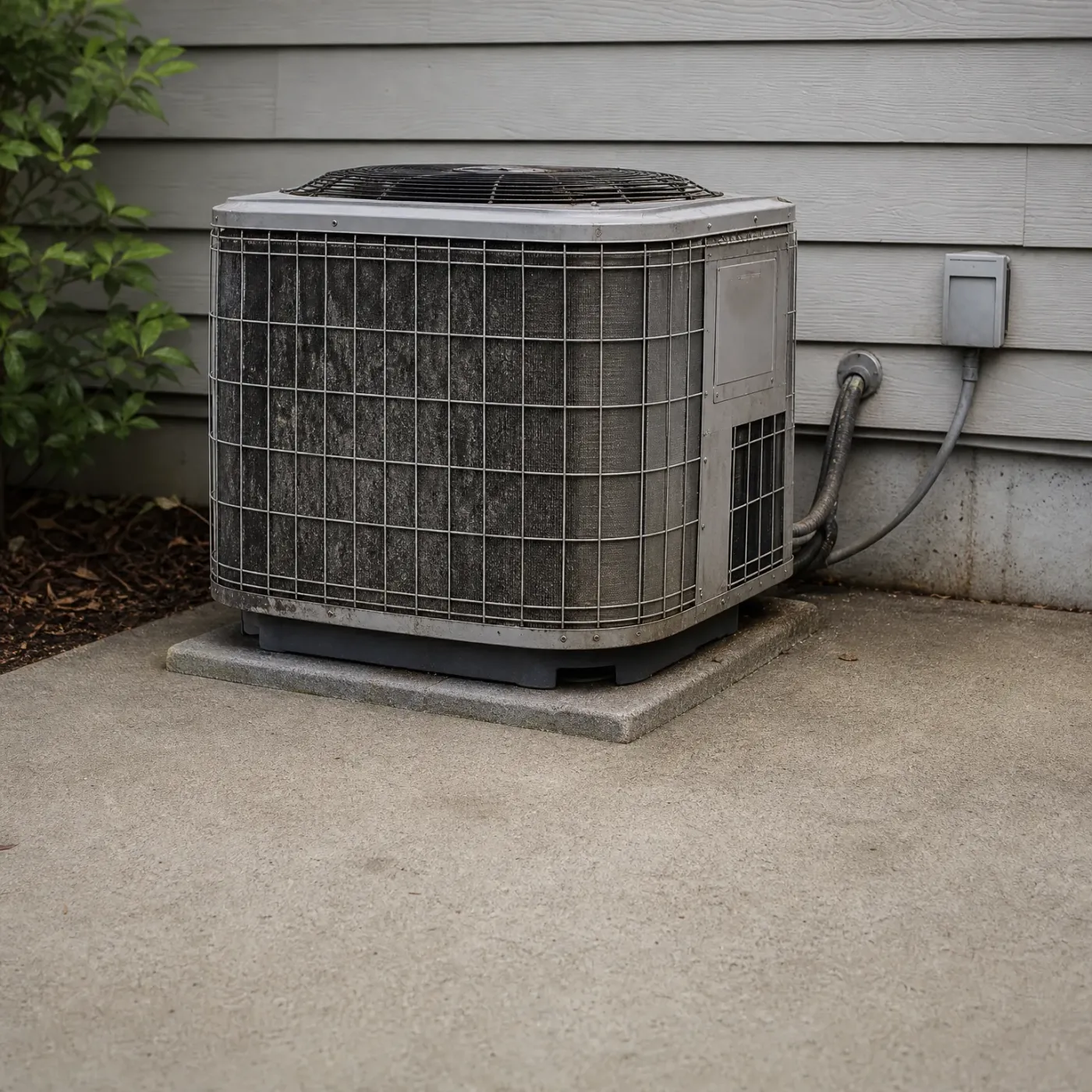
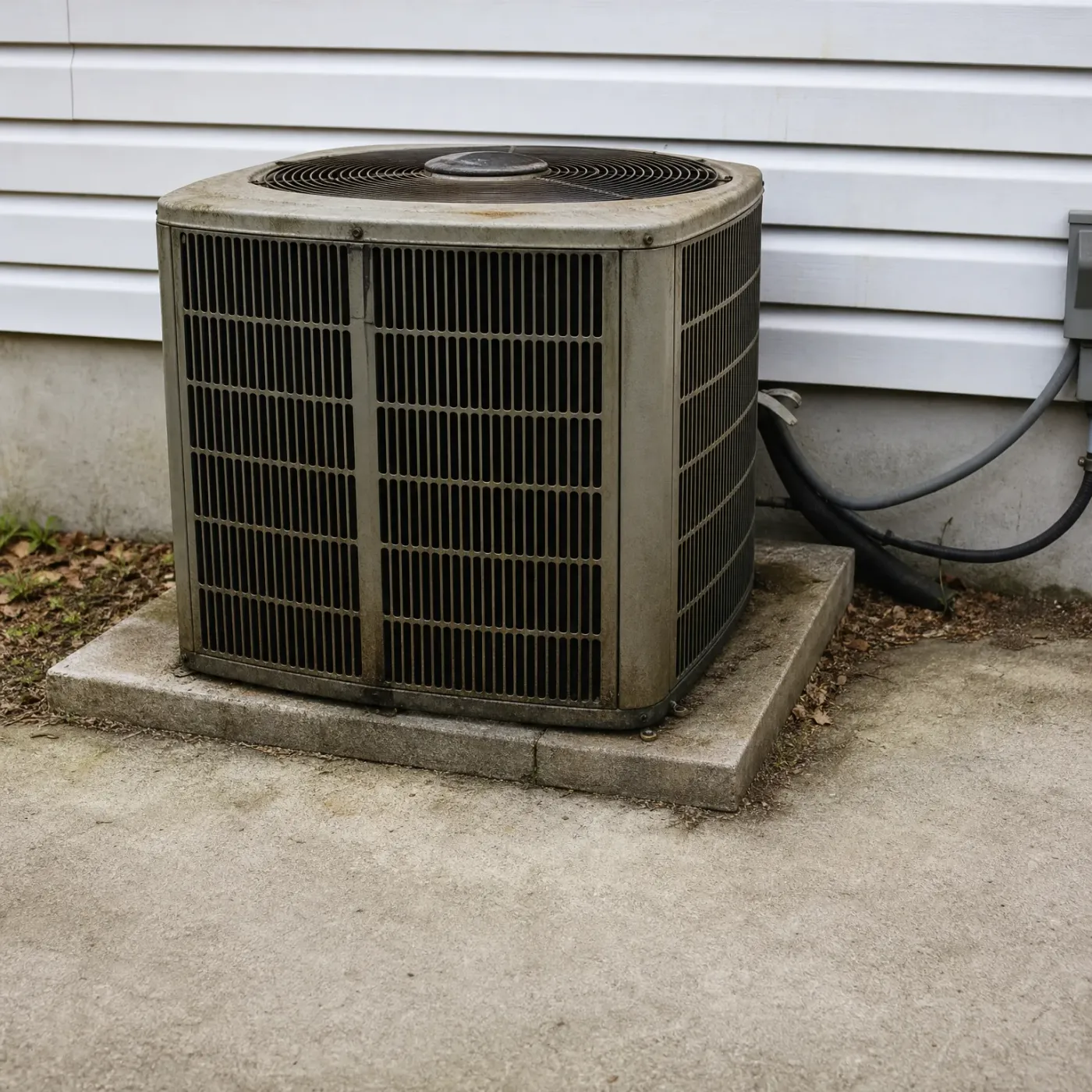
A weathered outdoor condenser unit on a concrete pad beside a house with white horizontal vinyl siding, with refrigerant lines and conduit running to a wall-mounted electrical box.

The outdoor unit under strain

Grime packed into the grilles and years of weathering choke off the airflow this unit needs. When it can't move air the way it should, it leans on aux heat to cover the gap, and that shows up as a light that stays on longer than it used to.

The aux heat light itself isn't a problem. It's electric resistance heat stepping in when the heat pump needs help, and on a cold Illinois morning that's exactly what it's supposed to do. What matters is how often it's doing that job and for how long, because a light that's on for hours at a time or coming on when it isn't that cold is telling you the heat pump side isn't carrying its share. That's a coil, a sensor, a defrost cycle, or a charge issue, and it's worth having someone look at rather than watching the bill climb through January. Instead of searching through contractors, calling a few, explaining the same thing about your thermostat and your bill each time, and sorting through quotes, you can get matched with a contractor who works on heat pumps in Illinois and let them reach out to you. You'll know where you stand with your system either way, but you won't have spent your evenings getting there.

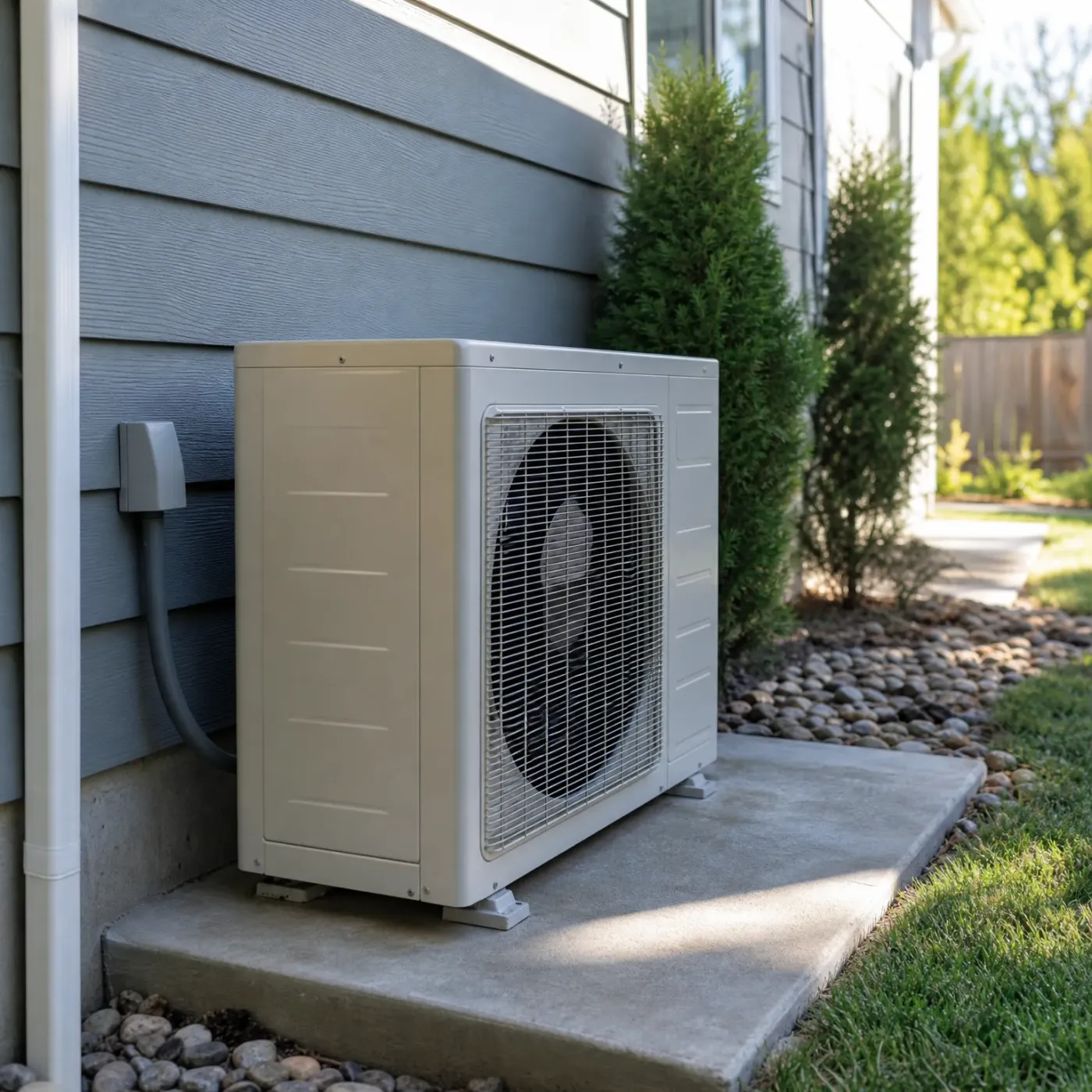
A beige outdoor heat pump or air conditioner condenser unit on a concrete pad beside a gray horizontal-siding house, with a disconnect box and conduit on the wall, shrubs, river rock and lawn nearby.

A local pro for your heat pump repair

Answer a few questions

Describe what your heat pump is doing once, in one form.

You're not committing to anything by asking.