Send the request today and let a heat pump pro reach out to you.
You walked outside in January and saw your heat pump running a cloud of steam, fan stopped, and figured something had failed. It hadn't. Defrost mode is the unit melting the frost that builds up on the outdoor coil when it's cold and damp out, which is most winter mornings in Illinois. For a few minutes it reverses itself, borrows some heat to clear the coil, and switches back. That part is normal.
What's not normal is when it happens too often, runs too long, or the unit comes out of it and never gets back to heating your house. If you're feeling cool air blowing while it's supposedly in defrost, or the backup heat is running most of the day to make up for it, something in the defrost control, the sensor, or the reversing valve isn't doing its job. With power rates what they are here, a heat pump that's stuck cycling through defrost wrong is costing you every hour it runs that way, and most homes still lean on it to keep gas furnace use down on the mild days.
Sorting out whether what you're seeing is the unit working the way it should or a sign it needs a repair isn't something you should have to guess at, and it's not something you should have to research by calling around to five different companies, describing the same steam cloud and the same cold air five different times, then sitting on quotes trying to figure out who actually knows heat pumps instead of just furnaces.
Send the form below and that part of it is off your plate. You won't be the one tracking down who's available, who's qualified, and who'll actually show up. A contractor who works on heat pumps in Illinois winters gets the details and takes it from there.
Why does my heat pump blow steam and shut off in winter?
You saw it happen and your first thought was that the unit broke. The fan stopped, steam came off the coil, and nothing about it looked like normal operation. In Illinois, where winter brings long stretches of cold, damp air, this happens to heat pumps often enough that it has a name. Knowing what it is tells you whether to worry or just wait it out.
It's melting frost off the coil, not failing
The outdoor coil pulls heat from the air even in winter, and when the air is cold and damp, moisture on the coil turns to frost. Enough frost buildup blocks airflow and the system can't move heat anymore. So it reverses itself for a few minutes, sends hot refrigerant through the outdoor coil to melt the frost, and the fan shuts off so it isn't blowing cold air through the house while that happens. The steam is just the frost melting and lifting off as vapor. Once the coil is clear, it switches back and the fan starts again. In Illinois, where damp cold is common most of the winter, this can happen several times a day and is the system working as it should.
Defrost cycling the way it should
The coil frosts, the unit reverses itself for a few minutes, steam lifts off, and it goes back to heating. It does this on its own through the cold months without you noticing most of the time, and the fan comes back on when the coil is clear.
A coil that never gets clean
Dirty fins and leaves packed against the base hold frost longer than a clean coil does. Defrost runs more often trying to catch up, your heat runs less, and the backup heat in your house picks up more of the load than it should.
What triggers the reversal
A heat pump decides when to defrost by reading two things: how cold the outdoor coil has gotten and how long the unit has been running. Most systems check on a timer, every thirty, sixty or ninety minutes of run time, and only start defrost if the coil sensor confirms it's cold enough to be frosted. That's why you won't see it happen on a mild, dry day in November even if the unit has been running for hours. It's also why a long stretch of damp weather in the 30s, which Illinois gets plenty of between December and February, can trigger it several times in a single afternoon.
Where the heat comes from
During defrost, the unit runs in cooling mode for a few minutes, which moves heat outside instead of in. To keep the house from going cold in the meantime, most systems turn on backup electric heat strips to cover the gap. That's a few minutes of electric resistance heat, the most expensive way to heat a home, kicking in during the coldest part of the day. If your system seems to run strips more than a few minutes at a stretch, or the house feels cool every time the outdoor unit steams, that's worth having a contractor check rather than writing off as normal.
Before you get your heat pump repairAfter you get your heat pump repair
Explain the job once and skip repeating it on every call.
There's no charge for the request.
On a cold, damp Illinois night your heat pump might run defrost four or five times between dusk and dawn, each one a few minutes long. That's the unit keeping up with the frost. It's when the cycles run long, or the fan won't restart after, that you're looking at a repair.
A heat pump stuck in defrost, or one that won't come out of it, is running electric strip heat or no heat at all while it struggles. On an expensive power bill here, that shows up fast, and the house gets cold while you wait it out.
The parts behind the cycle
The reversing valve is the part that flips the system into defrost, sending hot refrigerant backward through the outdoor coil.
A fan delay control keeps the outdoor fan off during defrost so it isn't blowing cold air across a coil that's trying to warm up.
Auxiliary heat, usually electric strip heat, kicks on during defrost to keep warm air moving through your vents instead of cold air.
The defrost board reads a sensor clipped to the outdoor coil, and that reading is what tells the system frost has built up enough to matter.
Once the coil sensor reads clear, the board switches the reversing valve back and the outdoor fan restarts within seconds.
A stuck reversing valve or a failed fan delay control are the two parts most likely to leave a unit stuck in defrost.
Defrost mode runs through a handful of specific parts, and knowing them tells you what's actually happening when the unit shifts over. The reversing valve is what flips the refrigerant flow, sending hot gas backward through the outdoor coil instead of through your indoor air handler. That's what melts the frost. While that's happening, a fan delay control shuts the outdoor fan off, because blowing cold air across a coil that's being heated on purpose would work against the whole point. Inside your house, auxiliary heat, usually electric strip heat, picks up the slack so the air coming out of your vents stays warm instead of running cold for those few minutes. None of this starts on a guess. A sensor clipped to the outdoor coil feeds a temperature reading to the defrost board, and the board uses that reading, along with how long the system has been running, to decide when frost has actually built up enough to need clearing. Once that sensor reads clear again, the board reverses the valve back to normal heating and the outdoor fan kicks back on within seconds. That's four parts working in sequence: sensor, board, valve, fan. When one of them fails, the sequence breaks at that point. A stuck reversing valve can leave the system reversed with no way back. A failed fan delay control can let the fan restart too early, or not shut off at all, which undercuts the whole cycle before it finishes.
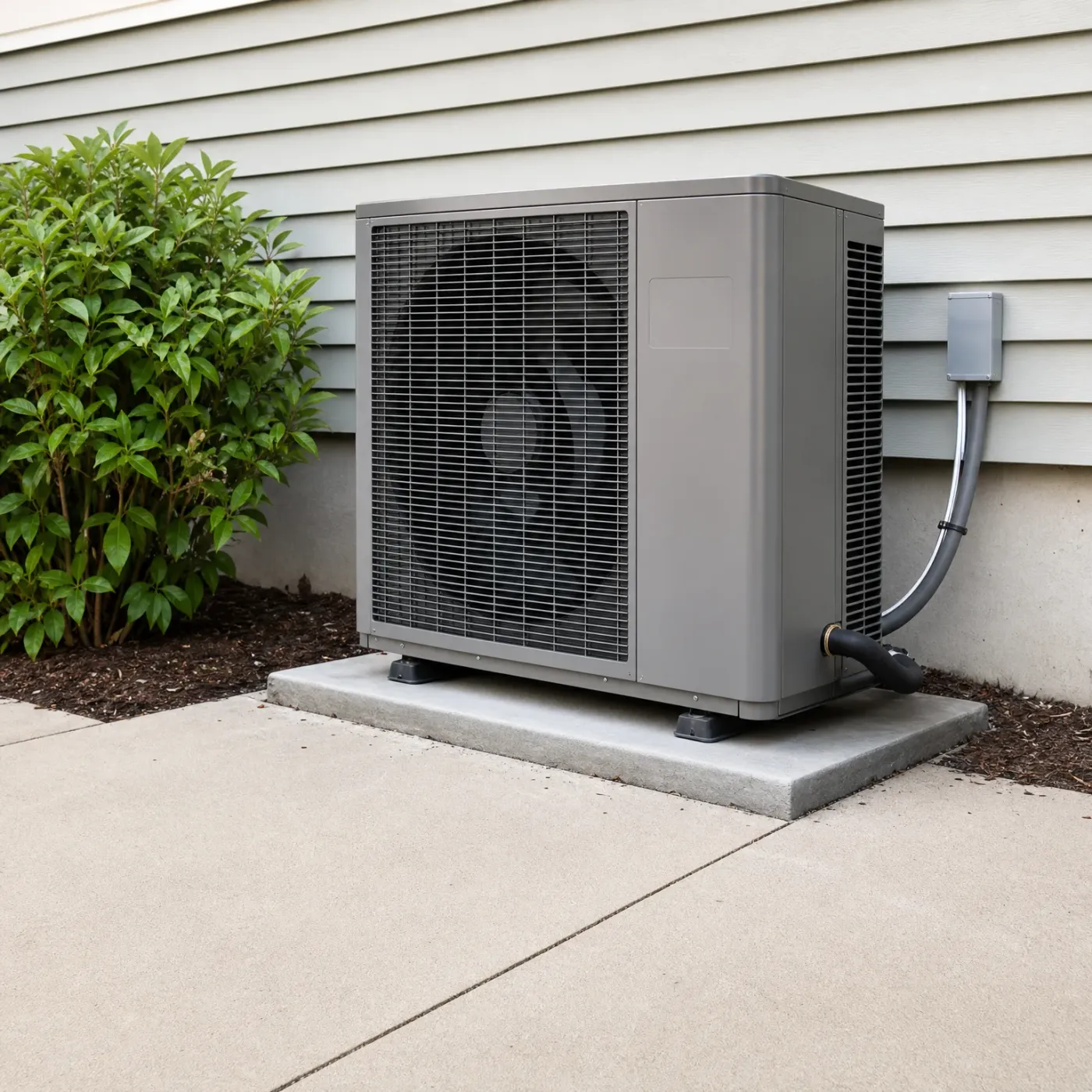
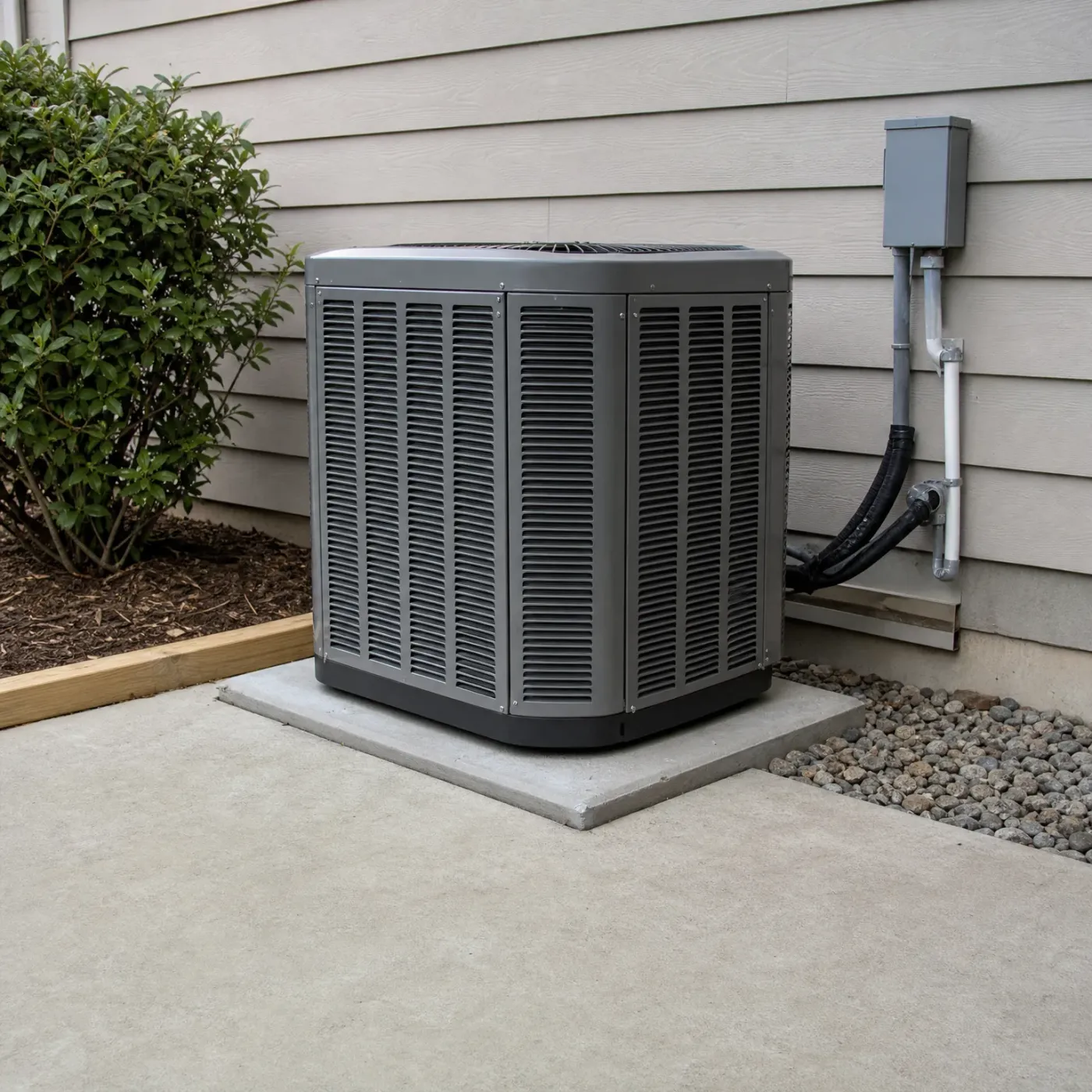
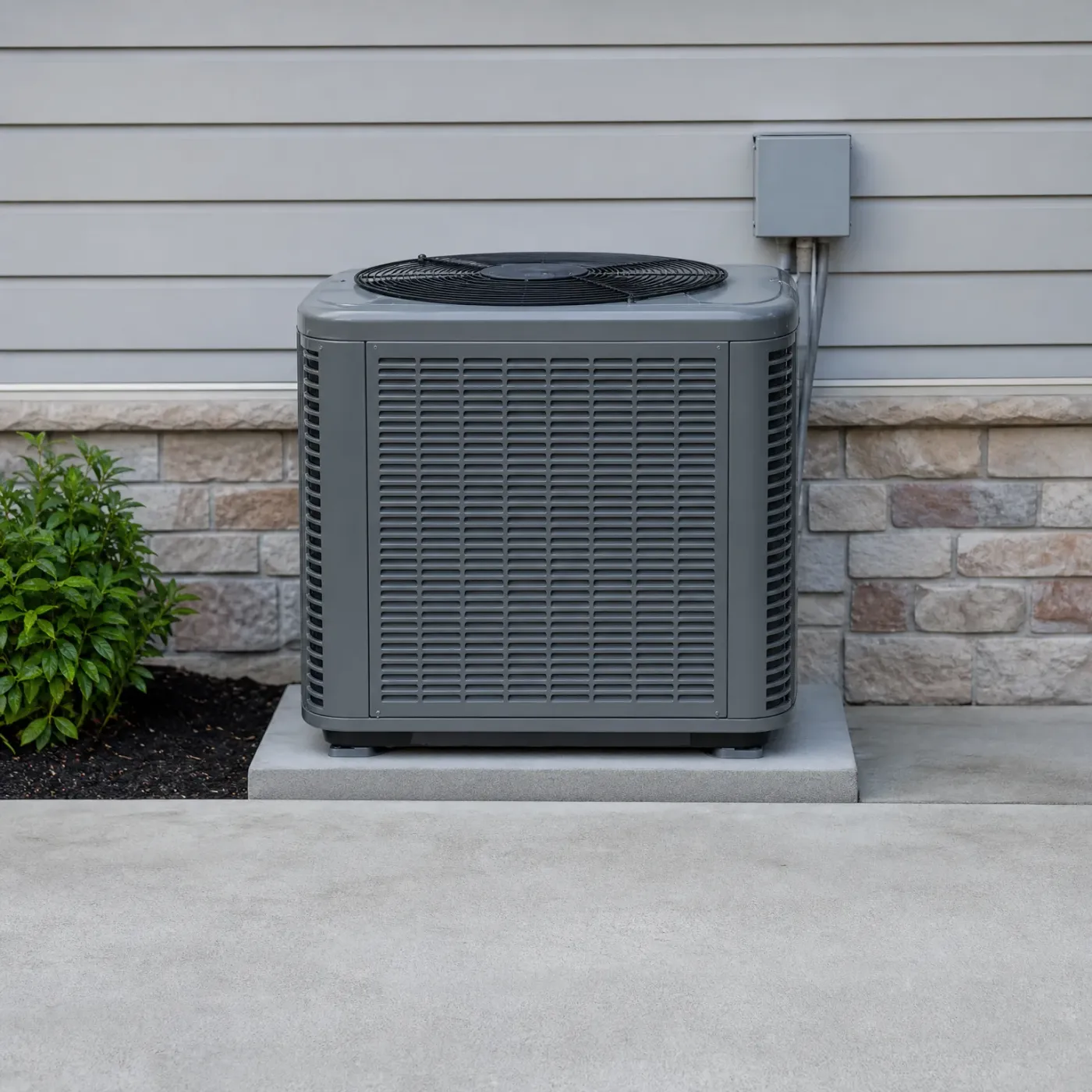
A heat pump cycling through defrost normally, coil clear, fan ready to spin back up once the reversing valve switches back.
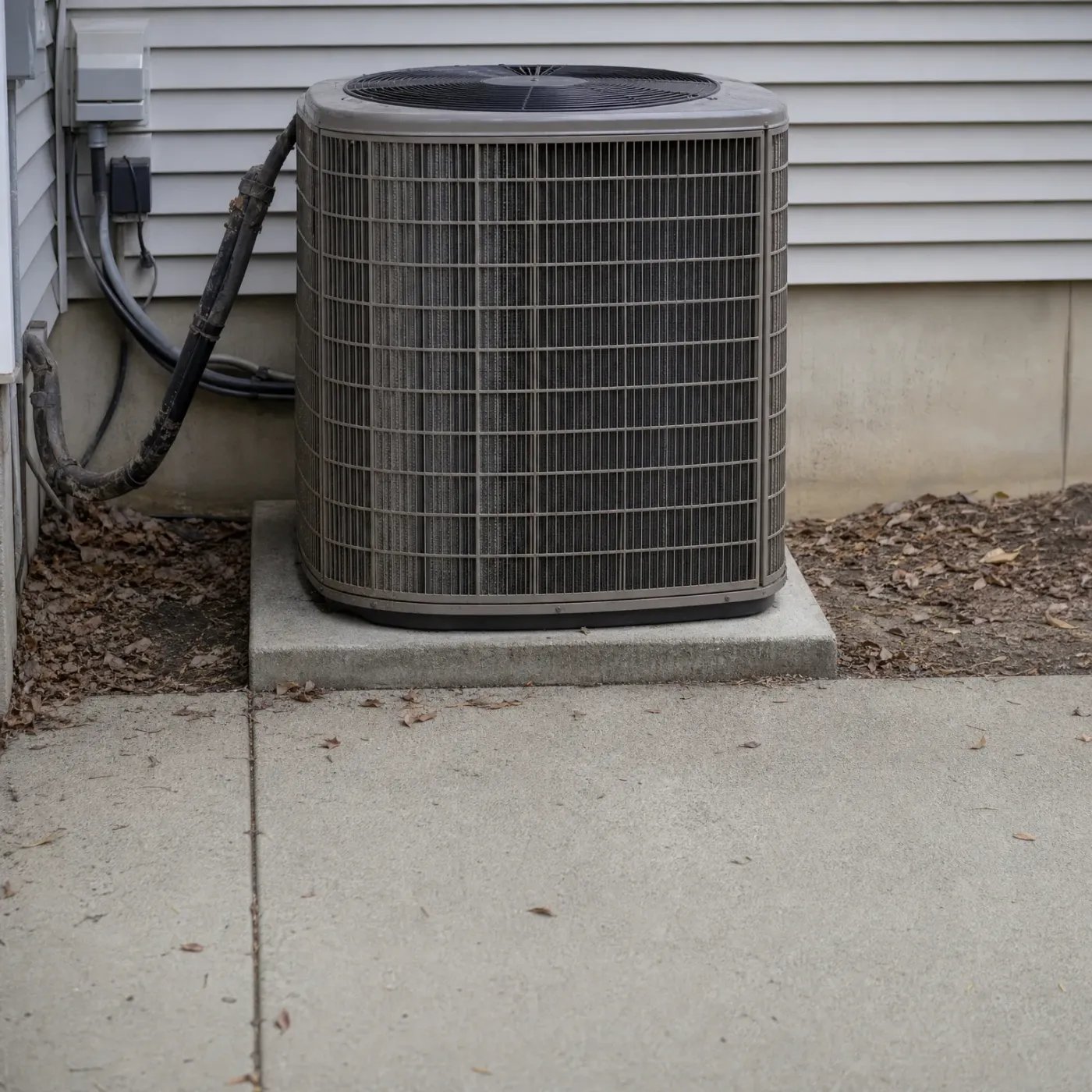
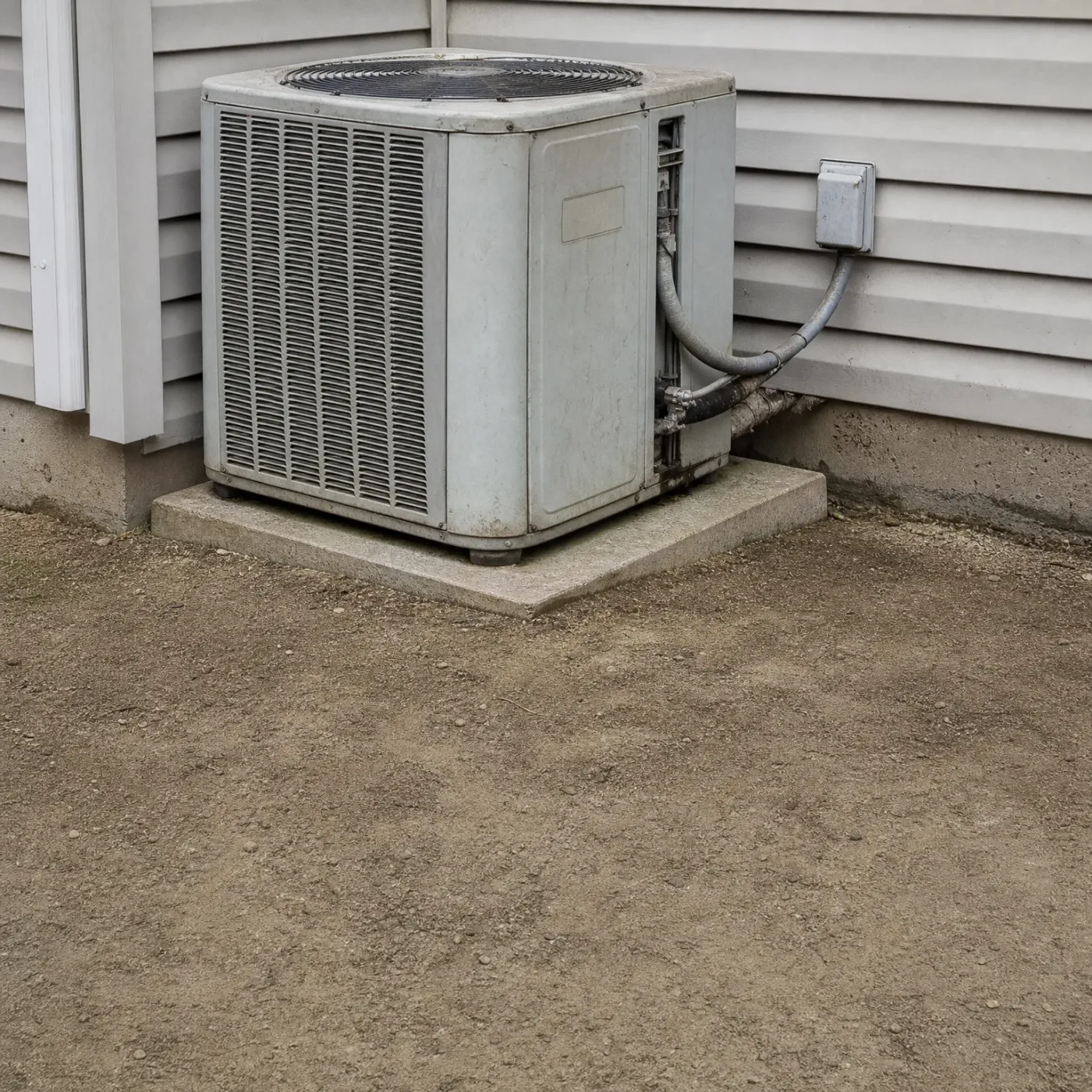
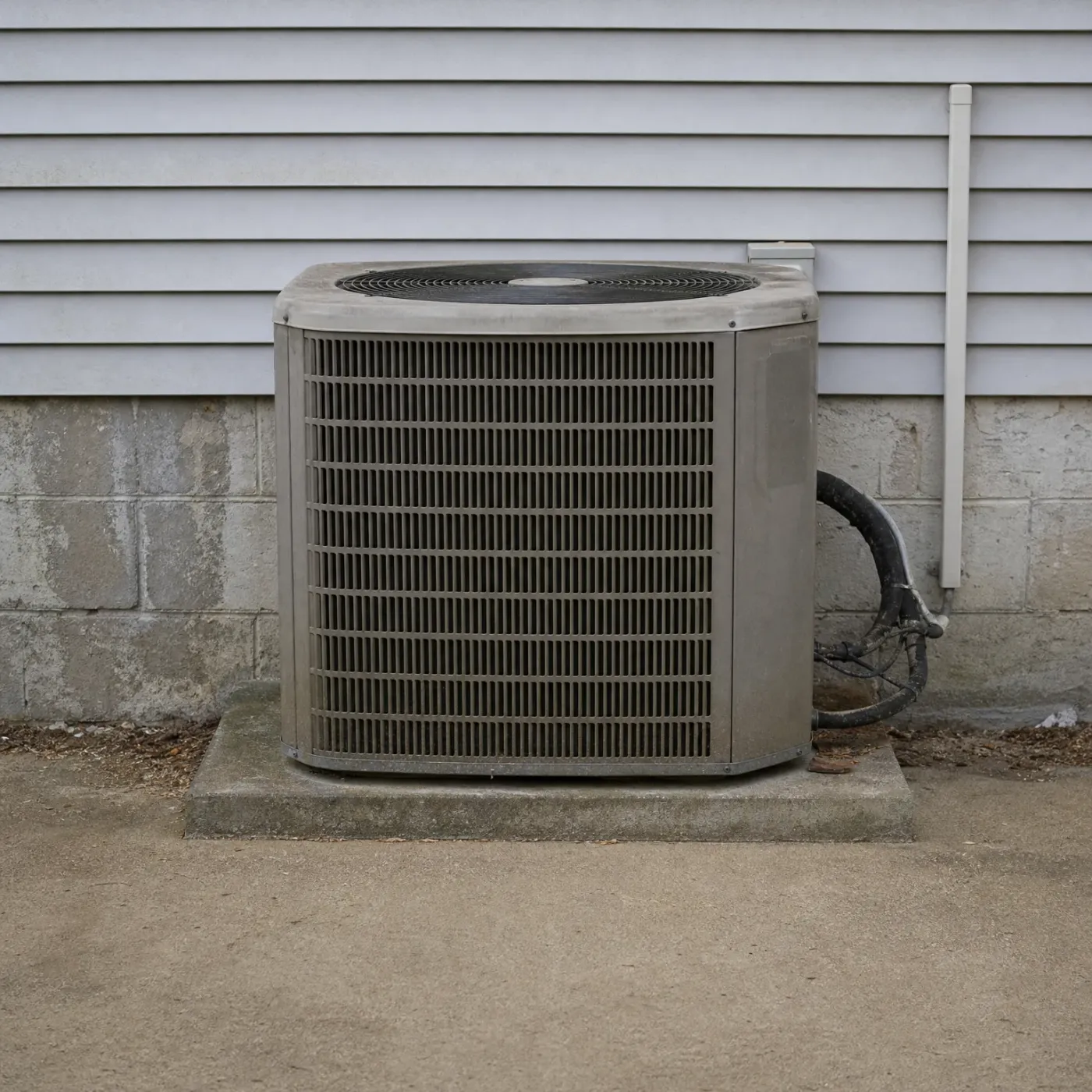
A heat pump that's been through too many frosts, coil scaled with ice, lines along the block showing the wear a bad defrost cycle leaves behind.
Illinois summer air carries a dew point around 63°F, the figure NOAA uses to track how much moisture is actually in the air rather than just the temperature. That's heavy enough to feel sticky walking from the car to the door. Your heat pump runs in reverse all summer pulling that moisture out along with the heat, and the outdoor coil works harder on the muggy nights than the thermometer alone would suggest. Winter is the season defrost mode shows up, but it's this summer humidity load, cycle after cycle, that wears on the same reversing valve and coil doing the defrost work months later. A unit worn down by a hard summer is more likely to struggle through a January frost cycle.
NASA POWER T2MDEW county cells weighted by homes
Is the frost on your heat pump a problem or not
Walk out back on a January morning and look at the coil. A thin white coat that clears after the next defrost cycle is nothing. A thick crust that's still there hours later, or ice built up along the bottom of the unit, means the cycle isn't keeping up. You might notice the fan stays off longer than it used to, or the unit runs defrost back to back without settling into regular heating between. Left alone, that coil can't absorb heat from the outdoor air the way it's supposed to, so the house falls back on gas heat more than it should, or the heat pump stops producing warm air at the vents at all.
1
The control board reads the outdoor coil getting colder than normal.
2
A timer confirms the unit has run long enough to frost over.
3
The reversing valve flips, sending hot gas backward through the coil.
4
The outdoor fan shuts off so it isn't cooling the coil further.
Power costs 17.67 cents per kilowatt-hour statewide
A heat pump leans on electricity for every degree it makes, especially when it's running extra defrost cycles on a cold, wet night. At 17.67 cents a kilowatt-hour, a unit that's defrosting more than it should will show up on your bill before you ever see it misbehave outside.
EIA-861 2025 statewide residential average
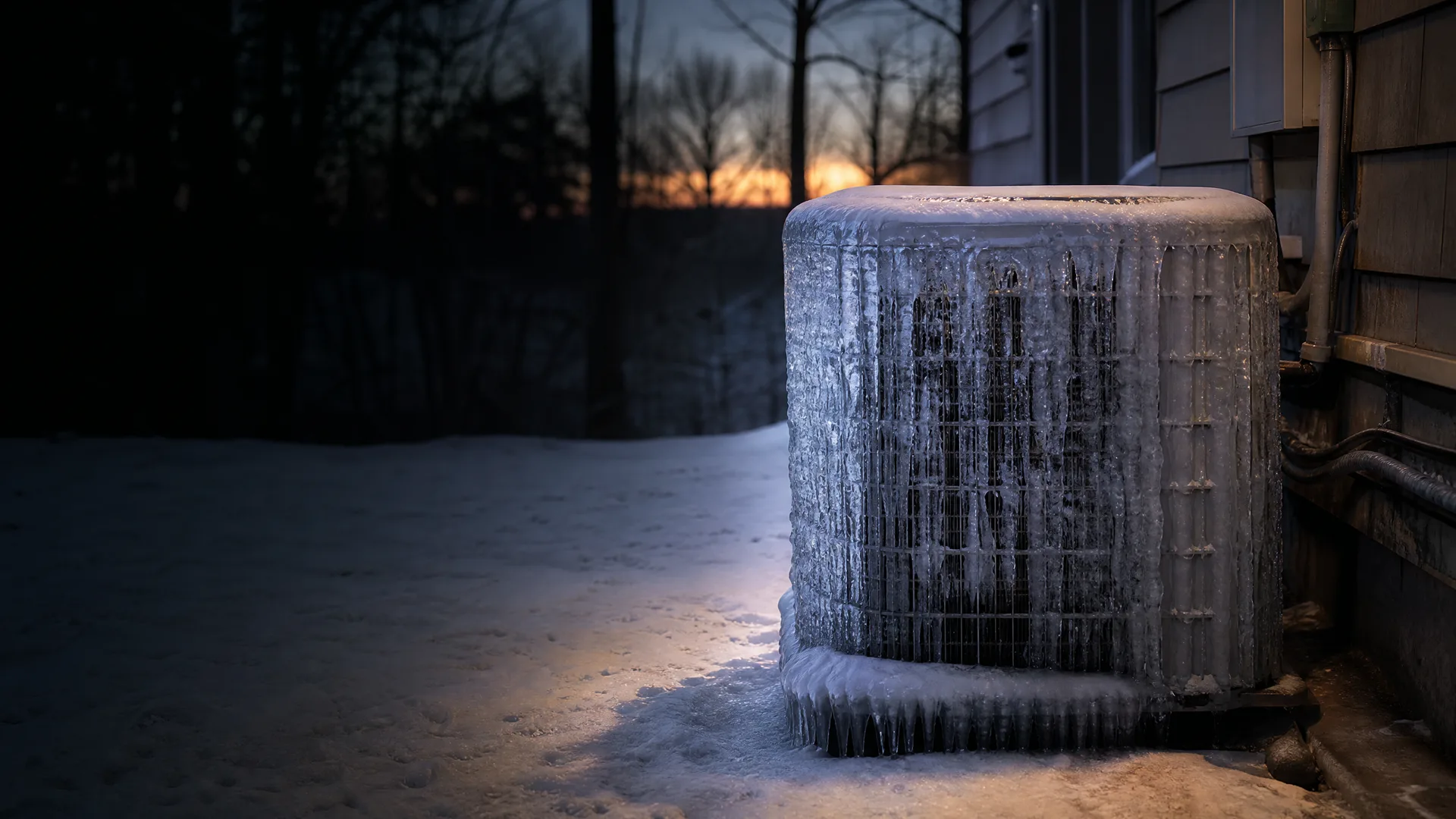
Six in the morning, still dark, and you'd gone out to get the trash can before the truck came. The side yard was quiet except for the compressor running. Your heat pump was wearing a coat of ice, thick over the coil, a ridge of it built up along the bottom where it meets the pad. No steam this time, no cloud lifting off. Just ice, and the fan not turning. You stood there in the cold a minute, trash can forgotten, waiting to see if it would kick into defrost on its own. It didn't. The compressor kept running against a coil that couldn't do anything with the heat it was moving, and the ice sat there the same as it had the night before.
Defrost mode on its own is nothing to worry about. Steam off the coil, the fan stopped for a few minutes, the unit reversing itself and going back to heating, that's a heat pump doing what it's built to do on a cold, damp Illinois night. What's worth your attention is a cycle that runs long, a fan that won't restart, ice that's still on the coil hours later. That's the system struggling, not just working. You could spend your evening searching for a contractor who works on heat pumps, calling a few, explaining what you saw on the coil each time, then sitting with quotes trying to figure out who actually knows this equipment. Send the form instead and that part is off your plate. You'll still need the repair done. But you won't be the one tracking down who can do it.