



A gray outdoor heat pump unit with a circular fan grille sits on a concrete pad beside a dark wood-clad house, next to a gravel bed with ornamental grasses and a stepping-stone path.

Skip calling around

What emergency heat means on an Illinois heat pump

Your heat pump's thermostat has an "emergency heat" setting, and it came on, or you're wondering when it should. That switch changes how your system makes heat, and running it wrong on an Illinois winter day can run up your electric bill fast. This page covers what the setting does and what it means when yours needs it. If your heat pump needs a look, one local contractor who works on these year round can take it from here, instead of you calling around and explaining the problem to every company in the phone book.

Describe it once

Emergency heat is a backup setting that shuts off your heat pump entirely and hands all the work to a secondary heat source, usually electric resistance coils built into the air handler. You flip it on when the heat pump itself can't pull heat from the outside air anymore, whether that's because of a mechanical problem like a failed compressor or a frozen outdoor unit that won't defrost. On a cold Illinois day, that outdoor coil can ice over faster than the system can clear it, and if the defrost cycle isn't keeping up, emergency heat is what gets warm air moving again while that gets sorted out. The catch is that electric resistance heat costs a lot more to run than a working heat pump, since it's making heat directly instead of moving it. If that switch has been on for more than a few hours and nothing's actually broken, you're paying extra for no reason. Left on by mistake through a stretch of cold weather, it adds up fast on the bill.

A woman in a knitted shawl sits in a living room with a fireplace, shelves, a sofa with cushions, and a lamp by a bright window, looking off to the side.
A woman with long brown wavy hair in a green shirt over a white top stands in a living room with built-in white shelves, a ceiling fan, a potted plant and a sliding glass door.
A woman with shoulder-length gray-streaked hair in a light gray knit sweater stands smiling and looking off to the side in a living room with a sofa, houseplant, framed picture, and sunlit sliding glass door.
A woman with shoulder-length curly gray hair wearing a gray knit sweater stands near a window with a sheer curtain, looking to the side, with a blurred interior room behind her.
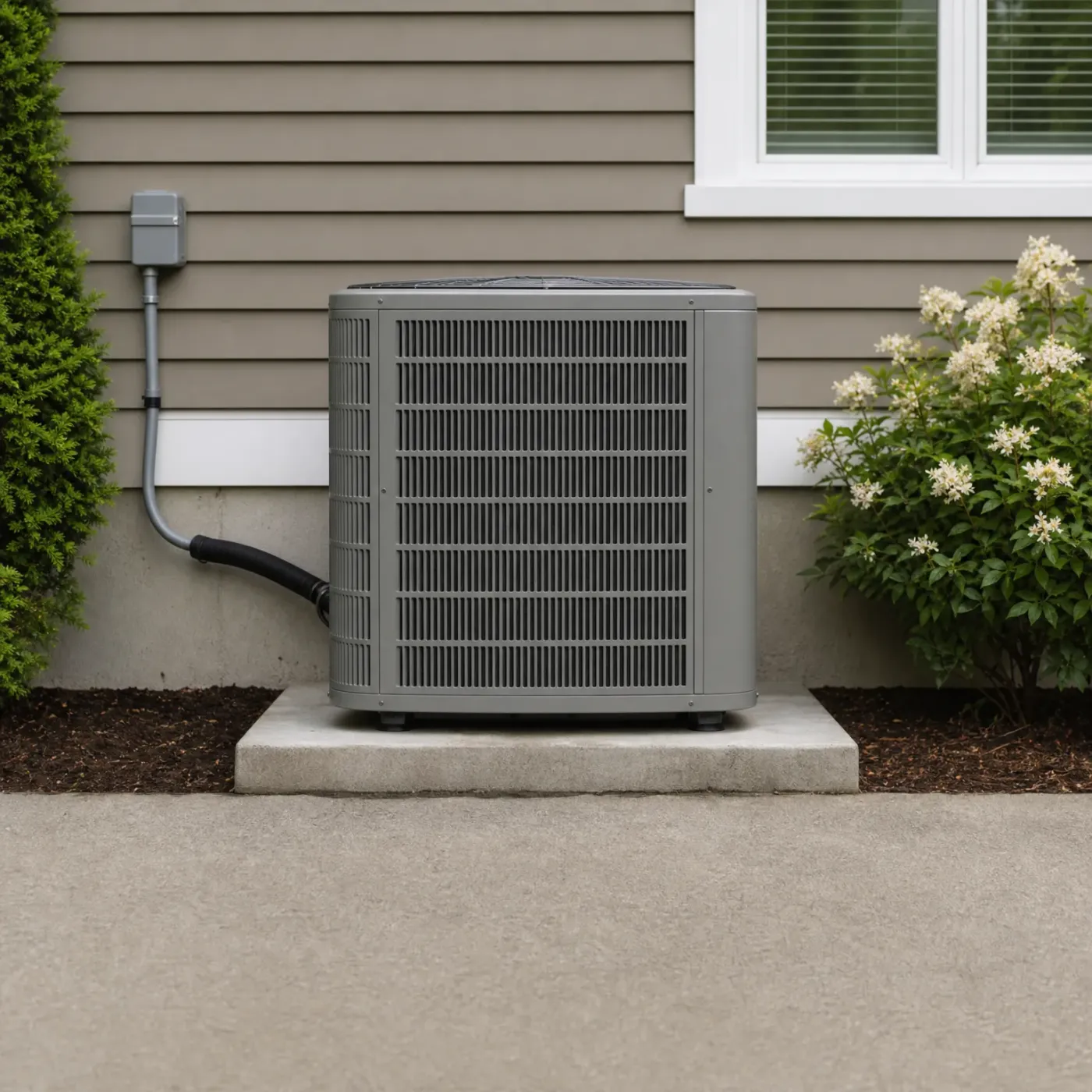
A gray outdoor condenser unit on a concrete pad beside a house with horizontal lap siding, a conduit and disconnect box on the wall, a shrub with white flowers at right and evergreen foliage at left.

Normal operation

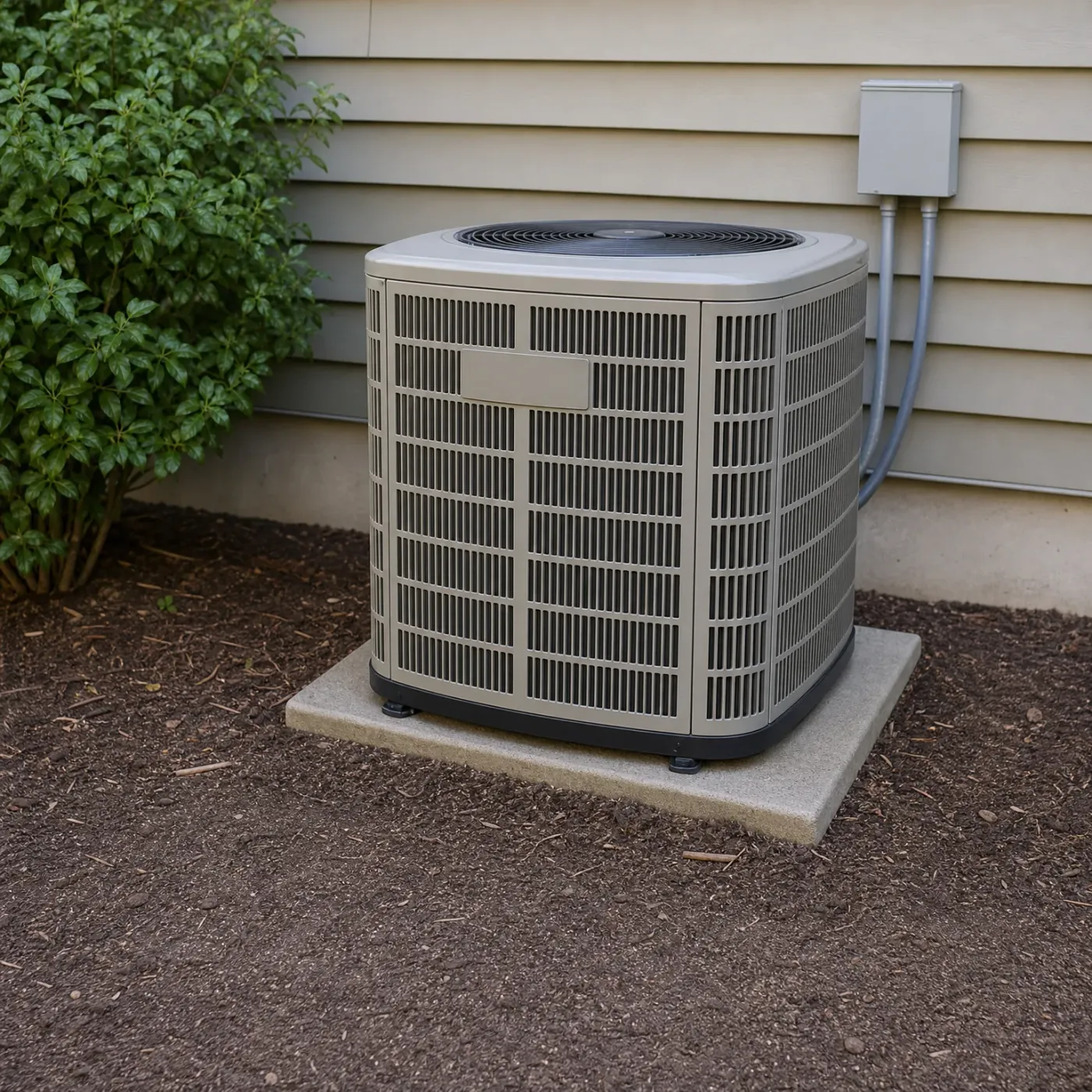
This is your heat pump on a normal day. The outdoor unit runs quietly, pulling heat from the outside air even when it's cold, and the thermostat stays on its regular heat setting. No emergency heat light, no backup coils kicking in, just the system doing its job on its own power.
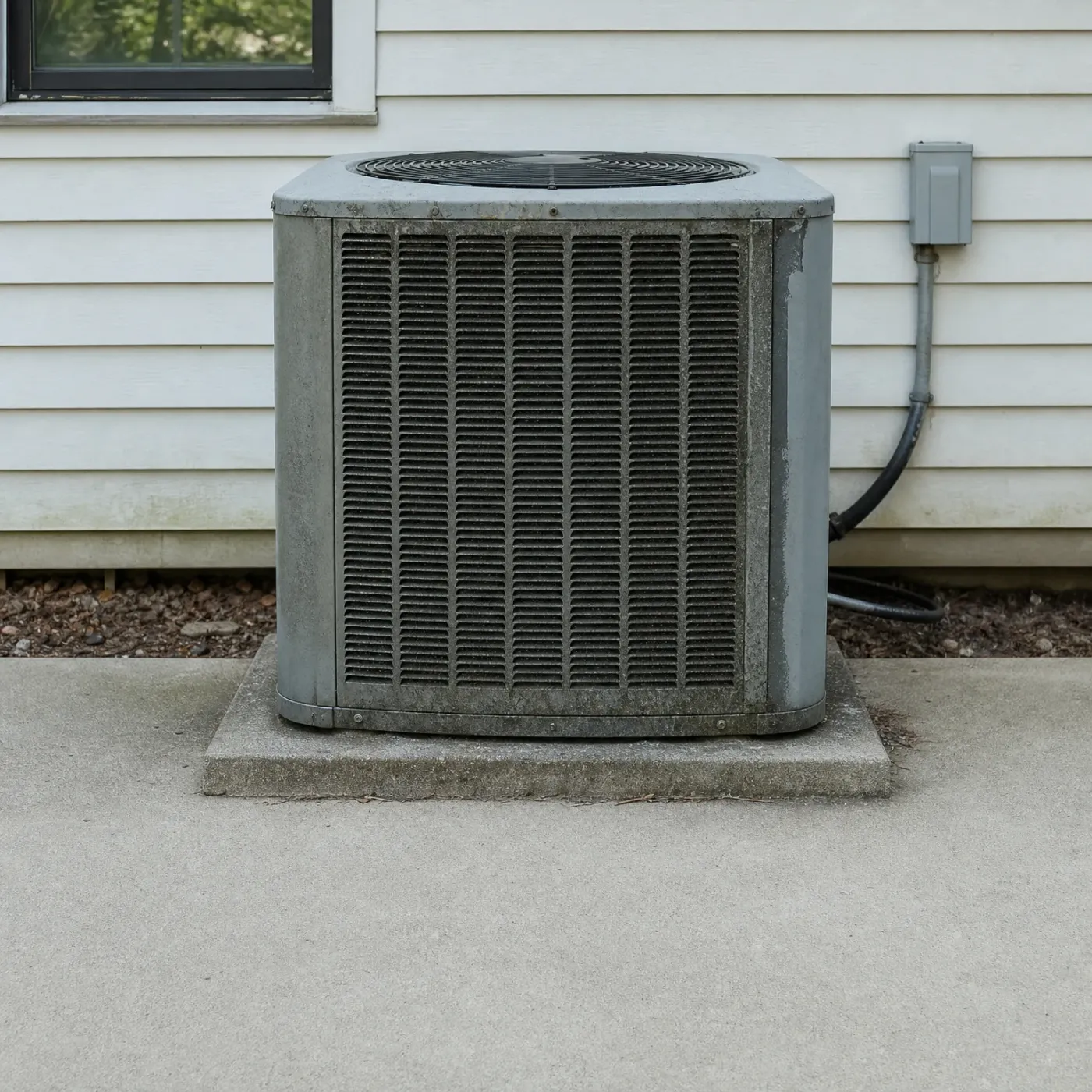
A gray outdoor air conditioning condenser unit on a concrete pad beside a house with light vinyl siding, with a gray electrical disconnect box and conduit on the wall to the right.

Heat pump in trouble

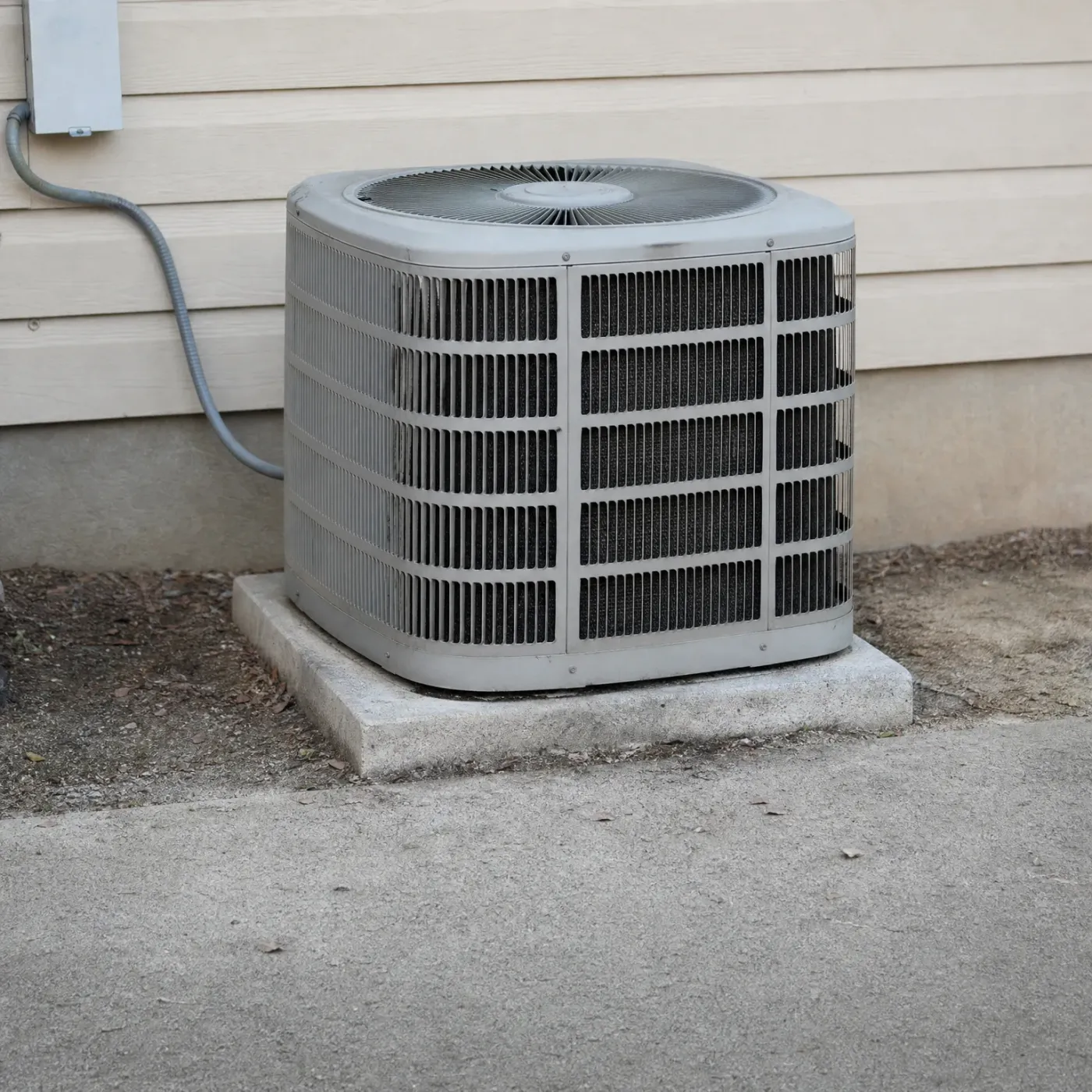
Dirt packed into the fins like this blocks airflow across the coil, and a unit in this shape may struggle to pull heat from the air at all. If yours looks like this and emergency heat won't turn off, the heat pump needs a look before another Illinois cold snap runs up your electric bill.

Why is the emergency heat light on at your house

You walk past the thermostat and notice the emergency heat light is lit, and you didn't touch it. Or you did, because the house felt cold and you wanted heat fast. Either way, check what's actually happening. If the outdoor unit is sitting still and silent instead of running, and the air coming out of your vents feels hotter than usual, that's the backup coils doing the work alone. Left that way through a stretch of Illinois cold, your electric bill will show it, since those coils use far more power than the heat pump does on its own. If the light stays on for more than a day with no clear reason, something is likely keeping the heat pump itself from running.

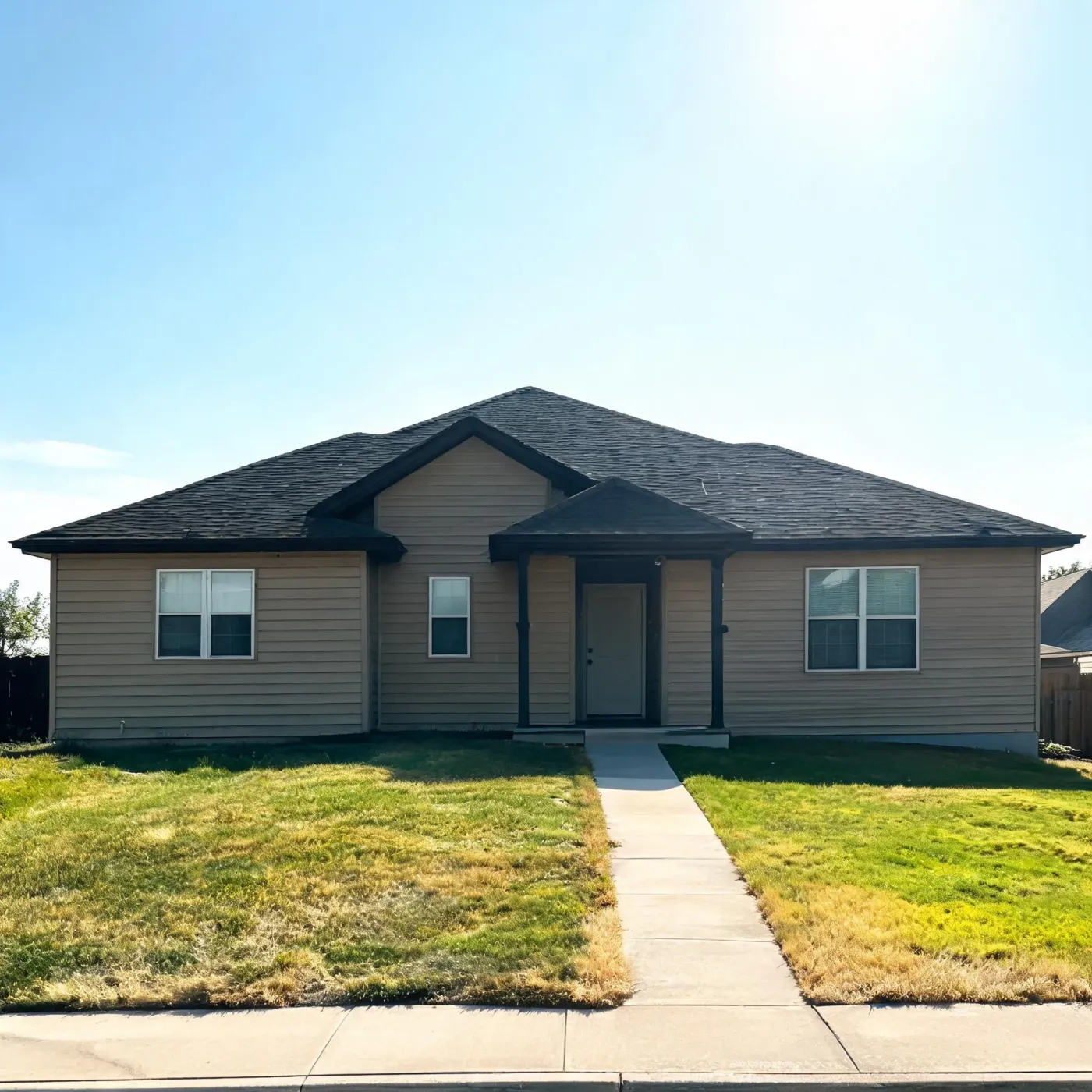
Single-story house with tan horizontal siding and a dark shingled hip roof, fronted by a patchy green and brown lawn and a concrete walkway leading to the covered entry.

Summers here run humid, with a dew point averaging 63°F across June, July and August, according to NOAA climate data. That's the number that makes the air feel heavy even when the temperature itself isn't that high. Your heat pump has to pull that moisture out of the air to cool the house, not just lower the temperature, and sticky air makes it run longer to get there. In winter the same unit works the other direction, and Illinois cold is what pushes it into emergency heat. A unit that's low on refrigerant or has a failing component struggles with both jobs, so if summers have felt harder on the system than they should, that's worth a look before winter puts more strain on it.

NASA POWER T2MDEW county cells weighted by homes

A closed laptop and a cream mug of coffee on a coaster sit on a dark wooden table, with a potted plant at left and a kitchen counter, tiled backsplash and shelf of ceramics in the background.

What the heat pump is actually doing when it switches over

A heat pump moves heat, it doesn't make it. Refrigerant in the outdoor unit absorbs heat from the outside air, even cold air, and a compressor carries that heat inside. Below a certain outdoor temperature, usually somewhere in the 30s or 40s, the system can't pull enough heat out of the air fast enough to keep the house warm, and some models add a second stage of electric coils automatically for short stretches to make up the difference. That's different from emergency heat. Emergency heat shuts the outdoor unit off completely and runs the electric coils alone, full time, because the heat pump isn't working at all, not because it's cold out.

That's the line a thermostat can't always tell you, and a lot of homeowners in Illinois end up guessing. If you're not sure whether your system switched over on its own or something failed outside, that's a question for someone who services heat pumps in your area regularly, not a string of calls to different companies explaining the same thing over again. One local contractor who already knows what tends to fail on these systems in an Illinois winter can look at your unit once and tell you which it is.

A living room corner with a beige upholstered armchair holding navy and striped cushions, a small round wooden side table with a carved bowl and a potted green plant, a framed landscape picture on a pale wall, built-in shelving, and a curtained window.
  1. Outdoor temperature drops below the heat pump's balance point

  2. Refrigerant can no longer pull enough heat from outside air

  3. Thermostat or system senses the shortfall and signals backup heat

  4. Electric resistance coils in the air handler energize

Why did my heat pump switch to emergency heat on its own?

You didn't touch the thermostat, but it's on emergency heat anyway, and you want to know if that means something broke. A heat pump that switches itself over usually isn't making a mistake. Something in the system triggered it, and figuring out whether that's normal cold-weather behavior or a sign of trouble is the difference between leaving it alone and calling someone.

It switched on its own because a sensor or control board told it to, not because you did

A heat pump can only pull so much heat from outside air before the compressor can't keep up with how cold it is. When that happens, the system's control board switches over to backup heat on its own, no thermostat input needed. That's normal in Illinois once outdoor temperatures drop low enough. What's not normal is the switch happening on a mild day, or staying stuck on emergency heat after a cold snap passes. That usually points to a frozen outdoor coil, a tripped breaker on the outdoor unit, a bad sensor, or low refrigerant, any of which stops the heat pump from running even when it should be able to. A licensed contractor can tell which one it is from the error code or a look at the outdoor unit.

An outdoor air conditioner condenser unit on a concrete pad beside a house with beige horizontal siding, with conduit running from an electrical box on the wall.
Before you get your heat pump repair
A beige outdoor air conditioning condenser unit on a concrete pad beside a house with horizontal vinyl siding, with refrigerant lines and a disconnect box on the wall, surrounded by dark mulch and a green shrub at left.
After you get your heat pump repair

Describe it once

If your heat pump is stuck on emergency heat, or it keeps switching over when it shouldn't, that's a sign something in the system needs a look, not just a thermostat setting to adjust. With power costing what it does in Illinois, running on electric resistance coils longer than necessary adds up fast, and most homes here count on gas for backup, not full electric heat. Sorting that out yourself means finding a contractor who still works on heat pumps, since plenty of shops around here mostly handle furnaces, then calling around, explaining what the thermostat is doing, and waiting on quotes to compare. A local contractor who services heat pumps through an Illinois winter has likely seen this exact problem, whether it's a bad sensor, low refrigerant, or a stuck relay, and knows where to check first. Your request goes to one contractor who takes on the job, not several competing for it, while you're dealing with a house running colder than it should.

What those coils cost you per hour

Electric resistance heat works by running current through a coil until it glows, the same way a toaster does, and it provides no multiplying effect the way a heat pump's refrigerant cycle does. A heat pump moves existing heat for the electricity it uses. Resistance coils make heat one unit at a time for one unit of power in. With Illinois power rates, a furnace built on gas is cheaper to run hour for hour than those coils, which is why emergency heat is meant to be a short bridge, not how your house stays warm for a stretch of cold days.

A thermostat setting your home can't tell apart

Air coming out of a vent on emergency heat feels about the same as air coming out of a vent on normal heat pump operation, since both move warm air through the same ducts. You won't notice the switch by standing under a register. The only reliable sign is the light on the thermostat itself, or a bill that comes in higher than the month before with no other change at home. That's part of why this setting gets left on by accident. Nothing about the house tells you it's running, only the thermostat and the meter do.

Power costs 17.67 cents per kilowatt-hour statewide

At 17.67 cents a kilowatt-hour, those backup coils add up fast since they're heating with straight electricity instead of moving heat the way the compressor does. A heat pump stuck on emergency heat for a stretch of cold days will show up on your next bill.

EIA-861 2025 statewide residential average

When leaving it on makes sense

If the outdoor coil is frozen over and won't defrost, or the heat pump is making a noise that wasn't there before, emergency heat is the right call until a contractor looks at it. It keeps the house warm while the heat pump itself sits idle, which is exactly what you want if something inside that outdoor unit is actually broken. A cracked contactor, a failed compressor, a defrost control board that stopped cycling, any of those will leave the heat pump unable to do its job, and forcing it to keep trying can turn a repairable part into a replacement. In that situation the extra cost on your electric bill is the trade-off for not running a damaged system. It's meant to be temporary. Left on for a few days while you get someone out is reasonable. Left on all winter because nobody looked at why it kicked on is a different problem, and an expensive one given what power costs in Illinois.

When it means something's wrong

If emergency heat turns on by itself and the outdoor unit isn't frozen, isn't making noise, and the temperature outside isn't especially low, that's not normal behavior. It usually points to the heat pump losing refrigerant, a stuck reversing valve, or a control board that isn't reading the outdoor temperature right and is tripping backup heat too soon. None of those fix themselves, and none of them are things to diagnose by watching the thermostat. A contractor who works on heat pumps in Illinois year-round has seen this exact pattern often enough to know which of those it usually is before pulling the panel off. That's the advantage of getting one contractor out who's local and licensed, rather than guessing at it yourself or waiting to see if it happens again.

A woman with her hair in a bun holds a sleeping young child against her chest, both wrapped in a textured beige knit blanket on a sofa in a dimly lit room with a lamp, framed picture, and bookshelf behind them.
An older woman with gray hair in a bun and glasses, wearing a beige knit sweater, smiles while looking to the side in a warmly lit kitchen, with a loaf of bread on the counter in the foreground and a snowy scene outside the window.

Where Things Stand Now

  • Emergency heat means the heat pump is off and electric coils are doing all the work, so it should be short-term, not a new normal.
  • If the setting stays on for more than a day or two with no cold snap or frost to explain it, something in the heat pump needs a look.
  • A contractor who services heat pumps all winter in Illinois has seen most of what makes one get stuck on backup heat.
  • Calling one licensed, local contractor means one visit and one diagnosis, not a string of callbacks while the coils keep running.
  • Your thermostat still tells you which mode is heating the house, so you can check it yourself once the repair is done.
  • Switching back to normal heat is the sign the heat pump is pulling its own weight again instead of leaning on the coils.

Emergency heat has one job, and it's not meant to be permanent. It tells the system to stop asking the heat pump to work and let the electric coils carry the house instead. That's fine for a frozen coil or a genuinely broken outdoor unit. It's not fine as the way your house stays warm through an Illinois winter, not with what power costs here.

The question to ask is how long it's been on and why. A cold snap or a frosted-over outdoor unit explains a day or two on backup heat. No clear reason, and it staying on past that, points to something in the heat pump that needs attention, a failed sensor, a stuck reversing valve, a compressor that isn't pulling its weight.

That's a job for someone who works on heat pumps all season in Illinois, not just central air in summer. They've seen what usually causes a system to stall out on backup heat and what it takes to get it back to normal operation. One contractor, licensed and local, means one visit sorts it out instead of juggling calls and explaining the problem over and over.

Once it's fixed, the thermostat tells you so. The emergency heat light goes off, the heat pump takes over again, and the house gets warm without the coils doing the work alone.

A gray outdoor condenser unit on a concrete pad beside a house with horizontal lap siding, bordered by mulch, shrubs and a mowed lawn.

No phone calls to make

Step 1 of 3: Equipment