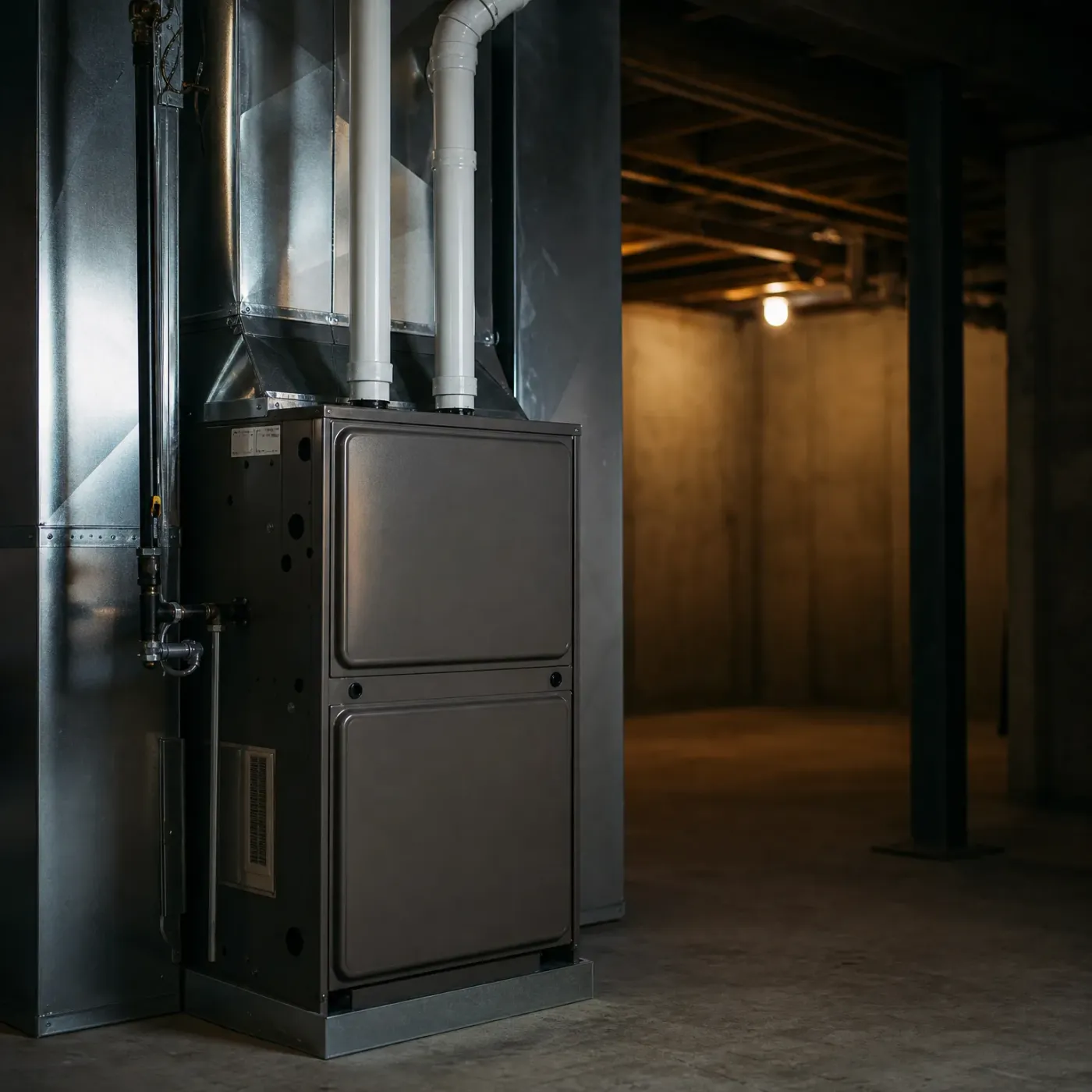




A gray high-efficiency furnace with two white PVC vent pipes stands beside galvanized sheet-metal ductwork in a dim basement with exposed joists and a concrete floor.

Get your furnace to the right pro

What size furnace an Illinois home needs

Furnace sizing in Illinois comes down to the square footage of your home, how well it holds heat, and how cold it gets where you live. Too big and it cycles on and off without warming the place right. Too small and it runs nonstop on the coldest days without catching up. This page walks through what sizing actually depends on, and gets you in touch with a contractor who can look at your home and tell you what size fits.

Get a local pro

There's no single number that fits every house. A furnace is sized by the heat loss of your specific home, measured in BTUs, and that depends on square footage, ceiling height, how many windows you have, and how tightly the place is built. Illinois winters push that number up compared to milder states, since the furnace has to make up for more cold outside air getting in and more heat escaping through walls and the roof. A contractor works this out with a load calculation, not a chart that just matches BTUs to square feet. Get the size wrong and you feel it: too large and the furnace short cycles, heating fast then shutting off before the house evens out, which wears on the parts and leaves cold spots. Too small and it runs for hours on the coldest days and still falls behind. The right size keeps the house at temperature without the furnace working harder than it has to.

Icicles hanging from a white gutter along the edge of a gray shingled roof on a red brick house, under an overcast sky.

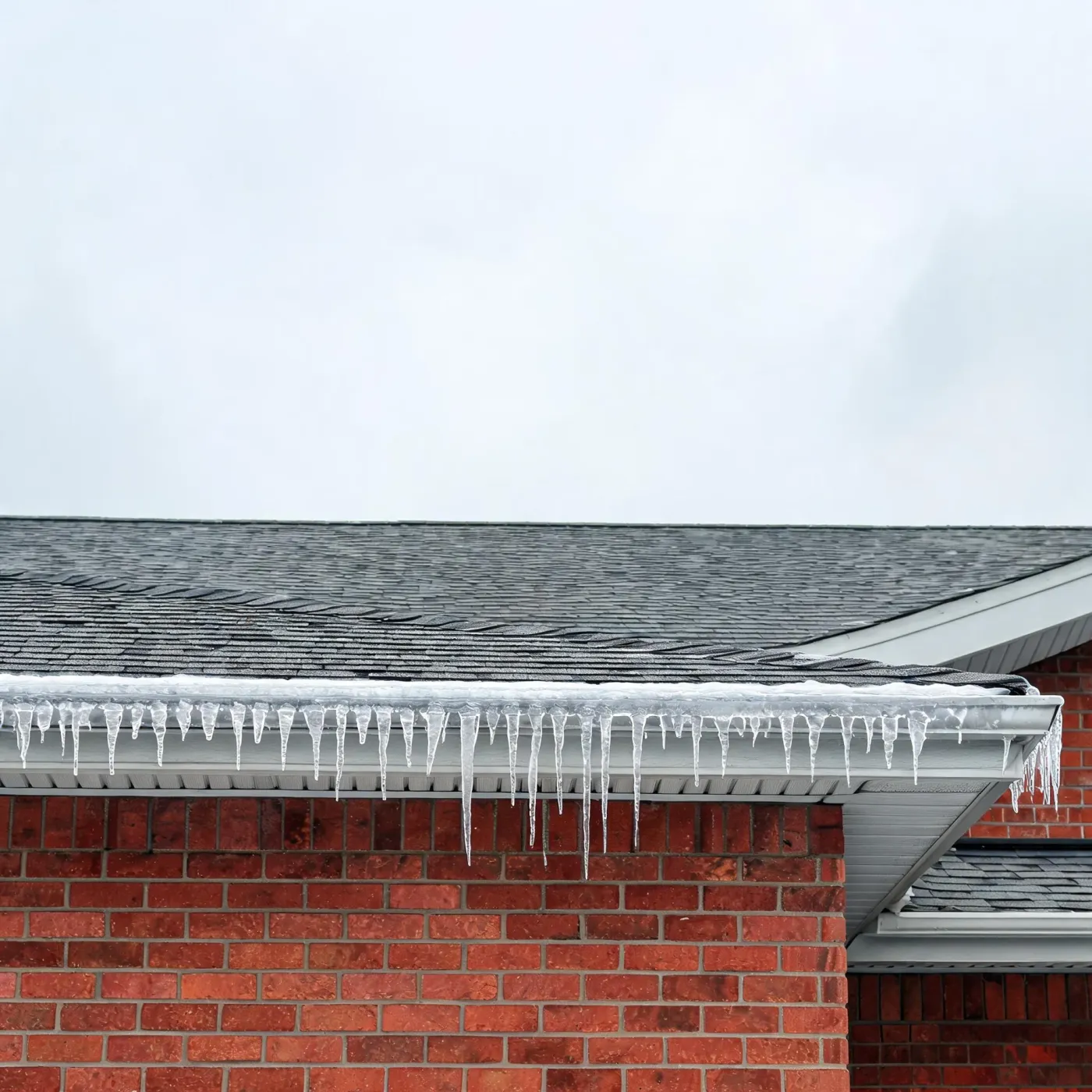
On a January night here, the temperature averages 20°F, according to NOAA. That's the kind of cold a furnace sits in for hours at a stretch, not just a quick burst in the early morning. A unit sized right for your home will run long steady cycles to hold the house there, and you'll feel warm air moving from the vents most of the night. One sized too small won't let up. It'll run straight through without climbing to the temperature on your thermostat, and you'll notice the house never quite catches up by morning. That's the gap sizing is meant to close, matching the furnace to how cold it actually gets where you live.

NOAA nClimDiv 1991-2020 county normals weighted by homes

A gray-haired man in a dark coat dusted with snow stands in a warmly lit home entryway, with a lamp, sofa, window and white staircase banister behind him.
An older man with gray hair and a beard, wearing a dark coat dusted with snow and a blue plaid scarf, stands smiling in a dimly lit entryway with a window, framed picture, table lamp and staircase behind him.
A gray-haired, bearded man in a dark winter coat with snow on the shoulders stands in a doorway of a home interior with a lit lamp, framed pictures, a potted plant and a staircase behind him, and an evergreen wreath at the left edge.
A gray-haired man in a dark coat with snow on the shoulders and collar stands smiling in a dimly lit entryway with a paneled front door, lamps, and a framed picture in an adjoining room.

Furnace too big for the house

An oversized furnace heats the air fast, hits the thermostat setting, and shuts off before it's pulled the chill out of your walls and floors. That short cycle means the rooms farthest from the furnace stay cooler while the room with the thermostat reads warm. It also means more starts and stops over the course of a day, which puts more wear on the igniter and the blower motor than a furnace running longer, steadier cycles. Gas use goes toward those short bursts of heat rather than an even draw, and the house never quite feels settled. You'd notice it most on a cold night when the furnace keeps kicking on and off instead of running through.
Furnace too small for the house

An undersized furnace can't keep up once the temperature drops hard, which in Illinois means it runs for hours without catching up to the thermostat. On the coldest nights it may never shut off at all, and the house still ends up colder than you set it. Power here isn't cheap, and a furnace running nonstop to chase a temperature it can't reach adds up over a winter. It also puts steady strain on the blower motor and heat exchanger, since they're working continuously instead of cycling off to rest. A furnace sized too small shows its limits exactly when you need it most, on the hardest nights of the year.

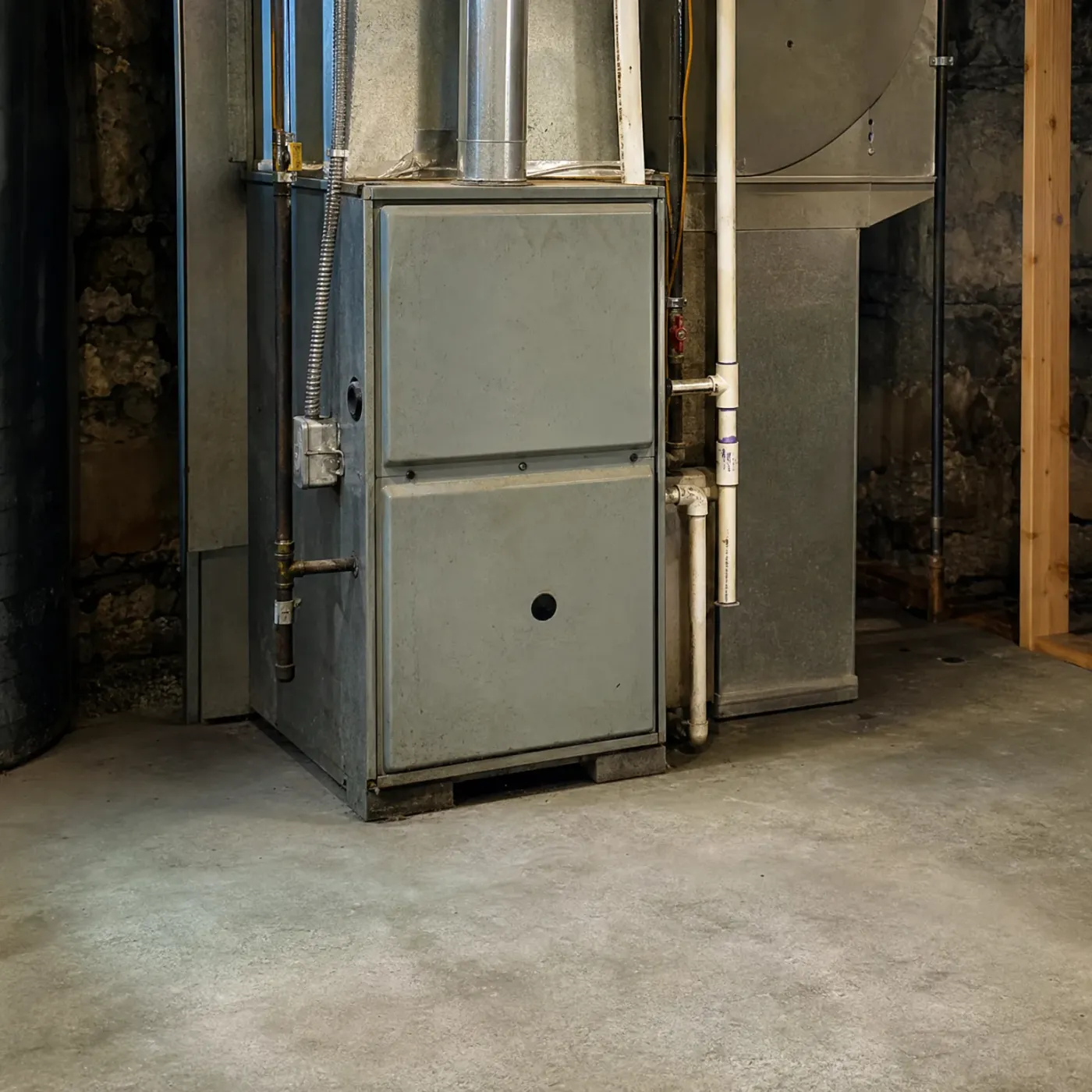
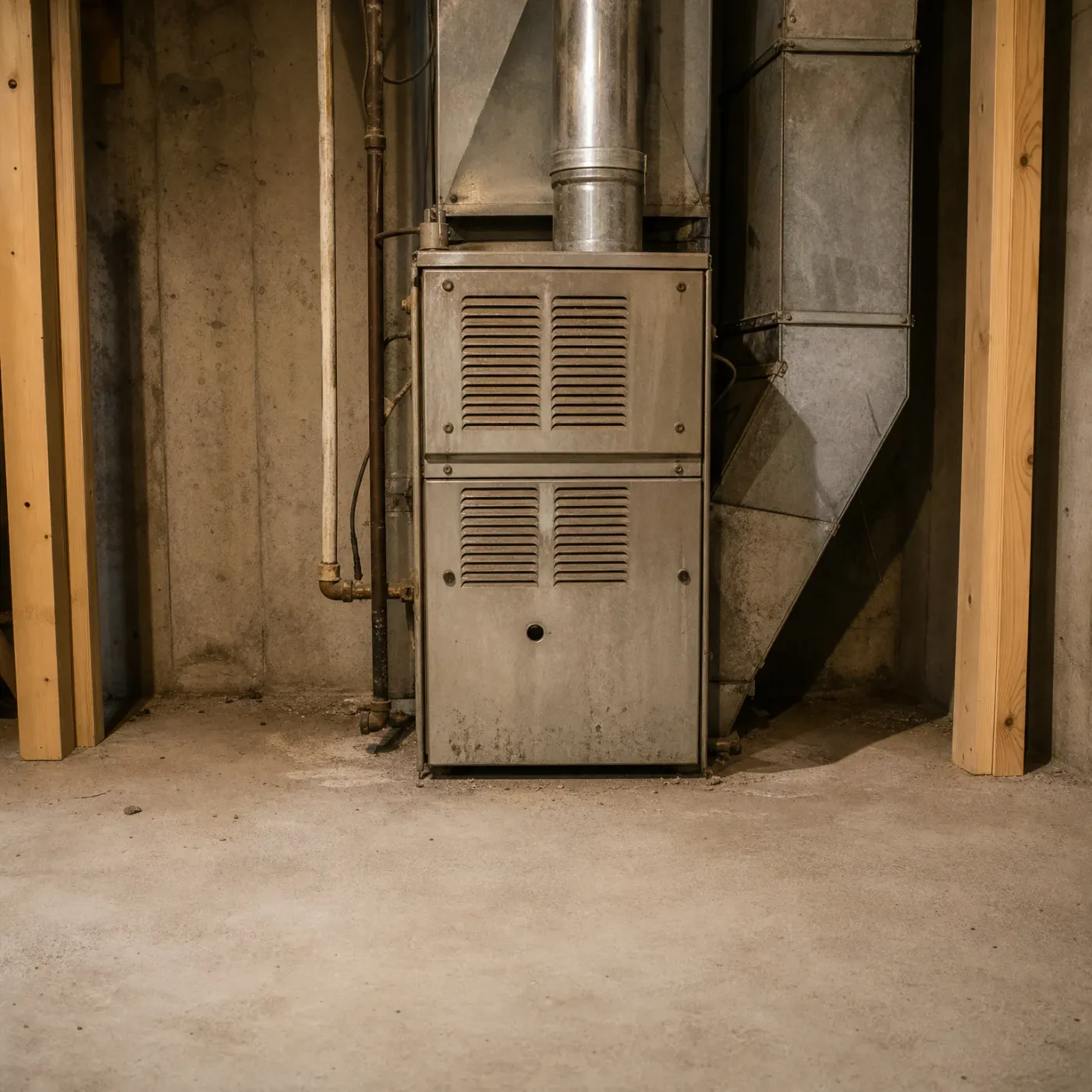
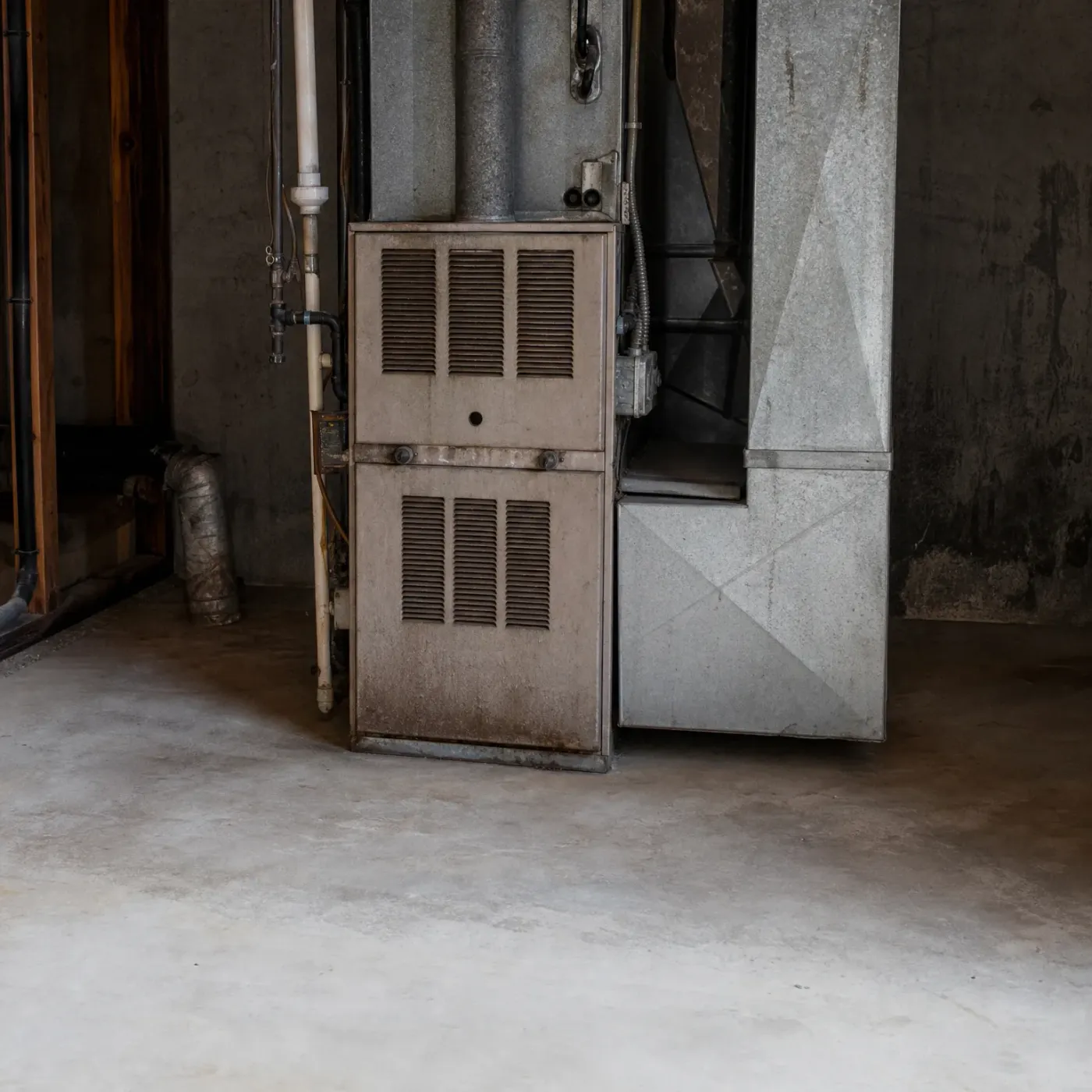
An older gas furnace with two louvered front panels stands on a concrete basement floor beside galvanized sheet-metal ductwork, pipes, and a weathered concrete wall.
Before you get your furnace installation
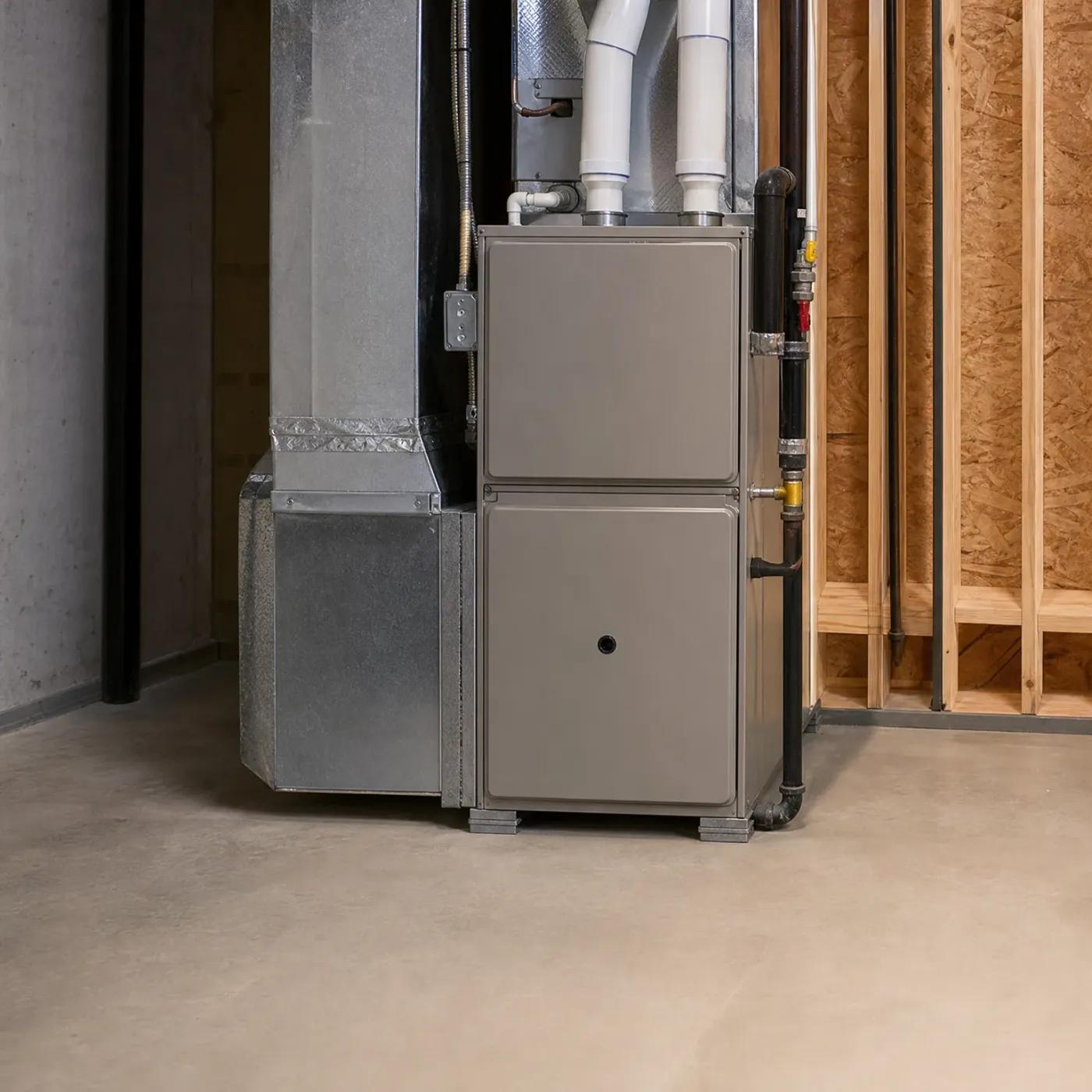
A gray high-efficiency furnace in a basement, connected to sheet-metal ductwork on the left and white PVC vent pipes above, with black gas and drain piping and an exposed wood-stud wall with OSB sheathing on the right.
After you get your furnace installation

How a contractor figures heat loss

A contractor doing this right walks the house before quoting a furnace. They measure each room, count windows and doors, check how much insulation is in the attic, and note which way the house faces. All of that feeds into a heat loss calculation, usually a Manual J, that adds up how many BTUs escape your home per hour when it's 20°F outside. Two houses with the same square footage can need different size furnaces if one has old single-pane windows and the other has newer double-pane ones. A contractor who skips this and sizes off square footage alone is guessing, and a guess either wastes gas or leaves you cold in February.

What the furnace nameplate tells you

If your furnace came with the house, the input BTU rating is printed on a plate inside the access panel. That number tells you what the unit was built to put out, not whether it was sized correctly for your home in the first place. Furnaces get swapped for a same-size replacement more often than they get resized, so a unit that's always run short cycles or never quite kept the back bedrooms warm may have been wrong from the start. Knowing that number before a contractor comes out helps them compare it against what your house actually needs and catch a mismatch that's been costing you gas for years.

Winter nights average 20°F statewide

A 20°F night means your furnace isn't just kicking on for a bit and resting. It's holding that output for hours, sometimes the whole night, to keep your rooms at temperature. Sizing has to account for that kind of sustained cold, not just a cold snap here and there.

NOAA nClimDiv 1991-2020 county normals weighted by homes

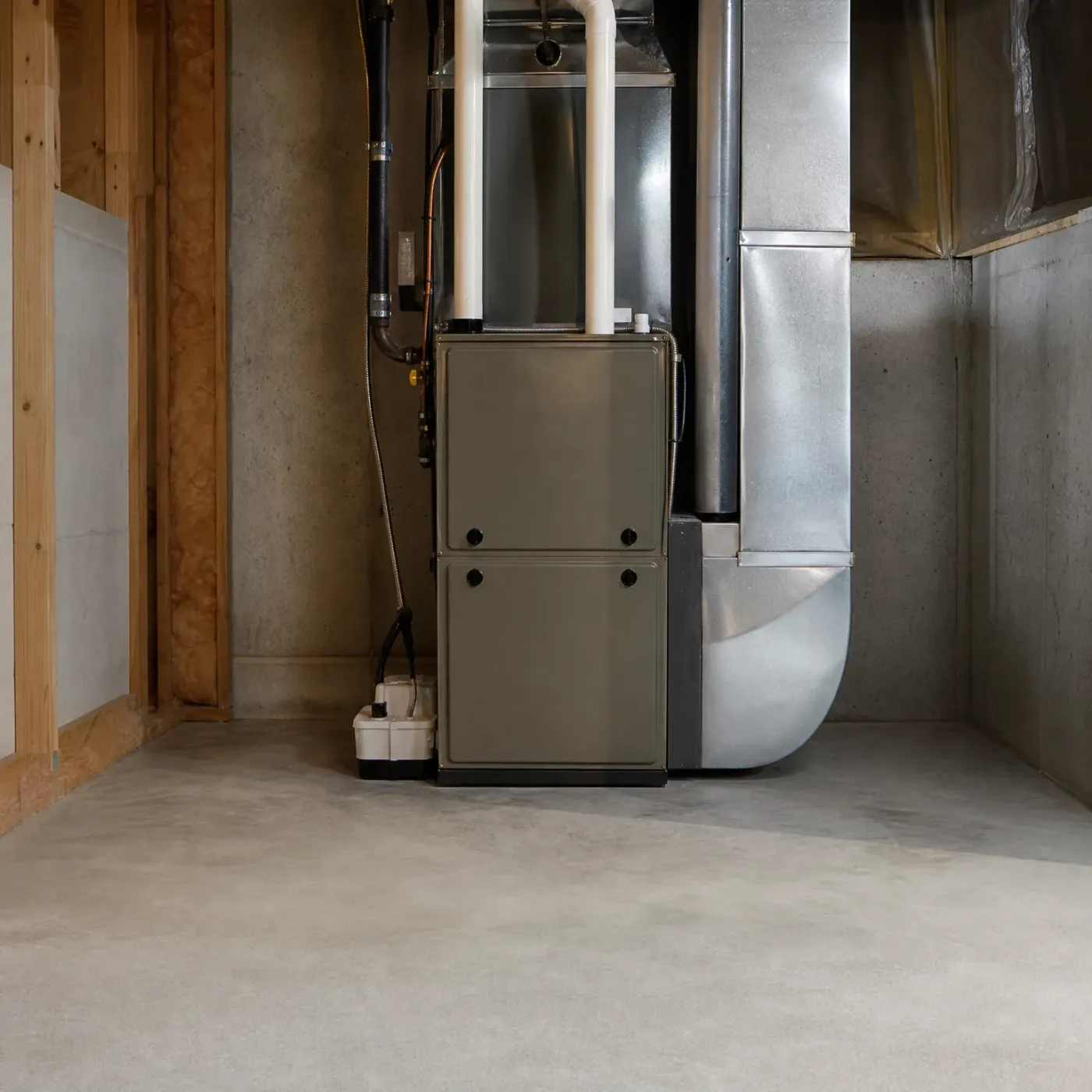
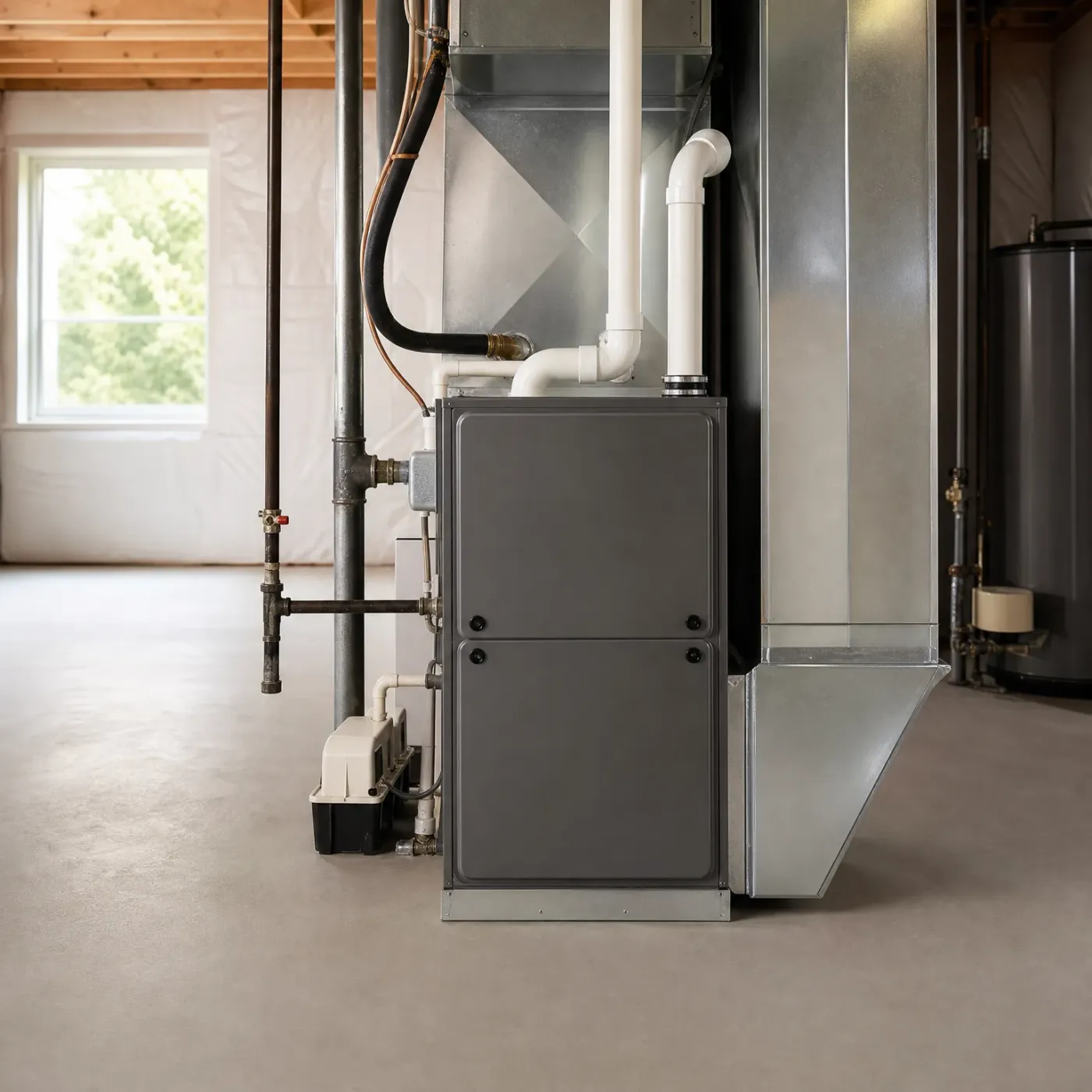
A gray high-efficiency furnace with white PVC vent pipes stands against a concrete basement wall beside sheet-metal ductwork, a small condensate pump on the floor, and exposed wood framing at left.
A furnace sized to the house runs for long stretches at steady output, keeping rooms even from one end of the house to the other.
A gray sheet-metal furnace with flue pipe and adjacent ductwork stands against a stone basement wall on a concrete floor, with white PVC and metal pipes running nearby.
A furnace too small or worn out for the job struggles against an Illinois cold snap, leaving the basement and the ductwork straining to keep up.
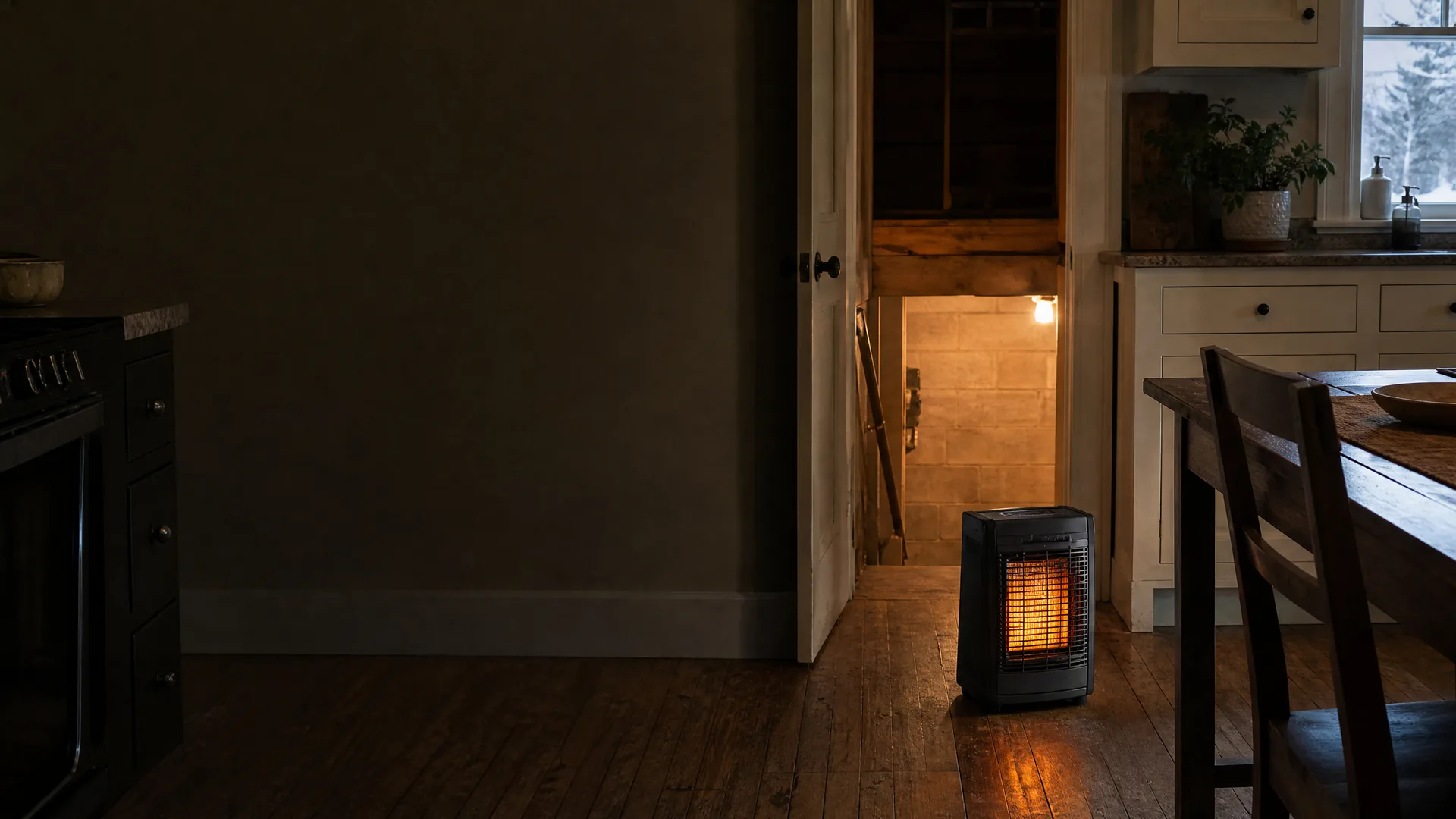
A dimly lit interior with wood plank flooring where a small portable heater with a glowing orange element sits near an open doorway, with a stove at left, kitchen cabinets and a potted plant at right, and a wooden table and chair in the foreground.

Six in the morning and the kitchen is the only room you can stand to sit in. You've got the space heater pulled up close to the table, its coil glowing orange, and you're still in your coat. The basement door behind it is open because that's where the furnace is, and you've been down twice already, flipping the switch off and on, listening for the whoosh that isn't coming. Outside it's still dark and somewhere near 20 degrees. The coffee's going cold faster than it should. You've got a form open on your phone, and once it's sent you can stop thinking about the furnace and just wait for the call.

The right pro for this job

A furnace sized by guesswork instead of a heat loss calculation is a gamble with every January night you've got ahead of you. You've seen what an oversized or worn-out unit does: cold rooms down the hall, a basement that never quite warms, a bill that climbs while the house still feels off. Getting the number right means a contractor who'll actually measure your home instead of quoting off its square footage alone. That's the part you can't do from here, and it's the part that decides whether next winter feels like this one or different. You've read what goes into the number. The next step is having someone put a tape measure to your walls and tell you what your house actually needs, so the furnace going in fits the place you live in, not an average of it.

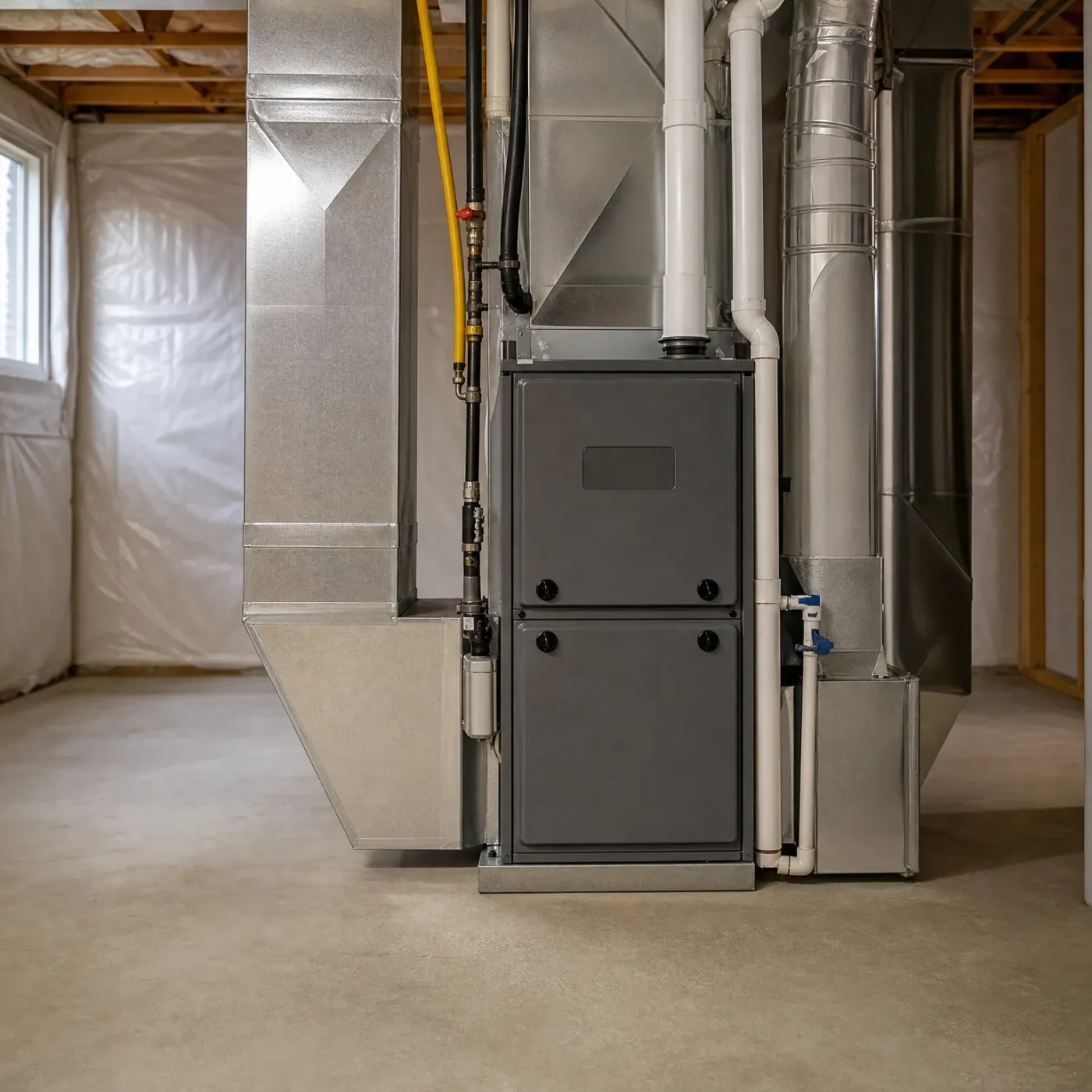
A gray gas furnace stands on a concrete basement floor, connected to sheet-metal ductwork, white PVC vent pipes, and a yellow gas line, with plastic sheeting covering the walls.

A furnace installed to match the house

This one's sized to the heat loss of the home it's in, with ductwork and gas lines run clean to it. It'll hold a steady output all night on a 20°F night and heat every room the same, basement included.

A metal furnace with louvered panels stands against a concrete basement wall, connected to sheet-metal ductwork and a round flue pipe, with wooden framing posts and a pipe nearby.

A furnace carrying more than it should

This one's old enough to show it, dust settled into the cabinet, and likely sized off a guess instead of a room-by-room count. On the coldest nights it runs flat out and still leaves rooms short of where the thermostat is set.

Two Ways to Size a Furnace

Sizing by square footage alone

  • A square-footage chart gives you a BTU range, but it has no idea how many windows face north or how high your ceilings run.
  • Two houses at 2,200 square feet can need different furnaces if one has a finished attic and the other doesn't.
  • This method skips insulation entirely, and an Illinois attic with thin coverage loses heat a chart can't see.
  • It's fast, and that's the appeal, but fast is how you end up with a furnace that short cycles or can't keep up on a 20°F night.
  • A contractor who quotes off square footage alone hasn't walked your rooms or checked your ductwork.

Sizing by heat loss calculation

  • This accounts for your square footage plus window count, ceiling height, insulation, and which way the house faces.
  • It gives a BTU number built around how your specific house loses heat, not an average of every house that size.
  • A contractor doing this walks the rooms, checks the attic, and notes where cold air is getting in.
  • It takes longer than reading off a chart, but it's the only way to know the furnace will hold a steady cycle through a long Illinois night.
  • This is what a straight answer on furnace size actually requires, since there's no single number that fits every house.
A gray high-efficiency furnace in a basement with sheet-metal ductwork, white PVC vent pipes, metal plumbing lines, a condensate pump on the floor, and a window showing green trees outside.

Furnace sized and installed right

This furnace sits clean on the slab, gas line and condensate lines run straight, ductwork sealed to it above. It was matched to the house before it went in, not picked off a chart. On a cold night it runs long and steady and every room gets the same heat.

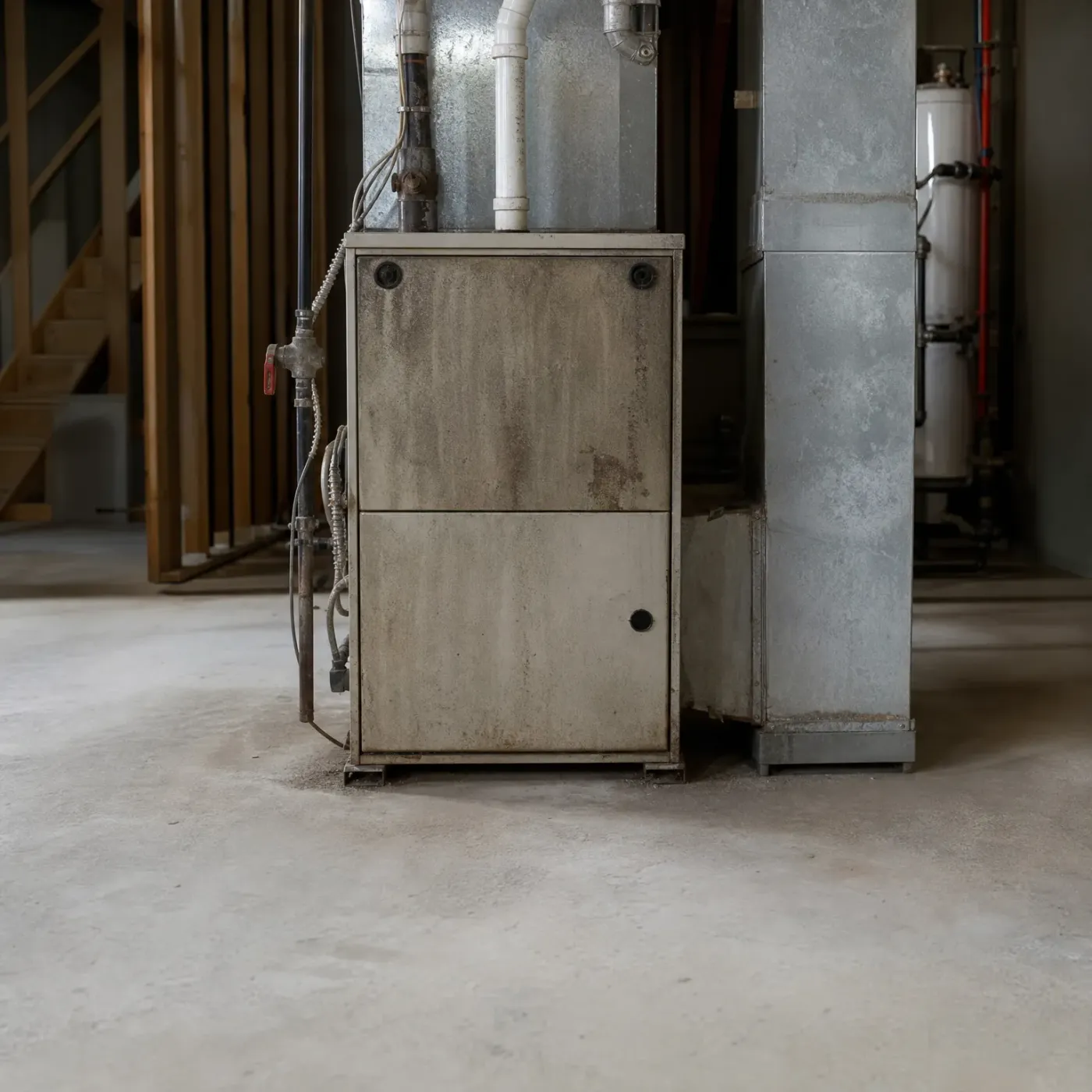
An older metal furnace with PVC and metal pipes stands on a concrete basement floor beside galvanized ductwork, with wooden stairs and a water tank in the background.

Furnace past its sizing and its years

Dust has built up on this one, and the gas line and condensate pipes look like they were worked around rather than planned for. A furnace like this was likely sized off a guess, not a heat loss number. It strains on the coldest nights instead of holding steady.

Why does the furnace never seem to stop running?

You notice it most at night. The furnace kicks on, runs a long while, and you don't hear it shut off before you fall asleep. Or maybe it's the opposite: it clicks on, off, on, off, every few minutes, and the room by the thermostat is warm while the bedrooms down the hall stay cold. You've started closing doors to keep heat in one room. The gas bill is higher than the house seems to justify, even with power rates what they are here. None of that means the furnace is broken. It can mean it was never matched to this house, and on a stretch of nights in the teens or single digits, a furnace working against its own size is wearing down faster than it should.

A woman with dark shoulder-length hair sits wrapped in a gray fleece blanket on a sofa with an open book on her lap, beside a lit lamp and a dark window.
A smiling older woman with gray shoulder-length hair in a cream cable-knit turtleneck sweater stands behind a wooden board holding a round loaf of bread, in a warmly lit kitchen with a dark window and shelves behind her.

Getting the size right

  • Furnace size comes from a heat loss calculation on your home, not a square footage chart.
  • An Illinois winter night near 20°F means your furnace needs to hold steady output for hours, not just short bursts.
  • An oversized unit cycles on and off and leaves far rooms cold, while an undersized one runs nonstop and still can't keep up.
  • A contractor who walks the house, measures rooms, and checks insulation and windows gets the number right the first time.
  • Getting matched with someone who does this properly means you stop chasing the answer yourself.
  • Once your furnace is sized and installed to match your home, those cold mornings in the kitchen stop happening.

The right furnace for your house was never going to come from a chart. It comes from your square footage, your windows, your insulation, and the kind of cold that sits over Illinois in January. A unit sized for those things runs long and steady on a 20°F night and heats the kitchen the same as the far end of the hall. One sized by guesswork does the opposite, whether that means short-cycling and leaving rooms cold or running flat out and still losing ground.

A contractor who measures the house before quoting a number is the difference between those two outcomes. That walk-through, room by room, window by window, is what turns a rough estimate into a furnace that actually matches your home. Skip it and you're gambling on every cold snap the rest of the winter brings.

You don't have to run that process down yourself. Once you're matched with a contractor who does this right, the work of figuring out the correct size and getting it installed belongs to them, not you. You've already seen what the wrong size costs you: the cold kitchen at six in the morning, the space heater pulled up to the table, the basement that never warms. Getting matched with someone who sizes it properly is how that morning stops repeating itself. The answer to what your house needs isn't something you have to work out alone from here.

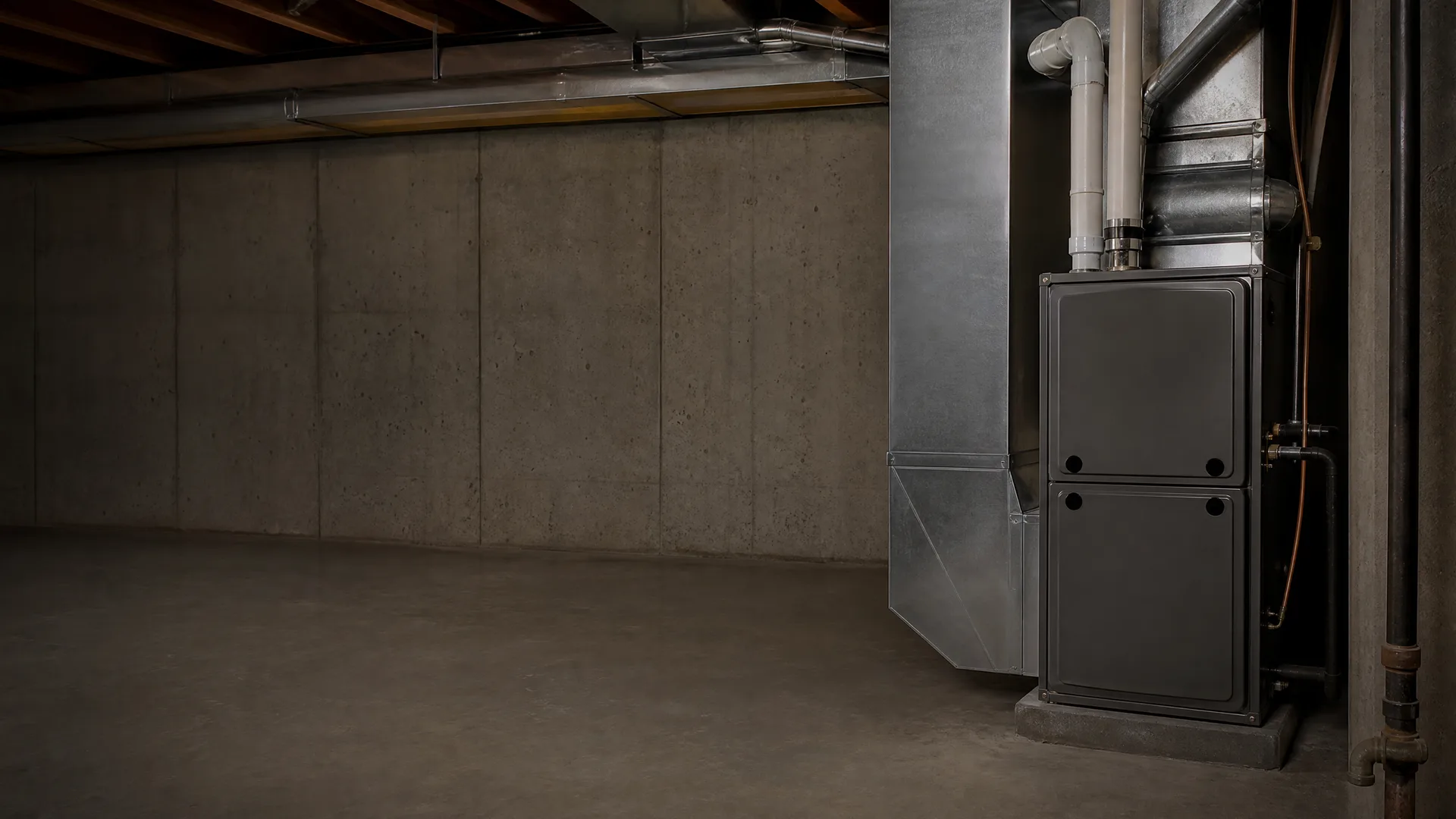
An empty basement with bare concrete walls and floor, exposed wooden joists and pipes overhead, and a dark furnace with sheet-metal ductwork and vent pipes in the right corner.

Matched to your furnace job

One request ends the search for a furnace installer.

Step 1 of 3: Equipment