Profile view of a bearded man wearing a dark baseball cap and a dark gray T-shirt against a plain off-white background.

What temperature to set the heat in an Illinois winter

Step 1 of 3: Equipment

Most homes in Illinois do fine with the thermostat set between 68 and 70 degrees during the day, then down to 62 or so at night or when no one's home. That range keeps the furnace running in shorter, steadier cycles instead of straining to catch up after a big swing. Illinois winters push outdoor temperatures well below freezing for weeks at a time, and the colder it gets outside, the harder your furnace has to work to hold any setting, so the gap between indoor and outdoor temperature matters more than the number on the dial. Setting it lower than 68 won't hurt the furnace, but going much above 70 means longer run times for comfort you probably won't notice. A furnace that's been maintained holds a setting more evenly and responds faster when you adjust it, which matters more once January and February settle in.

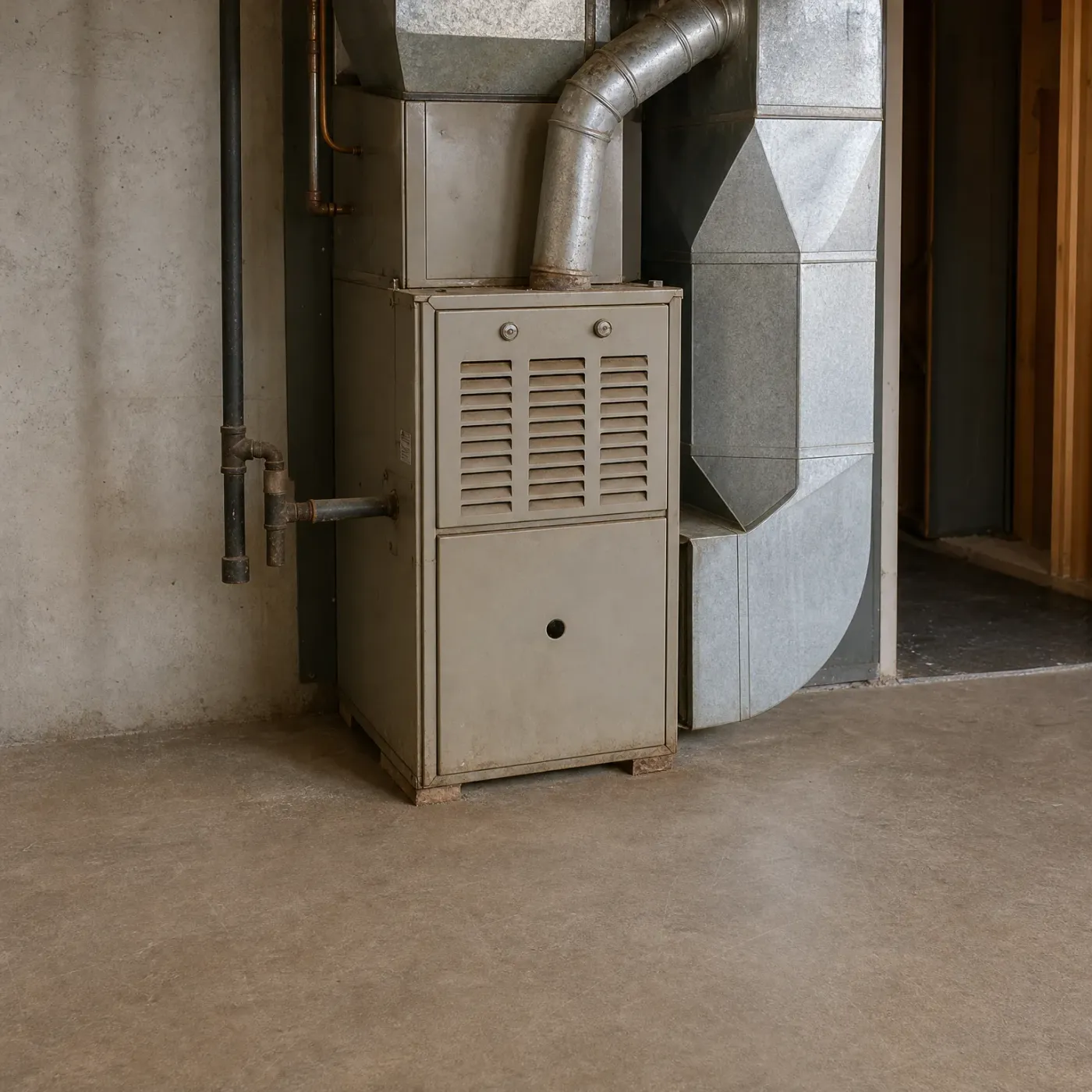
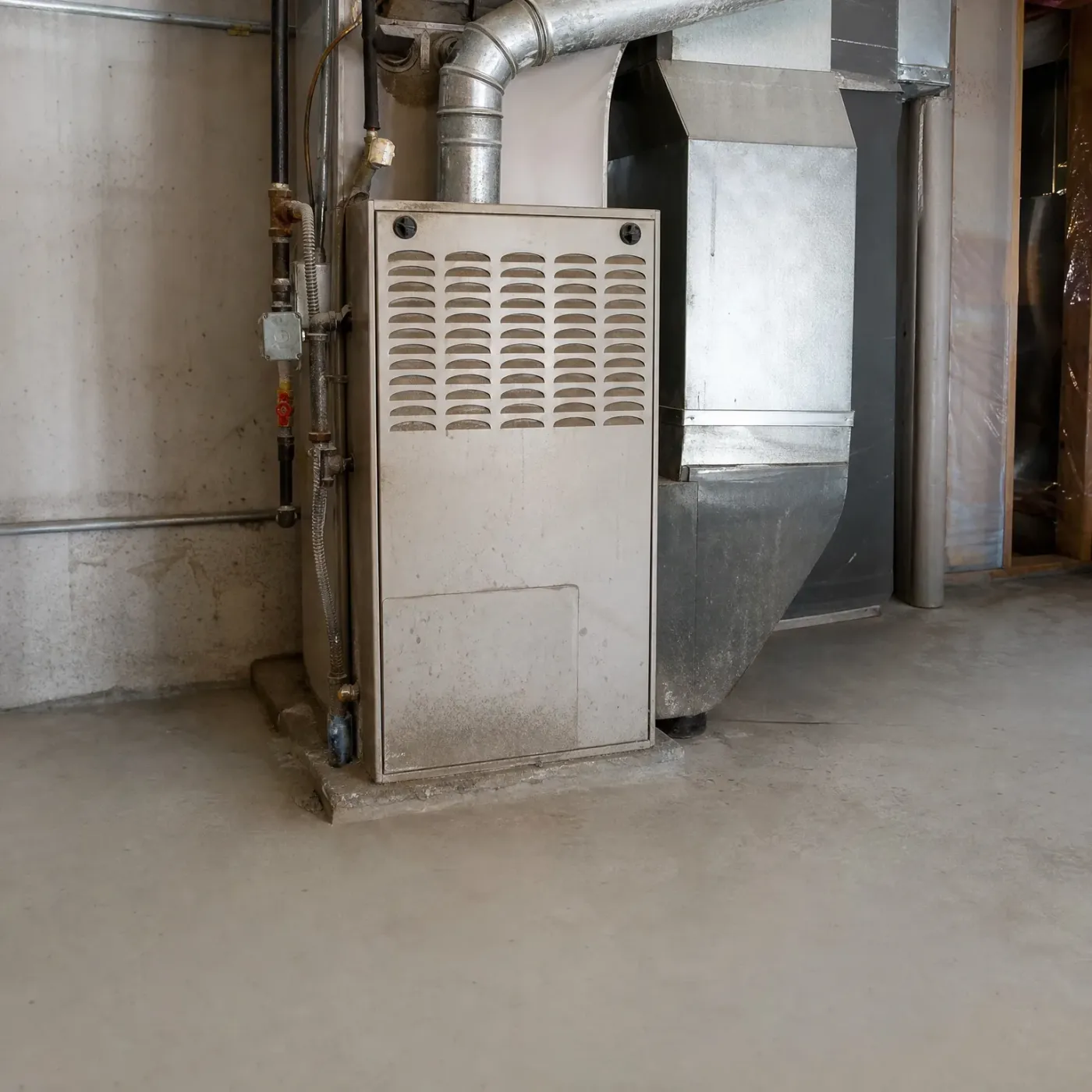
An older metal furnace with a louvered front panel stands against a concrete basement wall, connected to sheet-metal ductwork and a flue pipe, with copper and steel pipes running alongside.
Before you get your furnace maintenance
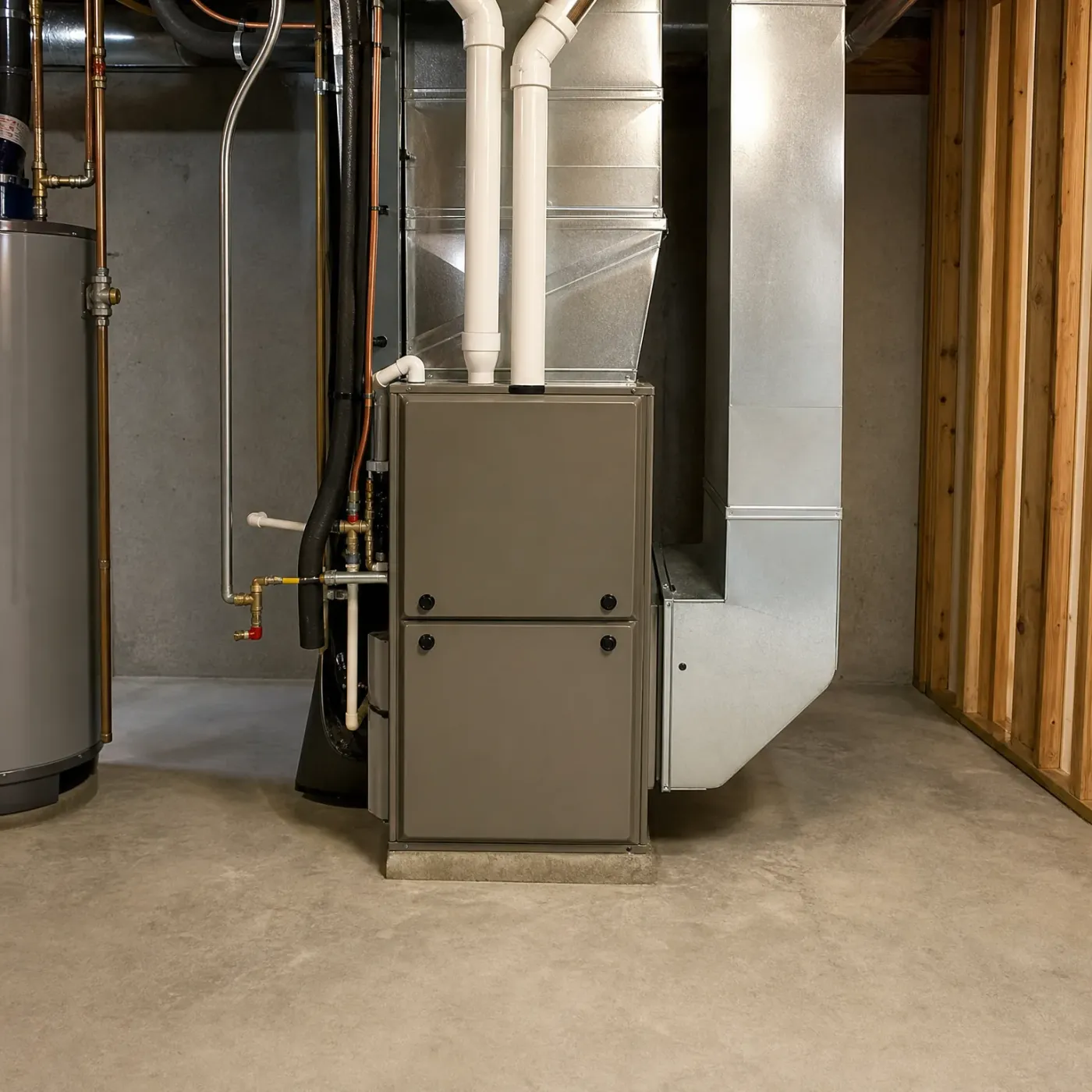
A beige high-efficiency furnace stands on a concrete basement floor beside sheet-metal ductwork, with white PVC vent pipes and a gas line running along an insulated wood-framed wall.
After you get your furnace maintenance

A furnace doesn't just turn on and hold a flame until the house hits temperature. It cycles, burner on, burner off, checking the thermostat the whole time. Set the dial somewhere steady and reasonable, and those cycles stay short and even. Push it higher, and the burner has to run longer each time to close the gap, which is where the extra gas comes from. Drop it a few degrees at night and the furnace barely notices, because a house loses heat slowly enough that making up that difference by morning takes almost nothing. A programmable thermostat does the same thing on a schedule, warming the house back up in small steps instead of one long push. None of that matters much if the flame sensor is dirty or the filter's clogged, since a furnace working against those has to run harder no matter what number you've set. That's the kind of wear maintenance catches before it shows up as a short-cycling furnace or a burner that won't stop running.

How Your Furnace Handles The Setting

  • A furnace set to hold steady at 68 cycles on and off in short bursts instead of running one long stretch to recover lost heat.
  • Every degree you push past 70 asks the burner to run longer per cycle, and that shows up on a gas bill that's already higher than your electric one here.
  • Dropping the thermostat at night works because the house loses heat slowly, so the furnace only has to make up a few degrees by morning.
  • A furnace that short-cycles on a poor setup wears the igniter and the blower motor faster than one running normal, steady cycles.
  • Programmable thermostats recover heat gradually before you wake up or get home, so the furnace never has to chase a big temperature swing.
  • A dirty flame sensor or clogged filter makes the furnace work harder to hit any setting, no matter where you leave the dial.
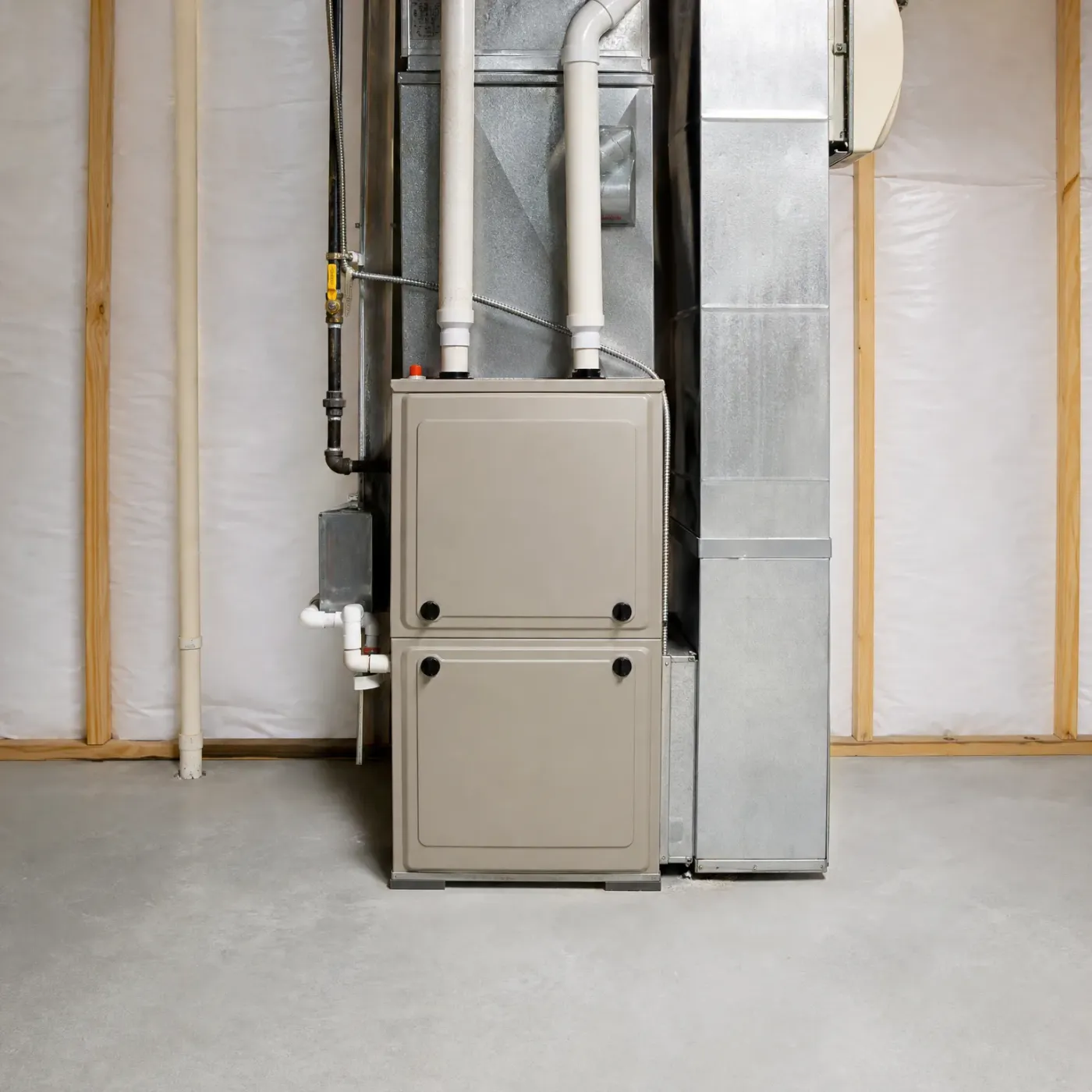
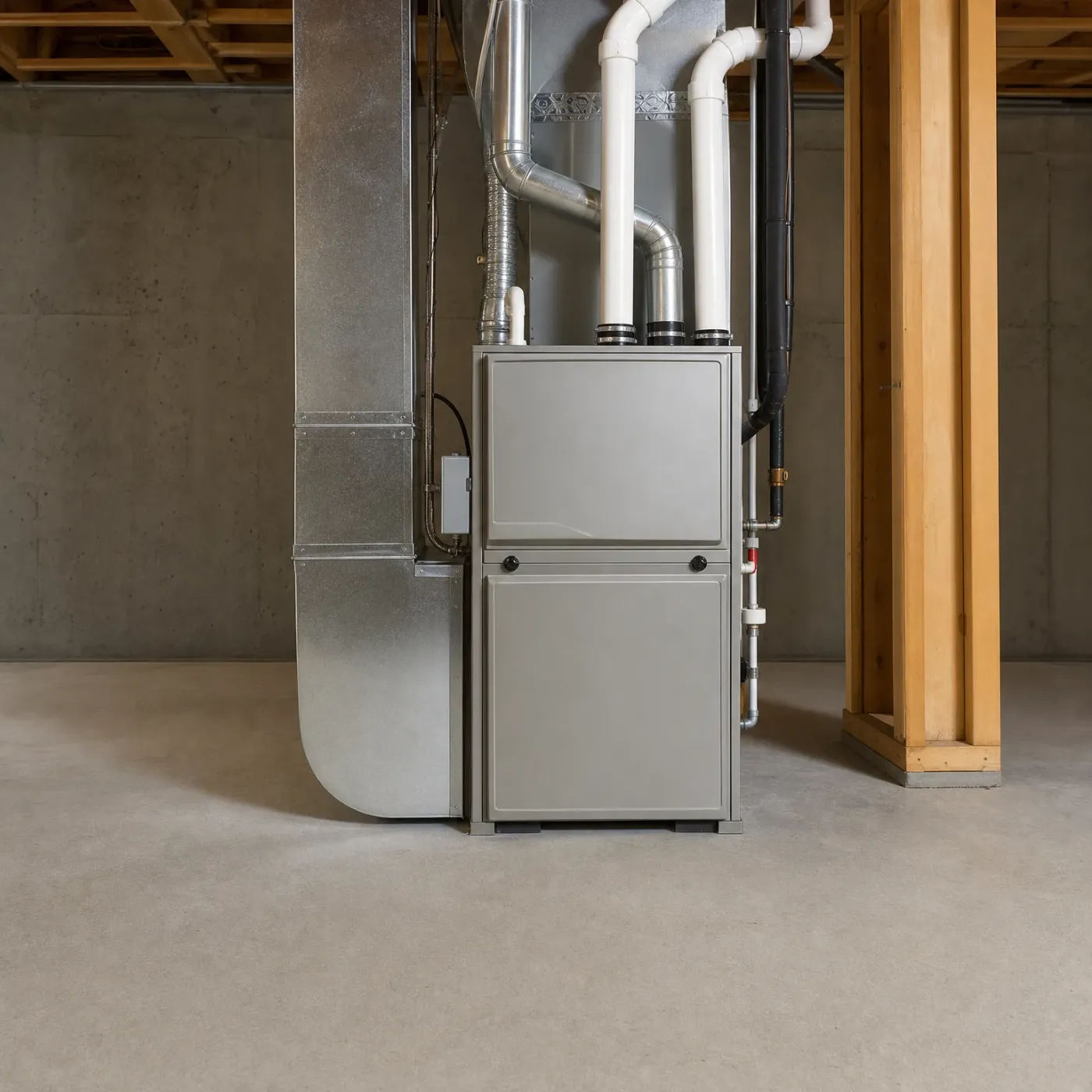
A gray high-efficiency furnace with white PVC vent pipes stands on a concrete pad in a basement, beside sheet-metal ductwork, copper piping and a poured concrete wall with wood framing at left.
A furnace running at a steady, moderate setting keeps a clean flame and even heat through the ductwork above it.
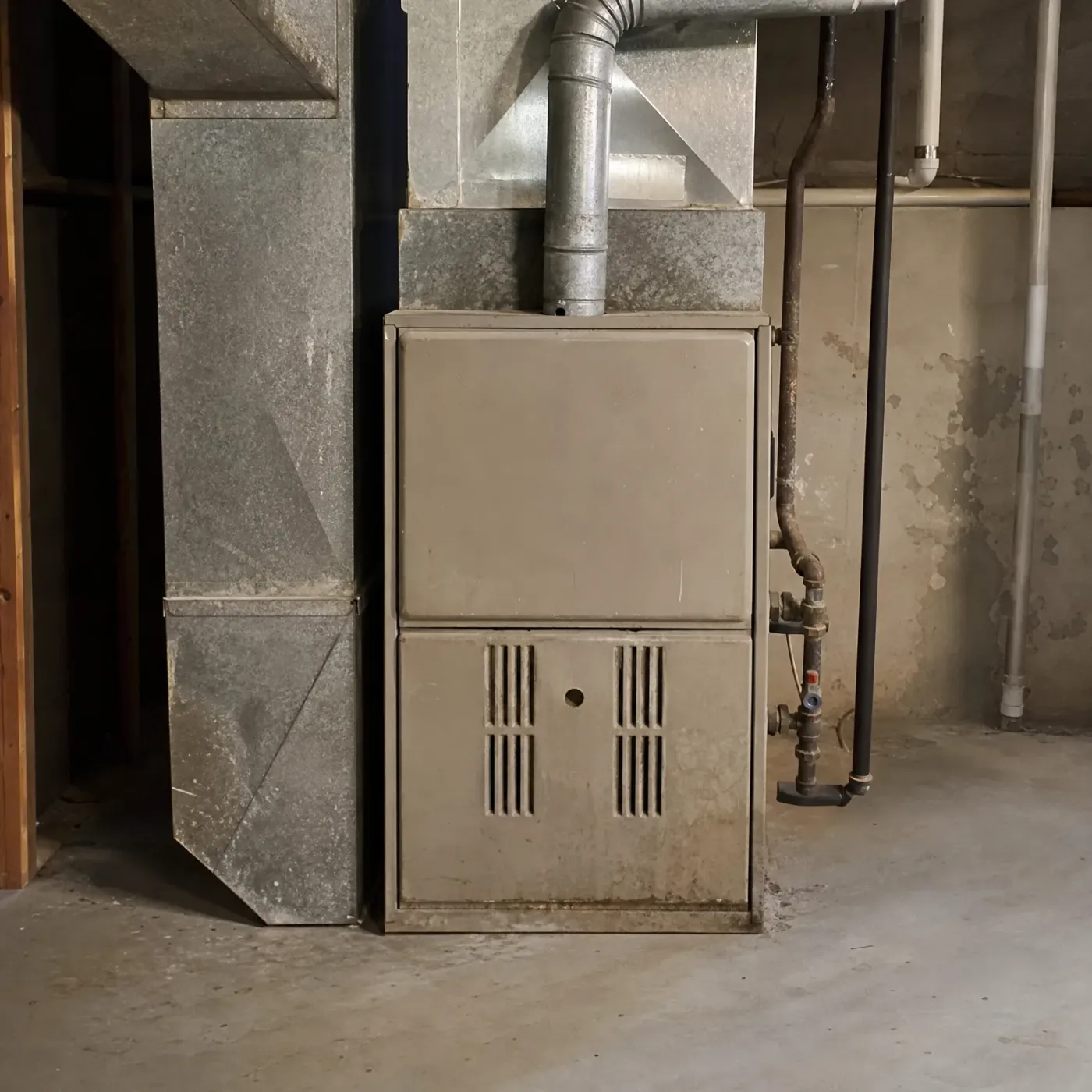
A beige gas furnace in a basement with a metal flue pipe, galvanized sheet-metal ductwork to its left, and gas and water pipes along the concrete wall to its right.
An older furnace pushed to make up lost heat works harder through its flue and fittings than it needs to.
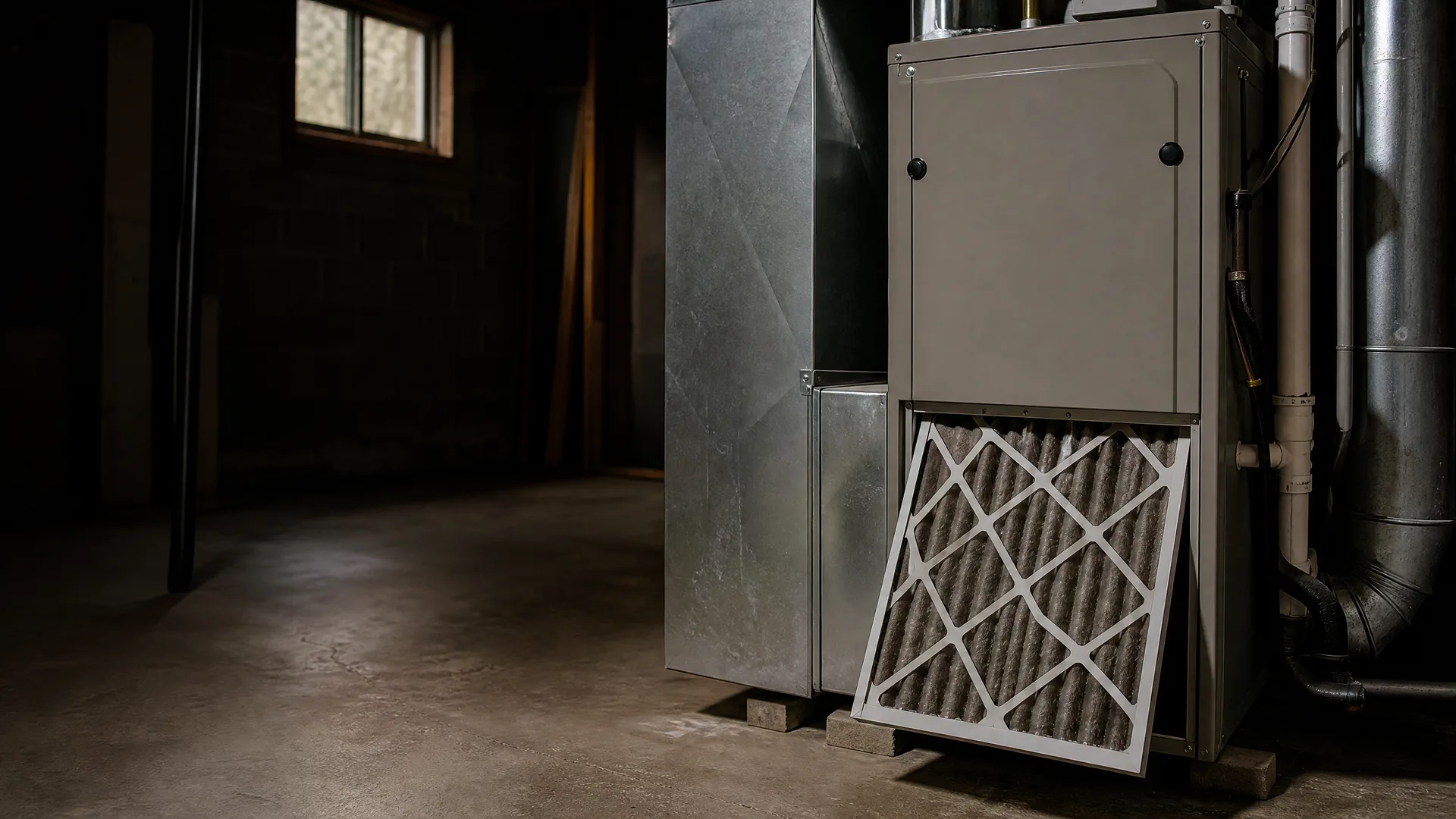
A gray furnace with sheet-metal ductwork in a dim basement, with a dirty pleated air filter leaning against its base on a concrete floor.

You're down in the basement on an October afternoon, pulling the filter to check it before the cold sets in. It slides out grey, matted with a summer's worth of dust, and you hold it up to the light from the bare bulb overhead to see how little passes through. The furnace sits quiet behind you, waiting on the thermostat upstairs. You think about the nights coming when it'll run till morning, and whether this filter has been doing its job or just sitting there making the burner work harder than it should. You set it on top of the cabinet to deal with later and head back upstairs.

Get the right pro for your furnace

A thermostat setting only does its job if the furnace behind it is working the way it should. A furnace that's low on airflow or running a dirty flame sensor will struggle to hold 68 no matter where you set the dial, and you'll end up nudging it up through January without knowing why the house still feels cold. That's what maintenance catches, the small things that make a furnace work harder than the setting should ask of it. With gas heat running most of the day from November through March and electricity rates here what they are, a furnace that's been checked over holds its temperature without the extra cycling that drives the bill up. You've got a number to aim for now. Having someone confirm the furnace can actually hit it without strain is the next thing worth doing, and it's one less thing on your list once it's handed off.

What a thermostat setback actually does

Dropping the thermostat a few degrees at night works because a furnace sized for your house only has to make up a small difference in the morning instead of holding the full spread hour after hour. The recovery period, when the furnace runs to bring the house back up to 68, uses less gas than most people expect, because it's one longer run instead of the house losing and regaining heat over and over. A setback of 6 to 8 degrees overnight is usually the point where the savings are real but the furnace isn't working from so far behind that it strains to catch up before morning.

Why the furnace itself sets the limit

A gas furnace moves heat through a heat exchanger, and that metal expands and contracts every time the burner fires and shuts off. A furnace that short-cycles, firing up for a minute or two and stopping, puts more wear on that exchanger over a winter than one that runs longer, steadier cycles. That's one reason 68 during the day works better than a lower setting paired with frequent manual bumps up and down. The thermostat schedule and the furnace's own condition work together. A unit that's been checked before the cold sets in holds its set temperature with fewer, longer cycles instead of fighting to recover ground.

An older woman with gray hair in a cream knit sweater sits under a blanket on a sofa by a window, looking outside toward yellow-leaved trees, with a lamp, shelves and an armchair in the room behind her.
A gray-haired woman in a chunky knit sweater sits in an armchair with a blanket, looking out a window at yellow autumn foliage, with bookshelves and a potted plant behind her.
A gray-haired woman in a navy sweater sits in an armchair with a knit blanket beside a window, looking out at yellow autumn foliage, with a dining table and houseplant in the room behind her.
A gray-haired woman in a gray cowl-neck sweater sits in an armchair with a blanket, looking out a dark-framed window toward yellow autumn trees.
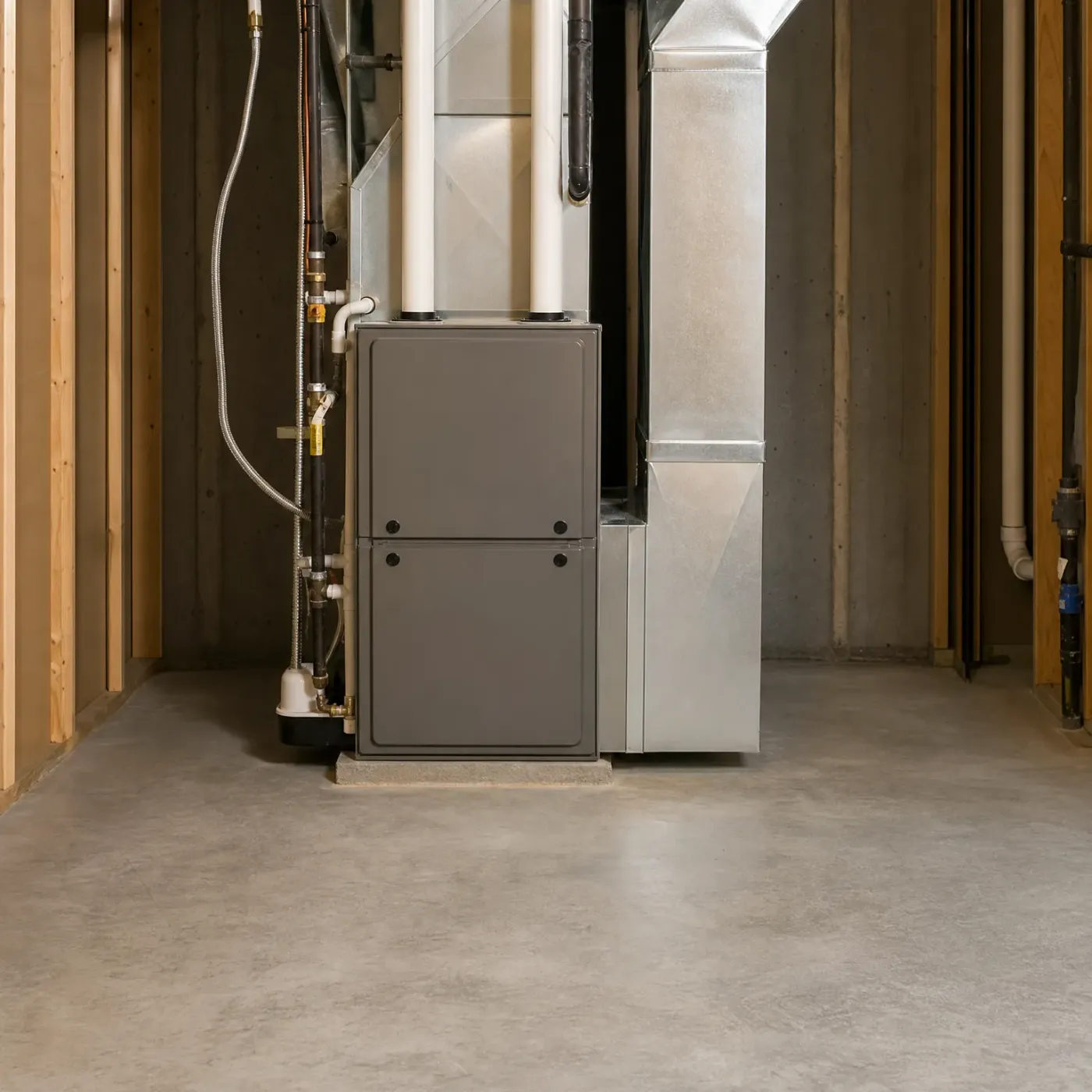
A gray high-efficiency furnace stands on a concrete basement floor beside sheet-metal ductwork, with white PVC vent pipes and a black flexible line running up to exposed wood floor joists, next to a wood-framed post against a concrete wall.

A furnace holding a steady setting

This is what a well-kept furnace looks like running a normal cycle. The burner fires, the blower pushes air through the ductwork, and the flue vents it out through the PVC pipe without strain. Set it at 68 and it just does this, over and over, all winter.

A beige metal furnace with a louvered front panel stands on a concrete floor against a concrete wall, connected to galvanized sheet-metal ductwork and a metal pipe.

A furnace pushed too hard

An older furnace can still heat the house, but it has less room for error. Asking it to climb back from 62 to 70 every morning puts more load on the black iron gas pipe and fittings than a steady setting does. Maintenance keeps it running the way it was built to.

A woman in a cream knit sweater sits in an armchair with her eyes closed and head tilted back, beside a window showing orange autumn foliage and a wooden side table with a mug.
A gray-haired man in a blue quarter-zip sweater sits in an armchair with his eyes closed, beside a large window with bare trees outside and a potted plant and lamp nearby.
A gray high-efficiency furnace in a basement with PVC vent pipes, sheet-metal ductwork, copper and insulated pipes, a water heater at left, and an unfinished wood-stud wall at right.

A furnace keeping up

This is a furnace that's current on maintenance, venting clean through PVC and tied into ductwork sized to move the air it makes. Set the thermostat at 68 and it holds there, cycling on and off without a fight. The burner shuts off when the house is satisfied, not when it gives up.

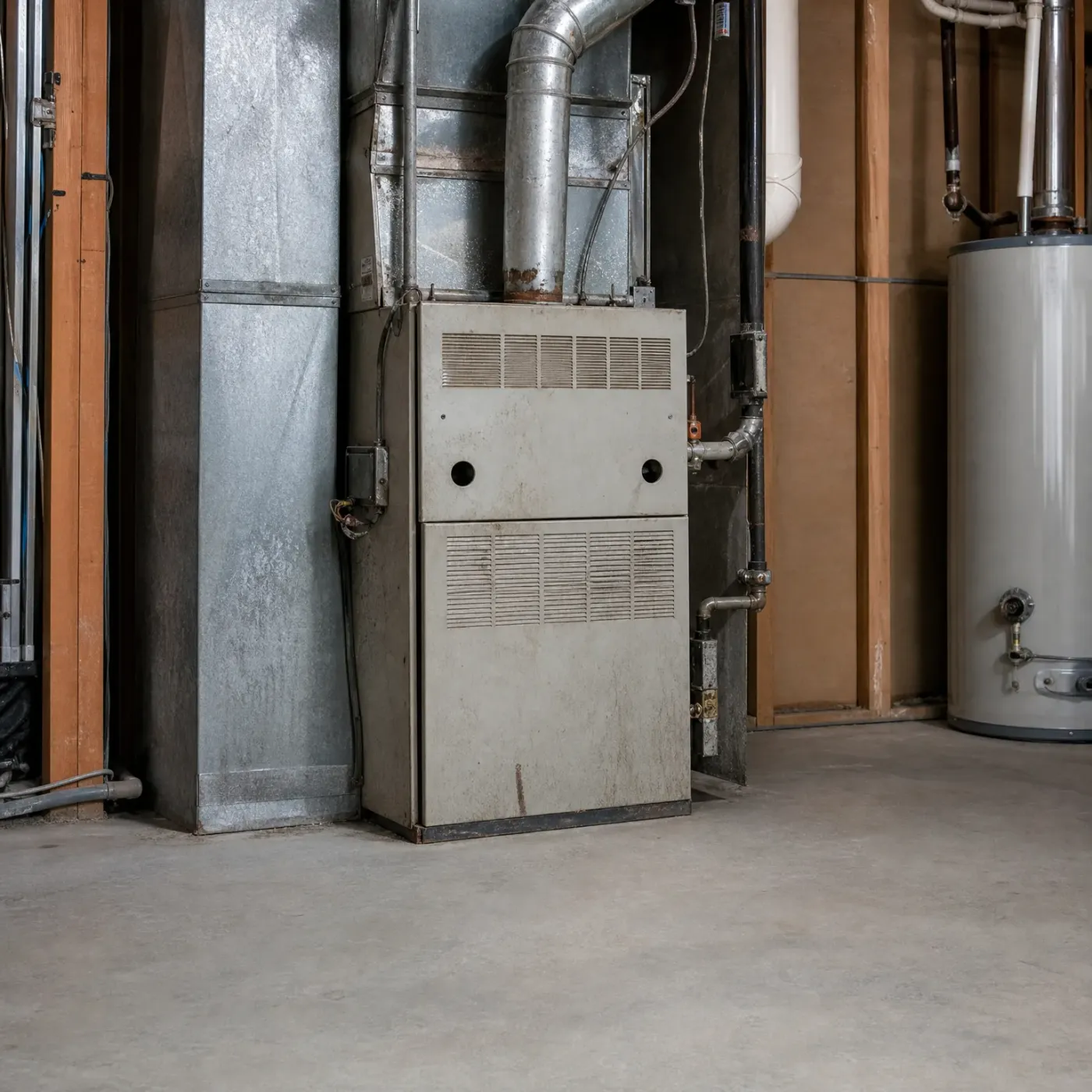
An older beige furnace with louvered front panels stands on a concrete basement floor beside galvanized ductwork, metal and plastic pipes, exposed wood framing, and a cylindrical water heater at right.

A furnace falling behind

This older furnace is working through galvanized ductwork and an aging flue, and a setting that used to hold steady doesn't anymore. The house cools faster than the furnace can answer, so the thermostat gets pushed to 72, then 74, chasing a temperature it used to reach at 68.

75.3% of homes statewide heat with gas

Three out of four homes in Illinois heat with gas, and yours is likely one of them. That means the thermostat number you pick isn't just about comfort, it's what tells your burner how long to run. Keep it steady and the furnace cycles the way it was built to.

ACS 2020-2024 5-year B25040

  1. The thermostat calls for heat when the temperature drops below its setting.

  2. The igniter glows hot enough to light the gas burner.

  3. The burner heats the air moving through the heat exchanger.

  4. The blower pushes that warm air out through the ductwork.

A woman stands in the open doorway of a white stucco house holding the dark door, facing a man in a black cap and shirt seen from behind in the blurred foreground, with a potted flowering plant beside the entry.

68 to 70 by day, 62 at night

That's the range that keeps a furnace in Illinois running the way it was built to. Nothing above does much good if the furnace behind the thermostat is already struggling to hold it, whether that's a weak flame sensor, a clogged filter, or airflow that's been off for months without anyone noticing from upstairs.

If you're not sure what shape yours is in, that's worth finding out before the cold really sets in rather than after. A contractor who works on furnaces in your area can take a look, tell you where things stand, and reach out to set up a time that works for you. You won't need to spend time tracking someone down yourself.

A wooden table holding a stone vase with a bare branch, two stacked books and a small dark bowl, beside a window with green foliage outside and a sofa in the dim background.
Corner of a gray lap-sided house with a white-trimmed grid window, white gutter and downspout, and fallen leaves on the shingled roof, with a wooden fence and yellow autumn trees behind.
Corner of a house with gray lap siding, white trim, a gutter and downspout along the roof edge, and a window at right, with orange autumn foliage and shrubs in the background.
Corner of a light stucco house with a white double-hung window, dark gutter and downspout, and tile roof edge, above a mulched bed of small green shrubs beside a lawn.
Corner of a house with white horizontal siding, white gutter and downspout, and a gray shingled roof with scattered leaves, beside a rounded green shrub and autumn-colored foliage.
Corner of a house with beige lap siding, white trim, a white downspout and a shingled roof, with hydrangea shrubs below and golden autumn trees in the background.

A pro who works on furnaces

Send the form and the furnace tune-up stops being something to remember.

Get a local pro

There's no charge for the request.