

Why heat pumps struggle in sticky Illinois summers

Step 1 of 3: Equipment

Why does my heat pump struggle to cool my house in Illinois summer?

You keep your thermostat set where you like it, but by late afternoon on a humid Illinois day the house feels warm and damp anyway, even though the unit outside is running. You're not sure if that's normal for a heat pump or a sign something needs attention, especially since the air coming out of the vents doesn't feel as cold as you'd expect.

Humidity is the problem, not the heat pump itself

A heat pump cools by pulling heat and moisture out of the air and moving it outside. On a muggy Illinois afternoon the outdoor air is already loaded with moisture, so the system has to work through a lot more of it to get your house down to temperature. The air coming out of the vents can feel less cold even when the heat pump is running fine, because it's spending part of its effort wringing out humidity instead of just dropping air temperature. If the unit is low on refrigerant, has a dirty outdoor coil, or the airflow through the filter is restricted, that struggle gets worse fast, and a house that used to feel comfortable by evening stays sticky instead.

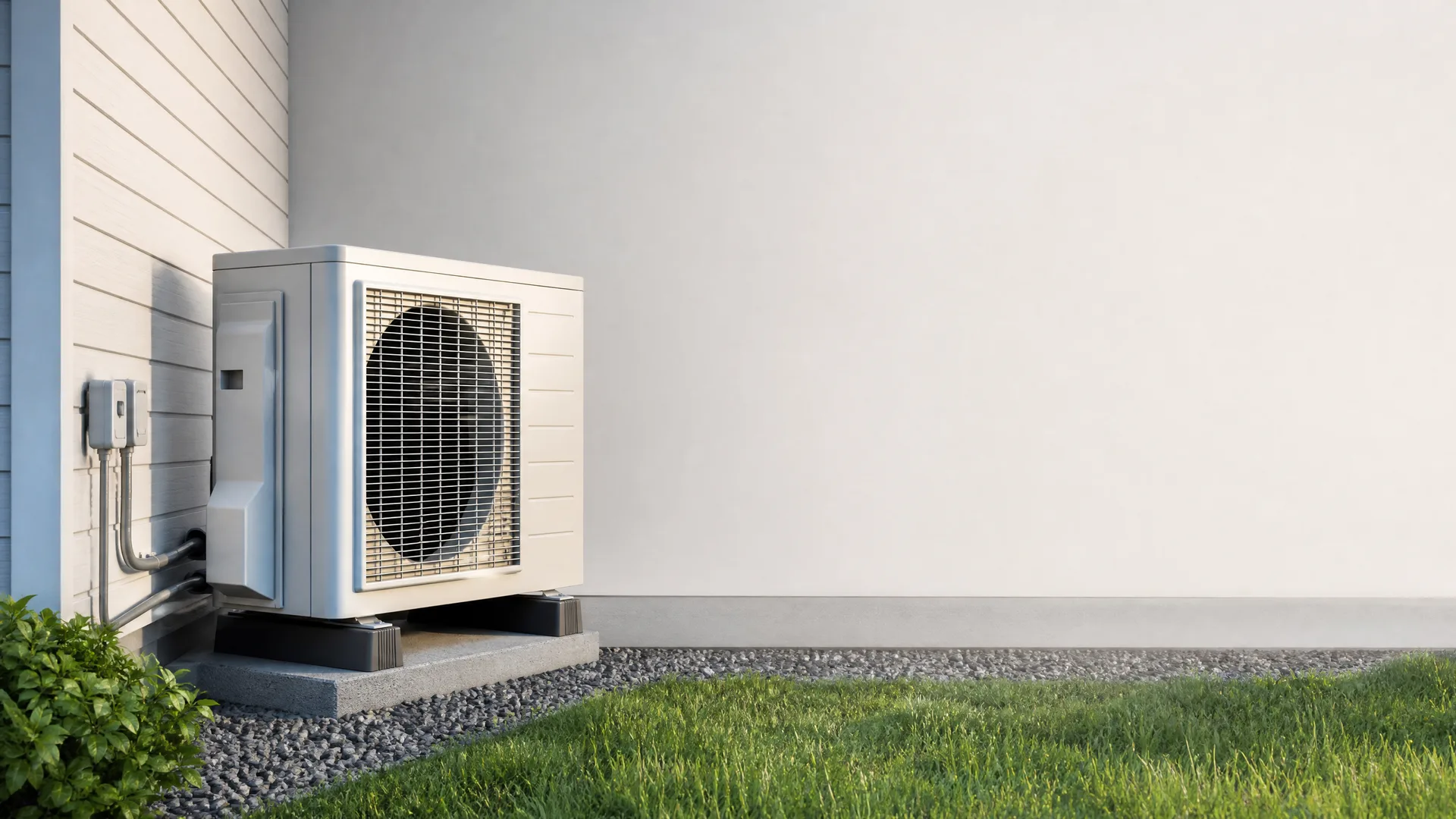
An outdoor heat pump unit on a concrete pad beside a house corner, with a small electrical box and conduit on the wall, gravel border, grass, and a plain light-colored wall filling the right side.

Humidity changes the math

A heat pump cools by pulling heat out of the air, and in the process it pulls moisture out too. On a dry day that's easy work. On a humid Illinois afternoon the air is already loaded with moisture, so the system spends more of its capacity wringing out water vapor and less of it dropping the temperature. The thermostat might read close to your setting while the air still feels damp, because the unit is fighting the humidity more than the heat.

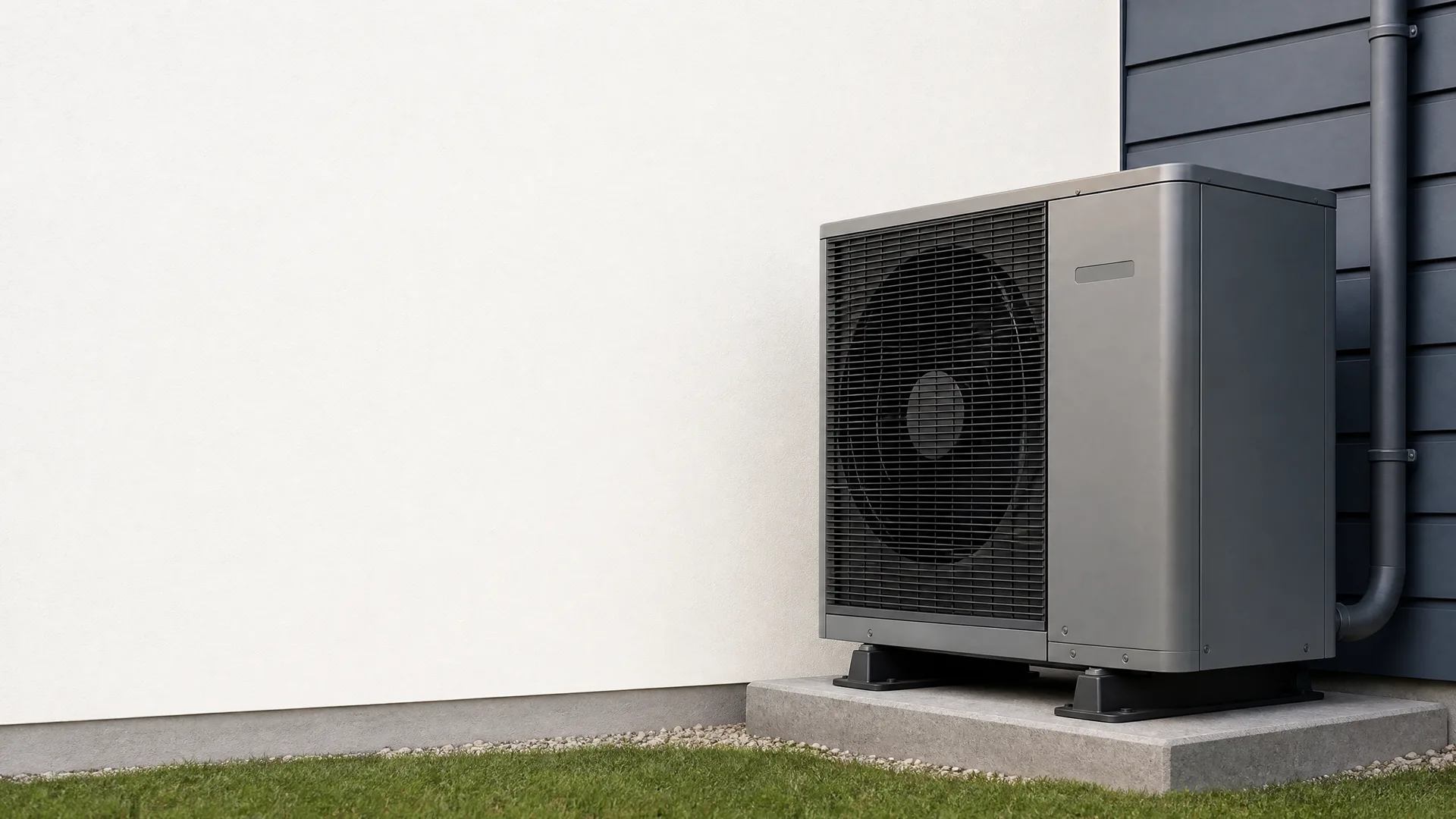
A grey outdoor heat pump unit on a concrete pad beside a white stucco wall and dark siding with a downpipe, with gravel and grass in the foreground.

The coil can't keep up

Inside the unit, the indoor coil is where that heat and moisture actually leave the air. If the coil is dirty, low on refrigerant, or sized for a milder load than what a sticky July day throws at it, it can't pull enough moisture out fast enough. The air moving past it stays cooler but still wet. A contractor checking the coil and refrigerant charge is often the difference between a system that keeps up and one that just runs longer without catching up.

A closed silver laptop and a ceramic mug of dark coffee sit on a wooden table in front of two chair backs, with a kitchen counter, tiled backsplash, wooden cutting boards, a vase of greenery and a potted plant by a window behind.

What a struggling heat pump costs you at home

You'll feel it first in the upstairs bedrooms, the ones farthest from the thermostat, staying warm and clammy while the main floor seems fine. Run the unit longer to chase that comfort and your electric bill climbs, which stings more here than most places since power in Illinois isn't cheap. Leave it be and the compressor is working harder than it should on every humid day, which is exactly the kind of strain that turns into a bigger repair down the road.

This is the sort of thing worth catching early rather than living with all summer. Once you send the form, you're done hunting for a contractor who services heat pumps, done calling around and explaining the same warm-upstairs story to three different companies, done sorting through quotes to figure out who actually knows this equipment. Someone qualified gets in touch, and the problem becomes theirs to diagnose instead of yours to worry over.

Interior corner of a room with a window and sheer curtain at left, a gray upholstered sofa with a cushion at right, and a round wooden table holding stacked books and a round vase with an olive branch.
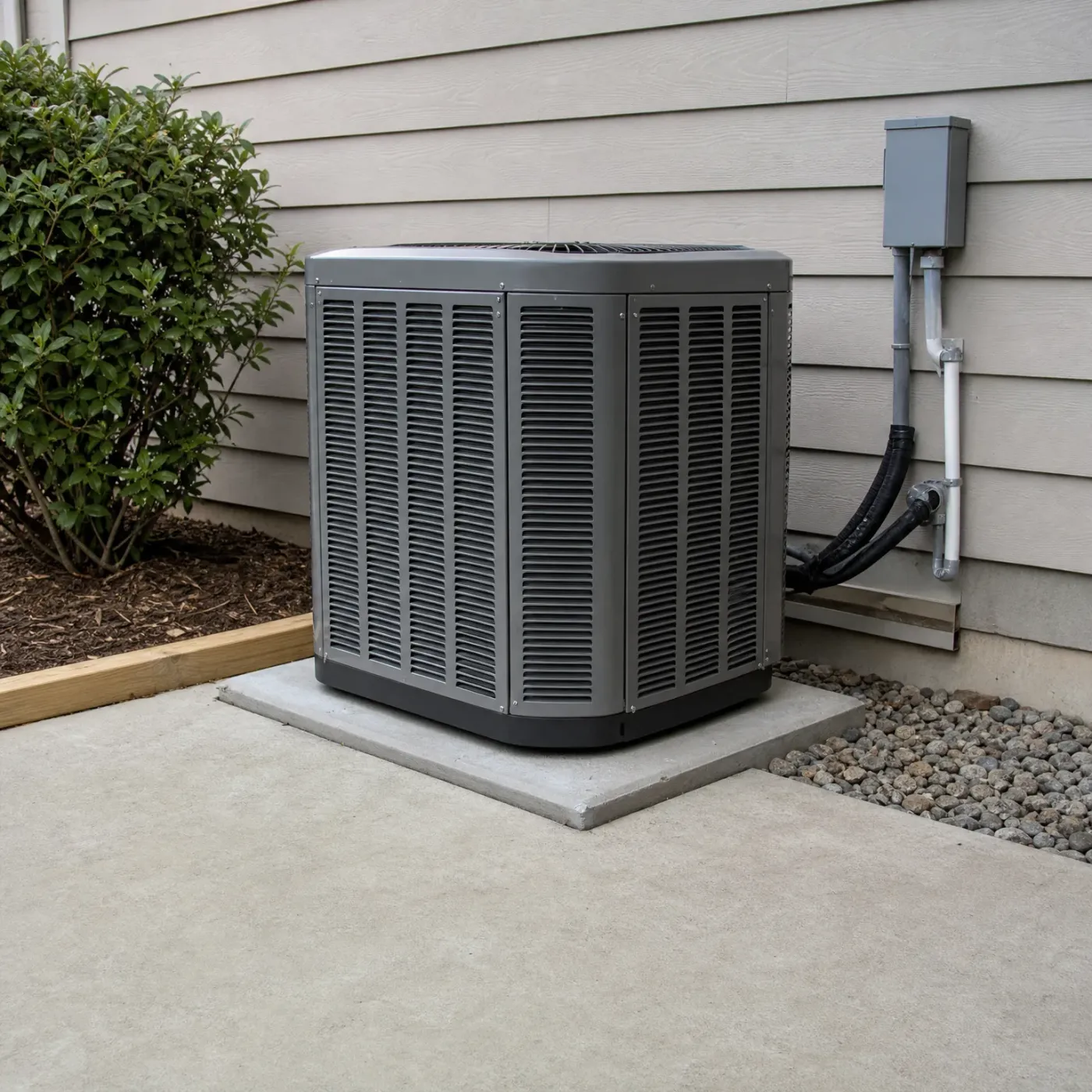
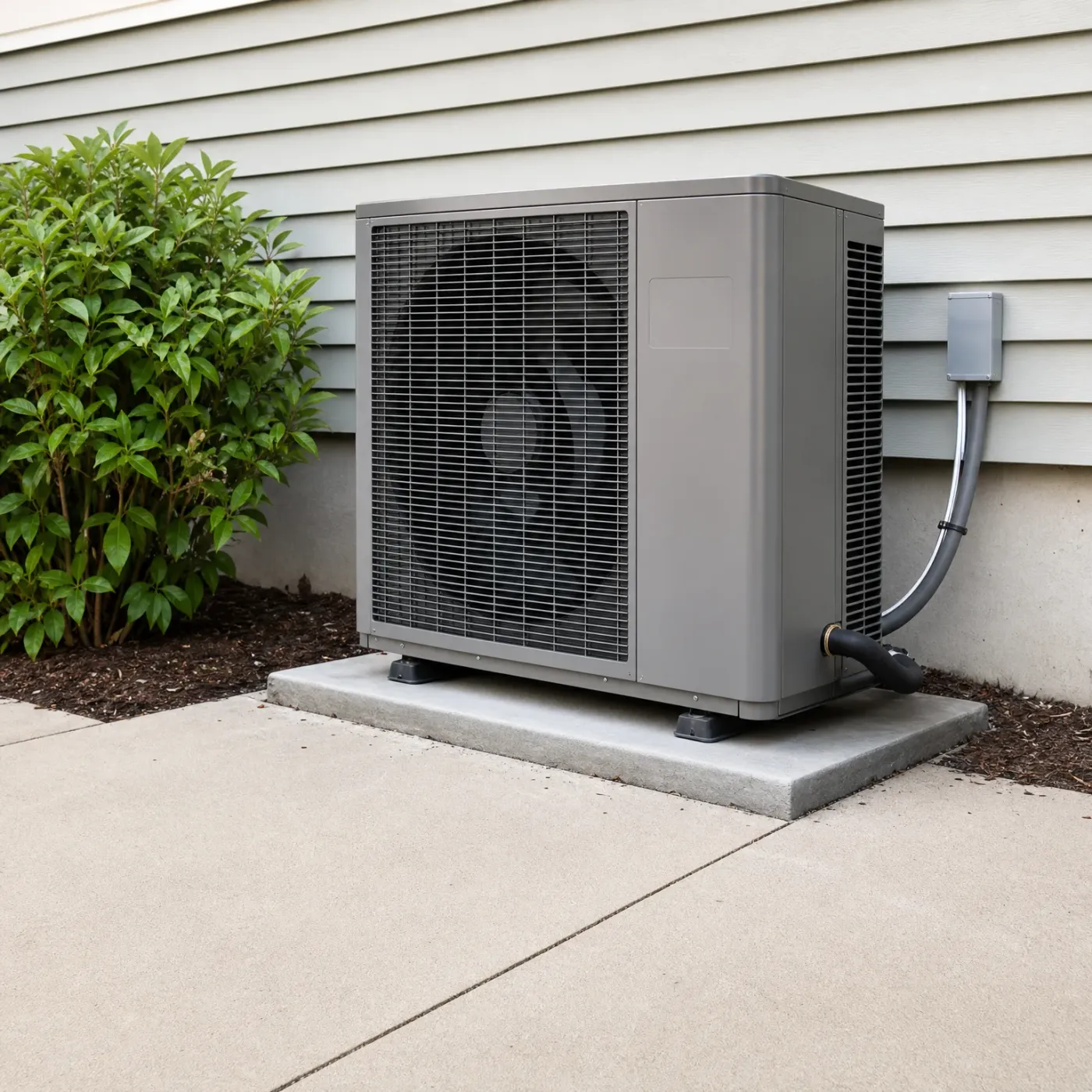
A gray outdoor heat pump unit on a concrete pad beside a house with horizontal lap siding, with a conduit running to a wall-mounted disconnect box and a green shrub to the left.

What a heat pump looks like when it's keeping up

The coil is clean and the fins are open to the air. The pad sits clear of the siding with room for the unit to breathe. In muggy weather this is what lets the system pull moisture out of the air without falling behind.
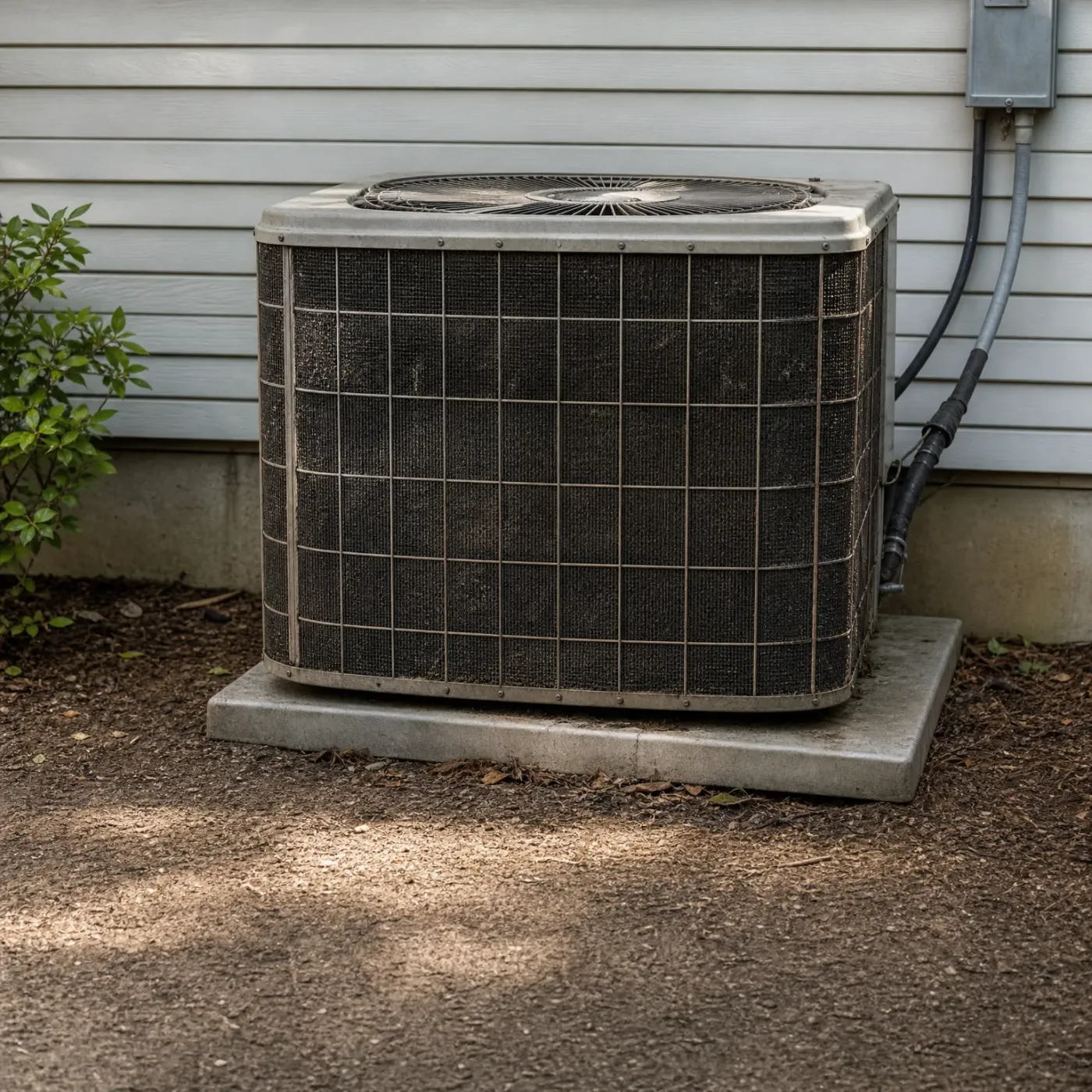

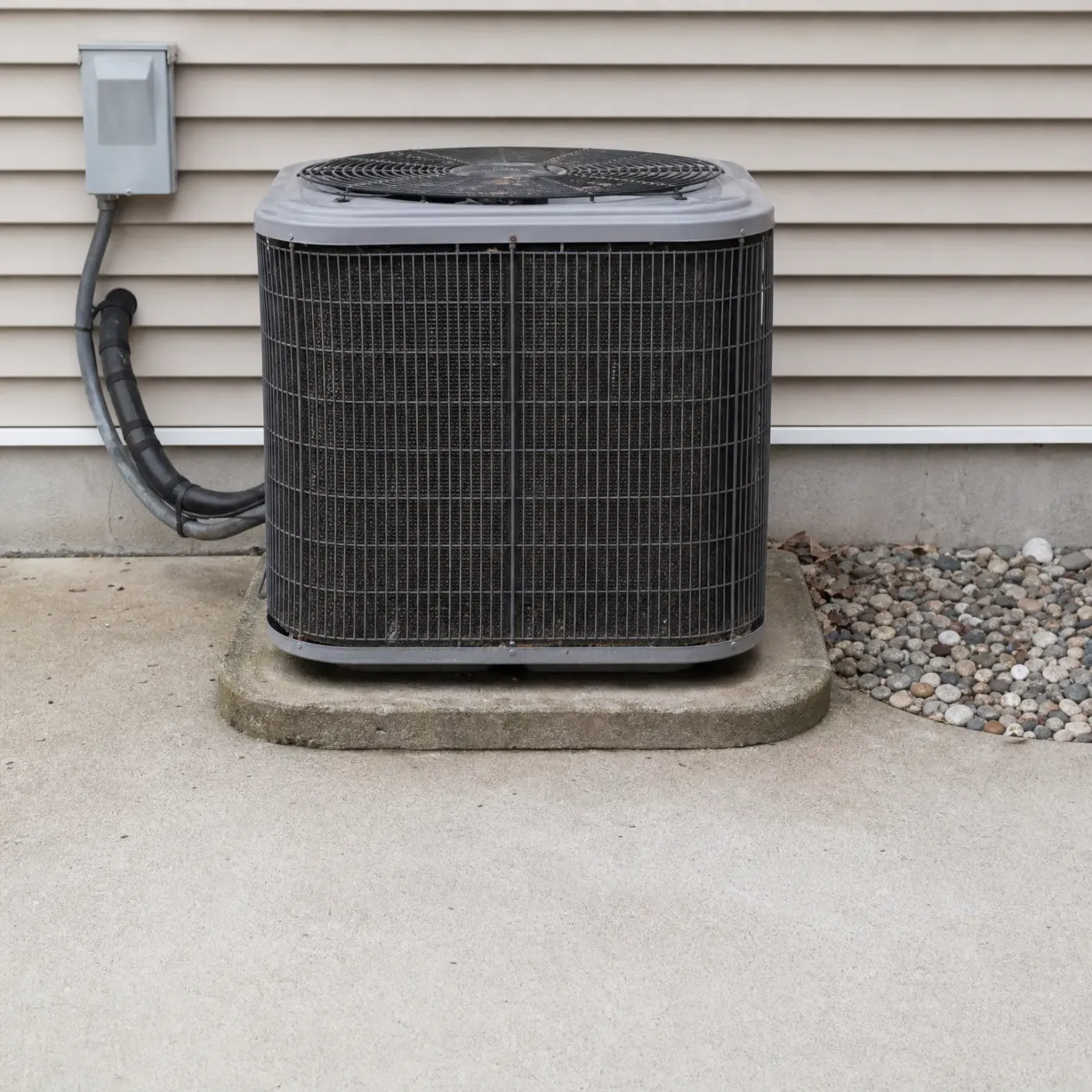
An outdoor air conditioning condenser unit with dusty coils sits on a concrete pad against light horizontal siding, with an electrical disconnect box and refrigerant lines on the wall and a shrub and mulch at left.

What a struggling heat pump looks like

Dirt and grass clippings cake the coil, and the fins are packed tight. Air can't move through it the way it needs to. Once a coil gets like this, catching the problem before it grows is a lot cheaper than waiting for a breakdown in August.

A smiling man in a gray long-sleeved shirt stands in a kitchen looking to the side, with open shelves of dishes, a white mug on the counter, a potted plant, and a view through a doorway into a living room.
A smiling bearded man in a green sweater sits at a white marble kitchen island with a mug, potted plant and bowl of fruit, in a bright white interior with open shelving and an arched doorway.
A smiling man with dark curly hair and a beard, wearing a dark green knit sweater, stands at a white marble kitchen counter with a dark blue mug, with open shelving, pendant lights and a houseplant behind him.
A smiling man in a green ribbed sweater stands behind a wooden table holding a ceramic mug of coffee in a kitchen with white subway tile, shelves of potted plants, and a bowl of fruit.

Hand off the heat pump problem

One form replaces the calls you'd make to find a heat pump pro.

No charge to send it. You decide if you hire them.

A heat pump that's low on refrigerant will still blow air and still sound normal, so you have no way to catch the problem by looking or listening.

By the time you notice the house isn't cooling right, the system has likely been working harder than it should for weeks, running up your electric bill the whole time.

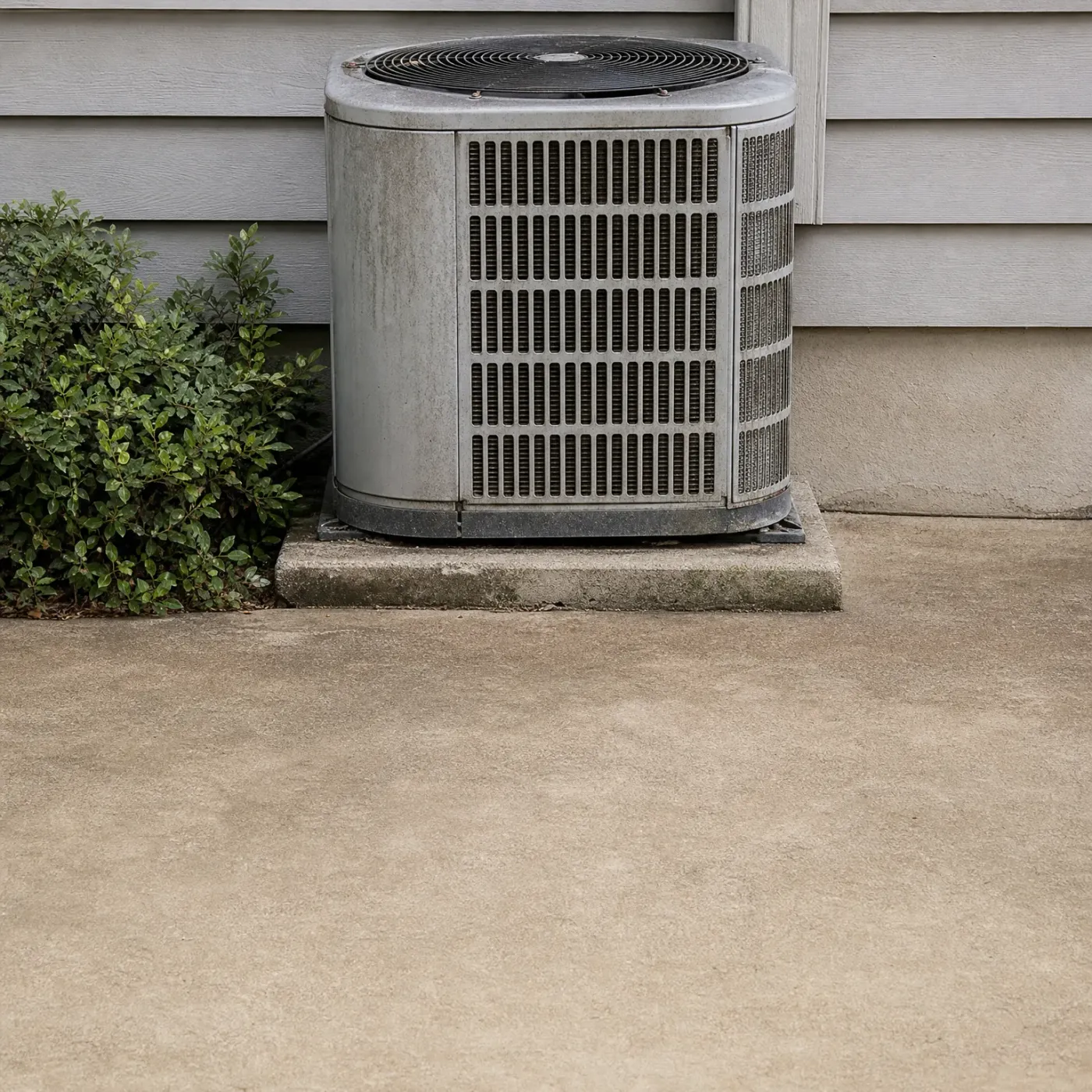
An outdoor air conditioning condenser unit on a concrete pad beside a house with horizontal lap siding, with a green shrub to the left and a wide concrete slab in the foreground.
Before you get your heat pump repair
A gray outdoor condenser unit on a concrete pad beside a house with horizontal lap siding, with a wall-mounted disconnect box, conduit and insulated refrigerant lines, a shrub at left and gravel at right.
After you get your heat pump repair

Your heat pump is a loop. Refrigerant carries heat from inside your house to the coil outside, and every part in that loop depends on the one before it. If the charge is low anywhere in that loop, the compressor works longer to move the same amount of heat, and on a humid Illinois day it's already working against air that's harder to cool. The outdoor fan is what pushes air across the condenser coil so that heat can leave the system. Slow that fan down, even a little, and the coil can't shed heat as fast, long before you'd ever notice a change in sound or airflow. Inside, the blower wheel does the same job in reverse, pulling air across the indoor coil so moisture can condense out of it. A dirty wheel moves less air, so less moisture comes out per hour. That moisture has to go somewhere, down a condensate line and through a trap, and if that line clogs, the water backs up into a system that was already struggling to keep up with the humidity in the first place.

How the system actually moves heat

  • Refrigerant runs through the outdoor coil, the compressor, and the indoor coil in a loop, and low charge anywhere in that loop weakens the whole cycle.
  • A heat pump sheds heat outside through the condenser coil, and when humid air restricts airflow across it, the compressor has to run longer to move the same heat.
  • The reversing valve is what lets the system switch between heating and cooling, and a valve that sticks can leave it stuck in the wrong mode or cooling poorly.
  • Condensate from the indoor coil has to drain out through a line and a trap, and a clogged line backs up moisture the system already struggled to remove.
  • The outdoor fan moves air across the coil to reject heat, and a slow or failing fan motor cuts that airflow before you hear or see anything wrong.
  • A dirty blower wheel inside the air handler moves less air across the indoor coil, so the system pulls less moisture out of the house per hour it runs.
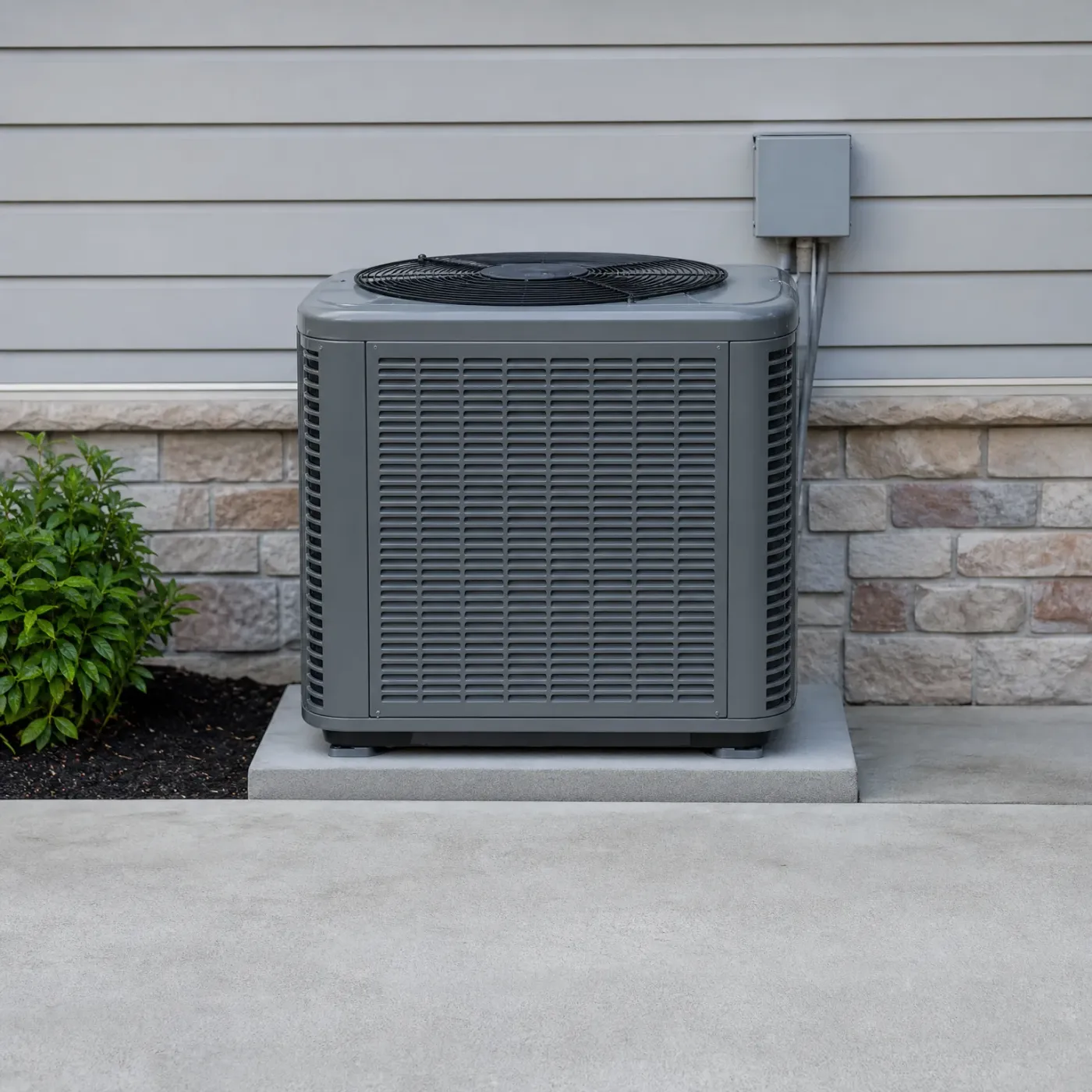
A gray outdoor condenser unit sits on a concrete pad against a house wall with horizontal siding above a stone veneer base, with an electrical disconnect box and conduit on the wall and a leafy shrub in mulch to the left.
A clear coil like this gives the fins room to shed heat even when Illinois air is thick with moisture.
An outdoor air conditioner condenser unit on a concrete pad beside a house with beige vinyl siding, with a gray electrical disconnect box and insulated refrigerant lines on the wall and river rock to the right.
Dirt packed into the fins traps heat against the coil, so the unit works harder and still falls behind on muggy days.
A dimly lit bedroom at dusk with a made bed, a table lamp on a nightstand, and a condensation-covered sash window with a dark curtain.

It's past eleven and the bedroom upstairs is still warm. You kicked the sheet off an hour ago and it's damp where you were lying on it. The window shows a faint fog at the corners, the kind that shows up when the glass is cooler than the air pressing against it outside. Downstairs you can hear the unit running, steady, like it's been running most of the evening. You get up and check the thermostat in the hall. It says seventy-two. It does not feel like seventy-two. You lie back down on the dry side of the bed and leave the fan on, figuring you'll deal with it in the morning.

Power costs 17.67 cents per kilowatt-hour statewide

At 17.67 cents a kilowatt-hour, every extra hour your heat pump runs chasing humidity shows up on the bill. A struggling unit doesn't just leave the house damp, it draws power the whole time it's falling behind, so the cost of ignoring the problem keeps adding up long after the day cools off.

EIA-861 2025 statewide residential average

A heat pump struggles in Illinois summer because it has two jobs at once, cooling the air and wringing the moisture out of it, and humid days make the second job harder without making the first one any easier. A clean coil, good airflow, and a full charge of refrigerant handle that load. Take any one of those away and the house stays warm and damp no matter how long the unit runs. That's the whole answer. The fix depends on which piece is missing, and that's not something you can tell from the thermostat or from standing outside listening to the unit run. Instead of calling around to find someone who works on heat pumps, waiting on hold, and explaining the same damp upstairs bedroom story twice, you can send the details once. From there, the search for the right contractor is no longer something you have to carry.

A dark wood cabinet with a paneled door and a ceramic pot of green foliage on top stands in a beige-walled room with white baseboard, a window at left, hardwood floor, and a patterned area rug.
A dark wood glass-front cabinet holding folded towels, woven baskets and a ceramic vase stands in a bathroom corner beside a window, with a potted fern and stacked towels on top and a freestanding tub partly visible at left.
A woven basket holding a green cushion and a cream fringed knit throw sits on a wood floor in a room corner beside a window and a dark wooden cabinet.
Corner of a room with a dark wood cabinet topped by a round vase, a linen curtain at a window, white baseboard, oak plank flooring with sunlight patches, and a woven jute rug in the foreground.
A dark wood sideboard against a pale wall holds a shallow stone bowl and a round ceramic vase with leafy branches, with sunlight from a curtained window falling across the wall, wood floor and woven rug.

Let someone else find the pro

Describe what your heat pump is doing once, in one form.

Hand it over

There's no charge for the request.