Side profile of a bearded man wearing a faded dark blue baseball cap and a matching dark T-shirt against a plain light gray background.

Why one room stays cold in an Illinois winter

Step 1 of 3: Equipment

Why is one room in my house always cold in the winter?

Cold evenings in an Illinois winter make it obvious fast. The living room or bedroom you're sitting in just will not hold heat like the rest of the house, no matter how long the furnace runs. You've maybe shut the vent in another room or shoved a towel under a door, but the cold spot stays put night after night. You want to know whether this is just how the house is built, or something that can actually be fixed.

It usually means that room isn't getting its fair share of heated air

Most of the time it comes down to airflow. A duct run to that room can be too narrow, pinched, or disconnected somewhere behind a wall, so the furnace is putting out heat but not enough of it reaches that vent. Sometimes the problem is simpler: a closed or blocked register, or a thermostat that's far from the cold room and reads the rest of the house as warm enough. A room on a corner of the house or above a garage also loses heat faster than one tucked in the middle, so it needs more airflow just to keep up, not less. With temperatures well below freezing for weeks at a time, a shortfall that's barely noticeable in October becomes the room you avoid by January.

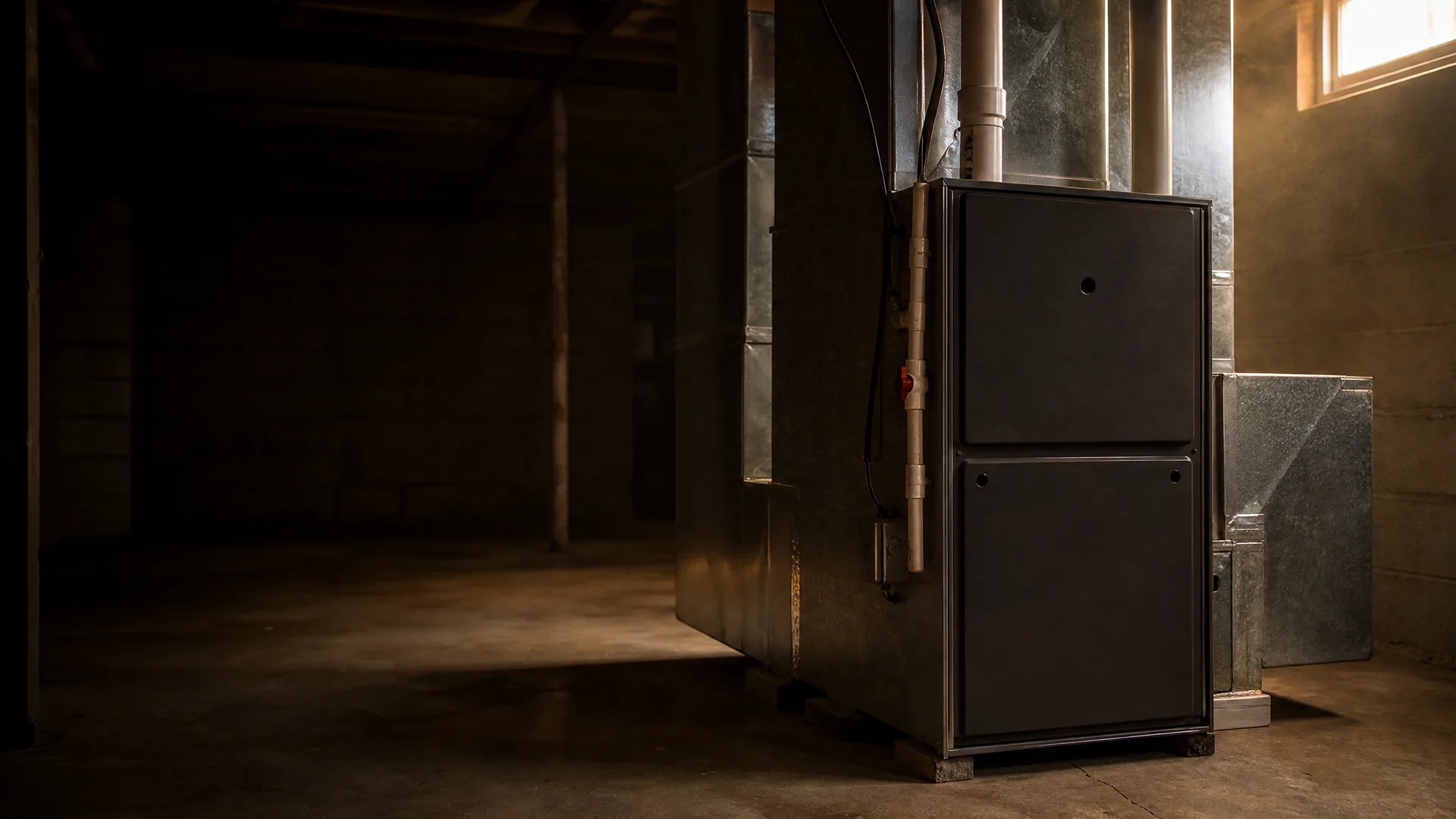
A dark residential basement with a concrete floor and block walls, containing a furnace with two access panels connected to galvanized sheet-metal ductwork and a white vent pipe, lit by a small window at upper right.

You're down in the basement a little before seven, and the furnace isn't running. No hum, no air moving, nothing. You put a hand near the vent anyway, out of habit. Cold metal. The pilot light or igniter should have kicked it on by now, with the temperature dropping outside and that one upstairs room already colder than the rest. Dust hangs in the air where the light from the stairwell cuts through, settled and undisturbed, the kind of stillness that means the blower hasn't kicked on in a while. You can hear the house settling, the usual creaks, but nothing from the furnace itself. It just sits there, dark, while the room above it keeps losing ground.

Vent Problem or Furnace Problem

A Closed Vent or Register

  • If the register in that room is closed or half closed, less warm air gets in than the room loses on a cold night.
  • Furniture or curtains blocking a vent cuts airflow the same way a closed damper does.
  • A room far from the furnace already gets less pressure through the duct than rooms close to it.
  • Opening the vent fully and clearing anything in front of it is the first thing worth checking before anything else.
  • If the room still runs cold with the vent wide open, the problem is further back in the duct or at the furnace itself.

A Furnace or Duct Problem

  • A duct that's come loose or disconnected in the attic or crawlspace sends warm air somewhere other than that room.
  • A blower that's lost strength won't push air far enough to reach the room at the end of the run.
  • A clogged filter starves every room of airflow, but the room farthest from the furnace shows it first.
  • If the thermostat is in a different room than the cold one, the furnace can shut off before that room reaches temperature.
  • A contractor licensed in Illinois and familiar with furnaces like yours can trace the duct run and find where the heat is being lost.
  • This usually takes a look at the ductwork and the furnace together, not just the vent in the cold room.
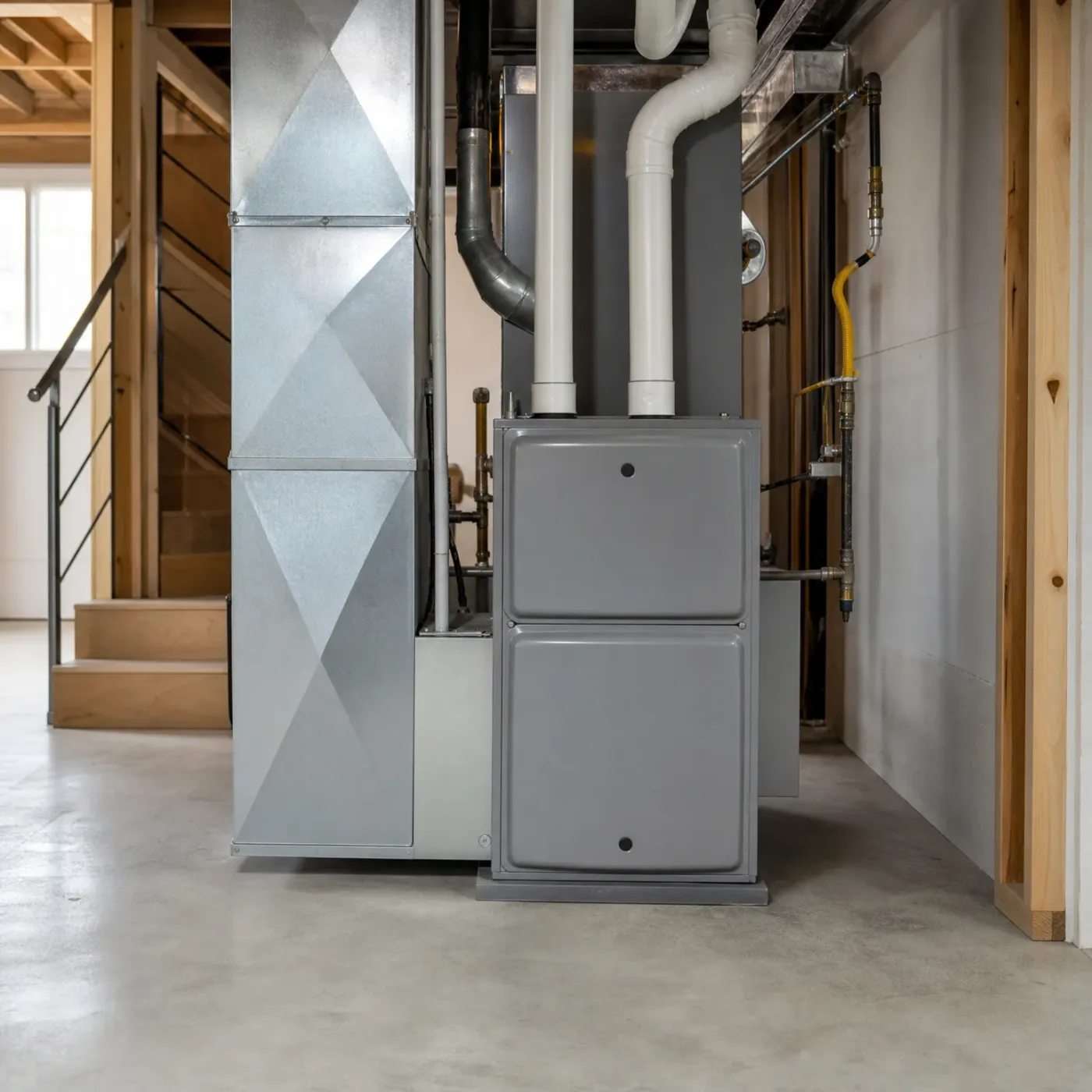
A gray high-efficiency furnace with white PVC vent pipes stands beside galvanized sheet-metal ductwork in a basement with a concrete floor, with a wooden staircase and railing at left.

The System Heating the House

This is what a furnace moving heat evenly looks like. Air comes off the plenum and runs through the ducts to every room at close to the same temperature. When it's working right, you shouldn't be able to tell which room is farthest from the basement.

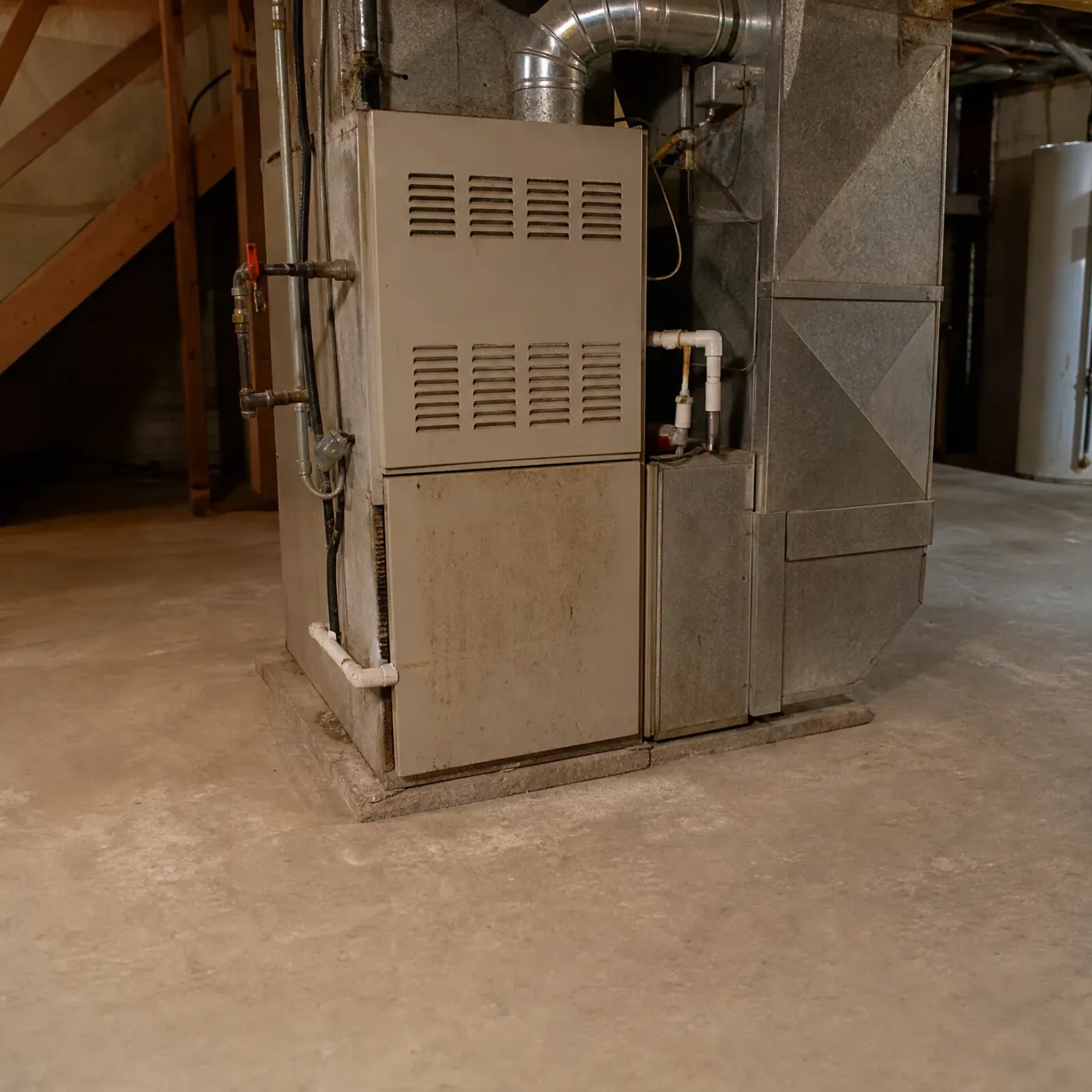
An older gas furnace with louvered panels sits on a concrete pad in a basement, connected to sheet-metal ductwork and PVC and metal pipes, with a water heater and wooden stair framing in the background.

The Same System Under Strain

Same furnace, same ducts, but something in the run to that one room is working against it. A duct losing air before it reaches the vent, a blower not pushing hard enough, or a return that can't pull air back out. A contractor who works on these all winter can trace it to the actual cause.

Is this just one cold room or something more?

You notice it most when you sit down for the evening. The vent in that room barely pushes air, or what comes out feels lukewarm next to the register in the hallway. You might catch a draft along the baseboard or near a window that the rest of the house doesn't have. Some nights you close the door to keep what heat is there from escaping, or you run a space heater instead of touching the thermostat. None of that fixes why the room won't hold heat. Left alone, the furnace keeps working harder to cover for that one room, which shows up on your gas bill before it shows up anywhere else.

A smiling bearded man in a dark green hooded jacket and blue t-shirt sits on a couch in a living room with shelves, a potted plant, and a bowl of popcorn on a wooden table.
A smiling man in a green long-sleeved shirt sits on a beige sofa in a living room, with a bowl of popcorn in the foreground, a large potted plant and shelving behind him.
A smiling man in a dark blue T-shirt sits on a couch in a dimly lit living room with a bowl of popcorn and a remote on a wooden table, a lit floor lamp and bookshelves behind him, and windows showing greenery.
A smiling bearded man in a dark green long-sleeved shirt sits on a leather couch in a living room, with a bowl of popcorn and a remote control on a wooden table in the foreground.

Hand off the search today

A furnace that runs fine everywhere else but can't warm one room usually comes down to something specific: a stuck damper, a duct run that was never sized right for that stretch of the house, or a blower struggling to push air that far. Finding which one it is means someone has to look at your ductwork, not guess from a list. A contractor who works on furnaces around Illinois all winter has seen this exact complaint plenty of times and knows where to check first. Send the request and that part is off your plate. One local, licensed contractor gets your information, not a handful of companies competing for the job, so you're not stuck answering calls from strangers trying to win your business. You'll still have a furnace running most of the day trying to heat a room that won't hold it until someone finds out why.

A duct run losing even a few degrees of heat over a long stretch is enough to make one far room feel noticeably colder than the rest of the house.

That's why the room above the garage or at the end of the hall is almost always the one that struggles, while the rooms closest to the furnace stay warm without any help.

75.3% of homes statewide heat with gas

Most houses near you run on gas heat, so that cold room almost always comes down to the furnace, the ductwork, or a damper rather than a space heater or bad wiring. Knowing it's gas narrows down what's worth checking first.

ACS 2020-2024 5-year B25040

One Cold Room, One Likely Cause

  • A closed or blocked vent is the first thing worth checking since it costs nothing to rule out.
  • A duct run that loses heat over a long stretch almost always points to the room above the garage or at the end of the hall.
  • Gas furnaces push air through ductwork, so a cold room usually traces back to the furnace, the ducts, or a damper rather than wiring.
  • A blower that can't push air far enough leaves the last room short no matter how long the furnace runs.
  • A damper stuck in the wrong position can starve one room while the rest of the house heats evenly.
  • Finding the exact cause takes someone checking airflow room by room, not guessing from the thermostat.

A furnace that heats the rest of the house fine but leaves one room cold almost always has a reason behind it, and that reason is usually mechanical, not mysterious. Start with what you can see. A vent that's closed, half closed, or blocked by a couch cuts off warm air before it ever reaches the room. If the vents are open and the air still feels weak or lukewarm, the problem is likely further back, somewhere in the ductwork or at the blower itself. Long duct runs lose heat along the way, which is why it's so often the room above the garage or the one at the far end of the hall that struggles while rooms closer to the furnace stay warm. A damper stuck in the wrong position does something similar, cutting supply to one room even though the system is working as it should everywhere else. Since most homes in Illinois heat with gas, the furnace and its ductwork are the right place to start looking, not the wiring and not a space heater plugged into the wall. What rules these out from each other is airflow, checked room by room, register by register, which is not something you can do from the thermostat. Once that's been checked, you'll know exactly what's keeping that one room cold and what it takes to fix it.

A woman with dark hair in a bun reclines on a gray sofa with her eyes closed and a slight smile, wrapped in a cream knit sweater and blanket, with an open book resting in the foreground and a lit lamp in the dim room behind.
A smiling bearded man in a dark crewneck sweater sits at a dinner table with a lit candle, glasses of wine and water, and plates of food in the foreground, with a lamp, framed art and a potted plant behind him.

Stop chasing a furnace pro

A furnace that heats the rest of the house fine but won't touch one room is a specific problem, not a mystery, and it takes someone who works on these systems all winter to find it fast. Submit the form and a licensed local contractor who services furnaces and ductwork in your area takes it from there. Just one contractor gets your request, so you're not fielding calls from five companies trying to beat each other to your door. From here, finding the answer is off your plate.

Let a pro reach out

Your request stays with one local pro.

You only hire the pro if you want to.