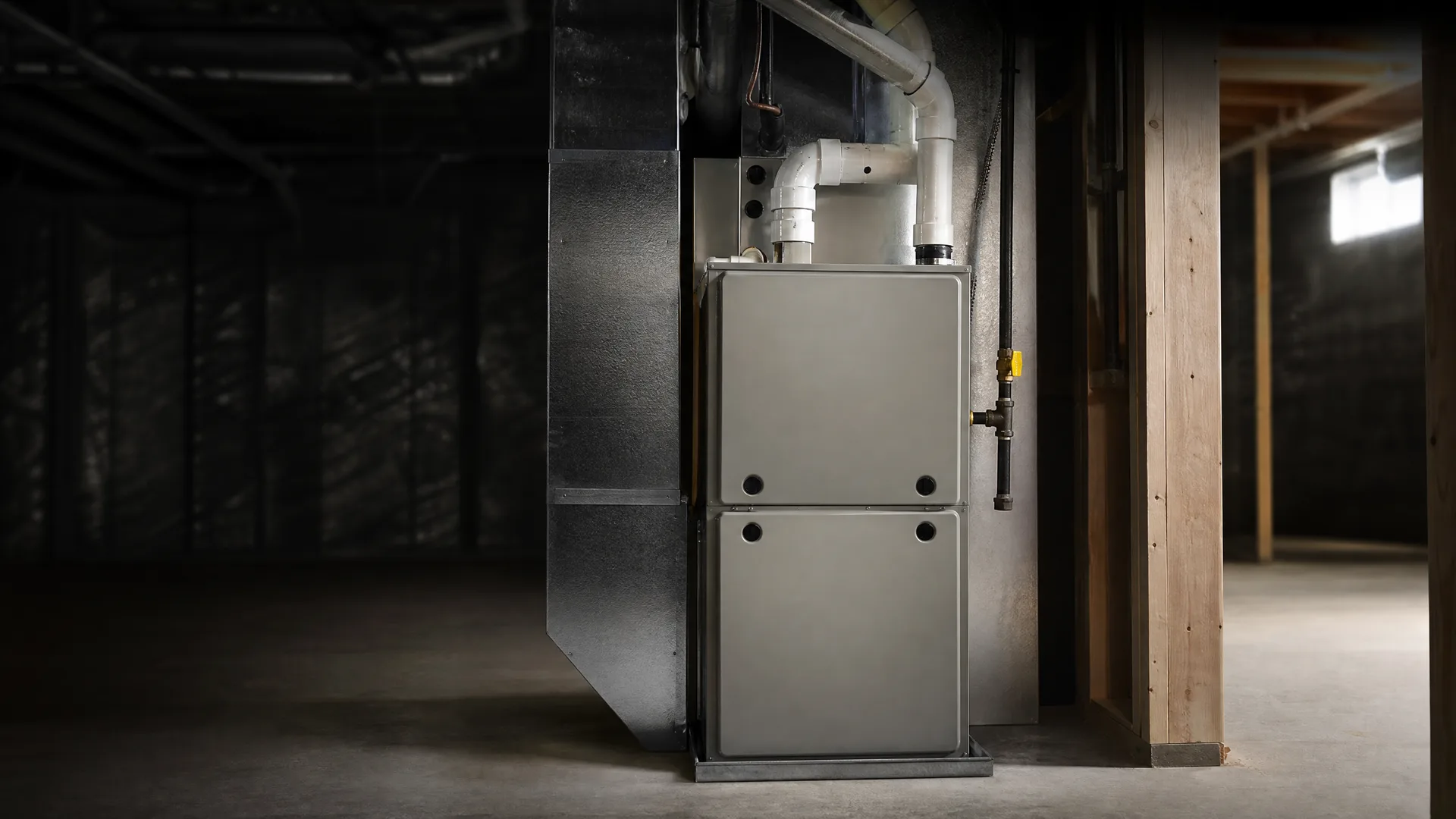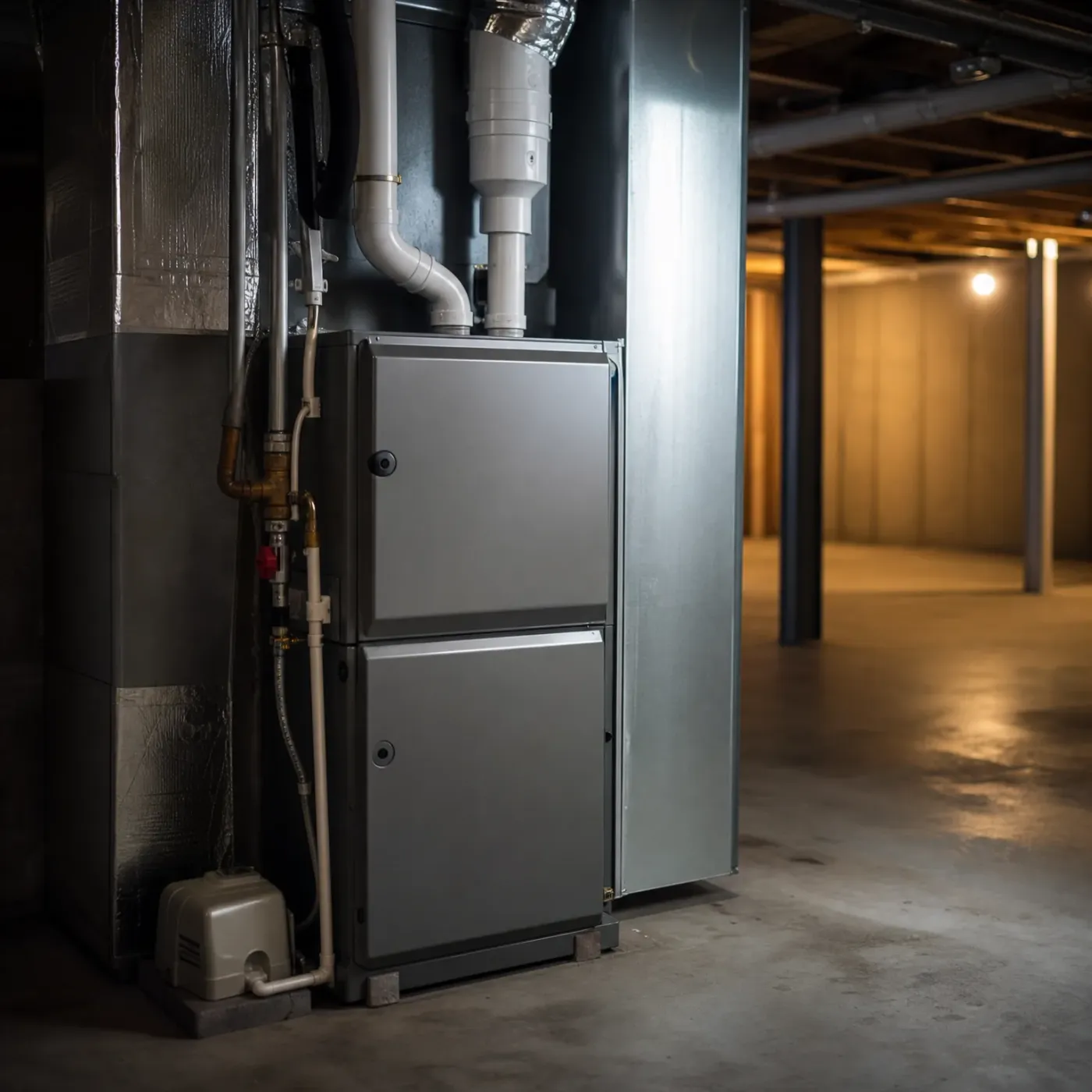




A gray high-efficiency furnace with PVC venting, copper and plastic piping, and a condensate pump sits beside sheet-metal ductwork in a concrete-floored basement.

Hand off the furnace problem

Why your furnace is leaking water in Illinois

A puddle under your furnace usually traces back to the condensate line, the pressure switch tubing, or a cracked heat exchanger, and which one it is changes what happens next. This page walks through what's likely going on and what to check before the water damages your floor or furnace. When you're ready, send the request and let a local furnace contractor take it from there.

Hand it off

Water under your furnace almost always comes from the condensate line, the tubing that carries moisture away from a high-efficiency furnace as it burns gas. That line can clog with algae or sediment, or a joint in it can come loose, and the water backs up and finds the floor instead of the drain. If your furnace is the older style without a condensate system, the water is more likely coming from the flue pipe or from a crack in the heat exchanger itself, which is a bigger problem. Illinois winters put a furnace through months of steady, hard use, and a clogged line that was fine in November can back up by January once the furnace has been running nonstop. Either way, a leak is worth checking before it reaches the furnace's electrical parts or trips a safety switch and shuts the whole system down on a cold night.

A smiling man in a dark green shirt over a white t-shirt sits at a kitchen counter with a dark mug, looking off to the side, with shelves, plants and a bright living area behind him.
A man in a gray long-sleeve waffle-knit shirt smiles and looks off to the side in a kitchen with open shelving, a refrigerator, a wooden sideboard with a potted plant, and a glass door to the right.
A man in a dark green ribbed sweater stands smiling and looking off to the side beside a stone kitchen counter with a ceramic mug, with a dining table, pendant lights, and large windows in the background.
A bearded man in a gray long-sleeve shirt stands smiling and looking off-camera beside a kitchen counter with a white mug, with a living room, fireplace and wall-mounted television behind him.

A furnace that condenses its exhaust makes water as a byproduct of running efficiently, and that water needs a clear path out. Most of the time it's the condensate line doing something it shouldn't. If the slope is off, or algae has built up inside it, the water stops draining and backs up into the drain pan. Once the pan overflows, you get a puddle at the base of the furnace. A separate small tube reads pressure off the draft inducer, and that one can develop a pinhole or a loose fitting that weeps water near the burners instead of the floor drain. If you've got a condensate pump, check whether it's running at all. One that's failed or come unplugged lets water collect until it has nowhere to go but out. A crack in the heat exchanger is a different problem entirely, and it tends to show up lower, near the blower compartment, rather than pooling at the front.

How the water actually gets there

  • A high-efficiency furnace cools its exhaust enough that water vapor turns back into liquid, and that condensate has to go somewhere.
  • The condensate line slopes toward a floor drain or a condensate pump, and if that slope is wrong the water sits in the line instead of draining.
  • A clogged condensate line backs up into the furnace's drain pan or trap, and the overflow shows up as a puddle on the floor.
  • The pressure switch tubing is a separate small line that reads vacuum from the draft inducer, and a pinhole or loose fitting there can weep water near the burner compartment.
  • A cracked heat exchanger lets flue gas condensate leak inside the cabinet instead of venting out, and the water shows up lower down near the blower.
  • A condensate pump that's failed or unplugged stops pumping water out entirely, so it backs up until it finds a way out of the furnace.
A gas furnace with a louvered upper panel stands on a concrete pad in a basement, flanked by sheet-metal ductwork, white PVC and metal pipes, and insulated columns.
Before you get your furnace repair
A dark high-efficiency furnace on a concrete pad in a basement, connected to galvanized ductwork, white PVC vent pipes, and copper and black gas piping, with concrete walls and wood framing nearby.
After you get your furnace repair
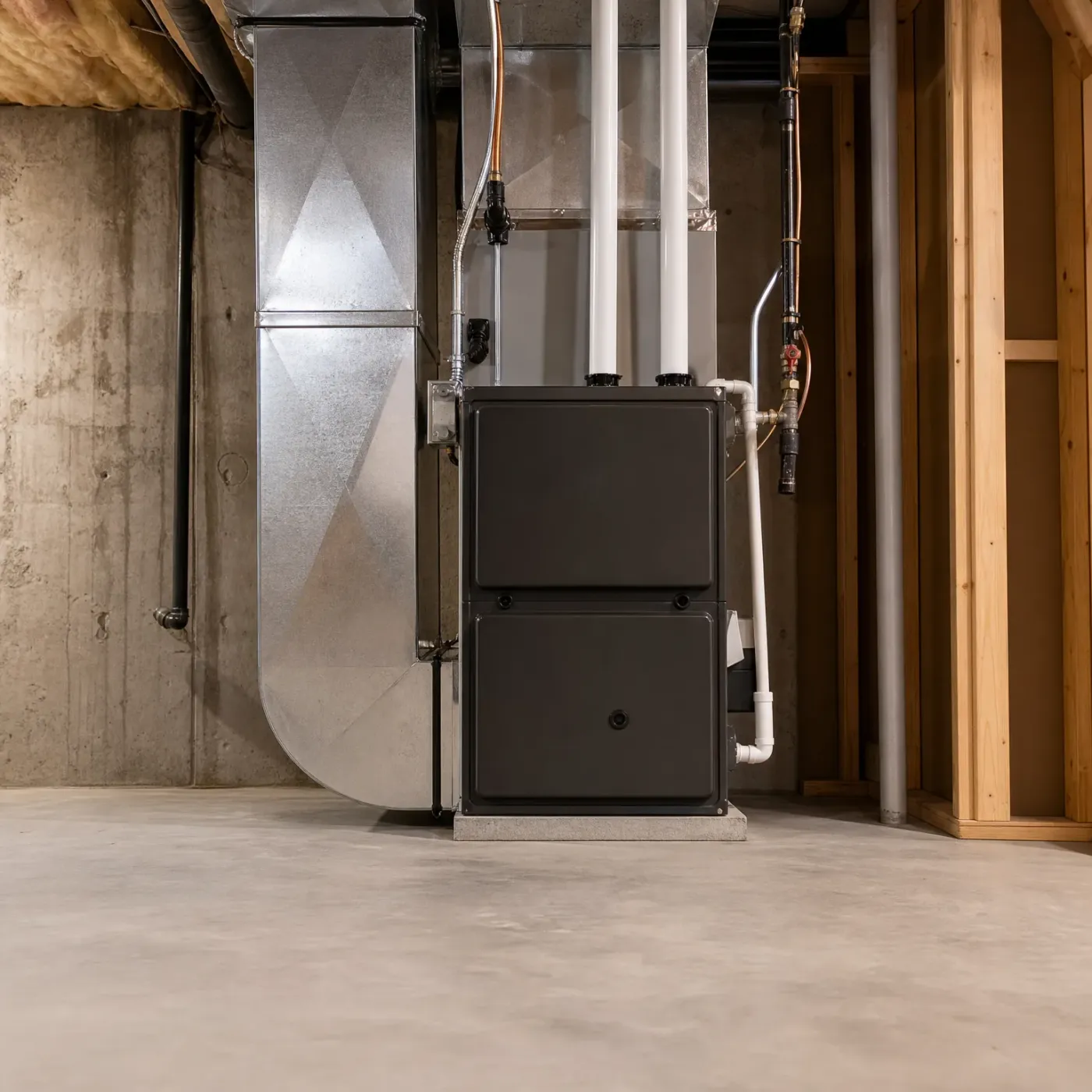
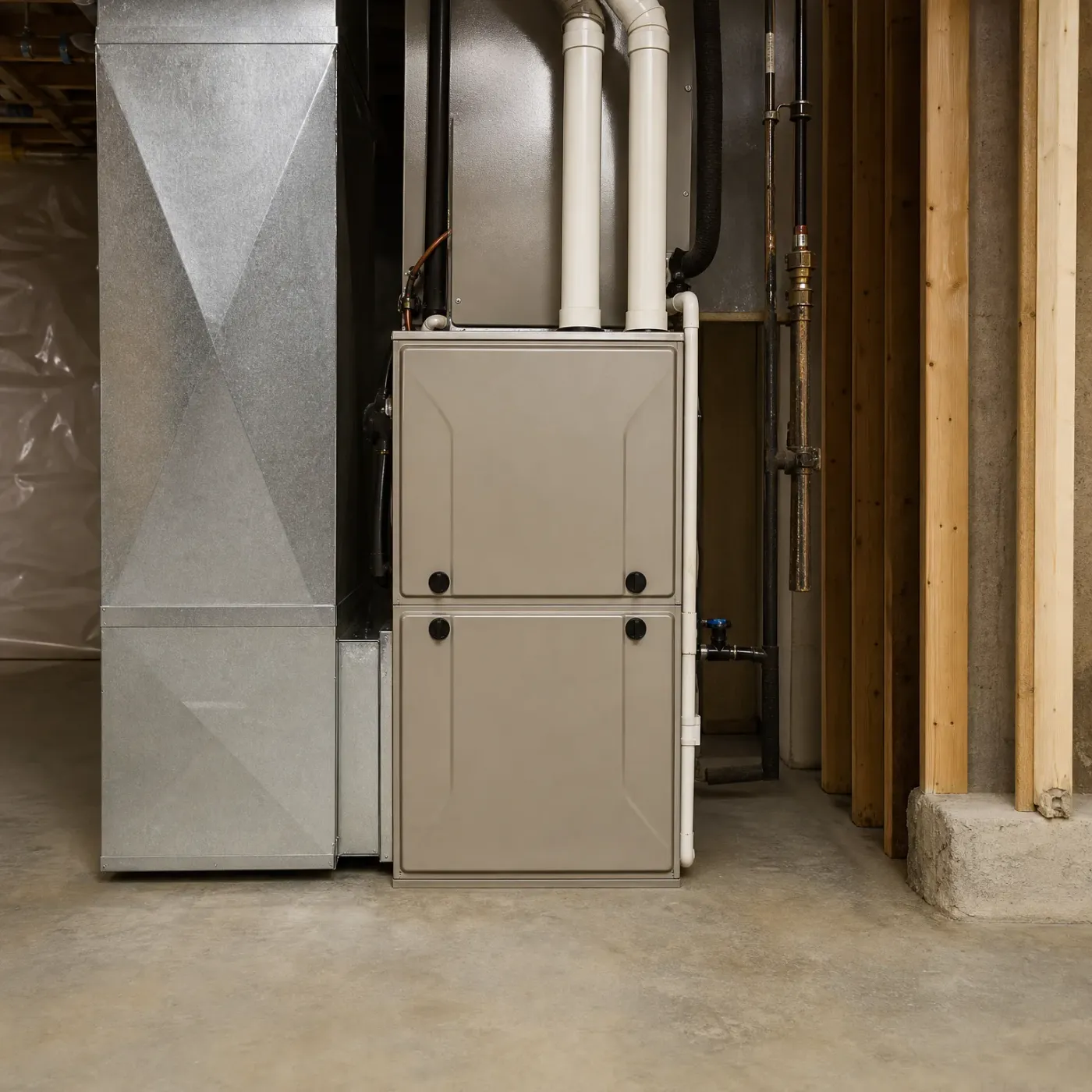
A beige high-efficiency furnace with white PVC vent pipes stands beside galvanized sheet-metal ductwork in a basement with a concrete floor, exposed wood studs, and metal piping along the wall.

High-efficiency furnace, running dry

This is what a high-efficiency furnace looks like when the condensate line is doing its job. The PVC pipes carry exhaust and intake air, and a separate line carries condensate out to a drain or pump. No puddle, no stain on the concrete, nothing pooling near the plenum.
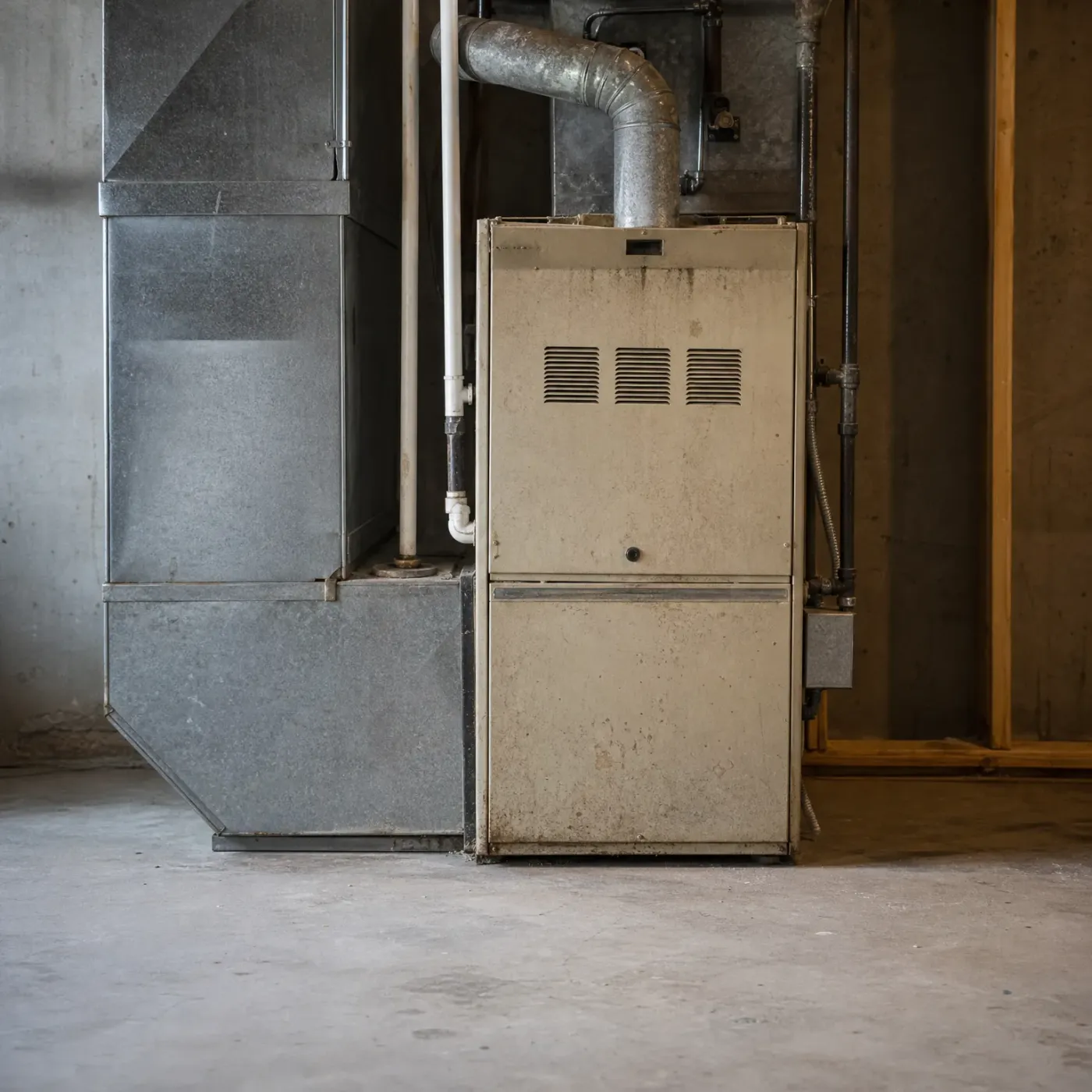
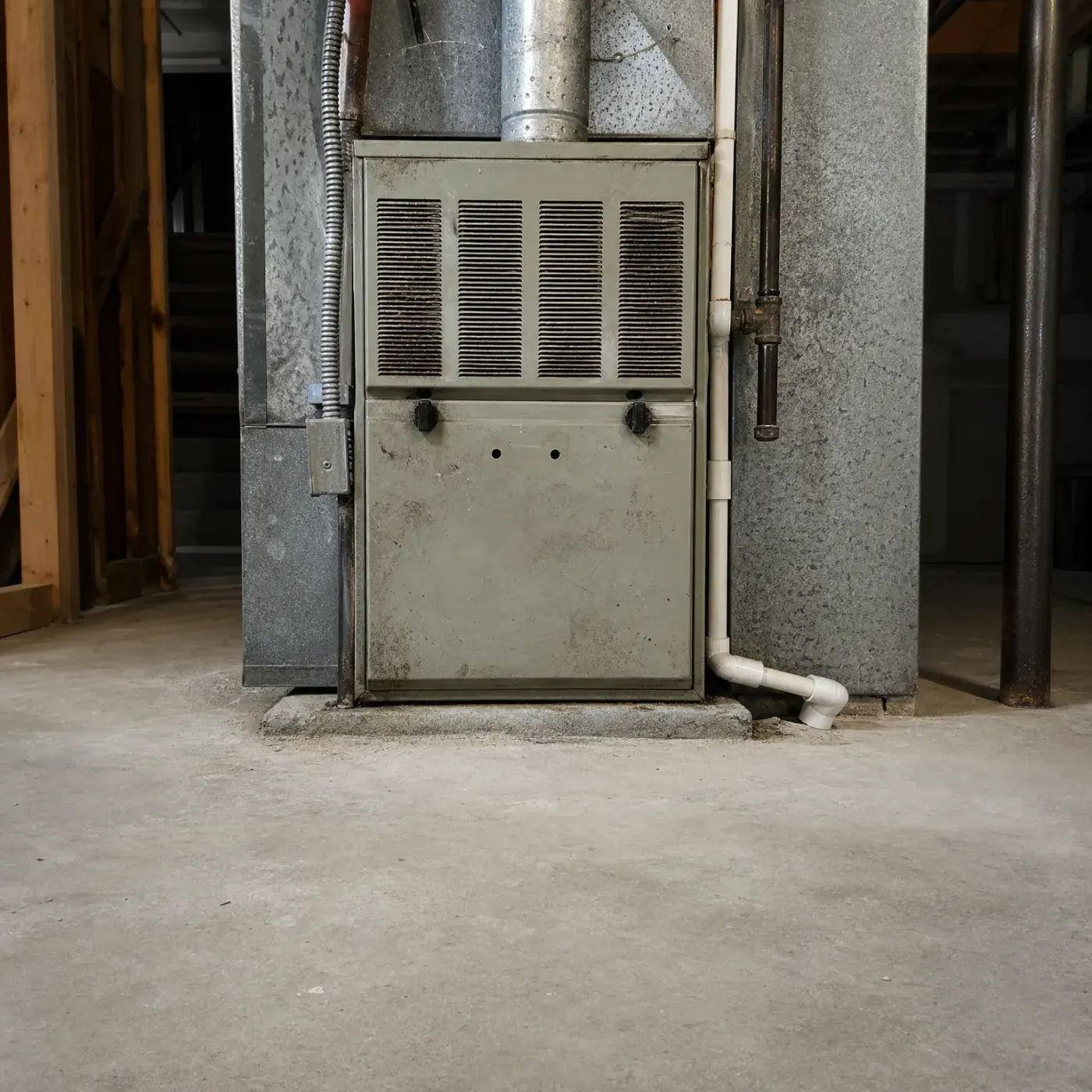
An older beige furnace with a louvered vent panel stands on a concrete basement floor beside galvanized sheet-metal ductwork, a metal flue pipe and vertical pipes along a concrete wall.

Older furnace, water at the base

This furnace vents through a metal flue instead of PVC, but it still produces condensate that has to drain somewhere. Water showing up near the cabinet usually means that drain path is blocked or sloped wrong. Left alone, it can reach the burners or the circuit board underneath.

Condensate Line or Heat Exchanger

Condensate line

  • This is the common cause, especially on a furnace that's run for a few winters without the line being cleared.
  • Algae and sediment build up inside the tubing over time and eventually block the flow, so the water has nowhere to go but out.
  • A trap in the line can hold old water that gums up the works even before a full clog forms.
  • Clearing the line and checking the slope is usually a quick fix for a contractor already working on the furnace.
  • If the condensate pump has failed instead of the line itself, that's a separate part to replace, not just a cleaning job.

Cracked heat exchanger

  • This is less common but more serious, and it means the furnace shouldn't keep running until it's looked at.
  • A crack lets flue gas mix with the air moving through the house, which is a safety problem, not just a water problem.
  • Water from a cracked exchanger often shows up with soot or a burning smell, not just a clean puddle.
  • A furnace built in 1977 or earlier is more likely to have a heat exchanger worn enough to crack.
  • Replacing a heat exchanger on an older furnace sometimes costs close to a new unit, so a contractor will usually walk through both options.
  1. Furnace burns gas, exhaust cools in the secondary heat exchanger.

  2. Cooling exhaust condenses into water inside the exchanger.

  3. A trap collects that water and feeds it into the condensate line.

  4. The line slopes down toward a drain or condensate pump.

Is it the condensate line or something worse?

Is it the condensate line or something worse?

Most of the time it's the line, not the heat exchanger

A clogged condensate line is the common answer, and it's usually the right one. A cracked heat exchanger is rarer, but it leaves clues the line doesn't. Water showing up only when the furnace first fires, or pooling right near the burner compartment instead of lower near the PVC piping, points away from the condensate line and toward the exchanger. A furnace that's run several winters without the line being cleared is the one most likely to back up. A contractor can pull the cover and tell within a few minutes which one it is, because the two failures leave water in different places.

A smiling bearded man in a green t-shirt sits on a gray sofa, looking down toward a device at the bottom of the frame, with a bookshelf and a green plant blurred behind him.
A bearded man in a plaid flannel shirt looks out a window at snow-covered conifer trees, with a steaming ceramic mug on the sill and wooden shelves holding dishes and a plant behind him.
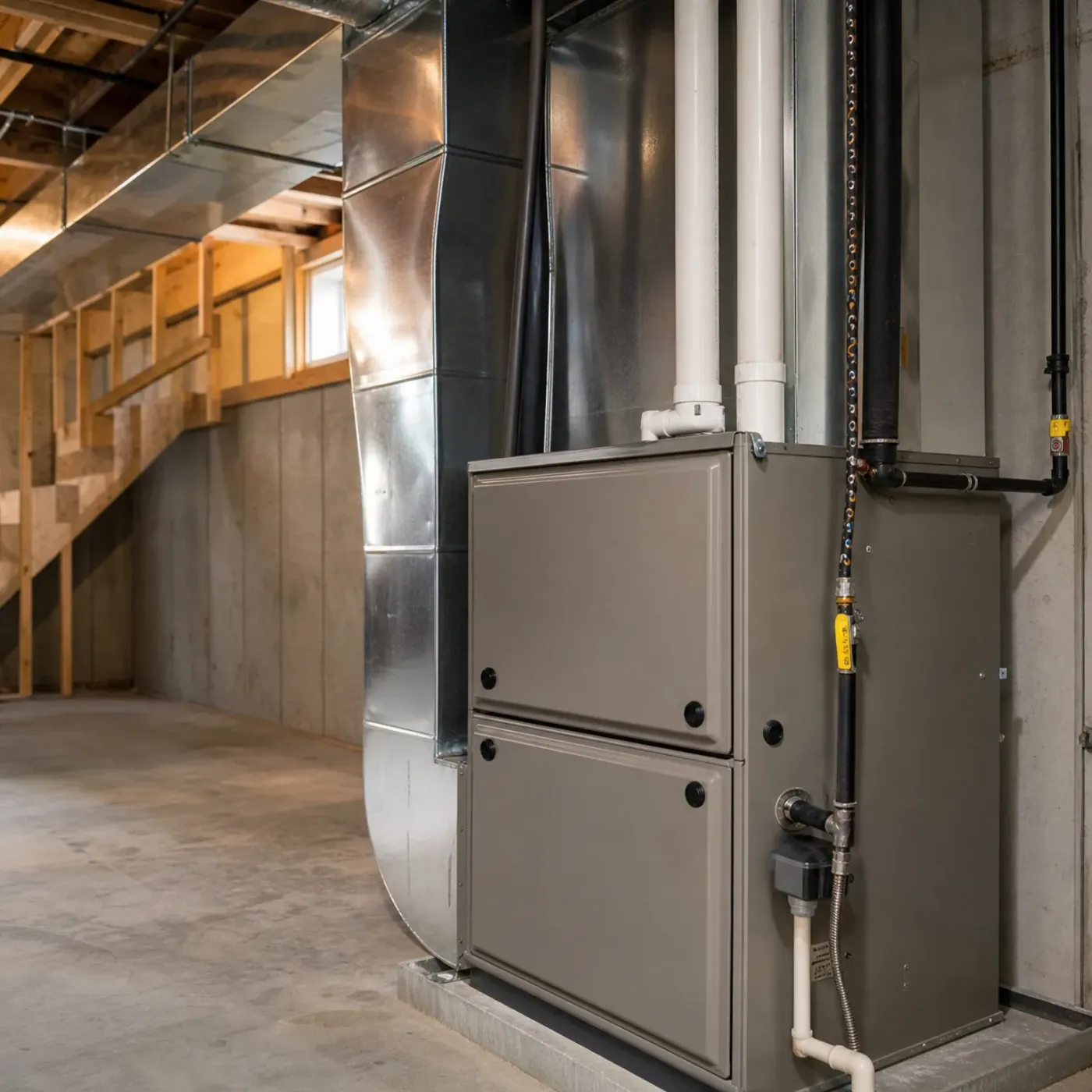
A gray high-efficiency furnace in an unfinished basement, connected to large galvanized sheet-metal ductwork, PVC vent pipes, a gas line and flexible conduit, with concrete walls, wood framing and a staircase in the background.

Send one request and you're done looking

Your request goes to one pro, not a list of companies.

Send the request today and stop worrying about who to call.

Reach a local pro

It costs nothing to send, and you don't have to hire anyone.

What's that puddle actually doing to your basement

Look for a damp spot or standing water right at the base of the furnace, maybe tracking toward the floor drain. You might notice a musty smell starting up, or see the cabinet itself streaked with rust along the bottom seam. If the furnace has a safety switch for this, it may just shut down and stop heating, which you'd notice fast with an Illinois winter outside. Left alone, that water sits against the furnace's metal cabinet and whatever flooring or drywall is nearby, and standing moisture in a basement is what mold needs to get going. It's worth checking before it sits another day.

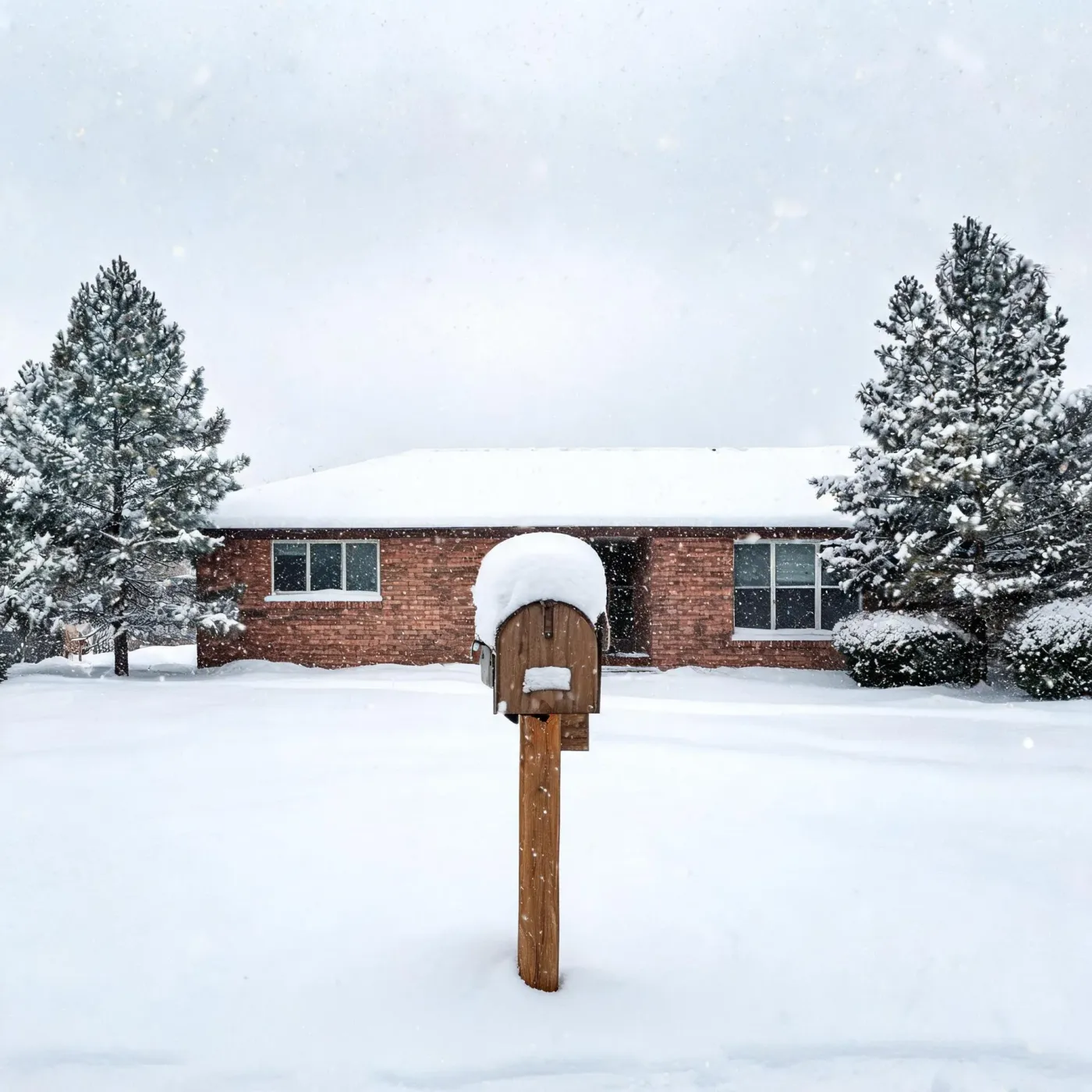
A snow-covered wooden mailbox on a post stands in a deep snowy yard in front of a single-story brick house flanked by snow-laden pine trees during falling snow.

Illinois winter nights average 20°F statewide, per NOAA, and that's cold enough for a high-efficiency furnace to run long stretches at a time to keep up. The longer it runs, the more condensate it produces, and the more water moves through that line and trap each night. A clog that's only dripped a little during milder weather can turn into a steady puddle once nights settle in near 20. If you've seen the water under your furnace get worse as it's gotten colder outside, that's usually why.

NOAA nClimDiv 1991-2020 county normals weighted by homes

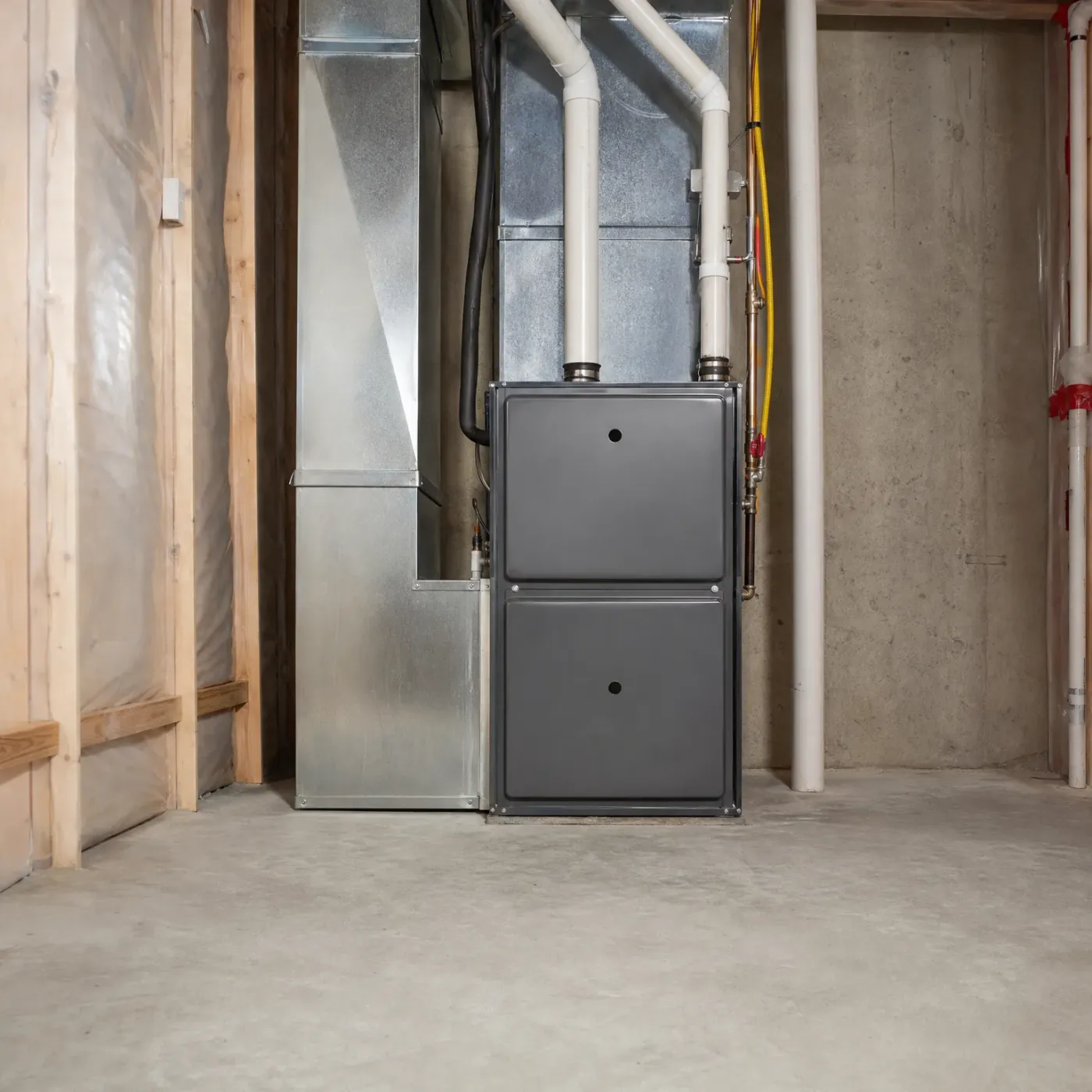
A gray high-efficiency furnace with two PVC vent pipes stands in an unfinished basement beside sheet-metal ductwork, a framed and plastic-covered wall, and a bare concrete wall with vertical pipes.
A furnace like this is draining the way it should, with every joint in the PVC line tight and nothing backing up into the cabinet.
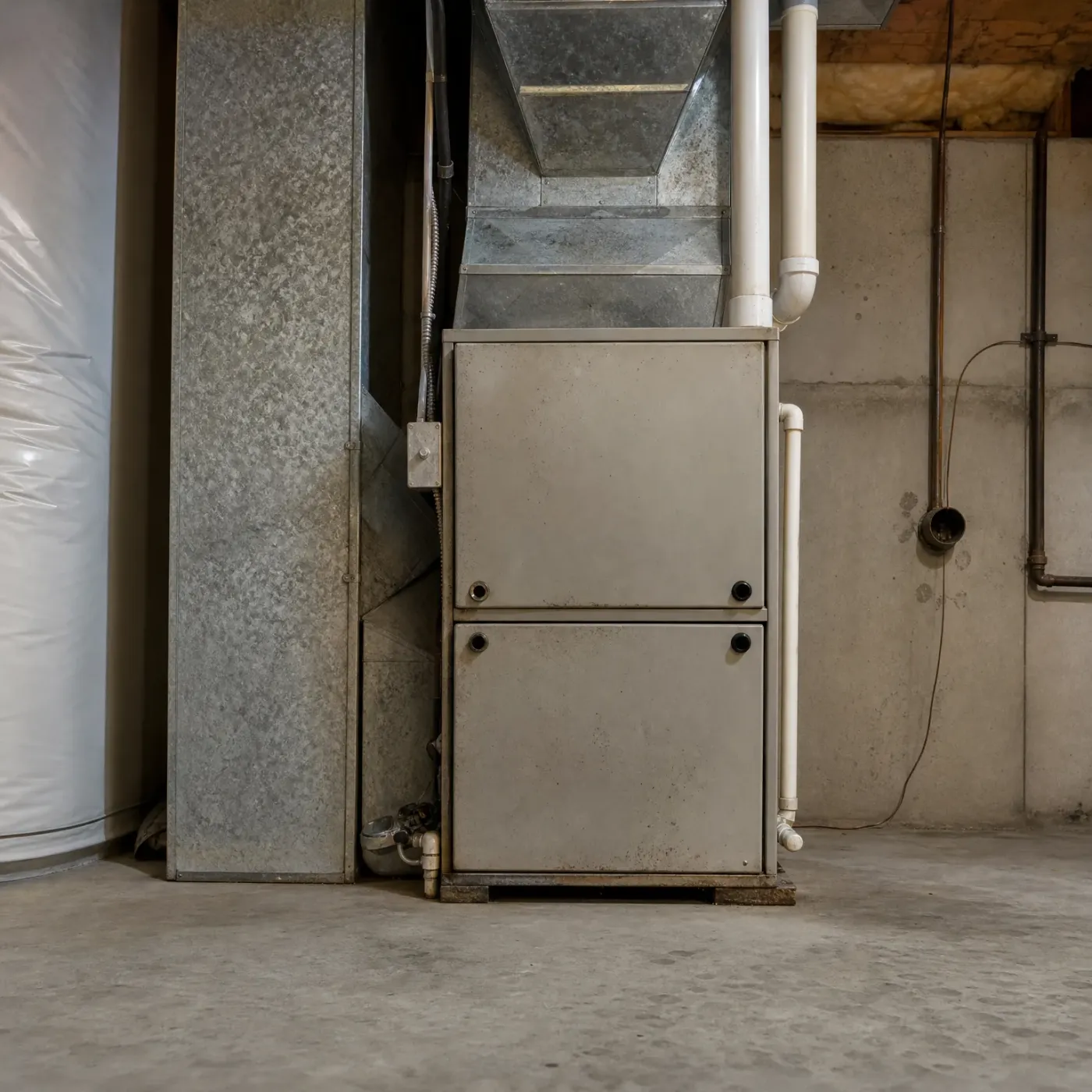
A gray furnace cabinet in a basement, connected to galvanized sheet-metal ductwork and white PVC pipes, against a concrete wall with exposed metal piping and insulation overhead.
Set on a pallet off the concrete, this furnace still has standing water risk if the drain line clogs or the trap loses its slope.

Winter nights average 20°F statewide

At 20°F, your furnace is cycling on for long stretches most nights, December through February. Each of those long runs pushes more condensate through the line. A clog that only dripped in November can turn into a steady puddle once the cold settles in like this.

NOAA nClimDiv 1991-2020 county normals weighted by homes

What to do about that puddle

  • A puddle at the furnace almost always traces back to the condensate line, not the heat exchanger.
  • Clearing a clogged line or resealing a loose joint is routine work for anyone who services furnaces through an Illinois winter.
  • A local contractor who handles this equipment every season knows which joint or trap tends to fail first on your type of furnace.
  • Once you send the request, one licensed contractor takes it from there, not a handful of companies calling at once.
  • Left alone, the clog won't clear itself, and the water finds a new path out of the cabinet as the cold holds through February.
  • Catching it now, before the next long run of 20-degree nights, keeps a small drip from turning into standing water on the floor.

Most puddles under an Illinois furnace come down to the same thing: the condensate line is clogged or a joint in it has worked loose, and the water that should drain away is finding the floor instead. That's not a guess, it's what the line is built to do and the most common way it fails. A furnace running long stretches on the cold nights Illinois gets from December through February produces more condensate, and more condensate means more pressure on a line that's already partly blocked.

This is routine work. A contractor who services furnaces through an Illinois winter has cleared this line and reseated this trap more times than they can count, and they'll know from the model of your furnace which joint tends to go first. That's the kind of knowledge that comes from working this equipment every season in homes like yours, not from a manual.

Send the request and it goes to one licensed, local contractor, not a batch of companies competing for your callback. They'll look at the line, the trap and the slope, and rule out anything more serious before they call it done.

The water won't stop on its own. Left alone through the rest of a cold winter, a slow drip tends to become a steady one. Getting it looked at now, before the next long cold stretch, is what keeps this a small fix instead of a bigger one.

A gray high-efficiency furnace with two access panels stands on a concrete basement floor, connected to sheet-metal ductwork and white PVC vent pipes, with wood framing and a gas line nearby.

Finding a pro stops being your job

Step 1 of 3: Equipment