 Get a furnace pro
Why your furnace makes a banging noise in Illinois
Tell a local repair pro what your furnace is doing.
A bang when your furnace kicks on is the burner lighting late and igniting a pocket of built-up gas all at once. It's loud enough to make you check the basement. It usually means a dirty burner or an airflow problem, and either one tends to get worse, not better, on its own.
Winters in Illinois don't give a furnace much downtime. Once it's running every day, a bang on startup isn't a one-time thing anymore. It happens again each cycle, and with gas heat running for months straight, that's a lot of cycles putting strain on the same part.
Figuring out which part means someone looking at your actual furnace. The make, the age, whether it's the burner or the heat exchanger or something in the ductwork pulling air wrong. That's not a guess you make from a search result.
What's in front of you otherwise is the usual runaround. Searching for a furnace repair company in your area, calling a few, explaining the noise and when it happens to each one, waiting to hear back, then doing it again if the first quote feels off or nobody has time this week. That's hours you don't get back, on top of a furnace that's still banging every morning.
This page matches you with a contractor who works on furnaces like yours and knows the kind of noise you're describing. You tell it once. They reach out to you directly, already knowing what you're dealing with, instead of you chasing down someone who might.
Illinois winters don't wait, and a furnace that bangs on startup isn't one to leave alone until it's convenient. The next step is below.
A loud bang when your furnace starts is usually the burner lighting late. Gas builds up for a second or two instead of catching right away, then it all ignites at once. That delay comes from a dirty burner, a failing igniter, or a flame sensor that's not reading right. A bang when the furnace shuts off is different. That's often ductwork popping as it cools, which points to an airflow problem rather than the burner. Either way, the bang is a symptom of something that won't fix itself. A late-light burner keeps lighting late until the igniter or burner gets serviced, and each small explosion puts more strain on the heat exchanger. With gas heat running hard through an Illinois winter, that's a lot of repeated stress on one part. A furnace that bangs now is worth having looked at before it stops lighting at all.
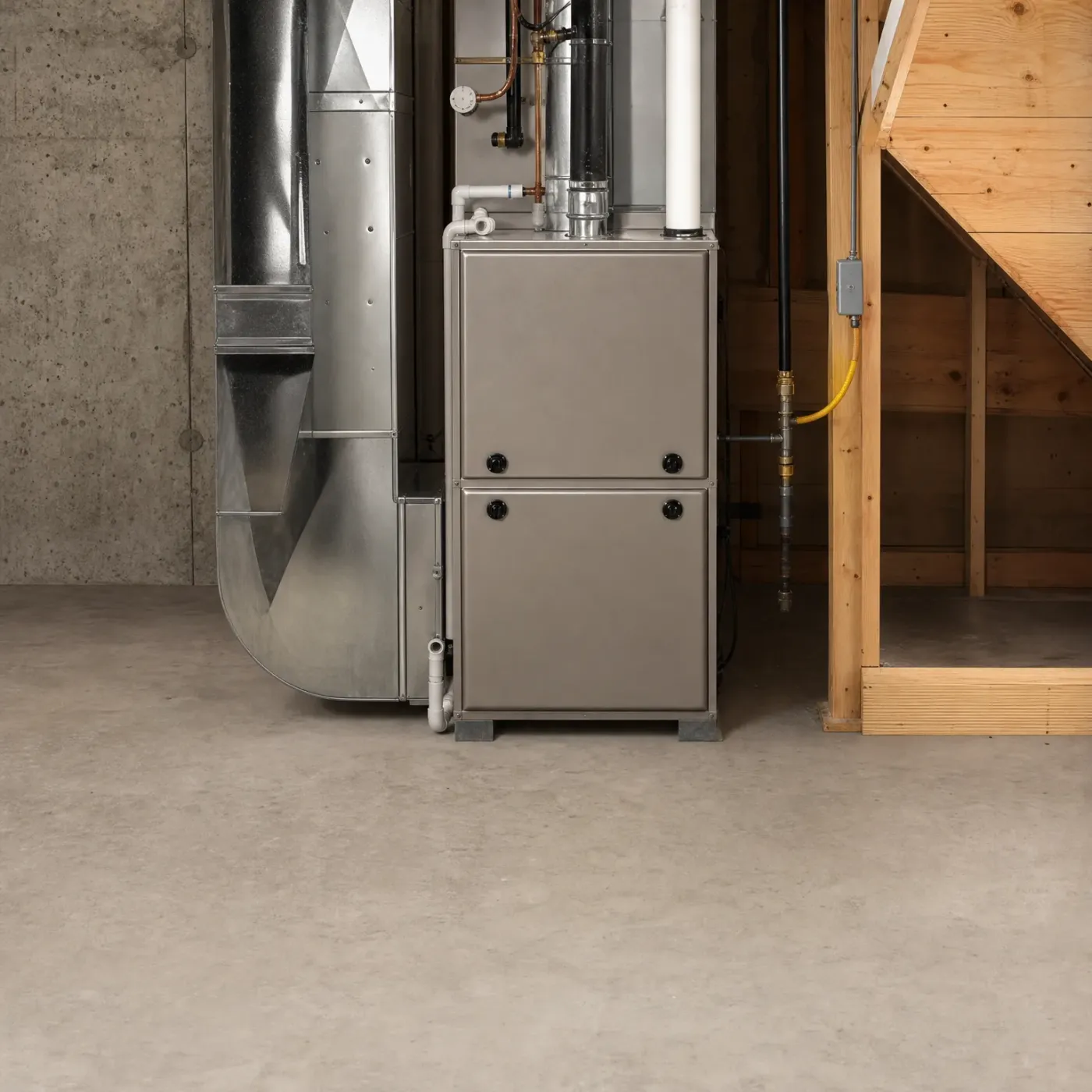
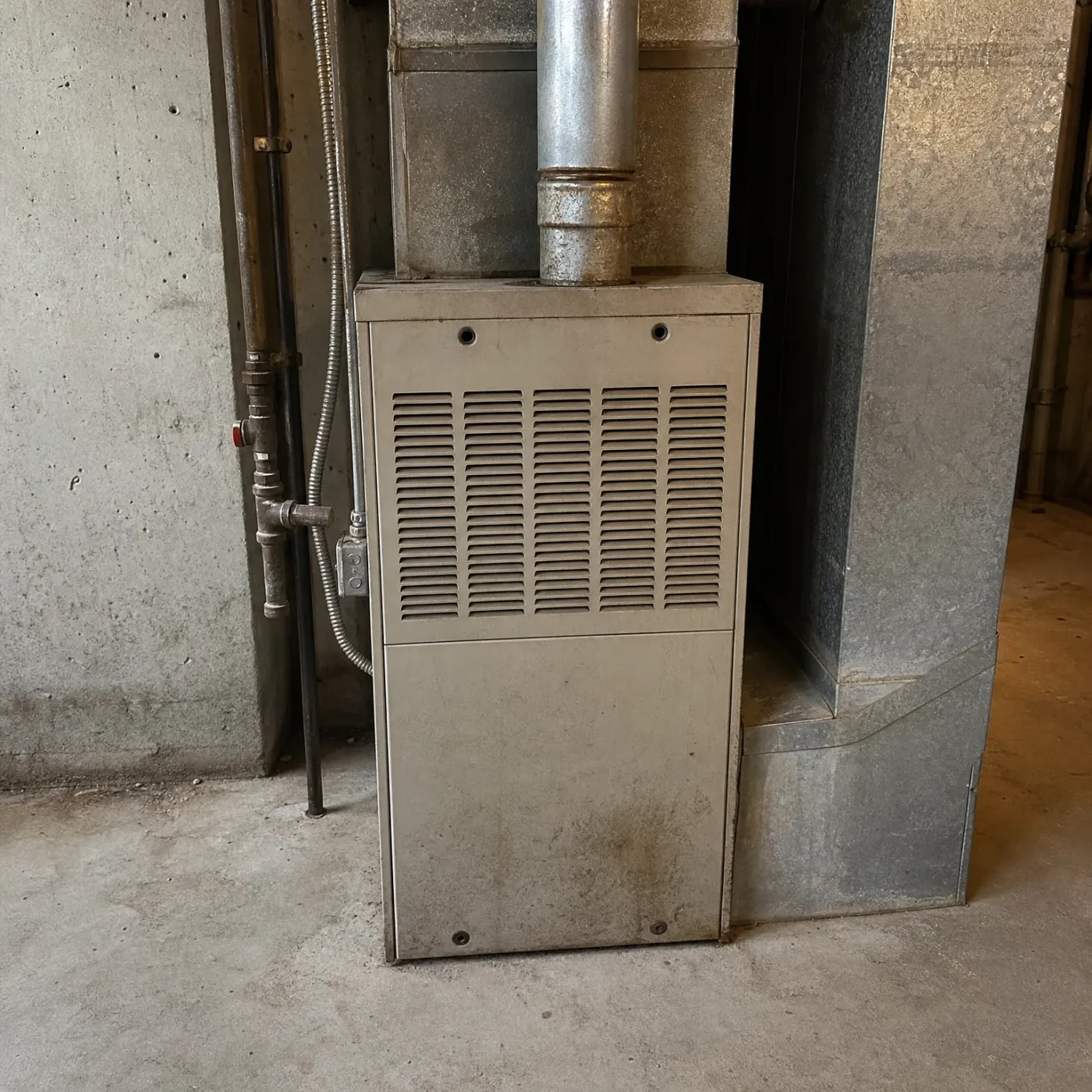
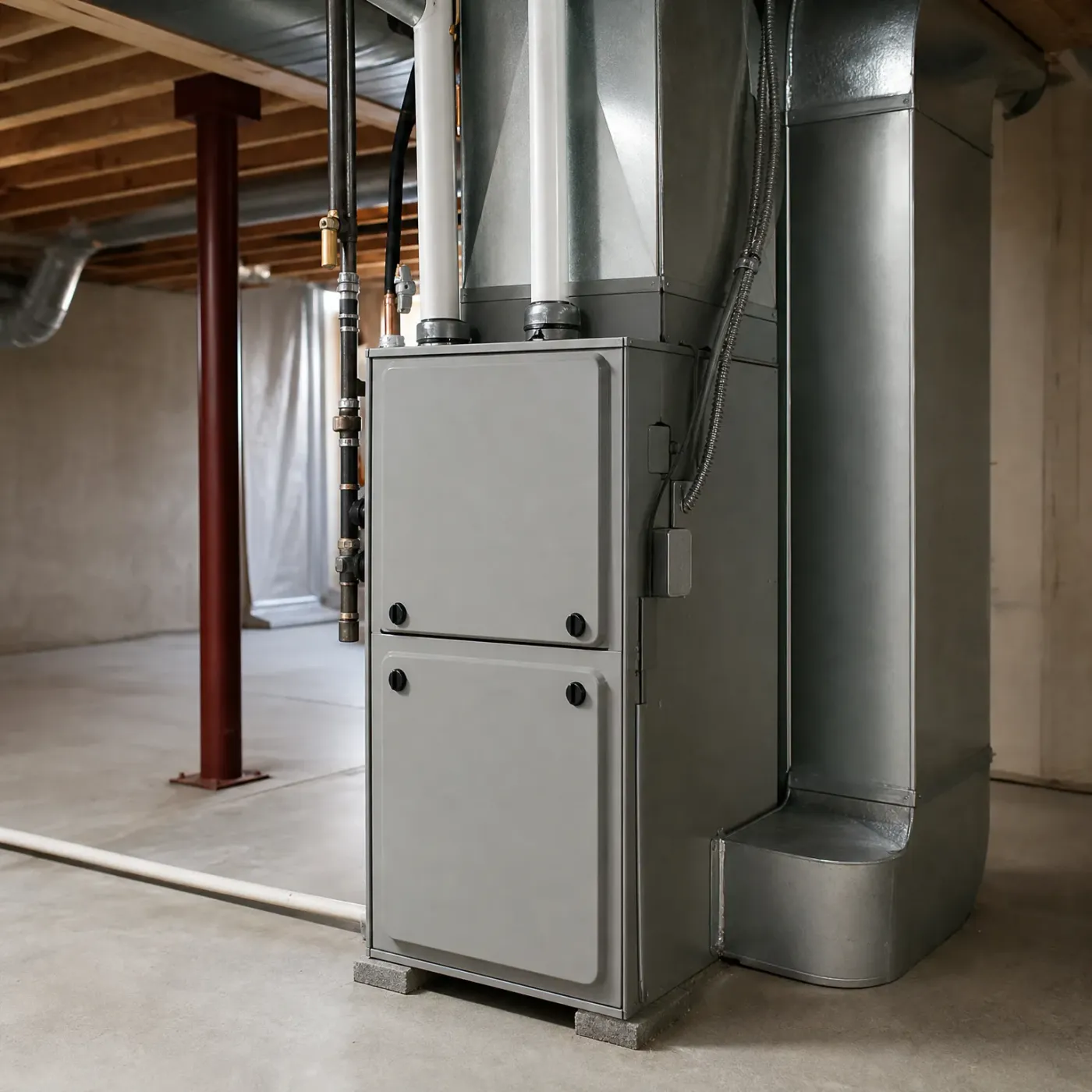
A furnace fires in a set sequence. The igniter glows, the gas valve opens, and the flame is supposed to catch right away. When that timing slips, gas keeps flowing for a second or two before it lights, and that delay is what makes the bang. A few things push the timing off. Burner ports caked with dirt or rust don't let flame spread across them fast, so the gas pools while the fire catches up. A flame sensor coated in residue sends a weak signal back to the control board, and on some furnaces that means another ignition attempt instead of a shutdown. Even the filter plays a part, since a clogged one changes how much air mixes with the gas at the burner. None of this fixes itself. Every late light scorches the burner and the sensor a bit more, so the parts causing the delay keep wearing down, and the bang you hear tonight is usually smaller than the one you'll hear next month.
How a Late Ignition Turns Into a Bang
- The burner should light within about two seconds of the igniter glowing, and anything longer lets gas pool in the burner compartment before it catches.
- A hot surface igniter glows for a set few seconds, and once it hits temperature the gas valve opens whether the burner is clean or not.
- Dirt and rust on the burner ports slow down how fast the flame can spread across them, so the gas keeps flowing while the fire catches late.
- A flame sensor coated in residue reads a weak signal, and some furnaces respond by cycling the igniter again instead of shutting off right away.
- Low airflow from a clogged filter or blocked return changes the mix of air and gas at the burner, which can delay a clean light.
- Each late ignition scorches the burner and sensor a little more, so the delay that caused one bang tends to produce bigger ones over time.




Get the right pro for your furnace
Skip searching for a furnace pro and answer a few questions instead.
Describe your furnace job, and a local pro who handles it gets in touch.
Asking costs nothing, and the choice to hire stays yours.
Bang on Startup vs. Quiet Startup
Bang on startup
- The noise happens at ignition, when the burner catches late and lights off a pocket of built-up gas instead of a steady flame.
- It tends to repeat every cycle, since whatever delayed ignition last time is still there the next time the furnace fires.
- Left alone, the delay usually gets longer, so the bang gets louder or starts happening on more cycles than before.
- A furnace doing this still heats the house, which is why people put off calling even though the cause doesn't go away on its own.
- A cracked heat exchanger is one of the things a late, forceful ignition can cause over time, and that's not something to wait out.
- A contractor can check the burner, the igniter, and the flame sensor to find which one is causing the delay.
Quiet startup
- The burner lights within a couple seconds of the igniter glowing, so there's no gas sitting around waiting to catch.
- You get one steady whoosh and then the low hum of the blower, with nothing that makes you stop and listen.
- A clean burner and a good flame sensor are what keep ignition landing on time, cycle after cycle.
- This is how the furnace ran when it was new, and it's what a repair is trying to get back to.
- No noise at startup doesn't mean no other issues, but it does rule out a delayed-ignition problem.
- A furnace running this way puts less strain on the heat exchanger over the winter.
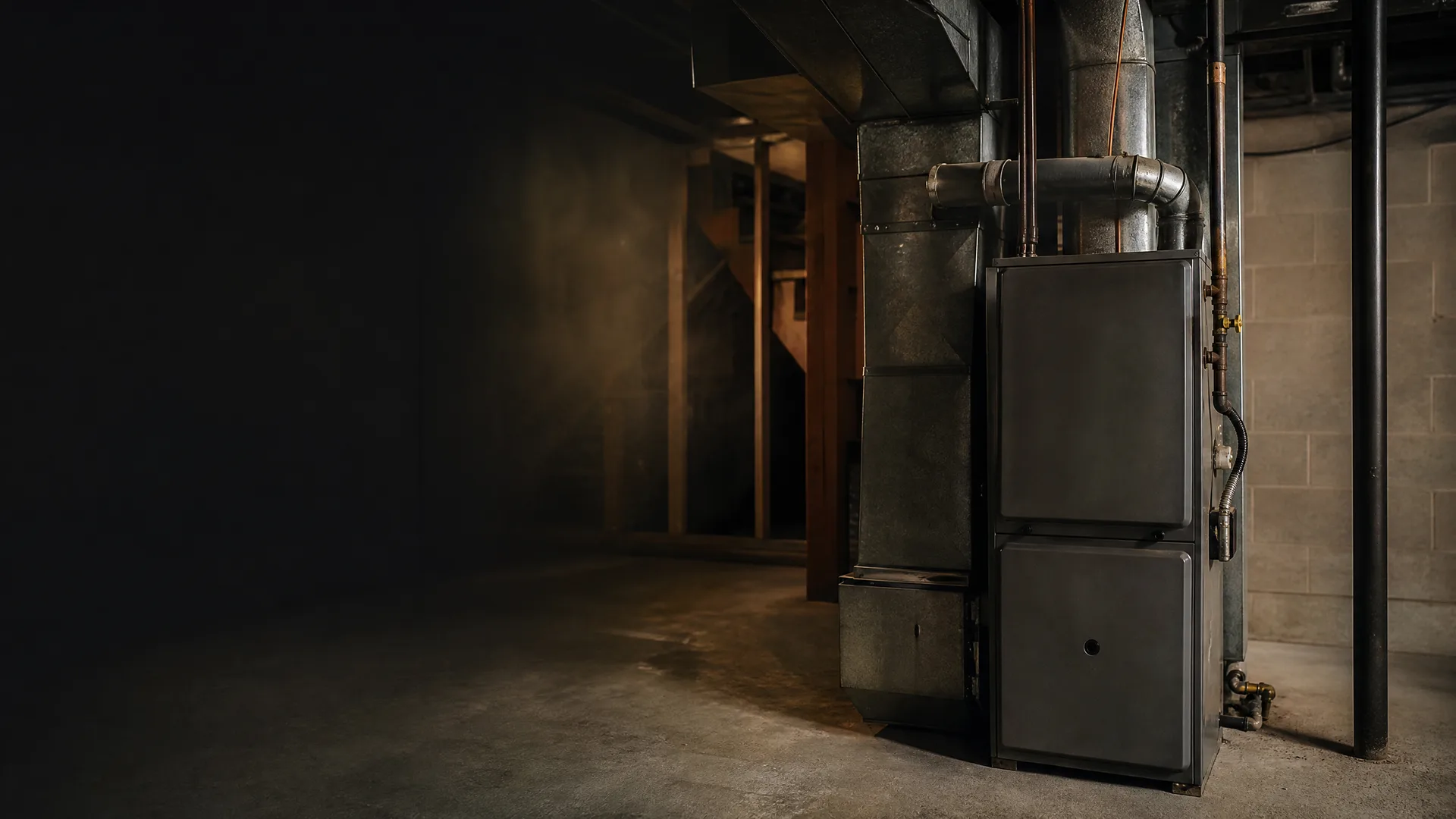
It's just past six on a November evening, and the thermostat upstairs finally calls for heat after sitting quiet most of the day. You're down in the basement for something else when you hear it try. Nothing lights right away. The furnace sits there, dark and cold, and you can see a thin haze of dust hanging in the air near the burner compartment, lit up by the bare bulb overhead. Then the bang comes, sharp enough that you flinch and look over your shoulder toward the stairs, half expecting someone to ask what that was. The furnace keeps running after, like nothing happened. You stay down there a minute longer, watching it, waiting to see if it does it again.
75.3% of homes statewide heat with gas
Three out of four Illinois homes run a gas furnace like yours, and that burner is lighting up every cold morning from fall through spring. A delayed ignition only gets louder and more frequent with age, so that bang is worth having a contractor look at before it happens every single cycle.
ACS 2020-2024 5-year B25040

A bang at ignition is a delay, and delays don't fix themselves
A bang when your furnace lights is gas catching late, not on time. The cause sits in one of a few places: a dirty burner, a weak igniter, a flame sensor that's lost its read. Each cycle it happens again, because whatever caused the delay is still there the next morning when the thermostat calls for heat.
You don't need to know which part it is before you get someone in to look. That part of it isn't on you. Once you answer a few questions about your furnace and your house, you'll be matched with a contractor who works on furnaces like yours in Illinois, and they'll be the one to call you, not the other way around. No sorting through listings, no explaining the bang three different times to three different companies. Just the right person, reaching out, to look at what's actually happening in your basement.
A pro who works on furnaces
One form replaces the calls you'd make to find a furnace pro.