Why your furnace won't shut off in Illinois

Step 1 of 3: Equipment

A furnace that won't shut off usually means the thermostat is telling it to keep running, or the furnace can't tell that it's reached temperature. A dirty flame sensor or a stuck relay can keep the burners firing past the point where they should cut out. Sometimes it's simpler: the blower keeps blowing air long after the burners stop, which is normal, but if that goes on for more than ten or fifteen minutes something is off. In an Illinois winter, a furnace that won't stop can run up your gas bill fast and push the house well past comfortable. It can also mean the furnace is working harder than it should, which wears down parts that were fine a month ago. Left alone, this is the kind of problem that turns a working furnace into one that needs more than a repair.

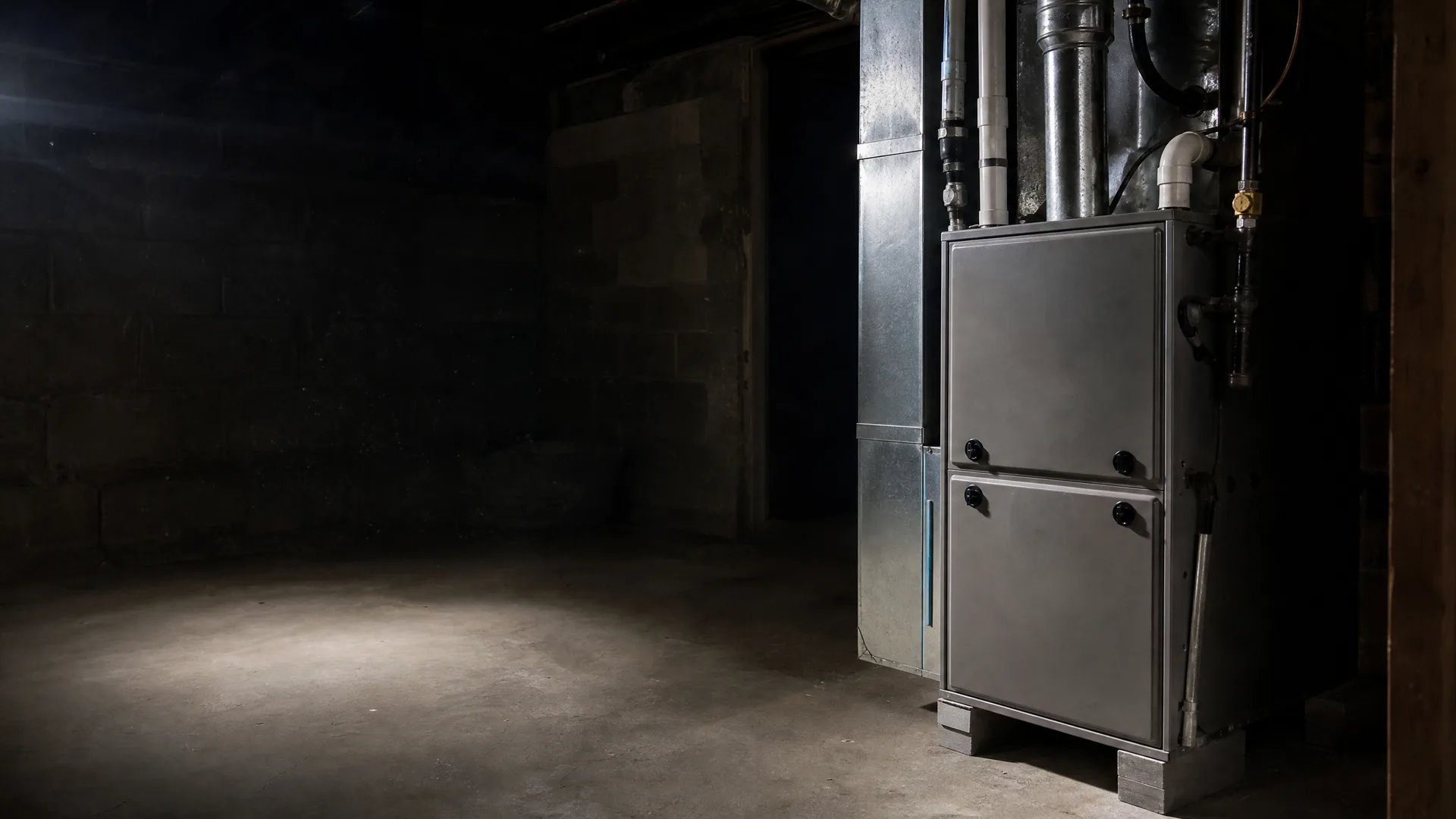
A gray furnace with ductwork and pipes stands against the wall of a dim concrete-block basement with a bare concrete floor lit by a single light.

You're downstairs in the basement around seven, and it's loud enough that you notice it from the stairs, that steady roar that hasn't let up since before dinner. Outside it's already dark, cold enough that the furnace should have cycled off twice by now. It hasn't. The blower keeps pushing air, and when you get close you can see a thin haze of dust hanging in the light near the cabinet, stirred up by all the running. You rest a hand on the thermostat upstairs and the house is already warmer than the number on the dial. Down here the furnace just keeps going, like it forgot what it's for.

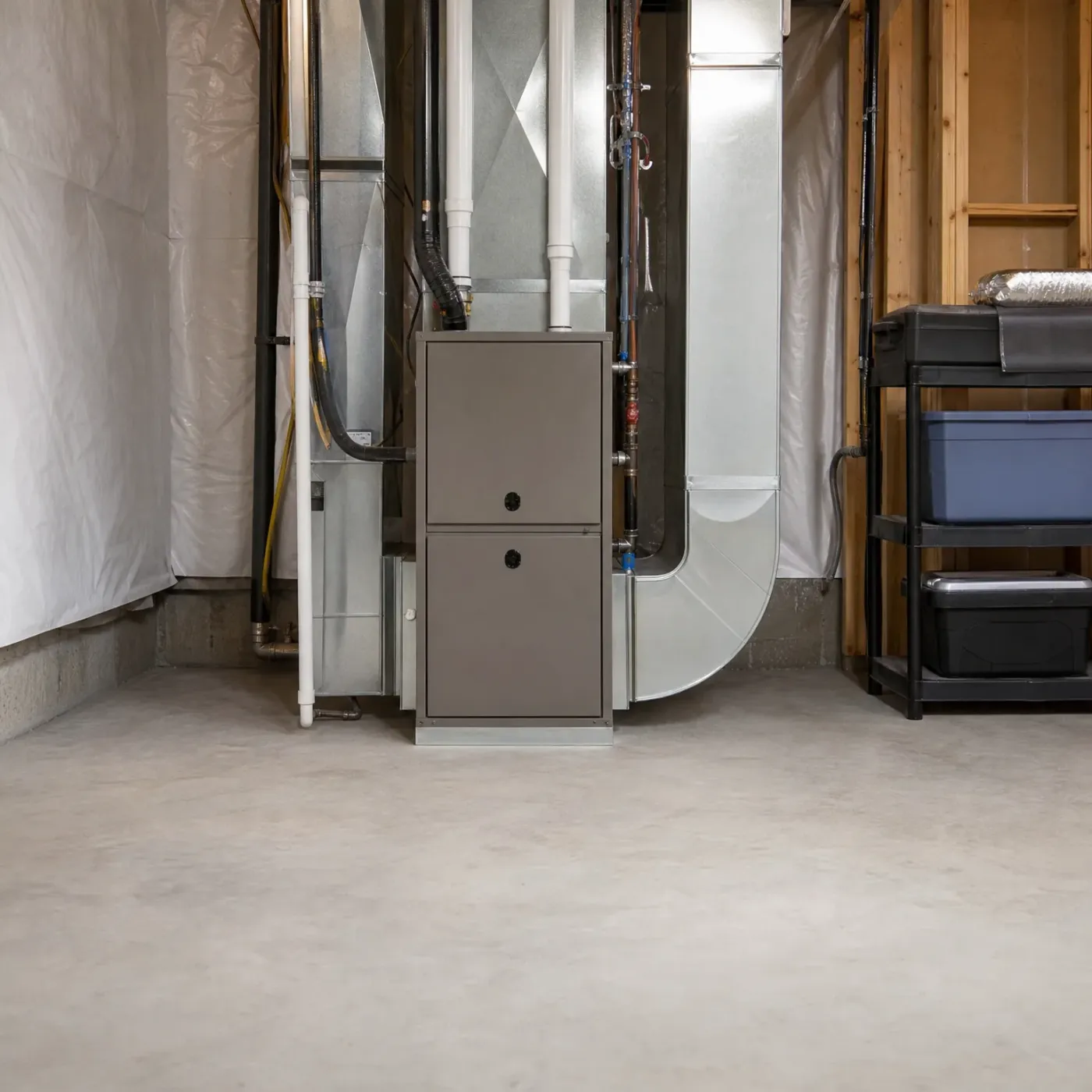
A basement utility area with a gray furnace, sheet-metal ductwork, pipes, plastic-covered walls, a concrete floor, and a black shelving unit holding storage bins.
A thermostat satisfied and a furnace cycling off on its own, the way it should after it's warmed the house.
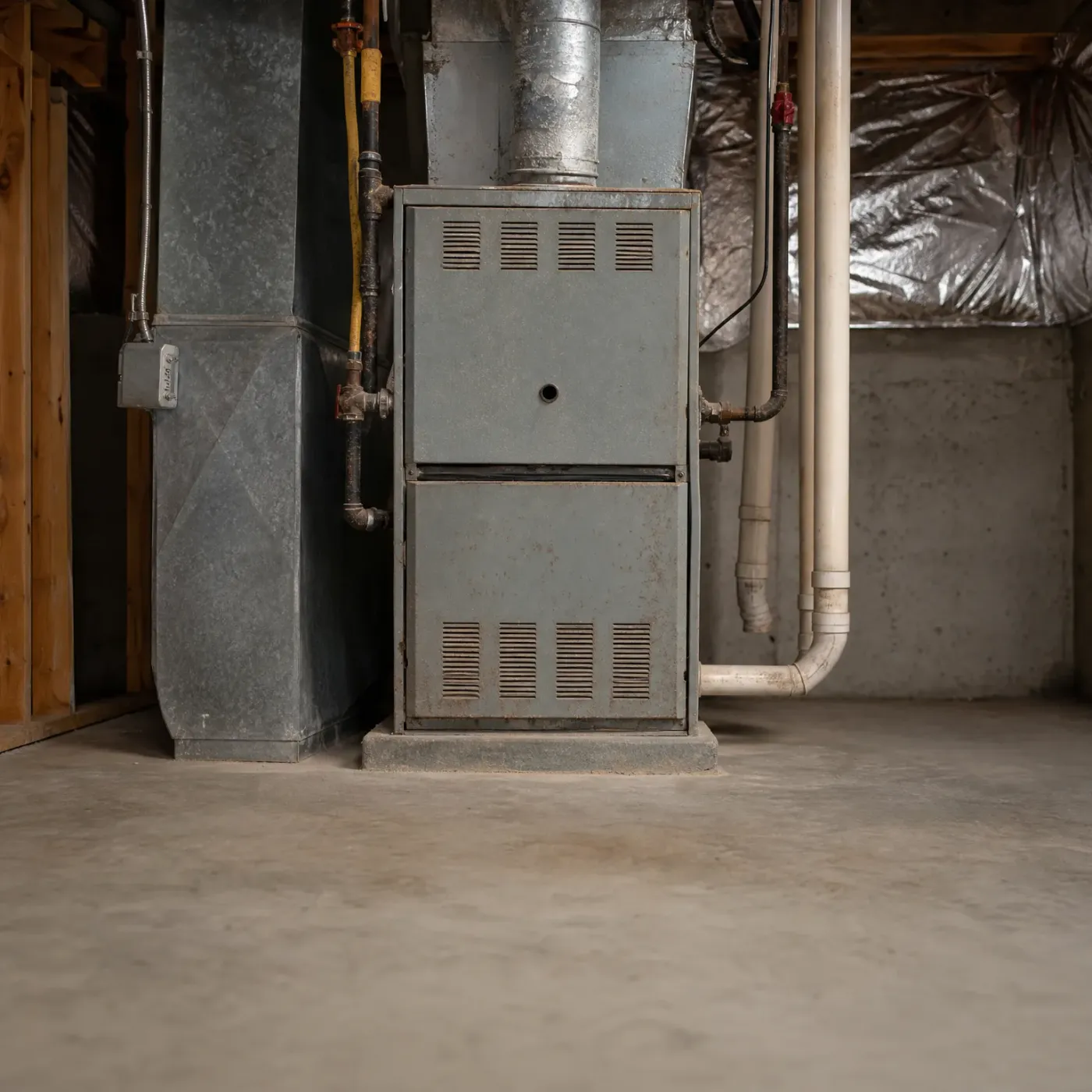
A gray metal furnace with louvered vent panels stands on a concrete basement floor beside galvanized ductwork, gas and plastic pipes, and foil-faced insulation along the ceiling and wall.
Rust on the cabinet and a furnace that keeps running well past when the house is already warm.

What's happening in your house right now

The house is warmer than you set it, maybe by a lot, and the thermostat number hasn't changed anything. Rooms near the vents feel almost hot while the thermostat still reads like it's working. The furnace itself sounds the same the whole time, no click, no pause, just running. Touch the ductwork near the unit and it's hot to the hand. Upstairs you might notice the air feels dry or stale, since it's just pushing the same heat through again and again. Left alone, this runs up the gas bill fast, and a furnace that can't shut itself off is also one that can overheat its own heat exchanger, which isn't a cheap part to replace.

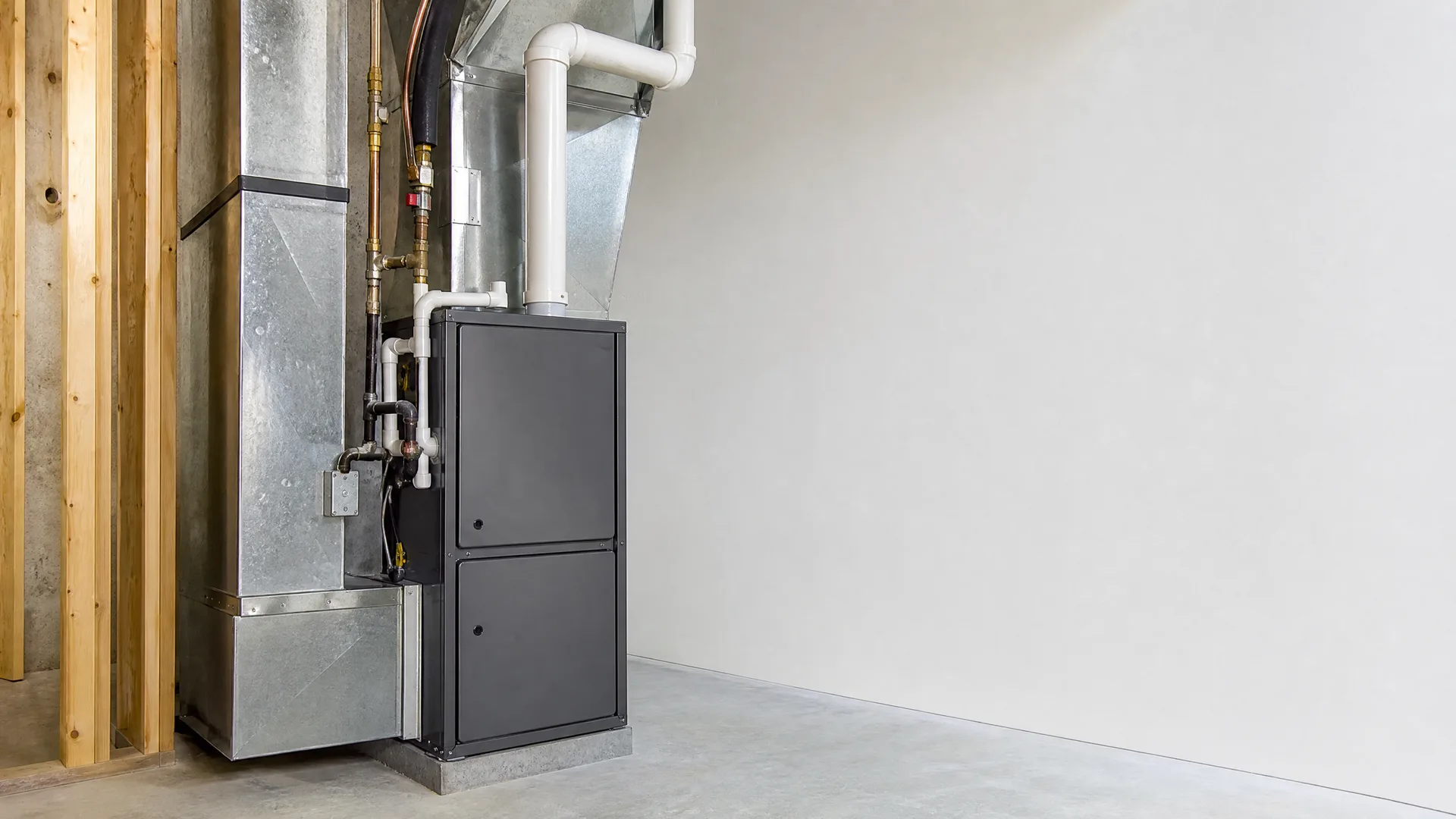
A dark gray furnace connected to galvanized sheet-metal ductwork, white PVC vent pipes and copper piping, standing against a plain light wall in a room with a bare concrete floor and exposed wood framing at left.

How the limit switch is supposed to work

Every gas furnace has a limit switch that watches the temperature inside the cabinet. When the air gets hotter than it should, the switch tells the control board to shut the burners off, even if the thermostat is still calling for heat. A furnace that keeps running past that point usually has a limit switch that's failed, or one that's reading wrong because airflow through the cabinet is restricted.

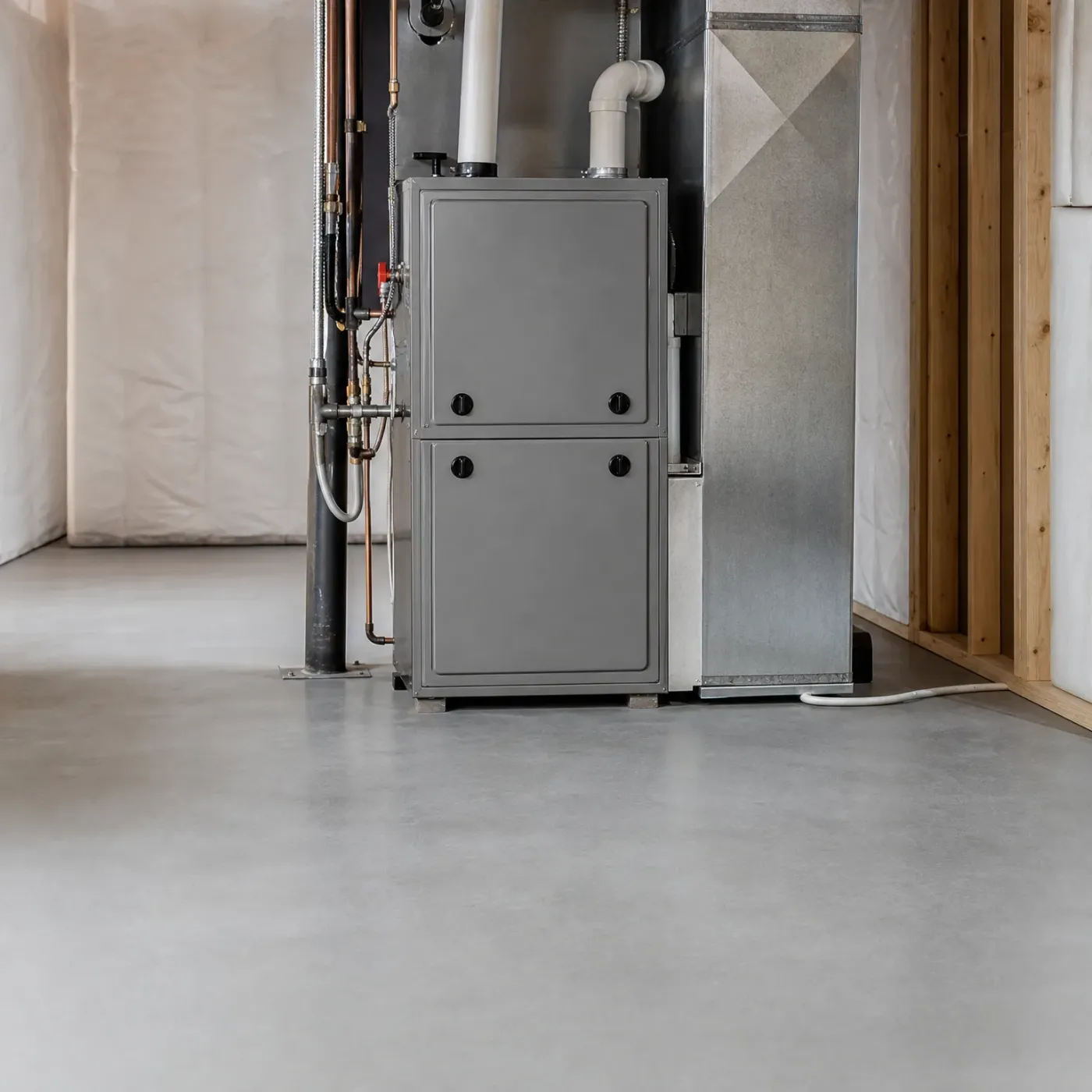
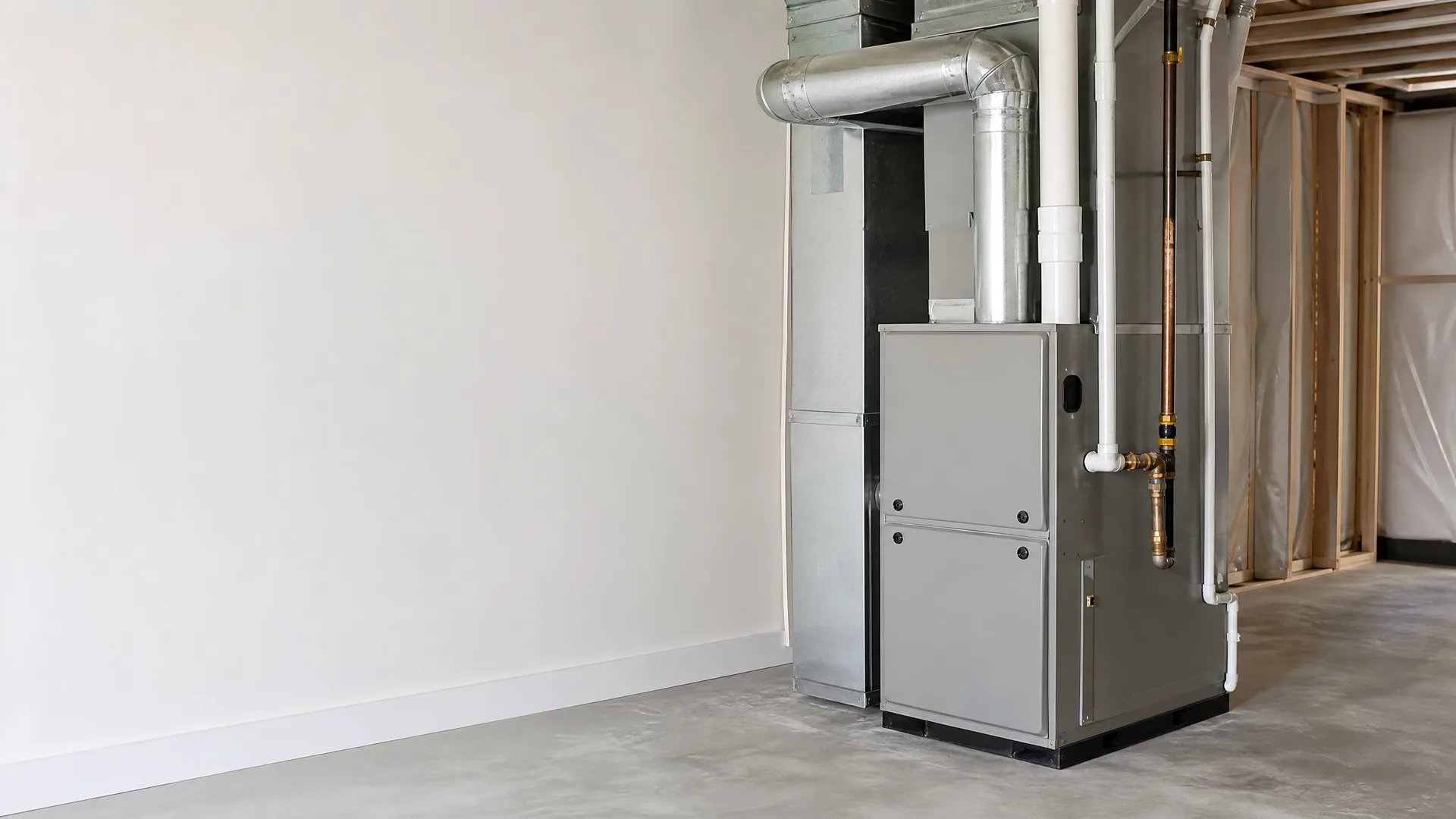
A gray high-efficiency furnace with sheet-metal ductwork, white PVC vent pipes and copper piping stands against a wall in an unfinished basement with a concrete floor and insulated wood stud framing at right.

Why a dirty filter makes it worse

A clogged filter slows the air moving through the furnace. Less air across the heat exchanger means the air inside the cabinet runs hotter than it's built to. That heat can push the limit switch to trip open and shut the burners off mid-cycle, or in some furnaces, confuse the control board enough that it never gets the signal to stop. Either way, the furnace is working harder than it needs to, and running longer to do it.

Winter nights average 20°F statewide

At 20°F, a furnace that's stuck on is heating a house that doesn't need it. Overnight lows like that mean the burners should be cycling on and off for hours, not running straight through. A furnace that won't stop is working against the thermostat, not with it.

NOAA nClimDiv 1991-2020 county normals weighted by homes

You catch it tonight

You call someone out while the furnace is still running, before the limit switch has been tripped open for hours on end. A tech checks the flame sensor, the relay, the limit switch itself, and finds whichever one is stuck. Most of the time it's a quick fix, the kind that doesn't come back. The furnace goes back to cycling normally, the house settles back to the temperature you actually set, and the gas bill for that stretch stays close to what it should have been.


You wait it out

You figure it'll shut off eventually, or the house will cool down enough that it stops mattering. Meanwhile the burners keep firing longer than they're built to, and whatever's keeping the furnace from reading its own limit switch doesn't go away on its own. The cabinet runs hotter than it should for longer stretches. Parts that were already wearing down get pushed further. By the time you do call, it's often more than the one part that started it, and the furnace has been working against itself the whole time.

A smiling man in a blue denim shirt over a white tee sits at a light stone kitchen counter with a grey mug and a bowl of oranges and bananas, with pendant lights and shelving behind him.
A smiling bearded man in a grey long-sleeved shirt sits at a kitchen counter with a dark mug, with a dining table, pendant light and glass doors onto greenery behind him.
A bearded man in a dark green knit sweater smiles and looks off to the side while standing at a kitchen counter with a white mug of coffee, with open shelving, a potted tree, and a dining table near large windows behind him.
A man with dark curly hair in a dark green sweater stands smiling and looking to the side in a kitchen with white cabinets, a potted plant, a stone countertop with a ceramic mug, and a dining area with framed art in the background.

Hand off the search today

A furnace that won't shut off isn't something to watch for a few more nights to see if it corrects itself. It won't. Whatever's stuck, the relay, the sensor, the limit switch, stays stuck until someone opens the cabinet and finds it. Meanwhile gas keeps feeding the burners and the blower keeps pushing heat into rooms that are already warm enough, and with what power costs in Illinois, that's not a small thing to let ride through a cold week. Someone local who works on furnaces like yours all winter has likely seen this exact failure a dozen times this season alone, in houses not unlike yours. Send the request and it goes to one contractor, licensed to work in Illinois, not a handful of companies competing for your callback. That's one less thing to manage while the furnace is still running downstairs and the house is too warm to make sense of.

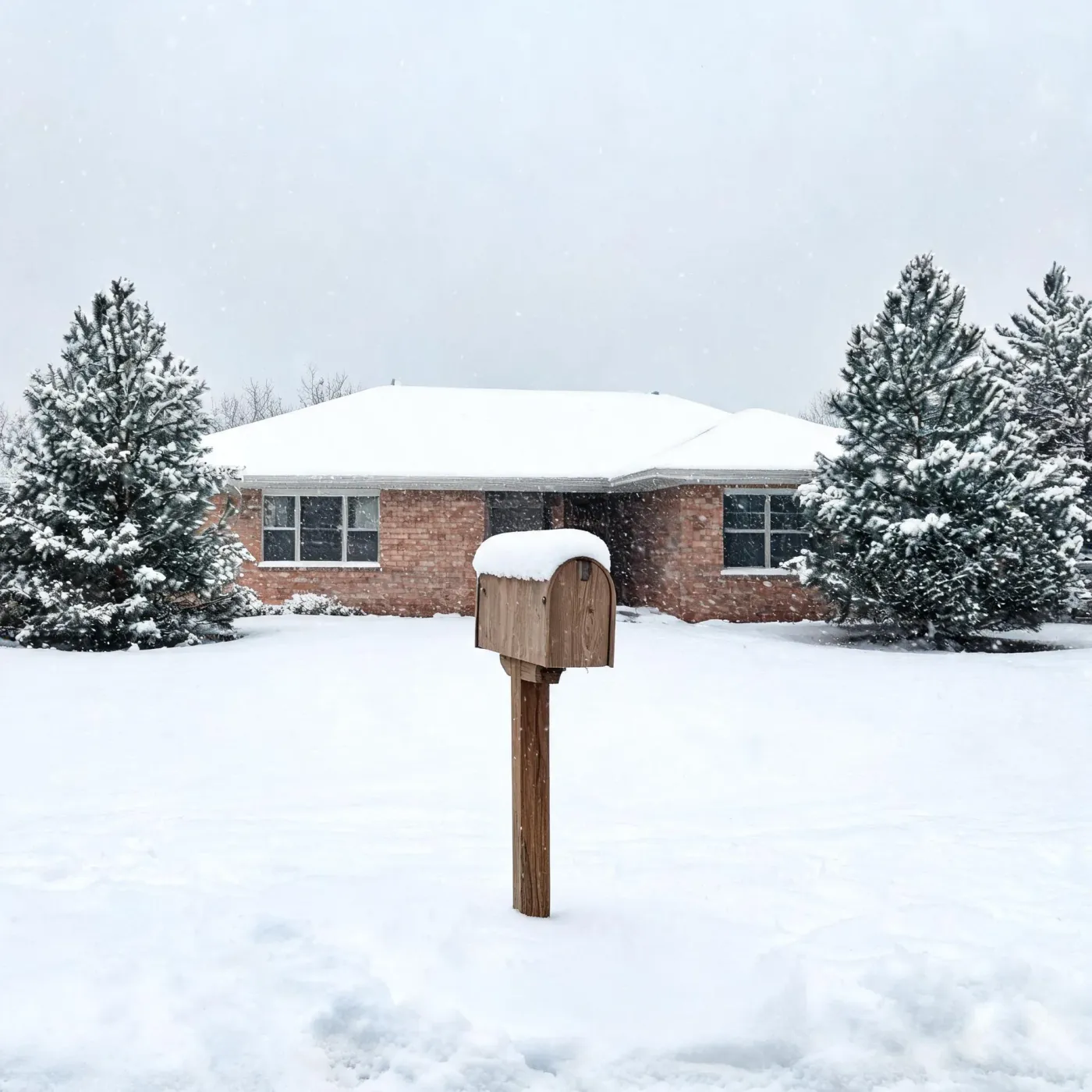
A snow-covered wooden mailbox on a post stands in a snowy yard in front of a single-story brick house flanked by snow-laden evergreen trees during falling snow.

Statewide, winter nights average 20°F, according to NOAA climate data. That's the kind of cold where your thermostat should be calling for heat, getting it, and cutting the burners off, then doing it all again a half hour later. All night long, over and over. If the furnace is stuck running instead of cycling, that pattern breaks down, and the house keeps climbing past the point where it should have stopped. You'd notice it most in a room near a vent, warmer than it has any reason to be at ten at night, with the thermostat doing nothing about it.

NOAA nClimDiv 1991-2020 county normals weighted by homes

Is the blower motor what's keeping my furnace running nonstop?

It's a fair guess. The blower is the loudest, most obvious thing running, so when the furnace won't quit it seems like the natural suspect. You can hear it pushing air through the vents for hours, and it's easy to picture that motor as the part that's stuck. But the blower doesn't decide when the furnace runs. Something else is telling it to.

No, the blower motor just does what it's told

The blower only moves air. It turns on when the control board tells it to and turns off the same way, and it has no say in how long the burners stay lit. What keeps a furnace running is upstream of the blower: the thermostat still calling for heat, or the limit switch and relay that are supposed to cut the burners off once the cabinet reaches temperature. If those are stuck, the blower keeps running right along with the burners, because that's its job whenever there's heat to move. A tech checking a furnace that won't shut off will look at the sensor, the switch and the relay before ever touching the blower itself.

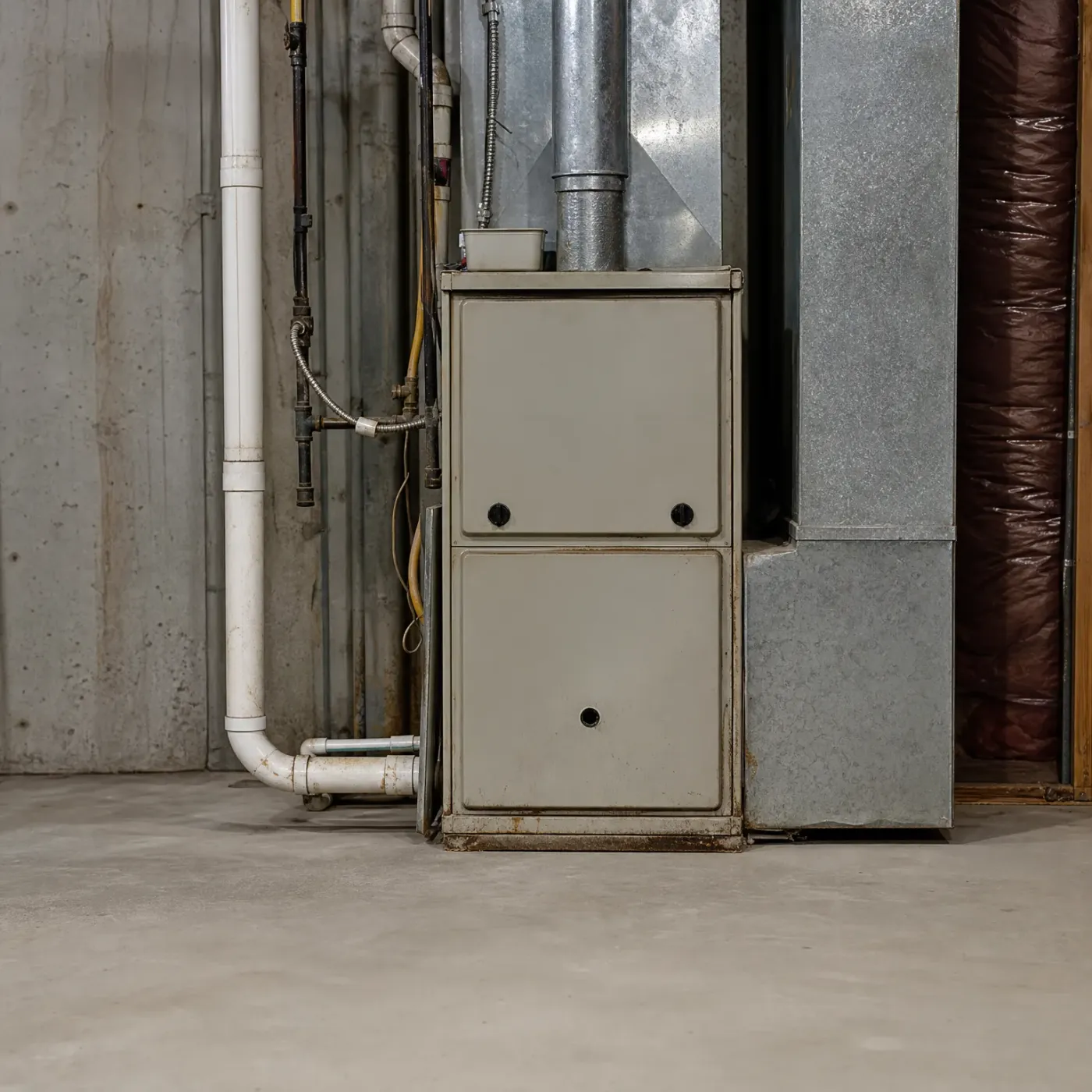
A beige furnace with two access panels stands against a concrete basement wall, with galvanized sheet-metal ductwork, a white PVC pipe, flexible conduit and insulated ducting around it.
Before you get your furnace repair
A gray furnace with white PVC vent pipes stands beside sheet-metal ductwork in a basement with a smooth concrete floor, exposed wood framing, and plastic sheeting on the walls.
After you get your furnace repair

What's keeping your furnace running

  • A thermostat that's satisfied, a stuck relay, or a failed limit switch are the three most common reasons a furnace keeps running.
  • The flame sensor, relay, and limit switch are the parts a tech checks first when a furnace won't cycle off.
  • A furnace stuck on at 20°F outside is burning gas it doesn't need to, all night long.
  • Catching it while the furnace is still running, rather than after days of nonstop operation, gives the limit switch less time to fail outright.
  • The blower motor is usually not the cause, even though it's the loudest part you can hear running.
  • None of these problems correct themselves, since whatever part is stuck stays stuck until someone opens the cabinet.

A furnace that won't shut off is stuck between two signals. Either the thermostat thinks the house needs more heat than it does, or the furnace can't tell it's already reached temperature. Both point back to the same handful of parts. A dirty flame sensor can misread the flame and keep the burners lit. A stuck relay can keep telling the burners to fire after the thermostat has already been satisfied. A failed limit switch, the part meant to shut things down if the cabinet gets too hot, can fail to trip at all. These are the three places a tech checks first, because these are the three places this problem actually comes from.

The blower is easy to blame since it's what you hear, but it's rarely the reason. It runs because the furnace tells it to, not the other way around. With outside lows around 20°F statewide, a furnace stuck on isn't cycling the way it should, on, satisfied, off, then on again later. It's just running, burning gas the house doesn't need right then.

None of this fixes itself. Whatever part is stuck stays stuck, whether that's tonight or three nights from now. The only difference time makes is how long the limit switch sits past the point it should have tripped. Catching it early, while it's still just loud and running too long, means a tech is opening the cabinet to find one stuck part instead of assessing what else gave out because of it.

A bearded man in a navy T-shirt sits on a light-colored couch indoors, smiling while looking down at a laptop screen in the foreground, with a framed picture and a potted plant blurred behind him.
A bearded man in a plaid flannel shirt stands indoors beside a wood-framed, frost-covered window, looking outside, with a steaming brown mug on the sill and a wooden cabinet behind him.

Stop chasing a furnace pro

A furnace that won't cycle off is a part stuck somewhere between the thermostat and the burners, and it stays stuck until someone opens the cabinet. A local contractor who works on furnaces all winter knows to check the flame sensor, the relay, and the limit switch first, because those are the parts that usually fail this way. Send the request and one licensed contractor in your area takes it from there, so you're not fielding calls from several companies while gas keeps feeding burners that should have shut off hours ago.

Send it today

Only one pro gets your request, so you hear from one company.

No fee to send it, and nothing to sign.