


What the cold does to a heat pump here
Winter here is long and it gets genuinely cold. Heat runs eight months a year, October through May, and the overnight low averages 20°F across December, January and February. That 20°F average matters more than it sounds like it should, because a standard heat pump starts losing ground before it even gets there. Below 40°F its heat output falls short of its rated capacity, and below about 35°F it typically needs backup heat to keep up. Kankakee County sits below both marks most of the winter. About 130 nights a year here fall to freezing or below, more than half of the nights heat runs at all, and every one of those nights is already past the point where a standard heat pump is straining.
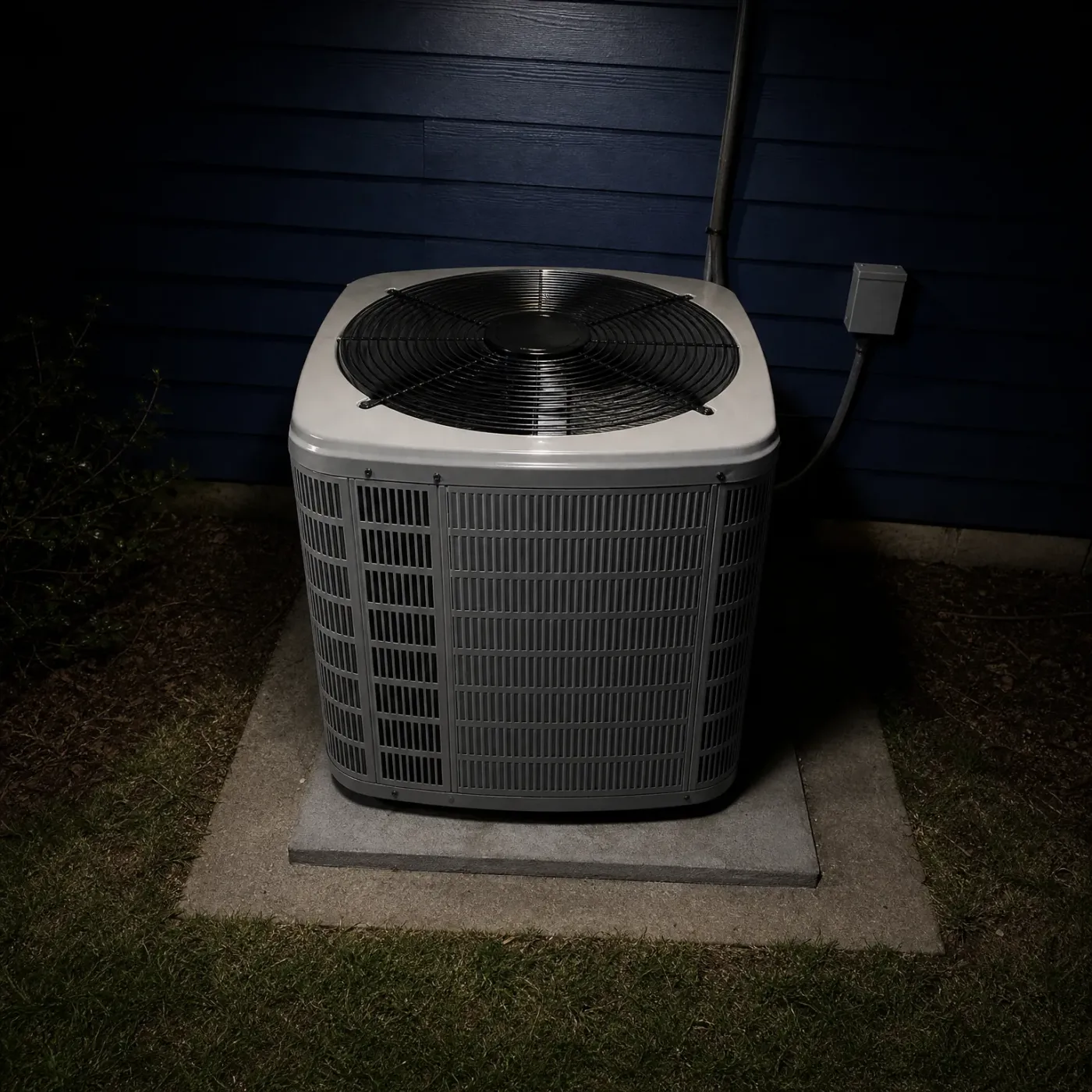
That does not mean a heat pump cannot heat your house. It means it needs help doing it on the coldest nights, and it needs backup heat more here than it would in a milder state. Cold climate heat pumps are built for exactly this. To carry the ENERGY STAR Cold Climate label, a unit has to still produce 1.75 units of heat per unit of electricity at 5°F and hold onto at least 70 percent of its 47°F capacity at that same temperature, verified by outside testing, not the manufacturer's word. Field testing on prototype cold climate units backs this up in practice: across two winters in occupied homes, backup heat covered only a small share of the load between 0°F and 35°F, and running on backup alone was rare even above 0°F. Nights that cold are not common here anyway. Only about 9 nights a year drop to 0°F or below, a small slice of the 130 freezing nights. So the real question for your house is not whether a heat pump can survive Kankakee winters. It is whether the one you install is built for them.