Eight months of work a year
Furnaces in Kankakee County run from October through May. That's most of the year asking the igniter, the blower motor and the heat exchanger to cycle on and off, day after day, for eight straight months.
Takes about a minute. No obligation.
Furnaces in Kankakee County run from October through May. That's most of the year asking the igniter, the blower motor and the heat exchanger to cycle on and off, day after day, for eight straight months.
A furnace that runs this long each year shows its weak spots early. A cracked igniter or a failing flame sensor tends to act up well before the coldest stretch of winter, not after it.
Most houses in Kankakee County heat with gas, 77.1 percent of them.
A tune-up here needs to check the burner and venting, not just swap a filter.



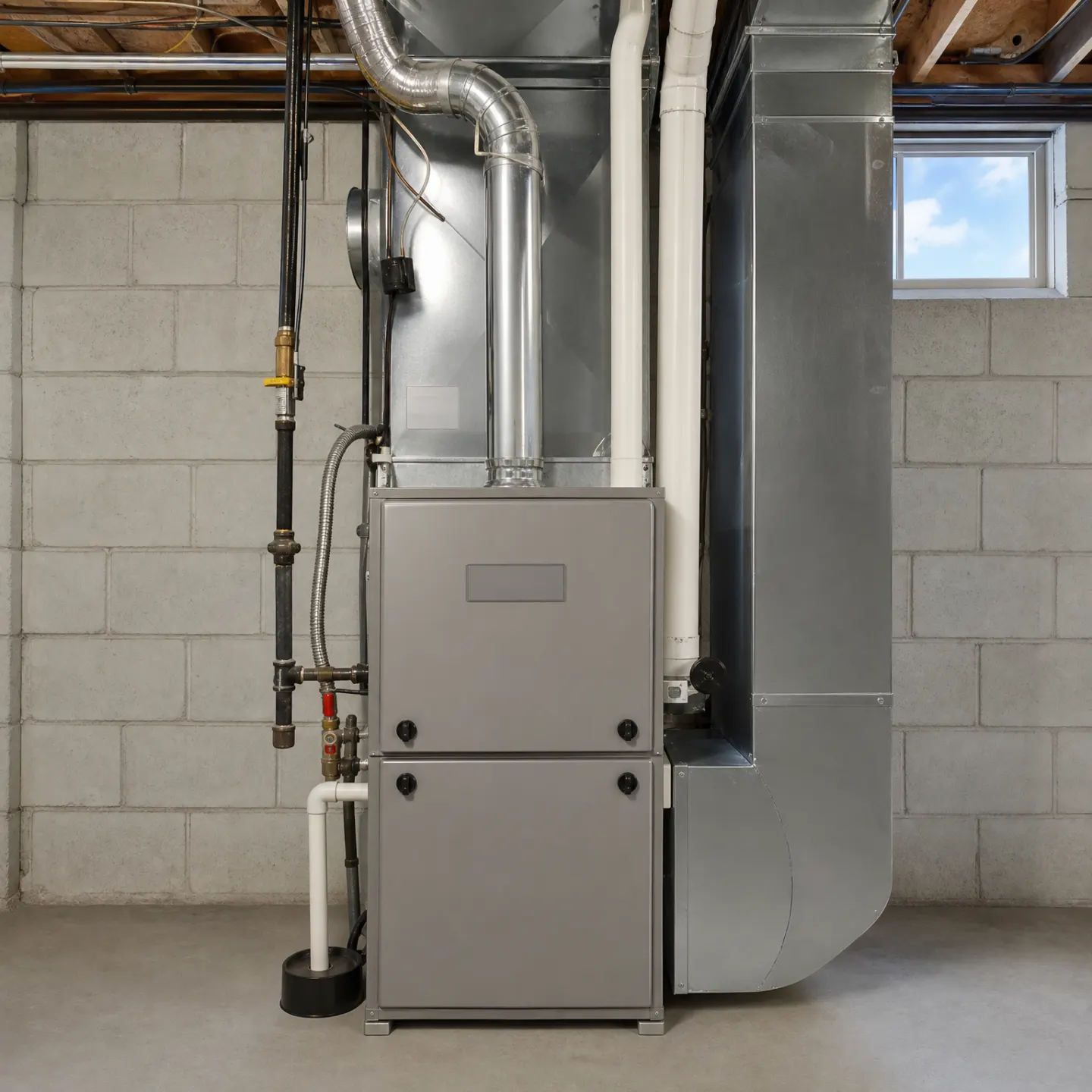
Half the homes in Kankakee County were built in 1972 or earlier. A furnace that old has likely been swapped out at least once, but the ducts, the gas line and the venting are often original to the house. A yearly check matters more on a setup like that. A tech can catch a cracked heat exchanger or a venting issue before it becomes a safety problem, not just a comfort one. If your system came with the house, or you're not sure how old it is, that's worth finding out before winter, not during it.
October is close. A furnace that runs eight months straight shows its weak spots early, and a tune-up now catches a worn igniter or a cracked heat exchanger before the house needs heat every day.
Find a contractorA system that's been running on the same ducts and gas line since 1972 is worth getting on a yearly schedule, not a call-when-it-breaks one. Ask whoever checks it to note the furnace's age and when it was last serviced, so next year's visit starts from something instead of a guess.
The burner flames sit behind a closed panel, and a tech has to pull it to see them. Flames that burn yellow or uneven instead of a steady blue point to a dirty burner or a combustion problem the homeowner never sees from the vent or the thermostat. Left alone, that same burner can start putting off carbon monoxide without the furnace showing any other sign of trouble.
A blower motor can run quiet and still be pulling more amperage than it should, which means the bearings are wearing out before the motor ever seizes. A tech checks the amp draw, the temperature rise across the heat exchanger and the gas pressure at the valve, numbers a homeowner has no way to check. Catching a motor or a heat exchanger drifting out of range here means it gets replaced on a schedule, not in the middle of a cold night.
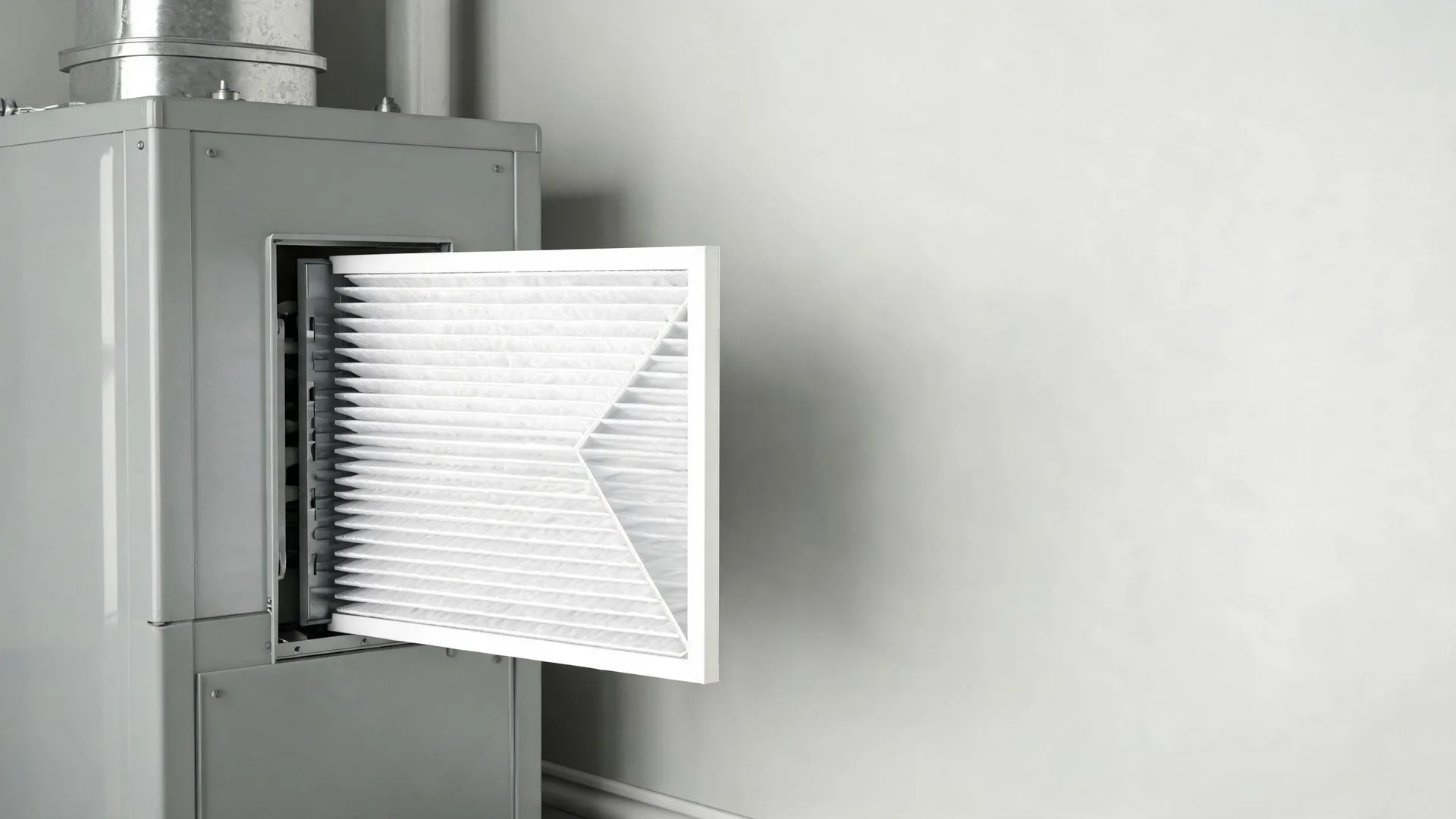
A furnace doesn't have a coil or a drain line. Those belong to the air conditioner side of the system, sitting in the cabinet above or beside the furnace, and a lot of homeowners don't realize the two share that space. What the furnace does have is a filter, and that filter matters to both sides of the system. A clogged filter starves the furnace of airflow, which makes the heat exchanger run hotter than it should and can shorten its life. The same clogged filter, once summer comes, also restricts the air moving across the AC coil above it, so a single dirty filter causes two different problems depending on the season. Changing it on a regular schedule is the one piece of upkeep that protects both machines at once.
A tune-up starts before any panel comes off. A tech checks the thermostat calls for heat properly and that the furnace responds right away, no delay, no short cycling. Then it's the filter, the blower wheel for dust buildup, and the belts or bearings if the motor has them. Inside the cabinet, the burners get cleaned and the flame checked for color and shape. The flue and venting get inspected for blockage or corrosion, since a flue that can't draft properly pushes exhaust back where it doesn't belong. Gas pressure gets set to the furnace's specs, not guessed at. Every electrical connection gets checked for looseness, because a loose wire generates heat on its own and that heat damages whatever it touches. None of this takes long when a furnace is in good shape. It takes a lot longer, and costs a lot more, when it's done for the first time on a furnace that's never had it done at all.