


Heat pump vs furnace in Rock Island County, Illinois

Price Both Options

Install quotes in Rock Island County

Which costs less to run in Rock Island County?

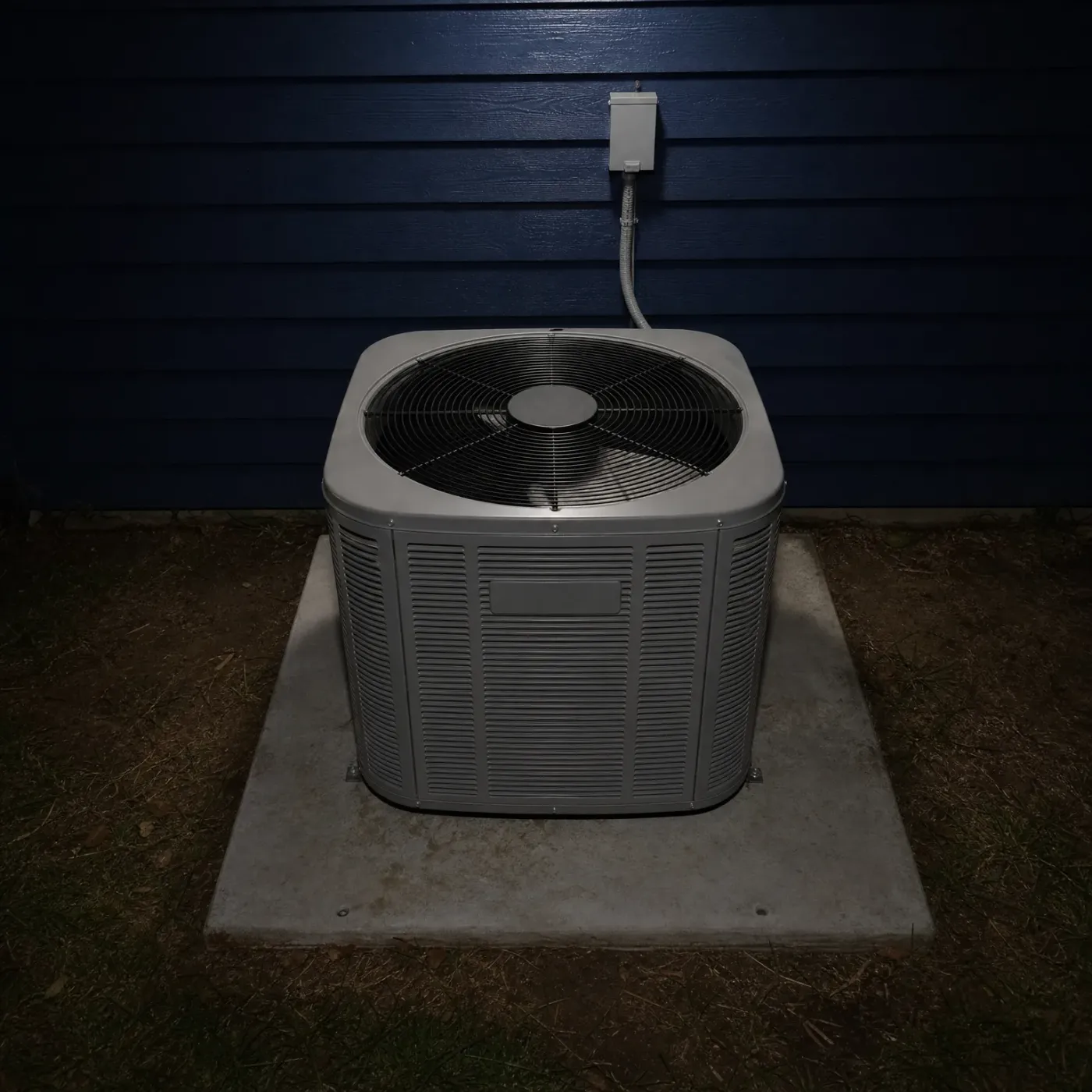
A gray outdoor condenser unit with a top-mounted fan grille sits on a concrete pad against dark blue lap siding, with a conduit running to a small wall-mounted disconnect box, photographed at night.

Heat pump

To heat your home here$2.12per 100,000 Btu

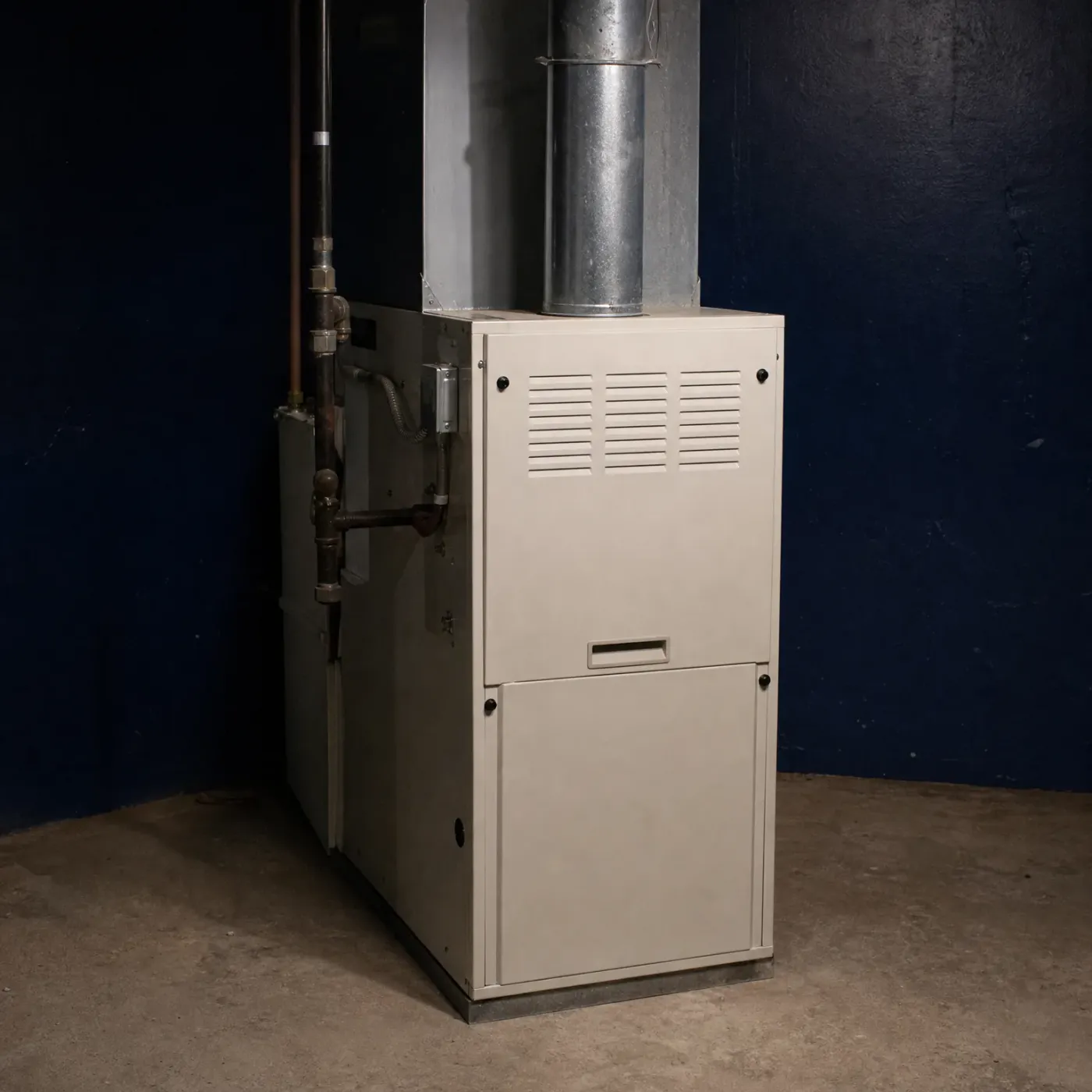
A beige residential furnace with a louvered upper panel stands against a dark blue basement wall, with a metal flue pipe rising from its top and copper and steel pipes running along the left side.

Furnace

To heat your home here$1.33per 100,000 Btu

At Illinois's gas and electricity prices, a gas furnace makes the same heat as a heat pump for at least 37% less.

Btu stands for British thermal unit, the standard measure of heat energy.

Where does a heat pump shine?

  • Steady, even comfort

    A heat pump runs long and low instead of blasting on and off. Rooms hold an even temperature all day.

    A navy upholstered armchair with ottoman, open book and throw blanket sits beside a lit fireplace and white built-in bookshelves, with a golden-colored dog lying on a gray rug and snow visible through the window.
  • No gas line, nothing burning in the house

    There's no gas line to the unit and no flame anywhere in it. Carbon monoxide isn't part of the picture.

    A navy blue whistling kettle sits on a black induction cooktop set into a light stone island with navy cabinets, with wooden open shelves holding bowls and plants, a stainless steel refrigerator, and a window with green trees behind.
  • Heats and cools in one system

    One machine handles the heat in winter and the cooling in summer. There's no second system to buy or keep up.

    A living room with a cream sofa holding navy and light blue pillows and a blue throw, a wood-and-metal coffee table with books, a pitcher and potted plant, a jute rug, a navy built-in bookshelf at left, and a large window showing green trees and shrubs.

Where does a furnace shine?

  • Strong, steady heat in hard cold

    Winter nights here average 18°F, and a furnace keeps putting out the same hot air at the vents no matter how far it drops. You're not waiting on it to catch up on the coldest night of the year.

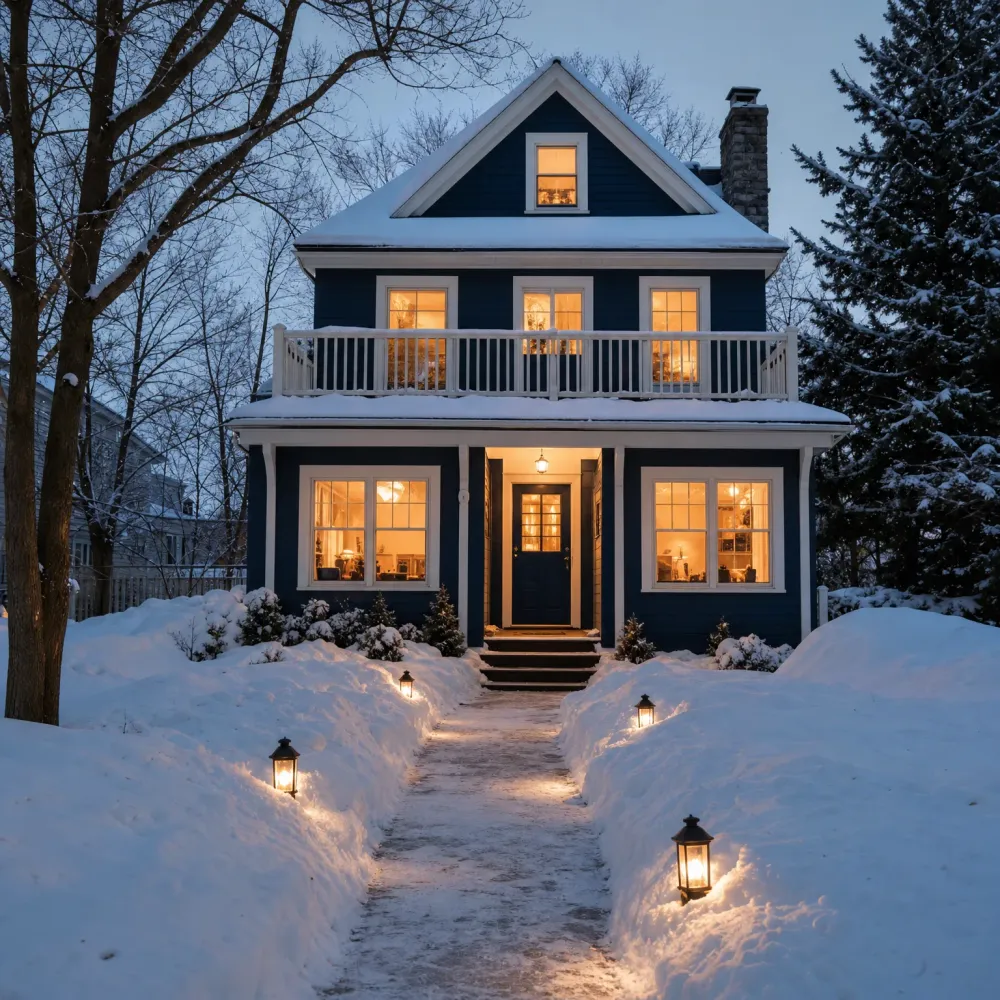
    A two-story dark blue house with white trim, lit windows, a balcony and a stone chimney at dusk, with a shoveled path through deep snow lined by small lanterns, bare trees at left and a snow-covered evergreen at right.
  • Runs on the gas most homes here already use

    Most homes in Rock Island County already heat with gas, so the line running to your house is likely already there. A furnace just uses what's already hooked up.

    A row of wood-sided houses with covered front porches and painted railings along a snowy sidewalk, with a gas meter at the near house and a person in a dark coat walking in the distance under bare trees.
  • Fast, strong heat on demand

    Turn the heat up and the furnace answers right away. There's no long wait for the house to catch up.

    Entryway with coats hung above a wooden bench holding mittens and a steaming mug, boots on a tile floor, a jute mat, a floor vent with visible warm air, a sheer curtain blowing by a window showing snow, and a dark blue door.

What winter here does to a heat pump

Your furnace or heat pump has to work from October through May here, eight months out of twelve. That is the real test, not the three summer months. The overnight low averages 18°F across December, January and February, and a standard heat pump's output starts falling short of its rating once it drops below 40°F outside. By 18°F it is well past that mark. It also crosses the point, around 35°F, where it typically needs backup heat to keep up.

That is not a rare cold snap. About 125 nights a year here fall to freezing or below, roughly half of the nights across the whole heating season, and every one of those nights is below both the 40°F and 35°F marks. Ten nights a year reach 0°F or below, a small share of the 125, but it tells you the backup heat built into a standard heat pump system is not sitting idle. It is working most winters here.

That does not rule out a heat pump. A model built and tested to the ENERGY STAR Cold Climate standard has to deliver at least 1.75 units of heat per unit of electricity at 5°F and hold onto 70 percent of its 47°F capacity at that temperature. Field testing of prototype cold-climate heat pumps in occupied homes found backup heat covered only a small share of the output between 0°F and 35°F, and running on backup alone was rare even above 0°F. A standard heat pump and a cold-climate one behave differently here. If a heat pump is on the table for this house, which one it is matters more than it would somewhere milder.
A row of houses along a snow-lined street, with a brick house with blue shutters and icicles on its gutter in the foreground and a light blue sided house beside it under a clear sky.

What it costs to run, and what to weigh against that

At Illinois's average fuel prices, a gas furnace is cheaper to run here. The running-cost figures work out to $2.12 per 100,000 Btu for a heat pump built to the federal minimum, against $1.33 for a furnace built to the federal minimum, so the furnace makes the same heat for at least 37 percent less. That heat pump figure does not add anything for backup heat on the colder nights, so on many of those 125 nights the real gap would be wider.

Gas is also what most homes here already run on. Utility gas heats 77.7 percent of homes in the county, electricity 17.9 percent. That does not settle anything about your house, but if your furnace came with the house, there is a good chance it already burns gas, and a gas furnace replacement uses the line that is already there.

A furnace only heats. It has nothing to do for the four months a year it is not needed, while a heat pump also runs the air conditioning, which is worth weighing if your cooling system needs replacing too. Where this leaves the decision: a furnace costs less to run and handles the county's cold more simply. A heat pump can still do the job, especially a cold-climate model, but it has to be sized and backed up for nights that are common here, not occasional, and its running cost advantage disappears into the electricity price, not the furnace's.

Sources: NOAA nClimDiv · NOAA 1991–2020 seasonal normals · PNNL Building America guide · PNNL-37127 field study · ENERGY STAR product criteria · Census ACS 2020–2024 · EIA SEDS 2024 · 10 CFR 430.32

A two-story navy blue house with white trim, a covered front porch and a light blue front door, with snow on the roof and lawn and a cleared concrete walkway leading to the street.

Common questions about heat pumps and furnaces

  • Can a heat pump heat a house through an Illinois winter?

    It can, but not at full strength on the coldest nights. A standard heat pump puts out less than its rated capacity once it's below 40°F outside, and loses more as it drops into the teens and single digits. Rock Island County sees about 125 nights a year at or below freezing and about 10 that hit 0°F or below, so a heat pump here is working under its rating most of the winter, not just occasionally.

  • Do I need backup heat with a heat pump here?

    Most homeowners here pair one with a backup heat source. A standard heat pump's efficiency drops once it's below about 35°F outside, and the average overnight low here across December, January and February is 18°F. A furnace is the backup most homes use, since gas already heats 77.7% of homes in the county.

  • Can I keep my furnace and add a heat pump?

    Yes, and here it's a common setup. The furnace carries the house on the coldest nights, the heat pump handles the rest, and the two share the job depending on the outdoor temperature. With an average winter low of 18°F and about 125 nights a year at or below freezing, there are plenty of nights here where that handoff matters.

  • Is a heat pump cheaper to run than a furnace in Rock Island County?

    No, a furnace costs less to run here. A heat pump works out to $2.12 per 100,000 Btu of heat at Illinois's average electricity price, against $1.33 for a gas furnace at the average gas price, so the furnace comes out at least 37% cheaper to run. That gap doesn't include any backup heat the heat pump needs on the colder nights, which would add to its side of the ledger.

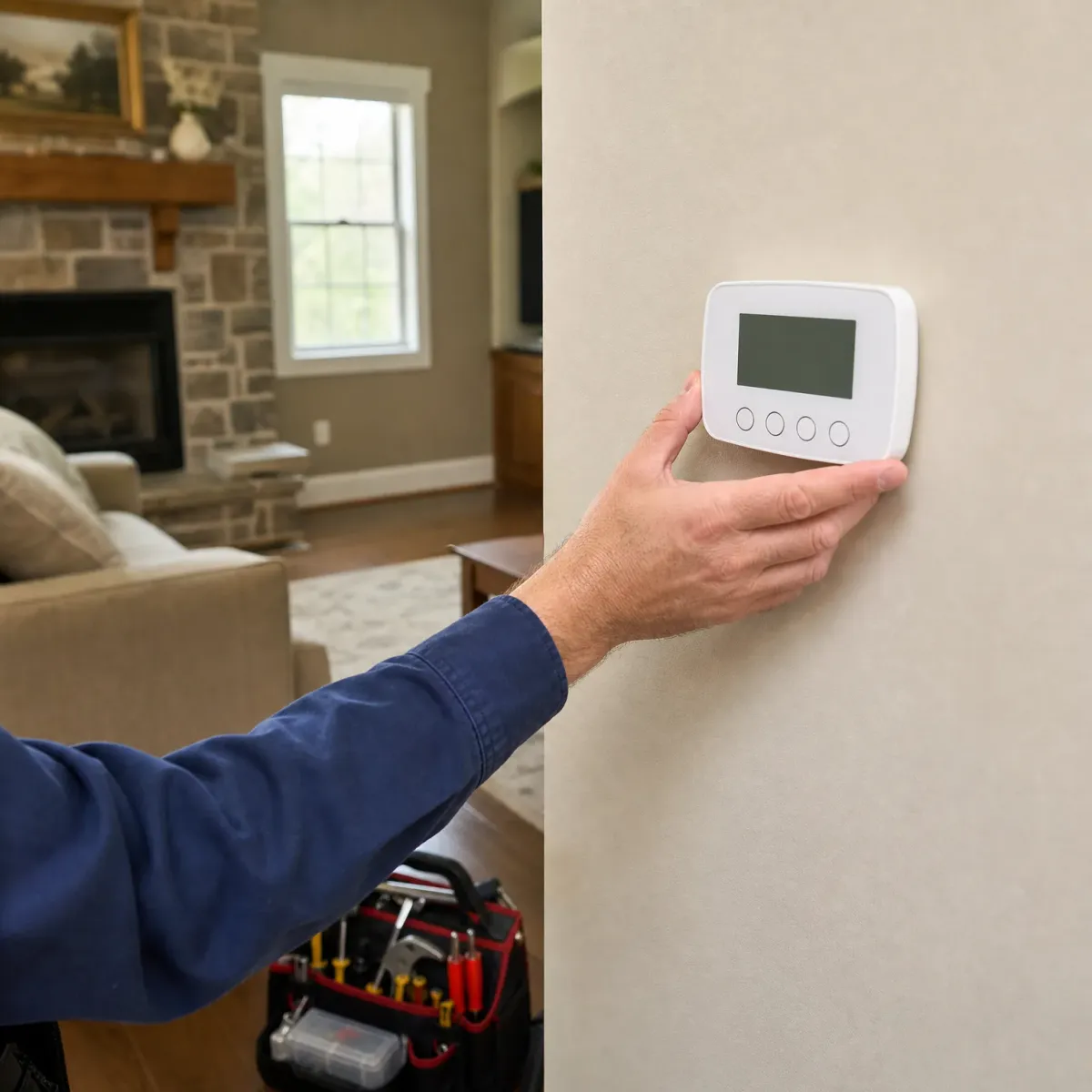
A person's hand in a blue long-sleeved shirt touches a white wall-mounted thermostat with a blank screen and four buttons, with a living room containing a stone fireplace, window, and an open tool bag visible in the background.

Tell us about the job

Takes about a minute. No obligation.

Step 1 of 3: Equipment