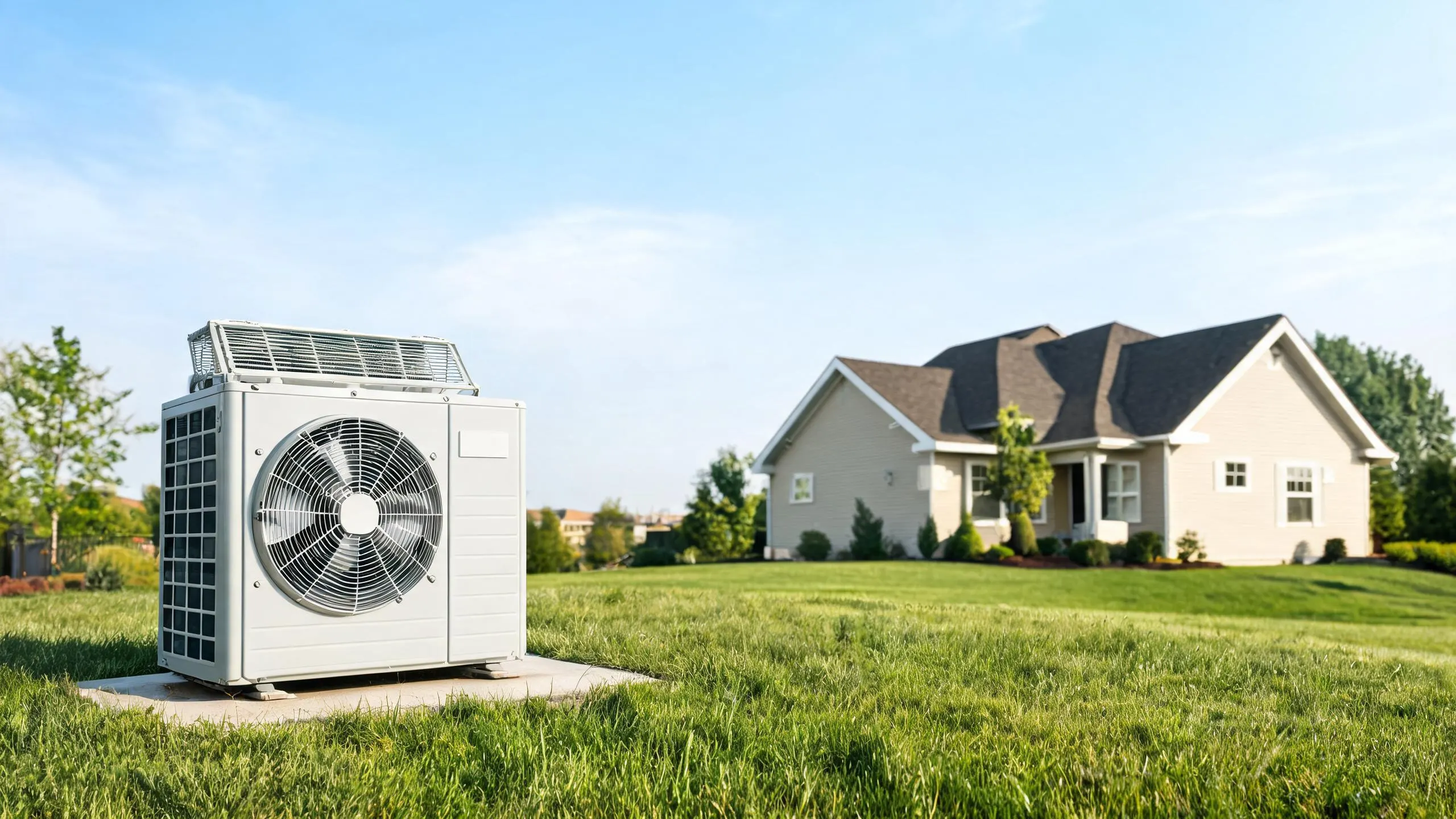



An outdoor air conditioning condenser unit mounted on a concrete pad in front of a single-story suburban house.

Heat Pump Installation in Moline, IL

Tell us about the job

Takes about a minute. No obligation.

Step 1 of 3: Equipment

Gas heats 77.7 percent of homes in Rock Island County. Electricity accounts for most of the rest, at 17.9 percent, with a small share on bottled or LP gas. A heat pump going into a gas house usually works alongside the furnace rather than replacing it, taking over the heating load until the temperature drops low enough that the furnace picks it back up. That pairing is common here because gas is already in the house and the ductwork is built to move air from a gas furnace. If your home is one of the smaller number already heating with electricity, a heat pump can serve as the only system, with electric resistance backup for the coldest days. Either way, the right setup depends on what's already installed, so that's worth checking before you decide what to replace.

8 months
October through May, your system heats
3 months
June through August, it cools
18°F
the average winter night it heats against
83°F
the average summer afternoon it cools against
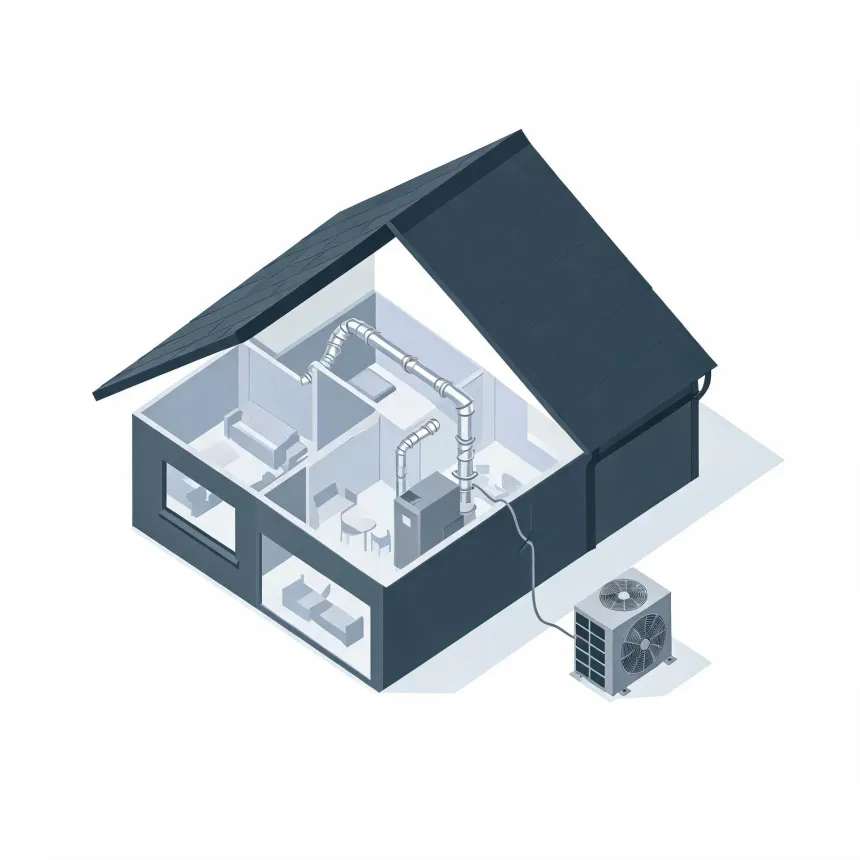
Isometric illustration of a cutaway house showing interior rooms with furniture, a furnace and ductwork, connected by a line to an outdoor condenser unit on the ground outside.
Your system heats October through May and cools June through August.

NOAA nClimDiv, 1991–2020 normals

Winter runs eight months here, October through May.

Get a heat pump in before September and it's running on your timeline, not a cold snap's.

Half these homes were built before anyone thought about a heat pump

Half the homes here were built by 1962
Climate zone 5A
Power here costs 10.13 cents per kilowatt-hour

Nothing about Rock Island County calls for an oversized unit or special equipment. A heat pump sized to the house and installed with a correct refrigerant charge will heat and cool it the way it's supposed to. What this county does bring is weather that tests the installation itself, not the sizing. Sixteen tornadoes and 87 damaging wind events hit the county between 2015 and 2024, and winter storms, heavy snow, ice and blizzards, came through 23 times in that same stretch. An outdoor unit needs to be mounted and secured with that in mind. None of it changes what size system your home needs or what it costs to run.

Zone 5A sets the floor for what goes in

Rock Island County falls in climate zone 5A, a cool zone where heating carries the bigger load over the year. Any split-system heat pump installed here has to clear the federal minimums on the label, at least 14.3 for cooling and 7.5 for heating. That's not a target, it's the floor every unit on the market has to meet. A federal tax credit is available on qualifying equipment, which helps offset a system built to that standard.

Find a contractor
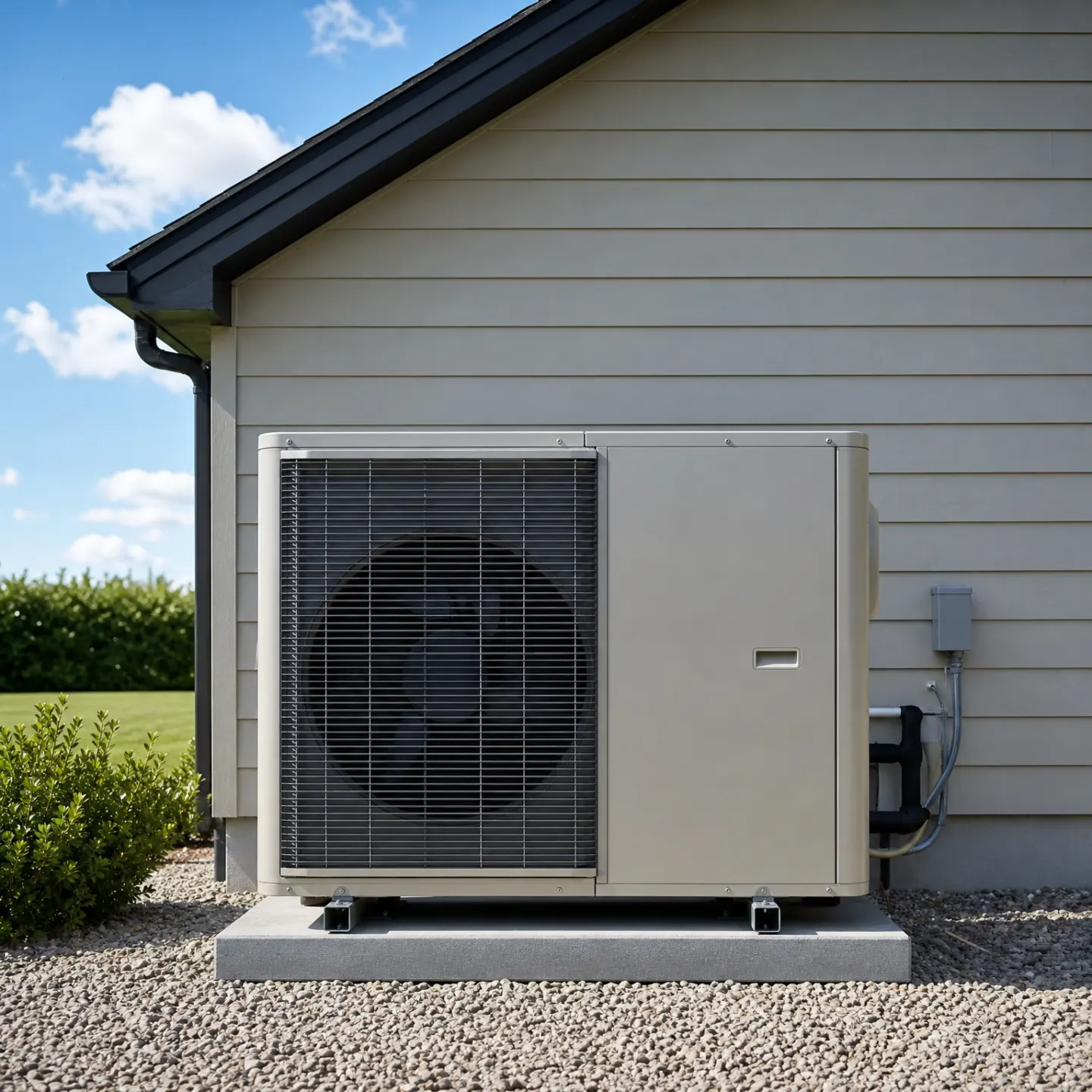
A residential heat pump outdoor unit mounted on a concrete pad next to a house with gray vinyl siding.

Running through a sticky summer and a long winter

The dew point here averages 63°F across June, July and August, which is what makes a summer day feel heavier than the thermometer alone suggests. A heat pump sized right for this house meets that by running long and steady, not in short blasts, and it does the same thing in the cold months. Hail hit the county 34 times between 2015 and 2024, which is a fact about the cabinet and coil sitting outside, not about what size unit this house needs or what it costs to run. A correctly sized system handles both ends of the year without asking for anything bigger.

Two numbers, and a floor, not a ceiling

The label on a heat pump carries two ratings, one for cooling and one for heating. A higher number means the unit moves more heat per unit of power it draws, so it costs less to run over a season. Those ratings are tested under set lab conditions, so a unit's real output shifts some with the actual weather outside. The rating also says nothing about whether the unit is sized right for the house it's going into. A high rating on an oversized or undersized unit still leaves you with a system that short cycles or runs constantly.
The rating only pays off installed right

A heat pump only hits the rating on its label when the refrigerant charge is correct and the airflow across the coil matches what the unit was built for. Low charge or a restricted duct run drags the real efficiency down below what the label promises, no matter how high the rating was to begin with. The rating is a ceiling the equipment can reach, not a guarantee it will. Ask what rating the proposed system carries and whether the ductwork and charge will be checked against it before the job is called done.

A handful of things push an installation up or down, and most of it comes down to what's already there. If the ductwork fits the new system's airflow, the job is a swap. If a duct run is too small or a trunk line has to move, that's extra labor and material before the heat pump itself gets touched. The outdoor unit needs a spot with clearance on all sides and a pad or bracket solid enough to hold it still, and if the old pad is cracked or the mounting location has changed, that gets built before anything else goes in. Electrical matters too. A heat pump with electric resistance backup draws more power than a straight gas furnace setup, and if the panel doesn't have the capacity or a dedicated circuit, that's its own piece of work. Line sets, the refrigerant lines running between indoor and outdoor units, get replaced rather than reused on most jobs, since old lines can carry contamination or the wrong diameter for the new equipment. The size of the unit itself matters less for cost than getting that size right, since a correctly sized system avoids the extra equipment and ductwork changes that come with correcting an undersized or oversized install later.

Electricity in Rock Island County runs about 10.13 cents a kilowatt-hour, cheaper than what most counties in the country pay. That changes the math on which heat pump makes sense here. A top-tier efficiency model costs more up front, and with power already cheap, it takes longer for the lower bills to make up that difference. A mid-range unit installed correctly, sized right with a proper charge, will run this house fine and cost less to buy. Where the money matters more is the installation itself, since a well-fitted system holds up through the winter regardless of what rating is stamped on the box.