


Three lit brick homes on a tree-lined residential street photographed at dusk.

Furnace Installation in Moline, IL

Tell us about the job

Takes about a minute. No obligation.

Step 1 of 3: Equipment

Half the homes in Rock Island County were built in 1962 or earlier. A furnace going into a house that age is working with whatever ductwork and venting came before it, not a clean slate. The old furnace may have been sized for a house that's since gotten new windows, more insulation, or an addition, and none of that gets fixed just by swapping in a new unit. Getting the size and setup right matters more in a house like this than in new construction, where everything was built around one system from the start.

8 months
October through May, your furnace is on duty
18°F
the average winter night it heats against
78%
of homes here heat with gas, so most furnaces here burn gas
80% AFUE
the federal minimum any new unit must meet
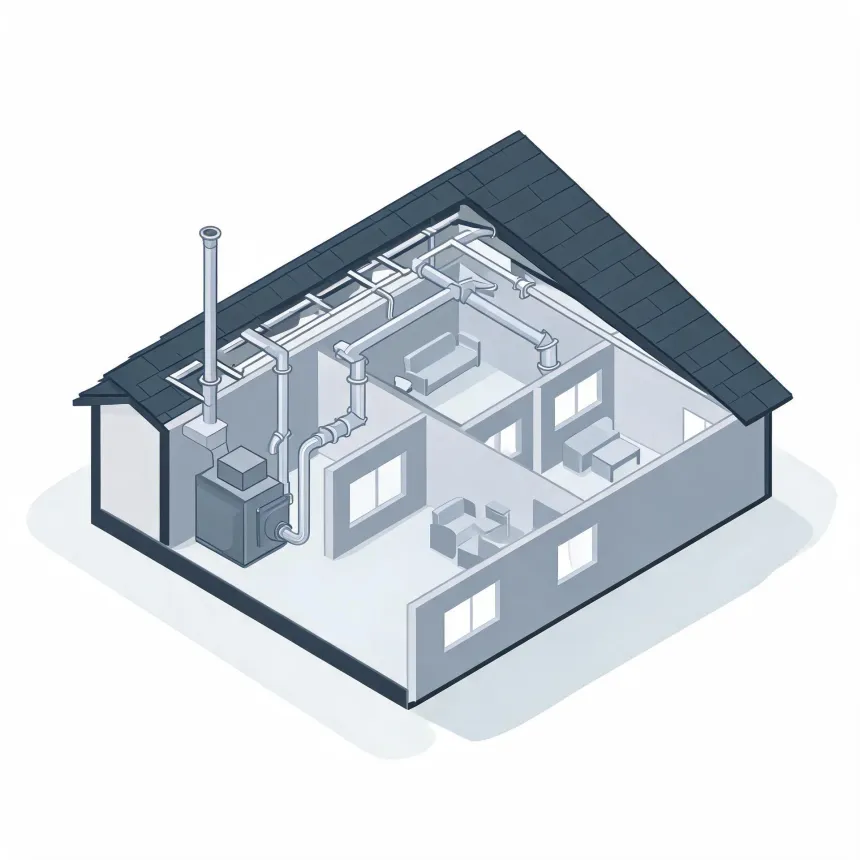
Isometric cutaway illustration of a single-story house showing interior rooms, a furnace unit with flue pipe, and branching ductwork running through the ceiling space under a dark shingled roof.
Your furnace works hardest from November through March.

NOAA nClimDiv, 1991–2020 normals

A furnace in Rock Island County runs about eight months a year, October through May.

A new system here needs to hold up to a long winter season, not just survive it.

Eight months of heat start in October. Get it done in September.

Heat runs October through May
Winter nights average 18°F
23 winter storms from 2015 to 2024

Rock Island County sits in climate zone 5A, a cool zone where heating does most of the work over the year. Any furnace going in has to meet the federal minimum for that: 80 percent efficiency, turning most of the gas it burns into heat instead of losing it out the flue. That standard applies to any furnace built from November 2015 on, so it is not a feature to look for, it is the floor. Furnaces built from December 2028 on will have to hit 95 percent, well above where the rule sits now. A homeowner installing this year is still buying under the current standard, and that is worth knowing going in.

The right size matters more here than the brand

Half the homes in this county were built in 1962 or earlier, and a lot of what's behind the walls has changed since whatever furnace came before this one. A contractor who sizes the new system to the house, not just to the old unit, is doing the part that actually matters.

Find a contractor
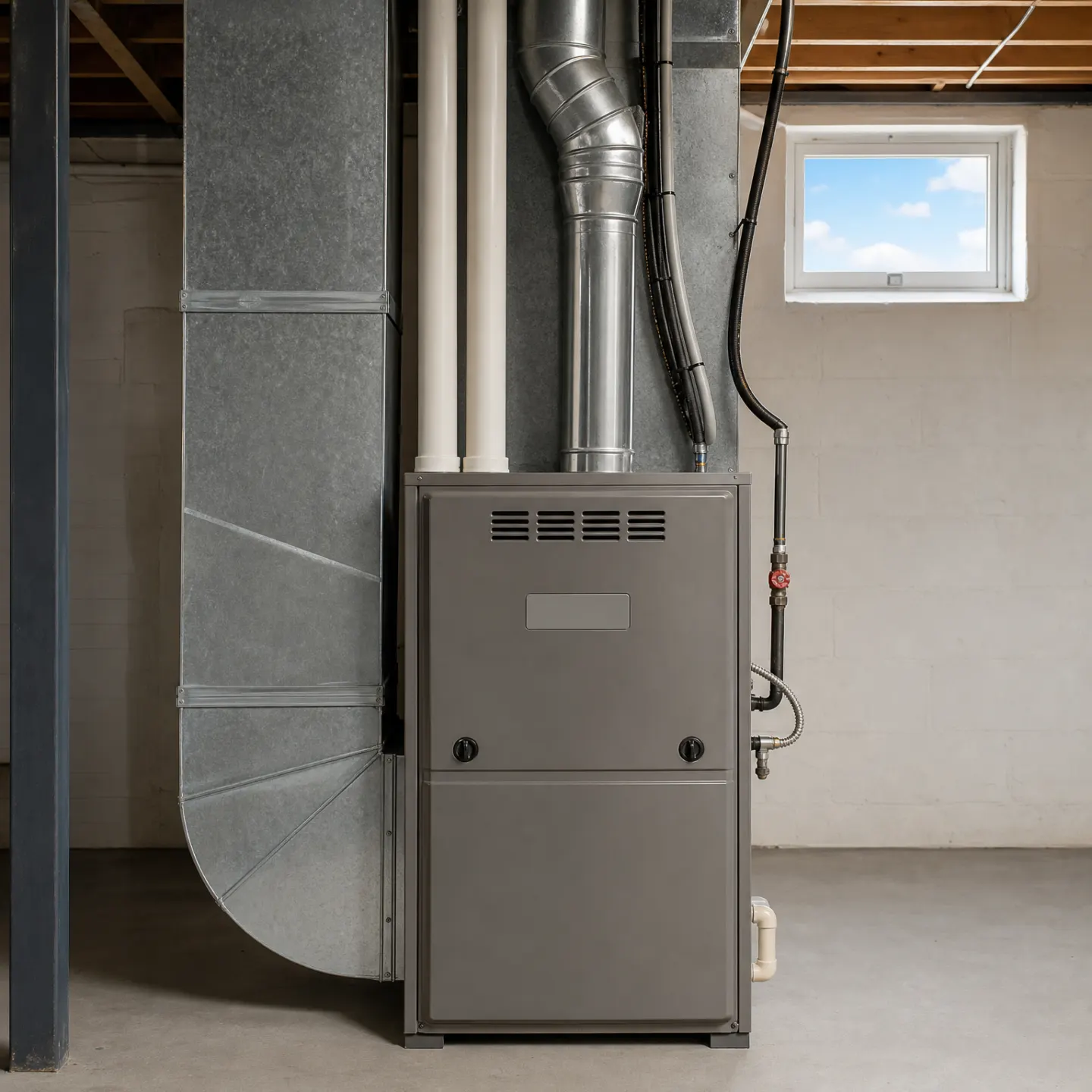
A gray residential gas furnace installed in an unfinished basement, surrounded by ductwork, a metal flue pipe, and a gas supply line.

Built for a long winter, not a mild one

Pick a furnace built to run eight months straight, not one sized for a shorter season somewhere else. Rock Island County has seen 23 winter storms between 2015 and 2024, the kind that bring heavy snow and ice and keep a system running flat out for days. A furnace that's undersized will struggle to keep up on those days, and one that's oversized will cycle on and off more than it should, wearing out parts faster either way. Get the sizing right for this house and this county, and skip anything priced like it was built for an easier climate.

The old furnace still has to come out

Disconnecting a furnace means shutting off the gas line, pulling the venting, and disconnecting the return and supply plenums before the cabinet can come loose. If it's a forced air system, the old unit is usually tied into the same ductwork the new one will use, so that connection has to be undone cleanly, not cut apart. Whoever pulls it has to cap the gas line properly and make sure nothing's left live or open.

Hauling it off is part of the job, not an extra

A furnace is heavy steel with a heat exchanger inside, and it doesn't go out with the trash. Most installers remove the old unit as part of the swap, since leaving a dead furnace sitting in a basement or utility closet isn't really an option for most homeowners. Ask whether removal and disposal are included before the work starts, so it's not a surprise on the day of install.

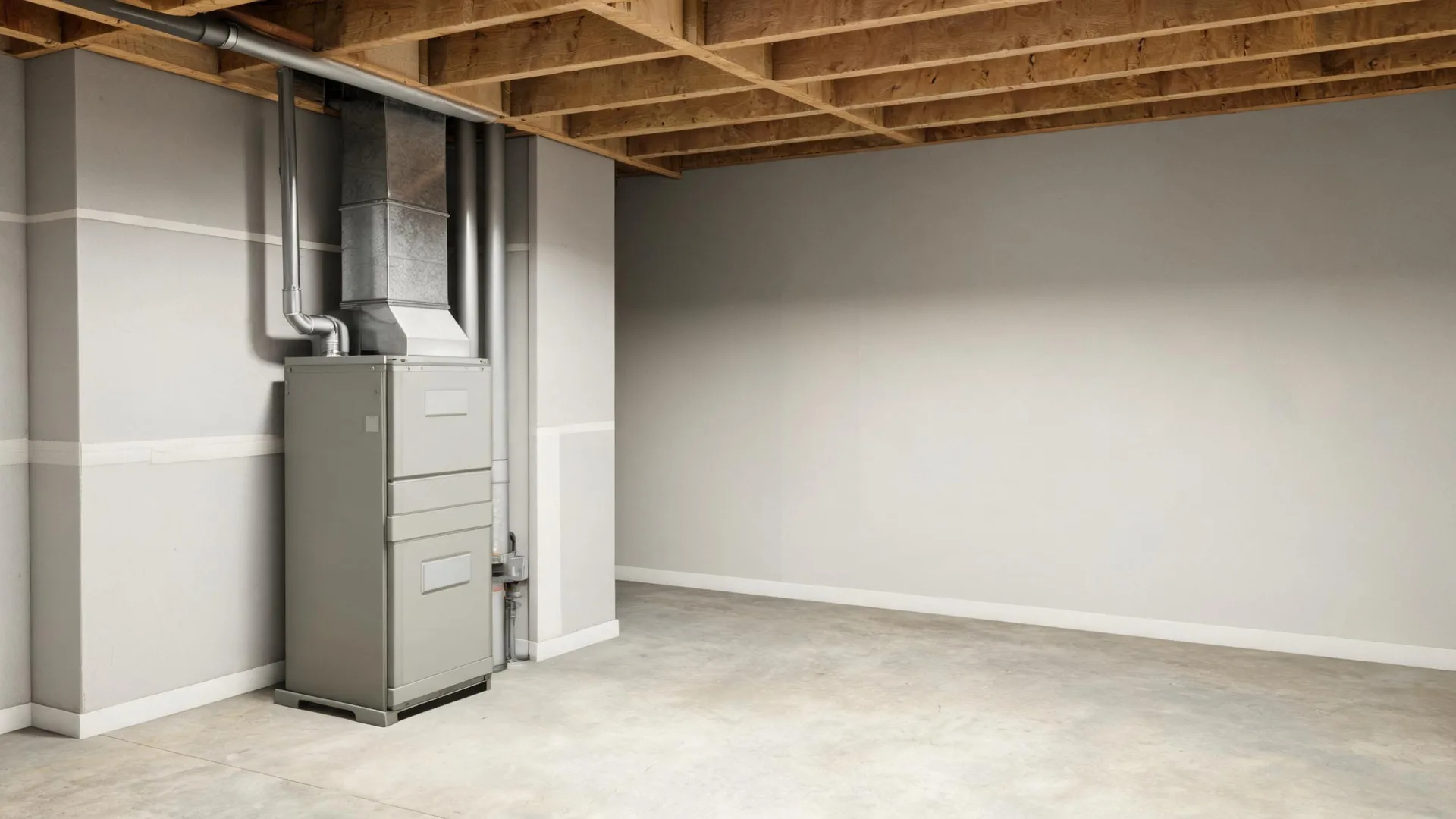
An unfinished concrete basement containing a metal HVAC air handler, exposed wooden ceiling joists with sheet-metal ducts, a hanging bare bulb, copper pipes, and stacked cardboard boxes.

A high-efficiency gas furnace would save about $120 a year to run in Rock Island County compared with a gas furnace.

  • A high-efficiency gas furnace$590 a year
  • A gas furnace$710 a year

Estimates for a typical Rock Island County home, from EIA household energy data, Illinois fuel prices and NOAA climate normals. Your home will differ.

Install day starts with a walkthrough, not a wrench. The crew checks the gas line, the vent path, and the ductwork the new furnace will tie into before anything gets disconnected. Once the old unit is out, they set the new cabinet, connect the supply and return plenums, and run the gas and vent lines to it. The electrical and control wiring gets hooked up next, then comes the pressure test on the gas line to check for leaks before it ever fires. The first startup is where a tech checks the flame, the airflow, and the temperature rise, and adjusts anything that's not reading right. A furnace that's installed and tested properly should run quietly and hold a steady temperature from the first cycle on.