A quiet suburban street at twilight featuring two-story brick homes with illuminated windows and large trees lining the sidewalk.

Heat Pump Repair in Moline, IL

Tell us about the job

Takes about a minute. No obligation.

Step 1 of 3: Equipment

Winters here push the heat pump hard

Moline winters average 18°F overnight across December, January and February, and the heat pump has to run through all of it. That kind of steady cold load is what wears on a system over time, not anything unusual about this area.

So the usual parts wear out first

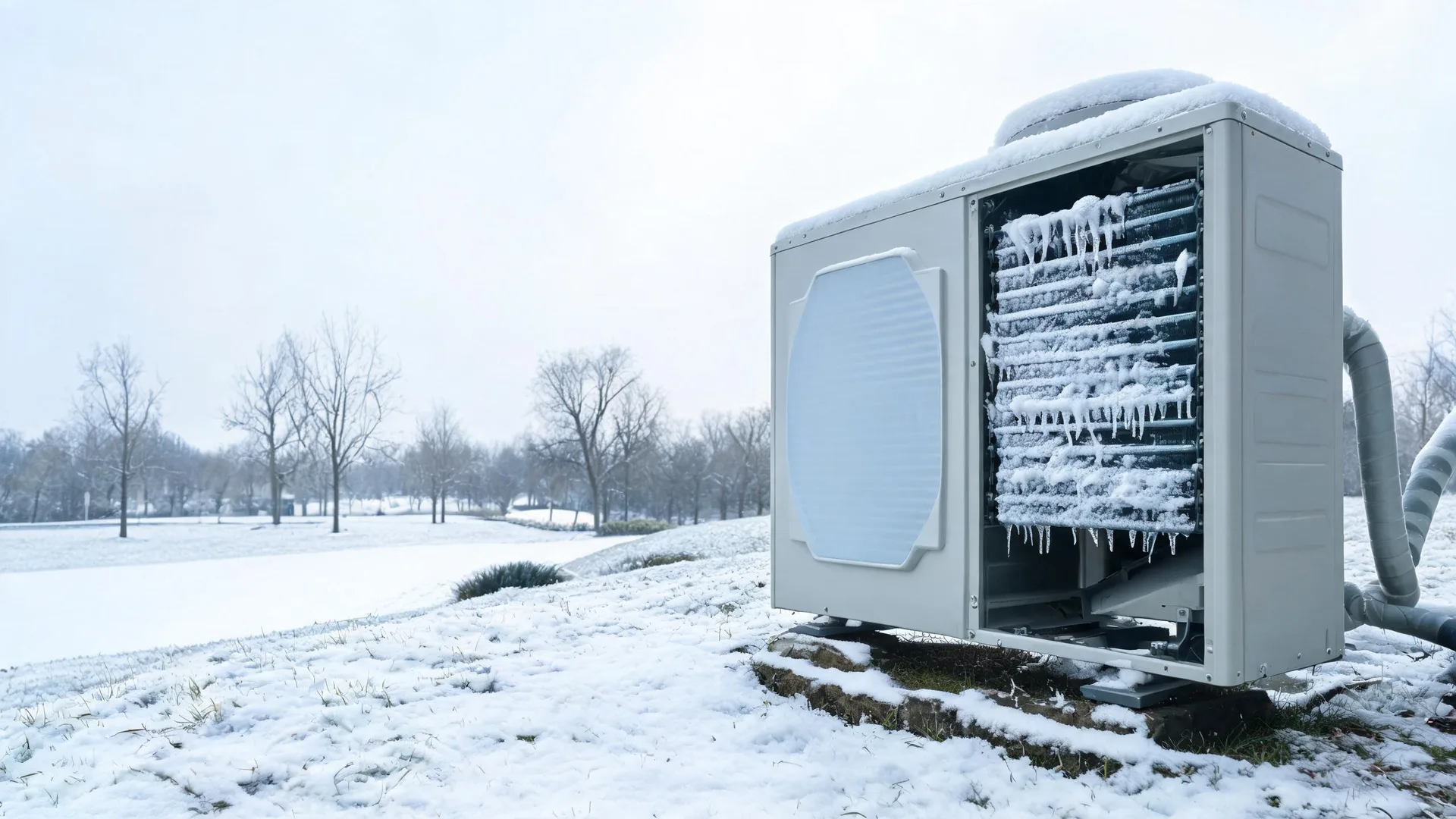
A heat pump working through a long cold season is most likely to show problems in the reversing valve, the defrost control, or the outdoor coil. Those are the usual points of failure, and they're worth checking before anything more involved.

8 months
October through May, your system heats
3 months
June through August, it cools
18°F
the average winter night it heats against
83°F
the average summer afternoon it cools against
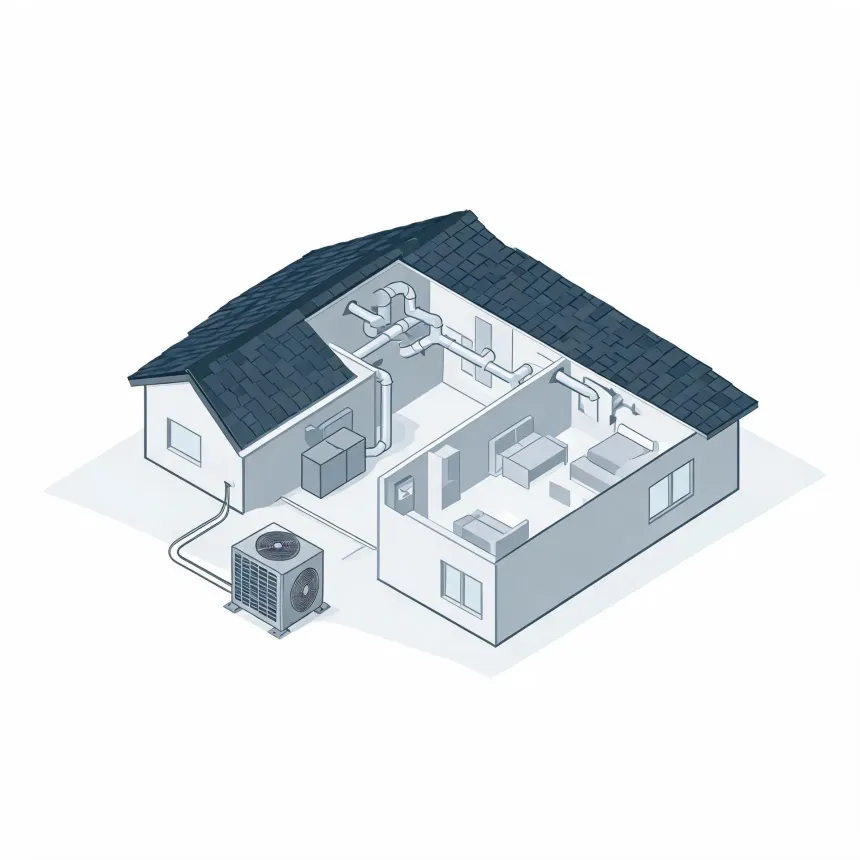
Isometric cutaway illustration of a single-story house showing interior rooms, ceiling ductwork, an indoor air handler, and an outdoor condenser unit connected by lines on the ground.
Your system heats October through May and cools June through August.

NOAA nClimDiv, 1991–2020 normals

Heat pumps here run October through May, eight months of the year.

September is when to get a weak system looked at, before the cold hits it every day.

A heat pump that's struggling costs more here every month it runs

Power costs 15.87 cents a kWh statewide
87 damaging wind events from 2015 to 2024
34 hail events from 2015 to 2024
A lot of these heat pumps are older than the home's last roofIf yours came with the house, ask the contractor how much life it has left before paying for a big repair.

Rock Island County sees its share of rough weather. Damaging wind, hail, even a tornado touching down now and then. None of that is unusual for this part of Illinois, and it's not what wears hardest on a heat pump. Steady cold through the winter does more damage over a season than any one storm does. Where weather does matter is the power. Illinois households lose power for a day or more often enough that it's worth planning for, and a heat pump that loses power mid-cycle can come back with a fault code or fail to restart its defrost cycle on its own. If yours has been acting up since a storm or an outage, tell the contractor that when they come out.

Fix it now, before it runs up your bill all winter

Illinois power runs 15.87 cents a kilowatthour, and a heat pump that's struggling pulls more of it every day it keeps running that way. Get the real cause found now.

Find a contractor
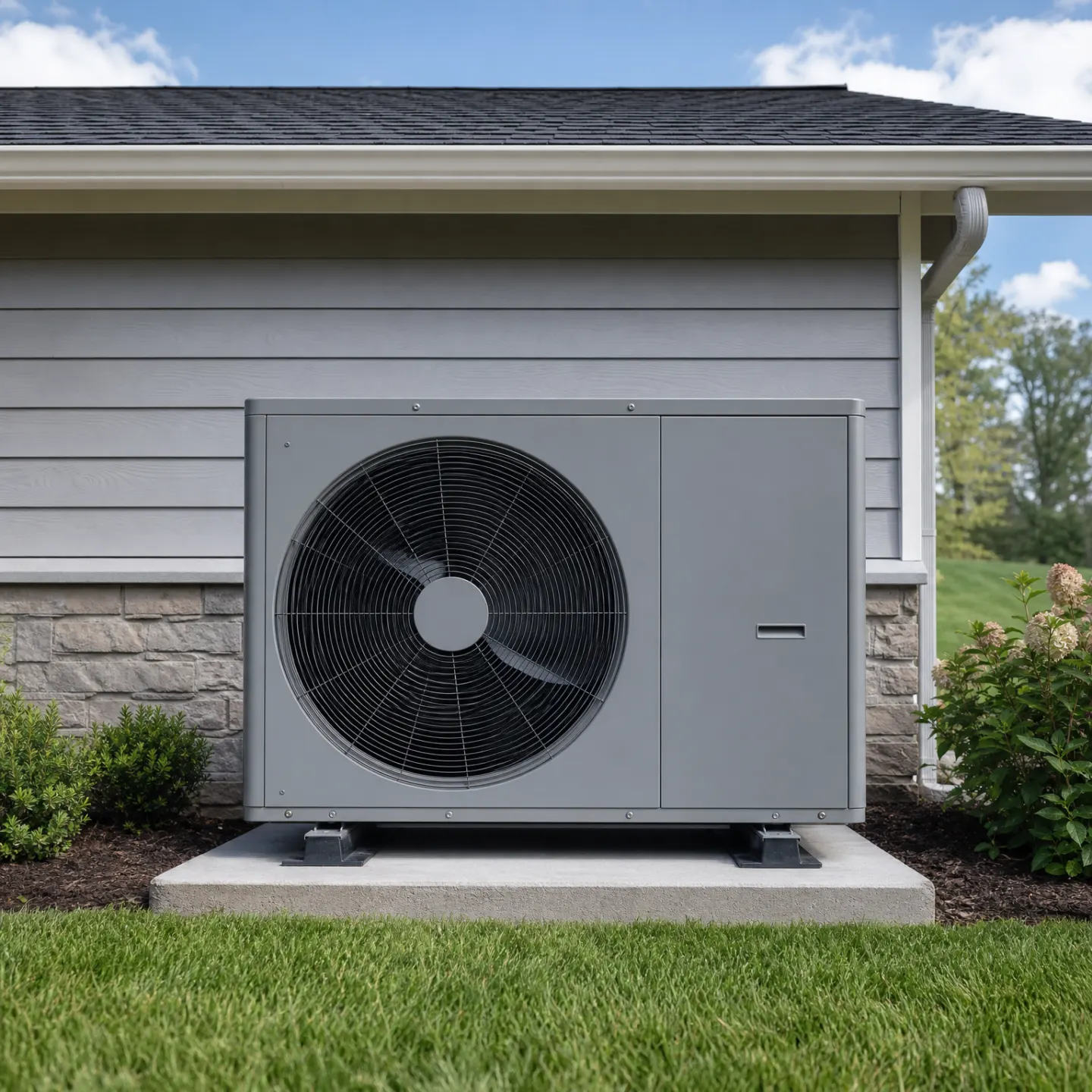
A gray outdoor HVAC unit mounted on a concrete pad beside a house with gray lap siding and a stone foundation.

Ask what you're repairing, not just what's broken

If the heat pump or the ductwork came with the house, ask the contractor straight out how much life is left in it before you pay for anything big. A repair is worth doing on a system that has years left. It's a different decision on one that's already past where most of these last.

Check the thermostat and the breaker first

Make sure the thermostat is set to heat or cool as needed and that the setpoint is actually past the current room temperature. Then check the breaker for both the indoor air handler and the outdoor unit. A tripped breaker or a thermostat bumped into the wrong mode accounts for a lot of no-heat and no-cool calls, and both take a minute to rule out.

Look at the outdoor unit and the air filter

Walk outside and see if the outdoor coil is caked in ice, covered in leaves, or blocked by anything piled against it. A heat pump needs open airflow on both sides to move heat at all. Inside, pull the filter and hold it to the light. If you can't see through it, swap it or clean it before anyone comes out, since a clogged filter can look like a much bigger problem than it is.

A heat pump that's icing up or short cycling doesn't fix itself by staying on. Ice on the outdoor coil blocks the airflow the system needs to move heat, so it runs longer to do the same job and builds more ice doing it. A reversing valve that's starting to stick works harder each cycle it's pushed through instead of replaced. A failing run capacitor strains the compressor every time it tries to start, and the compressor is what takes the damage in the end. None of that shows up as a bigger problem on day one. It shows up once a part that was struggling finally gives out, and sometimes it takes the compressor with it. If something sounds off, smells off, or the system is running far longer than it used to, that's the point to shut it down and get it looked at, not to wait and see.

A diagnostic call starts with questions, not tools. The contractor asks what the system is doing, when it started, and whether it happens heating, cooling, or both. Then they check pressures, measure temperature across the coil, and test the capacitor and the reversing valve under power, since a part can look fine sitting still and fail the moment it has to work. They'll run the system through a full cycle if they can, because some problems only show up partway into defrost or partway into a long run. The goal isn't just finding what's broken. It's finding why, so the same part doesn't fail again in a month.