September is the month to book it
Furnaces in Adams County start running in October and stay on through April. A check in September catches a weak igniter or a cracked heat exchanger before the furnace has to run at all.
Takes about a minute. No obligation.
Furnaces in Adams County start running in October and stay on through April. A check in September catches a weak igniter or a cracked heat exchanger before the furnace has to run at all.
Once October hits, the furnace does not get a break until spring. Whatever is wrong with it in October is still wrong in April, just worn down further by seven straight months of running.
Your furnace here only really has one job each year, running October through April.
One checkup before October is enough to catch what needs catching.



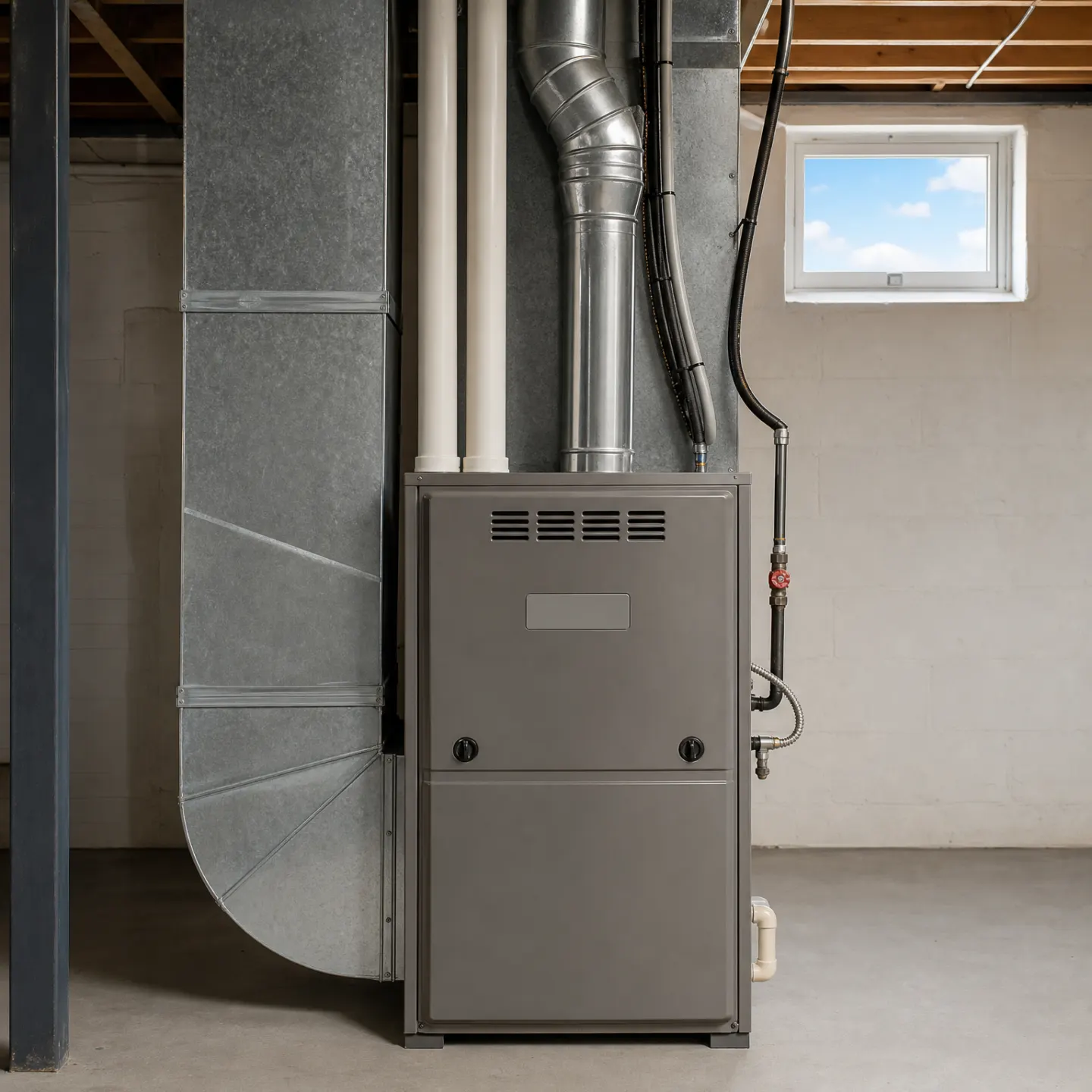
Most houses in Adams County heat with utility gas, close to six in ten. That's a gas furnace with a burner, a flue, and a draft system that has to work right every time it fires. A dirty filter is the least of what can go wrong over a season. The burner can carbon up, the flame sensor can weaken, and the venting can corrode where it meets the cap. A maintenance visit checks all of that, not just what sits behind the filter door. If your home runs on electricity instead, that heat strip or heat pump setup wears differently, so this same visit looks for different things.
It starts running hard in the first month of the season here. Book the check the month before.
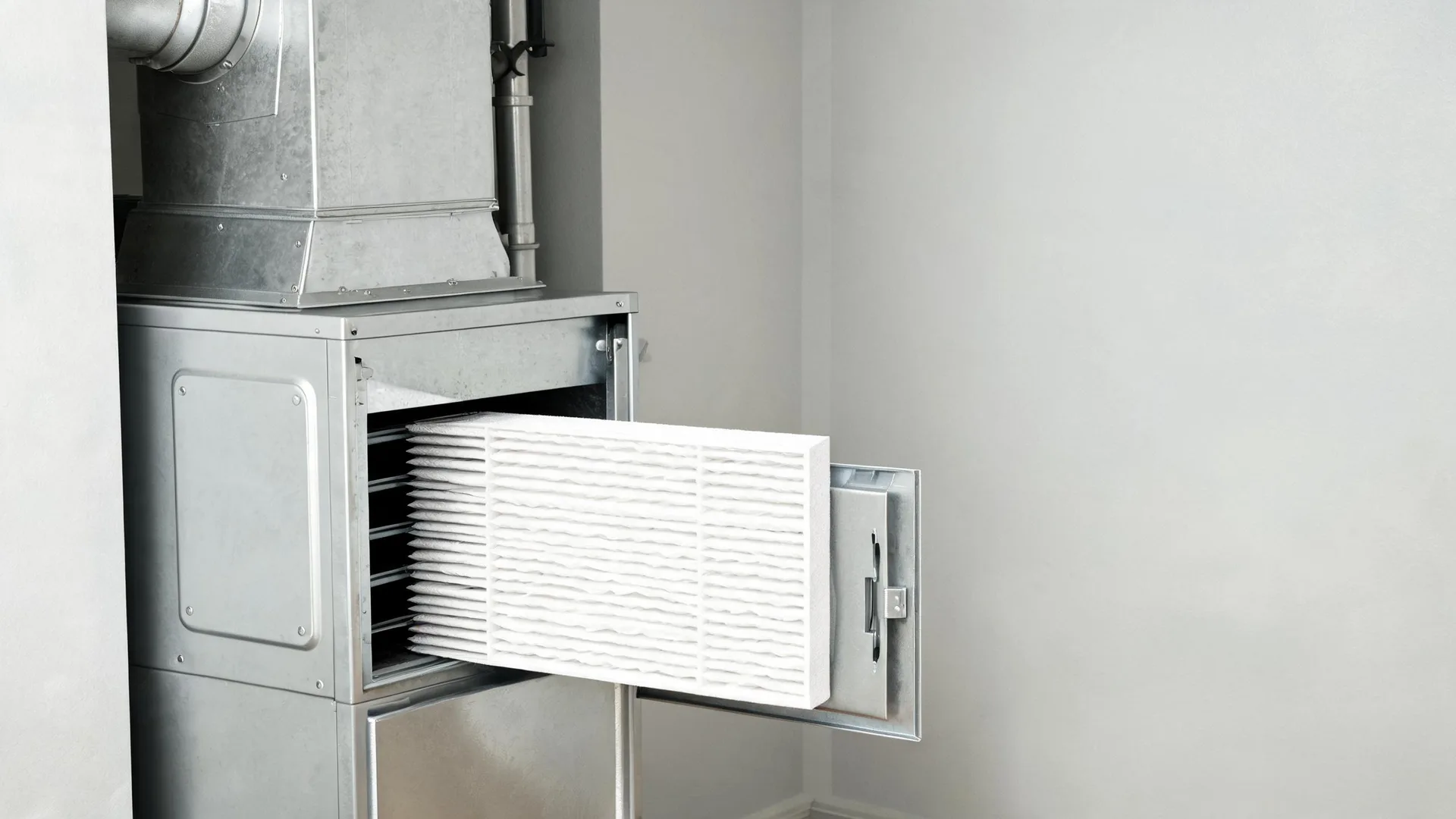
Find a contractorBetween visits, the filter is the one thing worth checking yourself. Pull it and hold it up to a light. If you can't see light through it, swap it. A clogged filter starves the burner of air and makes the blower work harder than it should, and that strain adds up over a long season. Keep the area around the furnace clear too. It needs room to pull in air, and anything stacked against it or blocking a vent can cause real problems. Walk past the vent hood outside once in a while and make sure nothing, like a nest or a pile of leaves, is sitting against it. Past that, leave it alone. There's no reason to open the cabinet or touch the burner yourself. If you smell gas, hear a new rattle or bang, or notice the flame looks yellow instead of blue, that's not a between-visits fix. That's a call.
A furnace filter protects the blower and the coil behind it from dust, nothing more. It does not touch the burner, the heat exchanger or the flue. A clean filter and a cracked heat exchanger can exist in the same furnace at the same time, which is why changing filters alone is not maintenance.
A standard gas furnace burns fuel and sends the exhaust out the flue, no water involved. A high-efficiency condensing furnace is different. It cools the exhaust enough to pull condensate out of it, and that condensate runs out through a drain line and a trap. If that line clogs, the furnace can lock itself out rather than let water back up into the cabinet.
A tune-up is mostly about what's happening where you can't look. The burner gets pulled and checked for carbon buildup, which changes how clean the flame burns. The flame sensor gets cleaned, since a film builds up on it over time and that's one of the most common reasons a furnace shuts itself off mid-cycle. The heat exchanger gets inspected for cracks, which you cannot see from outside the cabinet and cannot check yourself. The draft and venting get checked too, to make sure exhaust is actually leaving the house instead of finding its way back in. None of this shows up as a symptom until it fails, and by then it's not a checkup anymore, it's a repair.
A tune-up also covers the parts that make a furnace start and stop the way it should. The igniter gets tested under load, not just looked at, since a weak one can still glow without producing enough heat to light the burner reliably. The pressure switch gets checked to confirm it's reading the draft correctly, because a stuck switch will either stop the furnace from starting or let it run without enough venting. Gas pressure gets measured at the manifold and adjusted if it's drifted off spec, since too much or too little changes how the burner fires every single cycle. The blower motor and wheel get checked for wear and for dust buildup on the blades, which throws off airflow even when the filter is clean. Belts don't come into it on most furnaces built in the last few decades, since the blower motor drives the wheel directly. Each of these gets tested while the furnace is running, not just eyeballed cold, because some of these problems only show up under an actual flame.