A row of dark-clad single-story houses with gabled roofs behind trimmed hedges, lawn and leafy trees under an overcast sky.

Heat Pump Repair in Quincy, IL

Tell us about the job

Takes about a minute. No obligation.

Step 1 of 3: Equipment

Winters here work the heat pump hard

Quincy overnight lows average 22°F across December, January and February, so your heat pump leans on the compressor and reversing valve for months at a stretch. That's normal running for this climate, not abuse. When something breaks, it's usually a part worn from steady use, not a sign the system was wrong for this area.

The cause is usually something a tech can find fast

A heat pump that won't heat, short cycles, or runs constantly almost always comes down to one part. Maybe the reversing valve. Maybe the defrost control, the capacitor, or a low refrigerant charge. A contractor who knows what to check first can usually tell you within the first visit whether you're looking at a repair or something bigger.

7 months
October through April, your system heats
4 months
June through September, it cools
22°F
the average winter night it heats against
85°F
the average summer afternoon it cools against
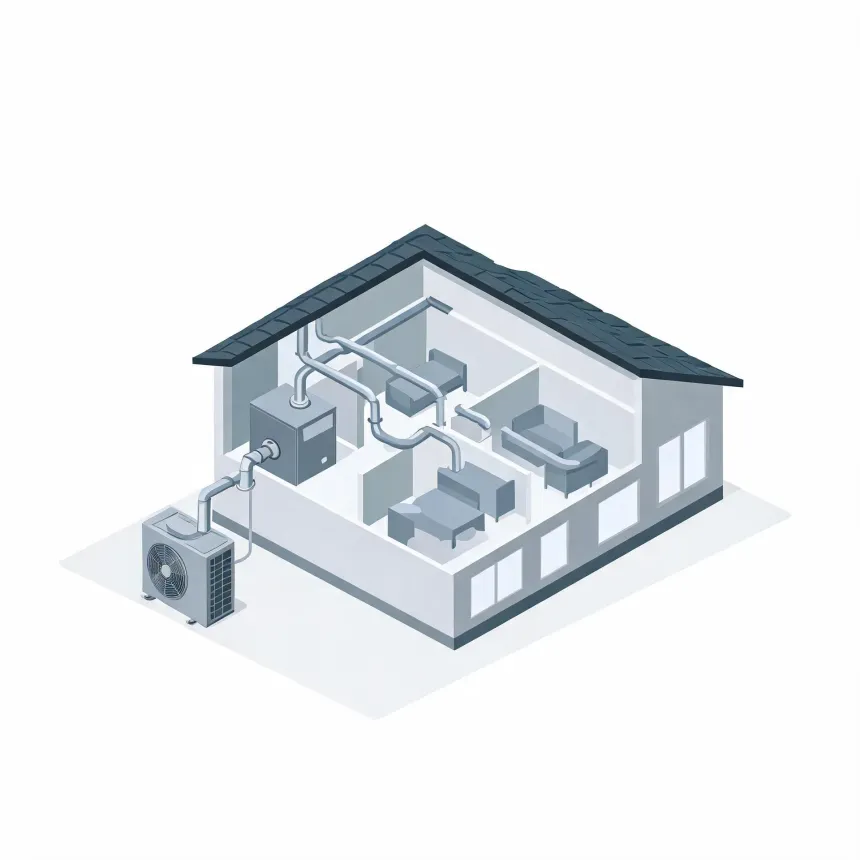
Isometric cutaway illustration of a single-story house showing an indoor air handler, branching ductwork through rooms with furniture, and an outdoor condenser unit connected by a line outside the wall.
Your system heats October through April and cools June through September.

NOAA nClimDiv, 1991–2020 normals

Heat here starts in October, with September the month to get a heat pump checked.

A weak compressor or low charge usually shows itself in that first cold snap, not before.

At 15.87 cents a kWh, a heat pump running wrong is a bill you'll notice

Power costs 15.87 cents a kWh statewide
33 hail events from 2015 to 2024
Winter nights average 22°F
Ask before you pay for the repairOn a system from 1965 or earlier, find out what's left before you fix what's broken.

A heat pump that's short cycling or running constantly at 15.87 cents a kWh is pulling power the whole time it does it. That cost doesn't wait for you to decide the repair can wait. If yours is already acting up, a tech can usually find the part behind it in one visit, a weak capacitor, a bad reversing valve, a low charge. Getting that part replaced now is what stops the bill from climbing every month you put it off.

Find out if it's worth fixing before you pay for a repair

If your heat pump came with the house, ask the tech how much life it has left. A repair on a system this old is only worth it if the system is.

Find a contractor
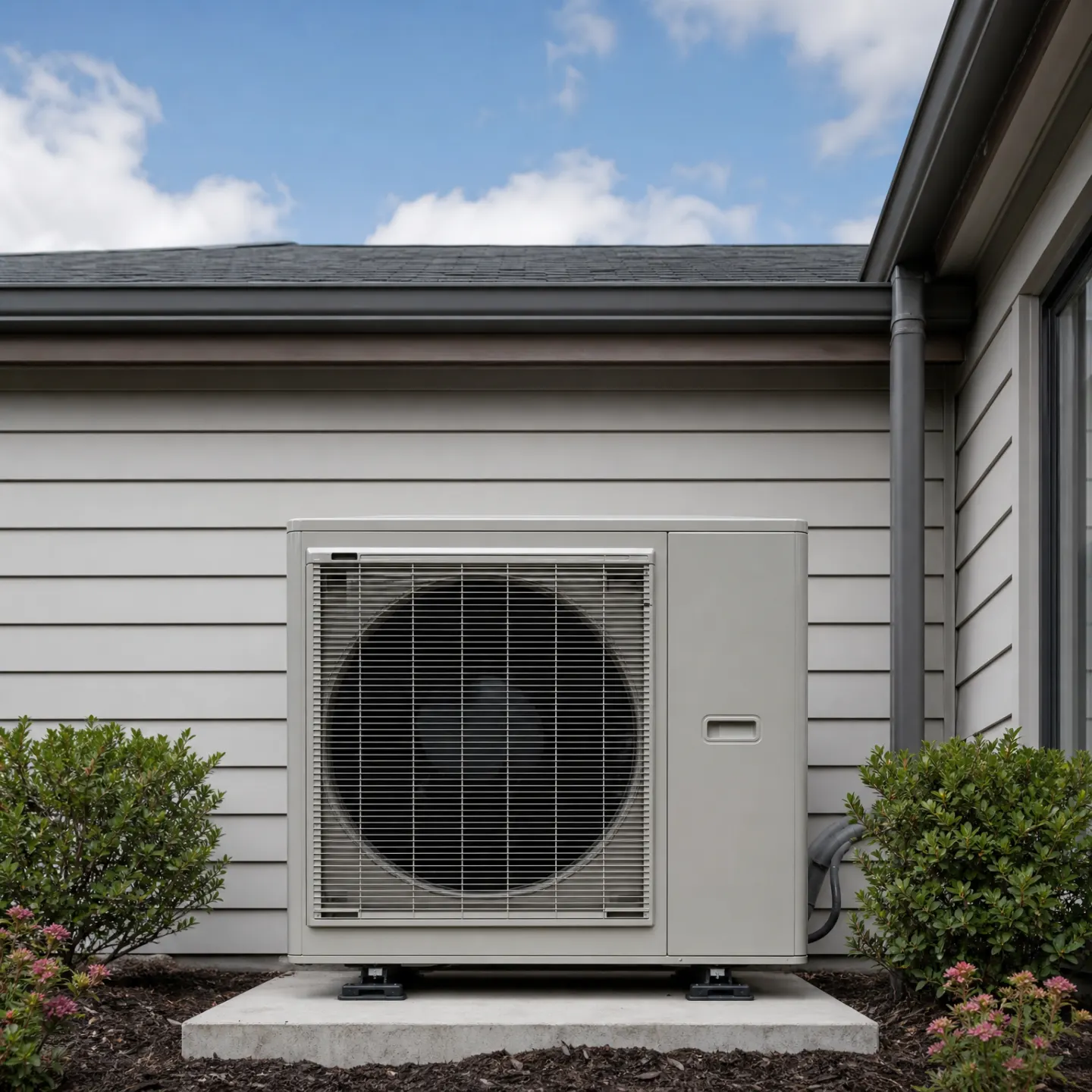
A gray heat pump condenser unit mounted on a concrete pad against the gray lap-siding exterior wall of a house.

A heat pump never gets a season off

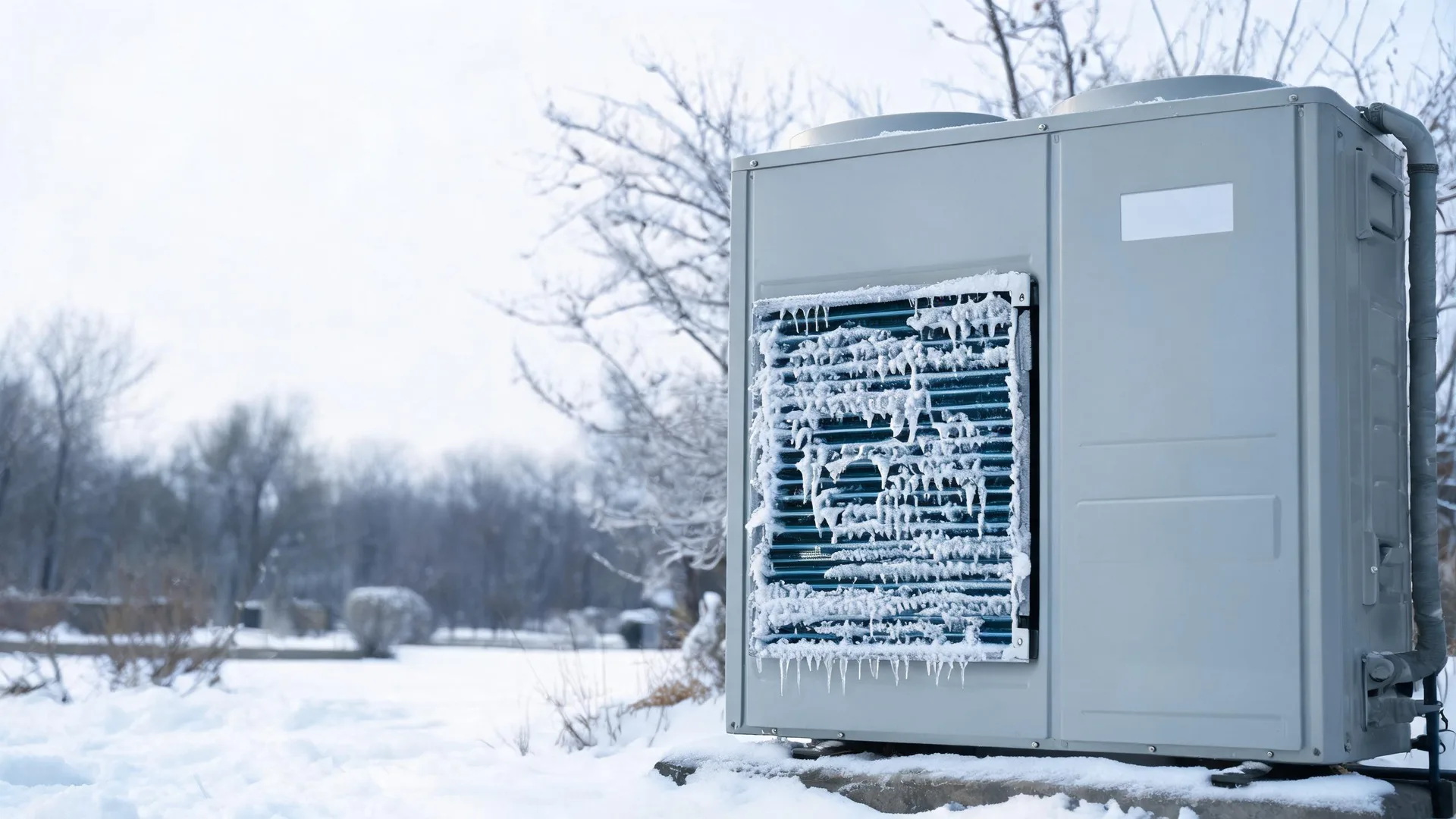
A heat pump never gets a season off the way a furnace does. It moves heat into the house when it's cold out and pulls heat out when it's warm, so the compressor and reversing valve are working year-round, not just part of the year. That steady work shows up as behavior, not noise. Air coming out of the vents that isn't warm enough or cool enough for what the thermostat is asking for. A system that runs in long stretches without shutting off, or one that shuts off and kicks back on too often. Frost on the outdoor unit that doesn't clear during the defrost cycle, so ice sits on the coil and blocks airflow. Any of these is worth a call before it gets worse. A system that won't shut off is usually losing refrigerant or fighting a part that's already failing, and running it that way just wears down what's left.

The reversing valve is usually the first thing to go

The reversing valve is what switches the heat pump between heating and cooling, and it's always working even when the system looks idle. The valve slides back and forth to redirect refrigerant, and over years of cycling that motion wears the seal until it sticks or leaks. A valve stuck partway lets refrigerant bypass where it should go, so the system runs but can't get the house to temperature.

The compressor rarely fails on its own

By the time a compressor stops working, something else usually caused it. A low refrigerant charge makes it run hotter than it should. A failing capacitor makes it struggle to start, which strains the windings every time it tries. Once those windings burn, the compressor is done, and a tech checking the capacitor and charge early is what keeps it from getting there.

There are a few things worth checking before you pick up the phone. Look at the thermostat first. Make sure it's set to heat and the temperature is actually set above room temperature, since a setting bumped by accident looks exactly like a system failure. Check the outdoor unit next. Clear away leaves, mulch or anything piled against it, because the outdoor coil needs open air around it to work at all. Look at the air filter. A filter clogged with dust chokes airflow across the indoor coil, and that alone can make a heat pump run constantly without heating the house. Walk around to the breaker panel and check that both breakers for the system haven't tripped, one for the outdoor unit and one for the air handler. None of this fixes a bad reversing valve or a low charge, but it rules out the easy explanations before you pay someone to find them.

Repair makes sense when one part failed in a system that's otherwise kept up with itself. A reversing valve or a capacitor is a contained job, and once it's swapped the rest of the system goes back to doing what it was doing before. Replacement makes more sense when the compressor is the part that failed, since that's the part that does the actual work of moving refrigerant, and a system that's lost it is done in a way a single repair doesn't fix. Age matters less than what's already gone wrong. A system that's needed a part replaced every year is telling you something a single working repair isn't. The tech who comes out can tell you which kind of problem you've got, because the failed part itself usually points to one or the other.