

Heat pump vs furnace in McHenry County, Illinois

Quote Both Systems

See real numbers before you choose

Which costs less to run in McHenry County?

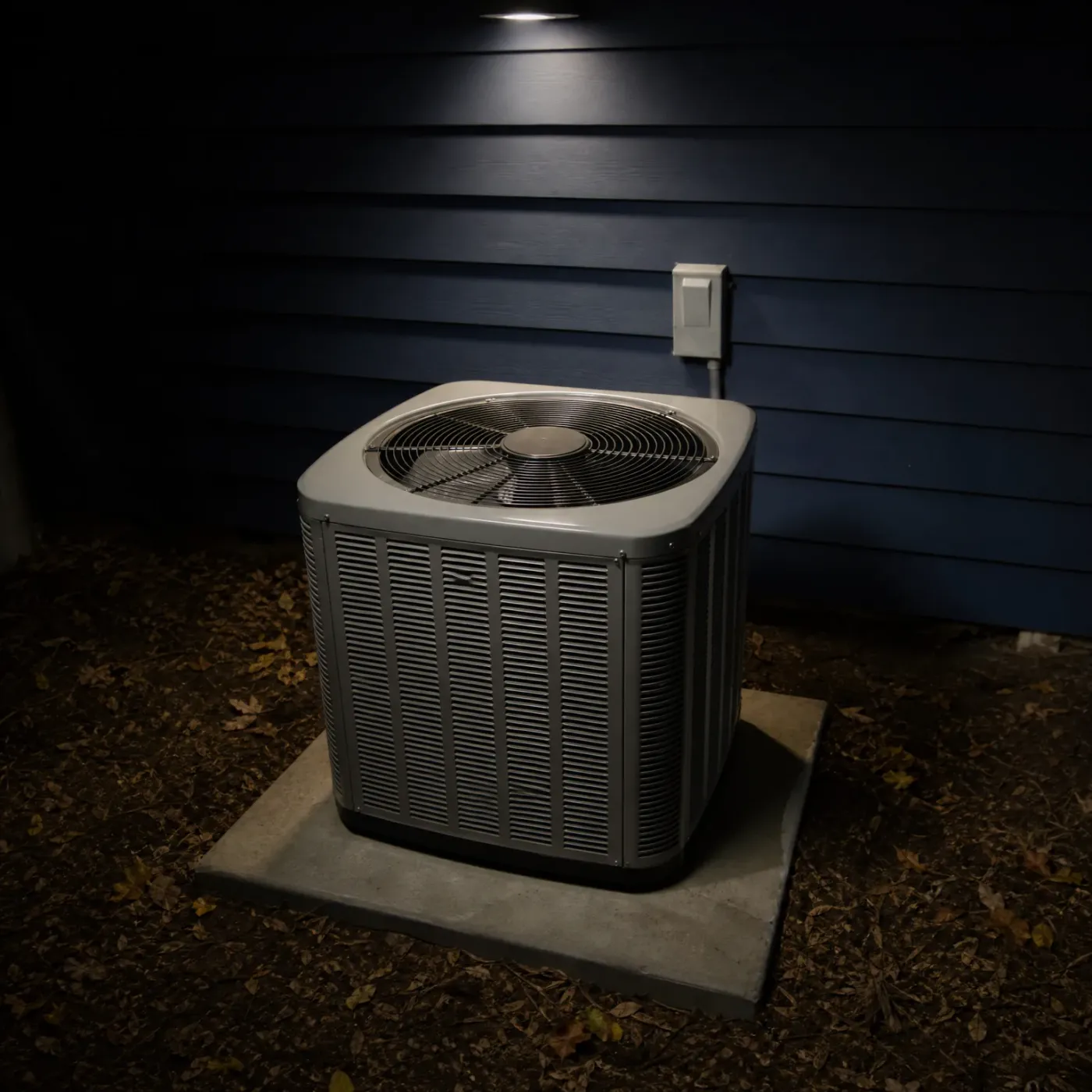
An outdoor air conditioning condenser unit on a concrete pad beside a dark blue horizontal lap-sided wall at night, lit from above, with a disconnect box on the wall and fallen leaves on the ground.

Heat pump

To heat your home here$2.12per 100,000 Btu

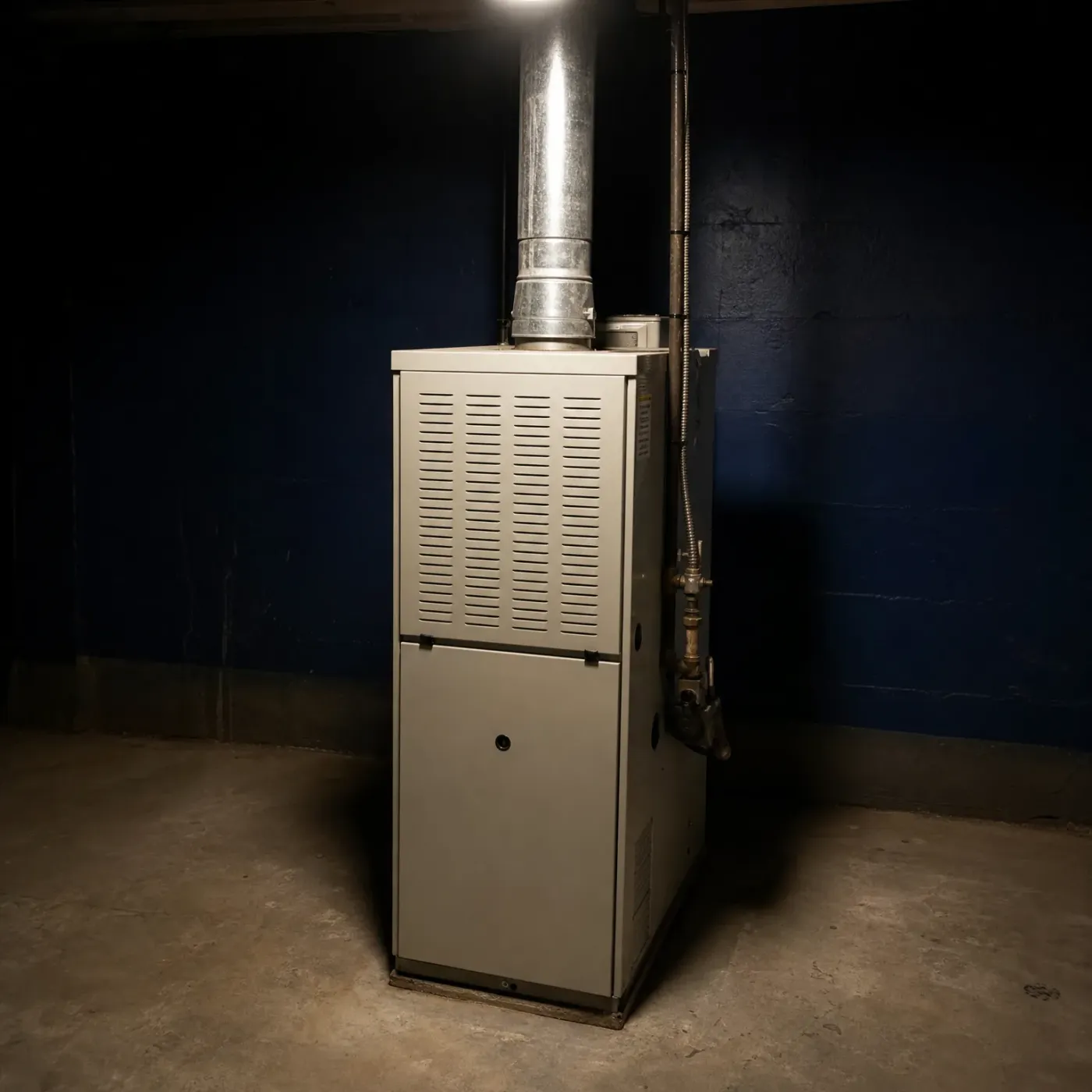
A beige residential furnace with a metal flue pipe rising to the ceiling stands against a dark blue painted basement wall on a concrete floor.

Furnace

To heat your home here$1.33per 100,000 Btu

At Illinois's gas and electricity prices, a gas furnace makes the same heat as a heat pump for at least 37% less.

Btu stands for British thermal unit, the standard measure of heat energy.

Where does a heat pump shine?

  • Steady, even comfort

    Instead of short bursts of heat, it keeps a gentle, steady output going. The house stays at one comfortable temperature.

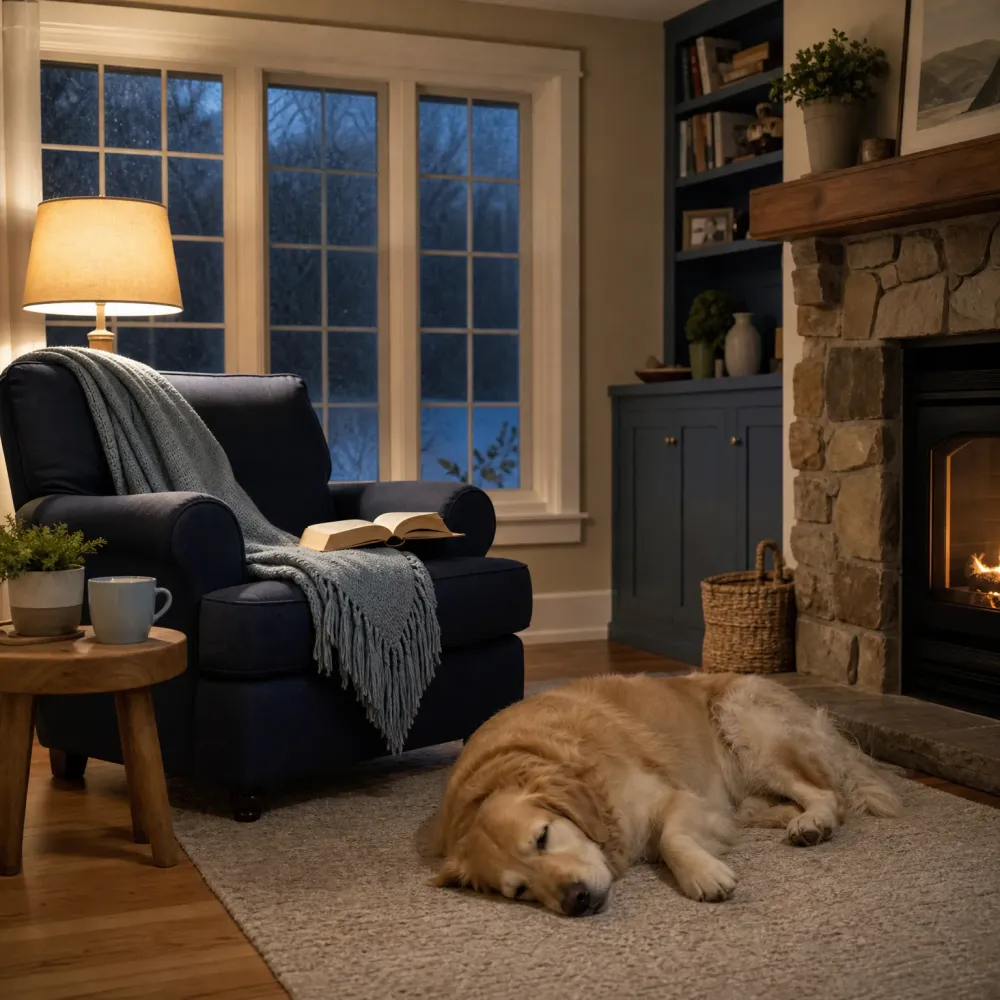
    A dimly lit living room at night with a navy armchair holding an open book and a knitted throw, a lit table lamp, a stone fireplace with a fire, built-in blue shelving, and a golden retriever sleeping on a light rug.
  • No gas line, nothing burning in the house

    It moves heat instead of making it from fire. That means no combustion, no flue and no gas bill for heat.

    Kitchen interior with white upper cabinets, navy lower cabinets, stainless range hood over a cooktop, white subway tile backsplash, and a light countertop island holding a bowl of lemons and a vase of white hydrangeas.
  • Heats and cools in one system

    A heat pump runs the same way all year. It pulls heat into the house in winter and pushes it out in summer.

    A living room with a cream sofa and blue, white, and textured cushions beneath a large window overlooking a green garden, with a rustic wooden coffee table holding a woven tray, ceramic vase with foliage, stacked books and a wooden bowl, and a dark blue built-in shelving unit at left.

Where does a furnace shine?

  • Strong, steady heat in hard cold

    Winter nights here average 17°F. A furnace puts out hot air right from the start, so the house keeps up on the coldest nights without the system straining to catch up.

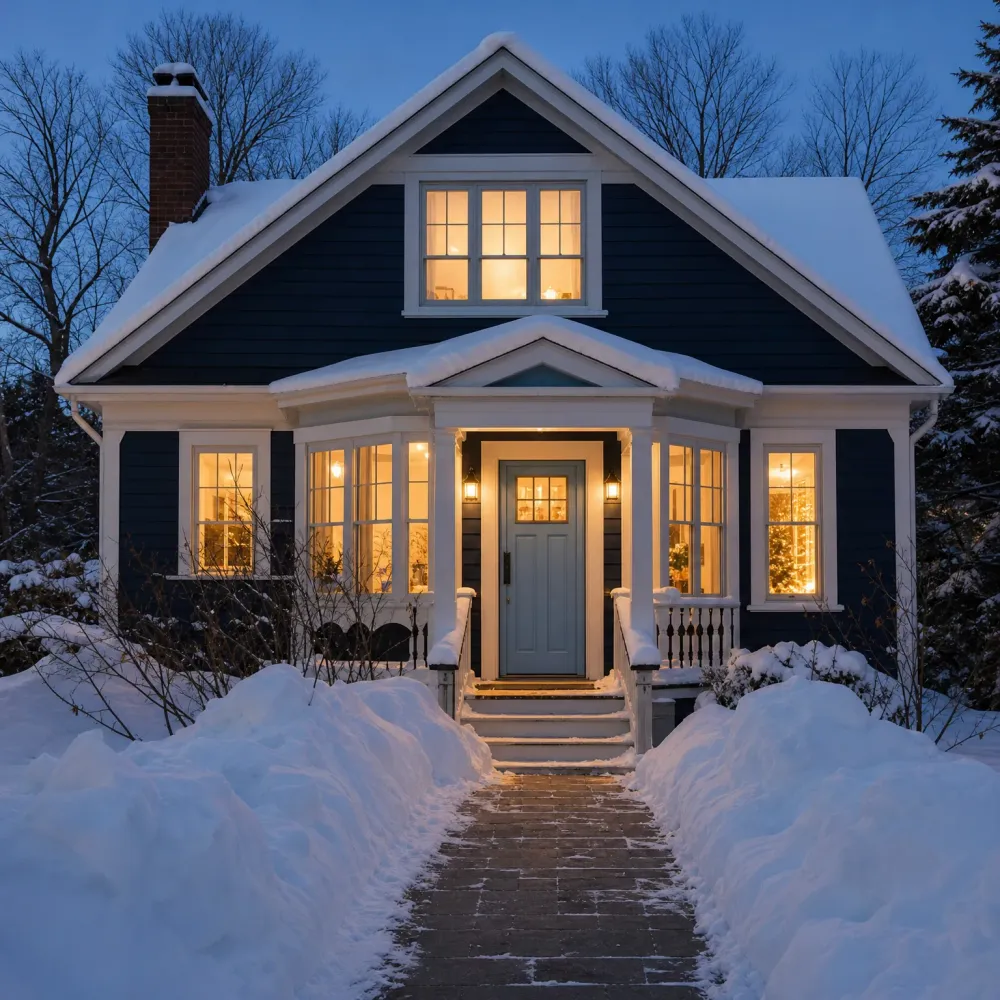
    A dark navy two-story house with white trim, lit windows, a covered porch and brick chimney, surrounded by deep snow with a cleared paved walkway leading to the front steps at dusk.
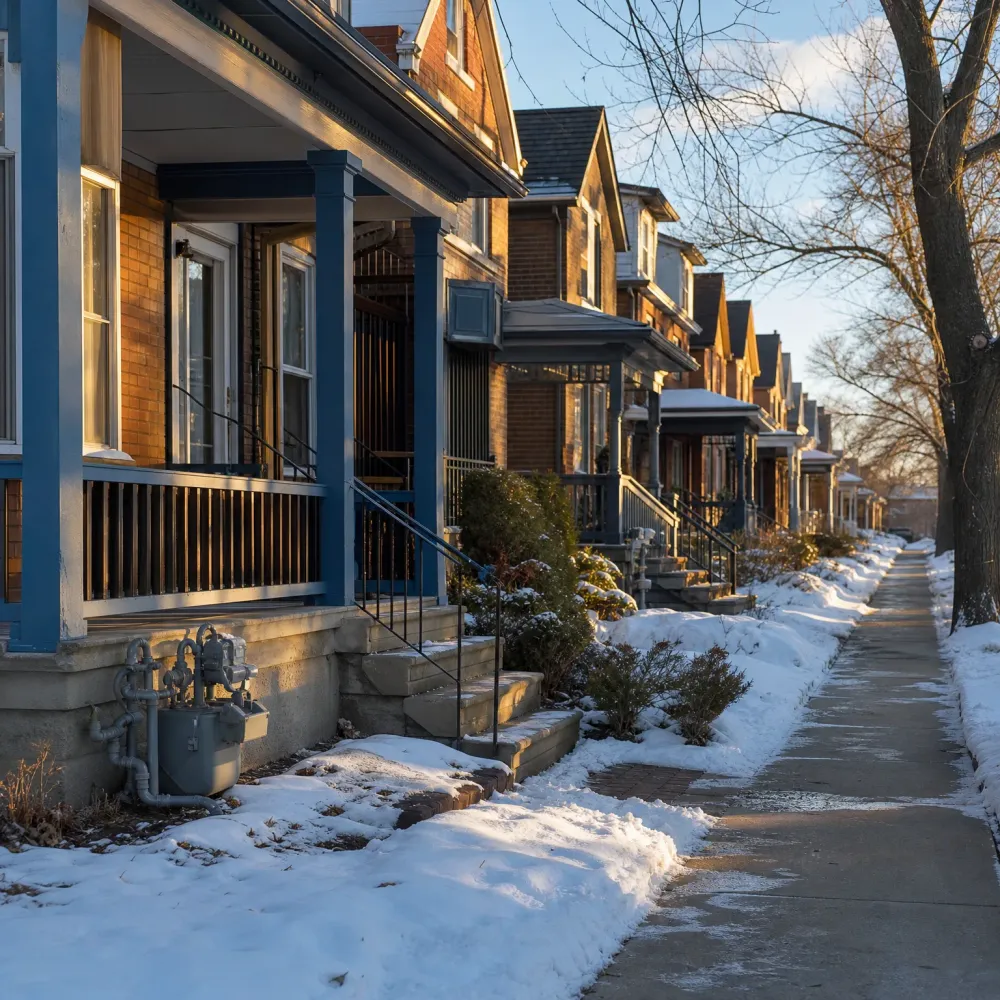
  • Runs on the gas most homes here already use

    Most homes in McHenry County already have gas line run to them, 85% of occupied homes heat with it. A gas furnace just uses what's already there.

    A row of brick houses with covered porches, blue-painted posts and railings, and metal gas meters, beside a cleared sidewalk bordered by snow and bare trees in low sunlight.
  • Fast, strong heat on demand

    The air coming from the vents feels genuinely hot. That's welcome on a freezing morning.

    A mudroom with a navy glass-paned door covered by a sheer white curtain, snow-dusted boots on a tiled floor, a woven rug, coats hanging on a rail, and a white bench with a wooden top holding a blue mug.

What the cold here does to a heat pump

Winter is the long season here, eight months of heat against three of cooling, and the cold gets real. The overnight low averages 17°F across December, January and February, and that's below the two marks that matter for a heat pump. Below 40°F a standard heat pump puts out less heat than its rating says. Below about 35°F it often needs backup heat to make up the difference. Every one of the roughly 140 nights a year here that drop to freezing or below is past both marks.

That doesn't mean a heat pump quits. Field testing on modern cold-climate units found backup heat covered only a small share of the load between 0°F and 35°F, and the units ran on backup alone only rarely, even when it got below zero. McHenry County sees that about 13 nights a year. So a cold-climate heat pump, the kind built and tested to the ENERGY STAR Cold Climate mark, holds up through most of a winter here without leaning hard on backup. A standard heat pump, built to the federal minimum, is a different machine in a 17°F average low. That's the one losing real capacity on the coldest nights.
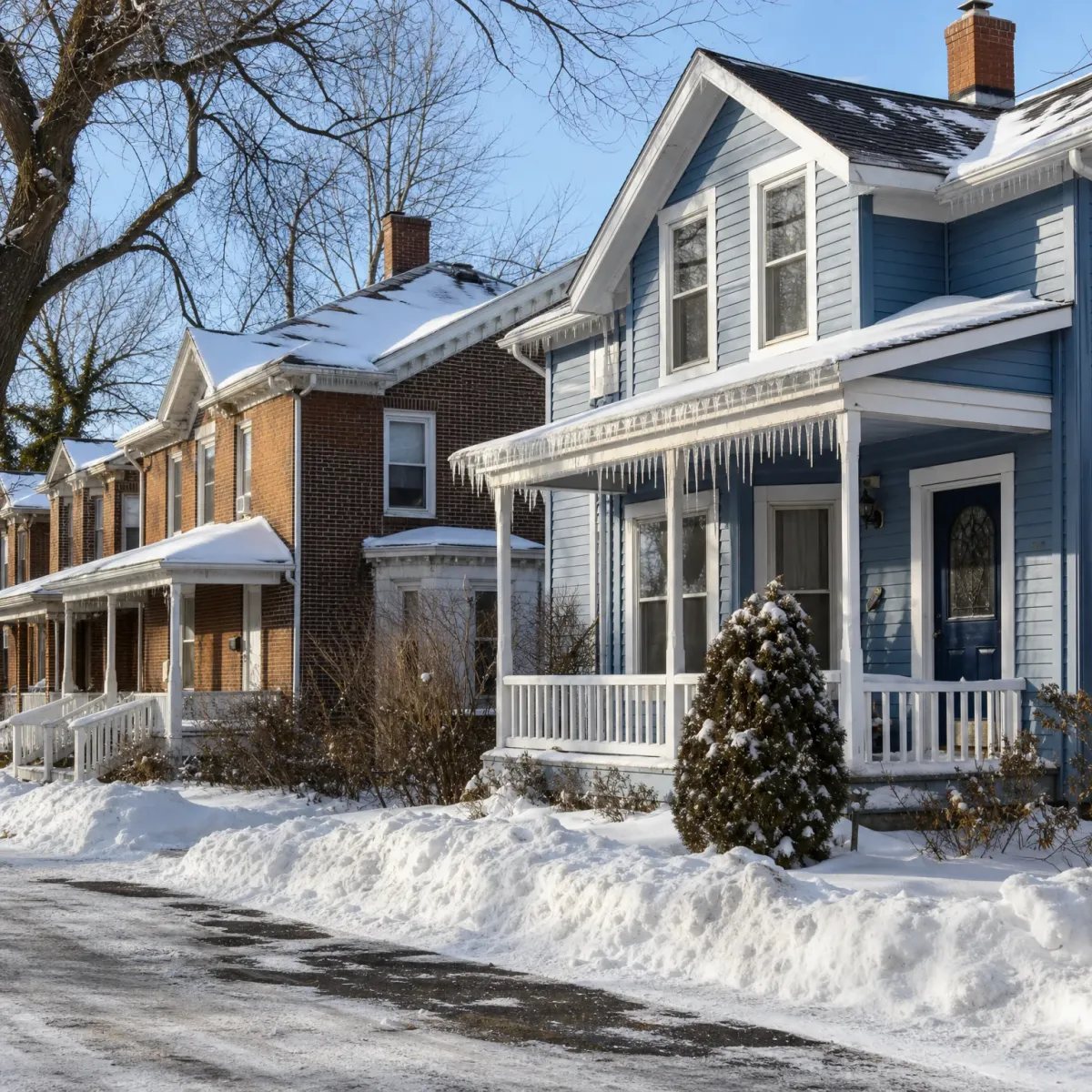
A row of houses along a snowy street, with a blue clapboard house with a white porch and icicles in the foreground and brick houses behind it under a clear sky.

What it costs to run, and what that means for your choice

A gas furnace is the cheaper of the two to run here. At Illinois's prices, a furnace makes the same heat for $1.33 per 100,000 Btu against $2.12 for a heat pump, over a third less. That gap is built on each machine at its federal minimum, so a furnace stays the cheaper burn even before you compare better units against better units.

Gas is also the fuel most of this county already uses. Utility gas heats 85 percent of homes here, electricity about one in ten. If gas already runs to your house, a furnace uses what's already there. If it doesn't, bringing gas to a home that runs on electric heat now is a cost of its own, and the furnace's cheaper fuel has to cover that first.

A furnace only heats. It has nothing to do the other four months of the year, while a heat pump runs your air conditioning too, in the same system, no second unit in the yard. If your AC is due for replacement anyway, that's a real piece of the decision, not just a line on the heating cost. For straight heating cost in a county this cold, the furnace wins. For a cold-climate heat pump that also cools the house, the case is closer, and it comes down to what your home already has running to it and what your cooling system needs.

Sources: NOAA nClimDiv · NOAA 1991–2020 seasonal normals · PNNL Building America guide · PNNL-37127 field study · ENERGY STAR product criteria · EIA SEDS 2024 · 10 CFR 430.32 · Census ACS 2020–2024

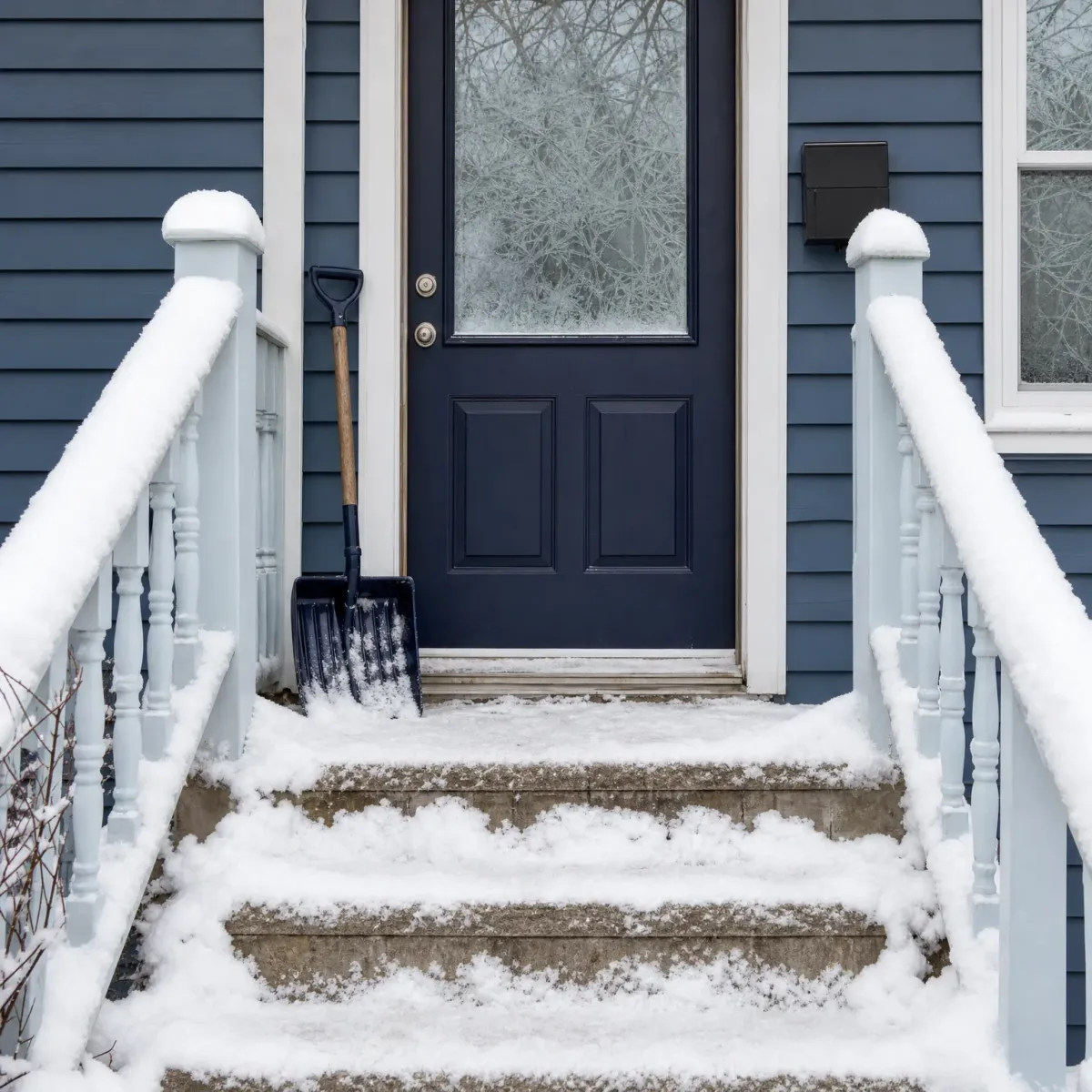
Snow-covered concrete steps and white railings lead to a dark blue front door on a blue clapboard house, with a snow shovel leaning beside the door.

Common questions about heat pumps and furnaces

  • Can a heat pump heat a house through an Illinois winter?

    A standard heat pump alone will struggle on the coldest nights here. Below about 35°F it often needs backup heat, and below 40°F its output falls short of its rated capacity, with only a fraction of that capacity left in the teens. The overnight low here averages 17°F across December, January and February, and reaches 0°F or below on about 13 nights a year, so most homes pair a heat pump with a backup heat source or keep a furnace for those nights.

  • Do I need backup heat with a heat pump here?

    Most likely, yes. A standard heat pump often needs backup heat once it's below about 35°F outside, and every one of the roughly 140 nights a year here that drop to freezing or below falls under that mark. Whether your particular system needs it depends on the equipment, so it's worth checking what you have or plan to install.

  • Can I keep my furnace and add a heat pump?

    Yes, and here that often makes sense. The furnace carries the house on the coldest nights, when a standard heat pump's output falls short of its rating, and the heat pump takes over the milder stretches of the 8 months the heat runs. Paired that way, neither machine has to cover weather it isn't suited for.

  • Is a heat pump cheaper to run than a furnace in McHenry County?

    No, a gas furnace costs less to run here. At Illinois's average fuel prices, a heat pump runs $2.12 per 100,000 Btu of heat against $1.33 for a gas furnace, so the furnace makes the same heat for less. That gap is for equipment built to the federal minimum and doesn't include backup heat, which would add to the heat pump's cost on the coldest nights.

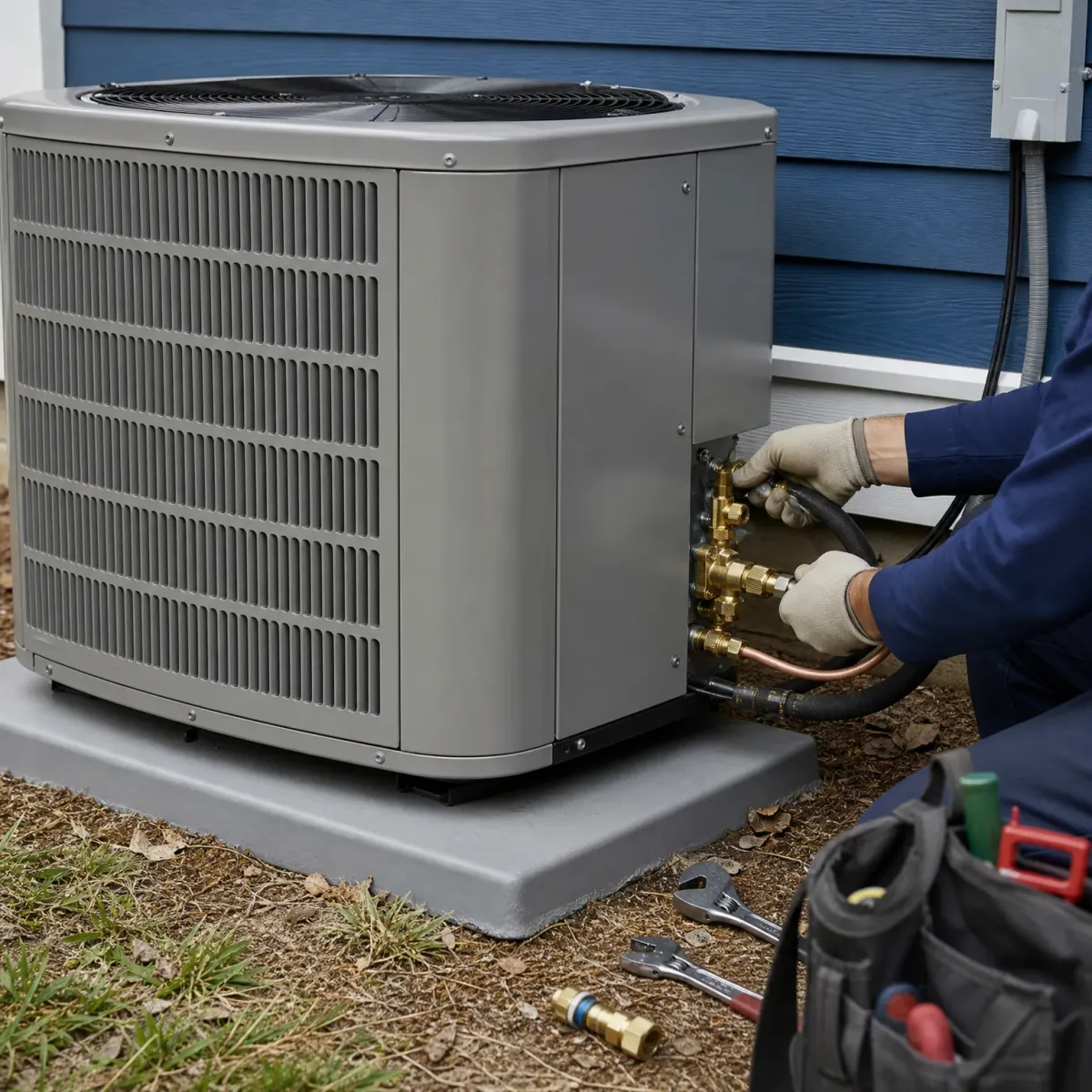
A gloved technician connects refrigerant lines with brass fittings at the side of a gray outdoor air conditioner condenser on a concrete pad beside a blue-sided house, with wrenches and a tool bag on the ground nearby.

Tell us about the job

Takes about a minute. No obligation.

Step 1 of 3: Equipment