




Three illuminated two-story brick houses on a tree-lined residential street photographed at twilight, with warm window light and landscape uplighting visible against a deep blue evening sky.

Furnace Installation in Crystal Lake, IL

Tell us about the job

Takes about a minute. No obligation.

Step 1 of 3: Equipment

Gas heats 85 percent of the homes in McHenry County, and it's almost certainly what's in yours now. That makes a gas furnace installation the straightforward choice. The same gas line, the same vent path, the same kind of ductwork sized for a gas furnace's airflow. A contractor can size the new furnace to the house rather than working around a fuel switch. Electricity heats 11.7 percent of homes here, and LP gas a smaller share still, so if your house runs on either of those, the installation looks different from what's typical in the county.

8 months
October through May, your furnace is on duty
17°F
the average winter night it heats against
85%
of homes here heat with gas, so most furnaces here burn gas
80% AFUE
the federal minimum any new unit must meet
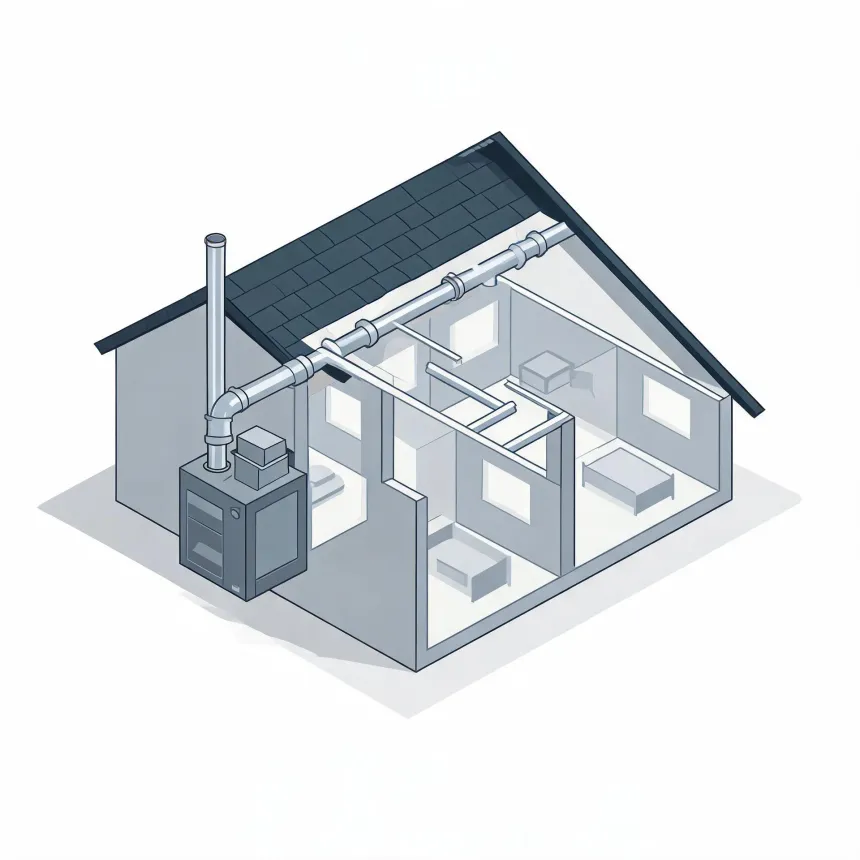
Isometric cutaway illustration of a small house showing interior rooms, ductwork running through the attic, and a furnace unit with a vertical flue pipe on the exterior wall.
Your furnace works hardest from November through March.

NOAA nClimDiv, 1991–2020 normals

Natural gas ran $10.64 per million Btu in Illinois in 2024.

A standard-size, standard-efficiency furnace is built for that cost, so there's no local reason to size up or pay for extra efficiency.

Eight months of heat, down to 17 below freezing

Heat runs October through May
Winter nights average 17°F
Climate zone 5A
Eight months on this furnaceHeat starts in October in McHenry County. Install before September and you're not doing it in a rush.

Ask every contractor for a Manual J load calculation before they quote a size. A furnace sized by square footage alone can end up too big, and an oversized furnace short cycles. It turns on and off faster than it should, which wears out parts sooner and still leaves rooms uneven. Ask what the AFUE rating is. That number tells you how much of the fuel actually becomes heat in the house instead of going out the flue. Ask whether the vent pipe and gas line are being reused as is or inspected for the new unit. A furnace is only as good as what feeds it and what carries the exhaust away. Ask what the warranty actually covers. Parts, labor, or both, and for how long, is often where quotes that look the same on price turn out to differ.

A standard furnace, sized right, holds up fine here

McHenry County sees its share of damaging wind and winter storms, and 16% of Illinois households lost power for a day or more last year. None of that changes what a furnace install here calls for. A standard size and efficiency, sized by a proper load calculation, is built to handle this.

Find a contractor
A man in a cap, long-sleeve shirt and work pants climbs porch steps toward a dark blue front door, carrying a worn canvas tool bag, with a small potted evergreen beside the entry.
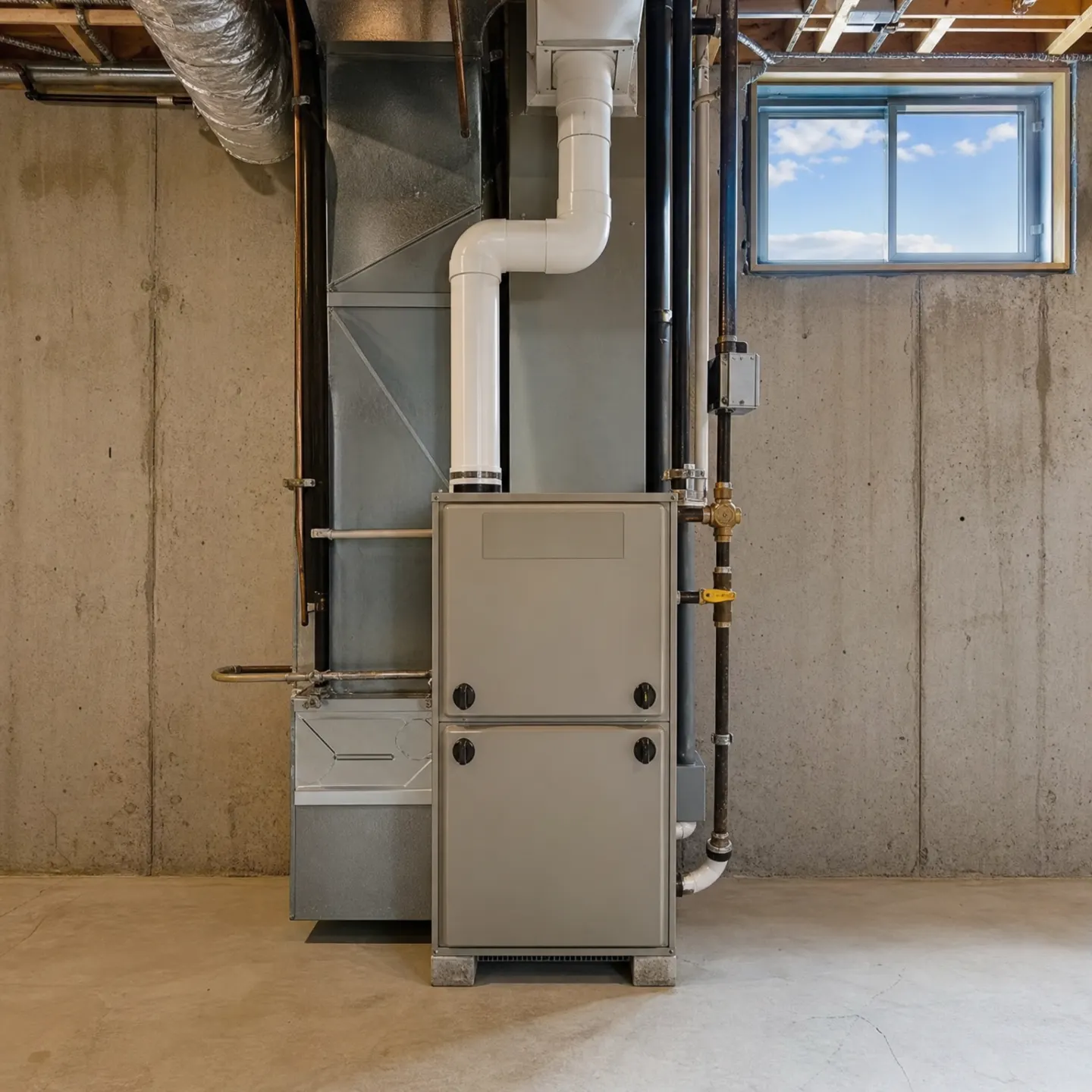
A gray gas furnace with attached ductwork and piping installed in an unfinished concrete basement.

Sized to the load, not the square footage

Load, not square footage, is what sizing comes down to. A Manual J calculation works out how much heat a house loses on the coldest day, room by room, factoring in windows, insulation, and ceiling height. Houses that look alike from the street can call for different size furnaces depending on how they're built. Run that math with square footage alone and the result is a guess wearing the shape of a calculation. Oversize the furnace and it heats the house fast, shuts off, then fires again a few minutes later. That short cycling keeps the heat exchanger and blower motor starting and stopping far more than a properly sized unit would, and rooms still end up uneven because the air never runs long enough to balance through the ductwork. Undersize it and it runs long and hard without ever quite catching up on the coldest nights. Sized to the actual load, a furnace settles into long, steady runs, which is the kind of work this equipment is built for.

What AFUE actually measures

AFUE is the share of fuel that turns into heat in the house instead of going out the flue. A furnace rated higher wastes less gas doing the same job. It says nothing about how big a furnace you need, only how efficiently the one you pick burns fuel once it's running.

Why the rating alone won't tell you the cost to run it

The AFUE number assumes the furnace is sized right for the house. An oversized furnace with a high rating can still run worse than it should, cycling on and off instead of settling into a steady run. The label tells you how the unit performs once it's working the way it was designed to. Whether it actually works that way comes down to the sizing, not the rating.

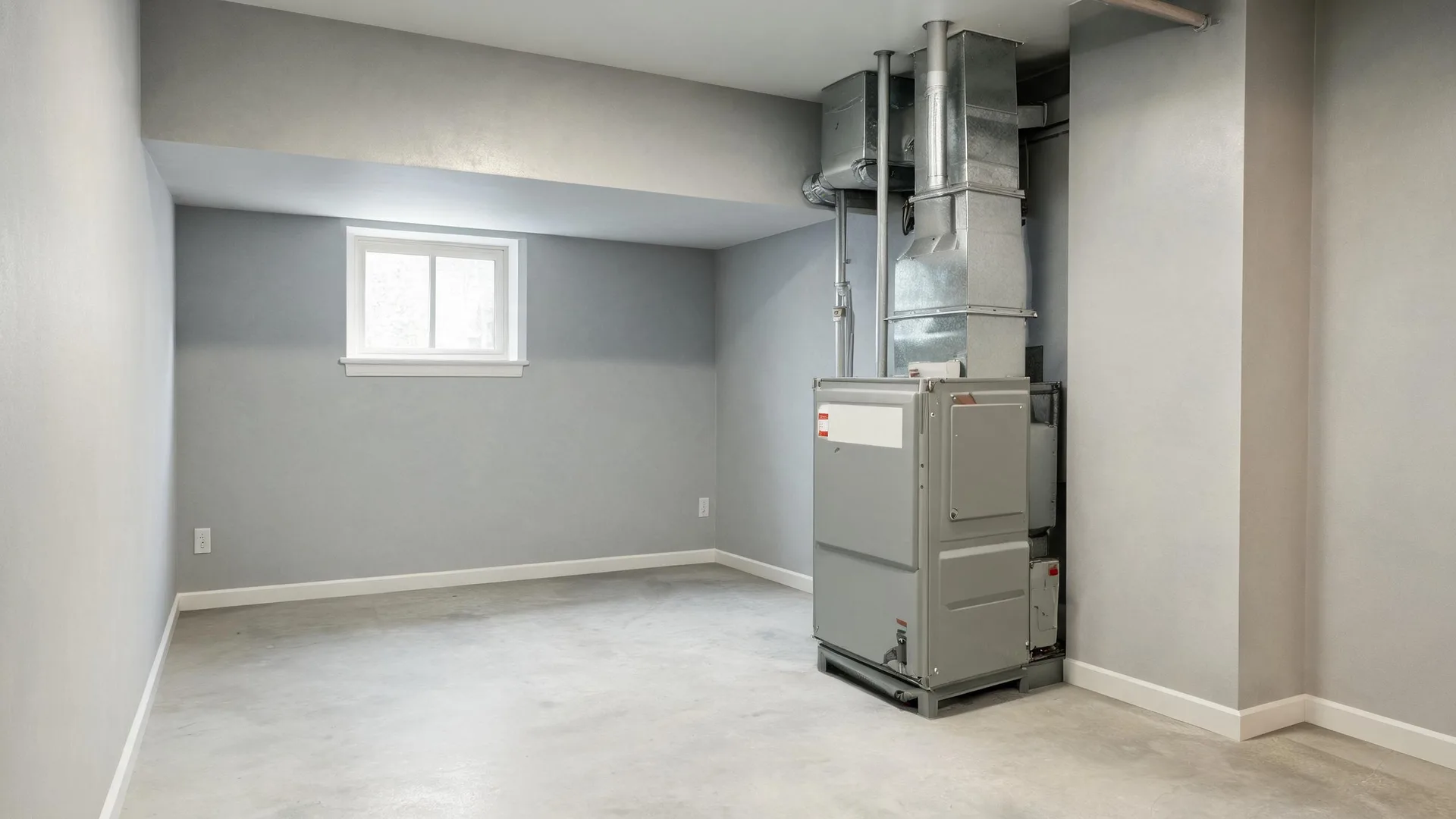
An unfinished basement featuring exposed ceiling joists, a metal HVAC unit with round ductwork, a hanging light bulb, and scattered boxes and debris along the left wall.

A high-efficiency gas furnace would save about $130 a year to run in McHenry County compared with a gas furnace.

  • A high-efficiency gas furnace$640 a year
  • A gas furnace$770 a year

Estimates for a typical McHenry County home, from EIA household energy data, Illinois fuel prices and NOAA climate normals. Your home will differ.

Installation day starts with the old furnace coming out, along with whatever vent pipe and gas line connection won't carry over to the new unit. Expect the crew to cut in new ductwork transitions if the new furnace's cabinet is a different size than the old one, since the plenum has to match up before the ducts connect to it. The gas line gets pressure tested once it's hooked up, and the vent pipe gets checked for the right slope and clearance before anything is sealed. Once the furnace is set and connected, it gets fired up and run through its paces, checking the temperature rise across the heat exchanger and making sure the blower is moving the right amount of air. A combustion analyzer reading at the flue tells the installer whether it's burning clean before they call the job done. Expect to walk through the thermostat settings and filter location before the crew leaves, since that's what you'll actually be dealing with all winter.