




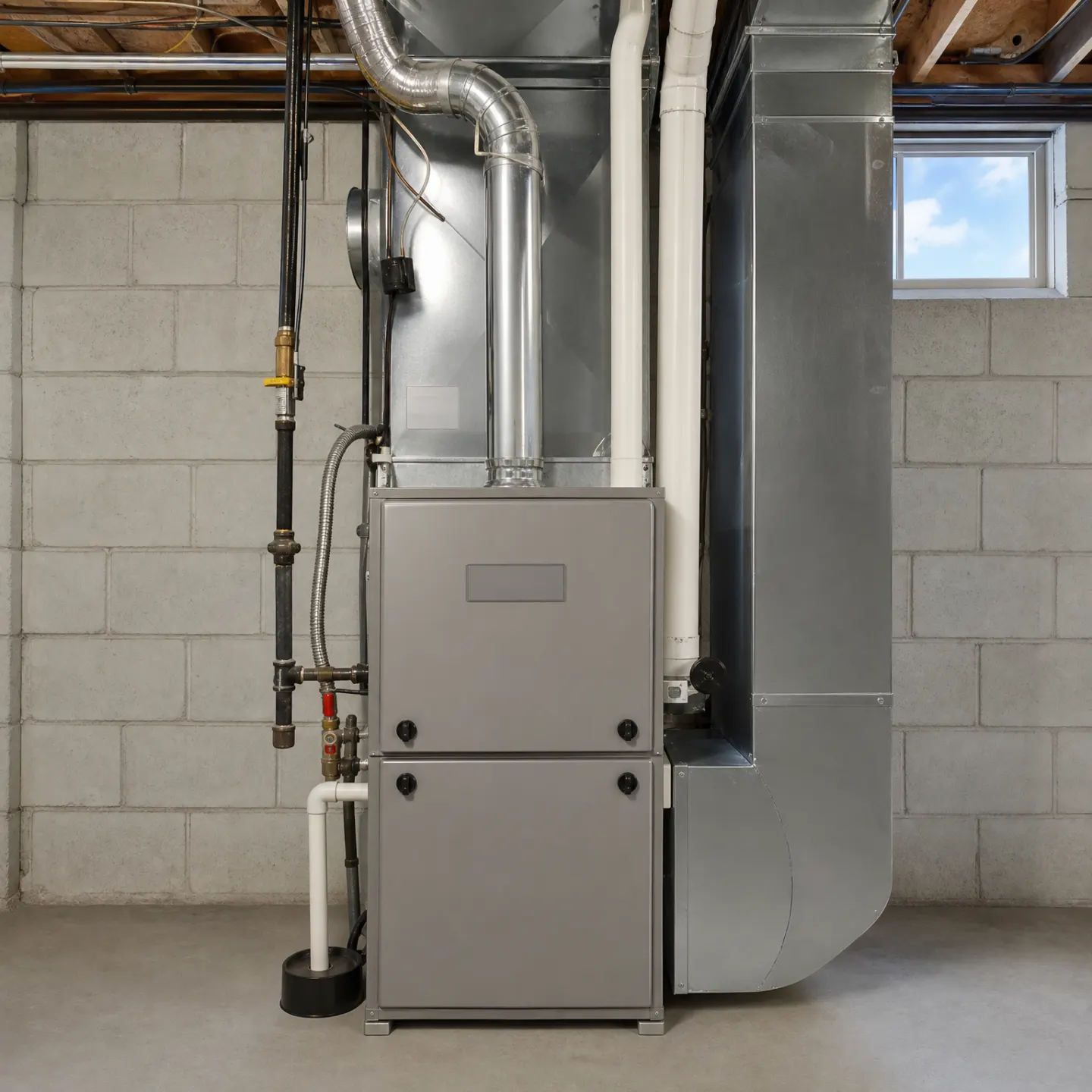
An unfinished basement featuring concrete block walls, exposed floor joists, a bare concrete floor, and a forced-air furnace with a large metal exhaust duct in the corner.

Furnace Repair in Crystal Lake, IL

Tell us about the job

Takes about a minute. No obligation.

Step 1 of 3: Equipment

Furnaces in McHenry County run from October through May. That's eight months of the year, more than half, spent cycling on and off to keep up. A furnace in a milder climate gets long stretches of rest. Yours doesn't get that. More run time means more cycles on the igniter, more hours on the blower motor, more chances for a part to wear past where it should. When something starts acting up here, it's rarely bad luck. It's usually a part that's been working since fall and is finally done.

8 months
October through May, your furnace is on duty
17°F
the average winter night it heats against
85%
of homes here heat with gas, so most furnaces here burn gas
18 winter storms
in ten years, the nights a failure hurts most
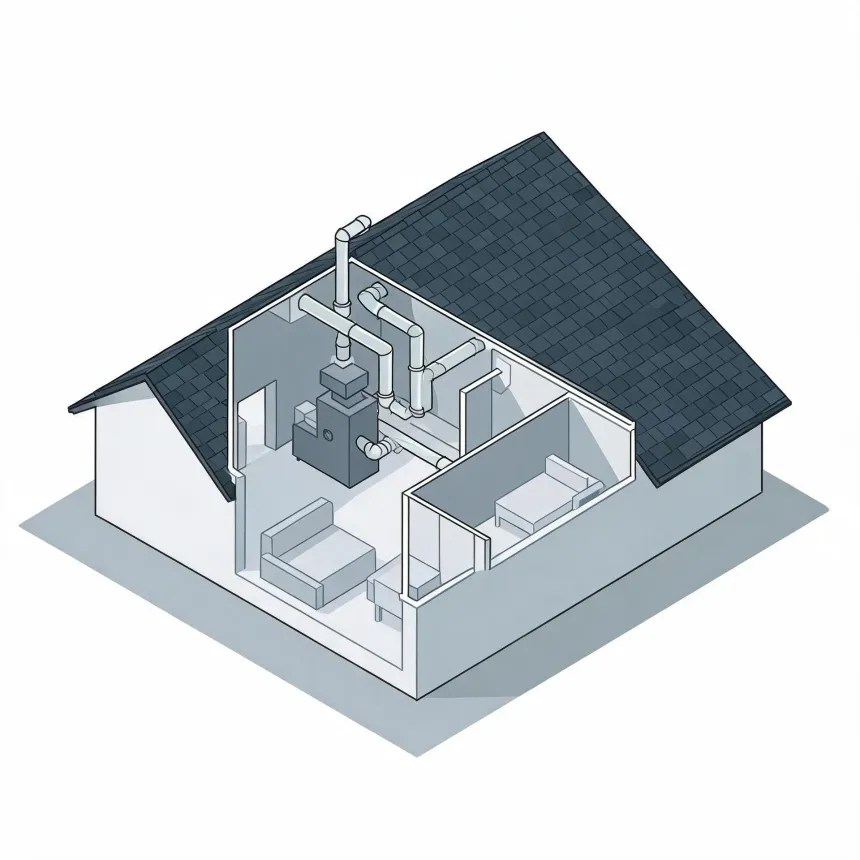
Isometric cutaway illustration of a single-story house with a dark shingled roof, showing interior rooms with furniture and a furnace connected to ductwork.
Your furnace works hardest from November through March.

NOAA nClimDiv, 1991–2020 normals

A cracked heat exchanger gets worse every hour the furnace keeps firing.

Shut it down and get it looked at before running it again.

Half the homes here were built since 1989, so the furnace inside is often newer too

Half the homes here were built by 1989
Climate zone 5A
Heat runs October through May
Built for weather like thisEight months of heat a year means October is when a weak part finally gives out.

If your furnace came with the house, check when that was. A repair is worth paying for on a furnace that still has years ahead of it. Replacement makes more sense when a system is old and failing in more than one way. For most homeowners here, a service call to diagnose the problem is the right next step before anyone talks about replacing anything.

Get the real problem fixed, not just the symptom

A furnace that's run since October has had months to wear a part down before it finally quits. Get it diagnosed and fixed properly, so the repair holds for the rest of the season.

Find a contractor
A man in a dark long-sleeve shirt and tan work pants, seen from behind, carries a worn canvas tool bag up steps toward a navy blue front door of a gray clapboard house, with a large blue planter and shrub to the right.
A gray high-efficiency gas furnace installed in an unfinished basement, surrounded by gas lines, a condensate drain, and sheet-metal ductwork.

What you can check yourself

Before anyone comes out, there are a few things worth checking yourself. Start at the thermostat. Make sure it's set to heat, not cool, and the set temperature is actually above room temperature. A dead or miscalibrated thermostat can look exactly like a dead furnace. Next, check the air filter. A filter clogged with dust chokes off airflow, and some furnaces will shut themselves down rather than run with no air moving across the heat exchanger. If yours pulls out gray and matted instead of white, swap it. Then find the furnace switch, it looks like a light switch, usually mounted on or near the unit, and make sure nobody bumped it off. Check the breaker too. A furnace that trips its breaker repeatedly shouldn't be reset again and again; that's a sign to stop and call someone. If you have a gas furnace, look for a reset button on the inducer motor or a flashing light on the control board. Count the flashes if you can, the pattern usually corresponds to a fault code, and whoever you call will want to know it. Don't try to relight a pilot or reset a gas valve yourself if you smell gas. Leave the house and call the gas company first. Last thing: listen to how it fails. A furnace that tries to start, clicks, and shuts off is different from one that never attempts anything at all, and telling a technician which one you're hearing saves time on the visit.

Most failures start with something small

A furnace rarely quits all at once. An igniter weakens a little more each time it fires. A flame sensor collects a film that throws off its reading. A blower motor bearing wears down heating cycle after heating cycle. Each of these can still limp along for a while, until the day it can't.

What that means for the repair

Finding the part that's actually failing matters more than treating the symptom in front of you. A furnace that short cycles could be a dirty flame sensor or a cracked heat exchanger tripping a safety switch, and those two repairs aren't close to the same job. A proper diagnosis traces the symptom back to the part causing it, instead of guessing.

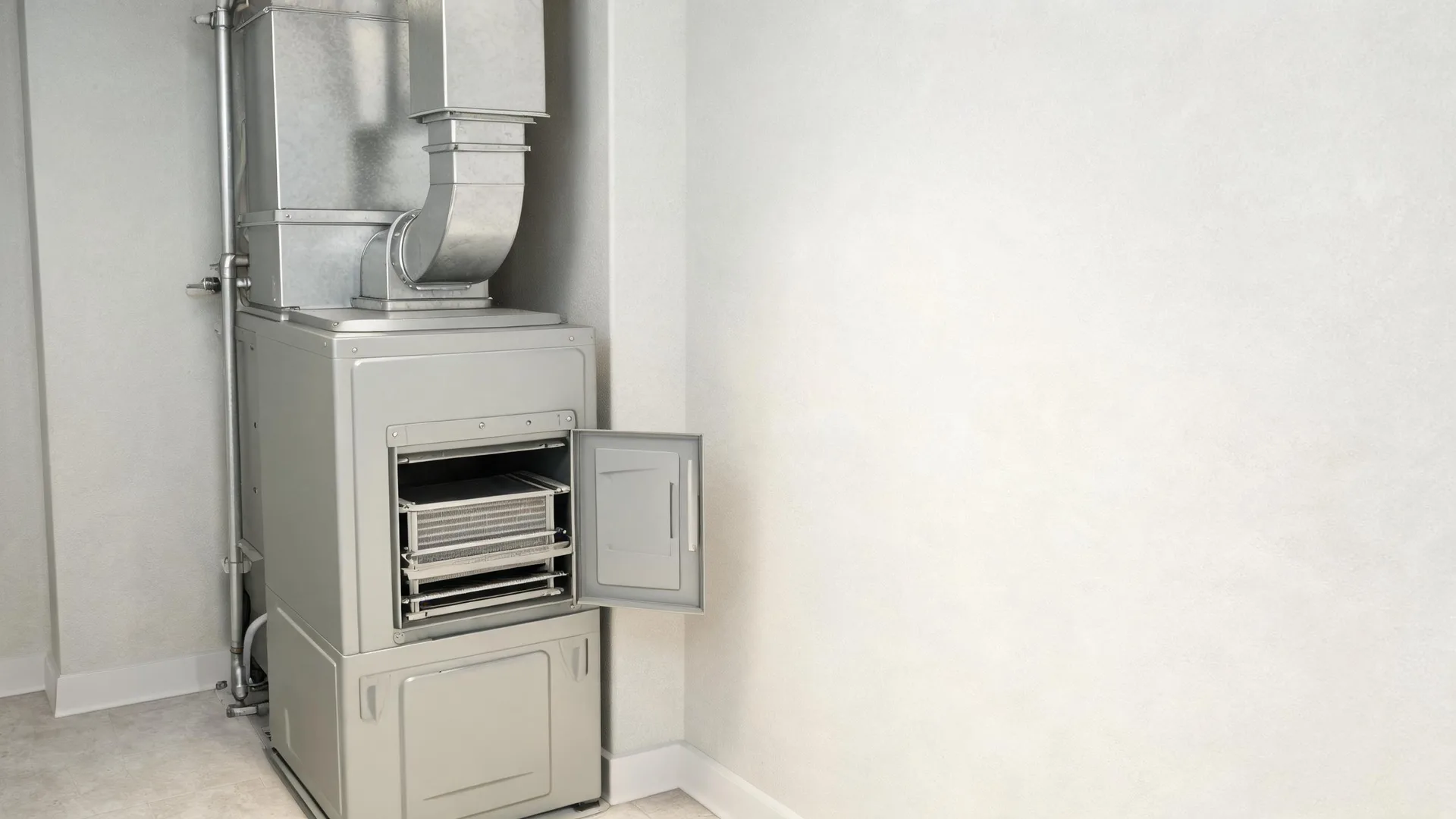
An unfinished concrete basement containing a gas furnace with sheet-metal ductwork, utility shelving, and exposed overhead joists.

A new furnace would cut about $150 a year off heating for a typical McHenry County home.

  • A new high-efficiency furnace$640 a year
  • An older furnace$790 a year

Estimates for a typical McHenry County home, compared with an older unit built to the previous federal minimum, from EIA household energy data, Illinois fuel prices and NOAA climate normals. Your home will differ.

Repair makes sense when one part has failed and the heat exchanger is sound.

Replacement makes sense when the heat exchanger is cracked or the furnace keeps needing parts.

A diagnostic visit starts with questions, not tools. What were you hearing before it quit, did it try to start, how long had it been acting up. Then the technician pulls the cover and checks the obvious things first: power to the unit, the flame sensor, the igniter, whether the inducer motor spins freely. If there's a control board, they'll read the fault code off it before touching anything, since that narrows down where to look. From there it's testing the part the symptoms point to, not swapping parts to see what helps. A multimeter across the igniter tells you if it's drawing the right current. A pressure switch gets checked for continuity. If the heat exchanger is in question, that gets inspected closely, because a crack there isn't something to guess about. The visit ends with the technician telling you what's actually wrong and what it takes to fix it, not just that something's wrong.