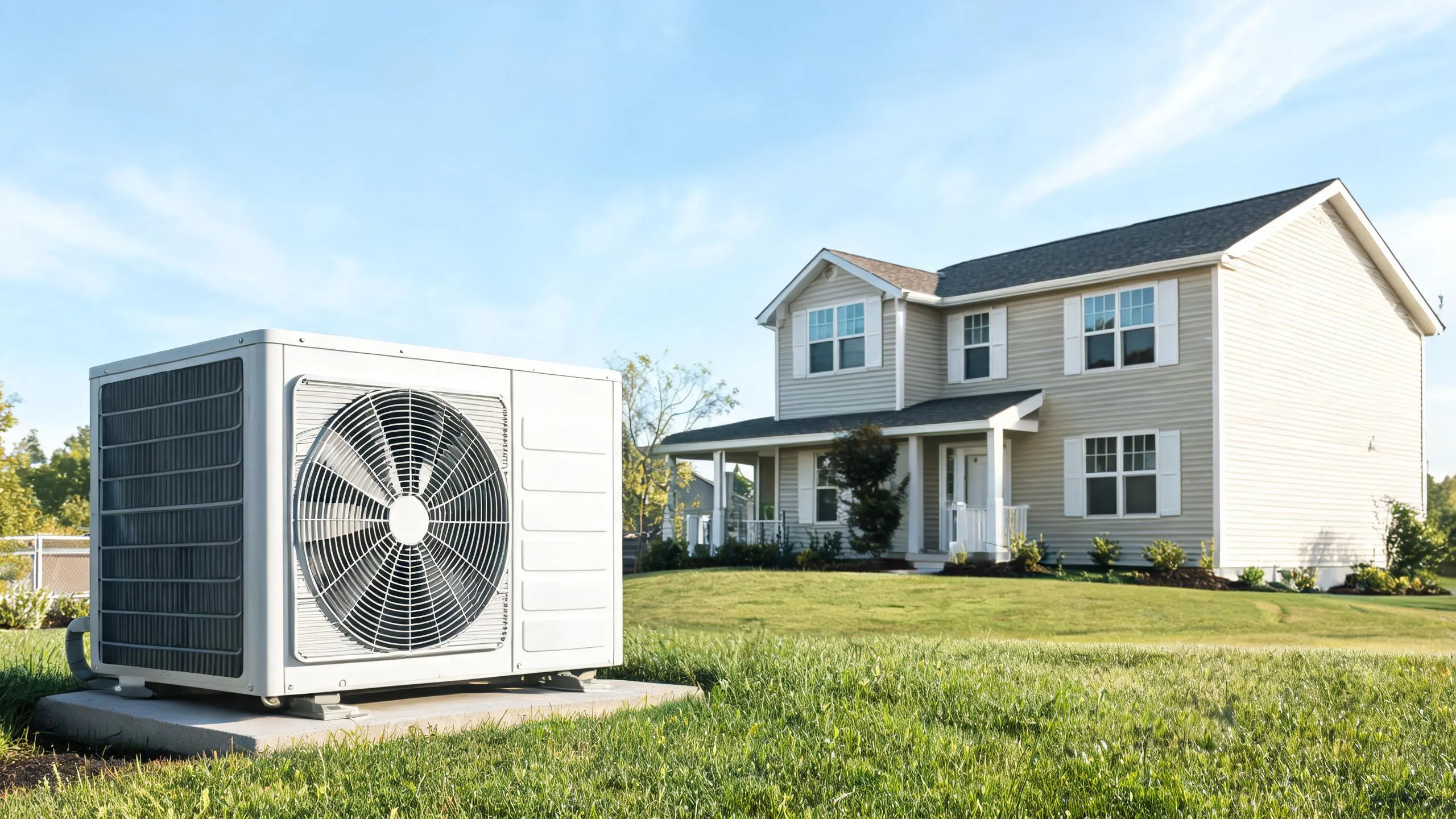
An outdoor heat pump unit mounted on a concrete pad in front of a two-story suburban house.

Heat Pump Repair in Crystal Lake, IL

Tell us about the job

Takes about a minute. No obligation.

Step 1 of 3: Equipment

Winter is the real test here

McHenry County overnight lows average 17°F across December, January and February, and that's the stretch where a heat pump works hardest. A unit that struggles to keep up on the coldest nights usually has a specific cause, like a low refrigerant charge or a failing defrost control, not a flaw in the equipment itself.

Diagnosis still comes first

A heat pump blowing cool air, cycling too often, or running constantly has a handful of usual causes. A contractor needs to check the actual system, the charge, the defrost cycle, the reversing valve, before anything gets replaced or recharged.

8 months
October through May, your system heats
3 months
June through August, it cools
17°F
the average winter night it heats against
81°F
the average summer afternoon it cools against
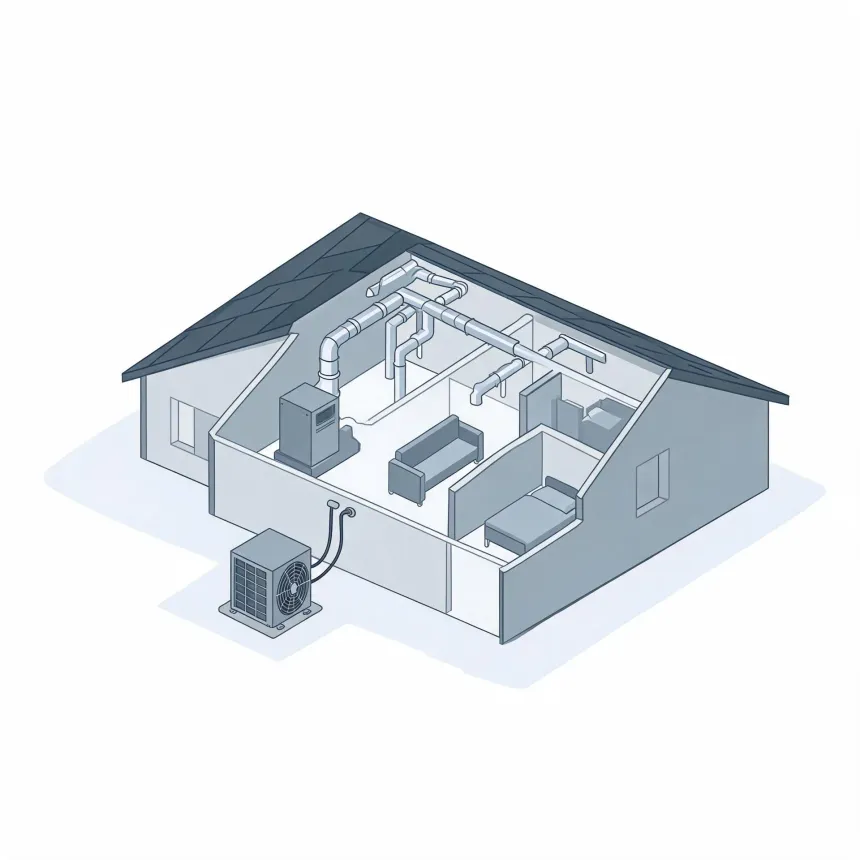
Isometric cutaway illustration of a single-story house showing interior rooms with furniture, an attic duct network connected to a furnace or air handler, and an outdoor condenser unit linked by lines outside the wall.
Your system heats October through May and cools June through August.

NOAA nClimDiv, 1991–2020 normals

Heat pumps in McHenry County switch over to heating in October.

A weak defrost control or a low charge often shows up in the first cold snap, not before.

At 15.87 cents a kWh, a heat pump running wrong keeps costing you every month it's not fixed

Power costs 15.87 cents a kWh statewide
140 damaging wind events from 2015 to 2024
45 hail events from 2015 to 2024

Crystal Lake sees its share of rough weather, 140 damaging wind events and 45 hail events logged in McHenry County over the past ten years, plus the occasional tornado. None of that is unusual for this part of Illinois, and none of it is what's wrong with your heat pump. Wind and hail hit the cabinet and the outdoor coil, not the parts that control refrigerant flow or defrost timing. If your unit took a direct hit, a tech will check the fins and the fan for damage. Otherwise, the cause is almost always something ordinary inside the system, not something the weather did to it.

Half the homes in McHenry County were built in 1989 or later. If yours is one of them, your heat pump likely has plenty of life left.

McHenry County splits close to down the middle, half the homes built in 1989 or earlier, half in 1989 or later. A heat pump that came with one of the newer houses hasn't had time to wear out. Repair is usually the right call.

Find a contractor
A man in a cap, navy long-sleeve shirt and tan work pants carries a canvas tool bag up steps toward a dark front door, with a potted shrub beside the porch.
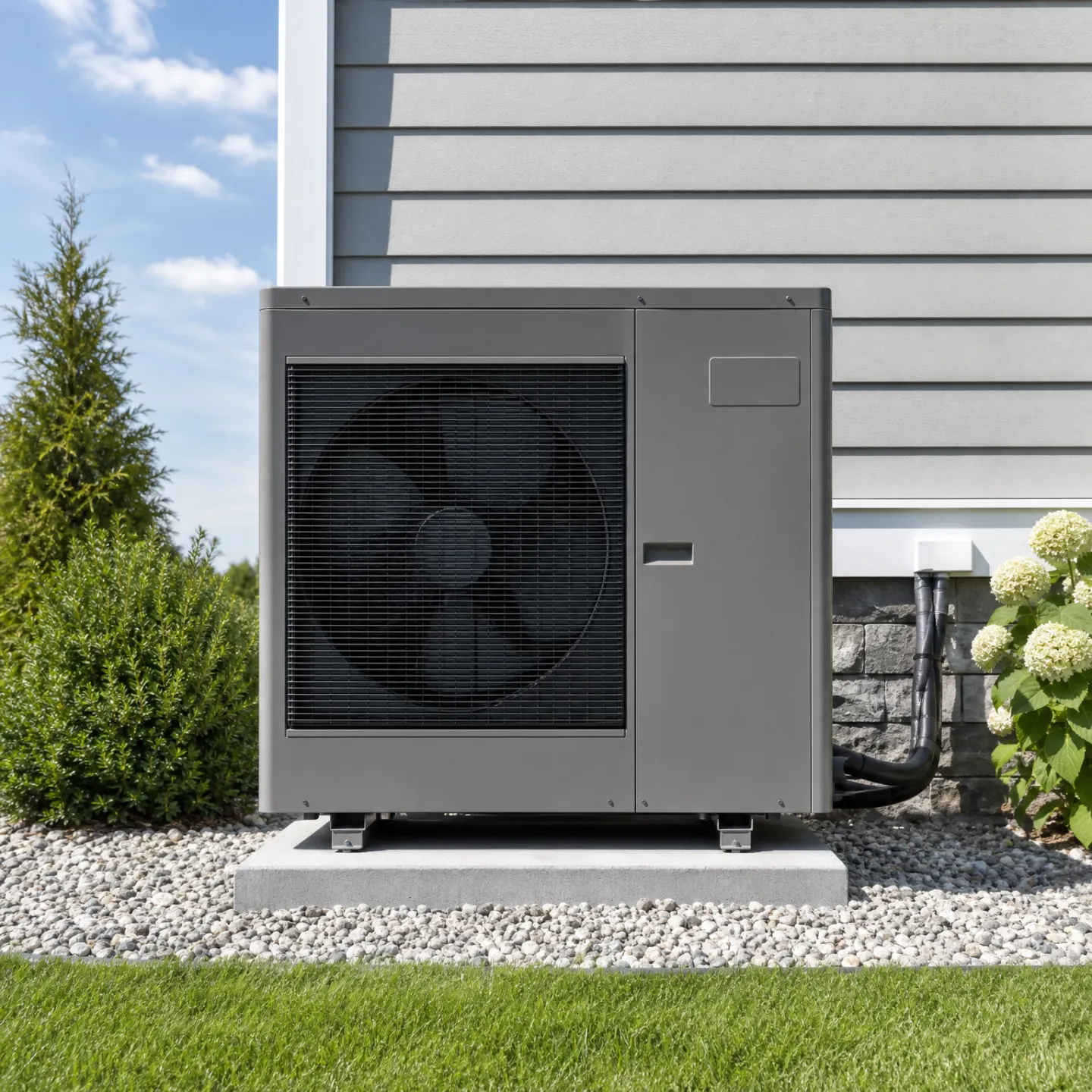
A gray air-source heat pump mounted on a concrete pad next to a house with gray vinyl siding, surrounded by gravel and flanked by green shrubs and white hydrangea flowers.

Get it checked before you get it replaced

If your house falls on the newer side of that split, don't let age be the reason you replace a working heat pump. Get the actual cause checked first, the charge, the defrost control, the reversing valve. A system that's only a couple decades old, or less, is usually worth fixing rather than swapping out.

What the sound tells you

A heat pump that starts clicking, buzzing, or grinding at the outdoor unit is usually pointing at the fan motor or a loose part inside the cabinet. A sharp hissing sound can mean refrigerant escaping where it shouldn't. Silence is its own sign too. If the outdoor unit isn't running at all while the indoor fan blows, the problem could be the reversing valve, the control board, or power not reaching the outdoor unit.

What the air itself tells you

Air that should be warm and comes out barely lukewarm often means the reversing valve is stuck or the charge has dropped. A unit that frosts up and never seems to defrost points to a bad defrost control or sensor. Short cycling, turning on and off every few minutes instead of running a full cycle, usually means a thermostat problem, a dirty sensor, or restricted airflow somewhere in the system.

A heat pump rarely fails all at once. A low refrigerant charge gets worse over time, and a compressor that keeps running against it wears down with every hour on the clock. A reversing valve stuck in one position can let the compressor run hotter than it should, and heat is what shortens a compressor's life. Frost left to build on the outdoor coil blocks airflow, so the unit works harder to move the same amount of heat, which only adds to the ice. Short cycling wears out the parts that get the unit started in the first place, the contactor and the start components, a little more with each cycle. A fault that gets caught early is usually one part. Left running, it tends to take a second part down with it.

The part that fails usually matters more than how bad the symptom looks. A contactor, a capacitor, a defrost sensor, a fan motor, any of these gets replaced on its own without touching the rest of the unit. A compressor is different. It costs the most to replace and it's the part most likely to end a unit's life if it fails outright. A heat pump blowing cold air could mean a stuck reversing valve, which is a straightforward repair, or it could mean a compressor that's lost its ability to compress, which usually isn't worth fixing on its own. Age plays into which of these is more likely, but it doesn't decide it. That's why a contractor checks the actual part before saying what the fix is.