Electricity here runs 18.08 cents a kilowatt-hour
That is higher than what most US counties pay. A heat pump runs on electricity for both heating and cooling, so that rate applies to the system every month it operates, not just in summer.
Takes about a minute. No obligation.
That is higher than what most US counties pay. A heat pump runs on electricity for both heating and cooling, so that rate applies to the system every month it operates, not just in summer.
Two heat pumps can look similar in a showroom and cost very differently to run once installed here. At this electric rate, the efficiency of the unit you pick matters more than it would somewhere power is cheap.
NOAA nClimDiv, 1991–2020 normals
The size of the unit has to match the house, not the other way around.
A heat pump too big or too small for the space will cost more to run no matter how efficient it's rated.




McHenry County falls under zone 5A in the 2021 energy code, a cool, humid zone where heating carries more of the load than cooling does. Any split-system heat pump installed here, if manufactured from 2023 onward, has to meet the federal minimums for that rating: at least 14.3 Btu of heat moved per watt-hour of electricity over the summer, and at least 7.5 Btu per watt-hour over the winter. That floor narrows what a contractor can offer you. It also means the unit sitting in a showroom already has to clear a bar set for homes like yours, not some national average.
The rate here is already set before a contractor shows up. The unit you pick decides whether that rate works for you or against you every month it runs. Ask what efficiency rating the quote is built around, and have the system sized to your house before you sign off.
Find a contractorWhatever is heating the house now does not get thrown out the day the new unit shows up. If it is a gas furnace, most installs pair it with the heat pump rather than scrap it. The heat pump handles the mild stretches, and the furnace kicks in when it gets too cold for the heat pump to keep up on its own. That setup is called a dual fuel system, and it needs a thermostat that can switch between the two and a control board that tells them when to hand off. The old outdoor condenser, if there was central air before, usually does come out, since the heat pump's outdoor unit replaces it and does both jobs. Refrigerant lines get checked and often replaced rather than reused, since old line sets can have the wrong diameter or leftover residue that contaminates the new system. Whoever does the work should pull the old refrigerant down and recover it rather than vent it, that part is federal law, not a courtesy.
A heat pump's ability to heat drops as the outdoor temperature drops, and the number on the spec sheet is usually measured at a mild temperature that tells you little about the coldest nights. Ask the contractor what the unit actually puts out at the lowest temperature your area sees, and where the balance point sits, the temperature below which the backup heat has to take over. Two units with the same rated capacity can behave very differently once it gets cold.
In a dual fuel setup, the thermostat and control board decide when the furnace takes over from the heat pump, and that decision point is adjustable. Ask who sets it and how, since a handoff set too late means the heat pump struggles in weather it can't handle, and one set too early means the furnace runs more than it needs to. This is a setting, not a fixed feature of the equipment, so it is worth asking how it gets configured for your house.
The rating on the label, SEER2 for cooling and HSPF2 for heating, tells you how much heat the unit moves for the electricity it uses, not how much heat it can put out. A higher number means it gets more work done per unit of power, the same way a car rated for better mileage goes farther on the same tank. It says nothing about whether the unit is the right size for the house, and a correctly sized unit with a lower rating can still cost less to run than an oversized one with a higher rating. The number on the box is also measured under set lab conditions, so it won't match what you see on the coldest or hottest days, only give you a way to compare one unit against another. Ask what rating a quote is built around and make sure it's not the only number you're judging the equipment by.
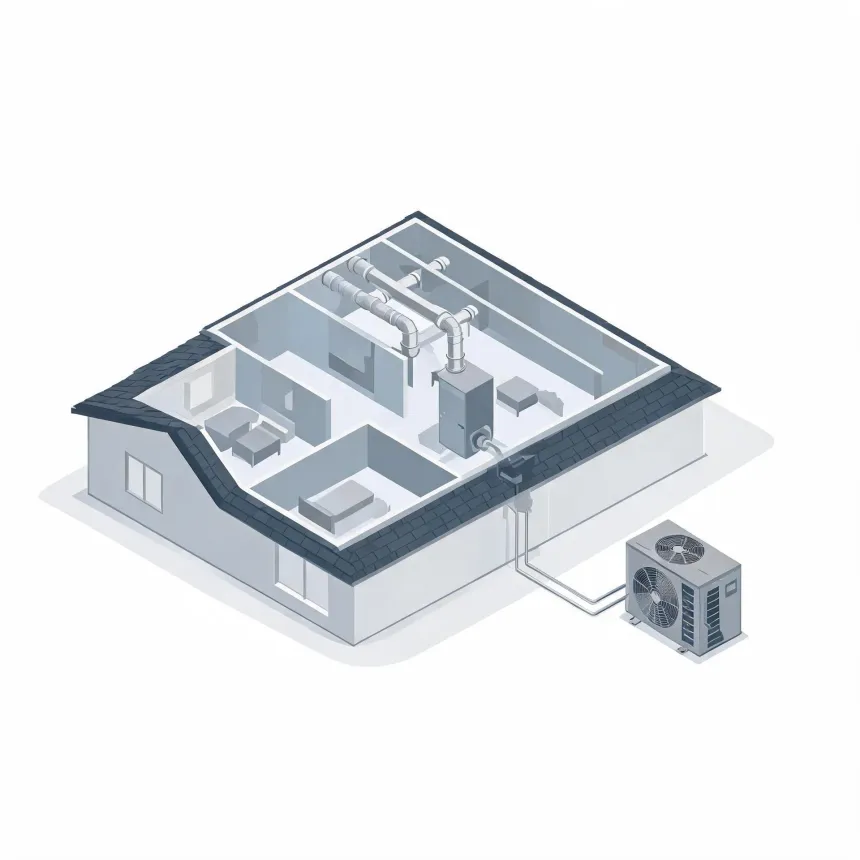
Installation usually runs a full day, sometimes two if the ductwork needs changes or the electrical panel needs work to handle the new circuit. The crew sets the outdoor unit on a pad first, then runs the line set between that and the indoor coil, which usually goes in above the furnace. Those refrigerant lines get connected, pressure tested, and checked for leaks before anything gets charged with refrigerant, since a leak found after the system is running costs more to chase down. The electrical hookup comes next: a dedicated circuit and disconnect box for the outdoor unit, and low-voltage wiring to the thermostat. Once everything is connected, the system gets charged, and a tech checks airflow at the vents and the temperature split between the air going in and out of the indoor coil. The thermostat gets programmed last, and in a dual fuel setup, that includes setting when the furnace takes over from the heat pump. Before the crew leaves, the system should run a full cycle in both heating and cooling, if the season allows it, so any issue shows up while someone is still there to fix it.