

Heat pump vs furnace in Jefferson County, Illinois

Get Quotes on Both

Serving Jefferson County homes

Which costs less to run in Jefferson County?

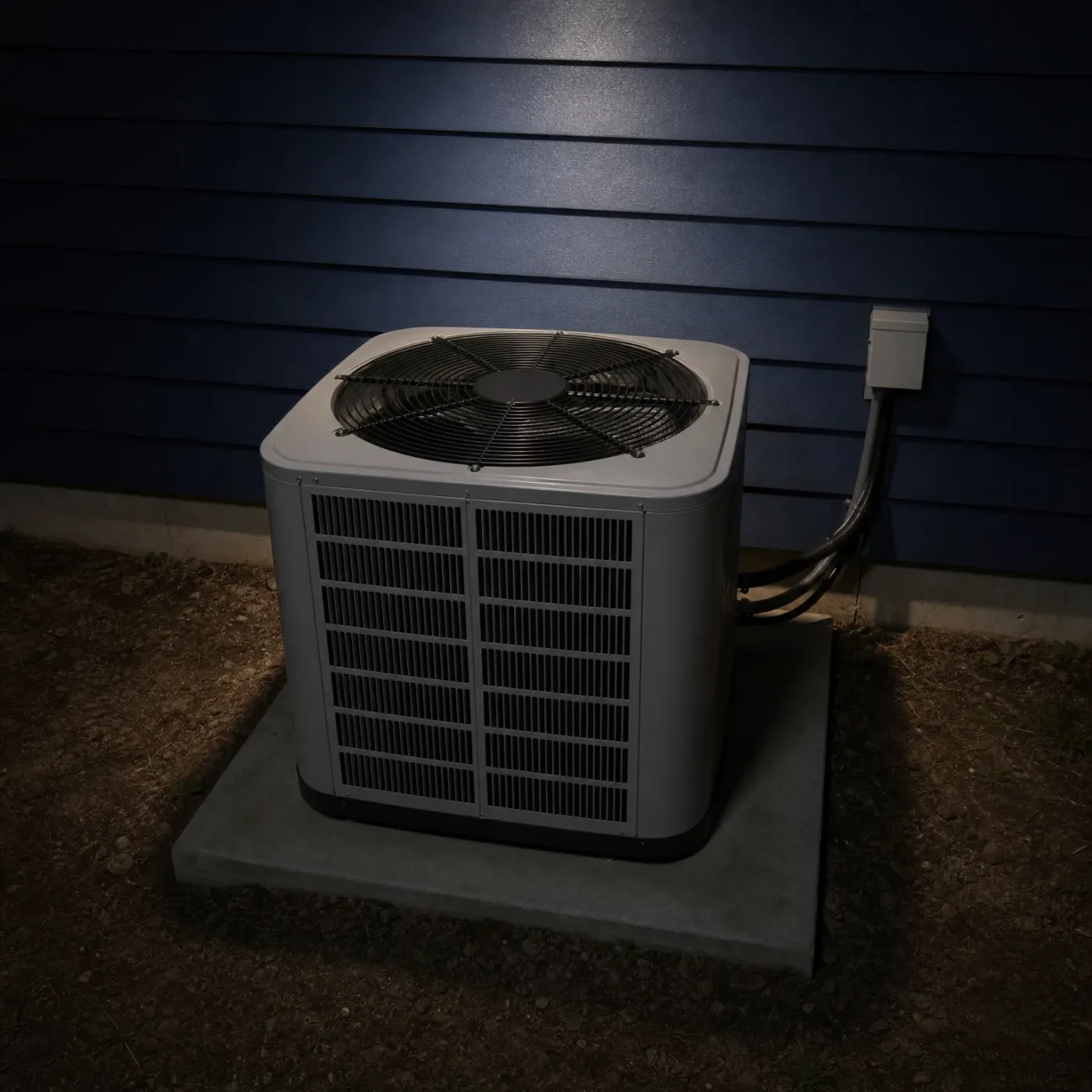
An outdoor air conditioning condenser unit with a top-mounted fan grille sits on a concrete pad beside a dark blue horizontal lap-sided wall at night, with refrigerant lines running to a wall-mounted disconnect box.

Heat pump

To heat your home here$2.12per 100,000 Btu

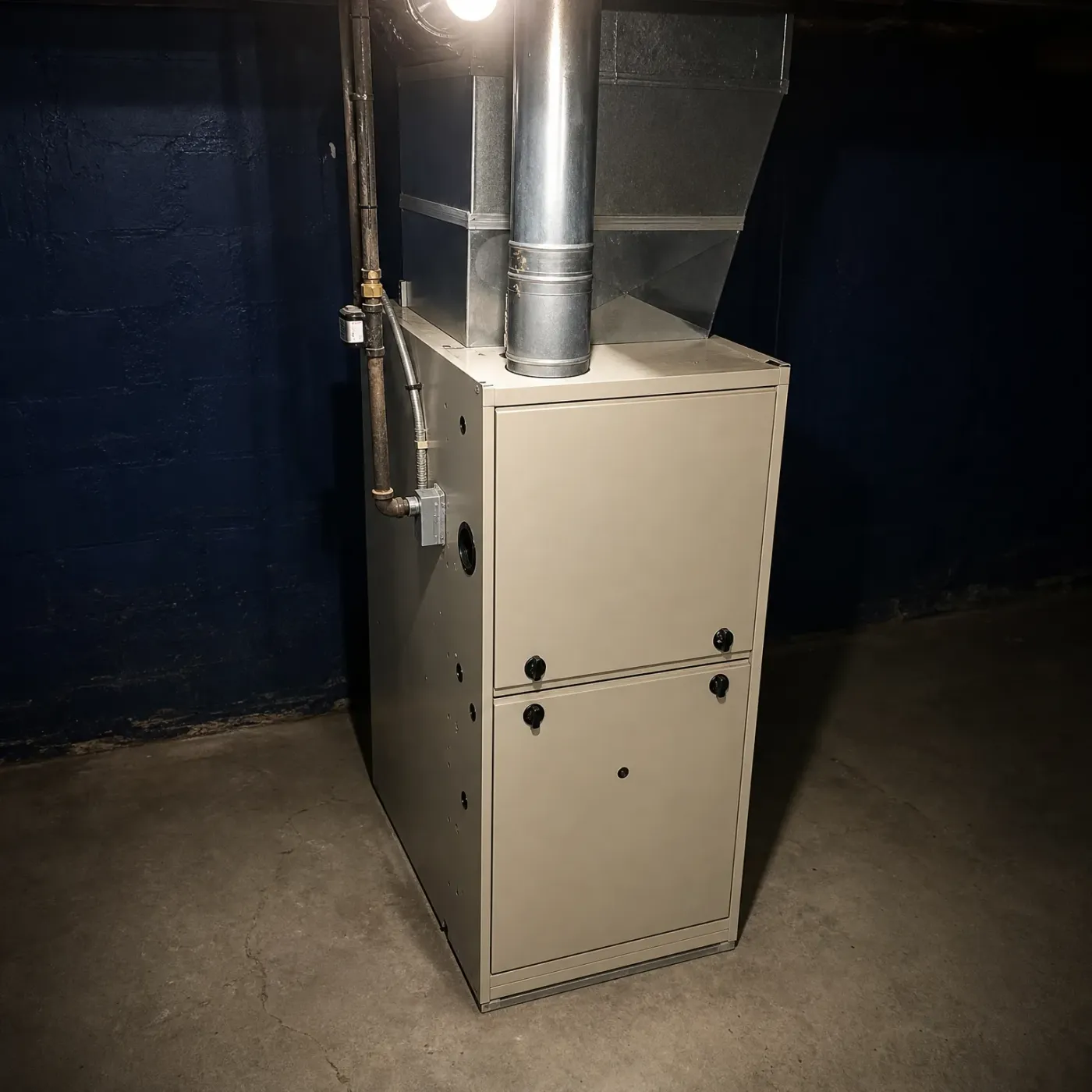
A beige residential furnace in a basement with a metal flue pipe and sheet-metal ductwork above it, next to a dark blue painted block wall and gas piping, on a concrete floor.

Furnace

To heat your home here$1.33per 100,000 Btu

At Illinois's gas and electricity prices, a gas furnace makes the same heat as a heat pump for at least 37% less.

Btu stands for British thermal unit, the standard measure of heat energy.

Where does a heat pump shine?

  • Covers a long cooling season

    May through September is five months of cooling here. A heat pump handles that whole stretch and then switches over to heat your home once the weather turns.

    A covered porch with blue horizontal siding, a ceiling fan, wicker furniture with blue cushions, potted ferns and a blue cabinet, with a glass of iced tea on a glass-topped wicker table and green trees beyond the railing.
  • Heats and cools in one system

    One machine handles the heat in winter and the cooling in summer. There's no second system to buy or keep up.

    A living room with a beige sofa holding navy and light blue cushions and a blue throw, a wooden coffee table with a mug, bowl, books and white hydrangeas, flanked by table lamps and a bookshelf, in front of a large window overlooking a green garden.
  • No gas line, nothing burning in the house

    It moves heat instead of making it from fire. That means no combustion, no flue and no gas bill for heat.

    A kitchen with a white stone-topped island over navy cabinetry, a stainless kettle on a black cooktop, a wooden open shelf holding bowls, mugs and a potted plant, and a ceramic vase of green flowers beside a woven stool.

Where does a furnace shine?

  • Proven, simple, easy to get serviced

    Parts are easy to find and most repairs are routine. Getting one fixed rarely means waiting on a specialist.

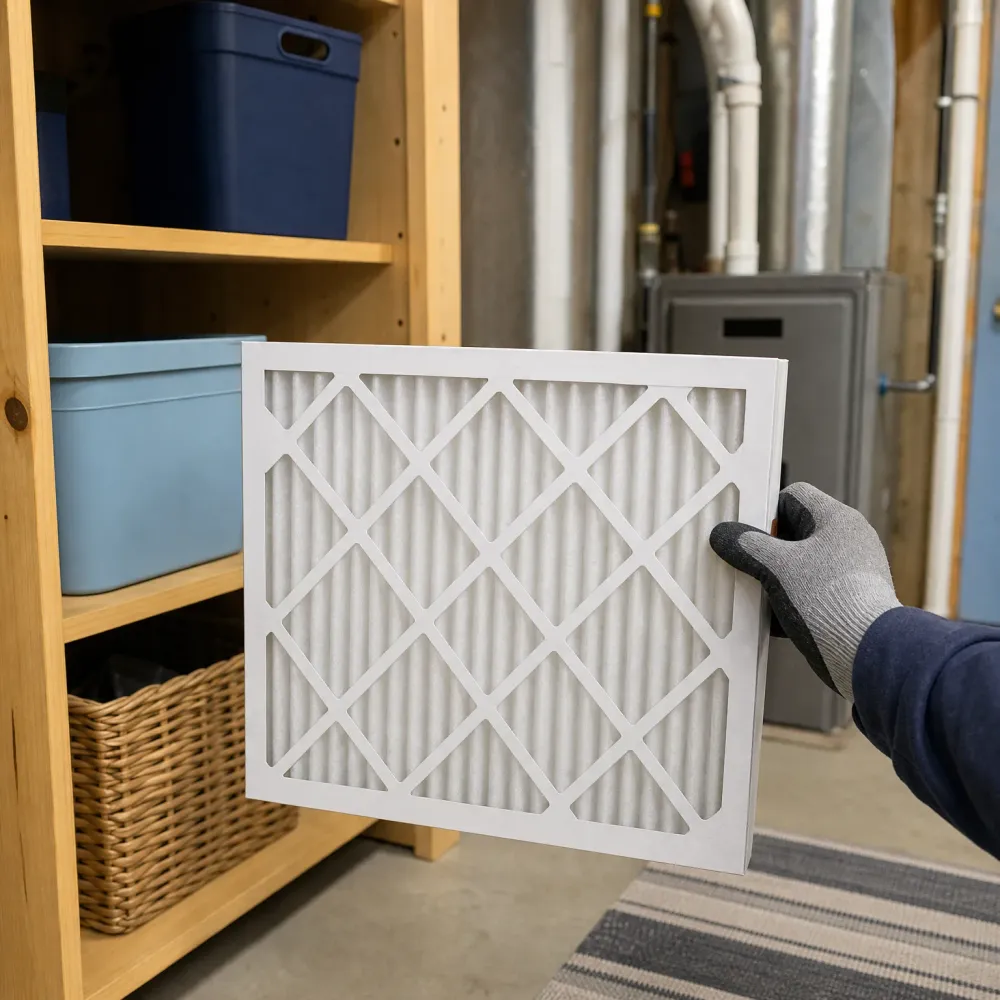
    A gloved hand holds a pleated cardboard-framed air filter in a basement utility area with wooden shelving, storage bins, a wicker basket, and ductwork in the background.
  • Fast, strong heat on demand

    A furnace pushes out hot air within minutes of switching on. A cold house warms up fast.

    An entryway with a navy door, sheer curtain, coats and a tote bag on hooks, a wooden bench with cushion and steaming mug, wicker baskets beneath, a blue fringed throw, and snow-dusted boots on a dark rug over tile.
  • Pairs with any central AC

    A furnace's blower and ducts carry cooled air too. Adding central AC uses the same system.

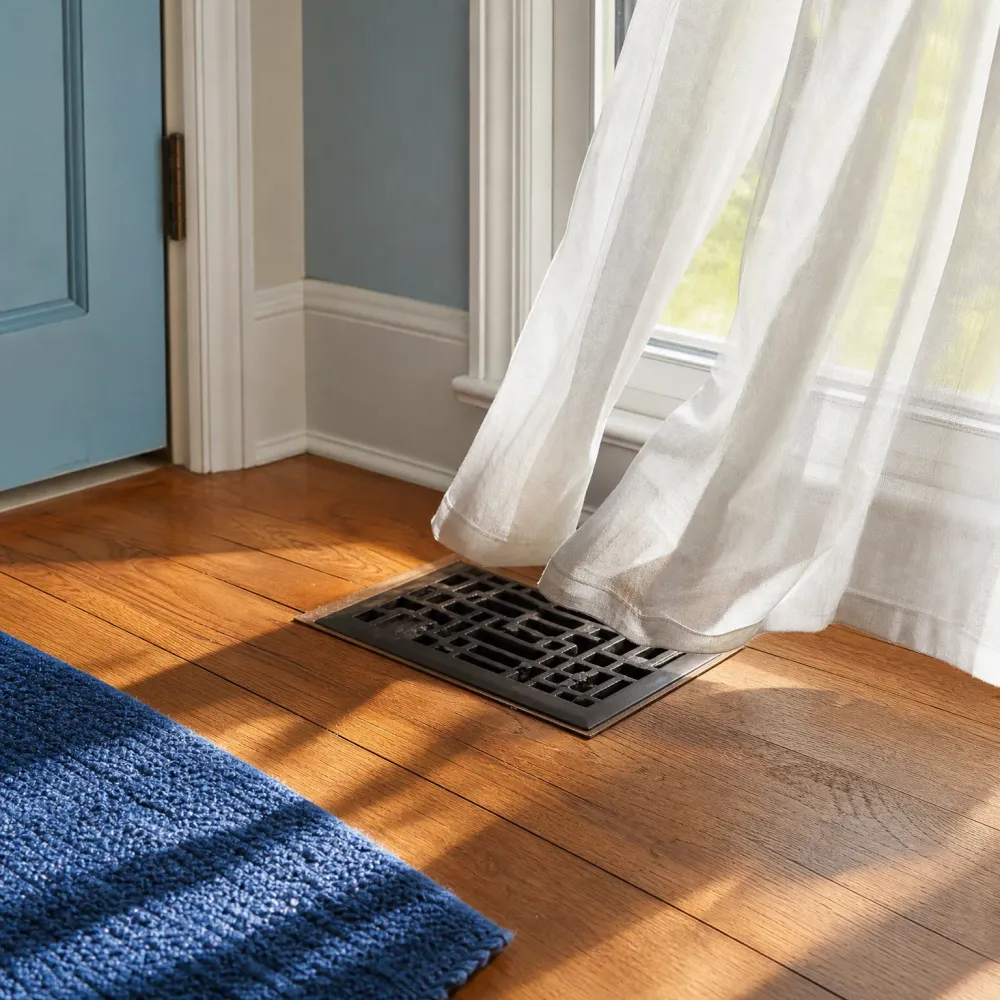
    A dark metal floor register vent set into hardwood flooring near a window with sheer white curtains, with a blue rug in the foreground and a blue door at left.

What winter here does to a heat pump

Your winter low here averages 26°F, and that is the number that decides this choice. A standard heat pump starts falling short of its rated heat below 40°F, and below about 35°F it usually needs backup heat to make up the difference. Your average night is below both marks. That is not a cold snap, that is a normal Tuesday in January.

About 105 nights a year here drop to freezing or below, roughly half the nights across the seven months your heat runs. On those nights a standard heat pump is leaning on backup heat to keep the house warm, and backup heat is almost always electric resistance, the most expensive heat there is. Only about 2 nights a year here reach 0°F, so the deep cold is rare, but the freezing nights that trigger backup heat are not rare at all. Half the heating season qualifies.

A cold-climate heat pump changes this math. To earn that label a unit has to keep making real heat down to 5°F, at least 1.75 units of heat for every unit of electricity, and hold onto most of its capacity at 47°F even at that temperature, tested by someone other than the company selling it. Field tests back this up: in occupied homes running prototype cold-climate heat pumps, backup heat covered only a small share of the load between 0°F and 35°F, and the system almost never ran on backup alone above 0°F. If a heat pump is the choice here, that distinction, standard or cold-climate, matters more than any other spec on the sheet.
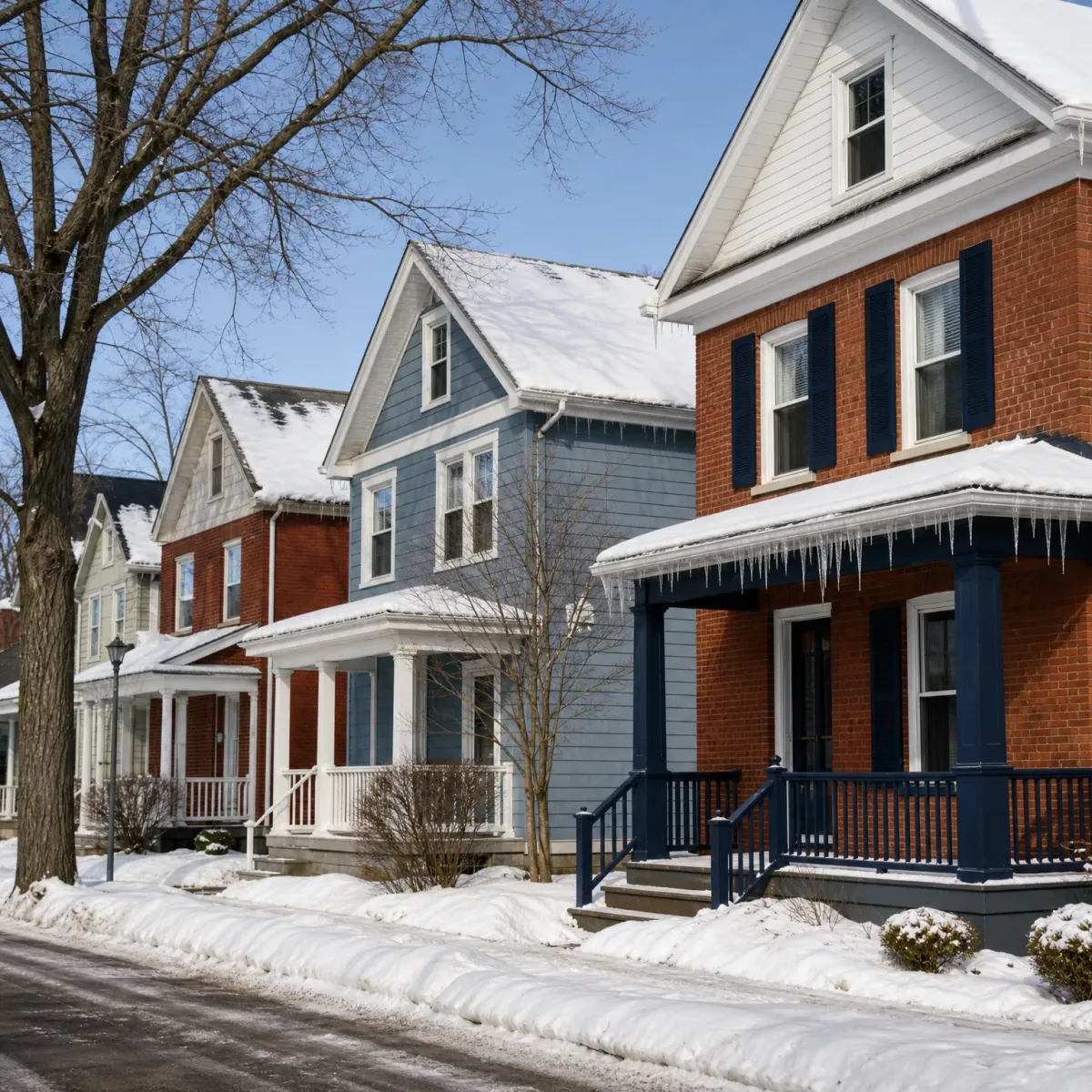
A row of two-story houses with brick and blue siding facades, covered porches and icicles along the eaves, beside a plowed street with snowbanks under a clear blue sky.

What it costs to run, and what that means for your choice

A gas furnace is cheaper to run here. At Illinois's current prices, a furnace built to the federal minimum makes the same heat for $1.33 per 100,000 Btu against $2.12 for a heat pump built to its federal minimum, over a third less. That gap is before backup heat gets added in on the standard heat pump's coldest nights, so on paper it understates what a standard heat pump costs you here.

Gas heats about one in three homes in this county, electricity about two in five, and propane about one in five. No single setup is the default here the way gas is in most of the state, so whichever system is already in your house is not a strong guide to what you should install next.

Your cooling season runs five months, May through September, against seven months of heat. A heat pump handles both in one system, no second unit for air conditioning. A furnace only makes heat, so it sits idle those five months while something else cools the house. If you are choosing a furnace, you are also choosing a separate AC system to pair with it. If you are choosing a heat pump, make it a cold-climate one. Anything less is asking a machine to do its hardest work on the nights it is weakest, and half your winter nights here are exactly those nights.

Sources: NOAA nClimDiv · NOAA 1991–2020 seasonal normals · EIA SEDS 2024 · 10 CFR 430.32 · PNNL Building America guide · PNNL-37127 field study · ENERGY STAR product criteria · Census ACS 2020–2024

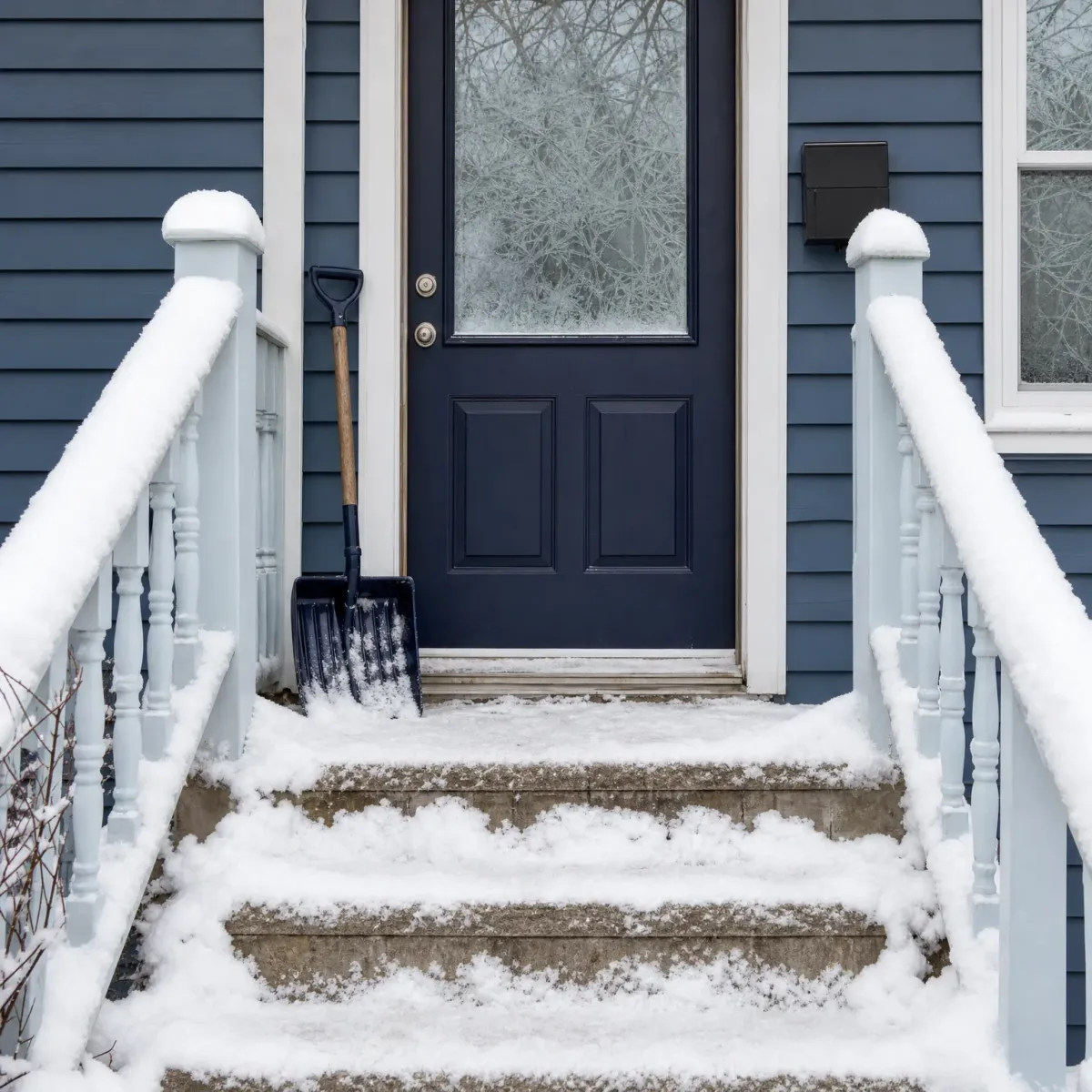
Snow-covered concrete steps and white railings lead to a dark blue front door on a blue clapboard house, with a snow shovel leaning beside the door.

Common questions about heat pumps and furnaces

  • Can I keep my furnace and add a heat pump?

    Yes, and in Jefferson County it's worth planning for from the start. A heat pump covers your cooling, May through September, and carries the heating load in milder weather. The furnace stays in place to take over on the roughly 105 nights a year here that drop to freezing or below, when a standard heat pump's output falls off.

  • What if my house doesn't have a gas line?

    Without a gas line your real choice is a heat pump, electric resistance heat, or a furnace burning propane or oil. A heat pump costs less to run than electric resistance heat in any weather, since it moves heat rather than generating it directly. Propane cost Illinois homes $19.96 per million Btu in 2024, almost double natural gas, so a heat pump is also worth weighing against a propane furnace here.

  • What if my house heats with oil or propane?

    About one in five homes here heat with propane, and oil or propane furnaces work the same way a gas furnace does, burning fuel for fast, strong heat. Propane ran $19.96 per million Btu in Illinois in 2024, almost twice natural gas's $10.64, so a home on propane stands to gain more from switching to a heat pump than one already on natural gas. A heat pump replacing propane heat would still need backup for the coldest nights, the same as one replacing gas.

  • Is a heat pump cheaper to run than a furnace in Jefferson County?

    No, a gas furnace costs less to run here. Illinois's prices put a furnace at $1.33 per 100,000 Btu of heat against $2.12 for a heat pump, both built to federal minimums. A heat pump also loses heating capacity below 40°F, which is most nights here, so the gap in what you'd actually pay runs wider than those two numbers alone suggest.

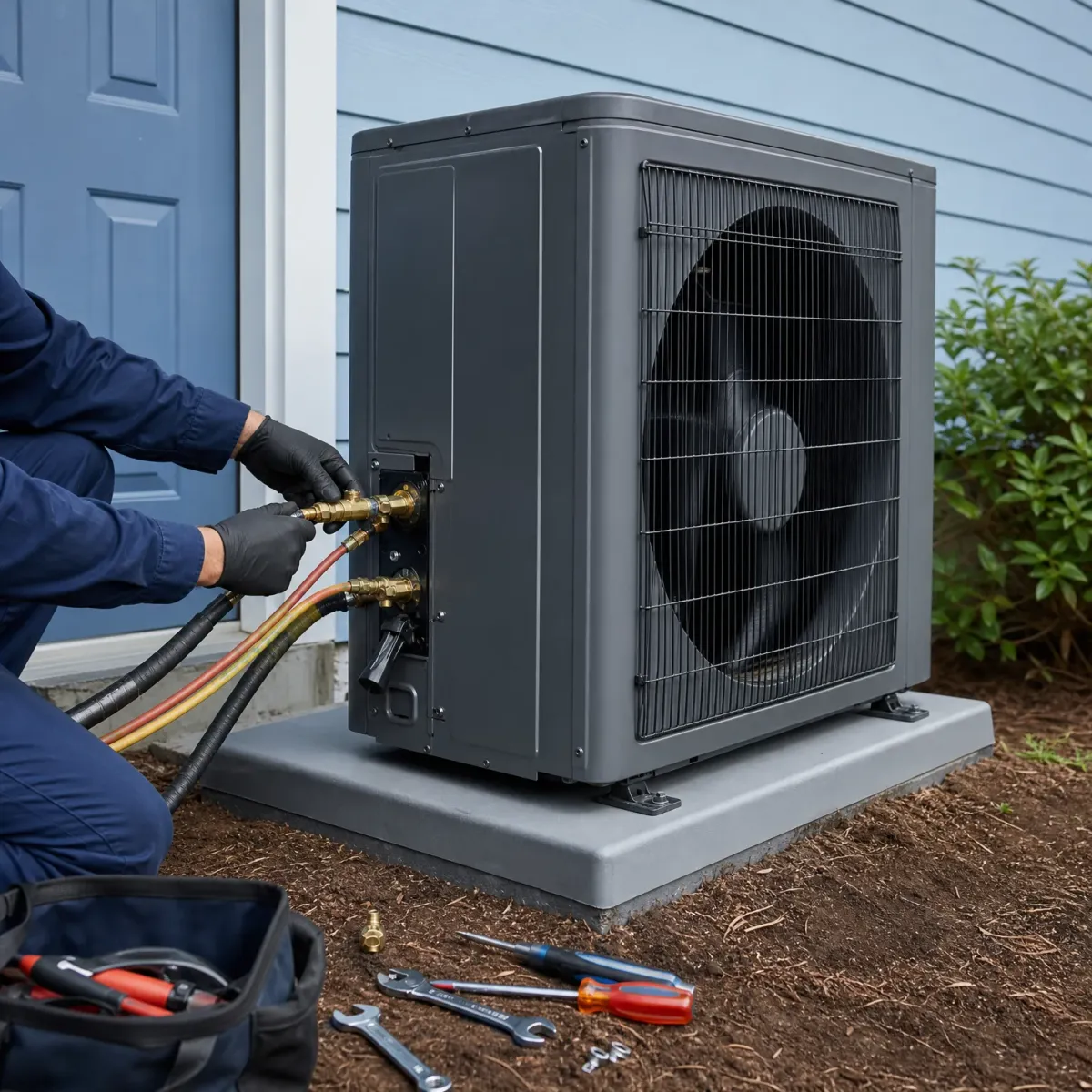
A person in dark blue coveralls and black gloves connects gauge hoses to the brass service valves of a gray outdoor condenser unit on a concrete pad beside a blue-sided house, with wrenches and screwdrivers lying on the soil in the foreground.

Tell us about the job

Takes about a minute. No obligation.

Step 1 of 3: Equipment