





A row of dark-painted single-story houses with gabled shingle roofs behind a trimmed hedge and mown lawn, surrounded by large leafy trees under an overcast sky.

Heat Pump Installation in Mount Vernon, IL

Tell us about the job

Takes about a minute. No obligation.

Step 1 of 3: Equipment

Electricity in Jefferson County runs 17.36 cents per kilowatt-hour on average, and that is higher than in most US counties. A heat pump here draws power for both sides of the job, cooling through a sticky summer and heating through a cold winter. There's no gas bill to split the load. Every kilowatt it uses shows up on one bill, at a rate that's already above what most of the country pays. That makes the efficiency of the unit itself worth more here than somewhere with cheaper power. A system that uses less to do the same job keeps more of that difference in your pocket, month after month.

7 months
October through April, your system heats
5 months
May through September, it cools
26°F
the average winter night it heats against
86°F
the average summer afternoon it cools against
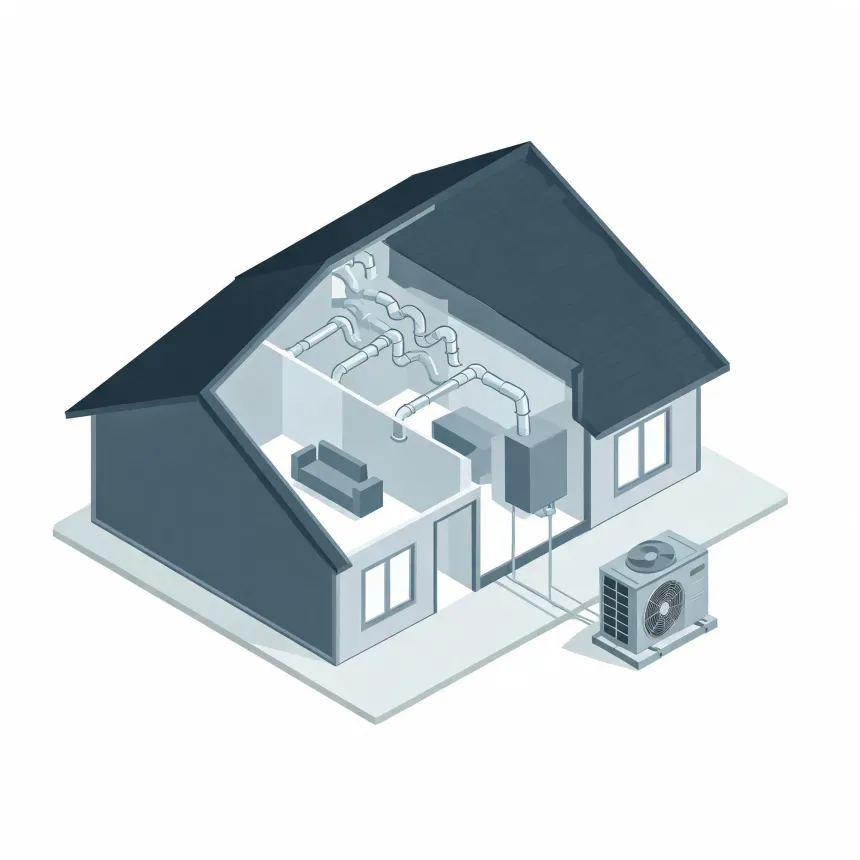
Isometric cutaway illustration of a house showing interior ductwork, an indoor air handler unit, and an outdoor condenser unit beside the building.
Your system heats October through April and cools May through September.

NOAA nClimDiv, 1991–2020 normals

The old system doesn't get left in place as a backup.

Pulling the furnace or AC unit out fully is part of the installation job, not an afterthought.

Most homes here already run on electric heat, so a heat pump fits the wiring that's already there

40.2% of homes heat with electricity
Climate zone 4A
Power here costs 17.36 cents per kilowatt-hour
Get It In Before OctoberHeat here runs October through April, so a heat pump installed in September is working from day one, not day fifty.

Jefferson County falls under zone 4A, a mixed climate that asks real work of a system in both directions, humid summers and cold winters alike. Any split-system heat pump installed here has to meet the federal minimum for that split: at least 14.3 Btu of cooling delivered for every watt-hour it draws, and at least 7.5 Btu of heating for every watt-hour in winter. That standard applies to what gets manufactured and installed, not to equipment already running in a home. It sets a floor, not a ceiling. Given what power costs here, a unit that only meets the minimum still costs more to run than one built past it.

The efficiency you pick now is what you pay for later

Pick a system rated well past the minimum and the difference shows up on the bill every month it runs, not just once. Get the install scheduled and that saving starts from the first hot or cold day it works.

Find a contractor
A man in a dark T-shirt, brown work pants, boots and a cap, seen from behind, climbs concrete steps toward a dark blue front door while carrying a worn canvas tool bag, with a potted shrub beside the entry.
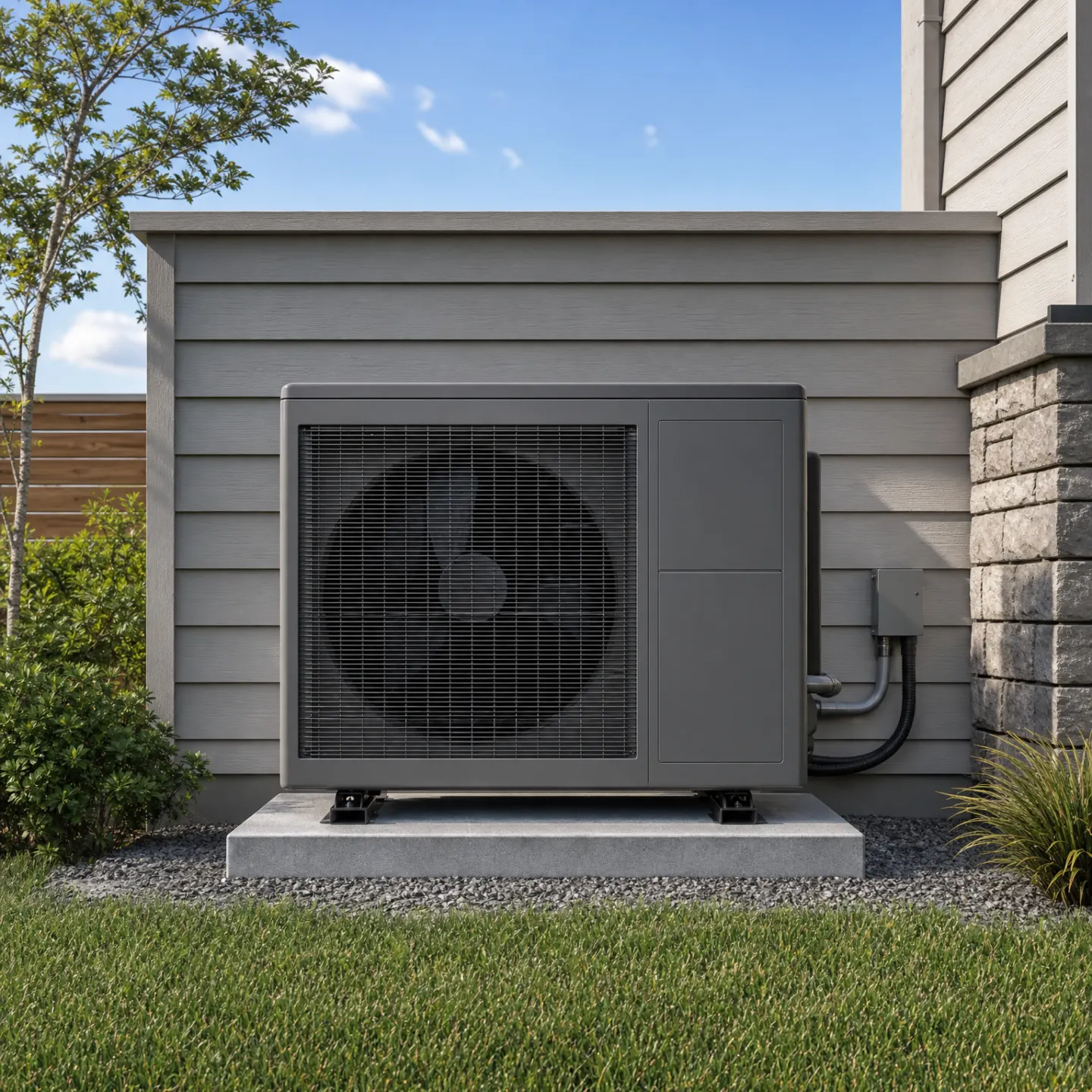
A gray heat pump outdoor unit mounted on a concrete pad next to a residential house with lap siding and stone accents.

Sizing Is Math, Not a Guess

Sizing a heat pump isn't about matching tonnage to square footage, or at least not only that. The right size comes from a load calculation, a room-by-room look at how much heat the house gains in summer and loses in winter. That means window area and orientation, insulation levels, ceiling height, air leakage, even how many people live there and what appliances run. Skip that work and guess instead, and you get a system that fights the house instead of matching it. Too big, and the unit short cycles, blasting the space to temperature and shutting off before it ever runs long enough to pull moisture out of the air. A house can end up cold and clammy at the same time. Too small, and it runs flat out on the coldest and hottest days and never quite catches up, with the backup heat strip picking up slack it shouldn't have to carry. Either way the compressor wears faster, cycling on and off more than it was built for, or straining against a load it can't meet. A unit sized right runs longer, steadier cycles, which is exactly what keeps both temperature and humidity in check. The load calculation is the part of the job that happens before anyone talks equipment, and it's worth asking whether one was actually done for your house, not just assumed from the system you're replacing.

What the Equipment Costs You Up Front

The compressor is the biggest single cost in the unit, and the stage it runs matters. A single-stage compressor runs flat out or not at all. A two-stage or variable-speed compressor can throttle down and run longer at lower output, which costs more to buy but less to maintain that strain. The outdoor coil, the indoor coil, the refrigerant lines sized for the distance between them, all of that is part of the equipment price before labor even enters the picture.
What the Job Itself Costs

Labor is driven by what the house already has. If the ductwork fits the new system's airflow, the crew connects to it. If it doesn't, modifying or replacing duct runs adds real time on site. Electrical work is its own line item too. A heat pump needs a dedicated circuit sized for its draw, and if the panel doesn't have room or the existing wiring doesn't match what the new unit needs, that gets resolved before the system ever runs.

Comparing two systems on price alone misses most of what decides which one is worth buying. Ask for the heating and cooling capacity at the actual outdoor temperatures the unit will see on the coldest and hottest days, not just the rated number at mild conditions. Some heat pumps lose real heating output as it gets colder outside, and lean harder on backup heat strips to make up the difference. Ask how the compressor stages, whether it runs at one speed or can throttle down and hold a lower output for longer periods, since that affects both comfort and wear. Ask what the warranty actually covers, parts versus labor, and for how many years, since a compressor or coil failure outside that window is a real cost. Ask whether the quote includes a load calculation specific to the house or whether the size was carried over from the old system. The unit with the lower price and the unit with the lower cost to run are not always the same machine.

Install day starts with the old equipment coming out, not the new one going in. Refrigerant gets recovered from the old system before anything is disconnected, since it can't just vent into the air. Once the outdoor unit and indoor coil are out, the crew runs new line set between the new outdoor unit and the new air handler or coil, sized for that equipment. The electrical work usually happens in the middle of the day, tying in the dedicated circuit and disconnect the outdoor unit needs. After that comes evacuating the line set with a vacuum pump to pull out moisture and air before any refrigerant goes in, because trapped moisture will corrode the system from the inside over time. Then the unit gets charged, powered up, and run through its paces: checking airflow at the vents, checking the temperature split between return and supply air, and listening for anything that sounds wrong before the crew calls it done.