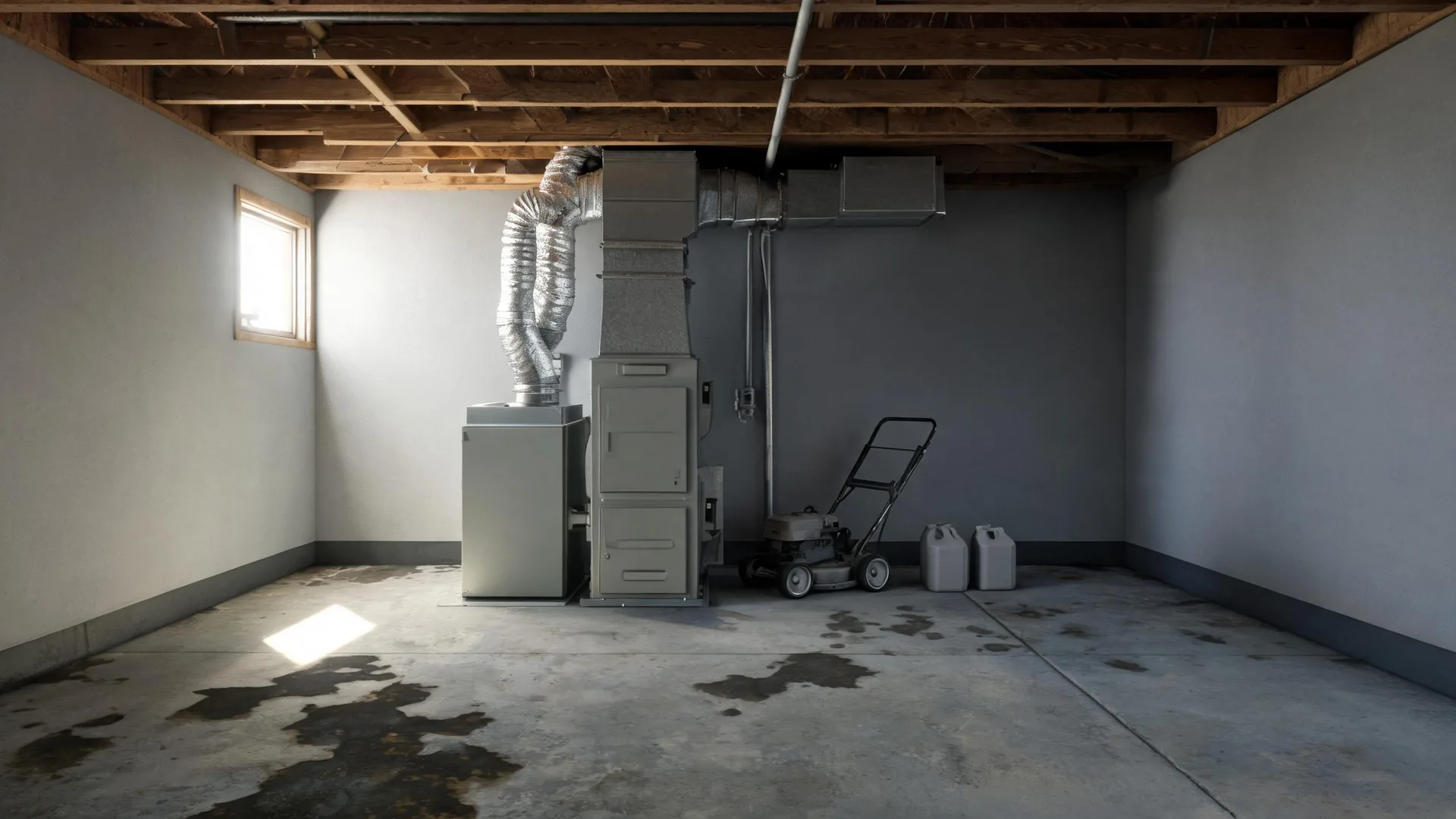
A nighttime view of a tree-lined residential street with illuminated two-story brick houses and street lamps.

Furnace Repair in Mount Vernon, IL

Tell us about the job

Takes about a minute. No obligation.

Step 1 of 3: Equipment

Seven months of real work

A furnace in Jefferson County runs from October through April. Overnight lows average 26°F through December, January and February. That is a normal winter workload, nothing extreme. It just means the furnace is the thing standing between the house and a cold night more often than not.

Most problems have a usual cause

A furnace that short cycles, won't light, or blows cold air is usually dealing with something a tech sees all the time. A dirty flame sensor. A failed igniter. A clogged filter choking off airflow. Finding which one it is matters more than guessing at a fix.

7 months
October through April, your furnace is on duty
26°F
the average winter night it heats against
11 winter storms
in ten years, the nights a failure hurts most
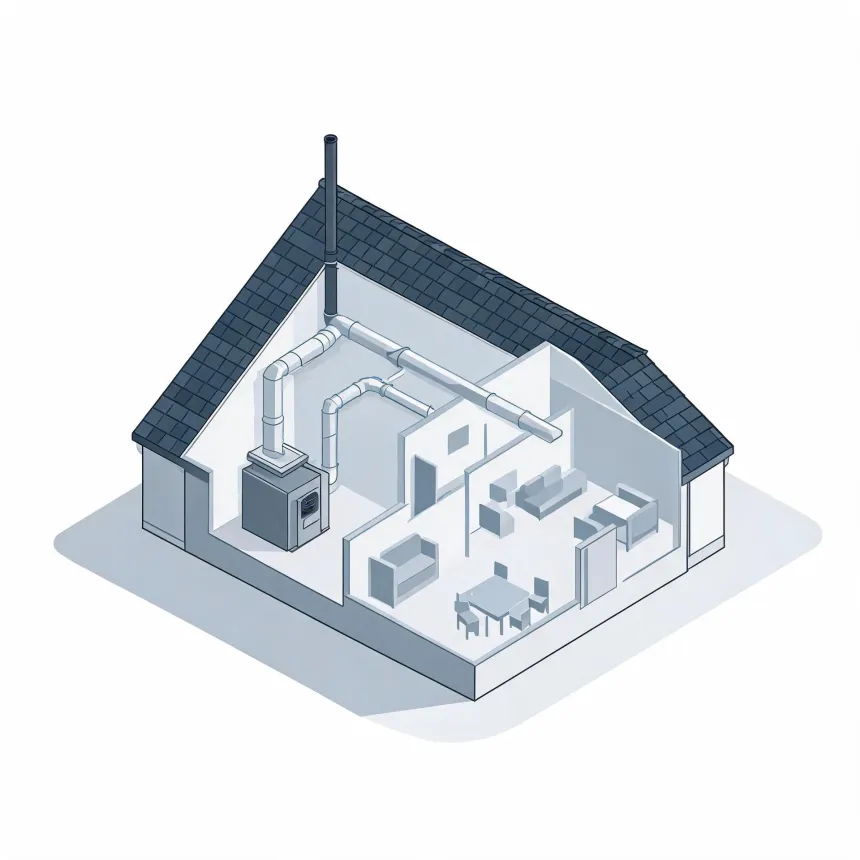
Isometric cutaway illustration of a house with a shingled gable roof, showing a gray furnace unit connected to overhead ductwork and a chimney flue, with simplified furniture in the rooms below.
Your furnace works hardest from November through March.

NOAA nClimDiv, 1991–2020 normals

Furnaces in Jefferson County start running in October.

A part that was already weak often fails in the first cold weeks, so a September checkup catches it before it quits.

At 26 cents more than the national average, a furnace running badly here runs up the bill every month it's ignored

Heat runs October through April
Winter nights average 26°F
Climate zone 4A

Get the usual fix

Nothing about this area is especially hard on it. It's most likely the usual problem with the usual fix.

Find a contractor
A gray gas furnace with attached ductwork and piping installed in an unfinished concrete basement.

What to check before you call

Check the thermostat first. Make sure it's set to heat and the target temperature is above room temperature. If it runs on batteries, swap them before you assume anything else is wrong. Pull the filter and hold it up to a light. If light doesn't pass through, it's choking the airflow, and that alone can cause short cycling or a safety shutoff. Find the furnace switch near the unit. It looks like a regular light switch, and it gets bumped off more often than people expect. Check the breaker panel too, since a furnace often sits on its own circuit and can trip without touching anything else in the house. If the furnace has a standing pilot, see if it's lit. If it won't stay lit after you follow the relighting steps printed on the panel, stop there and let a tech handle it. Last, look at the vent hood or exhaust pipe where it exits outside. If something is blocking it, the furnace may be shutting itself off on purpose, and that one you can usually clear yourself.

A small crack doesn't stay small

A cracked heat exchanger often starts small, maybe a faint tick or an odd smell when the furnace kicks on. Keep running it and the metal keeps flexing with every heating cycle, and the crack keeps opening wider. What could have been caught early turns into a full exchanger replacement instead of a simple repair.

A shutdown is the furnace protecting itself

A dirty flame sensor or a limit switch that won't reset makes the furnace cut out on purpose. That's the safety control doing its job. Bypassing it or forcing a restart doesn't fix what tripped it, and running the furnace in that state tends to damage whatever part is downstream of the one already failing.

Most furnace failures come down to a handful of parts that wear out doing the same job over and over. The igniter glows hot every time the furnace calls for heat, and after enough cycles the element gets brittle and breaks, same as a light bulb filament. The flame sensor sits right in the burner flame and slowly collects a film from normal combustion, until it can't tell the control board a flame is there at all. Blower motor bearings wear down from spinning for months straight, and you'll usually hear that before anything stops working. Capacitors that help start the blower motor weaken with age and heat, and a weak one makes the motor struggle to start or run. None of these fail because of bad luck. They fail because they have a wear point, and a furnace that runs every day for months gets there eventually.

A diagnostic visit starts before any panel comes off. A tech asks what the furnace was doing right before it acted up, short cycling, no heat, a burning smell, whatever it was. Then it's a sequence, not a guess. Power and gas supply first, then the thermostat call, then the ignition sequence itself, watching whether the igniter glows, whether the flame sensor picks up a flame, whether the gas valve opens when it should. Each step either passes or it doesn't, and wherever it stops is usually the answer. A tech checks the filter and airflow too, since a choked filter can mimic other failures and throw off where the real problem looks like it's coming from. Only after the cause is confirmed does the conversation turn to fixing it.