A two-story black-clad house with a covered porch behind a trimmed hedge, photographed from ground level across a blurred lawn, with large green trees and a neighboring gray house nearby under an overcast sky.

Heat Pump Repair in Mount Vernon, IL

Tell us about the job

Takes about a minute. No obligation.

Step 1 of 3: Equipment

April is when a weak heat pump shows itself

Homes in Jefferson County switch over to cooling in May, and the first hot stretch is what finds a capacitor or a contactor that was already going. If your heat pump is struggling now, it was likely headed there anyway.

Get it looked at before October

The same system switches back to heat in October and carries the house through winter, all the way to April. A repair now means it's not getting diagnosed for the first time on a cold morning.

7 months
October through April, your system heats
5 months
May through September, it cools
26°F
the average winter night it heats against
86°F
the average summer afternoon it cools against
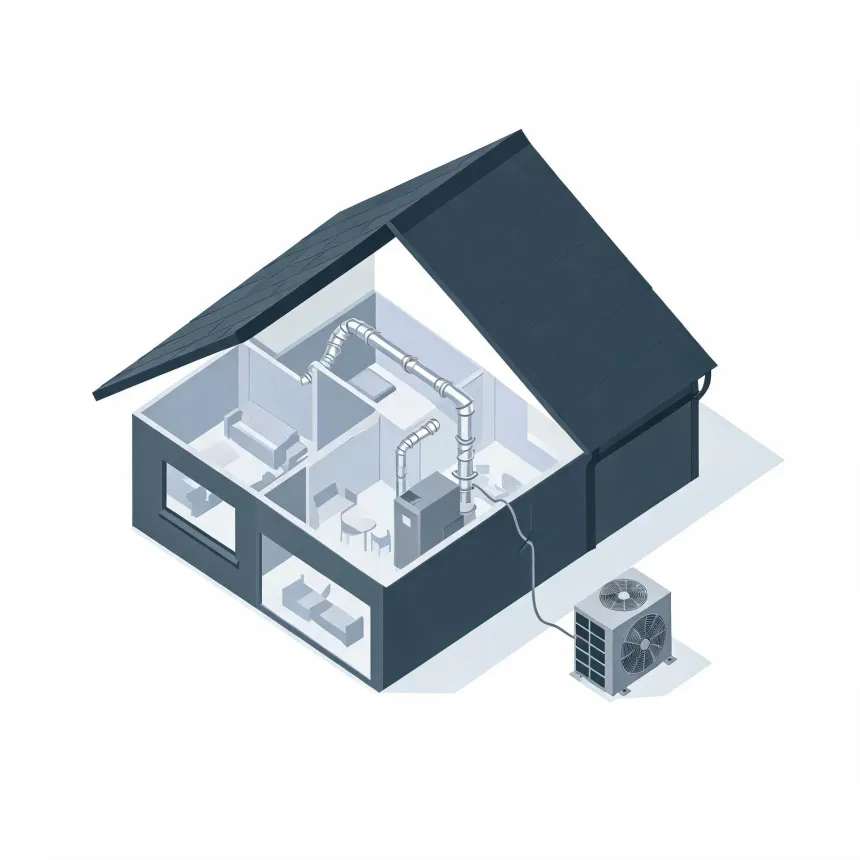
Isometric illustration of a cutaway house showing interior rooms with furniture, a furnace and ductwork, connected by a line to an outdoor condenser unit on the ground outside.
Your system heats October through April and cools May through September.

NOAA nClimDiv, 1991–2020 normals

Winter lows here average 26°F, not far below freezing, and summers run mixed rather than brutal.

Your heat pump isn't fighting extremes every day, so a unit in decent shape is usually worth repairing rather than replacing.

At 15.87 cents a kilowatt-hour, a heat pump running wrong is a cost you feel every month

Power costs 15.87 cents a kWh statewide
71 damaging wind events from 2015 to 2024
Winter nights average 26°F
Heat pump repair in Jefferson CountyHalf the homes in Jefferson County were built in 1977 or earlier, and that's not what's wrong with your heat pump

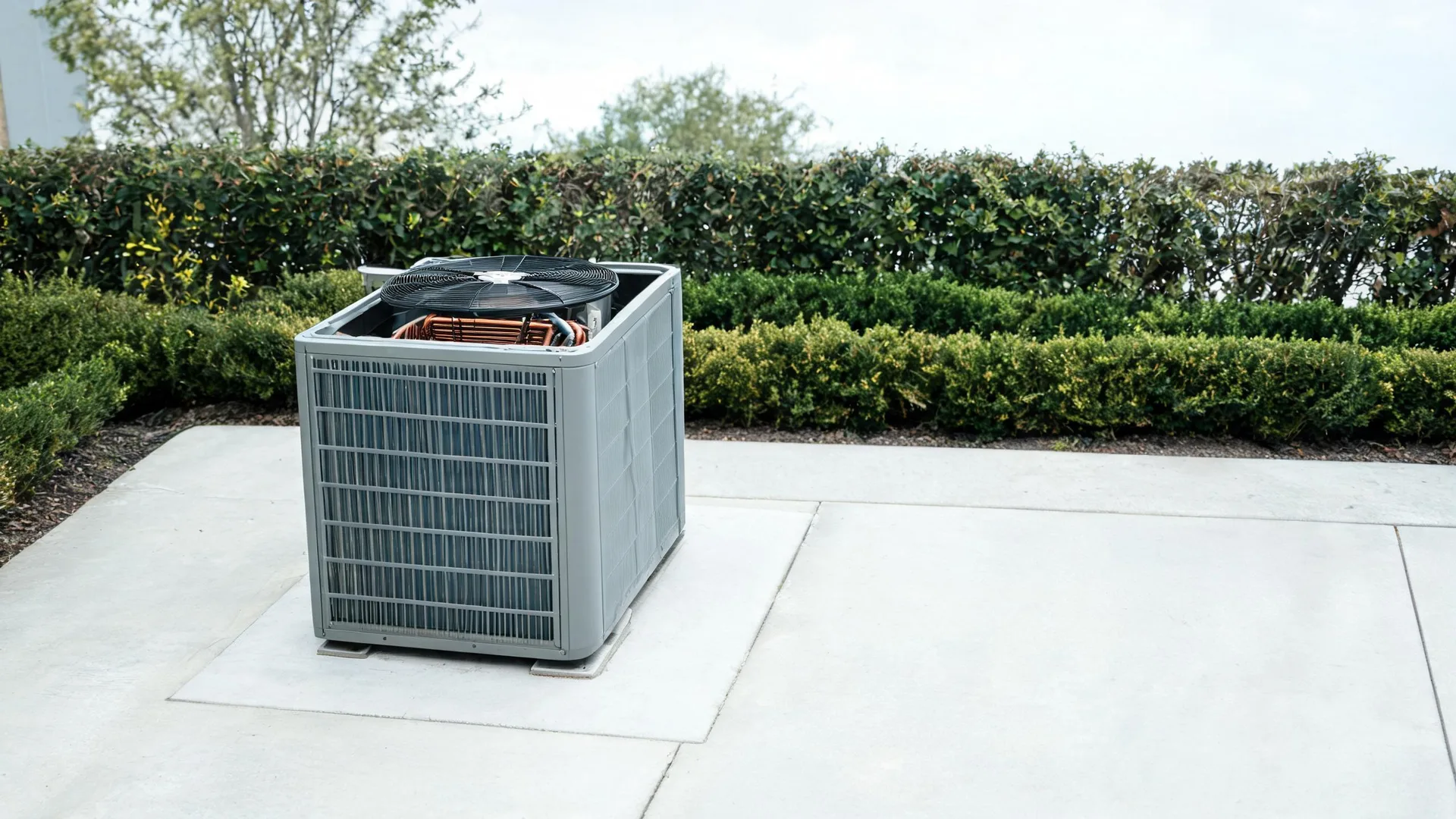
A heat pump that's struggling usually tells you before it fails outright. Short cycling is one of the first signs, the system kicking on and off in quick bursts instead of running a full, steady cycle. Ice building up on the outdoor unit and not clearing during the defrost cycle is another. Warm air blowing when it should be cooling, or cool air when it should be heating, often points to a problem with the reversing valve. Listen for it too. A hum without the fan starting, or a clatter from the outdoor unit, usually means a failing capacitor or a motor on its way out. If the system runs constantly but the house never quite reaches the set temperature, it's working harder than it should and losing that fight.

The longer it runs wrong, the more it costs

A heat pump that's cycling wrong or icing up doesn't correct itself, and at 15.87 cents a kilowatt-hour it's billing you every day it runs that way. Get the real cause found now.

Find a contractor
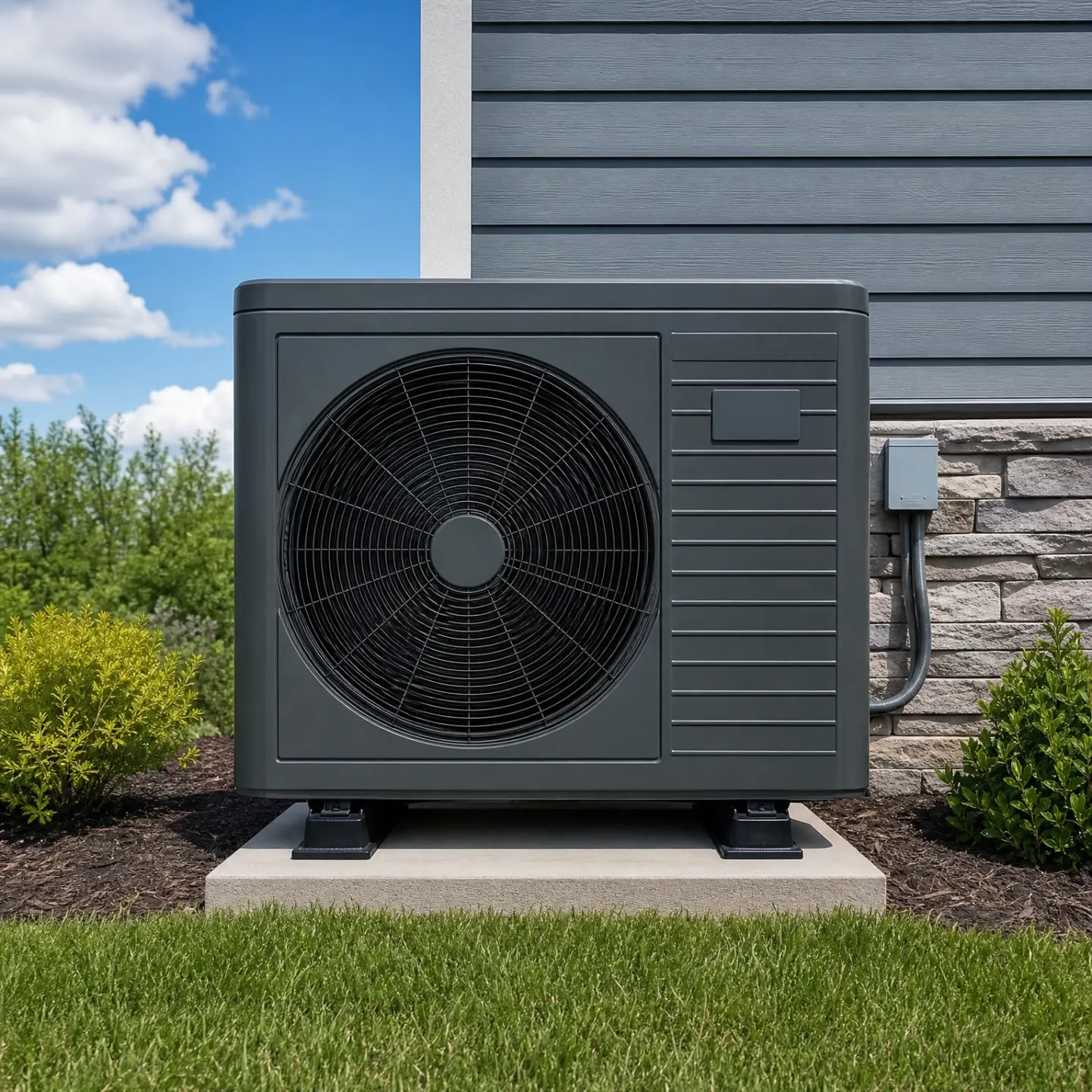
A dark gray heat pump unit mounted on a concrete pad next to a house with gray siding and a stone veneer wall.

What to check yourself before the call

Before anyone comes out, go outside and look at the unit. If the outdoor coil is caked in ice, that's useful to know and worth mentioning on the phone. Check the air filter too. A filter clogged with dust chokes airflow and can make a heat pump freeze up or run constantly without it being a sign of anything else wrong. Look at the thermostat setting and make sure no one bumped it, and check that the breaker for the outdoor unit hasn't tripped. If you have an emergency or auxiliary heat setting, note whether the system switches to it on its own, since that's something a tech will want to know. Don't chip ice off the coil or hose it down. Let it thaw on its own and leave the panels on the unit alone. None of this fixes a bad capacitor or a stuck reversing valve, but it rules out the easy stuff first.

The reversing valve is the part unique to a heat pump

Everything else in a heat pump is the same as an air conditioner, but the reversing valve is what lets it run backward and pull heat from outside air in winter. It's a solenoid that can stick in one position from age or from debris inside it, and when it does, the system either won't switch over or gets stuck between modes. That's a part a straight AC never has to worry about, and it's a common point of failure here.

Capacitors and contactors wear out on a schedule, not a signal

The capacitor that kicks the compressor and fan motors into motion weakens gradually, through heat and through the sheer number of times it's asked to fire something up. A contactor's contacts pit and burn a little every cycle. Neither gives much warning. One day the system hums and doesn't start, or the outdoor unit doesn't kick on at all, and that's usually the end of a slow decline rather than a sudden one.

Age by itself doesn't tell you whether to fix a heat pump or replace it. What matters is which part failed and what else is showing wear. A bad capacitor or contactor is a straightforward swap, and there's no reason to replace a whole system over one part doing its job of wearing out on schedule. A reversing valve or a compressor is a different question, since both sit at the center of how the system runs and cost more to get at. If a unit has needed a few unrelated repairs over a couple of years, that pattern matters more than any single breakdown. One failed part on a system that's otherwise been fine is just a repair. A system where something new keeps going wrong is telling you it's running out of life, and that's worth weighing against putting more money into it.

A diagnostic visit starts outside at the unit, before any gauges come out. A tech will check for ice on the coil, listen to how the compressor and fan sound on startup, and watch a full cycle if the system will run one. Refrigerant pressures get checked with gauges, since a reading that's off points toward either a leak or a reversing valve that isn't fully seating. The capacitor gets checked under load, not just by eye, because a weak one can still look fine sitting still. The contactor gets inspected for pitting. Inside, the tech checks airflow at the vents and looks at the filter, since restricted airflow can mimic a refrigerant problem and send someone chasing the wrong fix. The goal is to find the one part actually causing the symptom, not to swap parts until something changes.