

Heat pump vs furnace in Winnebago County, Illinois

Price Both Options

Install quotes in Winnebago County

Which costs less to run in Winnebago County?

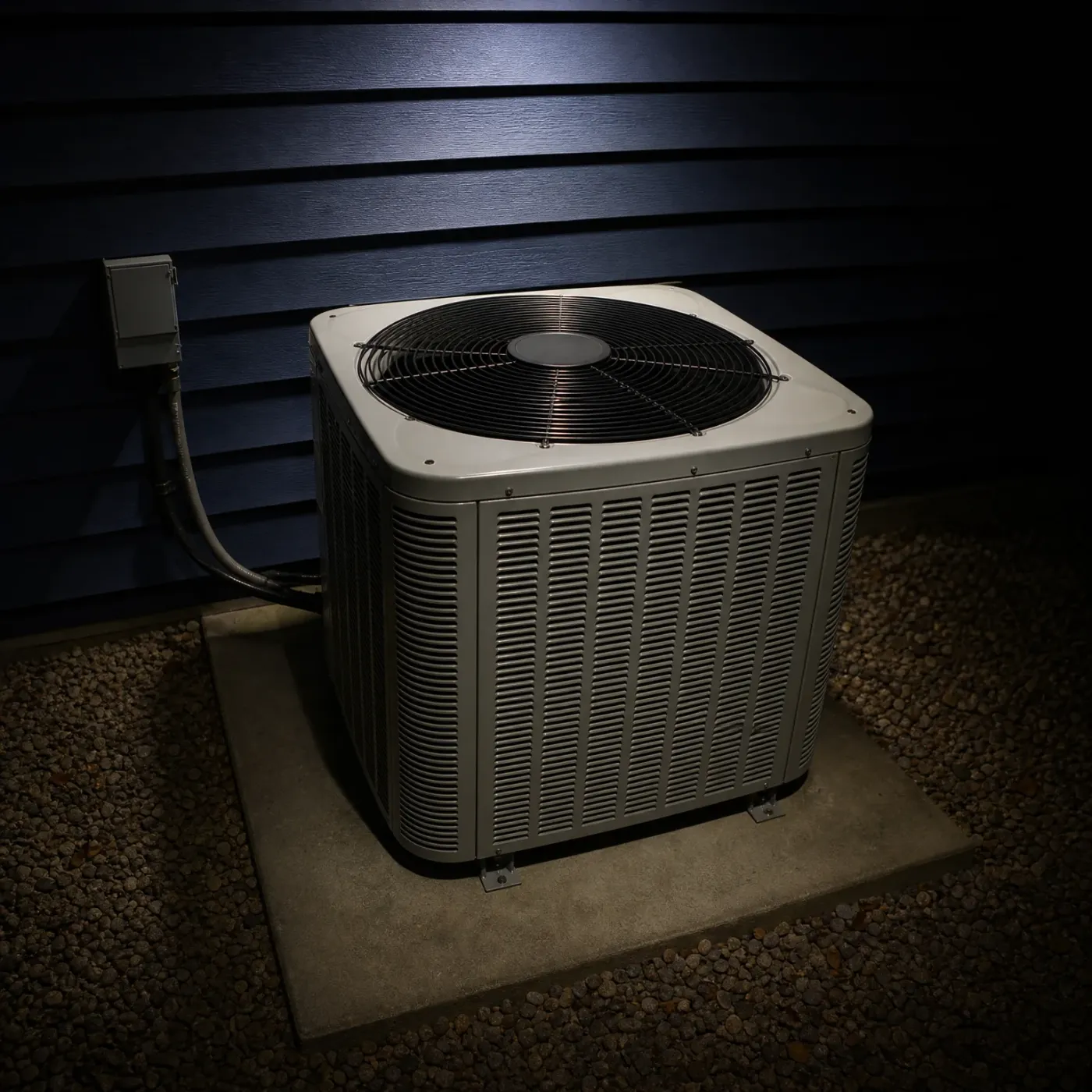
An outdoor air conditioner condenser unit with a top fan grille sits on a concrete pad surrounded by gravel, next to dark horizontal siding with a wall-mounted disconnect box and refrigerant lines.

Heat pump

To heat your home here$2.12per 100,000 Btu

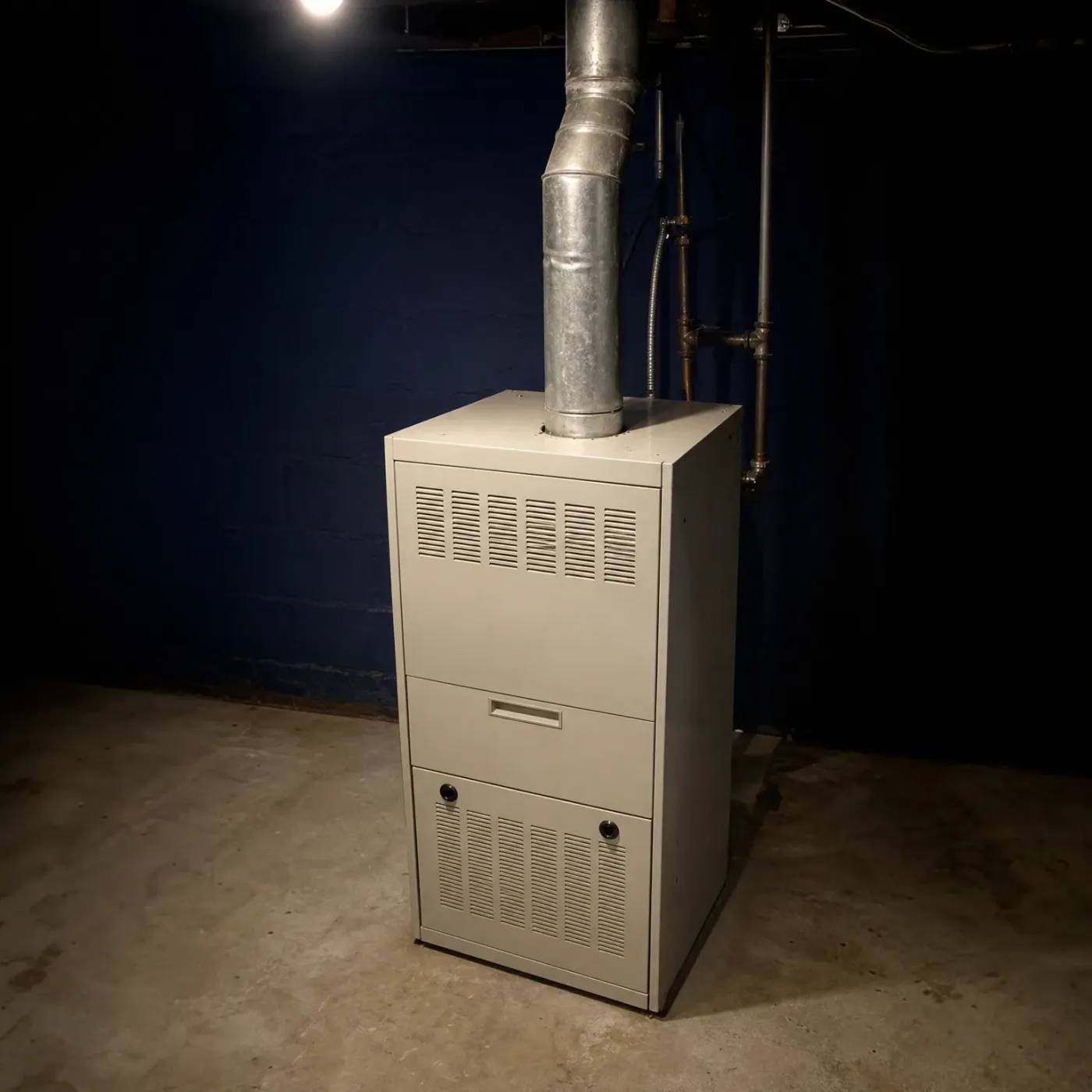
A beige residential furnace with louvered panels stands on a concrete basement floor against a dark blue painted block wall, with a galvanized metal flue pipe rising from its top and copper and steel pipes along the wall.

Furnace

To heat your home here$1.33per 100,000 Btu

At Illinois's gas and electricity prices, a gas furnace makes the same heat as a heat pump for at least 37% less.

Btu stands for British thermal unit, the standard measure of heat energy.

Where does a heat pump shine?

  • No gas line, nothing burning in the house

    A heat pump runs on electricity alone. Nothing burns inside the house.

    A kitchen island with a white countertop holding a black induction cooktop, a stainless steel kettle, a blue mug, a bowl of lemons and a potted plant, with navy cabinets, a wood shelf with plants and books, cutting boards and a blue bowl in the background.
  • Steady, even comfort

    Instead of short bursts of heat, it keeps a gentle, steady output going. The house stays at one comfortable temperature.

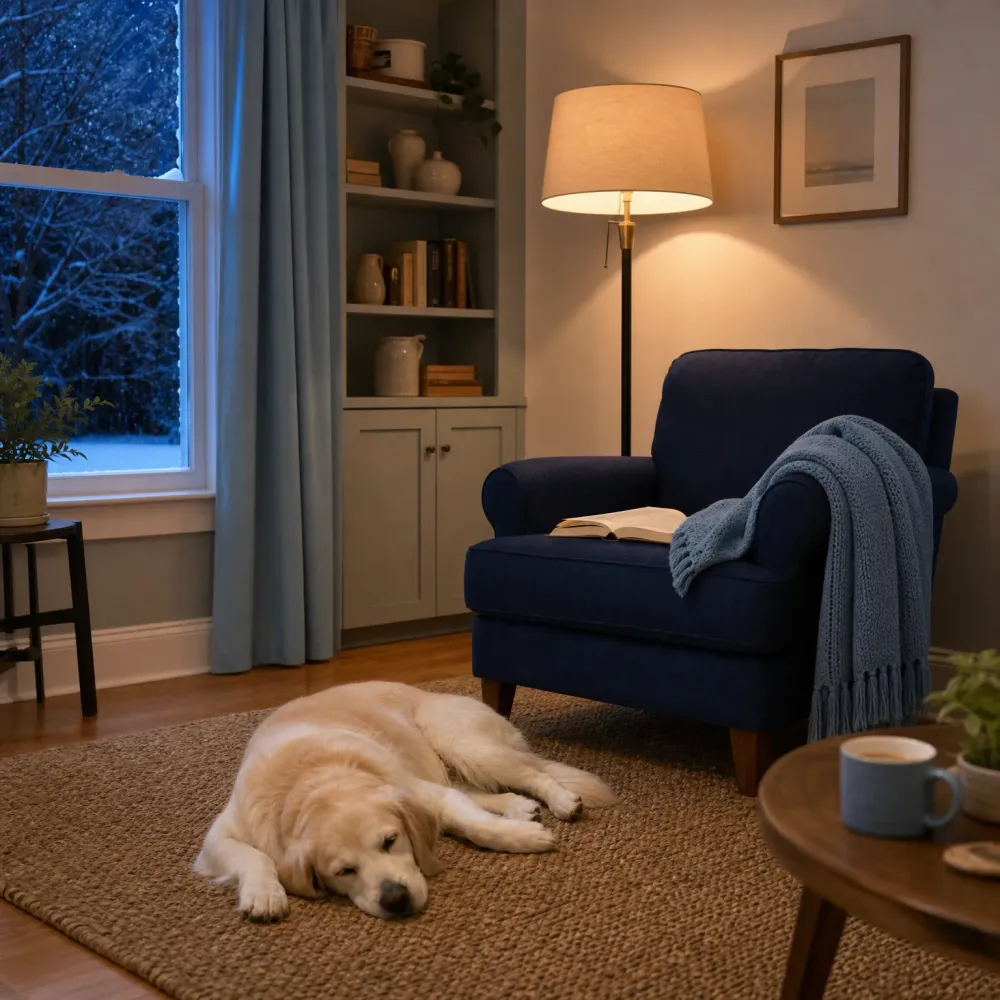
    A light-colored dog sleeps on a woven rug in a dimly lit living room with a navy armchair holding an open book and a knit blanket, a lit floor lamp, built-in shelves, and a window showing snow-covered trees at dusk.
  • Heats and cools in one system

    One machine handles the heat in winter and the cooling in summer. There's no second system to buy or keep up.

    A living room with a light blue sofa and navy cushion in front of a large three-pane window overlooking green trees, with a rustic wood coffee table, woven rug, navy cabinetry and bookshelves, a wall lamp, and potted plants.

Where does a furnace shine?

  • Strong, steady heat in hard cold

    Winnebago County nights average 16°F in December, January and February. A furnace burns gas to make heat on the spot, so it holds its output no matter how cold it gets outside.

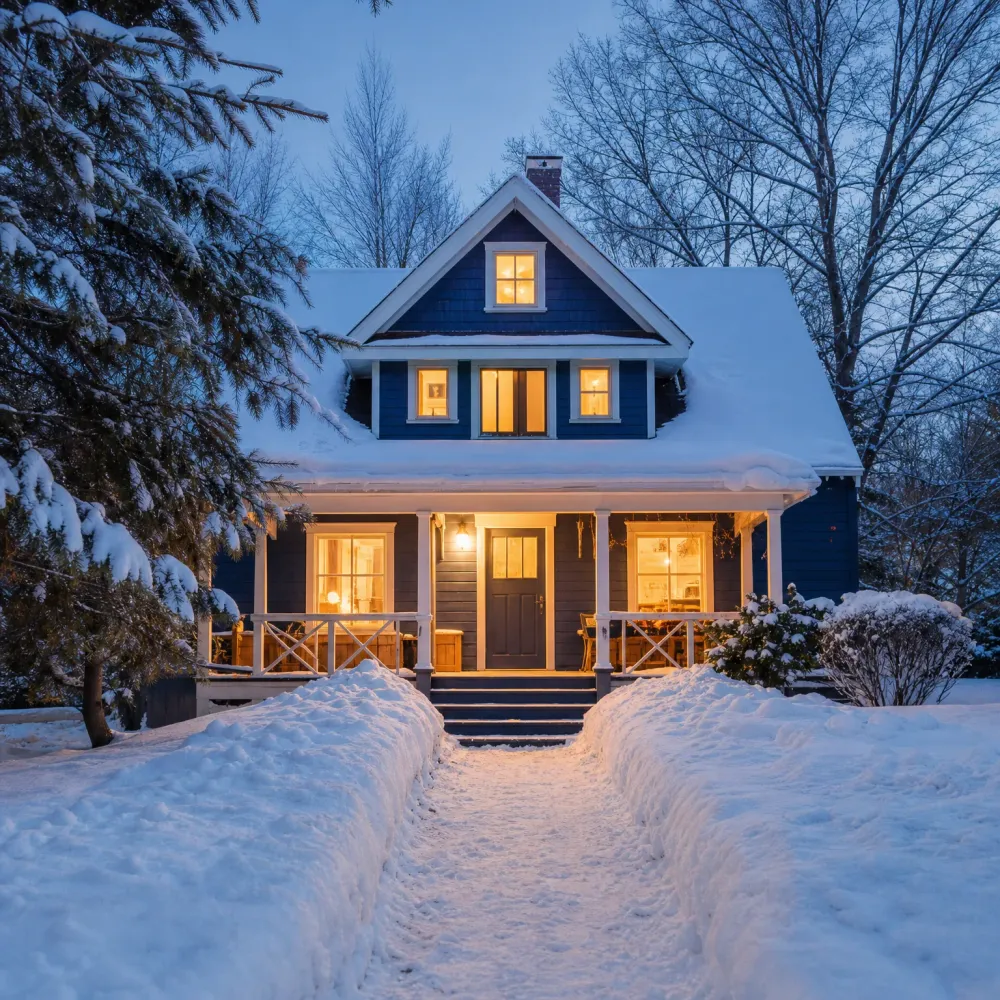
    A two-story dark blue house with white trim, a covered front porch and lit windows at dusk, with snow on the roof and a shoveled path leading to the front steps between snowbanks.
  • Runs on the gas most homes here already use

    Most homes in Winnebago County already have gas line run to them, so a gas furnace just connects to what's there. No new fuel source to add, no separate setup to figure out.

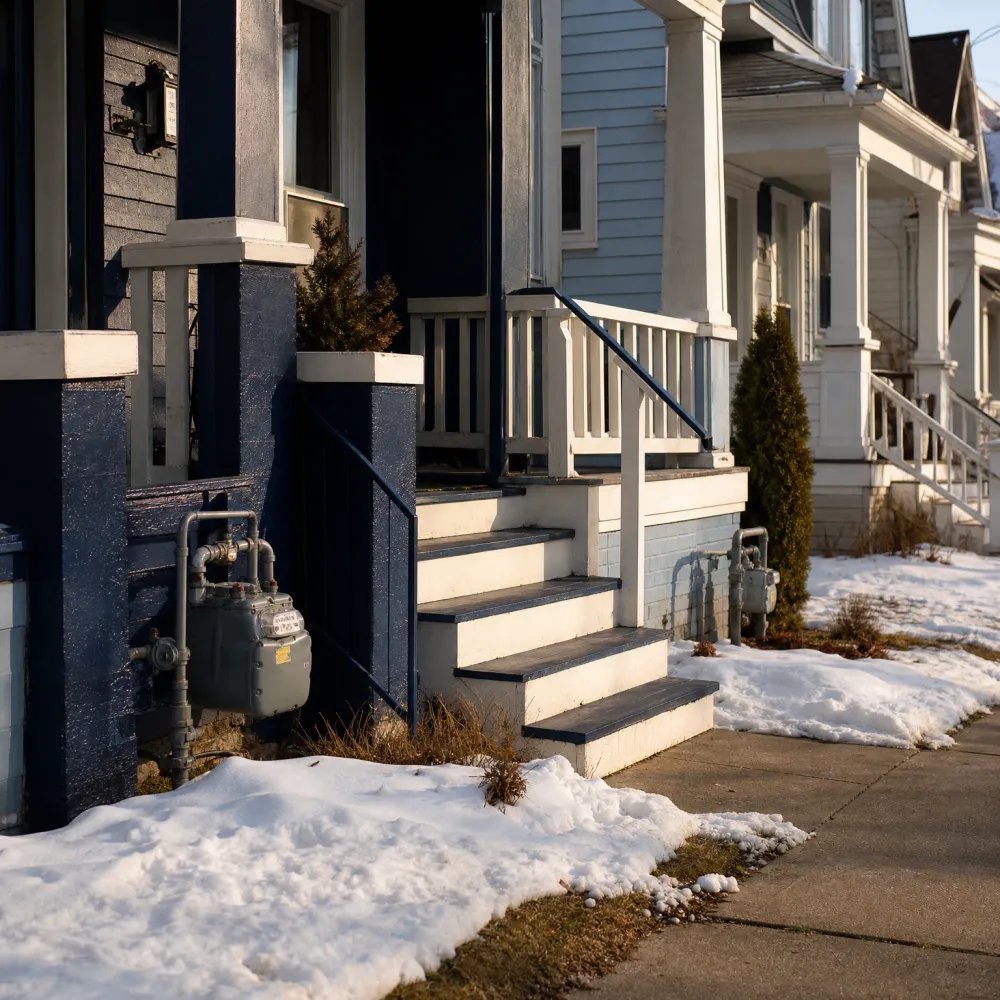
    A row of houses with covered porches, white railings and exterior gas meters, with snow on the ground beside a concrete sidewalk in low sunlight.
  • Proven, simple, easy to get serviced

    Gas furnaces have heated homes for generations. Almost every HVAC tech knows them inside and out.

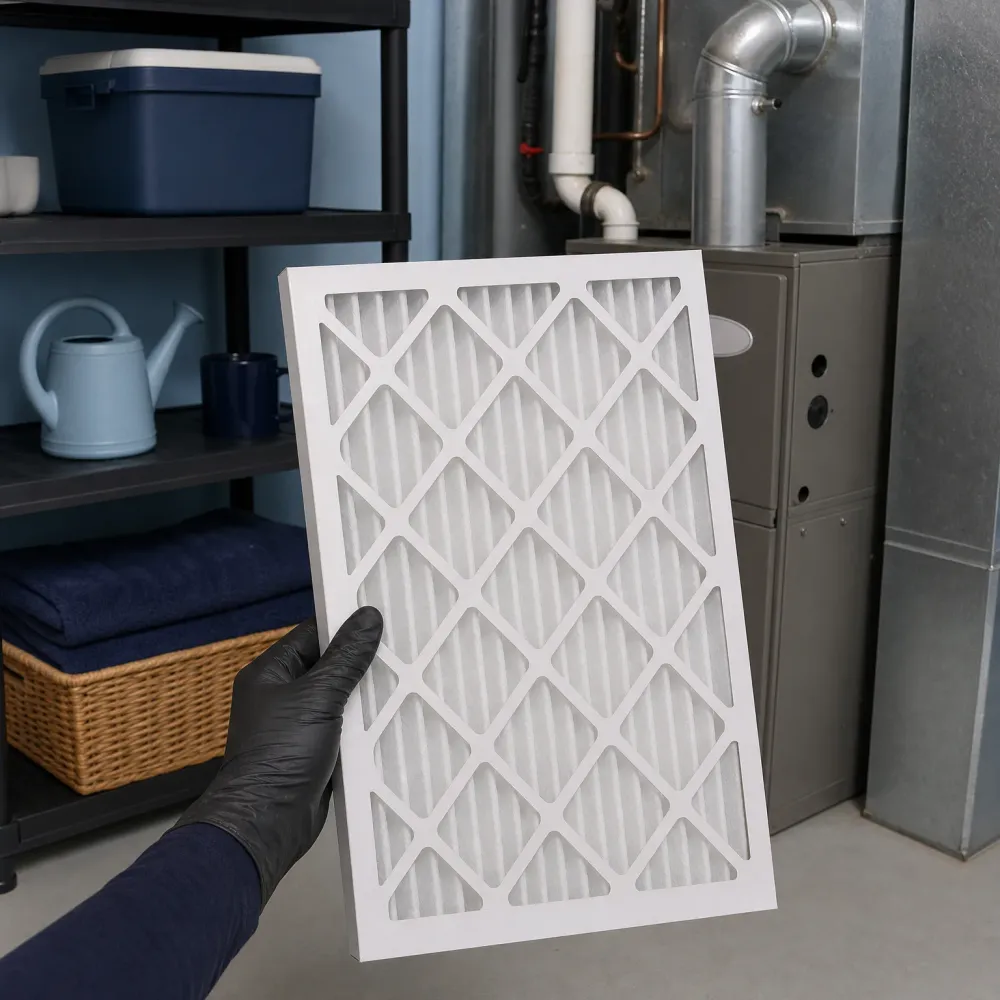
    A gloved hand holds a white pleated air filter in front of a furnace and ductwork, with shelving holding a storage bin, watering can, mug, folded towels and a basket in the background.

Winters here are long and genuinely cold

Winnebago County runs heat about eight months a year, October through May. Cooling only runs about three. Whatever you install is mostly a heating system that happens to also cool the house in summer.

The overnight low averages 16 degrees across December, January and February, and it drops to freezing or below on about 140 nights a year, over half the nights the heat runs. About 14 of those nights reach 0 degrees or colder. A standard heat pump loses ground as it gets cold. Below 40°F it puts out less heat than its rating says. Below about 35°F it typically needs backup heat to keep up. The average winter night here is colder than both marks, and every single night at or below freezing is too. A gas furnace does not have that problem. It burns gas and makes the same heat whatever the temperature outside.

That does not mean a heat pump will leave you cold. ENERGY STAR's Cold Climate heat pumps are tested to hold at least 70 percent of their rated heat, and at least 1.75 units of heat per unit of electricity, at 5°F. Field tests of these units in occupied homes found backup heat covering only a small share of the load between 0°F and 35°F, and running on backup alone was rare even above 0°F. The number that matters is whether the unit you are quoted carries that cold-climate rating, not just whether it is called a heat pump.
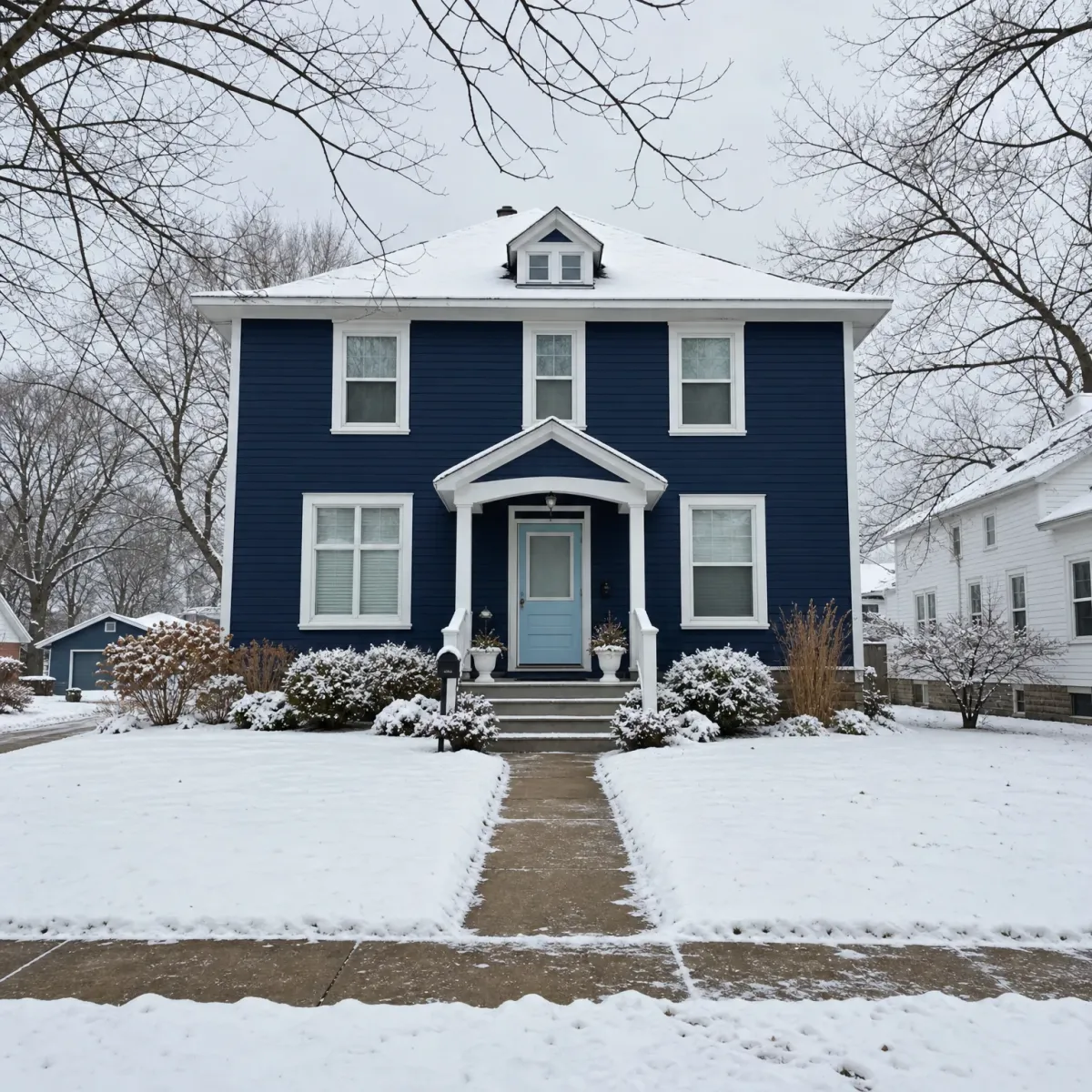
A two-story navy blue house with white trim, a light blue front door and small covered porch, surrounded by snow-covered lawn and bare trees, with a cleared concrete walkway leading to the steps.

What it costs to run, and what your neighbors already have

At Illinois's current prices, a gas furnace makes the same heat for less. The running-cost band above puts a furnace at $1.33 per 100,000 Btu against $2.12 for a heat pump, both at the federal minimum efficiency. That gap holds across the eight months heat is running here.

It also lines up with what is already installed around the county. Utility gas heats 83.5% of homes here, a little over four in five. Electricity heats 12.6%, a little over one in ten. If your house already has a gas line and a furnace, replacing it with another furnace is the straightforward path, and it is the cheaper one to run.

A heat pump still earns its keep in summer, where a furnace does nothing at all. June through August, with afternoons averaging 82 degrees, a heat pump is also your air conditioner, one system instead of two. If you want central air regardless, that changes the math. You are not just buying a furnace alternative, you are buying your AC too, and the cold-climate question above decides whether it can carry the winter on its own or needs a backup furnace alongside it.

Sources: NOAA nClimDiv · NOAA 1991–2020 seasonal normals · Census ACS 2020–2024 · EIA SEDS 2024 · 10 CFR 430.32 · PNNL Building America guide · PNNL-37127 field study · ENERGY STAR product criteria

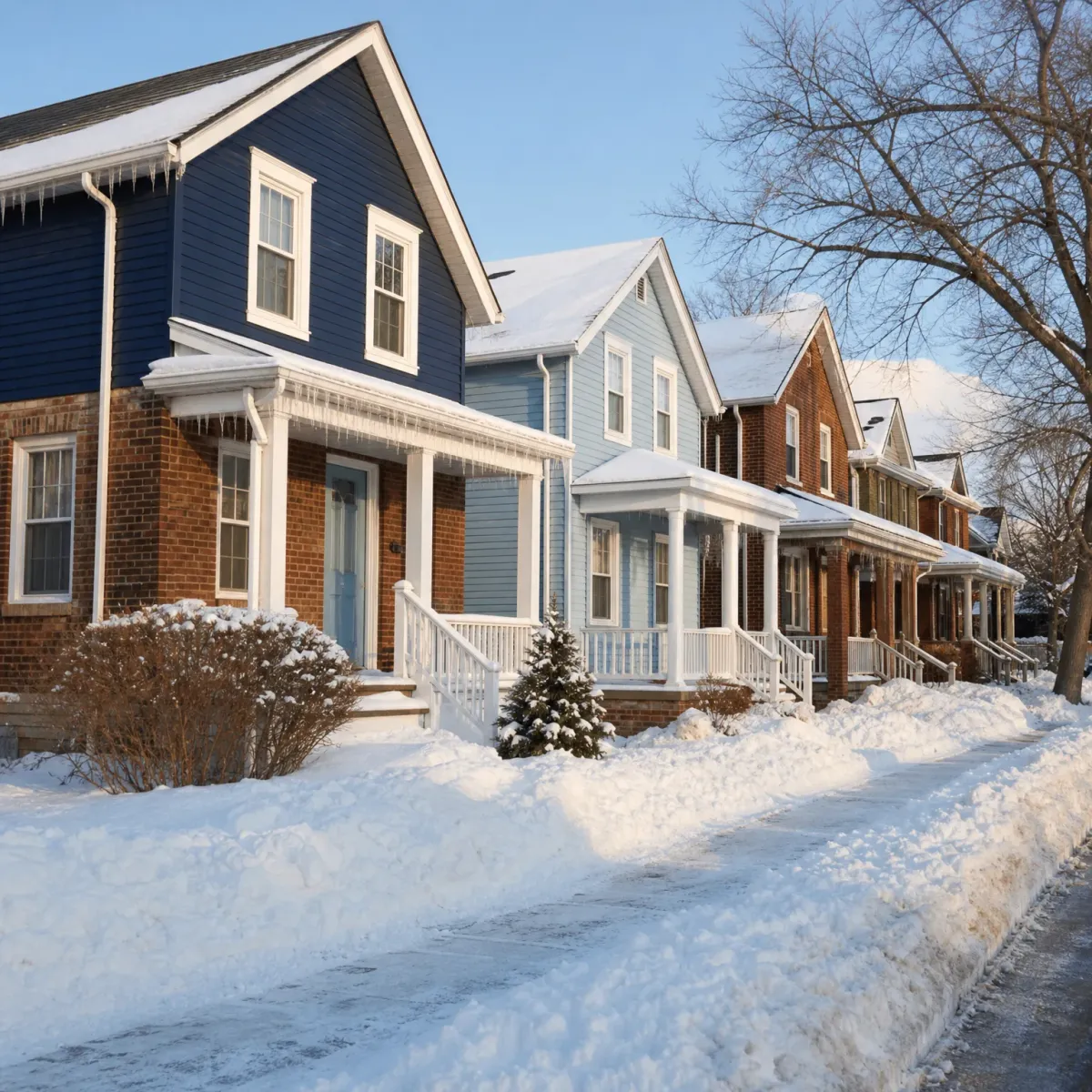
A row of two-story houses with brick lower walls, white porches and blue or light blue siding, behind deep snowbanks along a cleared sidewalk under a clear sky with bare trees.

Common questions about heat pumps and furnaces

  • Can a heat pump heat a house through an Illinois winter?

    A standard heat pump can heat through an Illinois winter, but it loses ground as the temperature drops. Its output falls short of its rating below 40°F, and the average overnight low here is 16°F, so on most winter nights it is working below its rated capacity. A cold-climate model holds onto more of its capacity at low temperatures, if that is the route you take.

  • Do I need backup heat with a heat pump here?

    Most homes here need it. A standard heat pump often needs backup once it drops below about 35°F outside, and that happens on roughly 140 nights a year in Winnebago County, over half the nights the heat runs. On the coldest nights, around 0°F on about 14 nights a year, backup carries more of the load.

  • Can I keep my furnace and add a heat pump?

    Yes, that pairing is called a dual fuel system, and it works by splitting the eight-month heating season between the two machines. The heat pump covers the milder nights, and the furnace takes over once it gets too cold for the heat pump to keep up efficiently, below about 35°F. That split matters here because about 140 nights a year fall to freezing or below, over half the nights the heat runs, and about 14 drop to 0°F or below. The furnace you already have can usually serve as that backup rather than being replaced.

  • Is a heat pump cheaper to run than a furnace in Winnebago County?

    No, a furnace costs less to run here. At Illinois's average fuel prices, a furnace makes the same heat for $1.33 per 100,000 Btu against $2.12 for a heat pump, both figures at federal minimum efficiency. That gap is why most homes in Winnebago County already heat with gas.

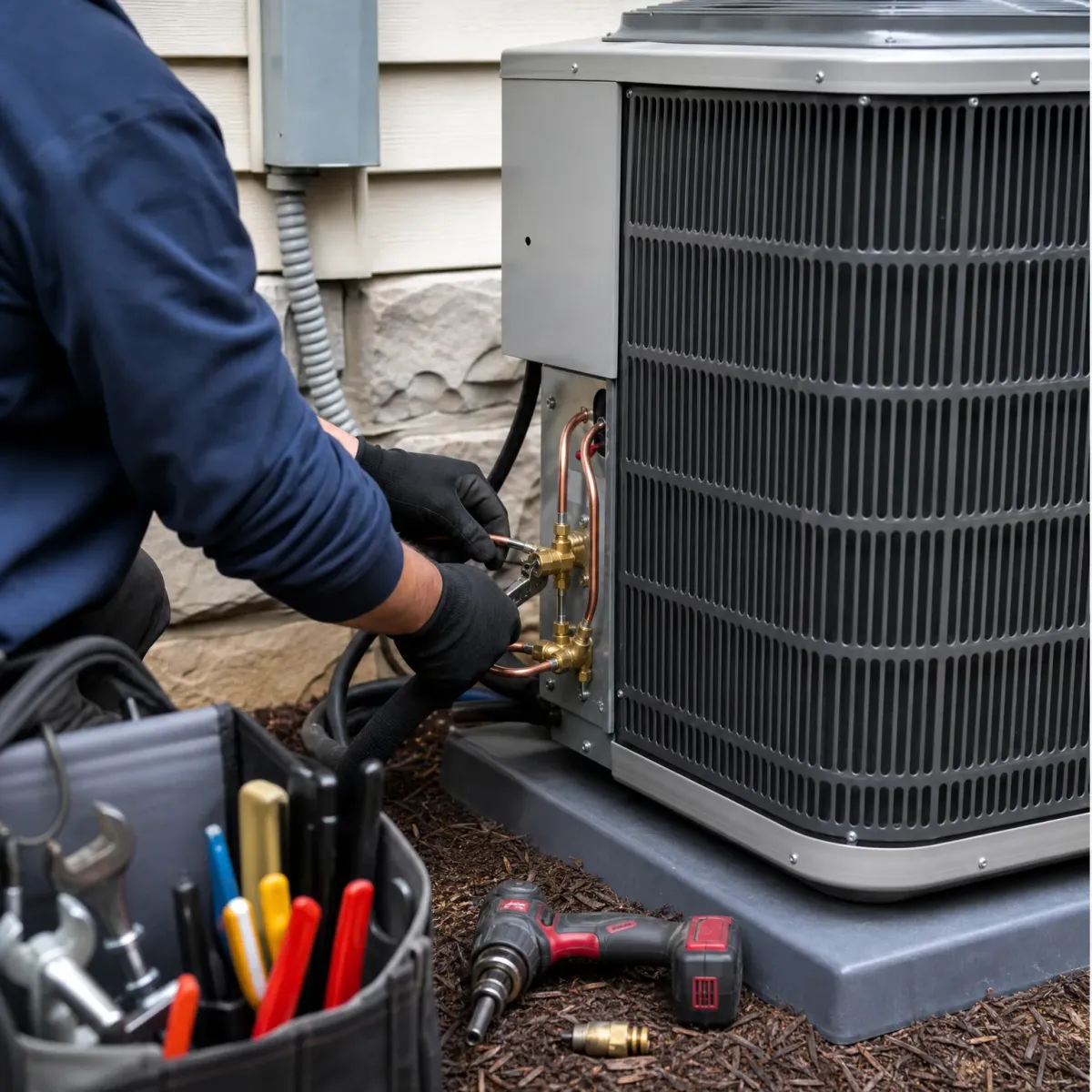
A person in a dark blue shirt and black gloves uses a wrench on brass service valves and copper lines at the side of an outdoor air conditioning condenser unit, with a tool bag and a cordless drill on the mulch in the foreground.

Tell us about the job

Takes about a minute. No obligation.

Step 1 of 3: Equipment