A quiet suburban street at twilight featuring two-story brick homes with illuminated windows and large trees lining the sidewalk.

Furnace Installation in Rockford, IL

Tell us about the job

Takes about a minute. No obligation.

Step 1 of 3: Equipment

Half these homes were built in 1971 or earlier

Winnebago County's housing stock is old. Half the homes here went up in 1971 or earlier, and a furnace going into one of those houses has to work with whatever ductwork and venting was planned decades ago, not a layout drawn up for today's equipment.

The install has to match the house, not just the old furnace

Swapping in a new furnace means checking the duct sizing, the vent path and the gas line against what the new unit actually needs. A contractor sizing the job right will look at the house itself, not just pull the same size as whatever is getting replaced.

8 months
October through May, your furnace is on duty
16°F
the average winter night it heats against
84%
of homes here heat with gas, so most furnaces here burn gas
80% AFUE
the federal minimum any new unit must meet
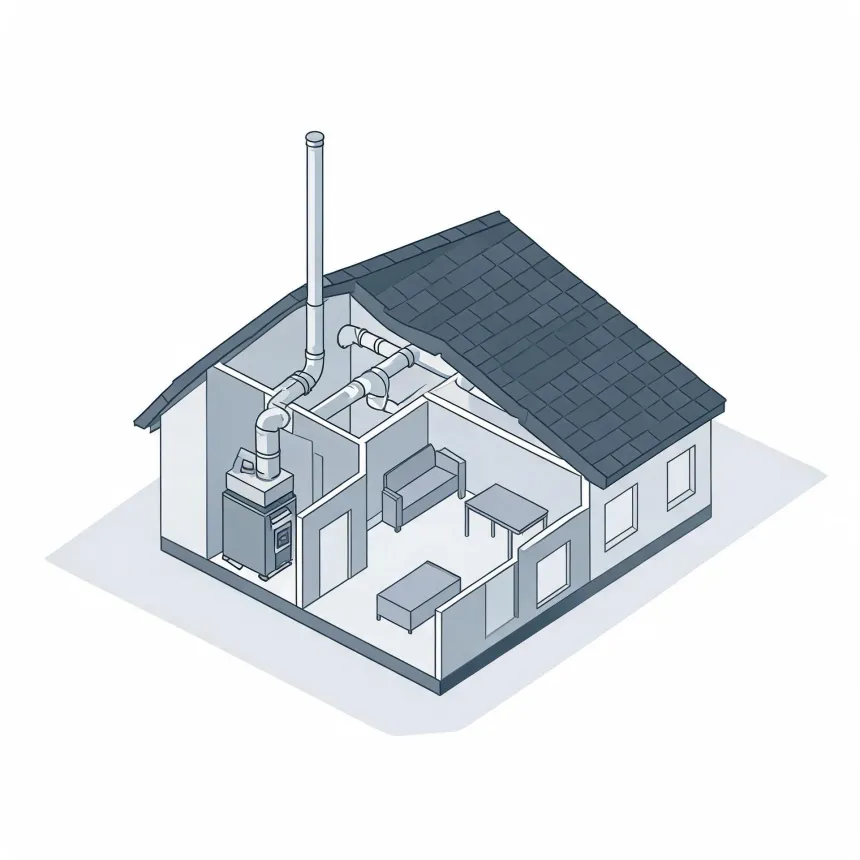
Isometric line illustration of a cutaway single-story house with a shingled roof, showing an interior furnace connected to ductwork and a tall vertical flue pipe, plus simple furniture in the adjacent room.
Your furnace works hardest from November through March.

NOAA nClimDiv, 1991–2020 normals

Furnaces in Winnebago County run from October through May, eight months of the year.

A new furnace here spends most of the year working, so sizing it right matters more than finding the lowest price.

Most homes here already run on gas, and that's the simplest system to replace

83.5% of homes heat with gas
Climate zone 5A
Heat runs October through May
Get it done before OctoberFurnaces here start running in October, and homes in Winnebago County run them for eight months straight.

Any furnace going into a home here has to meet the efficiency rules for zone 5A, the cool, humid climate class Winnebago County falls under. For now that means turning at least 80 percent of the gas it burns into heat over the winter, the federal minimum for furnaces built since November 2015. That floor rises to 95 percent for units manufactured on or after December 18, 2028, a jump that will narrow which furnaces are legal to install once that date hits. A furnace bought ahead of that change still has to clear the current 80 percent mark, no exceptions for climate zone or house age. Homeowners replacing a system now are choosing from the current rules, not the ones coming in a few years.

Pick the furnace sized for this house, not just a price

This furnace will run eight months of the year, longer than almost anywhere else. That's the case for getting the sizing and the installation right the first time, not for grabbing whatever costs least. A contractor can size the new system to the house and get it in before the cold sets in.

Find a contractor
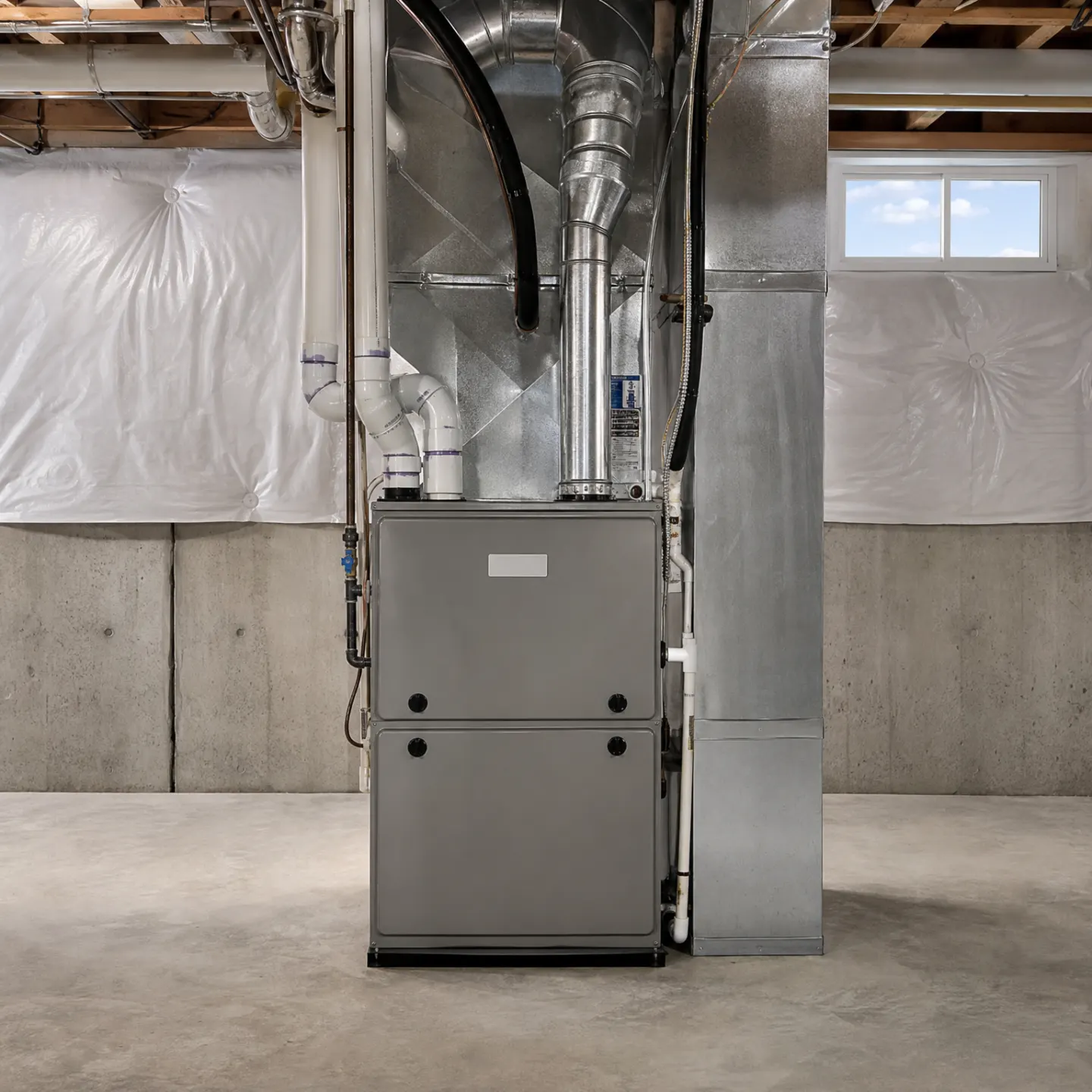
A gray residential gas furnace installed in an unfinished basement, connected to sheet-metal ductwork and PVC pipes.

Running through a house built decades before this furnace was

A furnace going into a house built in 1971 or earlier is working with duct runs and a vent path laid out that same year, not redrawn for whatever gets installed now. Day into night, the furnace only moves heat as well as that path lets it. If the ducts were sized for a different unit, a bigger furnace won't fix that, it just pushes harder against it. Checking the ductwork and venting against the new unit's actual requirements, not the old furnace's size, is what makes the install worth doing right.

Sizing comes from a heat loss calculation, not the old furnace's rating

The right size is worked out room by room, adding up how fast the house loses heat through its walls, windows, and roof. That number is what the new furnace has to match. Pulling the nameplate off the old unit and buying the same size skips that step, and it carries forward whatever mistake was baked into the original install.

Oversized or undersized both cause real problems

A furnace too big for the house heats the air fast, shuts off, and starts again a few minutes later. That short cycling wears out the ignition system early and leaves rooms farther from the furnace never quite warm. A furnace too small runs constantly during the coldest stretches and still can't keep up. Either way, the furnace is working against its own size, not with it.

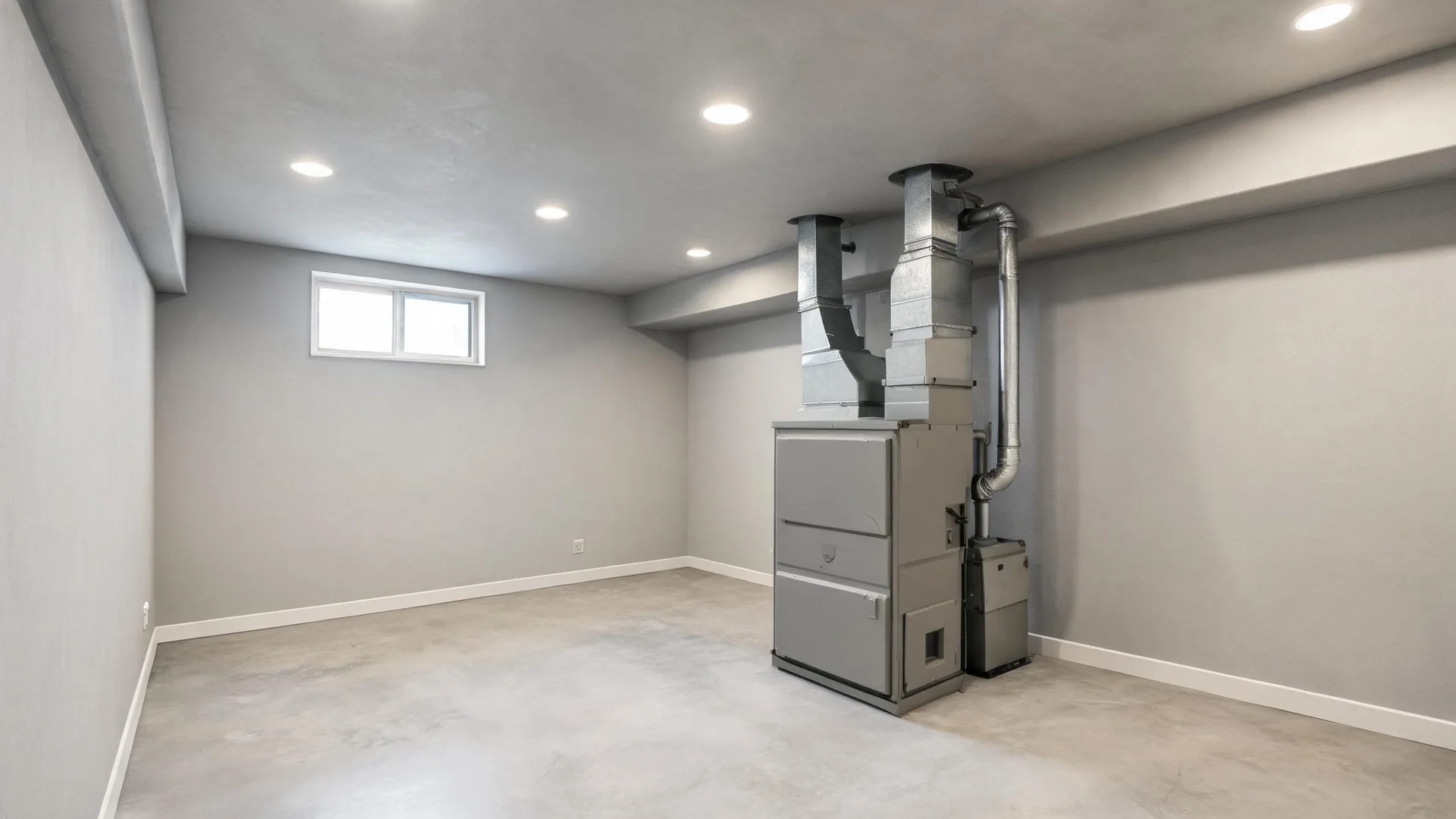
An empty unfinished basement containing a forced-air furnace with overhead ductwork, exposed ceiling joists, and a single hanging light bulb.

A high-efficiency gas furnace would save about $130 a year to run in Winnebago County compared with a gas furnace.

  • A high-efficiency gas furnace$630 a year
  • A gas furnace$760 a year

Estimates for a typical Winnebago County home, from EIA household energy data, Illinois fuel prices and NOAA climate normals. Your home will differ.

Installation day starts with the old furnace coming out, along with the old vent pipe if it doesn't match what the new unit needs. The new furnace gets set in place and leveled, because a unit sitting even slightly off can cause condensate to pool instead of draining. Gas line, vent pipe, and ductwork get connected next, then the electrical and the thermostat wiring. Before anything fires up, a tech checks the gas pressure at the manifold and confirms the vent is drafting the way it should, since a furnace venting wrong can pull exhaust back into the house instead of outside. Once it's running, the tech checks the temperature rise across the heat exchanger against what the manufacturer specifies for that model. That number has to land in range, not close to it, or the furnace gets adjusted until it does.