Eight months of work
Furnaces in Winnebago County run from October through May. That is most of the year asking the igniter, the blower motor and the heat exchanger to cycle on and off, day after day.
Takes about a minute. No obligation.
Furnaces in Winnebago County run from October through May. That is most of the year asking the igniter, the blower motor and the heat exchanger to cycle on and off, day after day.
A furnace that runs this many months a year wears faster than one that only has to cover a few. A loose connection or a worn bearing tends to show itself early in the season, right when the house needs the heat most.
Furnaces in Winnebago County start their heating run in October.
Book the tune-up in September, before the first cold night puts the furnace to work.



Most houses in Winnebago County heat with gas, 83.5% of them. A gas furnace adds a burner and a venting system to the parts that wear, and both need a trained eye. A cracked heat exchanger or a venting problem can let exhaust back up into the house instead of outside where it belongs. A tune-up checks the burner flame, the venting and the safety controls that shut the furnace down if something is wrong, not just the filter. Electric furnaces, in the 12.6% of homes that use one, skip the venting checks but still need the blower and heating elements looked at.
October through May, the furnace runs nearly every day it's asked to. A tune-up before the season starts catches the worn part while it's still cheap to fix, not after it fails on the first cold night.
Find a contractorChange the filter on a regular basis. A dirty filter chokes airflow across the heat exchanger, and that makes the burner work harder than it should. Keep the area around the furnace clear too. It needs open space to draw air in, and anything stacked against it is a fire risk as well as an airflow problem. Watch the flame through the viewing window if the furnace has one. It should burn steady and blue. A flame that flickers yellow or orange, or jumps around, is telling you something is burning wrong and that's not a homeowner fix. Listen for new sounds. A bang at startup, a squeal from the blower, or a rattle that wasn't there before all mean something shifted or wore down, and it's worth getting looked at before it gets worse. Don't ignore the carbon monoxide detector. If it ever goes off, that's not a maintenance item, that's get out of the house and call for help. Beyond the filter and keeping an eye and ear on things, leave the burner, the heat exchanger and the safety controls to someone trained on them.
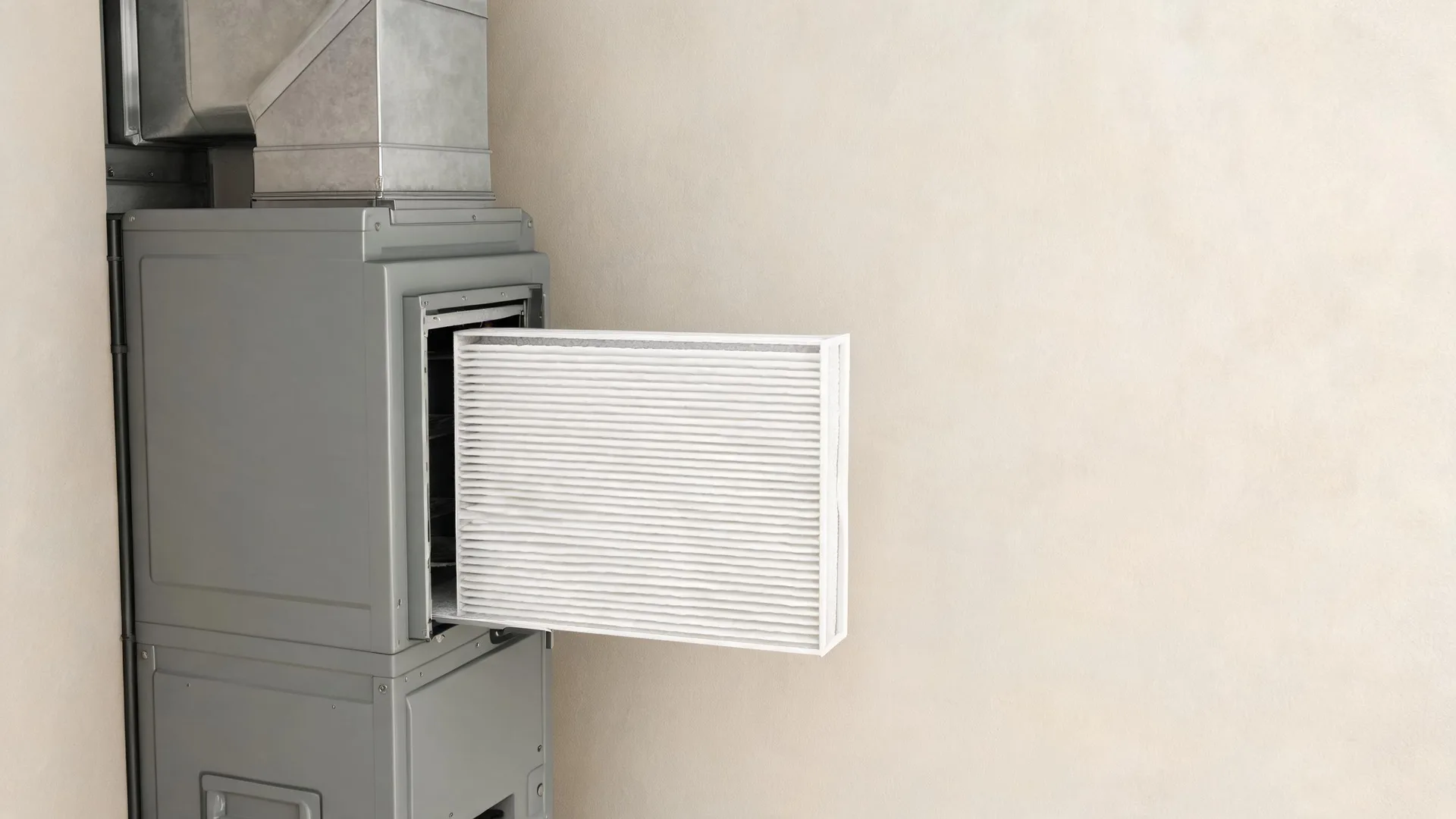
That's the air conditioner's job. A furnace burns fuel or heats an element, and a blower pushes air across the heat exchanger and out through the ducts. The filter sits in that air path and nowhere else matters as much for keeping the furnace clean inside.
Skip it long enough and dust settles on the blower wheel and the heat exchanger surface, and both lose their ability to move or transfer heat the way they're built to. The furnace runs longer to do the same job, and the extra heat it's holding onto has nowhere good to go.
A yellow or flickering flame instead of a steady blue one means the burner isn't getting the air mix it needs. Short cycling, where the furnace fires up and shuts off again before the house warms, points to a dirty flame sensor or a thermostat problem, not something that fixes itself. A pilot light or igniter that won't hold, or takes several tries to catch, is wearing out. Rooms that used to heat evenly and now run cold in the corners often mean the blower isn't moving air the way it used to. A furnace that runs longer and longer to hit the same temperature is losing efficiency somewhere inside, and that's worth finding before it quits instead of after.
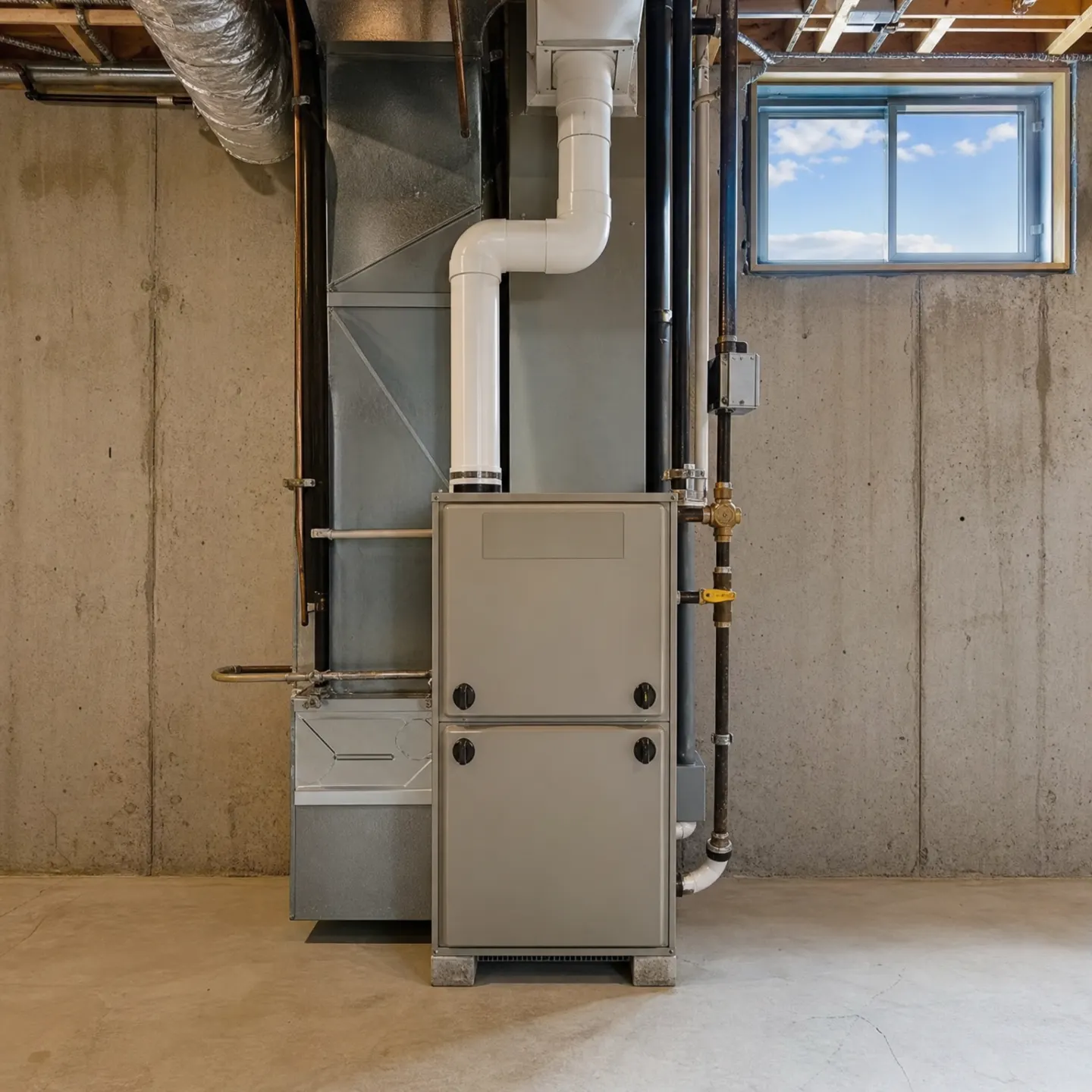
A tune-up starts with the burner. A technician pulls it and cleans off any rust or scale so the flame burns even across every port, then checks the flame sensor, since a coated sensor is one of the most common reasons a furnace shuts itself off mid-cycle. The heat exchanger gets inspected for cracks, because a crack there lets exhaust mix with the air going into the house, and that's not something to find out about later. The igniter gets tested for a weak glow or a slow catch. The blower wheel gets checked for dust buildup and the motor for worn bearings, since a wheel caked with dust can't move the air it was built to move. Belts aren't part of this anymore on most furnaces, but the motor still needs to spin freely and quietly. The technician also checks the venting for blockage or corrosion and tests the safety controls that are supposed to shut the furnace down if something inside goes wrong. None of that shows from the outside, which is the point of having someone check it before the furnace has to run on it all winter.