Electricity here runs 17.89 cents a kilowatt-hour
That is above what most US counties pay, and a heat pump runs on electricity for most of the year. The rate on your bill multiplies every hour the compressor runs.
Takes about a minute. No obligation.
That is above what most US counties pay, and a heat pump runs on electricity for most of the year. The rate on your bill multiplies every hour the compressor runs.
With power priced this high, the difference between a heat pump that runs efficiently and one that does not shows up every month, not just on the install invoice. Sizing and installation decide which one you get.
NOAA nClimDiv, 1991–2020 normals
Half the homes in Winnebago County were built in 1971 or earlier.
A heat pump going into a house that age has to be sized for that house, not for a generic one.




Winnebago County sits in climate zone 5A, a zone the 2021 energy code rates as cool with heating as the bigger load. Any split-system heat pump installed here has to meet the federal minimum for that zone: at least 14.3 Btu of heat moved per watt-hour of electricity over the summer, and at least 7.5 Btu per watt-hour over the winter. That floor applies to every heat pump built from January 1, 2023 on, so it already narrows what a contractor can install. A federal tax credit is available on top of that for units that qualify, separate from the minimum itself.
Sizing and installation are what put that efficiency rating to work or waste it. The same unit run right and run wrong can land on two different bills. Get the sizing and the install right from the start, and the rate on your electric bill works for you instead of against you.
Find a contractor
The heat pump going in has to be sized off a load calculation for this house, not a square footage chart. An older home carries its own mix of windows, air leaks and insulation, and that changes how much heat the unit needs to move on the coldest night. A contractor who sizes it right the first time saves you from a unit that short cycles or one that runs constantly and never quite catches up. Ask to see the calculation before the quote, not after.
The label carries a cooling number and a heating number, and they measure different seasons. A heat pump can be strong in one and weak in the other. For a machine that has to carry the heating load, the heating number matters as much as the cooling one, maybe more.
That number comes from a unit tested under set conditions, matched to the right coil and sized correctly. Put the same compressor on undersized ducts or pair it with the wrong coil and it will not deliver what the label promises. The rating is the ceiling. What gets installed decides how close the system runs to it.
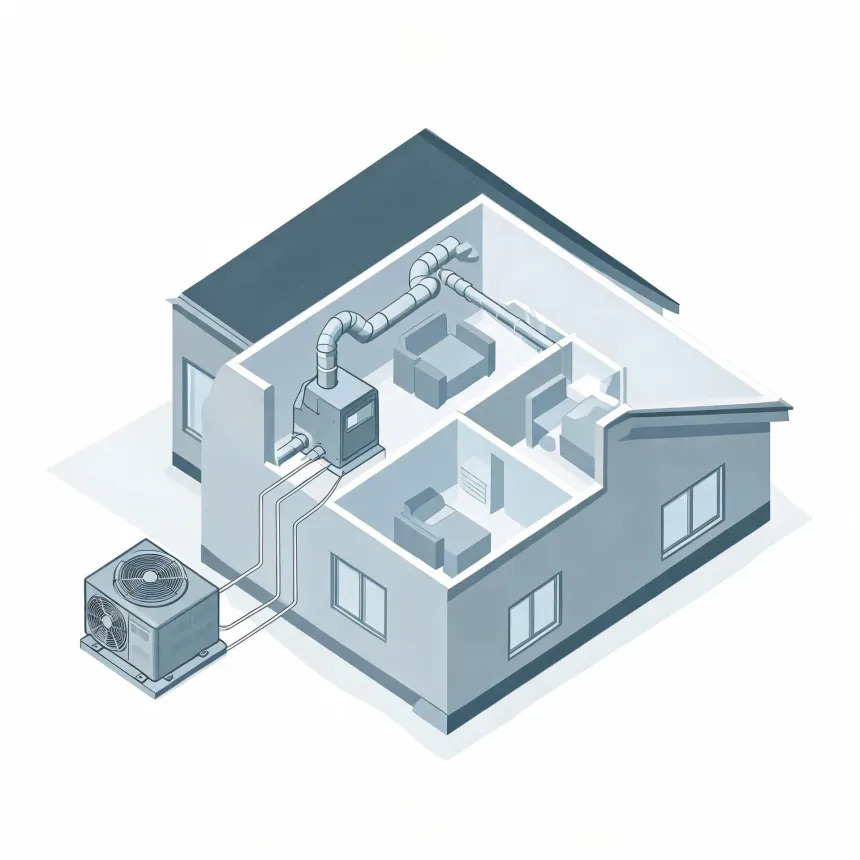
A heat pump's installed cost comes from more than the box on the truck. The outdoor unit and the indoor coil have to be matched as a pair, and the wrong pairing will choke the rating right off the label. Line sets sometimes need replacing rather than reused, especially if the old ones are the wrong diameter for the new system. If this is a retrofit off a furnace, the ductwork built for that furnace may not move enough air for a heat pump, which runs longer and moves air more constantly than a gas furnace cycling on and off. A contractor may also need to add a dedicated circuit or upsize the electrical panel, since a heat pump draws power every month it runs, not just a few. None of this is optional add-on work. It is what makes the unit perform the way its rating says it should.
Installation starts outside with the crane or dolly work of setting the outdoor unit on its pad, then runs to whatever tie-ins the job needs: refrigerant lines, the electrical circuit, the condensate drain if the air handler is being swapped too. The lines get connected, then pressure tested before any refrigerant goes in, because a leak found after charging means doing the work twice. Once the system holds pressure, the lines get evacuated to pull out moisture and air, since either one left behind will foul the refrigerant and wear the compressor early. Only then does the refrigerant go in, charged to the weight the manufacturer specifies for that line length, not just until the pressure looks right. The last stretch is startup: running the system in both heating and cooling, checking airflow at the vents, checking the temperature split across the coil, and confirming the thermostat is actually talking to the outdoor unit. A job done right ends with the contractor walking the thermostat settings with you, not just packing up the truck.