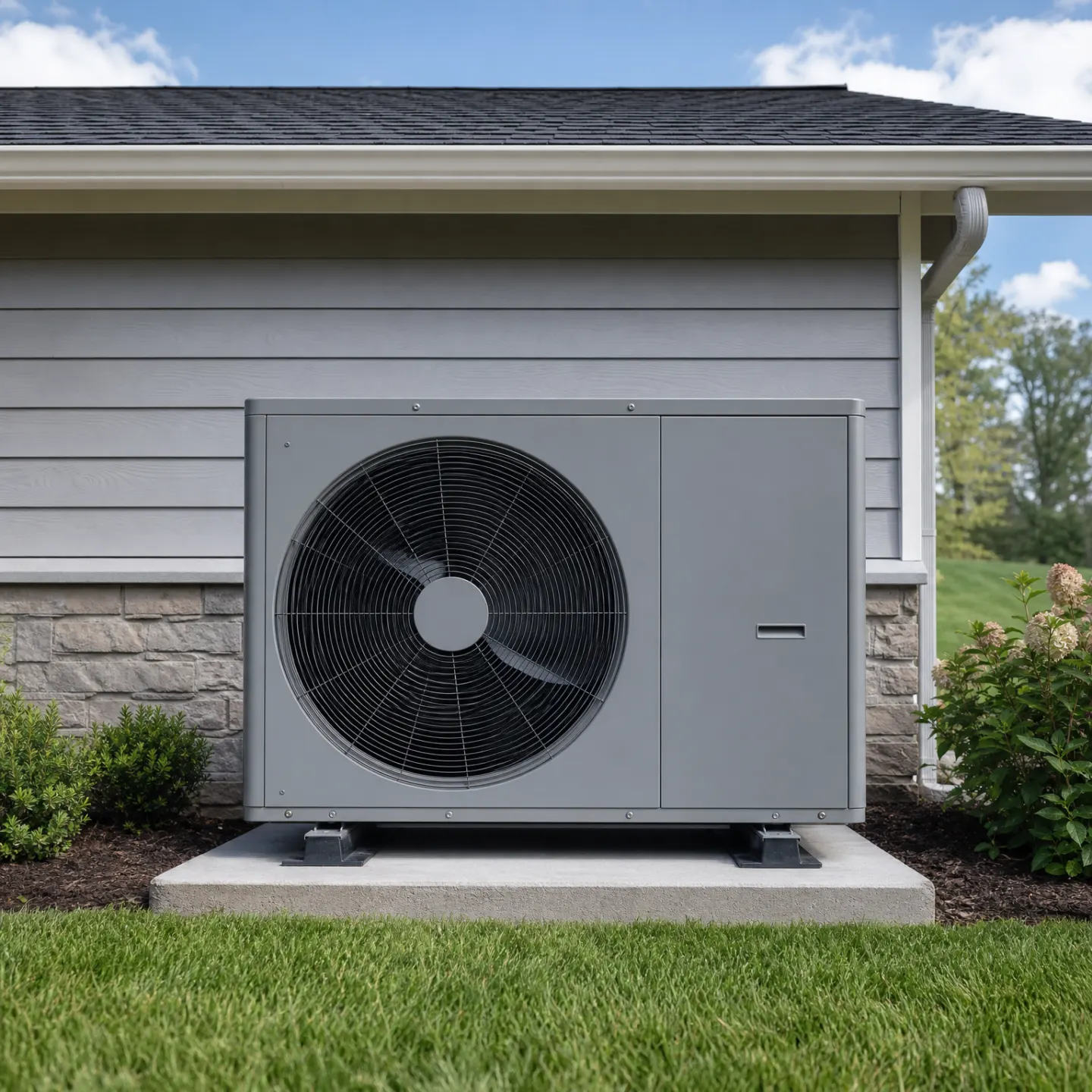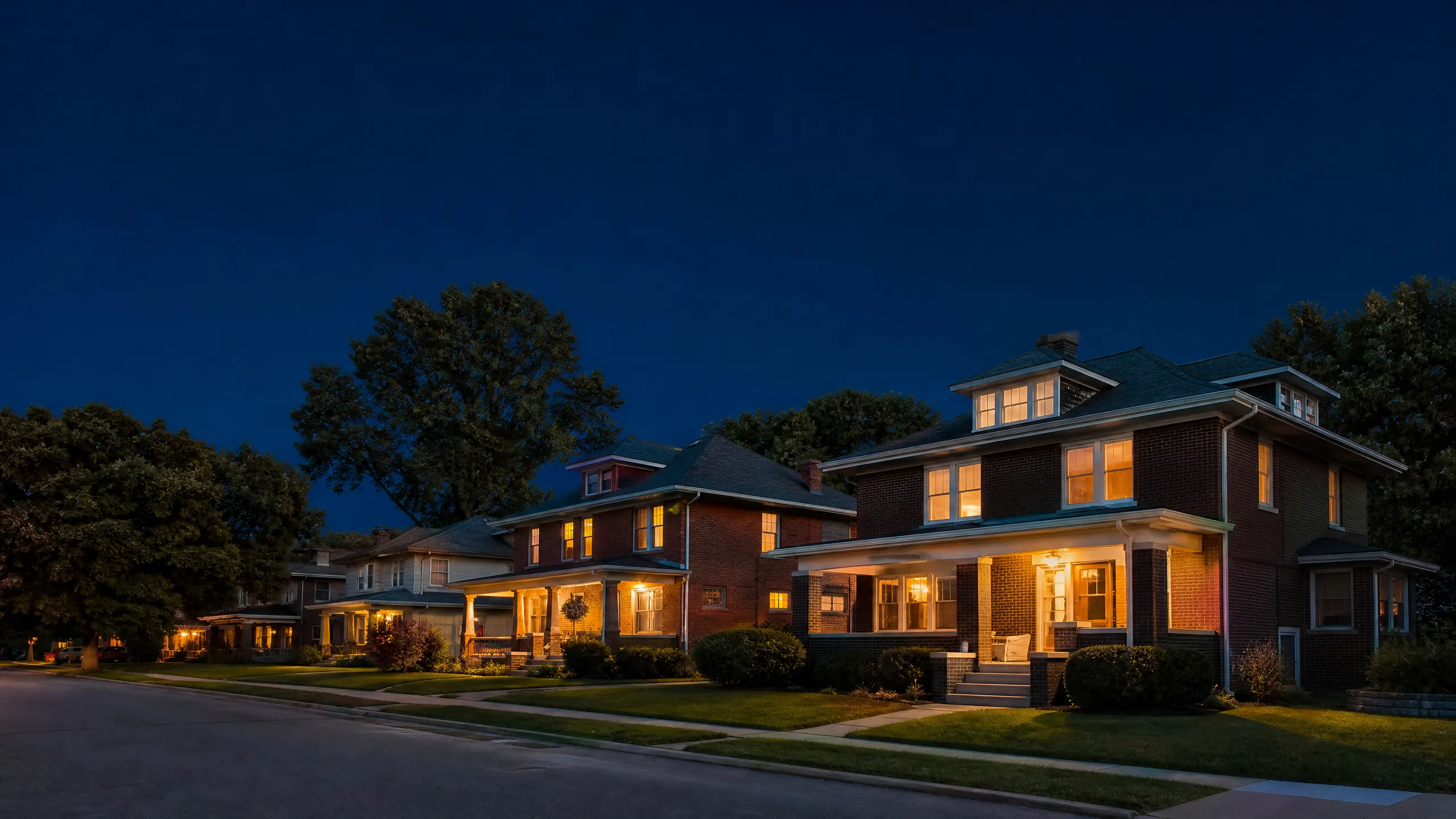
A lit brick residential street at dusk showing a row of two-story homes with covered porches and mature trees.

Heat Pump Repair in Rockford, IL

Tell us about the job

Takes about a minute. No obligation.

Step 1 of 3: Equipment

October is when a weak heat pump shows itself

Heat in Winnebago County runs October through May, about eight months a year. The first cold mornings put real load on a heat pump for the first time since spring, and a part that was already marginal tends to fail right then rather than in the easy months.

September is the time to get it looked at

If your heat pump struggled last winter or is acting up now, September is the month before the cold weather starts. A technician can find a weak part and fix it on a normal schedule, before the first hard freeze forces the issue.

8 months
October through May, your system heats
3 months
June through August, it cools
16°F
the average winter night it heats against
82°F
the average summer afternoon it cools against
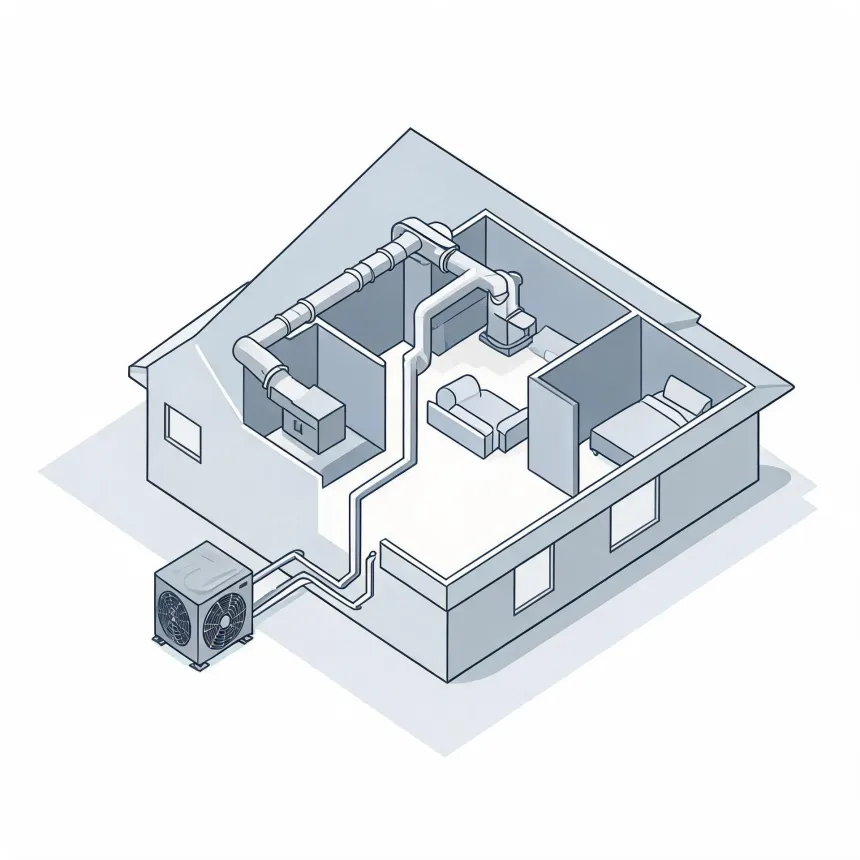
Isometric line illustration of a cutaway house showing interior rooms with furniture, ceiling ductwork, and an outdoor condenser unit connected by lines along the exterior wall.
Your system heats October through May and cools June through August.

NOAA nClimDiv, 1991–2020 normals

A heat pump that's old and struggling to keep up usually has more than one worn part at once.

When the compressor itself is failing, the fix often costs more than starting over with new equipment.

Half the homes in Winnebago County were built by 1971, and old age is hard on a heat pump

Half the homes here were built by 1971
131 damaging wind events from 2015 to 2024
54 hail events from 2015 to 2024
Rockford weather is not the problem216 severe weather events in Winnebago County between 2015 and 2024, nothing a heat pump built for Illinois winters can't handle

Illinois electricity ran 15.87 cents per kilowatthour in 2024, and a heat pump leans on electricity for every degree it moves. Run one that's short on refrigerant or working with a weak part and it draws more to do the same job, for as long as it's heating your house. That cost shows up on the bill whether or not anyone looks at the unit. A system running flat out because of one bad part is paying that higher rate for nothing.

A weak heat pump keeps costing you until someone looks at it

At 15.87 cents a kilowatthour, every extra hour your heat pump runs to make up for a bad part is money gone. Get it looked at and fixed, and it goes back to doing the job on what it should actually draw.

Find a contractor
A gray outdoor HVAC unit mounted on a concrete pad beside a house with gray lap siding and a stone foundation.

Ask how much life is left before you pay for a repair

If your heat pump came with a house built around 1971 or earlier, find out how many years it has left before you pay for a major repair. Ask the technician straight out, before any work starts, what a compressor or coil replacement actually buys you on a unit that age. Sometimes that money is better spent on new equipment.

The reversing valve only exists on a heat pump

A furnace doesn't have one. A heat pump does, and it's what switches the unit between heating and cooling. When it sticks, the unit can get stuck in one mode, or start blowing air that's not as warm as it should be. That valve cycles far more over a year than anything in an air conditioner, and it wears accordingly.

A failing part rarely fails alone

A weak capacitor forces the compressor to work harder every time it starts up, and that extra strain on the compressor is what wears it out early. A slow refrigerant leak makes the compressor run longer and hotter than it was built for. By the time a heat pump is clearly struggling, more than one part is usually worn down.

Before anyone comes out, there's a little you can check yourself. Look at the outdoor unit and clear away any leaves, grass clippings or ice built up around it, since blocked airflow alone can make a heat pump struggle. Check your thermostat is set to heat and the temperature is actually above room temperature, and swap the batteries if it's gone blank. Go to the air handler or furnace closet and pull the filter out. If you can't see light through it, replace it. Walk around the house and check that supply vents are open and nothing's been pushed in front of a return. None of that fixes a bad capacitor or a stuck reversing valve, but it rules out the simple stuff before you pay someone to find it.

A diagnostic visit starts outside at the unit. The technician checks refrigerant pressure, checks the compressor's amp draw, and watches what the reversing valve does when the system switches between heat and cool. Inside, they check the air coming off the coil and whether the system actually reaches the temperature you've got it set to. Readings off the capacitor and contactor show whether the compressor is starting clean or straining to get going. A trained eye knows which checks usually explain the symptom you called about, so this doesn't take as long as people expect. What you get at the end is a straight answer. Which part is failing, what fixing it involves, and whether that repair is worth doing on a unit this age.