




An unfinished basement featuring a forced-air furnace, exposed wooden ceiling joists, bare concrete walls, and miscellaneous items including cardboard boxes and coiled cables on the floor.

Furnace Installation in Danville, IL

Tell us about the job

Takes about a minute. No obligation.

Step 1 of 3: Equipment

Vermilion County saw 250 severe weather events between 2015 and 2024. That includes 163 damaging wind events, 70 hail events, and 9 tornadoes. Winter storms with heavy snow and ice hit the county 7 times in that same stretch. Statewide, 16% of Illinois households lost power for a day or more in 2024. A furnace does no good sitting in the dark, and a new install is the time to think about what happens when the power goes out before it does.

8 months
October through May, your furnace is on duty
21°F
the average winter night it heats against
54%
of homes here heat with gas, so most furnaces here burn gas
80% AFUE
the federal minimum any new unit must meet
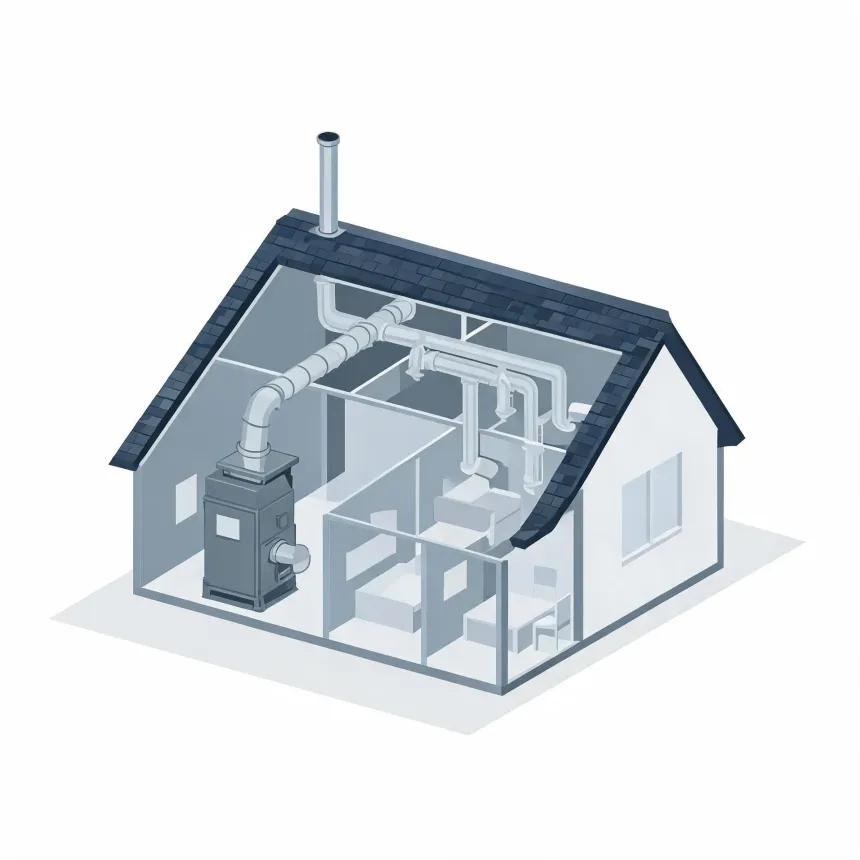
Isometric cutaway illustration of a small house showing a gray furnace unit with a flue pipe through the roof and branching ductwork running to rooms with simple furniture.
Your furnace works hardest from November through March.

NOAA nClimDiv, 1991–2020 normals

Half the homes in Vermilion County were built in 1957 or earlier.

A furnace going into a house that old has to match ductwork and venting that were never built with today's equipment in mind.

Eight months of heat means this isn't a job to rush into

Heat runs October through May
Winter nights average 21°F
Climate zone 5A
Gas prices here keep the payoff math simpleIllinois gas ran $10.64 per million Btu in 2024, so the pricier high-efficiency model takes longer to earn back.

Gas heats 53.9% of homes in Vermilion County, more than any other fuel. Electricity is next at 36.7%, and a small share run on bottled or LP gas. If gas already runs to the house, a gas furnace is usually the straightforward choice, since the line, the meter and the venting path are already there. Swapping in a new gas furnace means working with what the house already has rather than adding a fuel source it never had. That matters more here than in a lot of counties, since gas is so clearly the default rather than one option among several.

Plan for the outage before you need to

A new furnace is a chance to decide where the outdoor equipment sits and what happens to heat when the power drops. With storms this common in Vermilion County, that's worth working out now, while the install is already underway, not after the lights go out.

Find a contractor
A man in a dark shirt, tan work pants, boots and a cap walks up porch steps toward a navy front door, carrying a canvas tool bag.
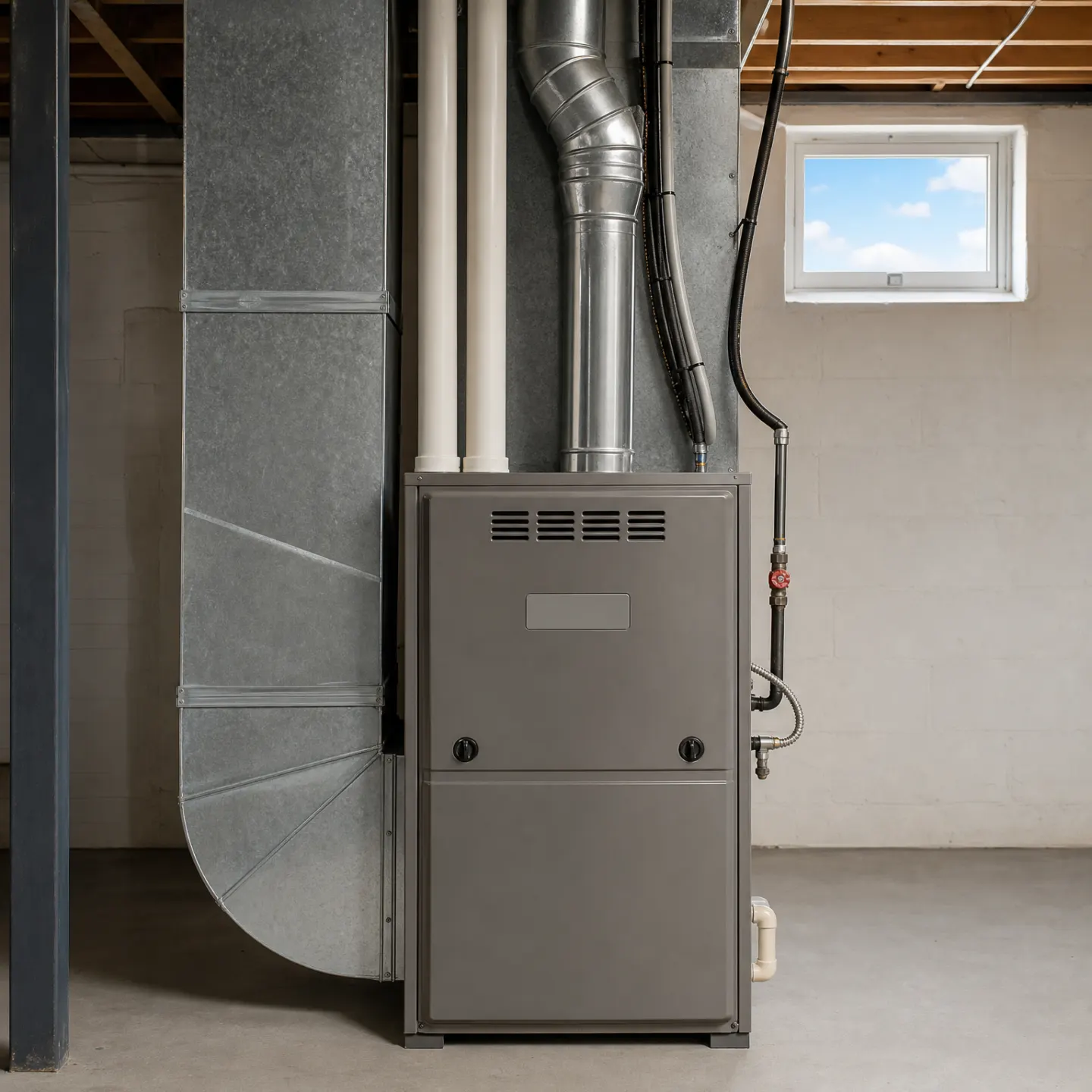
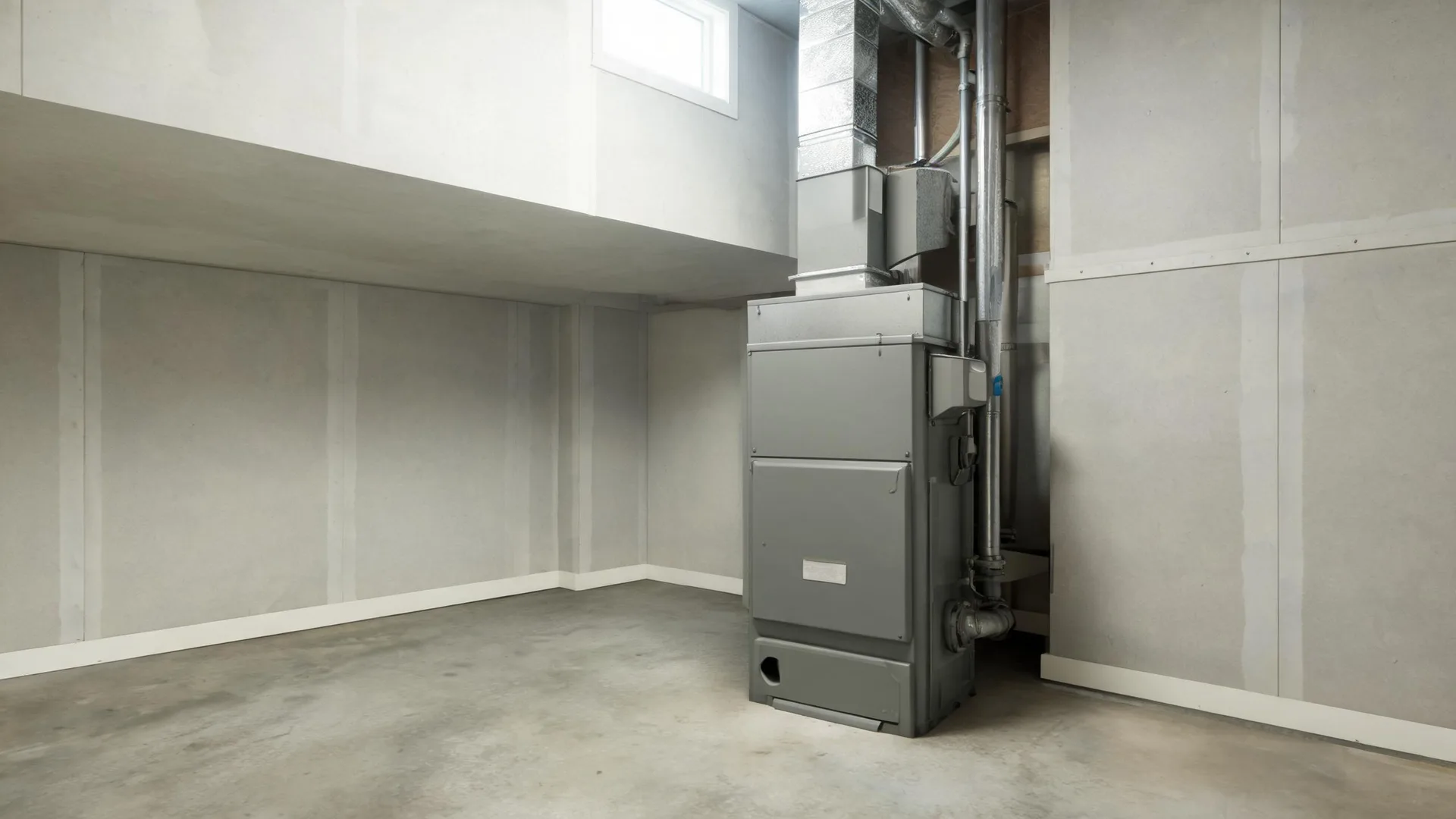
A gray residential gas furnace installed in an unfinished basement, surrounded by ductwork, a metal flue pipe, and a gas supply line.

Running for decades through ductwork built for a different furnace

A furnace going in now will likely outlast the house's original ductwork by decades. Whoever sizes the system should measure the actual ducts and venting instead of assuming they match the new equipment. Ask what they found before they cut in any new line or resize the flue. If the house dates to 1957 or earlier, that check matters even more, since the duct runs and vent path were sized for a furnace built to a different standard.

What the AFUE number actually measures

The efficiency rating on a furnace tells you how much of the fuel it burns turns into heat in the house, and how much goes out the flue. A higher rating means less gas wasted out the vent for the same amount of warmth. It says nothing about how big a furnace is or whether it fits the ductwork. Two furnaces with the same rating can still put out very different amounts of heat.
Why the rating changes what gets installed

A higher-efficiency furnace cools the exhaust more before it leaves the house, so it can't vent through a metal flue the way an older, lower-rated furnace does. It needs a dedicated plastic vent pipe running to the outside, usually through a wall rather than up through the roof. That changes where the furnace can sit and what venting work the install involves. A straight swap for the same rating as the old unit skips that extra work. Moving up in efficiency means planning for the new vent path before the old furnace comes out.

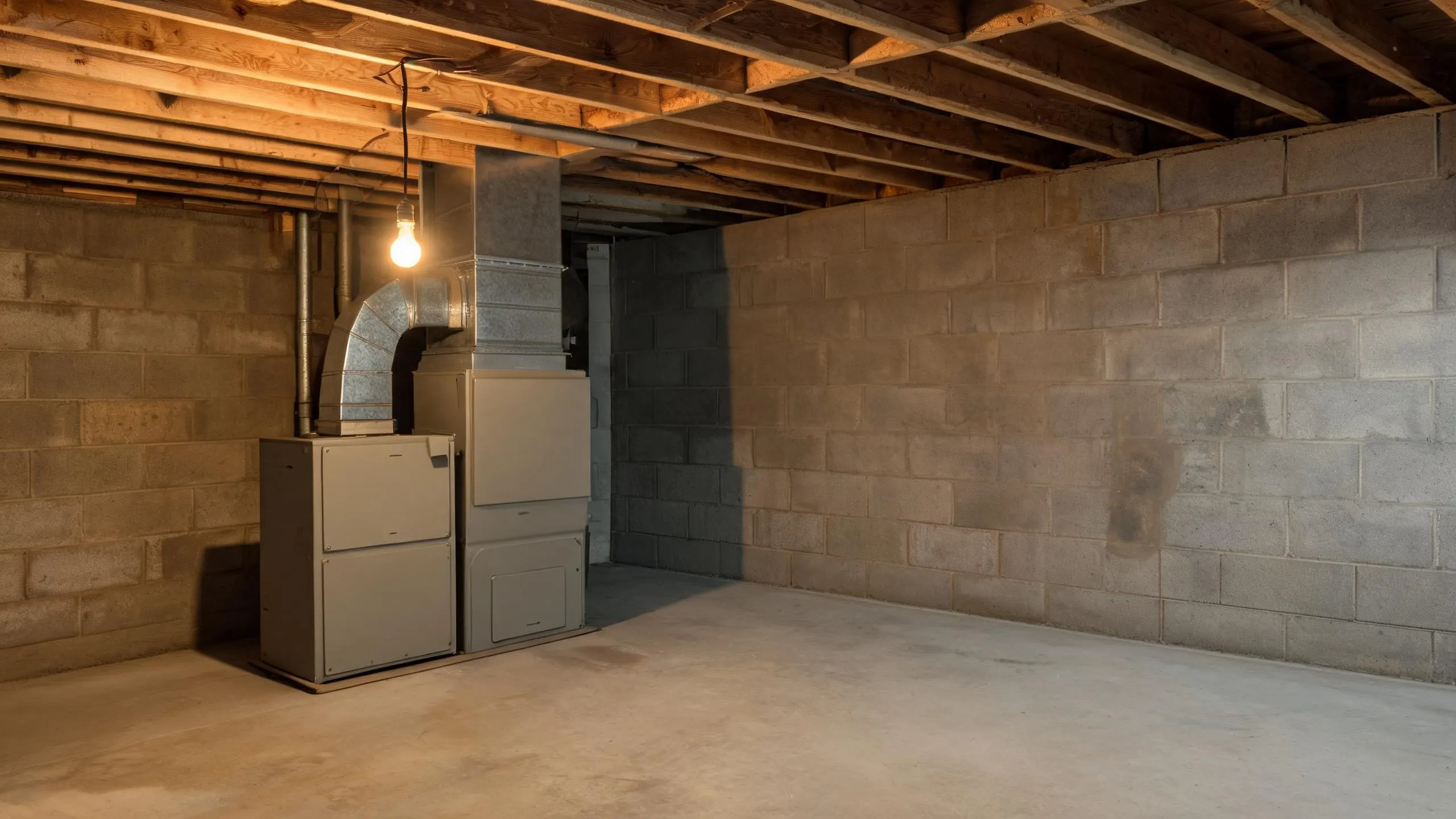
An unfinished basement featuring concrete block walls, exposed floor joists, a bare concrete floor, and a forced-air furnace with a large metal exhaust duct in the corner.

A high-efficiency gas furnace would save about $120 a year to run in Vermilion County compared with a gas furnace.

  • A high-efficiency gas furnace$530 a year
  • A gas furnace$650 a year

Estimates for a typical Vermilion County home, from EIA household energy data, Illinois fuel prices and NOAA climate normals. Your home will differ.

The old furnace usually comes out first, then the work starts on what's left behind. A tech will check the supply and return ducts, the gas line, the vent path and the electrical connection before setting the new unit in place. Sealing the duct connections matters as much as the furnace itself, since air leaking out of the joints is heat paid for and never felt. Once the new furnace is set, it gets fired up and run through a cycle so the tech can check the flame, the temperature rise and the airflow. The last step is usually a check with a combustion analyzer, reading the exhaust to confirm the furnace is burning clean and venting the way it should. A furnace that passes that check is one that's actually ready to run, not just one that's been bolted into place.