A illuminated two-story red brick house on a quiet residential street at dusk, flanked by mature trees under a deep blue evening sky.

Heat Pump Repair in Danville, IL

Tell us about the job

Takes about a minute. No obligation.

Step 1 of 3: Equipment

Zone 5A means the heat pump never really stops

Vermilion County sits in zone 5A, a cool climate where heating carries most of the load. That means your heat pump is running through long stretches of cold weather, not just taking the edge off a few chilly nights. Add in summer air thick enough to average a 64°F dew point, and the same unit is working the other direction too, pulling moisture out as much as cooling the air.

What that means when something's off

A system that runs this many months a year shows problems sooner than one that gets occasional use. A failing capacitor, a weak contactor, a refrigerant leak, these don't wait for a slow season to show up here. If your heat pump is acting up, get a contractor to diagnose it properly before assuming it just needs a quick fix.

8 months
October through May, your system heats
4 months
June through September, it cools
21°F
the average winter night it heats against
84°F
the average summer afternoon it cools against
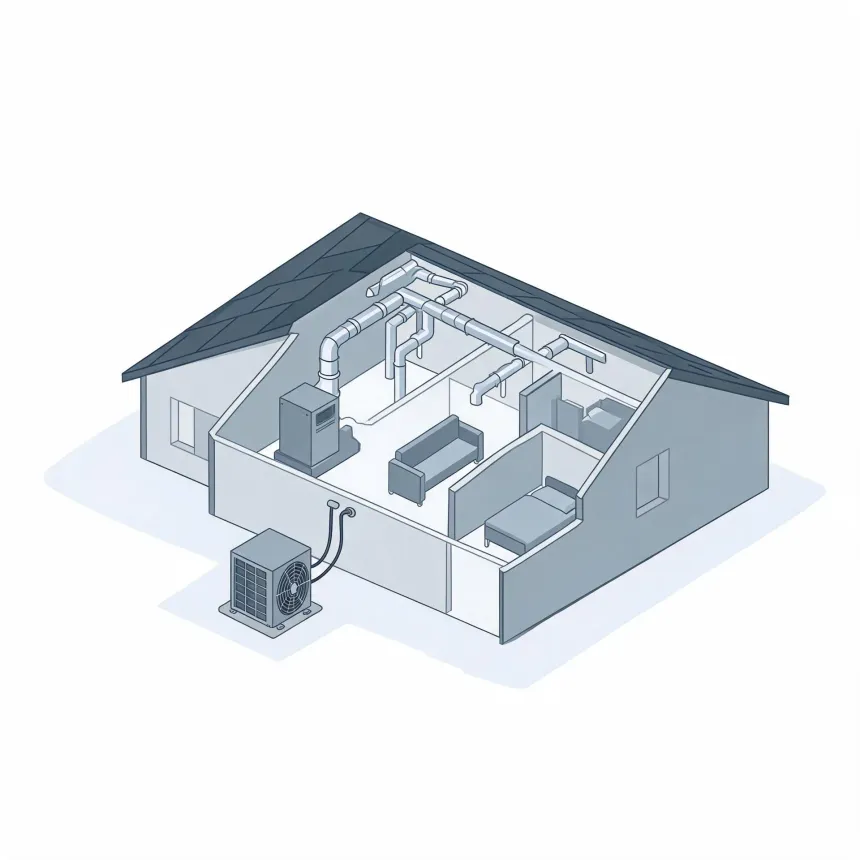
Isometric cutaway illustration of a single-story house showing interior rooms with furniture, an attic duct network connected to a furnace or air handler, and an outdoor condenser unit linked by lines outside the wall.
Your system heats October through May and cools June through September.

NOAA nClimDiv, 1991–2020 normals

Half the homes in Vermilion County were built in 1957 or earlier.

A heat pump in a house that old is more likely to be on its original ductwork and electrical setup, which affects what a repair can actually fix.

A repair bill here comes with a power bill behind it

Power here costs 17.81 cents per kilowatt-hour
Climate zone 5A
Cooling runs June through September
This county sees real storms163 damaging wind events and 70 hail events hit Vermilion County between 2015 and 2024.

October starts the heat this year, which means late September is when a weak part finally gets tested. A heat pump that limped through a mild September afternoon can fail outright the first cold morning it has to run full tilt for hours. The same thing happens at the other end, when June's first real heat load finds whatever was already marginal in May. If yours is struggling now, in the shoulder weeks before the season turns, that is not a sign to wait and see. It is usually the clearest sign you will get that something needs attention before the months of steady running start.

Find out what's actually wrong before the season decides for you

A heat pump that runs this many months a year doesn't fail at convenient times. Get the diagnosis now and you'll know whether you're looking at a repair or a replacement, instead of guessing in the middle of a cold snap.

Find a contractor
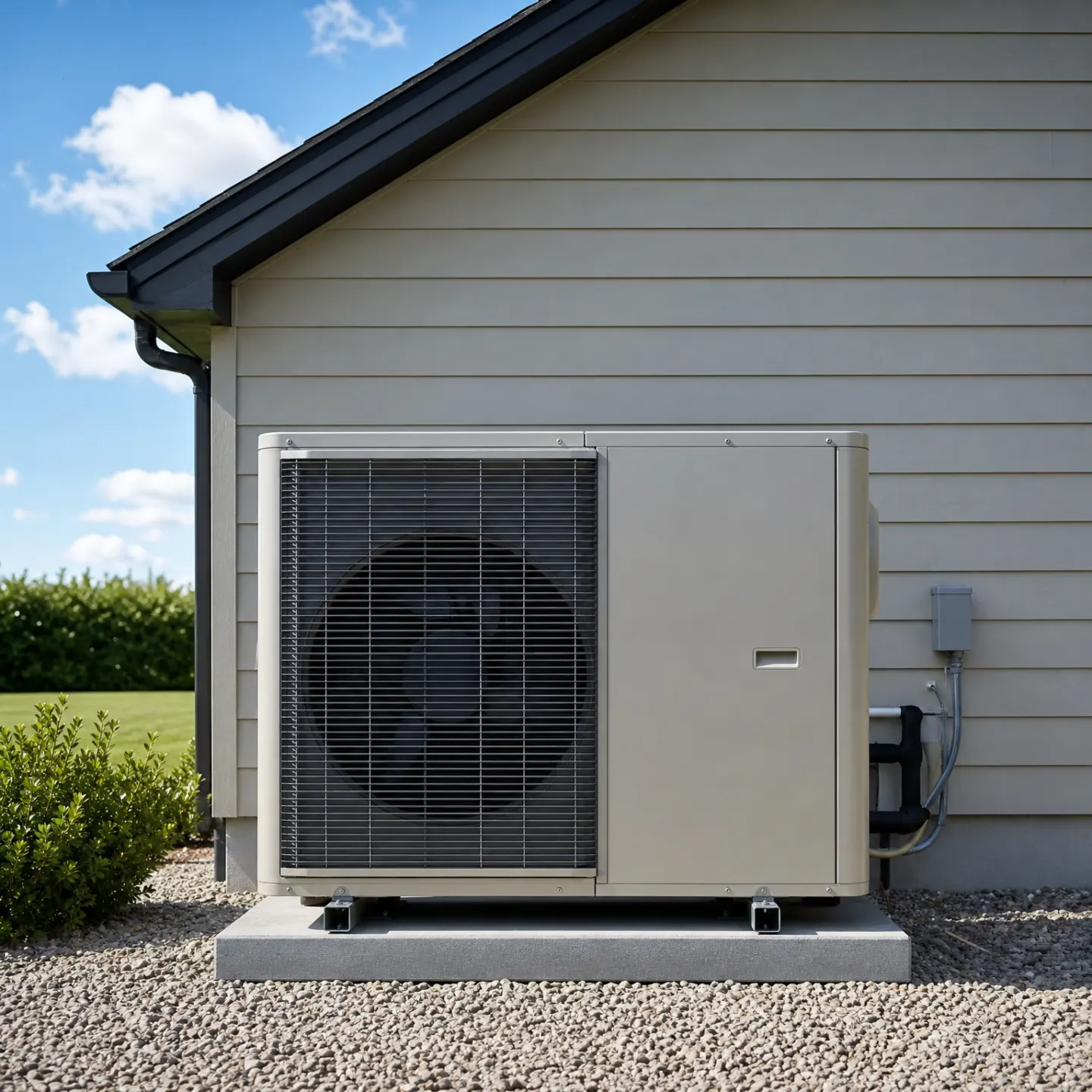
A residential heat pump outdoor unit mounted on a concrete pad next to a house with gray vinyl siding.

A small problem left running becomes a bigger one

A heat pump doesn't fail the moment something goes wrong inside it. It fails when that problem gets to run long enough to take something else down with it. A refrigerant leak starves the compressor of the oil that rides along with the refrigerant, and a compressor running low on lubrication wears out fast, even though the leak itself started somewhere else entirely. A failing capacitor makes the compressor strain on every single start, and a compressor that strains on every start has a shorter life than one that starts clean. Low airflow from a dirty coil or a clogged filter makes the system run longer to do the same job, and that extra runtime wears on parts that were never the original problem. The part that fails first is rarely the part that breaks last. Shutting the system down and getting it looked at stops the damage where it starts, instead of letting it spread to the one part that's expensive to replace.

What a struggling heat pump sounds and feels like

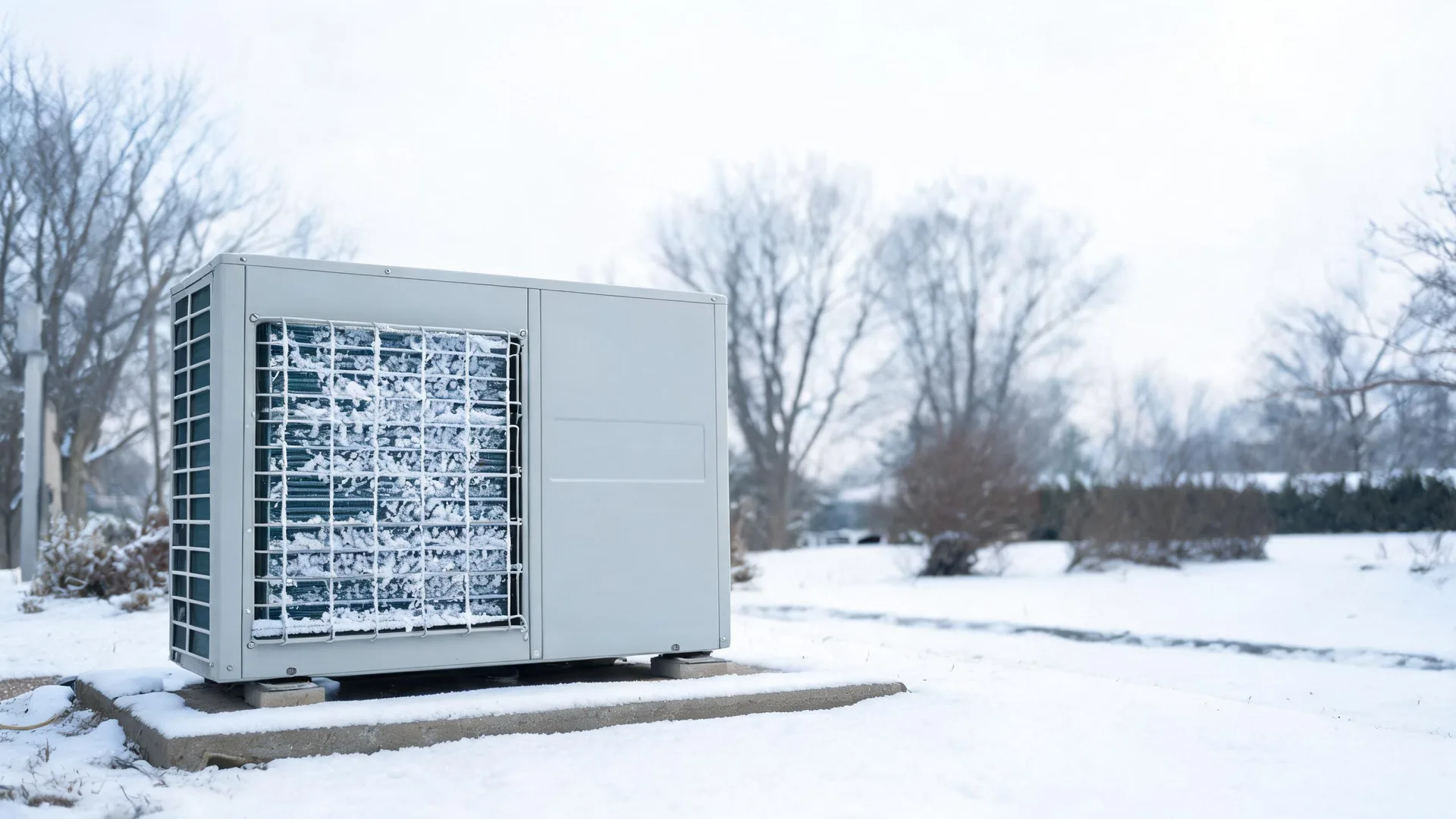
A heat pump that needs attention usually tells you before it quits outright. Air coming from the vents that feels barely warm or barely cool, even though the system is running. Short cycles where it kicks on and off instead of running a steady stretch. Ice building up on the outdoor unit that doesn't clear during the defrost cycle. A hissing or bubbling sound near the lines, which points to refrigerant escaping somewhere it shouldn't. Clicking when it tries to start but doesn't, or a hum without the fan ever turning. Any of these means something inside is working harder than it should to do less.

What to do once you notice it

Don't wait for the symptom to turn into a breakdown. A weak start capacitor will eventually strand the compressor on a morning you need heat most. A refrigerant leak that seems minor now will starve the compressor of lubrication and cost more to fix the longer it runs low. A reversing valve that sticks partway is often still repairable before it fails completely and locks the system in one mode. Getting a contractor to look at it while it's still limping along, rather than after it stops, is usually what keeps a repair a repair instead of turning it into a full replacement.

A heat pump fails from the same handful of causes, whether it sits in a mild climate or a hard one. The compressor is the part everyone worries about, but it's rarely the first thing to go. Capacitors and contactors wear out first, since they take the electrical punishment every time the system starts and stops. A dirty outdoor coil forces the whole system to work harder to move the same heat, and over time that strain shows up somewhere else, usually in the compressor it was supposed to protect. Refrigerant leaks don't happen from normal use. They happen at a joint, a valve, or a line that's been rubbing against something for years. The reversing valve, which switches the system between heating and cooling, sticks when it doesn't get used enough or wears out when it does, and either way it's a common failure point precisely because a heat pump calls on it so often. Most of this comes down to parts that work hardest getting worn out fastest, not bad luck.

If your outdoor unit sat through a hailstorm or had branches and debris thrown at it, that is worth a look even if the system still seems to run fine. Hail can dent the fins on the outdoor coil, and bent fins block airflow the same way dirt does, just less evenly. Debris can nick the fan blade or work into the cabinet around the fan motor. None of that always shows up as an obvious symptom right away. It can just mean the system works harder for the same result, which is exactly the kind of wear that catches up with a compressor later. A contractor checking it after a storm, not just after it stops working, is the way to know whether it took damage or came through clean.