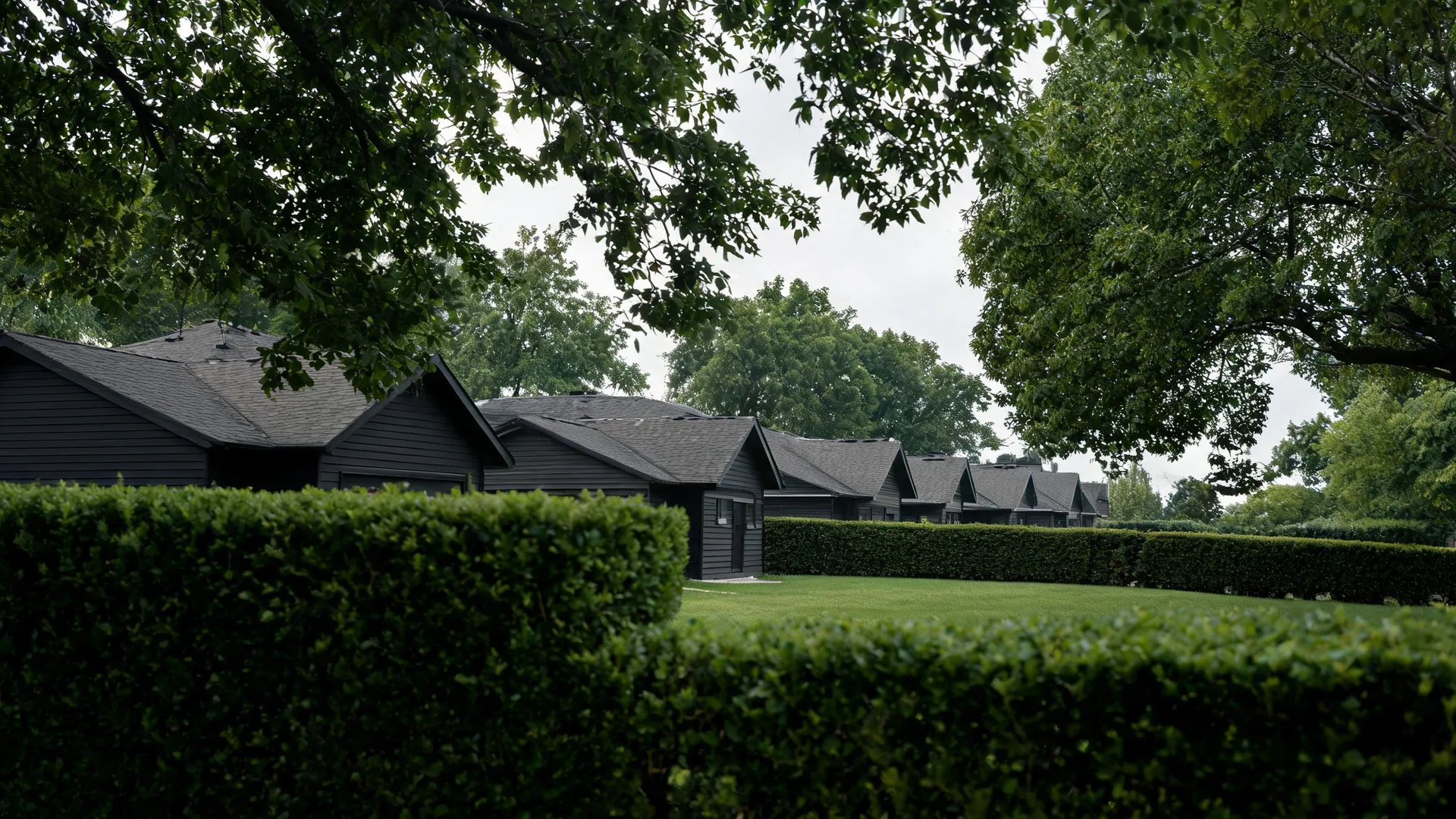
A row of dark-clad houses with gray gabled roofs behind trimmed hedges and a lawn, framed by overhanging tree branches under an overcast sky.

Furnace Maintenance in Danville, IL

Tell us about the job

Takes about a minute. No obligation.

Step 1 of 3: Equipment

Weather here takes a toll

Vermilion County logged 250 severe weather events between 2015 and 2024, including 163 damaging wind events, 70 hail events, and 9 tornadoes. That's a lot of chances for debris, hail and wind to reach a furnace's outdoor components.


Power doesn't always hold

Statewide, 16% of Illinois households went at least a full day without power in 2024. A furnace needs electricity to run even on gas, so an outage during a cold stretch leaves a house without heat until power comes back.

Over half the homes in Vermilion County heat with gas.

A gas furnace needs its burner, venting and safety controls checked every year, not just a new filter.

Half the homes here were old enough to vote before the furnace was

Half the homes here were built by 1957
Climate zone 5A
Heat runs October through May

October is when furnaces here go from idle to working every day, and that's also when a small problem turns into no heat on a cold night. Get the check done in September, before the first cold snap hits. Heat stays on through May, so this furnace has about eight months of steady work ahead of it once it starts. A tune-up in September catches a cracked heat exchanger or a weak igniter while there's still time to fix it without the house going cold.

Get the furnace checked before the next storm knocks the power out

A furnace tune-up covers the vents and outdoor components that wind, hail and debris can reach over a season of storms. It's also a chance to check that the furnace starts up reliably, since a power cut during a cold snap means no heat until the power and the furnace both come back.

Find a contractor
A man in a dark shirt and tan work pants, seen from behind, climbs stone steps toward a navy front door while carrying a waxed canvas tool tote, with a potted lavender plant beside the entry.
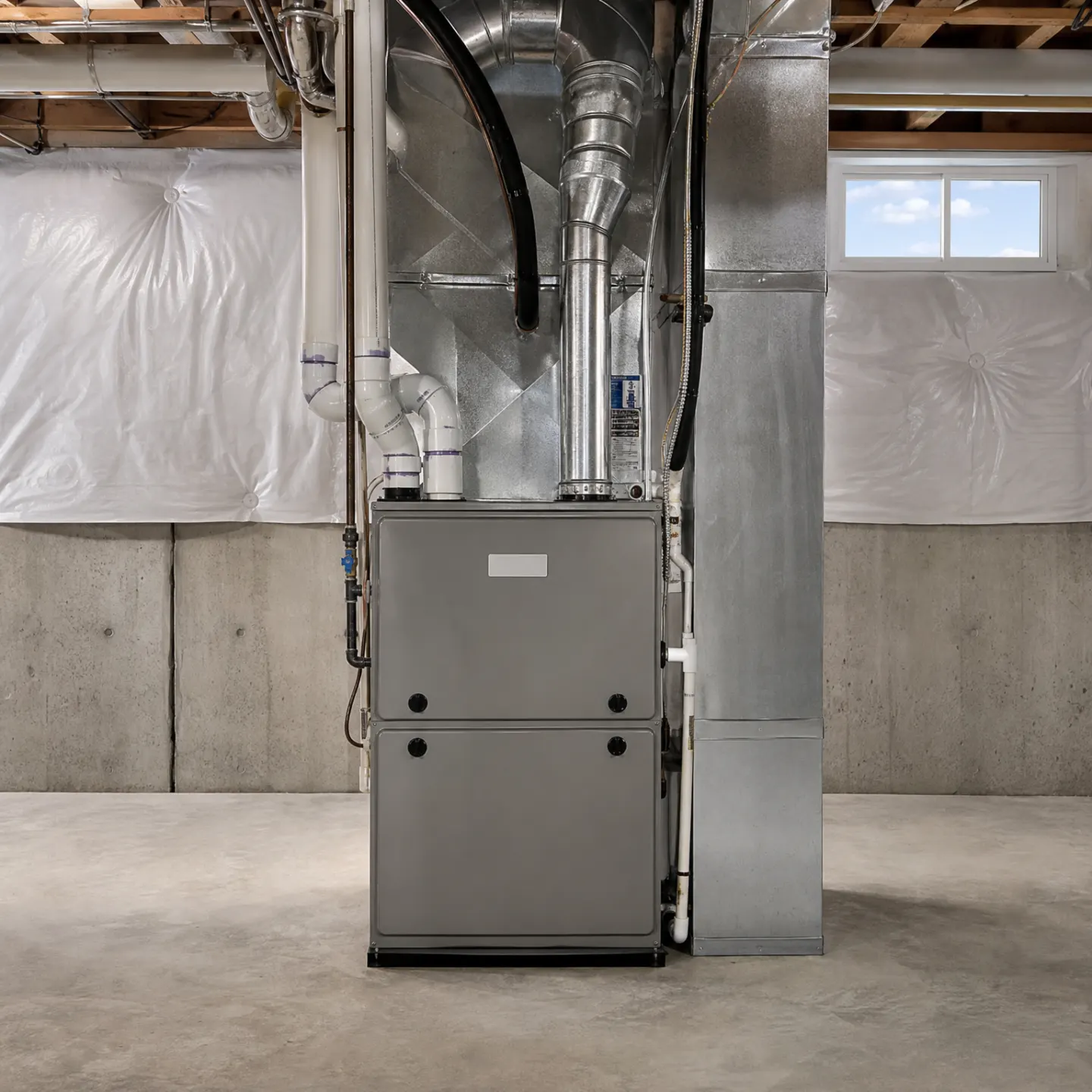
A gray residential gas furnace installed in an unfinished basement, connected to sheet-metal ductwork and PVC pipes.

The older the furnace, the more a yearly check catches

If the furnace came with the house, a once-a-year check is how a contractor catches a cracked heat exchanger or a failing control before it fails on a cold night. That matters more in a furnace that has run for decades than one a few years old. Ask whoever does the tune-up how old the unit actually is if you don't know. It tells you how closely to watch it.

A dirty filter works the whole system harder

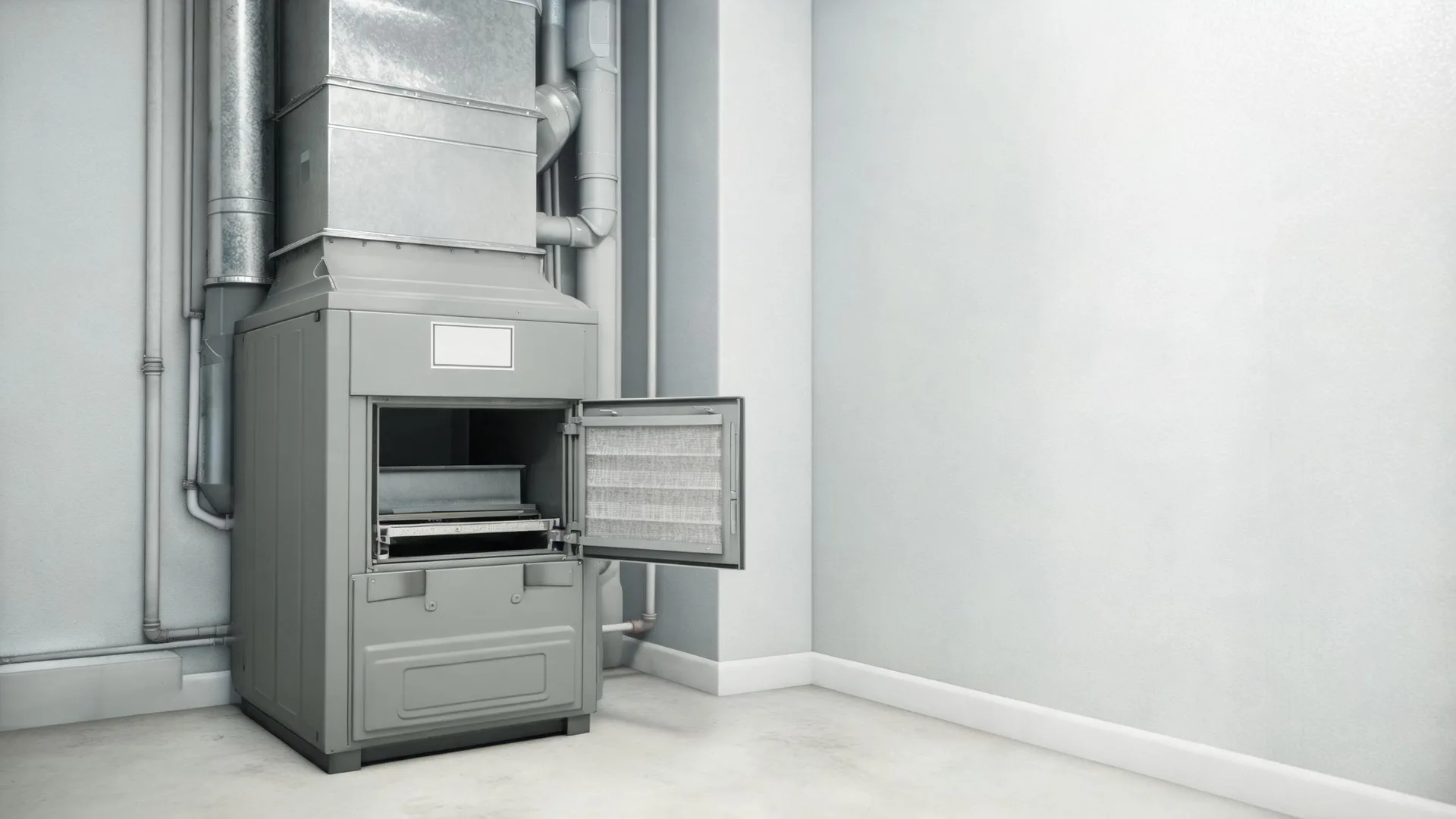
A clogged filter chokes airflow across the heat exchanger. The blower has to push harder to move the same air, and the exchanger can run hotter than it's built for. Left long enough, that heat stresses the metal and shortens the life of the part that keeps exhaust gases out of the air in the house.

The drain and coil matter even on a furnace

A furnace paired with central air shares a coil and a condensate drain with the cooling side. If that drain clogs, water backs up and can trip a safety switch or damage the cabinet underneath. A tune-up checks that the drain runs clear and the coil isn't caked with dust, since both sit right in the path of the air the furnace is heating.

A furnace usually tells you something is off before it quits outright. The burner flame should burn steady and blue. If it's flickering yellow or orange, that's incomplete combustion, and it means the gas isn't burning clean. A furnace that short cycles, turning on and off in quick bursts instead of running a full heating cycle, is often struggling with airflow or a failing sensor. Listen for sounds that weren't there before: a screech from the blower motor, a rattle from a loose panel, a boom when the burners light. Rooms that used to heat evenly but now run cold in spots can mean the blower isn't moving enough air or a duct connection has come loose. Any of these is worth a look before the part fails instead of just struggles.

A proper tune-up starts at the burners. A tech pulls them and cleans off rust and scale so the flame lights even and full across the burner instead of in patches. The flame sensor gets cleaned too, since a coated sensor is one of the most common reasons a furnace shuts itself off mid-cycle. From there it's the heat exchanger, checked for cracks or corrosion that could let exhaust gases mix into the air the blower pushes through the house. The igniter gets tested under load, not just looked at, because an igniter can glow and still fail to light the gas reliably. Belts and bearings get checked on the blower motor if it has them, and the whole unit gets a run cycle with the panels back on, watching how it starts, how it ramps up, and how it shuts off. A furnace that passes all of that is one a contractor can say, with some confidence, is ready to run.