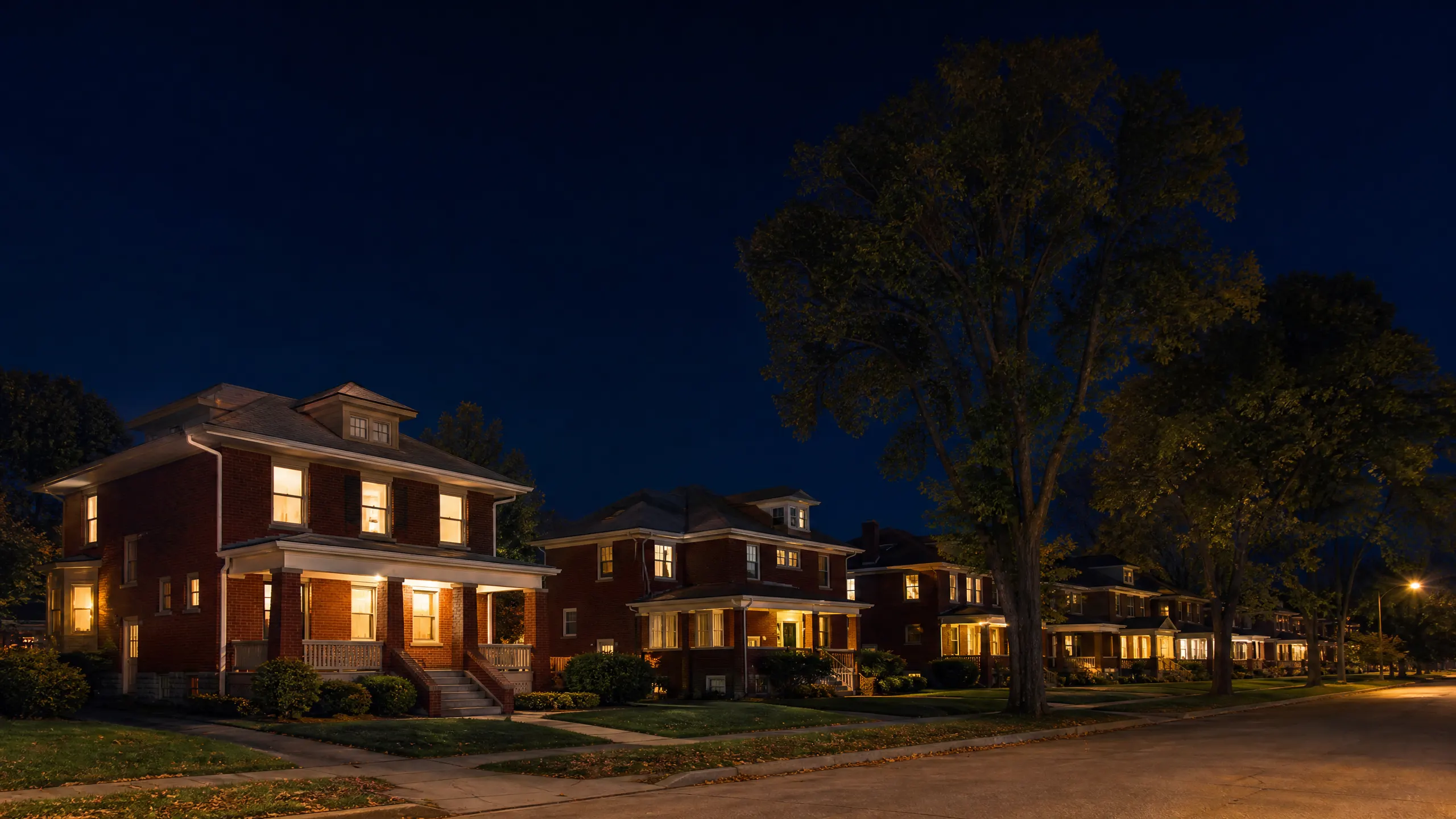





A nighttime street view of several illuminated two-story red brick homes with front porches, flanked by a large tree.

Furnace Maintenance in Champaign, IL

Tell us about the job

Takes about a minute. No obligation.

Step 1 of 3: Equipment

Champaign County saw 317 severe weather events between 2015 and 2024. Damaging wind caused 223 of them, hail accounted for 70, and 13 tornadoes touched down in that span. Statewide, 16% of households went at least a day without power in 2024. A furnace needs electricity to run even when the fuel is gas, from the control board to the blower motor to the igniter. When the power drops in the middle of a cold snap, you want to already know the furnace will start back up on its own and run the way it should. A tune-up before winter is the time to find a weak part, not after an outage has already tested it.

Furnaces here start running in October.

Get the tune-up done in September, before the cold and the outages test it.

Half these furnaces still have years ahead of them

Half the homes here were built by 1981
Heat runs October through May
Winter nights average 21°F
Over half these homes run on gasGas heats 54.2 percent of homes in Champaign County, more than electric or propane.

If your furnace came with the house, there's a good chance it's not old. A yearly check is what keeps it that way. A technician cleans the burners, checks the igniter, and tests the flame sensor before any of that wear turns into a breakdown. Catching a cracked heat exchanger or a failing control board early can mean a repair now instead of a full replacement later. For a furnace with years left in it, that yearly visit is what gets it to the end of its life still working the way it should.

Have it checked before the next outage finds the weak part

A tune-up checks the parts that let your furnace start back up and run after the power drops. Get it scheduled now, before a storm tests it for you.

Find a contractor
A man in a cap, dark shirt and tan work pants, seen from behind, carries a worn canvas tool bag up steps toward a dark blue front door beside a tall planter of flowers.
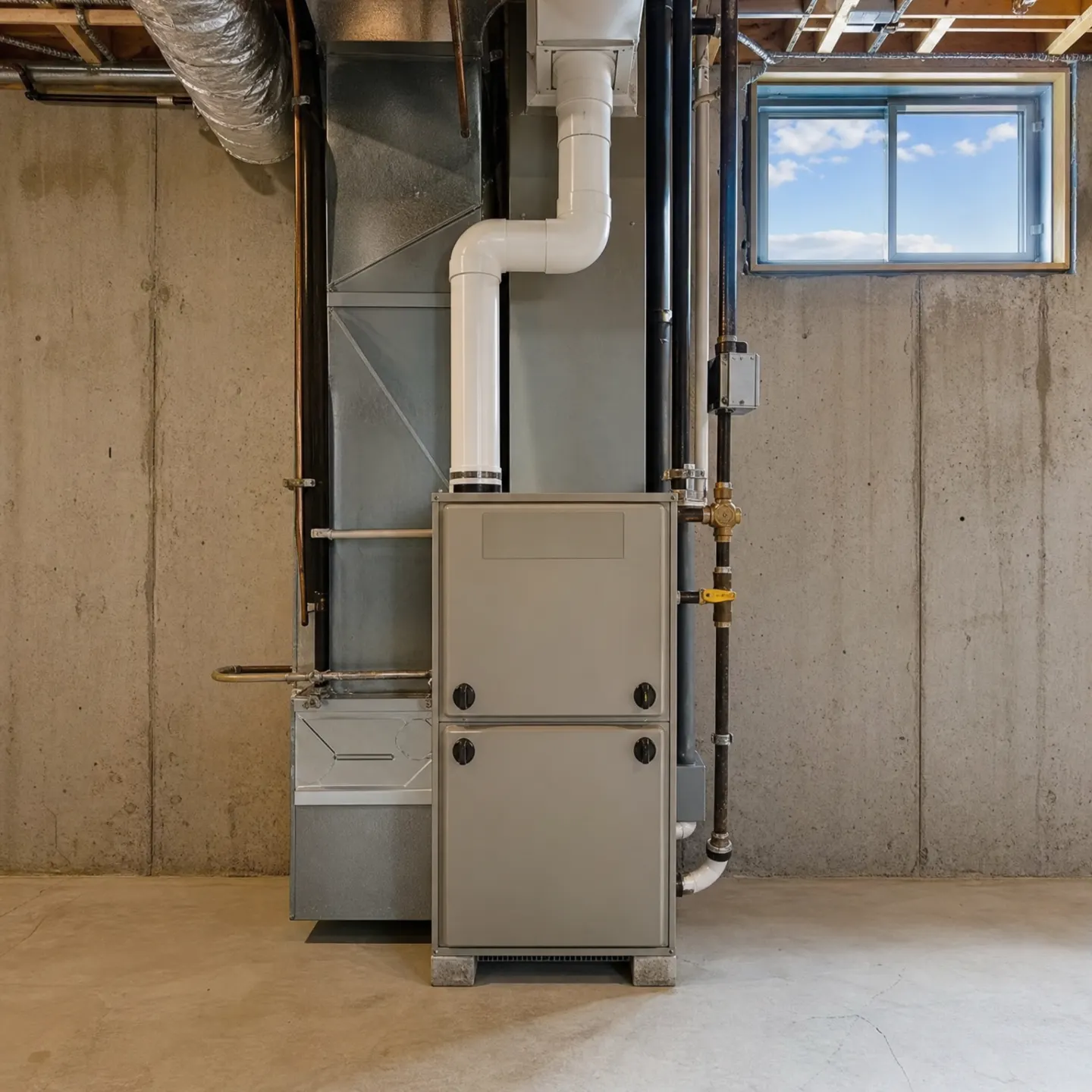
A gray gas furnace with attached ductwork and piping installed in an unfinished concrete basement.

The furnace usually tells you first

A furnace gives out warnings before it quits. Short cycling is one: it fires up, runs a few minutes, shuts off, then starts again before the house has warmed up. That's usually a flame sensor coated with residue or a flue that isn't drawing right. A burner flame that's flickering or yellow instead of steady blue means it isn't burning clean, and that's not something to wait on. A clicking igniter that doesn't catch, or a blower that kicks on louder than it used to, both point to a part working harder than it should. Dust blowing out of the vents right when the system starts up is a sign the inside hasn't been cleaned in a while. None of these mean the furnace is done. They mean it's telling you what it needs before it decides for you.

The filter is doing more than keeping dust down

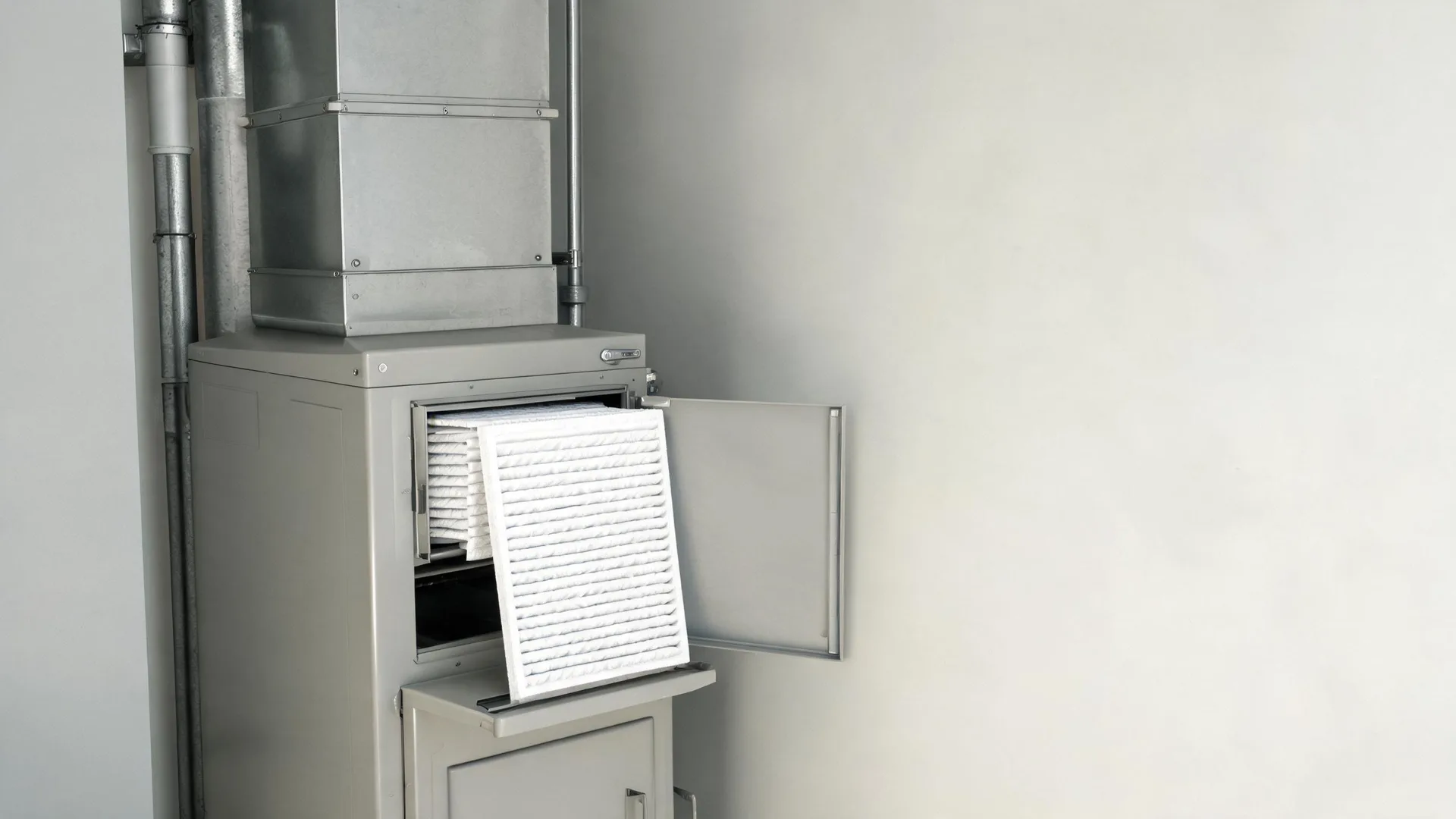
A clogged filter chokes off airflow across the heat exchanger. The blower has to push harder to move the same amount of air, and the exchanger runs hotter than it's built for. That's what cracks it over time. Checking the filter is one of the simplest parts of a tune-up and one of the few things that affects almost everything else the furnace does.
The drain line only matters once, until it doesn't

A high-efficiency furnace produces condensation that has to leave through a drain line, and that line can clog with sludge or algae over time. When it backs up, the furnace shuts itself down rather than let water reach the burners or the control board. It's a safety switch doing its job, but it means a dirty drain line can take the whole system offline even though nothing else is wrong.

A real tune-up means the furnace comes apart, not just gets looked at. The technician pulls the burners out to clean them, not just glances at the flame. The flame sensor gets removed and scrubbed, since a quick wipe without taking it out leaves the residue that causes short cycling. Static and working pressures get measured with a gauge on the gas line, not guessed at by eye. The heat exchanger gets inspected with a light and a mirror for cracks, because that's the part that can put carbon monoxide into the air if it fails. A quick visit checks that the furnace turns on and calls it done. A thorough one checks whether it's safe to keep running.

A tune-up is also when the moving parts get attention nothing else reaches. Bearings in the blower motor get checked for wear, and the blower wheel gets cleaned since caked-on dust throws it off balance and strains the motor over time. Belts, if the furnace has them, get checked for tension and cracking. Electrical connections get tightened, because a loose wire at the control board causes the kind of intermittent fault that's hard to diagnose later and easy to catch now. The technician also checks the limit switch, which shuts the furnace off if it overheats. It's not a part that fails often, but it's the one standing between a stuck blower and a cracked heat exchanger, so it gets tested rather than assumed to be fine.