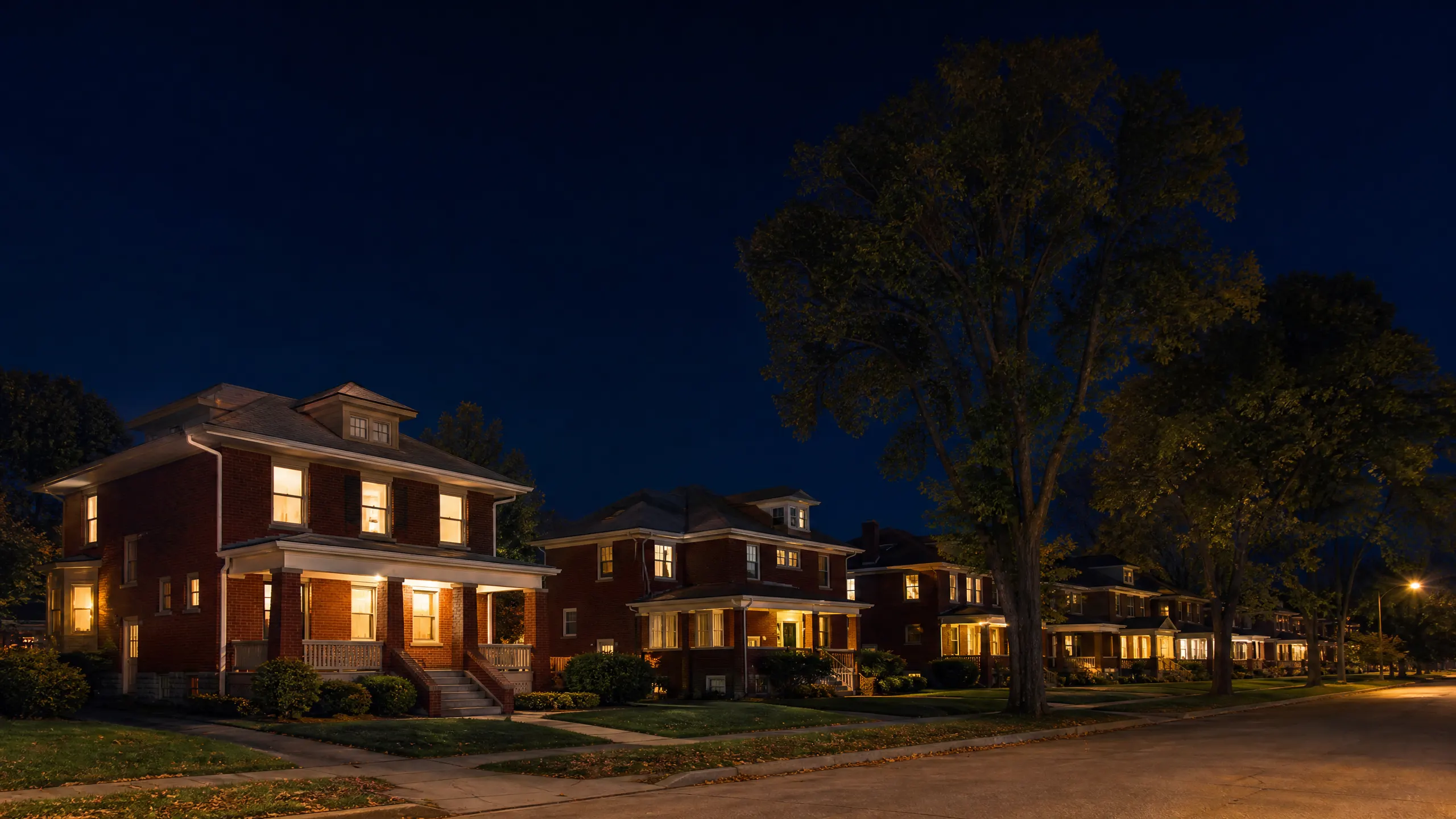


A nighttime street view of several illuminated two-story red brick homes with front porches, flanked by a large tree.

Furnace Repair in Charleston, IL

Tell us about the job

Takes about a minute. No obligation.

Step 1 of 3: Equipment

Furnaces in Charleston run from October through April, about seven months of the year. That's a long stretch, but it's not unusual, and it doesn't mean your furnace works any harder than furnaces anywhere else with a winter like this. Overnight lows average 23°F in December, January and February, so it's doing real work on those cold nights, not just cycling on now and then. When one acts up, the cause is usually something simple. An igniter that's failing. A flame sensor that needs cleaning. A blower motor on its way out. Most of these have a clear fix once someone's had a look at the unit.

7 months
October through April, your furnace is on duty
23°F
the average winter night it heats against
51%
of homes here heat with gas, so most furnaces here burn gas
6 winter storms
in ten years, the nights a failure hurts most
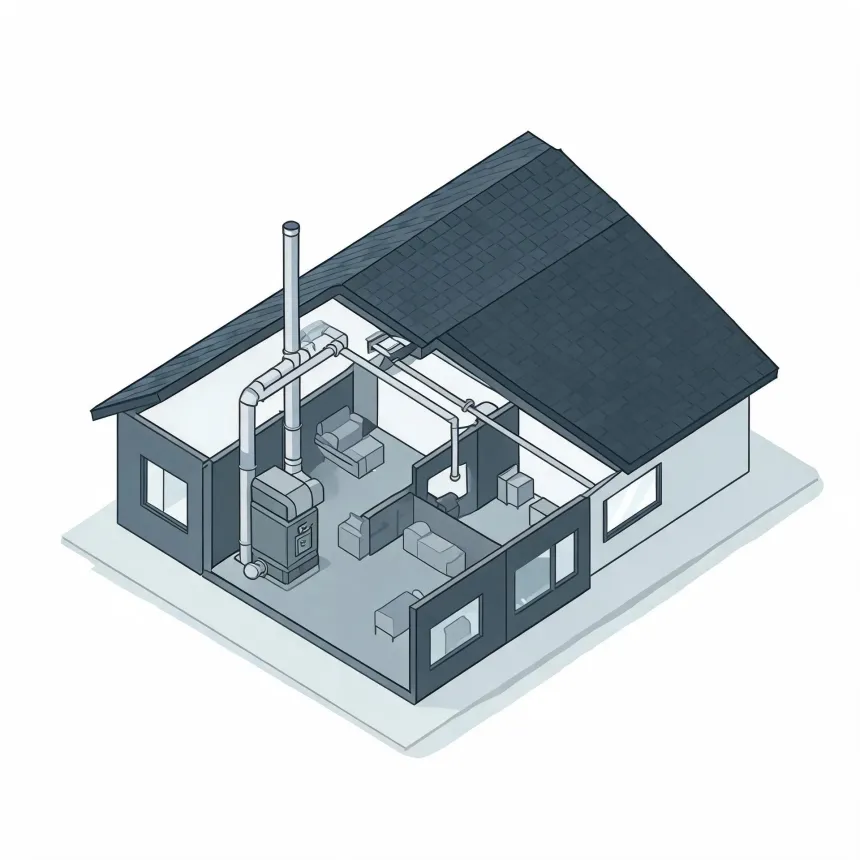
Isometric cutaway illustration of a single-story house showing interior rooms with furniture, a furnace unit connected to ducting and vertical flue pipes running through the roof.
Your furnace works hardest from November through March.

NOAA nClimDiv, 1991–2020 normals

Furnaces in Charleston start their season in October.

A weak part usually fails in the first weeks of running heat, not once winter settles in.

Half the homes in Coles County were built in 1971 or earlier

Half the homes here were built by 1971
Heat runs October through April
Winter nights average 23°F

If your furnace came with the house and the house dates to that era, ask the contractor straight out how much life it has left. A furnace that old has likely been repaired more than once already, and at some point a repair just buys a few more months. Before paying for another part, get a clear answer on whether the unit is worth the money or whether you're better off putting it toward a new one. A tech who's looked at the whole system can tell you which it is.

Get the usual fix

Nothing about this area is especially hard on it. It's most likely the usual problem with the usual fix.

Find a contractor
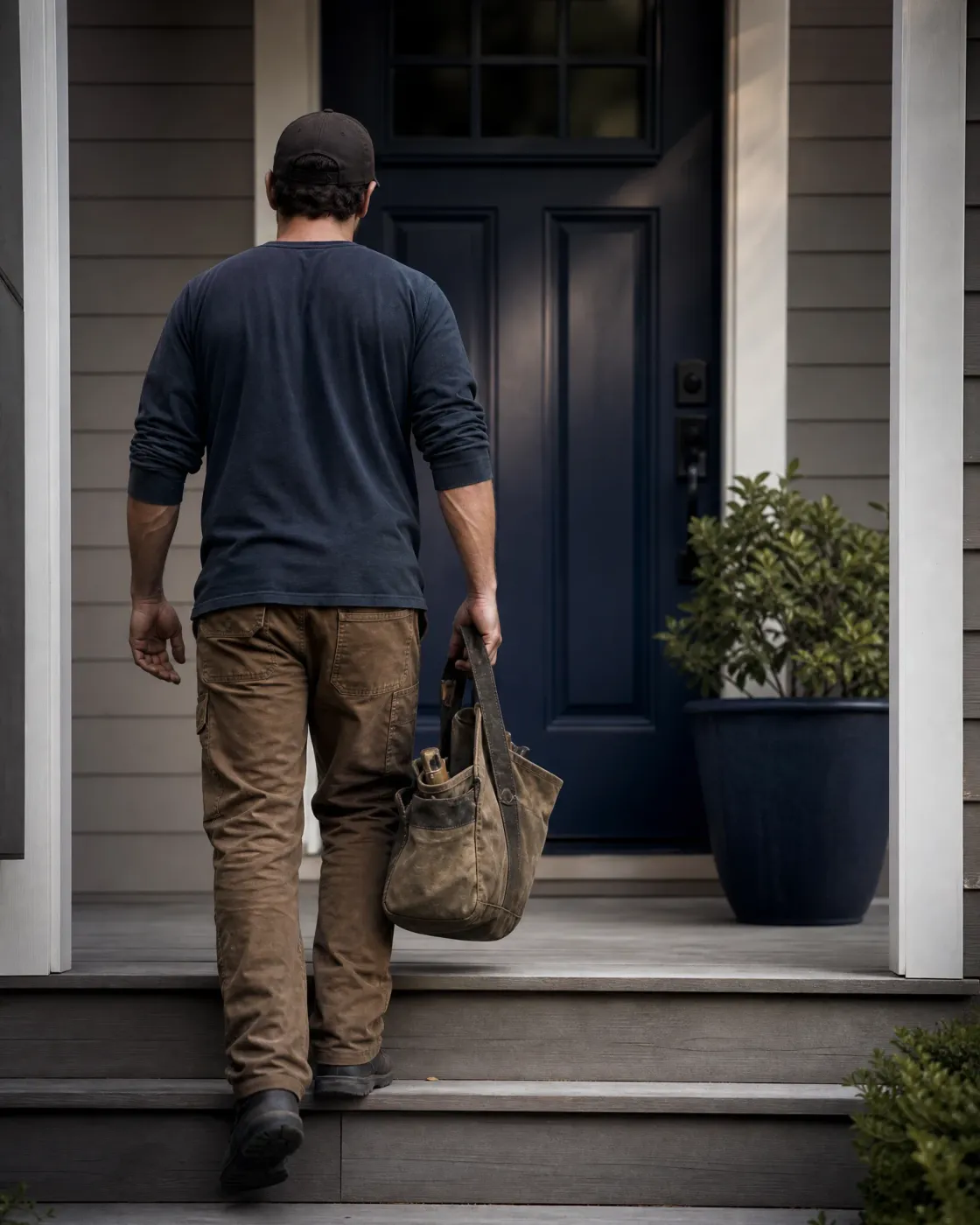
A man in a dark cap, navy long-sleeve shirt and brown work pants, seen from behind, carries a worn canvas tool bag up steps toward a navy front door on a gray clapboard porch with a potted shrub.
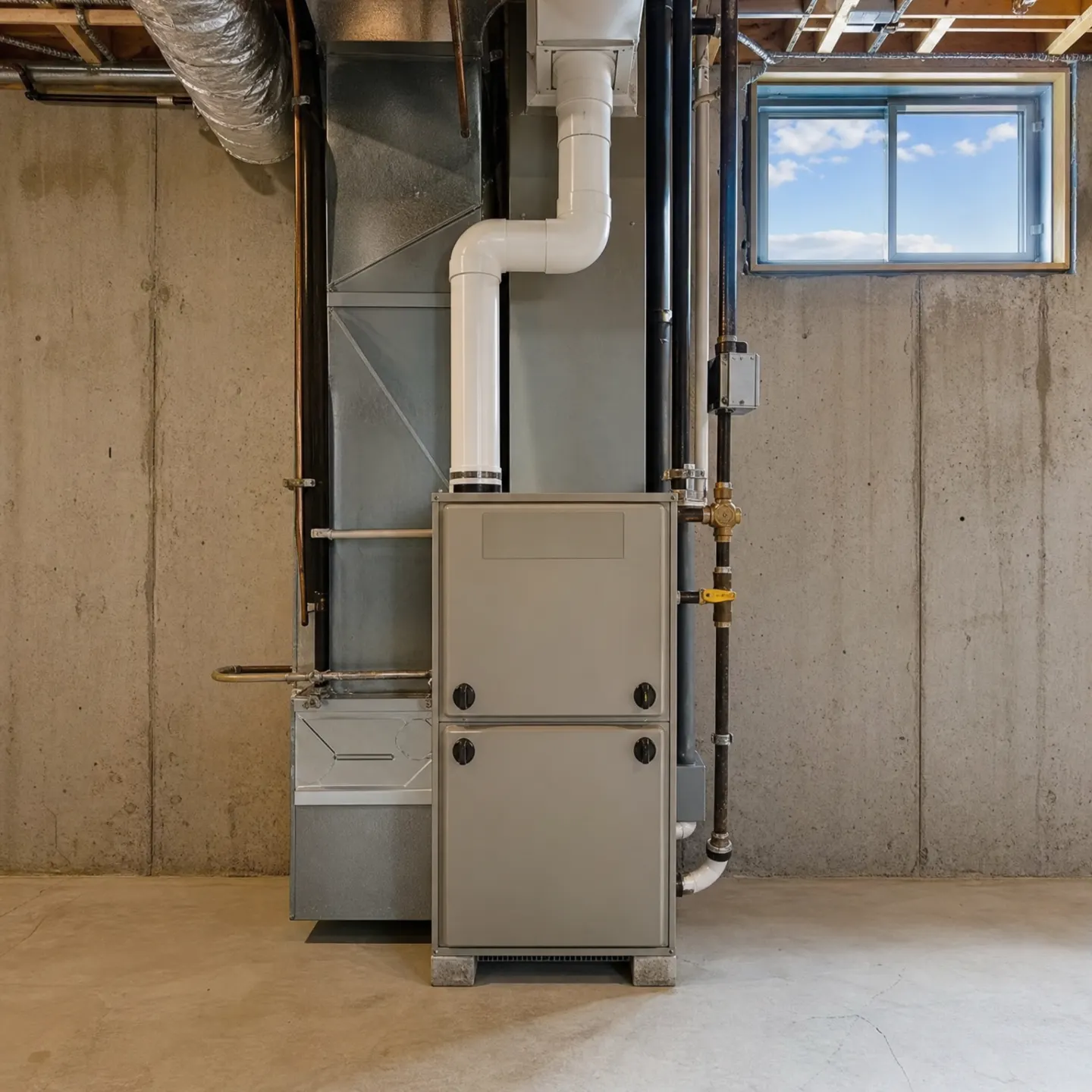
A gray gas furnace with attached ductwork and piping installed in an unfinished concrete basement.

Running it longer doesn't make the problem smaller

A furnace with a bad igniter or a failing flame sensor doesn't just stop working, it starts short cycling. It fires, shuts off, waits, tries again. Each attempt puts a load on the blower motor and the control board. A cracked heat exchanger is worse. Keep running it and the crack spreads, and the blower can start pushing exhaust into the air it's supposed to be warming. A blower motor running on worn bearings will keep going until it seizes, and when it does it can take the control board with it. None of this fails less because you wait. It fails more.

What you can check first

Make sure the thermostat is set to heat and the setting is above room temperature. Check the breaker for the furnace and the switch that looks like a light switch near the unit, sometimes mounted on or near the furnace itself. Look at the filter and replace it if it's gray or clogged. If the furnace has a standing pilot, see if it's lit. None of this calls for opening the cabinet or touching gas or electrical connections.

When to stop and call

If the breaker trips again after you reset it, stop and leave it off. If you smell gas, leave the house and call the gas company before calling anyone else. A furnace that turns on and shuts off within a few minutes, over and over, needs a tech rather than another reset. Soot around the furnace or a yellow flame instead of blue also means stop and call, not keep trying.

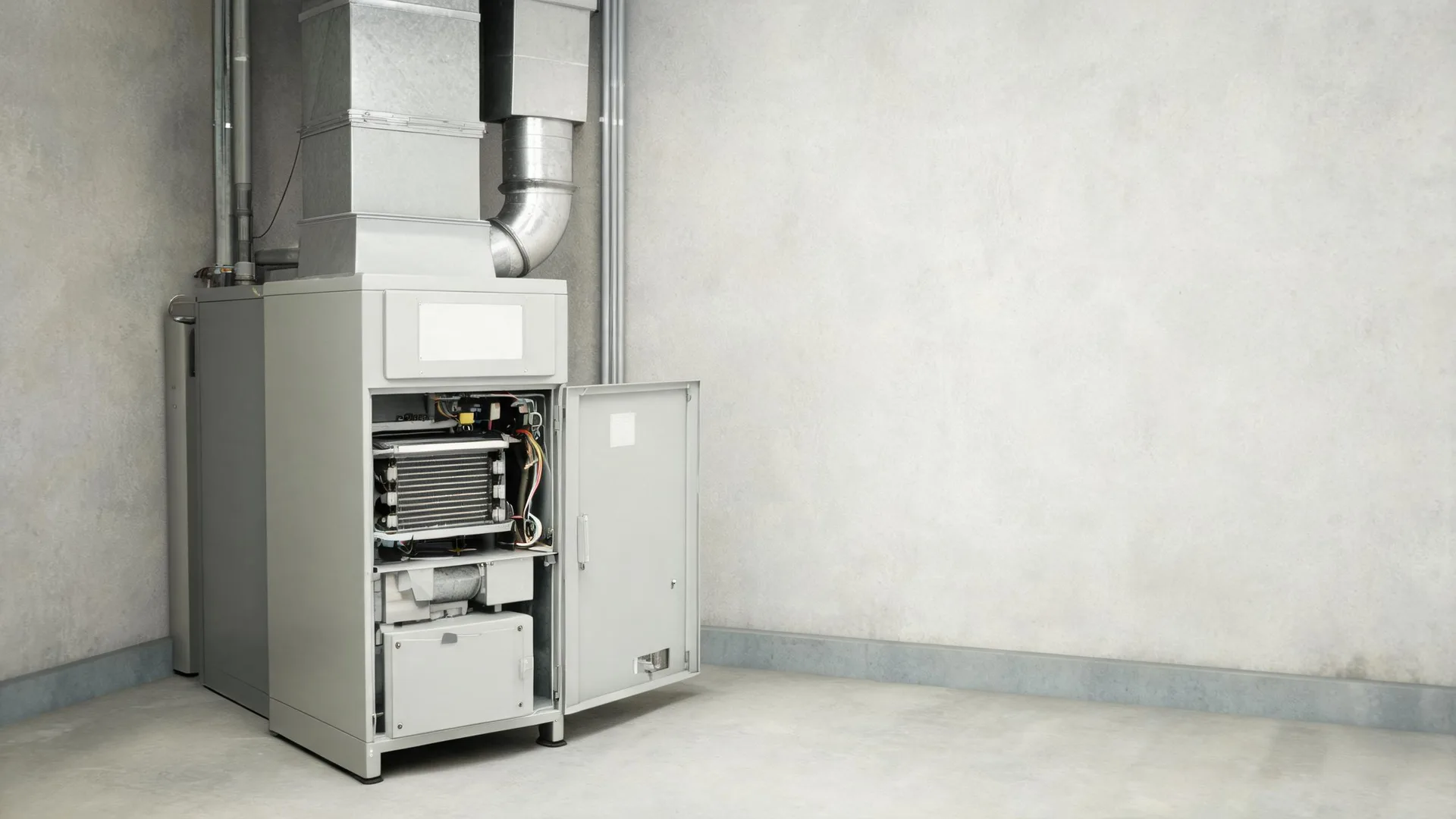
An unfinished basement containing a gas furnace with ductwork in the foreground and miscellaneous stored items along the far concrete wall.

A new furnace would cut about $120 a year off heating for a typical Coles County home.

  • A new high-efficiency furnace$500 a year
  • An older furnace$620 a year

Estimates for a typical Coles County home, compared with an older unit built to the previous federal minimum, from EIA household energy data, Illinois fuel prices and NOAA climate normals. Your home will differ.

Repair makes sense when one part has failed and the heat exchanger is sound.

Replacement makes sense when the heat exchanger is cracked or the furnace keeps needing parts.

A repair makes sense when the problem is one part doing its job badly. An igniter, a flame sensor, a blower motor. Swap the part and the furnace runs the way it did before, for about as long as the rest of it holds up. Replacement starts to make more sense when the thing that's failing isn't really the part, it's the furnace around it. A heat exchanger with a crack. A control board that's taking out other parts when it goes. A unit where this is the second or third repair in a short run of winters. At that point you're not fixing a furnace, you're renting a little more time from one that's already telling you it's done. A tech who's opened the cabinet and looked at the exchanger and the board can tell you which situation you're actually in, and that's worth more than guessing from how old the unit looks.