


A illuminated two-story red brick house on a quiet residential street at dusk, flanked by mature trees under a deep blue evening sky.

Heat Pump Repair in Charleston, IL

Tell us about the job

Takes about a minute. No obligation.

Step 1 of 3: Equipment

Winters here average 23°F overnight through December, January and February, which is well within what a heat pump is built to handle. Nothing about Charleston's weather pushes this equipment harder than it's designed for. So when a heat pump stops keeping up or starts short cycling, the cause is usually something specific and fixable, not the climate working against it. Could be a failing defrost control, a low refrigerant charge, or a reversing valve stuck in one position. A contractor can trace it to the actual part instead of guessing.

7 months
October through April, your system heats
5 months
May through September, it cools
23°F
the average winter night it heats against
85°F
the average summer afternoon it cools against
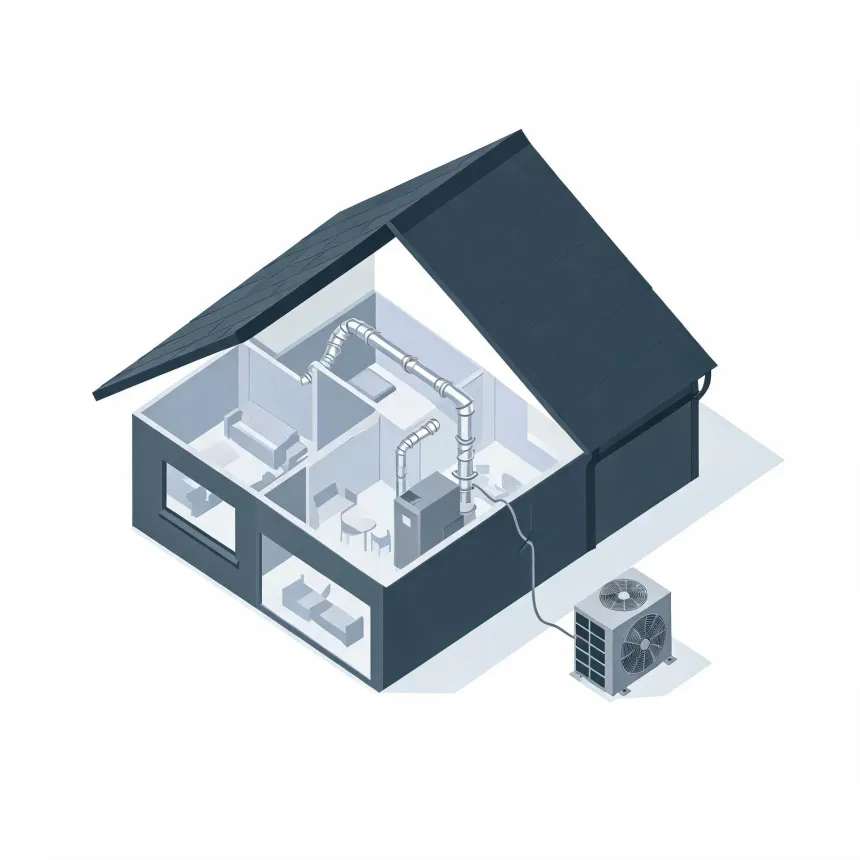
Isometric illustration of a cutaway house showing interior rooms with furniture, a furnace and ductwork, connected by a line to an outdoor condenser unit on the ground outside.
Your system heats October through April and cools May through September.

NOAA nClimDiv, 1991–2020 normals

Heat pumps in Charleston go to work in October.

A weak part that made it through last winter tends to fail in the first cold snap, not before.

A heat pump running wrong on 15.87 cent power adds up fast

Power costs 15.87 cents a kWh statewide
64 damaging wind events from 2015 to 2024
26 hail events from 2015 to 2024

Half the homes in Coles County were built in 1971 or earlier. If your heat pump came with a house that old, the thermostat and ductwork probably did too, and the heat pump itself may already be a replacement for whatever was in there originally. That matters when you're deciding whether to fix what's wrong or start pricing a new unit. A compressor or reversing valve failure on an older system is a different conversation than the same failure on one installed five years ago. Worth asking the contractor straight out how many years they think it has left before you pay for the repair.

Ask what the repair buys you before you pay for it

A contractor can tell you in a few minutes whether this heat pump is worth fixing or close to done. Get that answer before the repair starts, not after.

Find a contractor
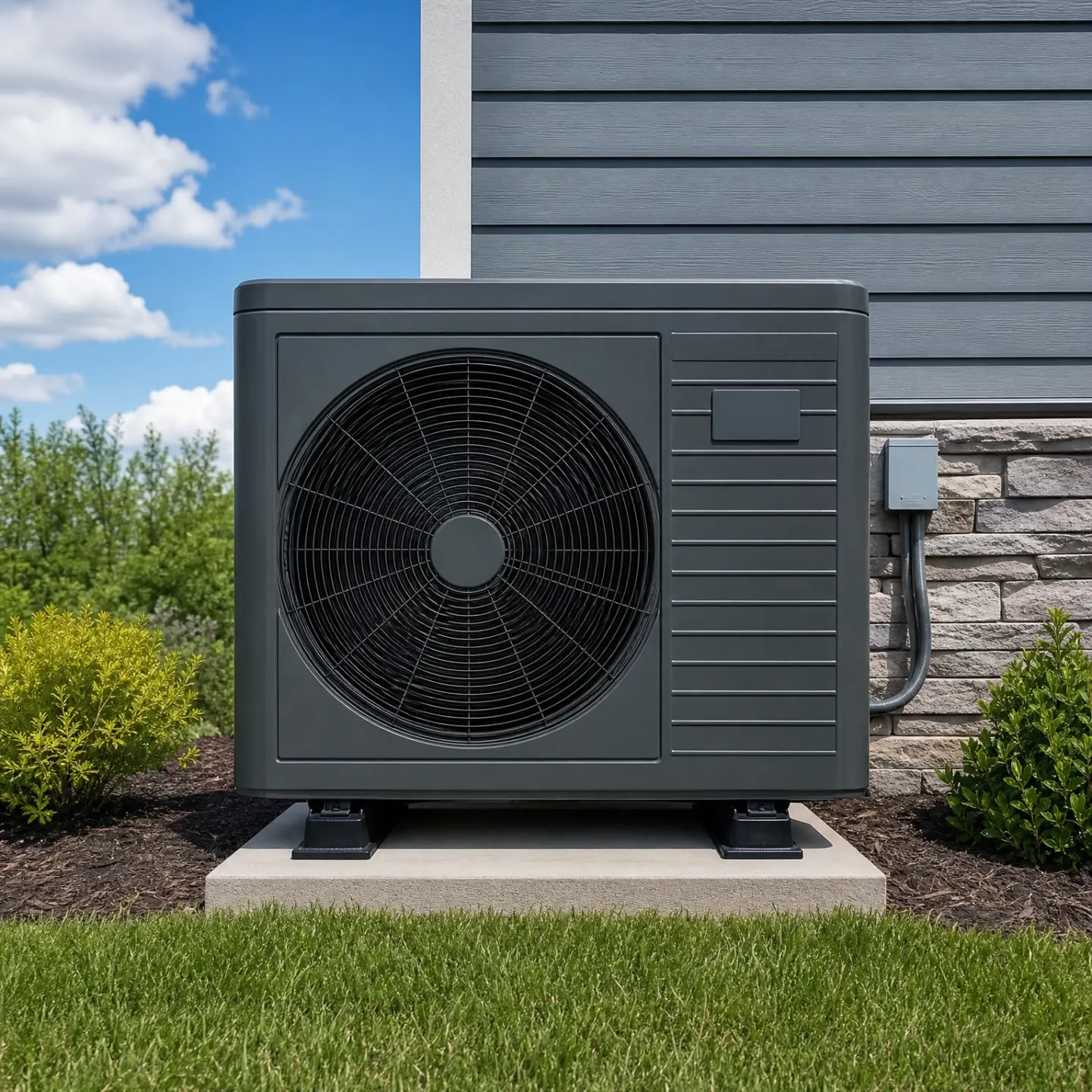
A dark gray heat pump unit mounted on a concrete pad next to a house with gray siding and a stone veneer wall.

What to check before you call

Before you pick up the phone, go look at the outdoor unit. If the fan isn't spinning and the coil is caked in ice, that's worth noting, but don't start chipping at it. Check the thermostat is actually calling for heat and that the batteries aren't dead. Go to the air handler or indoor unit and look at the filter. A filter clogged with dust will starve the system of airflow and can be behind all sorts of symptoms that look like bigger problems. Walk around outside and make sure nothing is blocking the outdoor unit, no bushes grown in close, no leaves packed against the side, no snow drifted up against it. Check your breaker panel for a tripped breaker before you assume the worst. If you've got a disconnect box near the outdoor unit, make sure it's pushed in all the way. None of this tells you what's actually broken, but it rules out the simple stuff, and it gives the contractor a clearer starting point when they show up.

Ice on the coil spreads if you let it run

A heat pump in defrost trouble will keep trying to pull heat through a coil that's icing over. Airflow drops, the compressor works harder to move the same heat, and the ice just builds on itself until the coil is solid. Left alone, that strain is what takes out a compressor.
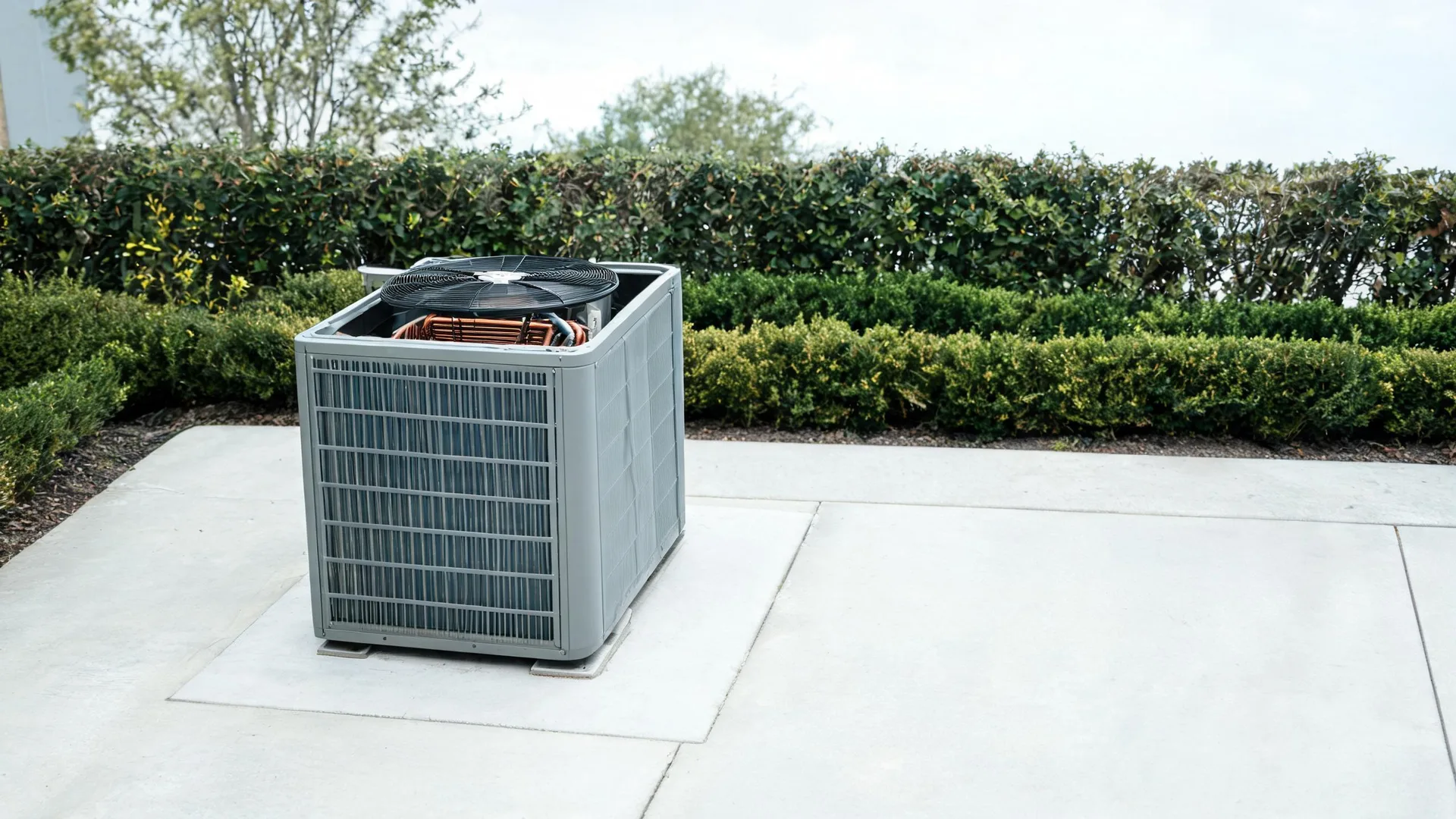
A refrigerant leak gets worse with runtime

A system low on charge doesn't fix itself by running longer. Every hour it runs with the charge down, oil isn't circulating the way it should, and the compressor is running hotter than it's built for. Catch it early and it's a leak repair. Catch it late and it's a compressor.

A heat pump fails for a handful of reasons, and most of them trace back to one of a few parts. The reversing valve is a common one. It's what switches the system between heating and cooling, and when it sticks, the unit can blow cold air when it should be heating, or get stuck running one mode no matter what the thermostat asks for. The defrost control board is another. It's job is to sense when the outdoor coil has iced over and trigger a defrost cycle, and when it fails, ice builds up unchecked until the coil is solid and airflow stops. Contactors and capacitors wear out too, the way they do in any air conditioner, and when they go the outdoor fan or compressor won't start even though power is reaching the unit. Low refrigerant almost always means a leak somewhere in the lines or coil, not the system using it up. None of these are weather related. They fail because a part wears out, corrodes, or was never right to begin with.

A contractor starts at the outdoor unit. They'll check pressures on the refrigerant lines, pull the panel and look at the contactor and capacitor, and watch whether the fan and compressor actually start when the thermostat calls for heat. Inside, they'll check airflow through the air handler and the temperature rise across the coil. A lot of it is ruling things out one at a time. If the reversing valve looks suspect, they'll test it directly rather than swap it on a guess. By the end you should hear what part failed, why it failed, and what fixing it involves.