




An unfinished basement interior featuring a large metal furnace unit, exposed ceiling joists, concrete walls, and scattered boxes and cables on the floor.

Furnace Repair in Decatur, IL

Tell us about the job

Takes about a minute. No obligation.

Step 1 of 3: Equipment

September is worth paying attention to. Furnaces here sit idle most of the year, then get asked to run hard starting in October, straight through April. Whatever was already marginal, a cracked heat exchanger, a weak igniter, a failing limit switch, tends to show itself in those first cold weeks rather than waiting. If your furnace struggled at the start of last winter, that same weak point is probably still there. Getting it looked at before October beats finding out on the coldest night of the year.

7 months
October through April, your furnace is on duty
22°F
the average winter night it heats against
74%
of homes here heat with gas, so most furnaces here burn gas
10 winter storms
in ten years, the nights a failure hurts most
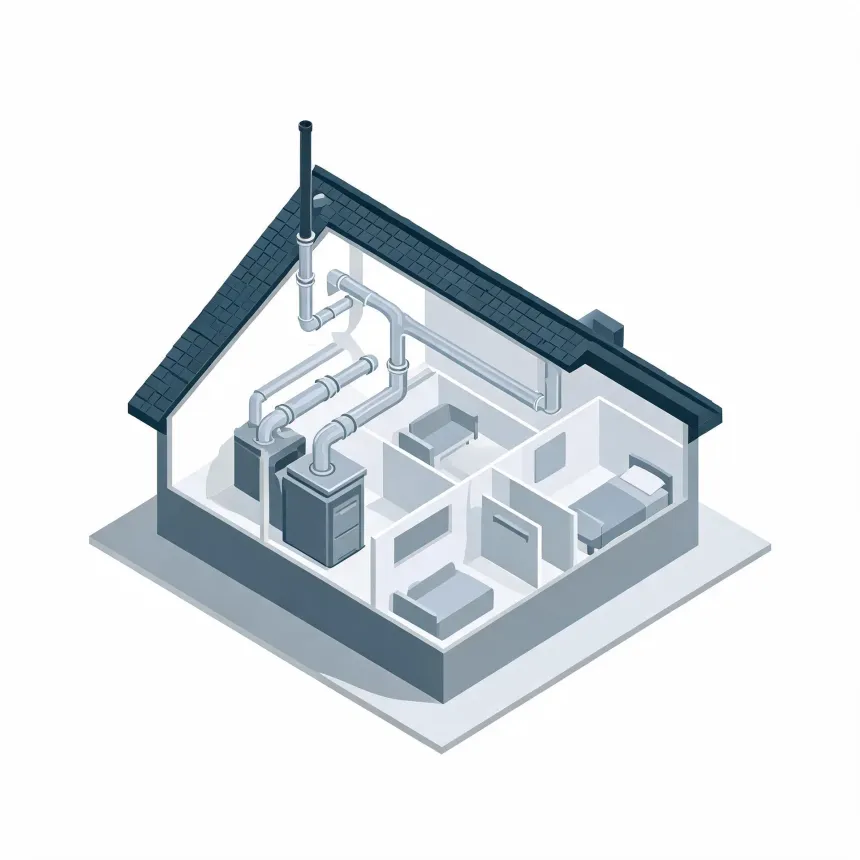
Isometric illustration of a cutaway house showing a furnace unit with ductwork and a flue pipe running through the interior rooms, which contain simple furniture.
Your furnace works hardest from November through March.

NOAA nClimDiv, 1991–2020 normals

Furnaces in Macon County run about seven months straight, October through April.

A furnace that limps through one cold month usually fails outright before the next one.

Half the furnaces in Decatur are working in a house built in 1964 or earlier

Half the homes here were built by 1964
Heat runs October through April
Winter nights average 22°F

The age of the furnace matters less than what's actually failing on it. A cracked heat exchanger settles the question on its own, since that part isn't sold separately and isn't meant to be patched. Once it's cracked, the furnace gets replaced, not repaired. Other failures are a different story. An igniter, a flame sensor, a draft inducer, these wear out on their own schedule and get swapped without touching the rest of the unit. A furnace that needs a tech out for different reasons winter after winter is telling you something. That's not bad luck. One repair on an old furnace doesn't mean much by itself. A pattern of them does.

Ask what the repair buys you before you pay for it

Half the furnaces in Decatur are running in a house built in 1964 or earlier. That alone doesn't mean yours needs to go. It means that when the tech is out for the repair, it's worth asking straight out how much life the furnace has left before you pay for the part that's failing now.

Find a contractor
A man in a cap, dusty dark shirt and work pants walks up stone steps toward a dark navy front door, carrying a worn canvas tool bag, with a potted shrub beside the entry.
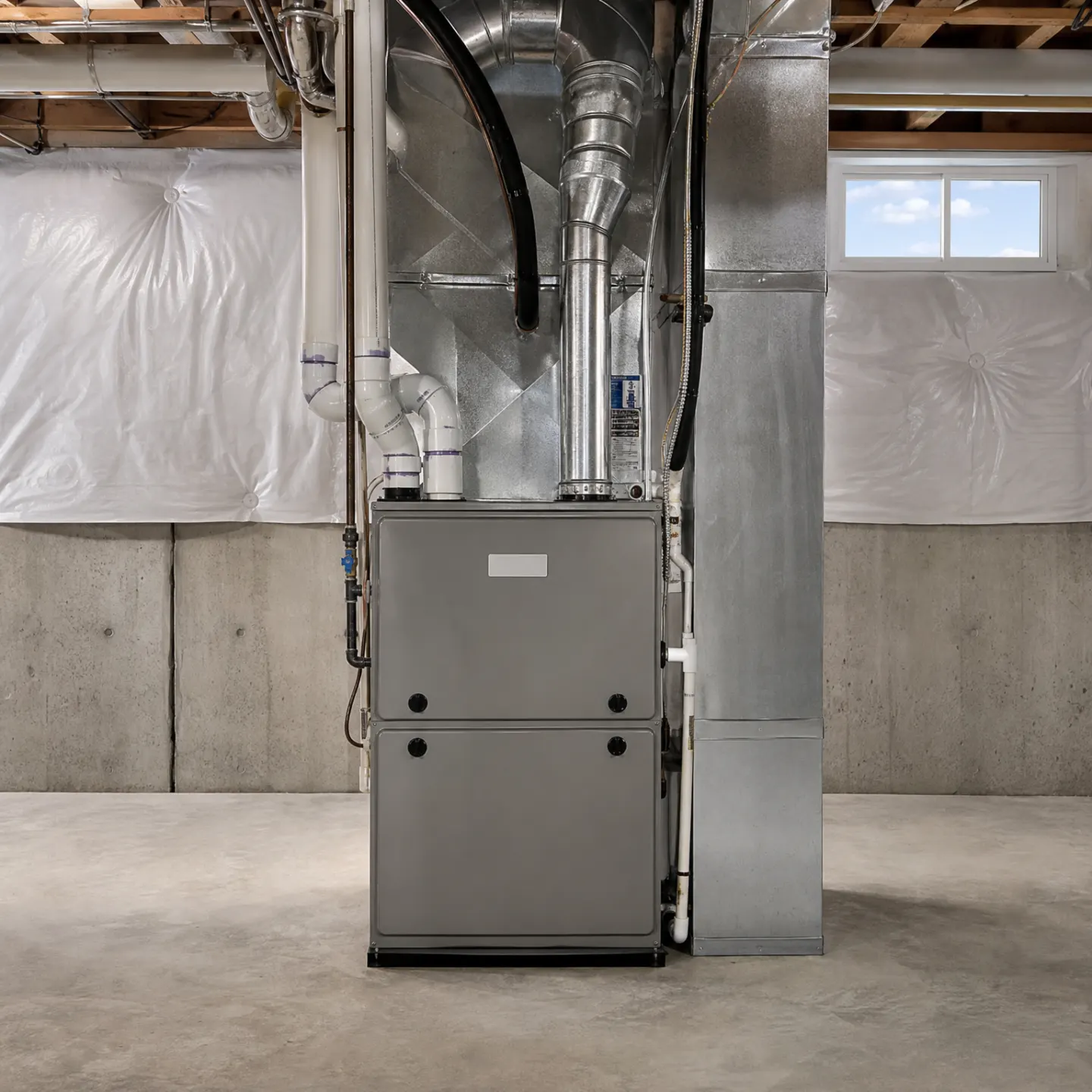
A gray residential gas furnace installed in an unfinished basement, connected to sheet-metal ductwork and PVC pipes.

Most failures are a part wearing out on schedule

A furnace fails the same handful of ways, and most of them come down to wear rather than bad luck. The igniter cracks after enough cycles of heating up and cooling down. The flame sensor coats itself with a film from normal combustion until it can't sense the flame anymore. The draft inducer motor wears out its bearings from spinning every cycle, every run. Pressure switches and limit switches fail because they're mechanical parts doing the same job thousands of times a season. None of that is damage from misuse. It's just what happens to parts that cycle on and off for months straight. The one failure that isn't routine is a cracked heat exchanger, and that one ends the repair conversation rather than starting it.

What you can check yourself

Look at the filter first and change it if it's gray or caked. A blocked filter starves the burners of air and trips the limit switch, which shuts the furnace down to protect it. Check the thermostat has fresh batteries if it uses them, and make sure it's set to heat, not just fan. Go to the furnace itself and check the switch on the wall or door frame near it, the one that looks like a light switch. That's a power cutoff and it gets bumped off by accident more than people expect. Last, check the air filter grille and return vents aren't blocked by furniture or boxes. None of this takes tools.

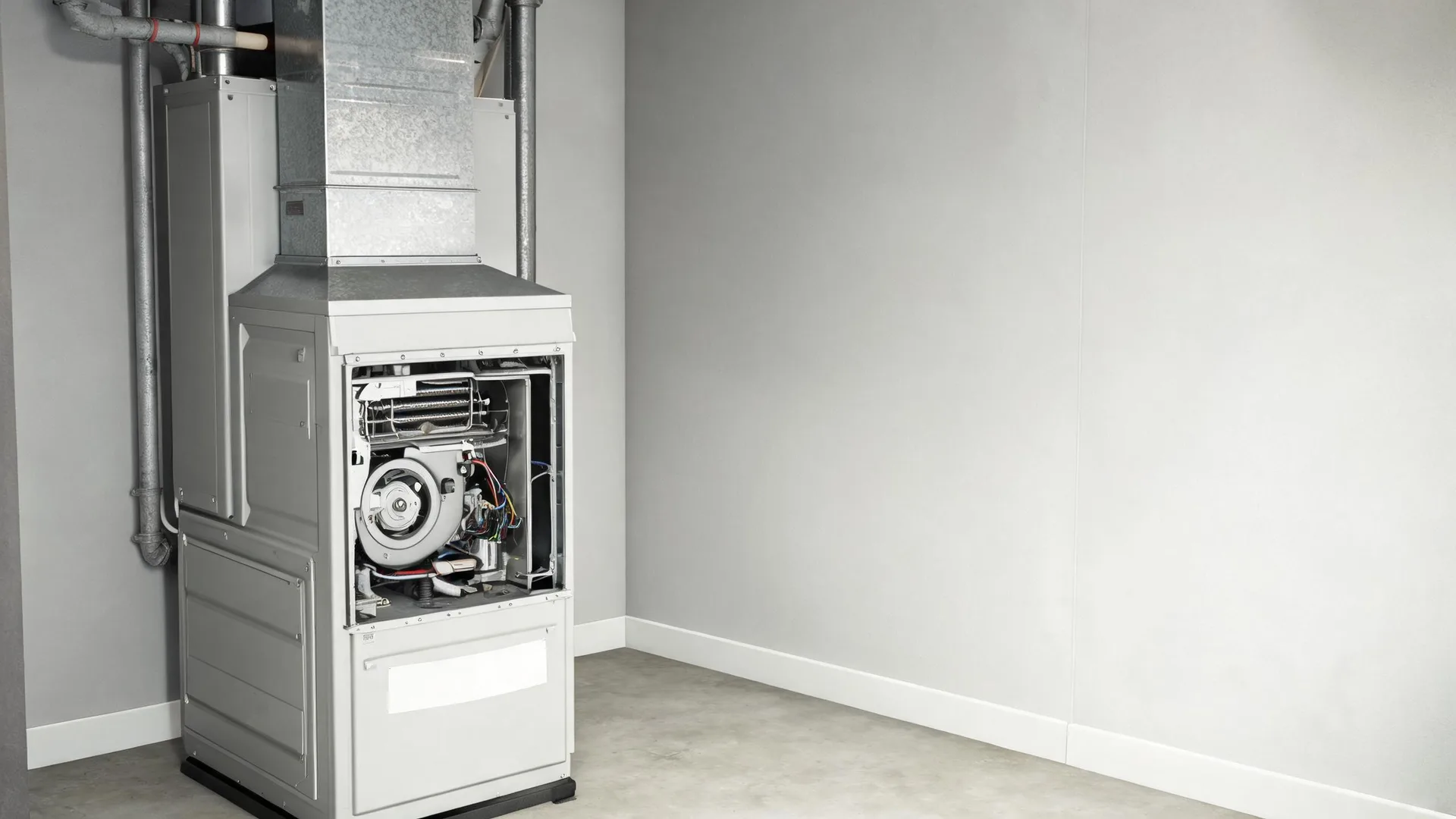
What tells you to stop and call someone

If the furnace is making a banging or screeching noise, don't keep running it. If you smell anything like rotten eggs, leave the house and call the gas company before anyone calls a repair tech. A furnace that short cycles, turning on and shutting off again within a couple minutes, has a problem past the thermostat and needs a trained eye. Same with a pilot light or flame that burns yellow instead of blue. Those aren't settings you adjust yourself. They're signs something inside is already failing.

A gas furnace and sheet-metal air handler unit installed in an unfinished concrete basement.

A new furnace would cut about $120 a year off heating for a typical Macon County home.

  • A new high-efficiency furnace$520 a year
  • An older furnace$640 a year

Estimates for a typical Macon County home, compared with an older unit built to the previous federal minimum, from EIA household energy data, Illinois fuel prices and NOAA climate normals. Your home will differ.

Repair makes sense when one part has failed and the heat exchanger is sound.

Replacement makes sense when the heat exchanger is cracked or the furnace keeps needing parts.

A diagnostic visit starts before any panel comes off. The tech asks what the furnace was doing, when it started, and whether it's happened before. That points to a system issue rather than a one-time glitch. Then comes power and gas, confirmed at the source rather than assumed. With the cover off, the tech checks the flame itself. The color and shape tell you whether combustion is clean or starved for air. From there it's a sequence. Igniter or pilot, flame sensor reading, pressure switches, limit switch, each one tested rather than guessed at. A combustion analyzer or a close look at the heat exchanger settles whether what's cracked is a part or the exchanger itself. The visit ends with the tech telling you what failed and what it would take to fix it, before any work starts.