


A row of dark-sided single-story buildings with gabled shingle roofs behind a tall trimmed hedge, with lawn, leafy trees and an overcast sky.

Furnace Repair in Springfield, IL

Tell us about the job

Takes about a minute. No obligation.

Step 1 of 3: Equipment

Sangamon County logged 335 severe weather events between 2015 and 2024. Most of that was wind, 198 events, with 110 hail events mixed in. A furnace sits inside, so the box itself usually rides out a storm fine. But 15 tornadoes touched down here in that same stretch, and hail and wind both put pressure on the power grid before they ever touch your house. When the lights go out, a gas furnace still needs power for the blower and the control board, so no power means no heat no matter how sound the unit is. Statewide, 16% of Illinois households lost power for a full day or more in 2024. That's not rare enough to ignore.

7 months
October through April, your furnace is on duty
22°F
the average winter night it heats against
73%
of homes here heat with gas, so most furnaces here burn gas
7 winter storms
in ten years, the nights a failure hurts most
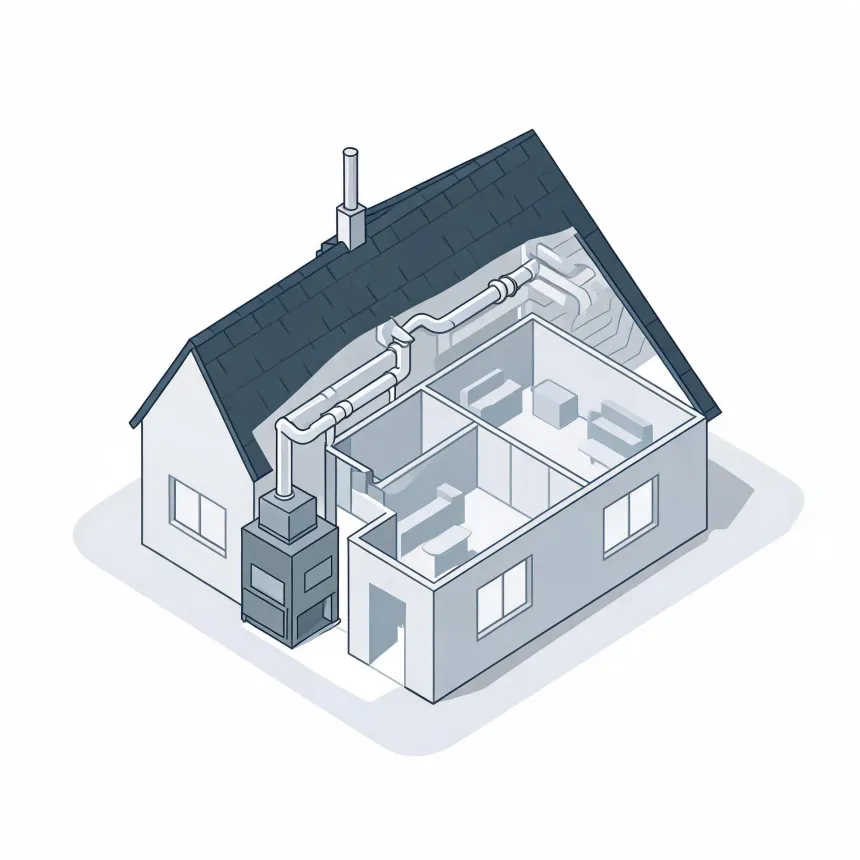
Isometric line illustration of a cutaway single-story house with a dark shingled roof, showing interior rooms and ductwork connected to a gray furnace unit with a flue pipe.
Your furnace works hardest from November through March.

NOAA nClimDiv, 1991–2020 normals

A cracked heat exchanger will keep running if you let it.

Shutting the furnace down at the first sign of trouble is cheaper than waiting for it to fail on its own.

Seven months of heat means seven months it has to work

Heat runs October through April
Climate zone 5A
Winter nights average 22°F

The igniter causes more no-heat calls than any other part. It's a thin strip that heats up to light the burners, and it wears thin from being switched on and off thousands of times over its life. When it finally fails, the furnace tries to start, can't get a flame going, and shuts itself off. The flame sensor fails a different way. It coats over with a thin film from normal combustion, and once it can't sense a flame it cuts the gas as a safety step, even with a good igniter doing its job. Blower motors wear out at the bearings after years of running, and a clogged filter speeds that up by making the motor work harder to push air through. None of these failures are a reason to keep running the furnace anyway and hope. A furnace that won't light is already stopped. The ones worth shutting down yourself are the ones still running when they shouldn't be.

If the outage already happened, get the furnace checked before you trust it

A power cut doesn't leave a mark on the furnace, so there's nothing to see afterward. If yours sat through an outage this winter, or the blower's been acting strange since, have someone look at the control board and igniter before the next cold snap finds the problem for you.

Find a contractor
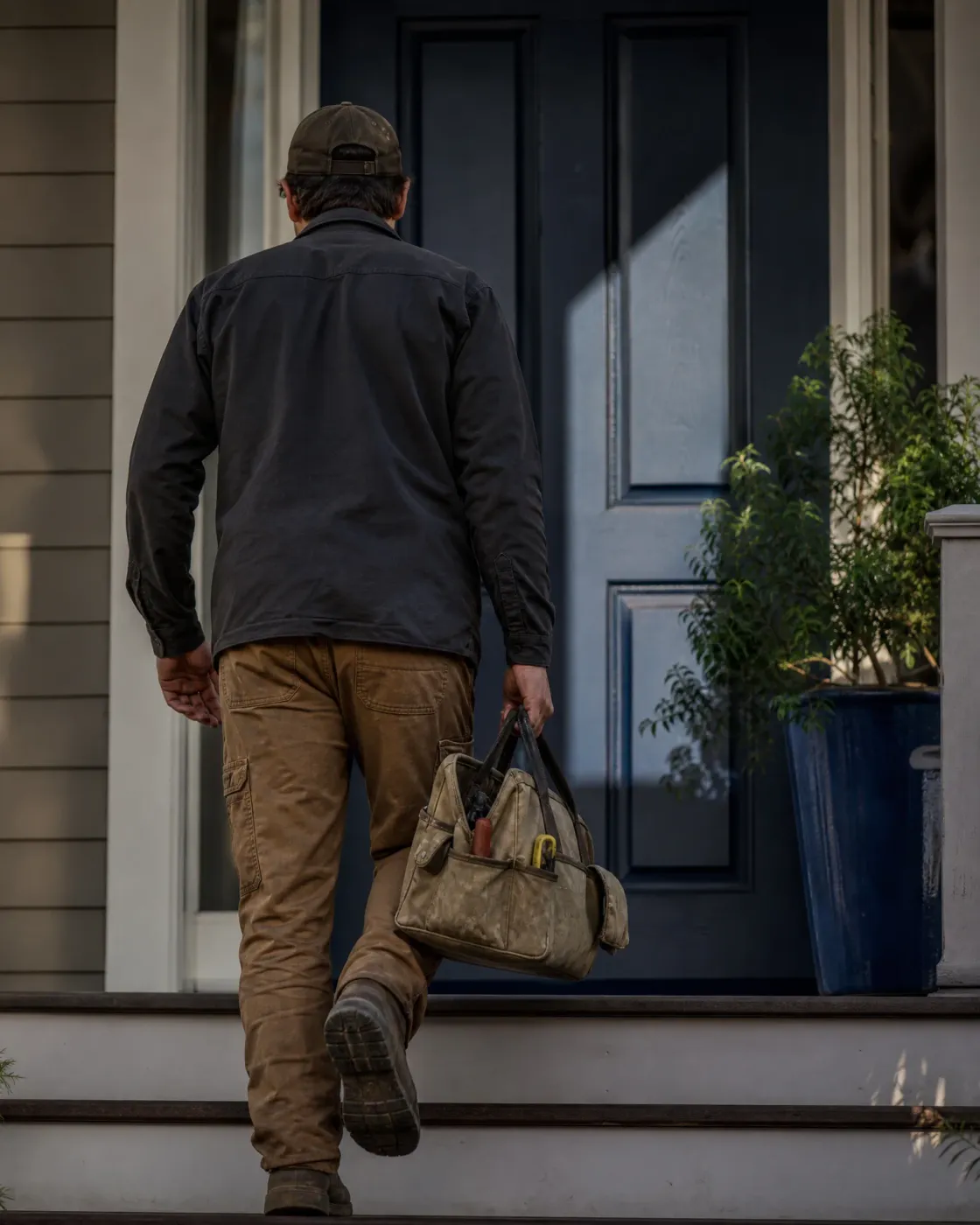
A man in a cap, dark jacket and tan work pants walks up porch steps toward a dark blue paneled door, carrying a canvas tool bag with tools in its outer pockets, beside a potted shrub.
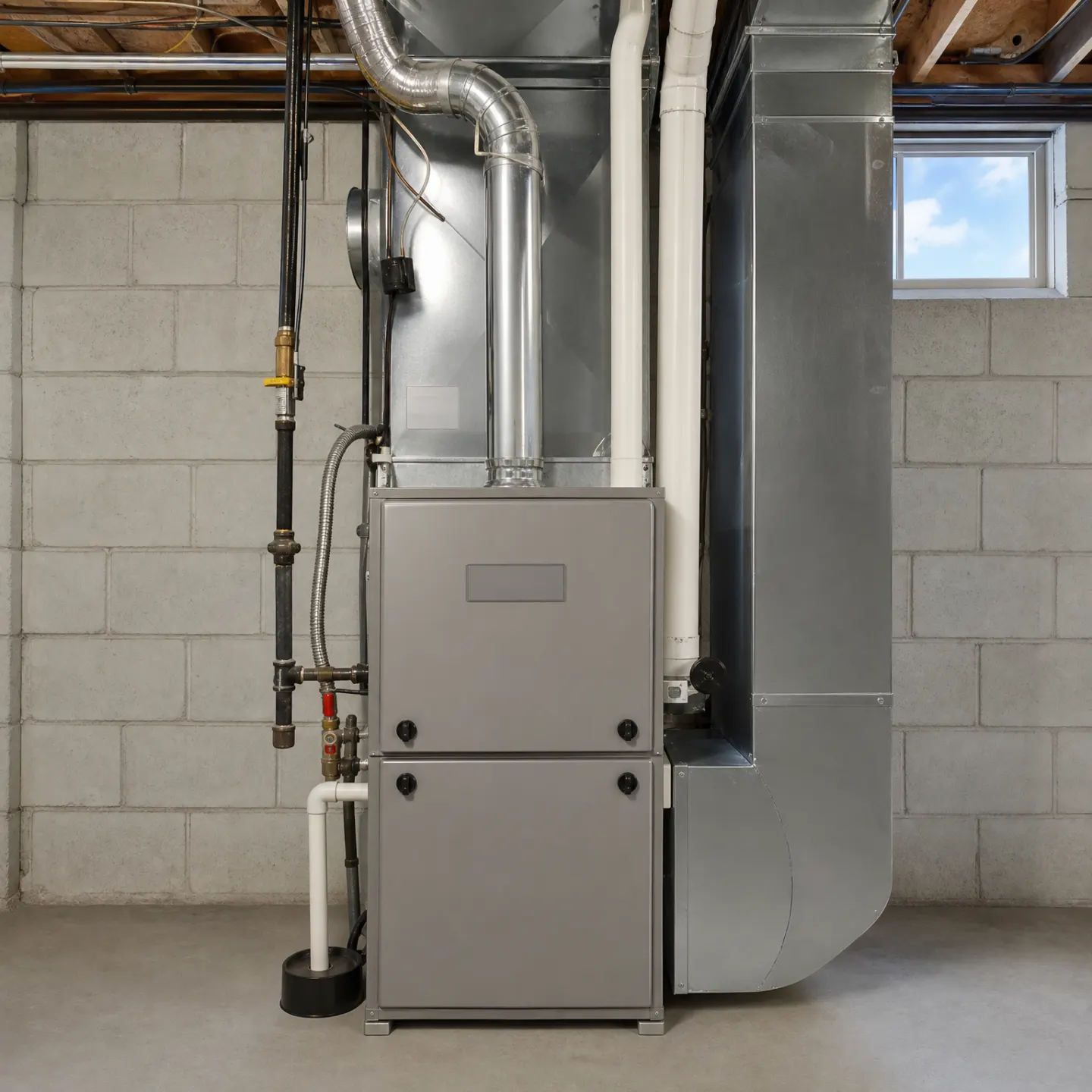
A gray high-efficiency gas furnace installed in an unfinished basement, surrounded by gas lines, a condensate drain, and sheet-metal ductwork.

The furnace usually tells you before it quits

A furnace that's starting to fail doesn't usually just quit. It tells you first. Short cycling is the clearest sign: the burners light, run for a minute or two, and shut off before the house warms up, then start again a little while later. That's a furnace protecting itself from a problem it can sense but can't fix on its own. A burner flame that should burn blue and steady but instead flickers yellow or orange is another one worth paying attention to, since it points to a combustion problem rather than a worn part. Rattling or screeching from the blower compartment usually means a bearing or a loose part, and it gets worse, not better, the longer it runs. A furnace that runs longer than it used to without warming the house as well is losing efficiency somewhere in the system, even before anything fails outright. None of these mean the furnace is finished. They mean something inside it has worn past where it can keep working, and the longer it runs in that state, the more it can damage the parts around it.

Check the simple things first

Make sure the thermostat is set to heat and the temperature is set above room temperature. Check that the furnace switch, which looks like a light switch near the unit, is on. Look at the breaker panel for a tripped breaker. If the furnace uses a standing pilot, check whether the pilot light is lit. None of this takes a tool, and it rules out the causes that have nothing wrong with the furnace at all.

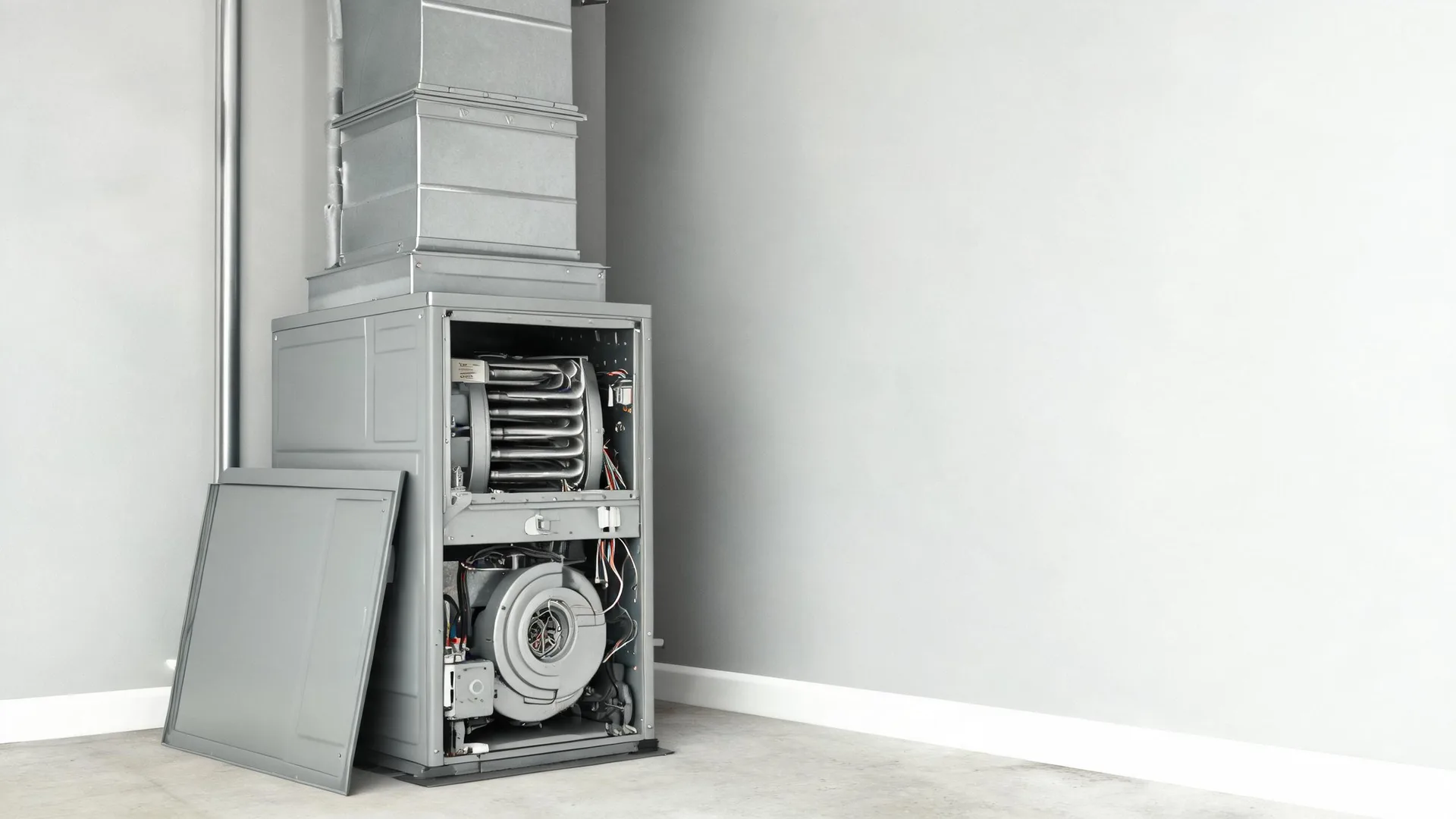
Know what to leave alone

The filter is fair game. Pull it and look at it against the light; if you can't see through it, swap it. Past that, step back. Opening the cabinet to look at the igniter or flame sensor means working near gas and electrical connections, and a flame sensor that looks fine to the eye can still be coated with the film that's blocking it. If the furnace smells like gas, don't check anything. Shut it off, leave the house, and call from outside.

An unfinished basement featuring a grey forced-air furnace with metal ductwork, concrete block walls, exposed wooden joists, and a single hanging bare bulb.

A new furnace would cut about $120 a year off heating for a typical Sangamon County home.

  • A new high-efficiency furnace$510 a year
  • An older furnace$630 a year

Estimates for a typical Sangamon County home, compared with an older unit built to the previous federal minimum, from EIA household energy data, Illinois fuel prices and NOAA climate normals. Your home will differ.

Repair makes sense when one part has failed and the heat exchanger is sound.

Replacement makes sense when the heat exchanger is cracked or the furnace keeps needing parts.

A furnace is a box full of parts with different lifespans, and that's the right way to look at it when one fails. An igniter or flame sensor is a small, cheap part, and replacing one doesn't say anything about the rest of the unit. A cracked heat exchanger or a failed control board is a different question, because those sit closer to the cost of the whole system, and at that point age matters. A furnace in its first half of life is almost always worth repairing no matter what broke. One well past its expected service life, facing a major repair, is where it's worth asking a contractor to lay out both numbers side by side rather than fixing on faith. Frequency counts too. A furnace that needs a service call every season is telling you something a single repair bill won't.