




A low-angle view across a mown lawn and trimmed hedge toward a dark two-story house with a covered porch, framed by large leafy trees under an overcast sky.

Furnace Repair in Marion, IL

Tell us about the job

Takes about a minute. No obligation.

Step 1 of 3: Equipment

Furnaces in Marion start their first real work in October, after sitting unused since spring. A weak igniter or a failing flame sensor usually makes it through the summer without showing anything wrong, then fails the first cold week it has to work. September is the month to catch that, before the heat gets switched on for good. Once it's running daily through the winter, the same worn part tends to fail at a worse time, on a colder night. If your furnace is already acting up now, that's the sign, not something to wait out.

7 months
October through April, your furnace is on duty
27°F
the average winter night it heats against
14 winter storms
in ten years, the nights a failure hurts most
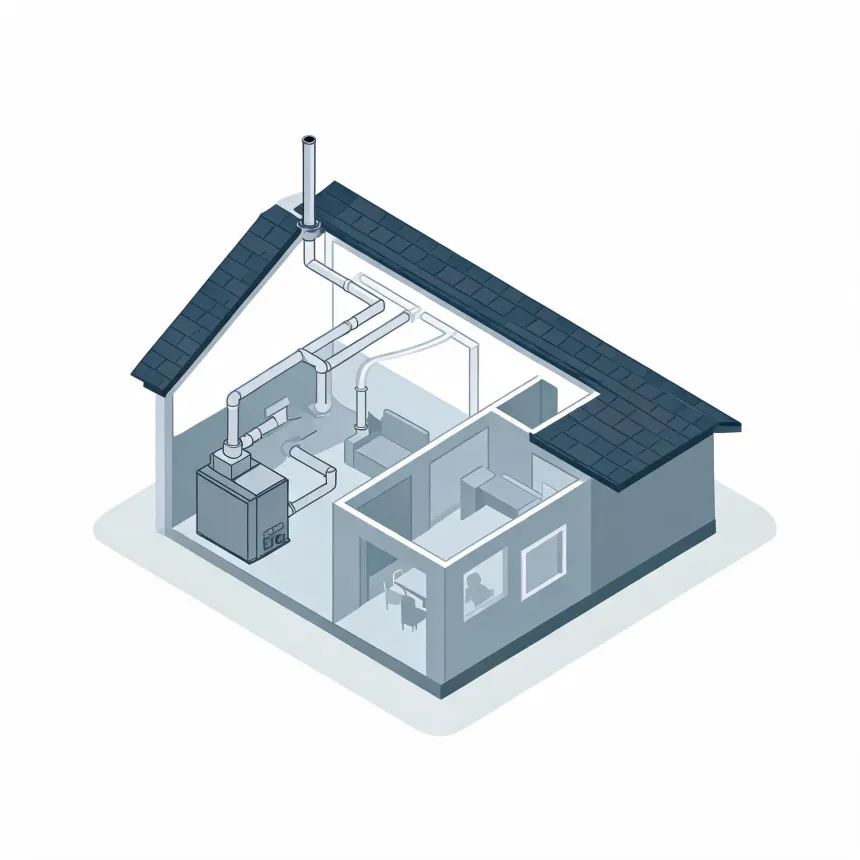
Isometric cutaway illustration of a single-story house showing interior rooms, a furnace unit with connected ductwork, and a flue pipe extending through the dark shingled roof.
Your furnace works hardest from November through March.

NOAA nClimDiv, 1991–2020 normals

A cracked heat exchanger gets worse every time the furnace fires.

Keep running it and that crack can start pushing exhaust into the air you breathe.

Furnace season is long here, and Illinois power isn't cheap

Heat runs October through April
Winter nights average 27°F
14 winter storms from 2015 to 2024
Weather here isn't why furnaces fail151 severe weather events in Williamson County between 2015 and 2024, and none of them are why your furnace quit

Half the homes in Williamson County were built in 1981 or later. If yours is one of them, the furnace inside it hasn't necessarily been through decades of hard use. A furnace that age with a bad igniter or flame sensor is usually a quick, inexpensive fix, not a sign the whole unit is done. Age is one of the first things a tech checks before recommending anything bigger than a repair, and a newer system backs up a repair call rather than arguing against it.

A furnace running badly costs you every month it's not fixed

A furnace that's cycling too much or struggling to keep up isn't just annoying. Every extra hour it runs costs more here than it would most places. A tech can usually tell you fast whether it's a worn part or something bigger, and either way the fix stops the extra cost.

Find a contractor
A man in a navy T-shirt, tan work pants and cap, seen from behind, carries a worn canvas tool bag up wooden porch steps toward a dark blue front door.
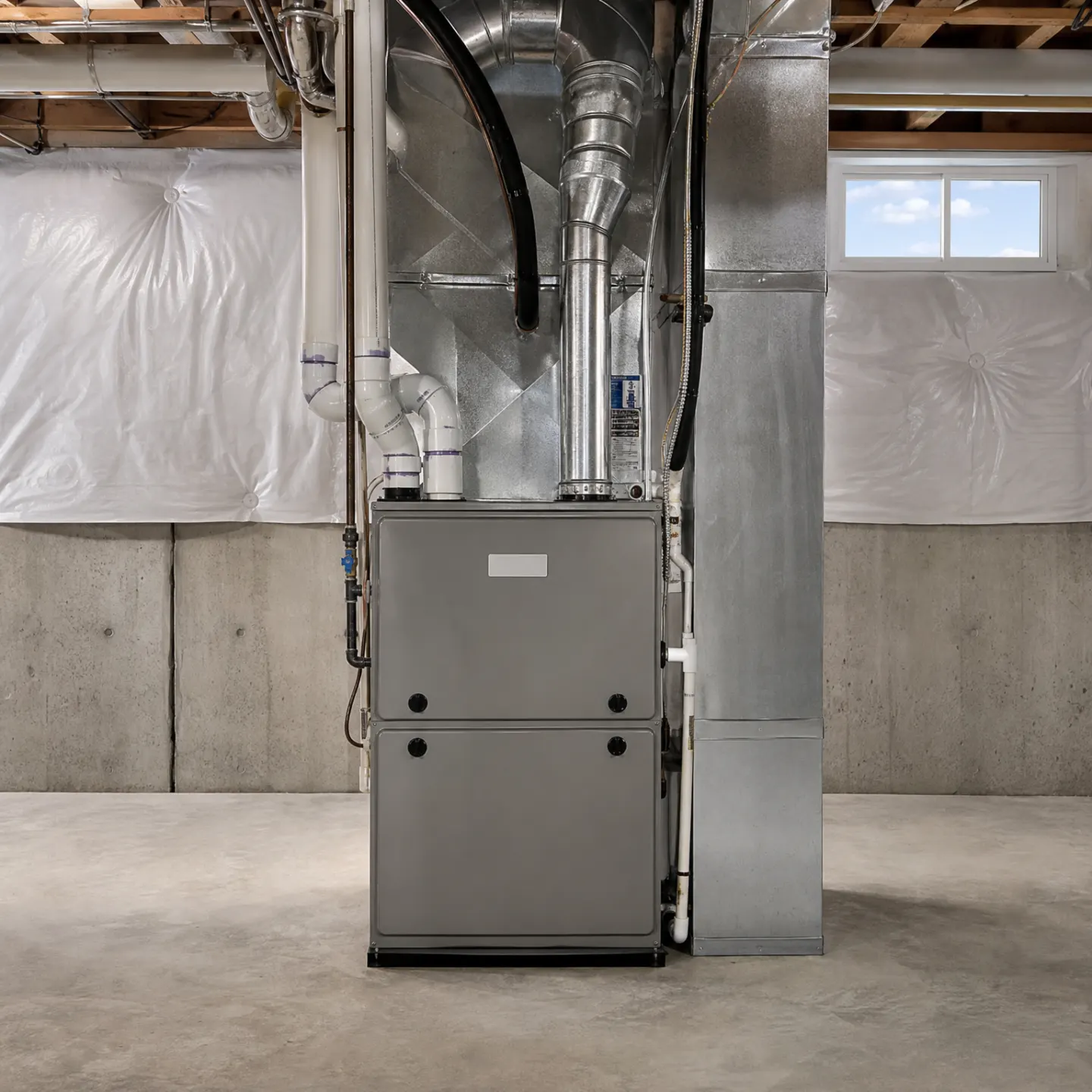
A gray residential gas furnace installed in an unfinished basement, connected to sheet-metal ductwork and PVC pipes.

Know the age before you decide the fix

If your furnace came with the house and the house was built in 1981 or later, get it looked at rather than replaced. A worn igniter or flame sensor doesn't mean the unit is at the end of its life, and a tech can rule out the bigger problems in one visit. Start with a repair call and let the diagnosis tell you if anything more is needed.

Most calls come down to one worn part

The igniter and the flame sensor fail more than anything else in a furnace. The igniter sits in the flame every time the burners light, and that wears it out over time until it stops glowing hot enough to catch the gas. The flame sensor coats with a thin layer of residue from normal combustion, and once it's coated it can't tell the control board the flame is lit, so the system shuts itself down as a safety measure.
The blower motor fails for a different reason

A blower motor usually goes because the bearings wear out from years of spinning, or because the capacitor that gets it started weakens and can no longer push it into motion. A motor that hums but won't turn, or one that's loud and straining, is further along than an igniter problem. It's also a different repair, often a heavier one, and worth knowing apart from the quick fixes.

Before you call, a few things are worth checking yourself. Make sure the thermostat is set to heat and the target temperature is actually above the room, not just switched on. Find the power switch on or near the furnace, the one that looks like a light switch, and make sure it wasn't bumped off during other work nearby. Check the breaker for the furnace hasn't tripped. Pull the filter and look at it, and if it's gray and packed solid, swap it, since a blocked filter starves the burners of air and can cause a shutdown that has nothing to do with the igniter or the flame sensor. If the furnace has a door panel that lifts off or unlatches, make sure it's seated all the way, since most furnaces have a safety switch that won't let the burners fire unless that panel is fully closed. None of this fixes a cracked heat exchanger or a dead igniter, but it rules out the handful of things that look like a broken furnace and aren't.

A diagnostic call starts before any panel comes off. The tech asks what the furnace was doing right before it quit, since a system that shut down mid-cycle points somewhere different than one that never lit at all. Then the covers come off and the igniter gets a look, since a cracked or weak igniter is often visible without a single test. The flame sensor gets checked next, usually by pulling it and looking for buildup, and cleaning it is sometimes enough to tell on the spot whether that was the problem. If the furnace lights but shuts down again a few seconds in, that behavior itself is a clue, not just something to note and move past. A tech following that path can usually tell you what's wrong before anything gets replaced, and that's the point of the visit, to know before paying for a part.