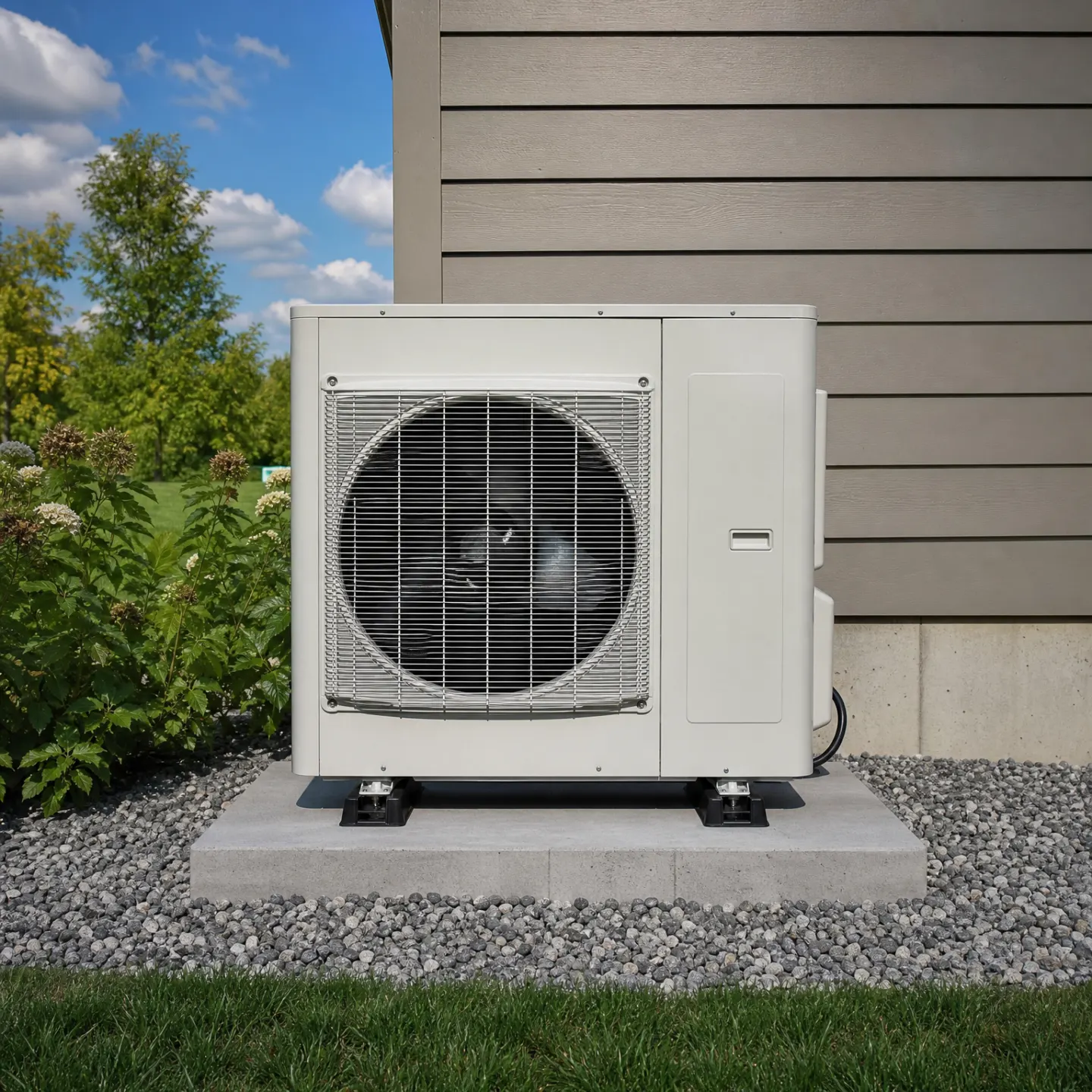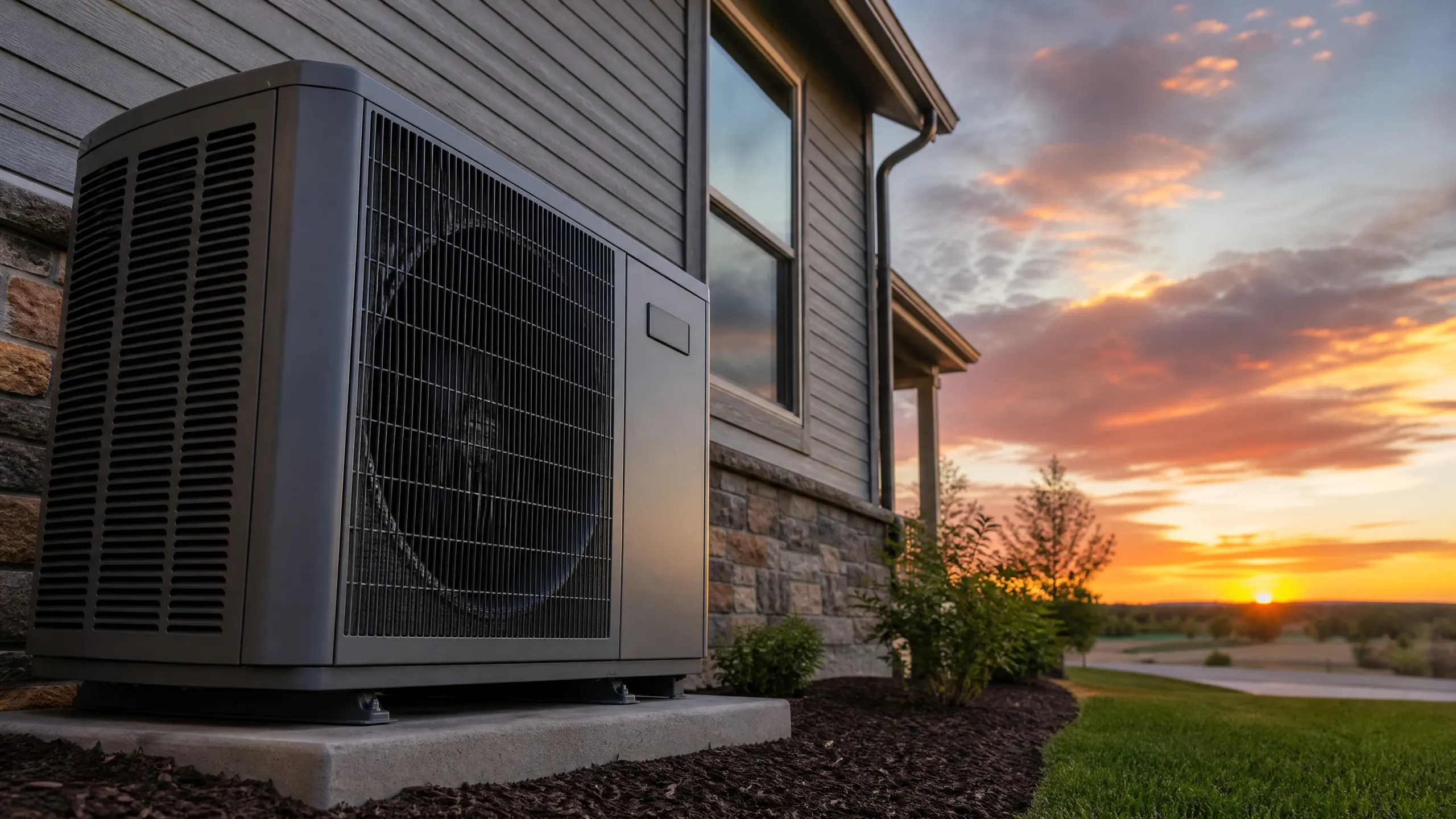
An outdoor air conditioning condenser unit mounted on a concrete pad next to a residential house at sunset.

Heat Pump Installation in Marion, IL

Tell us about the job

Takes about a minute. No obligation.

Step 1 of 3: Equipment

Electricity here runs 17.22 cents a kilowatt-hour

Homes in Williamson County paid an average of 17.22 cents per kilowatt-hour in 2025, more than most US counties pay. A heat pump runs on electricity for both heating and cooling, so that rate applies to the system year round, not just in summer.

Efficiency decides what this system costs to run

With power priced this high, the difference between a heat pump that runs efficiently and one that does not shows up on every bill it generates. The summer dew point here averages 67 degrees, heavy air that makes a heat pump work harder to cool a home, so how the unit is sized and installed matters as much as the equipment itself.

7 months
October through April, your system heats
5 months
May through September, it cools
27°F
the average winter night it heats against
87°F
the average summer afternoon it cools against
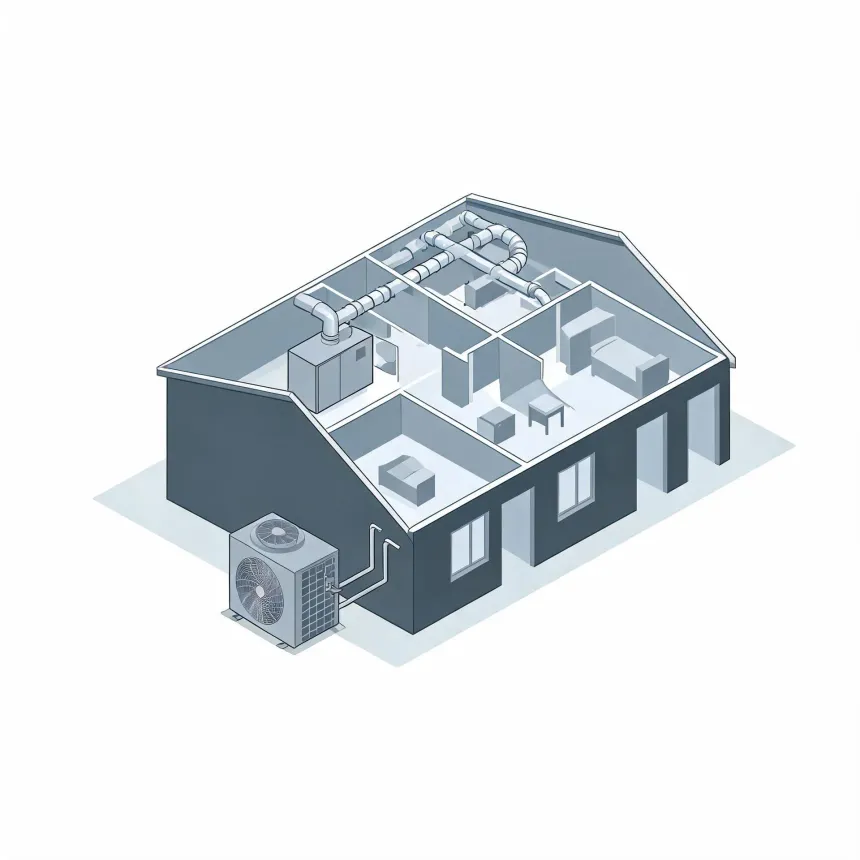
Isometric cutaway illustration of a single-story house showing interior rooms, attic ductwork and an air handler, with an outdoor condenser unit connected by lines along the exterior wall.
Your system heats October through April and cools May through September.

NOAA nClimDiv, 1991–2020 normals

Electricity already heats most homes in Williamson County.

A heat pump installed here fits how this county already runs, not something new to get used to.

Two seasons back to back, so get it installed before one of them starts

Cooling runs May through September
Heat runs October through April
Climate zone 4A

Williamson County falls under zone 4A in the 2021 energy code, a mixed climate that asks real work of both the heating side and the cooling side. Any split-system heat pump installed here, manufactured on or after January 1, 2023, has to clear federal minimums built for that kind of work: at least 14.3 Btu of heat moved per watt-hour over the summer, at least 7.5 Btu per watt-hour over the winter. That standard narrows what a contractor can offer. It also sets a floor, not a target, so two systems can both meet it and still run differently on the bill. Ask what a given model clears, not just whether it passes.

Ask what the unit clears before it goes in

Power here costs more than in most places, and a heat pump runs on it year round. The efficiency rating on the unit you choose decides what every bill looks like after that. Ask what the model you're getting actually clears, not just whether it passes the minimum.

Find a contractor
A white mini-split heat pump outdoor unit mounted on a concrete pad beside a gray-sided house, surrounded by gravel and green shrubs.

The old system has to come out clean before the new one goes in

When a heat pump comes out, the old refrigerant has to be recovered before anyone touches a wrench to the lines. That refrigerant can't be vented, so a technician pulls it into a tank with a recovery machine first. Once the lines are open, the old line set often gets replaced rather than reused, since contaminants and old oil left behind can shorten the life of the new compressor. The indoor coil and the outdoor unit both come out, and if the system used a separate air handler, that gets swapped too so the new coil matches what the new outdoor unit expects. Whoever installed the original system will know what refrigerant it ran on, and if it's an older type, that alone is often reason enough to replace rather than patch it.

The size comes from a load calculation, not the old unit's tag

A contractor works out the right size by going room by room: the windows, the insulation, the ceiling height, how the house is laid out. Swapping in whatever size was there before skips that step, and the old unit may have been wrong from the day it went in. Two houses that look alike from the street can need different sized systems once someone actually works the numbers.

Wrong size costs you either way

A heat pump that's too big cools the air fast and shuts off before it pulls the moisture out, so the house feels clammy even at the temperature you want. One that's too small runs flat out and still can't keep up when it's coldest or most humid outside. Either way the compressor is cycling or straining more than it should, and that shows up in how long the system lasts as much as in how it feels.

The efficiency rating on a heat pump's label tells you how much heat it moves for the electricity it uses, nothing more. It's not a grade on build quality or how long the unit lasts. Two units can carry different ratings and use the same compressor and the same materials throughout, with the higher number coming from how the coil is sized and how the system manages refrigerant flow. A higher rating usually means a bigger coil, or a compressor that can slow down instead of just switching on and off, or both. That matters because a heat pump that can run at a lower speed most of the time wears less than one that's always starting and stopping at full power. The rating also assumes the system is installed and charged correctly. A unit with a strong rating that's undercharged or paired with the wrong coil won't perform anywhere near what the label promises.

Installation day starts with the old equipment coming out and ends with the new system running and tested, usually in one day for a straightforward swap. Once the old coil and outdoor unit are disconnected, the new line set gets run and the indoor coil and outdoor unit go in. The technician brazes the refrigerant lines, pressure tests them for leaks, then pulls a vacuum on the system to clear out air and moisture before any refrigerant goes in. Refrigerant gets weighed in to the amount the manufacturer specifies for that line length, not just topped off by feel. After startup, the technician checks the temperature of the air coming off the coil, confirms the system is pulling the right amount of current, and walks the thermostat settings with you before packing up. A system that's rushed through startup can run for years before an undercharge or a bad vacuum shows up as a worn compressor.