




A row of dark-clad single-story cottages with gabled roofs behind trimmed hedges, with a mown lawn in the foreground and large leafy trees under an overcast sky.

Heat Pump Installation in West Frankfort, IL

Tell us about the job

Takes about a minute. No obligation.

Step 1 of 3: Equipment

Electricity here runs 17.10 cents per kilowatt-hour on average, higher than most US counties pay. A heat pump runs on electricity, so that rate applies to every hour it works. Summer adds its own load. The dew point averages 67°F across June, July and August, heavy enough that the system has to pull real moisture out of the air, not just cool it. That work shows up on the meter. A unit that does this efficiently costs less to run than one that doesn't, and in a county already paying more per kilowatt-hour, that difference matters more here than it would somewhere with cheaper power.

7 months
October through April, your system heats
5 months
May through September, it cools
27°F
the average winter night it heats against
87°F
the average summer afternoon it cools against
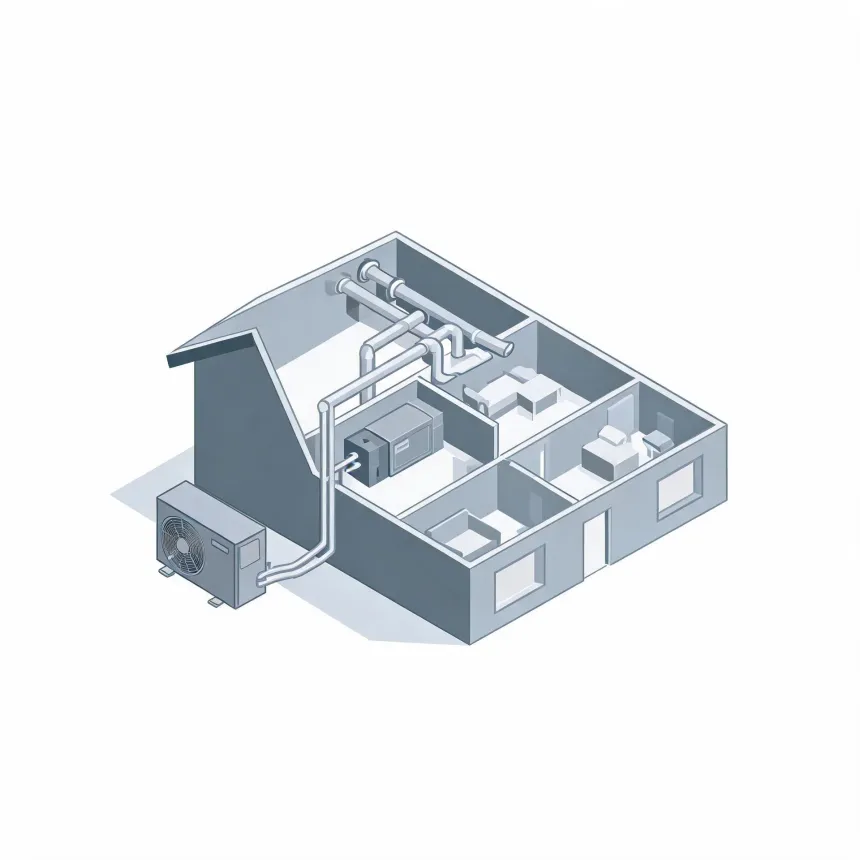
Isometric grayscale illustration of a cutaway house showing interior rooms, ducted air handler and duct runs, connected by pipes to an outdoor condenser unit beside the building.
Your system heats October through April and cools May through September.

NOAA nClimDiv, 1991–2020 normals

Electricity already heats half the homes in Franklin County.

A heat pump installed here is replacing a system most homes already run, not asking anyone to switch fuels.

Half these homes were built by 1963, and the heat pump has to fit the house it's going into

Half the homes here were built by 1963
80 damaging wind events from 2015 to 2024
24 hail events from 2015 to 2024

Franklin County sits in climate zone 4A under the 2021 energy code, a mixed zone where both the summer load and the winter load count. Any split-system heat pump installed here, if manufactured from 2023 on, has to clear federal minimums built for that kind of load: at least 14.3 Btu of heat moved per watt-hour of electricity over the summer, at least 7.5 Btu per watt-hour over the winter. Those numbers set a floor. A unit has to clear it to be sold at all, which narrows what a contractor can offer in the first place. Some systems clear it by a wide margin rather than just scraping by, and in a county where power already costs more than most places pay, that margin is what shows up on the bill every month. A federal tax credit is available for qualifying installations, which offsets part of the cost of choosing higher than the floor.

What this heat pump costs you shows up every month, not just on install day

Franklin County pays more per kilowatt-hour than most places, and a heat pump runs on nothing but electricity. That makes the unit itself worth weighing against the floor, not just meeting it. Ask what efficiency rating a contractor is quoting you, and whether it is higher than the federal minimum. The tax credit can help close the gap on that choice.

Find a contractor
A man in a cap, gray T-shirt and tan work pants carries a canvas tool bag up porch steps toward a dark blue front door of a gray clapboard house, with a potted plant at left.
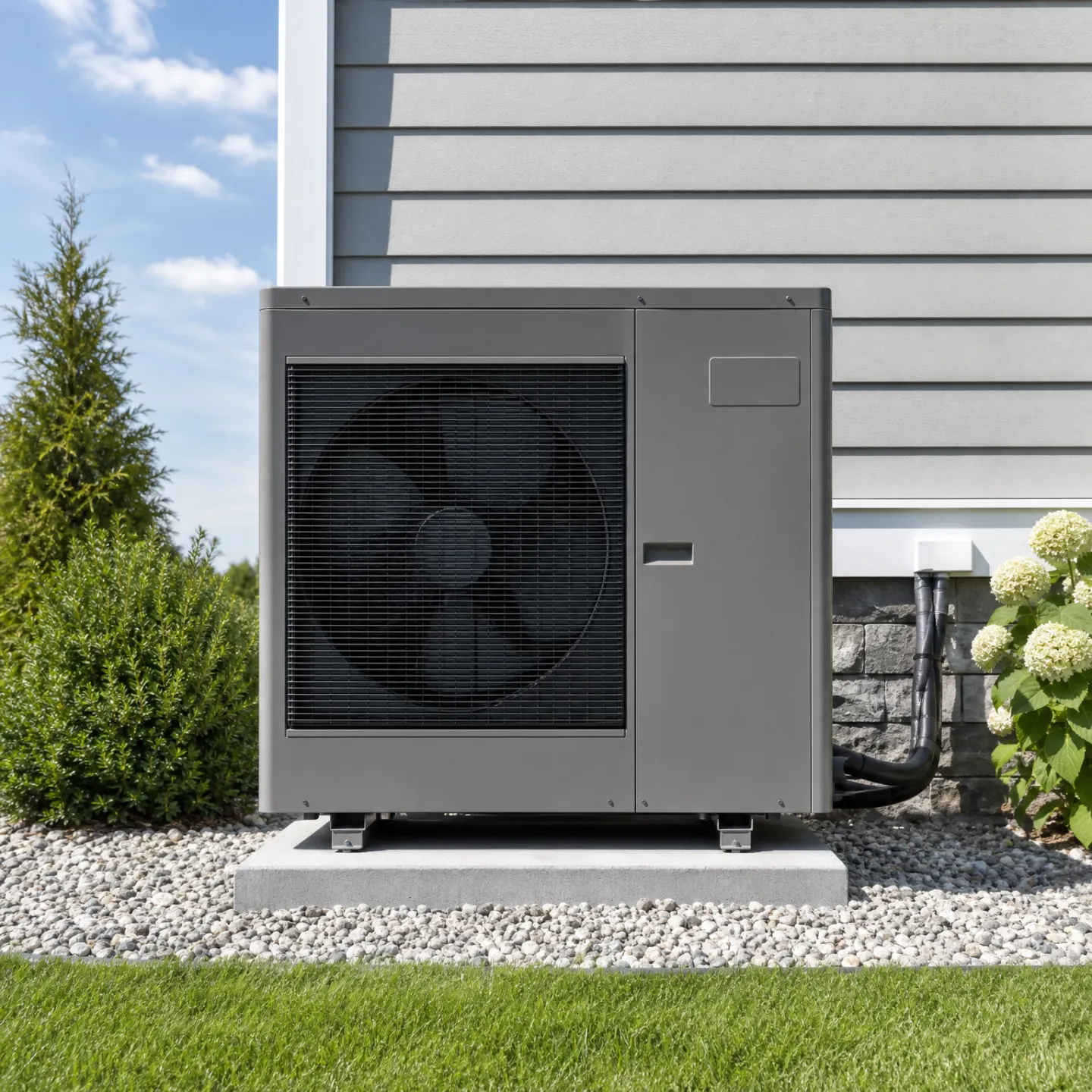
A gray air-source heat pump mounted on a concrete pad next to a house with gray vinyl siding, surrounded by gravel and flanked by green shrubs and white hydrangea flowers.

A machine that works most of the year is worth installing before it has to

This heat pump will run from October through April, about seven months, then switch over and run May through September for cooling. Add those up and it's working nearly the whole year, with only a short stretch in spring and fall where it does neither. That overnight low in winter averages 27°F, which is real cold for a heat pump to pull warmth out of. A system installed in September, before heat season starts, gets to be tested and adjusted while nothing's on the line. One installed in October, after the cold sets in, has to work from day one with no room for a callback or a part on order. The same goes for spring. Getting it in before May means it's already proven out before the humidity load hits.

The old system has to come out first

A heat pump swap means disconnecting the old equipment, not just setting a new unit next to it. The indoor coil, the outdoor unit, the refrigerant line set, all of it comes out. If the old system used refrigerant, that refrigerant has to be recovered into a tank, not vented, before anything gets disconnected. That's a legal requirement, not a courtesy. Old electrical whips and disconnects usually get replaced too, since a new unit draws different power than what was there before.
What gets reused and what doesn't

The ductwork usually stays, if it's in good shape and sized right for the new system. The line set sometimes stays, but a lot of contractors replace it anyway, since an old line set can have contamination or the wrong size for the new refrigerant. The electrical disconnect box and whip almost always get swapped. None of this is guesswork a homeowner has to do. It's part of what gets inspected before the new unit goes in, and it's worth asking the contractor directly what they plan to reuse and why.

That efficiency rating on the label is a ratio, not a grade. It tells you how much heat the unit moves for the electricity it uses, measured one way for cooling and another way for heating, and the two numbers don't move together. A unit can be strong in summer and only average in winter, or the other way around, depending on how the compressor and coils are matched. The rating is also measured under set lab conditions, so it describes what the equipment is capable of, not what it will do on the coldest night of the year or the most humid afternoon. Two units with the same rating can still behave differently in a real house, because ductwork, refrigerant charge and how well the system was installed all affect what actually gets delivered. The number on the label is where to start the comparison, not where it ends.

Half the homes in Franklin County were built in 1963 or earlier. A house that age wasn't built with a heat pump in mind, and whatever ductwork, wiring or electrical panel is already there has to work with whatever gets installed now. That doesn't mean the new system has to fight the old house. It means sizing matters more than it would in new construction, where everything was planned together from the start. A unit sized off square footage alone can end up wrong for a house this age, running longer than it should or short-cycling instead of settling into a steady run. The contractor doing the install should be looking at the actual house, not just the year it was built, before settling on what size and type goes in.