



A quiet suburban street at twilight featuring two-story brick homes with illuminated windows and large trees lining the sidewalk.

Furnace Installation in Granite City, IL

Tell us about the job

Takes about a minute. No obligation.

Step 1 of 3: Equipment

Gas heats 60.7% of homes in Madison County, more than any other fuel. If your old furnace ran on gas, a new gas furnace is almost always the straightforward swap. The vent, the gas line and the return air are already sized for that kind of system. Switching to electric means new wiring and new ductwork sizing, work most homes here were never set up for. Worth asking your contractor what your current setup supports before you decide.

7 months
October through April, your furnace is on duty
25°F
the average winter night it heats against
61%
of homes here heat with gas, so most furnaces here burn gas
80% AFUE
the federal minimum any new unit must meet
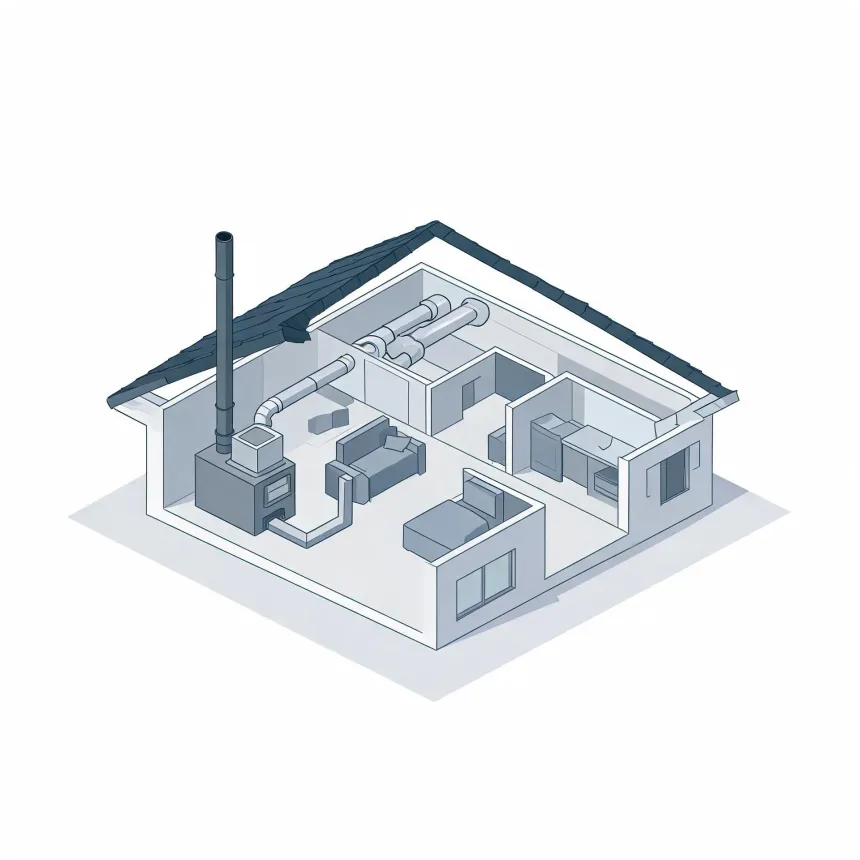
Isometric line illustration of a cutaway single-story house showing interior rooms with furniture, a furnace unit with a tall flue pipe, and connected ductwork running under the pitched roof.
Your furnace works hardest from November through March.

NOAA nClimDiv, 1991–2020 normals

Half the homes in Madison County were built in 1971 or earlier.

A furnace going into a house that age has to work with the ductwork and venting already there, not the other way around.

Gas here runs $10.64 per million Btu, so the highest-efficiency furnace isn't the one that pays for itself fastest

Heat runs October through April
Winter nights average 25°F
Climate zone 4A

Madison County gets its share of rough weather, including windstorms, hail and the occasional tornado. None of that calls for a bigger furnace. A standard size matched to your home's heating load and your current ductwork is what holds up here. What weather like this does affect is power, and a furnace with electronic ignition won't run without it, no matter how new or efficient it is. If that matters to you, ask your contractor about backup options for the furnace itself, not about sizing up the unit.

A standard furnace, sized right, is built for this

Furnace here runs about seven months a year, October through April, with overnight lows averaging 25°F in December and January. That's a normal load, not a reason to size up or chase the highest efficiency rating. A standard furnace, sized to your home, handles it.

Find a contractor
A man in a cap, dark long-sleeve shirt and brown pants carries a canvas tool bag up wooden porch steps toward a navy front door beside a potted shrub.
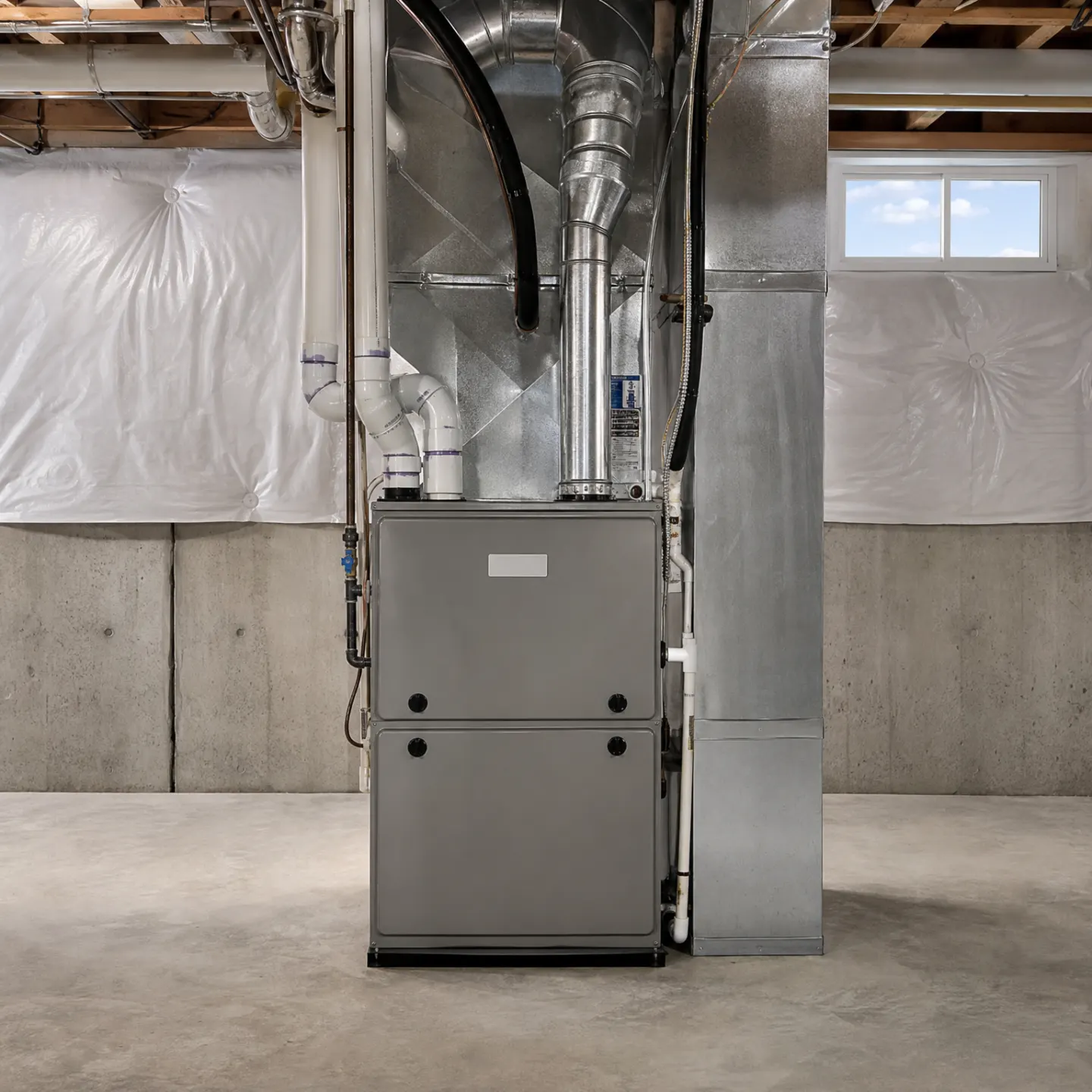
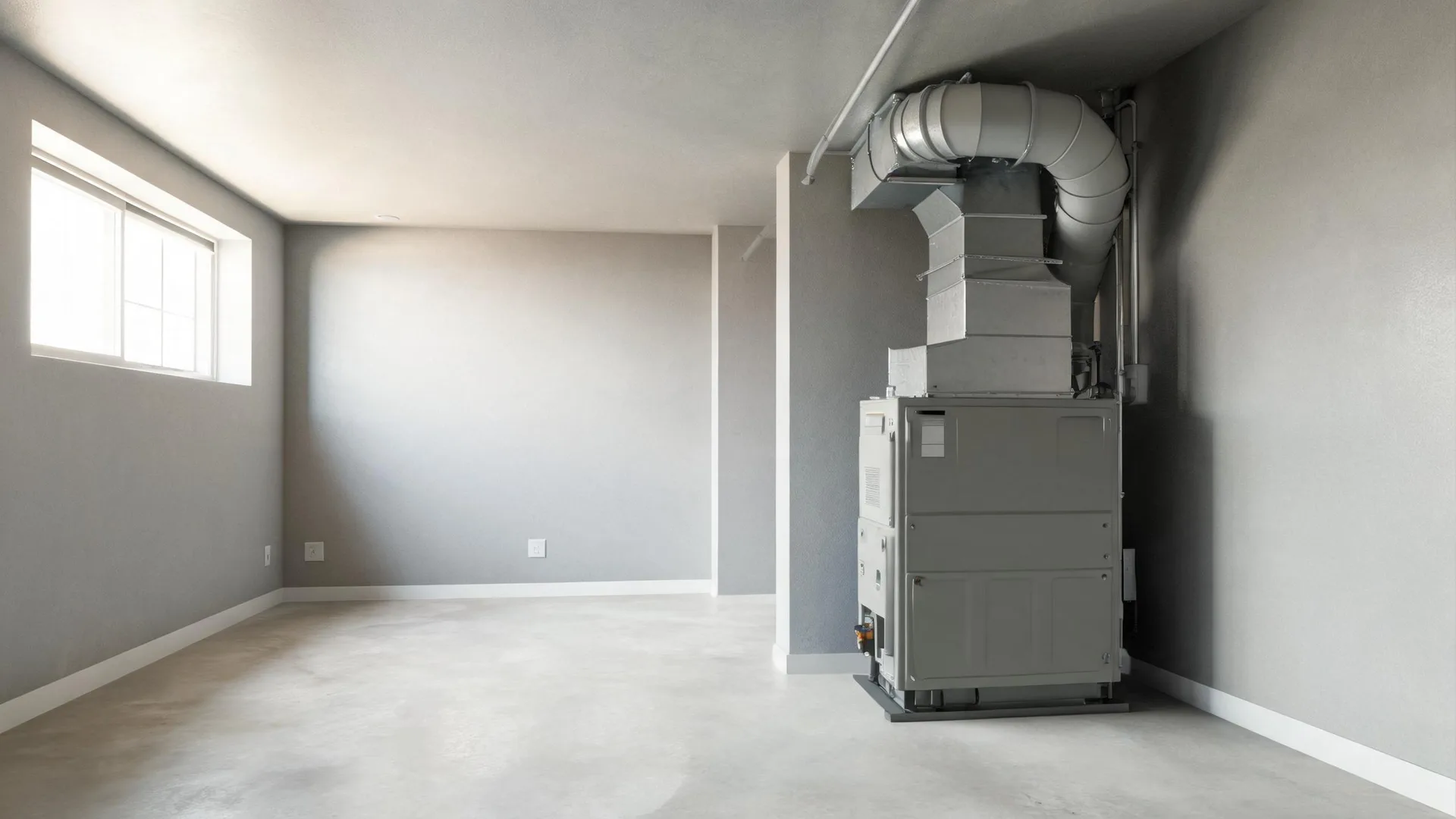
A gray residential gas furnace installed in an unfinished basement, connected to sheet-metal ductwork and PVC pipes.

September, before the first cold night

Heat here starts in October and runs seven months, into April. A furnace replaced in September goes in while the weather is still mild, so there's time to size it properly and check the ductwork before the first cold night. Wait until it fails mid-winter and you're picking from whatever's in stock, installed in a rush with the house already cold.

Ask what the AFUE rating actually assumes

A furnace carries an efficiency rating earned in a lab, not in your ductwork. Ask the contractor what that rating depends on, and whether your venting and duct runs let the furnace actually hit it. A high rating on paper means less once it's tied into a system it wasn't tested with.
Ask how they arrived at the size, not just the size

A furnace should be sized from a load calculation done on your house, the insulation, the windows, the layout, not copied from the unit it's replacing. If a quote jumps straight to a number without asking about any of that, ask how they got there. The method behind the number is what you're really comparing.

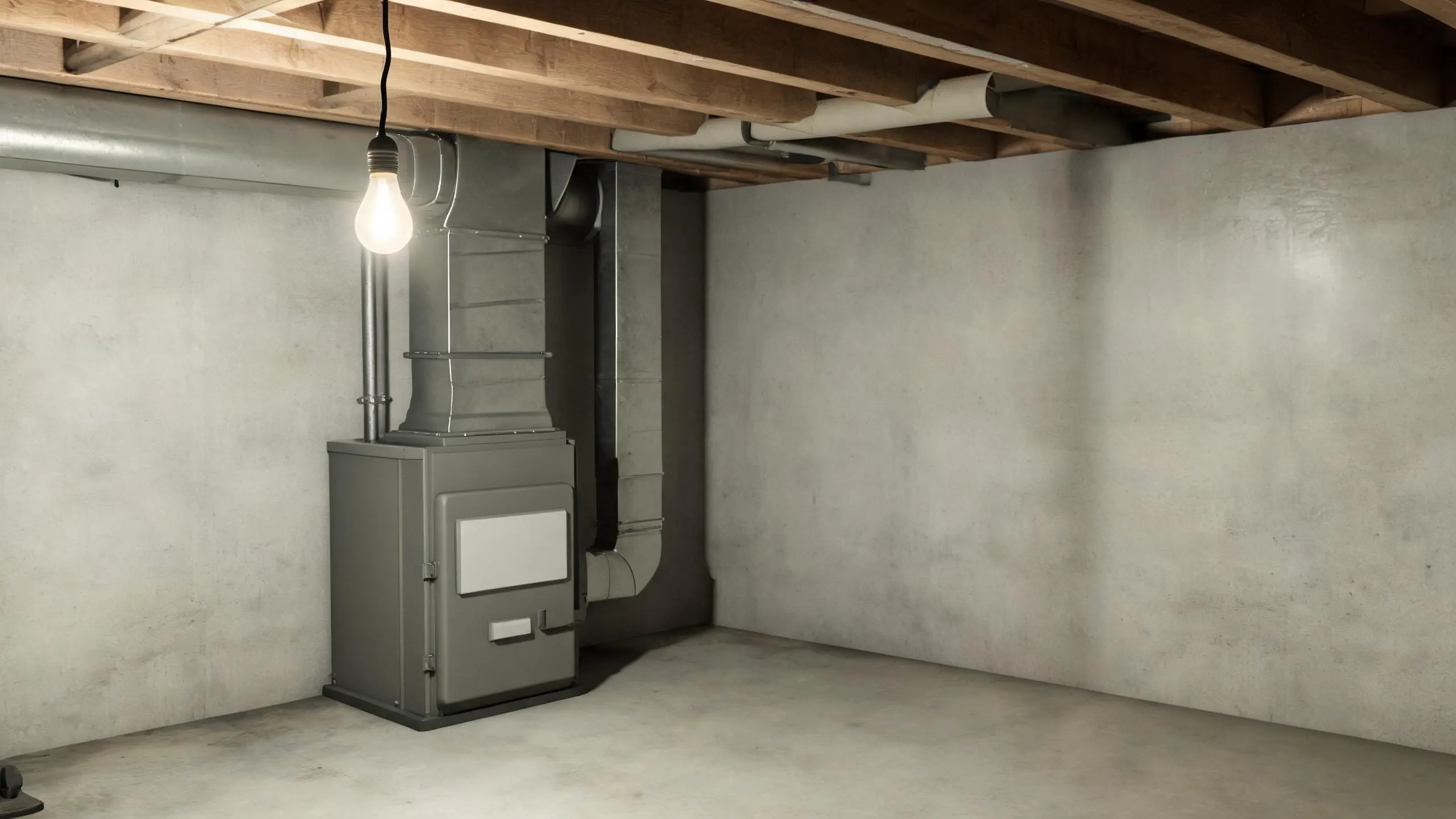
A bare concrete basement containing a gray gas furnace with metal ductwork and a vertical flue pipe, lit by a single hanging bulb.

A high-efficiency gas furnace would save about $90 a year to run in Madison County compared with a gas furnace.

  • A high-efficiency gas furnace$450 a year
  • A gas furnace$540 a year

Estimates for a typical Madison County home, from EIA household energy data, Illinois fuel prices and NOAA climate normals. Your home will differ.

Install day starts with the old furnace coming out. Then the duct connections, gas line and vent get checked against the new unit before anything is permanent. A tech will check the supply and return ducts for leaks or gaps while they're exposed, since that's hard to get to once the furnace is buttoned up. The vent pipe gets matched to the new furnace too, not just reused, because the wrong size or slope can cause real problems with how it drafts. Once it's set, the furnace gets fired up and run through a full cycle. Ignition, airflow, temperature rise. Gas pressure gets set to the manufacturer's spec rather than left wherever it lands. A thermostat that's being replaced gets wired and tested at the same time. Most of the day is that checking and adjusting, not the parts swap itself.