Furnace here runs from October through April, about seven months straight. Overnight lows average 25°F through December, January and February, so once that furnace is on for the season it doesn't get much of a break. One check before that stretch starts is enough to catch a weak igniter or a clogged filter before it has to run every night in the cold. There's nothing unusual about Granite City winters that wears a furnace out faster. It's the length of the season that matters, not the severity of any one night.
Your furnace in Granite City goes from off to running every night starting in October.
Get it checked in September, before it has to work for seven months straight.
Most of Granite City heats with gas, which means a furnace that needs more than a filter swap
60.7% of homes heat with gasHeat runs October through AprilWinter nights average 25°F
Granite City weather doesn't ask your furnace for anything extraMadison County saw 144 severe weather events between 2015 and 2024, mostly wind and hail, not the cold snaps that wear out a furnace.
Skip the yearly check and the furnace doesn't fail outright, it just works harder than it should. Dust builds up on the flame sensor until it stops reading the flame correctly, and the furnace shuts itself down as a safety measure, usually on the coldest night it can find. A dirty filter chokes airflow, so the blower runs longer to push the same heat through the house, and the heat exchanger behind it runs hotter than it was built for. Burners that never get cleaned burn unevenly, which shows up as a yellow flame instead of a steady blue one. None of this happens fast. It's a furnace losing ground a little at a time until the night it can't keep up at all.
A furnace gives warning before it quits. The burner flame should burn steady and blue. Let it turn yellow or shaky and the burners need cleaning before that flame sensor coats over with soot. Listen for a bang when the furnace kicks on, that's gas building up before it lights instead of catching right away, and it means a burner is dirty or out of adjustment. Short cycling, where it fires up, runs a few minutes, and shuts off again, usually traces back to a clogged filter choking the airflow it needs. Rooms that used to heat evenly but now run cold in the back of the house point to the same thing, or to a blower losing strength. Any of these on their own is worth a look before the cold settles in for good.
The filter is doing more than keeping dust out
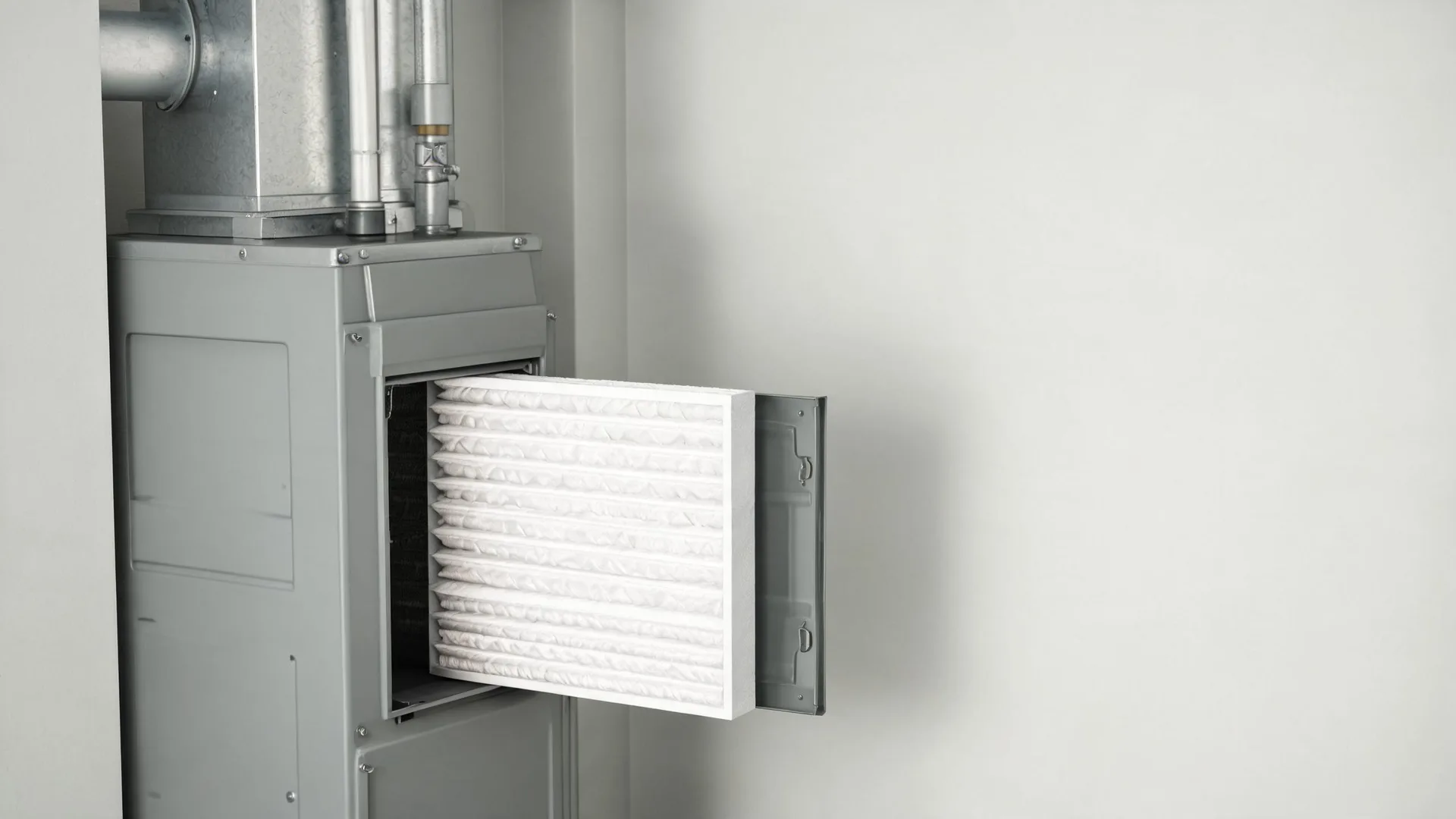
A clogged filter chokes airflow into the furnace, so the blower has to run longer just to push warm air through the house. That extra runtime strains the blower motor and lets the heat exchanger run hotter than it was built for. A filter is the cheapest thing to check during a yearly visit and the one most likely to get ignored.
The condensate drain only matters on a high-efficiency furnace
A high-efficiency furnace produces condensation that has to drain out through a small tube. If that line clogs with algae or sludge, the furnace shuts itself down rather than let water back up into the cabinet. Clearing it takes a minute during a yearly check, and it's a frustrating thing to discover on the night the furnace won't fire at all.
A quick tune-up checks that the furnace lights and the thermostat tells it to run, then calls it done. A thorough one pulls the burners out to clean each one, not just the one closest to the access panel. It checks the flame sensor and cleans it rather than wiping it on a sleeve and moving on. It tests the draft at the vent to make sure exhaust is actually leaving the house instead of backing up into it. It checks amp draw on the blower motor against what that motor is rated for, which catches a motor on its way out before it strands you. A tech who only swaps the filter and listens for the furnace to kick on has checked that it runs today, not that it will keep running through the next cold snap.
Pulling the burners means taking each one out far enough to see the ports, not just glancing at the one up front. Caked-on dust narrows a burner port and the flame that comes off it burns ragged instead of steady. The igniter gets tested for resistance, not just watched for a glow, because one can glow weak and still fail to light the gas. A full check also puts a combustible gas detector near the heat exchanger, since a crack there can leak exhaust into the air the furnace is supposed to be heating, and no bang or yellow flame will ever tell you that one. The blower wheel gets looked at too, since dust packed between its blades throws it out of balance the same way a clogged filter starves it for air. All of this stays hidden behind the access panel, and the furnace runs either way, right up until the day one of these quietly lets go.