Gas is the standard here
Utility gas heats 60.6% of homes in St. Clair County. If your current furnace runs on gas, a new gas furnace is the straightforward swap, and the gas line and venting are already in place.
Takes about a minute. No obligation.
Utility gas heats 60.6% of homes in St. Clair County. If your current furnace runs on gas, a new gas furnace is the straightforward swap, and the gas line and venting are already in place.
A third of homes in the county heat with electricity, so an electric furnace is not an unusual choice here. Either way, matching what the house already has keeps the job simpler than switching fuels.
NOAA nClimDiv, 1991–2020 normals
Furnaces in St. Clair County start running in October.
A furnace put in by September gets broken in before the first cold night asks anything of it.



Natural gas in Illinois ran $10.64 per million Btu in 2024, which keeps the fuel bill side of this decision fairly plain. A high-efficiency furnace burns less gas to make the same heat, but at that price the extra cost of the top-tier model takes a long time to earn back. That doesn't make efficiency pointless, it just means it shouldn't be the only thing driving the choice. A furnace that matches your ductwork and vents the way your house needs, and that a local contractor can service without trouble, is worth more here than a rating on a sticker.
St. Clair County sees its share of rough weather, storms, hail, the occasional tornado, but none of that changes what a furnace here needs to be. A standard gas or electric furnace sized to your house handles a normal winter fine. The thing worth planning for is the power going out, since some Illinois homes lose it for a day or more in a bad storm. Worth asking your contractor how your new furnace handles that.
Find a contractor
Half the homes in St. Clair County were built in 1975 or earlier, half after. A furnace doesn't know which kind of house it's in, and it doesn't need to. Size it to the house, vent it the way the house is already vented, and it runs the same number of winters either way.
An oversized furnace heats the house fast, then shuts off, then kicks on again a few minutes later. That short cycling wears out the parts that start the burner and keeps the house swinging between too warm and not quite warm enough. A furnace sized right runs longer, steadier stretches and wears evenly.
A contractor works out the right size by looking at the square footage, the windows, how the house is insulated, and how the ducts are laid out, not by matching whatever furnace is already in there. If the old one was wrong for the house, replacing it with the same size just repeats the mistake.
Estimates for a typical St. Clair County home, from EIA household energy data, Illinois fuel prices and NOAA climate normals. Your home will differ.
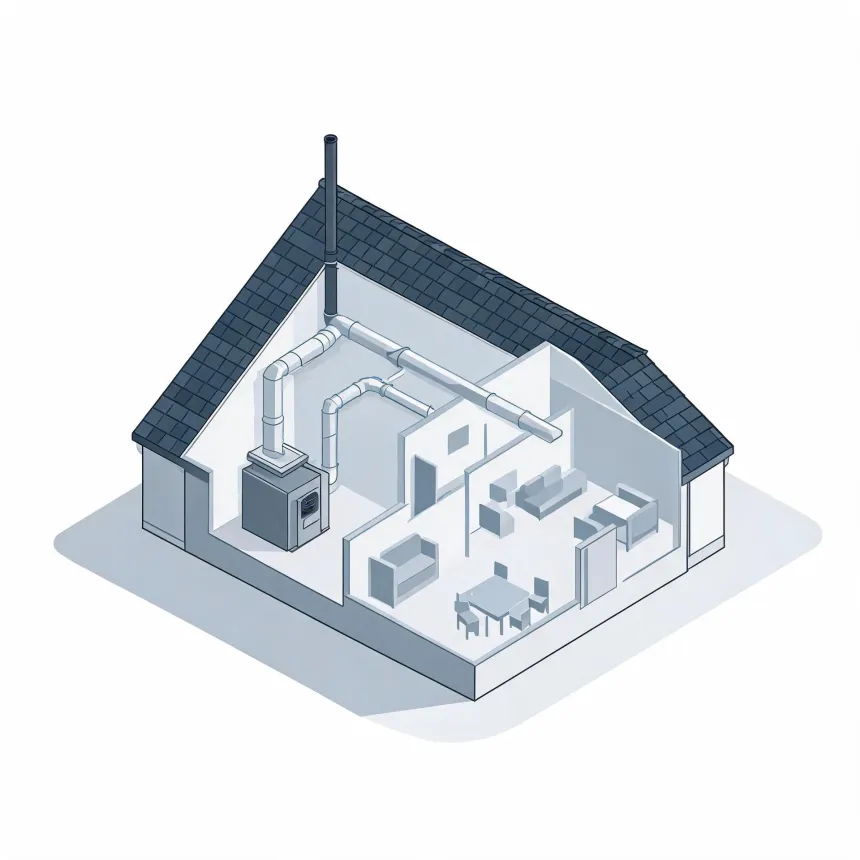
Install day starts with the old furnace coming out, along with whatever duct and vent work has to change to fit the new one. The contractor runs the gas line or electrical circuit to the new unit, sets it in place, and connects the supply and return ducts. Venting gets checked next, since a new furnace often breathes differently than the one it replaced and the flue or intake pipe has to match it. Once it's hooked up, the contractor fires it, checks the gas pressure or amp draw, and watches the heat exchanger and burners run through a full cycle. The last step is airflow, making sure every room gets the heat it's supposed to before anyone signs off on the job.